


 Claim Ownership
Deep Dive Podcast
Subscribed: 2Played: 46
Subscribe

© The Urban Herald
Description
Contemporary insights, news, lifestyle, entertainment, business, technology, and more, all with and modern perspective.
The Urban Herald is a passion project by an autistic individual who hyperfocuses on research and sharing knowledge. Every article is crafted with love, then transformed into audio using AI voices—not ideal, but what makes this self-funded operation possible.
My autism affects my spoken communication, making traditional hosting challenging. I'm working toward real voices someday. Until then, I hope you'll find value in the insights shared here. Thank you for listening.
The Urban Herald is a passion project by an autistic individual who hyperfocuses on research and sharing knowledge. Every article is crafted with love, then transformed into audio using AI voices—not ideal, but what makes this self-funded operation possible.
My autism affects my spoken communication, making traditional hosting challenging. I'm working toward real voices someday. Until then, I hope you'll find value in the insights shared here. Thank you for listening.
184 Episodes
Reverse

Join us as we explore the ultimate guide to St Patrick's Day, moving beyond the plastic beads and green beer to uncover the real history of the world's favorite Irish holiday. In this episode, we reveal how Saint Patrick was actually born in Roman Britain, debunk the famous myth about driving snakes out of Ireland, and explain why the original color of the holiday was Saint Patrick's blue instead of green. We also take a journey around the globe to see how cities like Dublin, New York, Chicago, and even the Caribbean island of Montserrat celebrate today. Whether you want to know what authentic Irish food like colcannon really is, or how to properly host a celebration for 2026, this episode has everything you need to understand the true spirit of the holiday.Dive deeper:Ready for more insights? Read the full article and get more insights on our website.🔗 https://theurb.co/st-patricks-day#StPatricksDay #IrishMusic #IrishCulture #CelticMusic #StPaddysDay

Looking for the perfect footwear for your next marathon build? In this podcast episode, we dive into the top 10 super trainers of 2026, exploring how advanced foam and rocker geometries can reduce your running effort by up to 4%. From the versatile Asics Superblast 3 to the plush Nike Vomero Plus and the value-packed Puma MagMax 2, we break down which shoe fits your specific running style and pace. Let us know in the comments which pair you are picking up for your next long run!Read the full breakdown, including a buyer's guide, foam technology explainer, and rotation strategies, at the link below.https://theurb.co/best-long-run-shoesASICS Superblast 3: https://amzn.to/4luhGSQSaucony Endorphin Azura: https://amzn.to/4sL7bgqNike Vomero Plus: https://amzn.to/4sDyadAAdidas Hyperboost Edge: https://amzn.to/4bEZKBzMizuno Neo Vista 2: https://amzn.to/4uqVQnbPuma MagMax 2: https://amzn.to/47Nc9ktBrooks Glycerin Max 2: https://amzn.to/4bIUixwNew Balance SC Trainer v3: https://amzn.to/40yyb6QHoka Skyward X: https://amzn.to/4rBMXVnOn Cloudboom Strike: https://amzn.to/4bHPtEJ#RunningShoes #MarathonTraining #SuperTrainers #BestRunningShoes #RunningComm

In this episode, we go deep into one of the most severe human rights crises on the planet right now. Iran is one of fewer than ten countries in the world where homosexuality remains punishable by death. Women have been killed in morality police custody for improperly worn hijabs. Over 53,000 people have been arrested in connection with protests since 2022, and children as young as nine years old fall under adult criminal law.We break down the full architecture of Iran's gender apartheid system: the legal codes that make women second-class citizens, the AI-powered surveillance network that monitors them 24 hours a day, the documented practice of pre-execution rape in prisons, the forced gender surgeries used to "eliminate" homosexuality, and the state-facilitated honour killings that claim hundreds of lives every year.We also ask the harder questions: Why do Western progressive movements largely stay silent? What role does geopolitics play in shielding this regime from accountability? And with the death of Supreme Leader Khamenei in early 2026, what could the future hold for 90 million Iranians who have been fighting for their lives?Read the full investigation at The Urban Herald!🔗 https://theurb.co/iran-human-rightsStay connected!📲 Follow us for more urban stories: @theurbanheraldDon't forget to LIKE 👍, SHARE ⤴️, and SUBSCRIBE ▶️ for more in-depth analyses and critical perspectives on trending topics!#IranianWomen #IranActivism #FreeIran #IranRevolution #IranHumanRights

Six days into one of the most dramatic military escalations the modern Middle East has ever seen, we did something unusual. We sat down with three of the most capable AI systems in the world, gave them the same brief, and asked them to tell us honestly: what are the odds this becomes something global?ChatGPT gave global war a 15% probability. Claude said 17%. Gemini said 30%. Averaged out, that is a 21% chance of a scenario most of history books describe in past tense.In this episode, we walk through every layer of that analysis. What the Strait of Hormuz closure actually means for your cost of living. Why Gemini's estimate was nearly double ChatGPT's and what that disagreement reveals about how we model geopolitical risk. The nuclear infrastructure scenarios that intelligence analysts are quietly watching. And why Claude's day-by-day probability tracking showed the numbers moving in the wrong direction every single day.This is the conversation that the headline figures alone do not tell. Subscribe to The Urban Herald on your podcast platform of choice and follow us for daily updates as the probability assessments change in real time.We broke down every probability estimate, every point of consensus and every point of divergence between the three AI systems. Read the full analysis at The Urban Herald.🔗 https://theurb.co/iran-conflict-escalationStay connected!📲 Follow us for more urban stories: @theurbanheraldDon't forget to LIKE 👍, SHARE ⤴️, and SUBSCRIBE ▶️ for more in-depth analyses and critical perspectives on trending topics!#IranConflict #StraitOfHormuz #MiddleEastWar #Geopolitics #WorldNews

2025 wasn't just another challenging year for cinema. It was the year the entire industry model collapsed and rebuilt itself in real time, and most people completely missed what actually happened.For fourteen consecutive years, Marvel owned the global box office top ten. Then in 2025? Zero Marvel films made the cut. Not because they forgot how to make movies, but because audiences collectively rejected the shared universe homework model. We dive deep into why Thunderbolts, Captain America, and Fantastic Four all failed whilst Zootopia 2 grossed nearly £1.6 billion by doing something radically simple: telling complete stories.The middle tier of cinema, those £40-100 million budget films that used to reliably earn £150-400 million globally, has been completely eliminated. We're talking about a structural collapse from £21 billion to £14 billion in just six years. Studios now operate in a brutal binary: make billion-dollar tentpoles or send everything directly to streaming. There's no middle ground anymore.Animation dominated 2025 because it solved a problem live-action couldn't: delivering self-contained narrative experiences. Six of the top ten films were animated or family-oriented, and the pattern reveals exactly what modern audiences demand. We break down why Lilo & Stitch, Demon Slayer, and Minecraft succeeded where established franchises crashed.The theatrical window has shrunk to 30-45 days, fundamentally altering audience psychology. That shift doesn't just adjust a business metric, it dismantles the entire emotional infrastructure that made cinema special. We explore why this matters more than any other factor in understanding cinema's future.Mission Impossible saw a 50% decline. Predator couldn't crack the top 20. John Wick and Conjuring spinoffs scattered beyond position 30. Franchise fatigue didn't gradually build, it hit like a cliff face as audiences decided brand recognition alone no longer justifies their time or money.We examine the data Hollywood executives are still struggling to comprehend, the second week phenomenon that's killed opening weekend metrics as predictive tools, why Netflix acquiring Warner Bros signals an existential shift, and what "event cinema" actually means when audiences can access everything at home within weeks.This episode reveals the complete restructuring of theatrical cinema, why 2025 represents a permanent turning point rather than a temporary downturn, and what studios must understand to survive in an industry that will never return to its pre-pandemic model. Cinema isn't on life support because audiences stopped caring. It's restructuring because the old model finally exhausted itself.Read more: https://theurb.co/cinema-future
 1
1What happens when society's understanding of autism gets stuck in 1988? You get a pervasive stereotype that dismisses the lived experiences of millions and a seemingly innocent comment that cuts deeper than most people realize.In this episode, we explore the phrase "you don't look autistic" and unpack why it represents far more than a simple misunderstanding. Based on our latest investigative piece written by an autistic journalist, we examine how Rain Man and Sheldon Cooper became the default templates for an entire neurological difference, leaving countless people invisible and unsupported.We discuss the hidden labour of masking, where autistic people spend enormous energy performing neurotypicality to the point of complete burnout. We reveal why autistic women face diagnostic delays of eight to ten years compared to men, and how socialisation creates the perfect camouflage for traits that desperately need recognition and support.The conversation moves through medical settings where articulate patients are dismissed, workplaces where sensory accommodations are denied to people who "seem fine," and educational environments where bright students are punished for being authentically themselves. We examine the mental health crisis emerging from years of forced performance and the identity confusion that comes from not knowing who you are beneath the mask.This isn't just disability awareness. This is about recognizing that autism looks like whatever the autistic person in front of you looks like. It's about understanding that invisible disabilities are still disabilities, that support needs don't require visual proof, and that our current narrow definition is actively harming people.Whether you're autistic yourself, know someone who is, work in healthcare or education, or simply want to understand why language matters, this episode offers practical guidance for responding when someone shares their diagnosis, plus insights into building spaces where masking isn't a survival requirement.Join us as we dismantle the stereotype and rebuild understanding from the ground up.Read more: https://theurb.co/autism-masking

Denmark has officially become the first country in the world to end postal letter delivery, closing a 400-year chapter of communication history. On December 30th, 2025, PostNord delivered its final letter, marking a transition that seemed impossible just decades ago but now feels almost inevitable.In this episode, we explore what led to this historic decision and what it means for the future of communication globally. With letter volumes plummeting 90% since the early 2000s and Denmark's sophisticated digital infrastructure making physical mail nearly obsolete, the writing was literally on the wall. Those iconic red mailboxes that once defined street corners across Danish towns have been removed, sold off, and transformed into nostalgic garden ornaments.But this isn't just a story about technological progress. We dig into the real concerns about digital exclusion, particularly for elderly citizens and rural populations who may struggle to navigate a purely online world. How do you balance efficiency and innovation with accessibility and inclusion?We also examine what this means for the postal industry worldwide. As PostNord pivots entirely to parcel delivery to capitalize on the e-commerce boom, several European nations are watching closely and considering similar moves. Could Denmark's bold step become the global standard, or will the human cost of leaving some citizens behind prove too high?Join us as we unpack the cultural significance of losing physical mail, the nostalgia stirred by this transition, and the broader implications for how societies communicate in an increasingly digital age. This is about more than just letters; it's about who we include and who we might inadvertently leave behind as we race toward the future.Read more: https://theurb.co/denmark-postal-end

In this episode, we conduct a forensic analysis of the rise and dramatic 2026 fall of Nicolás Maduro, exploring how he transformed Venezuela from a nation-state into a transnational criminal conglomerate. We detail the tactical specifics of Operation Absolute Resolve, the high-stakes American military raid that extracted Maduro from his fortified residence at Fort Tiuna and placed him in a Brooklyn jail cell to face charges of narcoterrorism, weapons trafficking, and money laundering.Beyond the tactical victory, we expose the "hidden face" of a regime that functioned as a "Pranato"—a large-scale prison gang structure where human suffering was the primary currency of control. The sources reveal the inner workings of the Cartel of the Suns, a drug-trafficking network embedded within the highest ranks of the Venezuelan military, and the CLAP food scheme, which weaponised hunger to ensure political loyalty while siphoning billions through shell companies.We also investigate the bizarre personal myths and occult influences surrounding Maduro, from the debunked rock band "Enigma" past to his private devotion to the Indian guru Sathya Sai Baba. Finally, we examine the grim reality of state-sponsored terror in the dungeons of El Helicoide and the environmental "ecocide" occurring in the Orinoco Mining Arc, providing a comprehensive look at the legacy of a regime that left a nation in ruins.Read more: https://theurb.co/nicolas-maduro

In March 2025, Disney released Snow White, expecting a triumphant milestone. Instead, they got one of the most spectacular failures in cinema history. With a 2.2/10 IMDb rating, over $200 million in losses, and controversies that dominated headlines for months, this wasn't just a bad movie. It was a cultural implosion that exposed the cracks in Hollywood's entire business model.In this episode, we dissect exactly what went wrong. How did a $270 million production spiral into disaster? Why did the CGI dwarfs terrify audiences? What role did pre-release controversies, casting debates, and social media scandals play in poisoning public perception? And critically, why did verified audiences who actually watched the film rate it 74%, while coordinated review bombers dragged it to 2.2?We explore the production chaos involving strikes, fires, and endless reshoots. We examine the casting controversy surrounding Rachel Zegler and Gal Gadot that turned the film into a culture war battleground. We analyze the uncanny valley problem with photorealistic CGI that Disney still hasn't solved. And we investigate what Snow White's failure reveals about audience exhaustion with remakes, Disney's creative bankruptcy, and Hollywood's risk-averse addiction to established IP.This episode goes beyond one film's box office numbers. It's about an industry at a crossroads, struggling to balance nostalgia mining with genuine creativity. It's about the limits of corporate franchise strategies. And it's about what happens when a studio bets everything on a formula that audiences have finally rejected.Whether you're a film industry professional, a Disney fan wondering what happened, or simply fascinated by spectacular corporate failures, this deep dive offers insights you won't find anywhere else.Join us as we unpack 2025's biggest entertainment disaster and what it means for the future of Hollywood.Read more: https://theurb.co/snow-white-flop
As 2025 comes to a close, we're exploring something everyone thinks about but few master: how to set meaningful resolutions that survive beyond February. This isn't another motivational pep talk. It's a deep dive into the psychology and neuroscience of sustainable behaviour change.We unpack fascinating research showing that 55% of people using structured goal frameworks maintain their resolutions a full year later, compared to just 22% relying on willpower. We examine why approach-oriented goals outperform avoidance goals, how gratitude practices create measurable changes in brain chemistry, and why self-compassion beats harsh self-criticism every time for long-term success.The episode walks through a complete framework for 2026 preparation. We discuss extracting valuable lessons from 2025 without dwelling on failures, the power of release rituals for letting go of emotional baggage, and the Three C's Framework for auditing what deserves to carry forward: Connections, Competencies, and Commitments.You'll learn the SMART-ER goal framework, an evolution of traditional goal setting that adds crucial elements of regular evaluation and readjustment. We break down why specificity matters more than ambition, how to create infrastructure that removes friction, and the exact questions to ask during monthly and quarterly reviews.We also tackle the messy middle, that period between initial enthusiasm and eventual success where most people quit. Discover why progress isn't linear, how to respond to setbacks without shame, and why maintaining is succeeding when you've stopped a negative trajectory.This episode offers practical tools grounded in research, from the year-in-review timeline exercise to the gratitude audit, from vision boarding your desired future to creating accountability mechanisms that actually work. Whether your focus is fitness, financial wellness, relationships, or personal growth, these principles apply universally.Join us for an honest, intelligent conversation about how to prepare for 2026 with both ambition and self-compassion. Because you're not pursuing perfection. You're pursuing progress. And that makes all the difference.Read more: https://theurb.co/new-year-prep
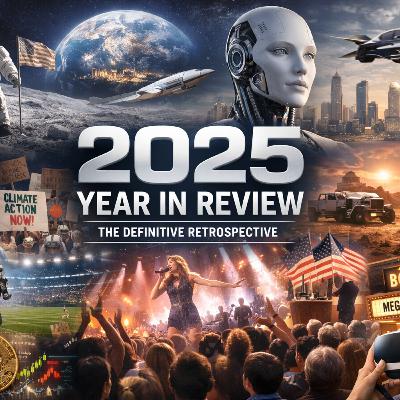
In this episode, The Urban Herald unpacks the year that felt like a glitch in the simulation.We trace how cinema made a genuine comeback, why Beyoncé and Kendrick dominated the cultural soundtrack, and how podcasting and books mirrored a world wired on anxiety. Then we dive into AI’s shift from flashy demo to core infrastructure, quantum computing’s real breakthrough, Nvidia’s 5 trillion milestone, and AI-designed cancer drugs that quietly changed medicine.We also walk through the darker side of 2025: Charlie Kirk’s assassination, the spike in political violence, Trump’s second term and the electoral backlash, global conflicts, youth-led uprisings, and a world wrestling with historical reckoning from the Holocaust’s 80th anniversary to the Tuam grave and Brazil’s shocking Piauí poisoning case.Finally, we explore how wellness turned into longevity science, fashion split into competing aesthetics, travel went regenerative, Bitcoin rose and fell, luxury collectibles became serious assets, and inclusion, neurodiversity and LGBTQ+ rights pushed forward against fierce resistance.If you want to understand what really defined 2025 and what it means for the decade ahead, this is your guided tour.Read more: https://theurb.co/2025-retrospective

Millions of people are currently using artificial intelligence tools with alarming carelessness, treating systems like ChatGPT as infallible oracles rather than probabilistic engines. This podcast is your essential guide to understanding why blindly trusting AI is dangerous, exploring the reality of AI hallucinations, where the system generates plausible-sounding information that is completely fabricated. We reveal sobering data showing that even highly advanced models still occasionally manufacture information, and error rates can skyrocket during complex tasks, such as citation generation, where models have been shown to hallucinate in 28% to 91% of references.Learn to adopt the defensive AI mindset by treating the technology exactly like a satellite navigation system: a powerful tool to augment your decision-making, not replace it. Discover the crucial practices necessary for responsible AI use, including crafting extremely specific prompts, using the professional fact-checker’s technique of lateral reading to verify claims independently, and employing the non-negotiable human-in-the-loop model for final review. We discuss how AI excels at tasks like summarization and brainstorming, but struggles fundamentally with verification and judgment. Ultimately, the human must always remain the expert driver, keeping judgment, expertise, and responsibility firmly in hand. This is how you leverage AI's strengths while avoiding driving yourself straight off a cliff.Read more: https://theurb.co/use-chatgpt-effectively

The Game Awards 2025 delivered one of the most shocking results in gaming history, and we're unpacking every moment. An indie game just defeated the biggest AAA titles of the year, and the implications reach far beyond a single trophy.In this episode, we break down the complete winners list across every major category, exploring what these choices reveal about the current state of gaming. We examine the patterns emerging from voter preferences, the categories where surprises ran wild, and the decisive shift away from massive-budget spectacles toward authentic, innovative experiences.We also discuss what this watershed moment means for indie developers, major studios scrambling to adapt, and the future of game development heading into 2026. Whether you're a casual player or deeply embedded in gaming culture, these results signal something significant about where the industry is heading.Plus, we highlight the snubs that sparked controversy, the acceptance speeches that went viral, and the performances that stole the show. The Game Awards aren't just about celebrating achievements anymore; they're a barometer for the entire industry's direction.Read more: https://theurb.co/game-awards-2025
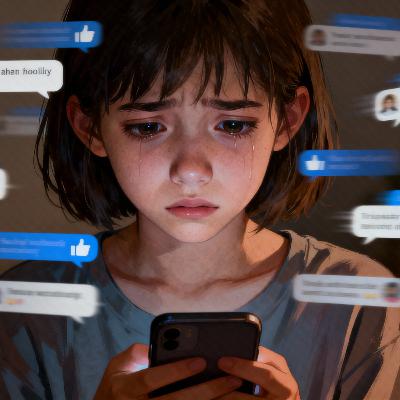
This podcast explores the urgent global movement demanding social media bans for children under 16, following the groundbreaking legislation established in Australia on 10 December 2025. We investigate why a child’s place is not on social media, examining the "crisis of maturity" that renders adolescents "fundamentally ill-equipped" to navigate psychologically manipulative digital platforms. Drawing on settled science, we detail how the teenage brain's developing prefrontal cortex and dramatically changing dopamine system are "neurobiologically primed" for reward-seeking behaviour, making them exquisitely vulnerable to the engagement-maximizing mechanics of social media.Discover how platforms exploit this developmental reality through infinite scroll feeds, notification pings, and personalized algorithms that actively train young brains to crave digital validation metrics such as likes and follower counts. Since widespread social media adoption, rates of adolescent depression and anxiety have risen dramatically, with correlation no longer in question. Adolescents spending over 3 hours daily on platforms face double the risk of depression and anxiety symptoms, compounded by a "sleep disruption cascade" that impairs self-regulation and emotional processing.We challenge the pervasive notion of "parental choice," comparing the resistance to social media regulation to the historical opposition to mandatory seatbelts and tobacco restrictions. The Australian ban and the subsequent regulatory momentum in nations like Norway, Malaysia, and the United Kingdom are forcing a confrontation with corporate business models that prioritize profit over the protection of childhood development. This series posits that regulation is not governmental overreach but the bare minimum required to protect a generation.Read more: https://theurb.co/social-media-ban-teens

In December 2025, Netflix announced the largest media merger in a quarter-century: an $82.7 billion acquisition of Warner Bros., one of Hollywood's most legendary studios. But can it actually happen?Join us as we dissect the seismic deal that would unite Batman, Harry Potter, and Game of Thrones under the world's dominant streaming platform—controlling 43% of the global market and 430 million subscribers. We'll explore:The fierce bidding war between Netflix, Paramount, and ComcastWhy Hollywood's creative community is mobilising unprecedented oppositionPresident Trump's concerns and the brutal regulatory battle aheadThe clash between HBO's prestige philosophy and Netflix's algorithm-driven modelWhat this means for cinema's survival and the future of entertainmentFrom hostile takeover bids to accusations of "starvation strategy," from Jane Fonda's constitutional warnings to theatre owners' existential fears—this is the story of how a $1,000 movie projector empire built over 102 years could become part of the very platform that disrupted it.Is this Hollywood's inevitable evolution, or an antitrust nightmare that must be blocked? The next 18 months will decide.
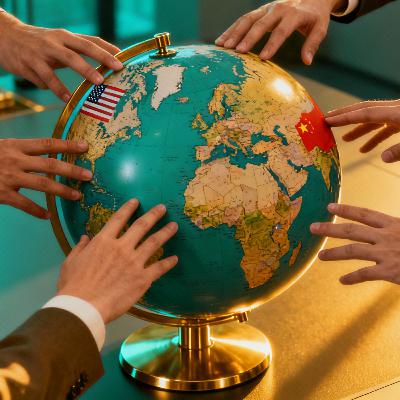
Welcome to your essential guide to the year 2026, exploring the trends that will define a year of profound global uncertainty. Based on the annual forecast from The Economist, we analyse how the "Trumpnado" continues to reshape international relations through a transactional, "America First" approach.In each episode, we break down the ten critical themes you need to watch:The Geopolitical Drift: Why the old rules-based order is decaying into loose "coalitions of the willing," and how China is seizing the opportunity to court the Global South and India.The War on Narratives: As the US celebrates its 250th anniversary, we examine the cultural battles over history and the political showdown looming over the midterms.The Economy & Tech: Will the $400 billion artificial intelligence bubble finally burst? We look at the risks of a market correction and the battle for the independence of the Federal Reserve.Europe’s Dilemma: The continent faces an "impossibility trilemma", trying to balance defence spending, green growth, and an ageing population while Ukraine's war shifts into a permanent "grey-zone" conflict.The New Frontiers: From the "Godzilla" of weight-loss drugs, Retatrutide, to the controversial, pro-doping "Enhanced Games" in Las Vegas, we ask: is it cheating, or is it progress?Join us as we navigate the "polycrisis" of 2026, where finance, politics, and technology collide.Read more: https://theurb.co/world-ahead-2026

What separates essential Christmas cinema from seasonal filler? In this episode, we explore eight films that have genuinely earned their place in the festive canon. From Frank Capra's 1946 masterwork about human worth to the anarchic brilliance of Gremlins, we examine why certain Christmas films resonate across decades while others fade into obscurity. We dissect the Die Hard debate, explore how Klaus revolutionized hand-drawn animation, and discover why The Nightmare Before Christmas works as both Halloween and Christmas viewing. Whether you're seeking philosophical depth, technical artistry, or spectacular entertainment, these films offer something beyond comfort viewing. Join us as we move past algorithm recommendations to understand what makes Christmas cinema genuinely essential. Expect film analysis, cultural commentary, and a roadmap for your ultimate holiday marathon.Read more: https://theurb.co/8-best-xmas-movies

You likely know the face, the unibrow and flower crown reproduced on everything from nail art to coffee mugs—but do you know the radical, communist reality of the woman behind the merchandise?Thorns and All accepts the "uncomfortable invitation" to look past the pop culture icon and examine Frida Kahlo’s art for what it truly is: a searing political commentary on the body, gender, and Mexican identity. We move beyond the sanitised narrative of a "strong woman who overcame pain" to explore a life defined by contradiction, "pain without purpose," and revolutionary politics.In this series, we peel back the layers of "Fridamania" to discuss:The Body in Ruins: How a catastrophic bus accident turned her bed into a prison and her mirror into a laboratory, resulting in works that confront taboos like miscarriage and chronic suffering with forensic precision.The Elephant and the Dove: The toxic, obsessive, and creative dynamic between Kahlo and Diego Rivera, where mutual infidelity and emotional cruelty fuelled masterpieces like The Two Fridas and Diego and I.The Radical Politics: Why the hammer and sickle on her casket was no accident, and how her Tehuana dress was a deliberate statement of anti-colonial resistance rather than just a fashion choice.The 2025 Market Scandals: An investigative look at how an anti-capitalist artist became the most expensive female artist in history (with The Dream selling for $54.7 million), amid explosive allegations of missing diaries and stolen paintings from the Casa Azul.It is time to stop looking at the tote bag and start looking at the paintings — honestly, thorns and all.To put it simply, imagine Frida Kahlo’s legacy as a historic building: modern pop culture has merely plastered over the cracks with bright, floral wallpaper to make it palatable for tourists, but this podcast aims to strip that wallpaper back to reveal the structural damage, the load-bearing beams of political steel, and the raw foundations underneath.Read more: https://theurb.co/frida-kahlo

The AI landscape in 2025 feels like rush hour on the London Tube, crowded, chaotic, and everyone's rushing somewhere. But where should you actually be going?In this episode, we break down the 10 leading AI models that matter right now: OpenAI's GPT-5 and o3, Google's Gemini 3 Pro, Anthropic's Claude Opus 4.5, xAI's Grok 4, Meta's Llama 4, and rising challengers like DeepSeek R1 and Alibaba's Qwen. But this isn't another breathless tech review. We're talking real-world performance, not just laboratory benchmarks.We explore why context windows ballooning to 10 million tokens changes everything, how open-source alternatives now challenge premium models, and why Fortune 500 companies are running multiple LLMs simultaneously. You'll learn the strategic framework for choosing AI based on use case, whether that's coding, research, content creation, or enterprise automation.We also dig into the uncomfortable truths: GPT-5's troubled rollout, Gemini's occasional behavioral collapses, Microsoft Copilot's quality gap, and why the newest model isn't always the best choice. Plus, we discuss critical cost considerations that turn "affordable" APIs into budget nightmares at scale.This conversation is for founders, developers, enterprise leaders, and anyone making AI decisions that will affect their organization for years. Because in 2025, picking the wrong AI model isn't just inconvenient. It wastes development hours, derails productivity, and locks you into expensive infrastructure.The takeaway? There's no single "best" AI model, only the smart balancing act between capacity, cost, reliability, and your specific needs. We'll help you play it well.Read more: https://theurb.co/ai-models-2025

Welcome to The Digital Footprint, the essential guide for parents navigating the digital age dilemma of documenting family life. Sharenting, the act of parents publicizing their children’s lives on social media—has become a cultural phenomenon, turning parents into "digital biographers" who create online scrapbooks spanning from ultrasound scans to sporting triumphs.This podcast explores why sharenting is a double-edged sword and the serious risks embedded in the impulse to share joy. We delve into the implications of forming a permanent digital presence for children, considering that studies show by the time children reach their teens, upwards of 1,000 photos of them are already online.Each episode provides practical solutions for safe sharenting while examining the major risks, including:Identity Theft and Fraud: How seemingly innocent posts provide “jigsaw data” for criminals, noting that two-thirds of identity theft cases involving minors are predicted to be traceable to parental oversharing by 2030.Future Opportunities: The concern that a child’s curated digital footprint may negatively affect later assessments by university admission officers or future employers.Safety and Predator Risk: The danger associated with location tags and identifiable details, highlighting the horrifying reality that over 50% of images found on illicit forums originally came from parents’ social media posts.Autonomy and Consent: The complex debate around digital consent, especially as children mature and may resent the digital narrative created for them. We discuss the growing "revenge factor," where teenagers challenge their parents' decisions, sometimes leading to legal disputes.Learn to implement the “stop and think” rule, set vital privacy boundaries, and understand international frameworks like GDPR which affirm the child's "right to be forgotten". We guide you in walking the tightrope, ensuring that your celebration of family life today doesn’t compromise your child’s autonomy tomorrow. The core principle remains: every child deserves a choice in their own digital story.Read more: https://theurb.co/sharenting

Comments

Download from Google Play

Download from App Store
 United States