


 Claim Ownership
seeing by ear. Essener Gespräche zur Fotografie
Subscribed: 0Played: 0
Subscribe

© Zentrum für Fotografie Essen
Description
Seit über 100 Jahren ist die Stadt Essen Standort für Fotografie. Im Zentrum für Fotografie Essen haben sich ihre wichtigsten Institutionen zusammengeschlossen: Folkwang Universität der Künste, Historisches Archiv Krupp, Museum Folkwang und die Stiftung Ruhr Museum. Die Audioreihe "seeing by ear. Essener Gespräche zur Fotografie" gibt Einblick in ihre Arbeit; von A wie Archive bis Z wie Zugänglichkeit.
Sprecherin: Mona Leinung
Sprecherin: Mona Leinung
26 Episodes
Reverse

A Folkwang Photo Talk by Andrew Fisher, Kulturwissenschaftliches Institut (KWI) Essen (in English)The Folkwang Photo Talks are a lecture series featuring international scholars and researchers who present and discuss emerging research projects in the field of photography.This talk frames the topic of sequence in photography with reference to Jacques Ranciere’s claim that politics is at root a contest over the narrative organisation of time. It explores major historical meanings the term sequence has had for photography – centering on the promise that sequencing strategies help make narrative sense of a conflicted world – and sets out to evaluate their continuing relevance and interest through discussion of two artworks: Rabih Mroué’s »Images Mon Amour« (2021) and Lamia Joreige’s »If Not Now When« (2016). These works use expanded ideas of photography to come to terms with the histories of war and violence that have shaped the artists’ homeland, Lebanon. The talk explores the ways they take up different media and appropriate different historical approaches to critical sequence making, so as to register difficult to make sense of historical and political processes of disruption and elision, loss and catastrophe.
A Folkwang Photo Talk by Nicoletta Leonardi, Brera Academy of Fine Arts MilanThe Folkwang Photo Talks are a lecture series featuring international scholars and researchers who present and discuss emerging research projects in the field of photography.Drawing on case studies from Italian art academies, this talk examines how photographic teaching collections—once central to artistic training but later marginalized as obsolete—formed a shadow archive of modern visual culture. These collections, comprising photographs, casts, drawings, and prints, were not passive tools but active mediators of knowledge, gender, and power. They shaped how students learned to see, reproduce, and classify images, while also reflecting the gendered divisions of artistic labour and the colonial imaginaries underpinning European aesthetics. By tracing the circulation of photographs between classrooms, museums, and industries, the talk situates the »copy« at the intersection of pedagogy, media, and ideology. The copy emerges here not as a mere imitation but as a productive instrument—one that sustained the transmission of style, technique, and visual authority across generations. These intermedial pedagogies reveal a complex ecology of images where photography functioned both as a new technology and as an heir to older traditions of replication and display.
A Folkwang Photo Talk by Elizabeth Otto, University at BuffaloThe Folkwang Photo Talks are a lecture series featuring international scholars and researchers who present and discuss emerging research projects in the field of photography. In this talk, which derives from her ongoing book project, »Bauhaus Under Nazism: Creativity, Collaboration, and Resistance in National-Socialist Germany, 1933–1945«, Elizabeth Otto focuses on members of the Bauhaus art and design school (1919–1933) working in photography during the Nazi period, after the Bauhaus had closed. While regime propagandists and functionaries denigrated many modern art forms as »Entartete Kunst,« photographic imagery continued to be in high demand, and many »Bauhäusler« took photographs as portraits, documentation, and art. The Bauhaus’s photography program had been a late addition to the school, opening only in 1927 under Walter Peterhans, and it attracted a particularly radical group of leftist and communist students. It is therefore no coincidence that the only two Bauhaus members known to have gone into armed resistance against the Nazi regime were both photographers.Yet other Bauhaus photographers made very different choices. This talk shapes out that Bauhaus photographers working in Germany from 1933 to 1945 were not bound together by a singular politics or approach, but how all of them were tapping into this medium’s powerful representational imagery.
Giulia Cramm (ehemals Fotoarchiv des Ruhr Museums) im Gespräch mit den Fotohistorikerinnen Clara Bolin und Nathalie Dimic sowie Dorothee Linnemann vom Historischen Museum Frankfurt Warum lassen sich in der Auftragsfotografie nur wenige Frauen finden und wie sehen die Berufswege der wenigen, bekannten Fotografinnen aus? Dieser Frage ist Giulia Cramm am Ruhr Museum im Rahmen der Ausstellungsserie zu Marga Kingler, Ruth Hallensleben und Brigitte Kraemer nachgegangen. Sie sagt: Bei der Suche nach Fotografinnen braucht es Geduld und Kooperation. Wer gezielt nach ihnen sucht, stößt oft auf fragmentierte Konvolute, deren Zusammenführung, Aufarbeitung und Einordnung fundierter Expertise und Interpretation bedarf. In dieser Gesprächsrunde diskutiert Giulia Cramm ihre Erfahrungen mit Kolleginnen, die ebenfalls versuchen, Fotografinnen sichtbarer zu machen.Die Aufnahme wurde im Rahmen der Tagung „Ruth Hallensleben: Auftragsfotografie im Kontext von Sammlungen, Politik und Frauenforschung“ am 23. Mai 2025 im Ruhr Museum aufgezeichnet.
Thomas Dupke (Fotoarchiv des Ruhr Museums) im Gespräch mit Simone Förster (Stiftung Ann und Jürgen Wilde), Michael Kempf (KZ-Gedenkstätte Flossenbürg), Ulrich Prehn (Zentrum für Antisemitismusforschung an der TU Berlin) und Rolf Sachsse (Fotograf und Fotohistoriker). Mit einer Einführung von Mira Anneli Naß. Auftragsfotografien stellen Museen und Archive oft vor große Herausforderungen. Das trifft insbesondere dann zu, wenn diese Aufträge mit Organisationen des Nationalsozialismus zusammenhängen. Auch im Werk der Industrie- und Landschaftsfotografin Ruth Hallensleben, deren Nachlass das Fotoarchiv des Ruhr Museums übernommen hat, finden sich neben augenscheinlich unpolitischen Auftragswerken Fotografien, die für NS-Propaganda angefertigt und genutzt wurden. Für die Ausstellung „Fotografien im Auftrag – RuthHallensleben“ beleuchtete das Ruhr Museum 2025 auch diesen Teil ihres Werkes neu. Die teils aufgearbeiteten, teils noch immer offenen Fragen stellte das Haus öffentlich zur Diskussion. Die Vorgehensweisen und Hinweise aus ganzunterschiedlichen Museen, Gedenkstätten und Archiven können Sie in dieser Folge nachhören. Sie wurde im Rahmen der Tagung „Ruth Hallensleben:Auftragsfotografie im Kontext von Sammlungen, Politik und Frauenforschung“ am 23. Mai 2025 im Ruhr Museum aufgezeichnet.
Ein Vortrag von Theo Grütter, Direktor des Ruhr Museums Essen. Die fotografische und die industrielle Entwicklung sind im Ruhrgebiet, insbesondere am Fotostandort Essen, symbiotisch verflochten. Industrieunternehmen, allen voran Krupp, nutzten das Medium seit den 1860er Jahren für die Entwicklung und Präsentation ihrer Produkte. Auch ihre fotografischen Innovationen ebneten den Weg der Fotografie zum Kunst- und Alltagsmedium. Diese Bilder wiederum prägen bis heute die kollektive Wahrnehmung der Region – mit realen sozialen und wirtschaftlichen Auswirkungen. Gäbe es ohne Fotografie überhaupt das Ruhrgebiet? Dieser Frage geht Theo Grütter, Direktor des Ruhr Museums, nach. Ausgehend von der wohl bekanntesten und damals umstrittenen Arbeit „Im Ruhrgebiet“ von Chargesheimer und Heinrich Böll trägt er die wichtigsten fotografischen Werke seit dem frühen 20. Jahrhundert zusammen – und zeichnet nach, wie fotografische Abbildungen einerseits und wirtschaftliche sowie gesellschaftliche Entwicklungen andererseits zusammenhängen. Diese Folge wurde am 6. Mai 2025 im Rahmen einer Vortragsreihe zur Ausstellung „Land der tausend Feuer“ im Ruhr Museum Essen aufgezeichnet.

Eine Einführung von Dr. Kathrin Schönegg, Leiterin Sammlung Fotografie München ist mit einer starken Ausrichtung auf die optischeIndustrie schon im 19. Jahrhundert Fotostadt. Entsprechend früh sammelte das Münchner Stadtmuseum daher technische Objekte, ab den 1960er Jahren auch fotografische Bestände. Heute besitzt es bundesweit eine der größten und breitesten Sammlungen zur Kulturgeschichte der Fotografie. Jeder Sammlungsschwerpunkt hat seine eigene Logik und braucht eine eigene archivarische Strategie. Dr. Kathrin Schönegg stellt am Beispiel dreier Nachlässe das konkrete Vorgehen vor.Das Gespräch wurde im Rahmen des Zweiten Essener Fotosymposiums am 6. Februar 2025 im Museum Folkwang aufgezeichnet.
Stefanie Grebe (Ruhr Museum) und Steffen Siegel (Folkwang Universität der Künste) im Gespräch mit der Künstlerin Ricarda Roggan (Leipzig/Stuttgart) und dem Künstler Jörg Sasse (Berlin) Seit ihrem Studium sucht Ricarda Roggan in ostdeutschen Archiven nach Fundstücken für ihr eigenes künstlerisches Werk. Jörg Sasse entwickelt mit dem „Speicher“ eine Arbeit, die Archive und die mühevolle Arbeit mit ihnen auch für ein breites Publikum begreifbar macht. Nun kommt auch bei ihnen die Frage auf: Wie, wem und für welchen Zweck wollen sie ihr Werk einmal übergeben? Das Gespräch wurde im Rahmen des Zweiten Essener Fotosymposiums am 6. Februar 2025 im Museum Folkwang aufgezeichnet.
Stefanie Grebe (Ruhr Museum) im Gespräch mit Marco Klindt (digiS Berlin) digiS Berlin berät und unterstützt Kunst- und Kulturhäuserbundesweit bei der Digitalisierung ihrer Sammlungen. Das Angebot reicht von Vertragsvorlagen über Datenbankberatung bis hin zum digitalen Archivraum in der digiS-Cloud. Der Informatiker Marco Klindt erklärt, warum gerade die Digitalisierung von (Foto-)Kunst so lange braucht, welche Unsicherheiten sein Team den Einrichtungen schnell nehmen kann – und warum der Papierprint am Ende häufig doch langlebiger ist als Bits auf einer externen Festplatte. Stefanie Grebe ergänzt praktische Erfahrungen aus dem Fotoarchiv des Ruhr Museums. Das Gespräch wurde im Rahmen des Zweiten Essener Fotosymposiums am 6. Februar 2025 im Museum Folkwang aufgezeichnet.
Christine Frisinghelli (Camera Austria Graz) im Gespräch mit Steffen Siegel (Folkwang Universität der Künste) Im Jahr 2001 kommt ein schwarzer Koffer zur Camera Austria nach Graz (Österreich). Inhalt: das Fotoarchiv des französischen Soziologen Pierre Bourdieu. Nur wenige wissen zu diesem Zeitpunkt, dass Bourdieu seine Eindrücke des kolonialisierten Algeriens auch fotografisch festgehalten hatte. Als Kunst versteht er selbst das ausdrücklich nicht. Wie also kommt es, dass er sein Archiv einem Haus für zeitgenössische Kunst überlässt? Wie hat die Archivarbeit die Camera Austria verändert? Weshalb hat der Nachlass seinen endgültigen Ort am Centre Pompidou in Paris gefunden? Im Gespräch mit Steffen Siegel berichtet Christine Frisinghelli, langjährige Chefredakteurin des Magazins Camera Austria International, von einer außergewöhnlichen Gelegenheit, die auch ihr Lebenswerk entscheidend prägte. Das Gespräch wurde im Rahmen des Zweiten Essener Fotosymposiums am 6. Februar 2025 im Museum Folkwang aufgezeichnet.

Ein Gespräch zwischen Matthias Gründig (Museum Folkwang) und Prof. Thomas Weski (Stiftung für Fotografie und Medienkunst mit Archiv Michael Schmidt) Seit Oktober 2024 befindet sich das Archiv des Fotografen Michael Schmidt am Museum Folkwang in Essen. Dafür zogen neben den Vintages auch sämtliche Negative, über 20.000 Kontakt-, Arbeits- und Testabzüge, Entwürfe für die einzelnen Werkgruppen, insbesondere auch Dummies für die Buchprojekte, Korrespondenz, persönliche Unterlagen, der Aktenbestand des Studios sowie Michael Schmidts private Bibliothek von Berlin ins Ruhrgebiet. Wesentlicher Grund für den Umzug war der Wunsch, den Nachlass besser für die Öffentlichkeit zugänglich zu machen. Prof. Thomas Weski, langjähriger Begleiter Michael Schmidts, betreute den Bestand zuvor mehr als 25 Jahre lang, zusammen mit Laura Bielau, viele Jahre Assistentin von Michael Schmidt. Im Museum Folkwang ist nun der Fotohistoriker Matthias Gründig für die Arbeit mit diesem wertvollen Archiv verantwortlich. Hier treffen sich beide zum öffentlichen Übergabegespräch - und stellten erste Pläne für die Zukunft vor. Das Gespräch wurde im Rahmen des Zweiten Essener Fotosymposiums am 6. Februar 2025 im Museum Folkwang aufgezeichnet.
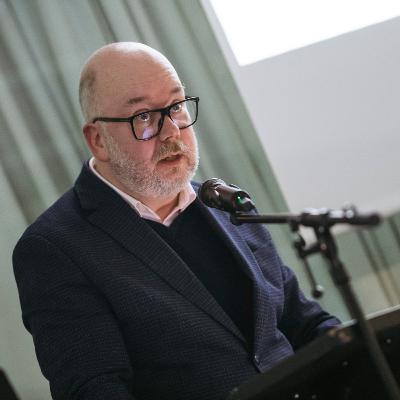
A summery of the 3rd Essen Symposium for Photography by Markus Rautzenberg, Media Theorist and Professor of Philosophy at the Folkwang University of the ArtsWhat if photography’s future is not defined by what it is,but by how it operates? In his conclusion, Markus Rautzenberg reframes photography as a shifting field of »modal configurations« – a set of changing, rule-based practices that gain and lose relevance over time – rather than a stable medium grounded in technique, materiality, or indexicality. The lectures of the 3rd Essen Symposium for Photography reveal a medium shaped by friction,overlap, and transformation.Follow this talk to understand how photographic knowledgeemerges not from images alone, but from shared social expectations and uses. When and under what conditions do images count as credible, meaningful, or true? And does this mean that photography may be less in crisis than our waysof understanding it? Join the conversation and leave a comment to speculatewith Markus and us.This session was recorded on February 4, 2026, on theoccasion of the 3rd Essen Symposium for Photography »What Will Photography Be? An Invitation to Speculate«, hosted by the Essen Center for Photography. Photo credit: Essen Center for Photography / Silviu Guiman
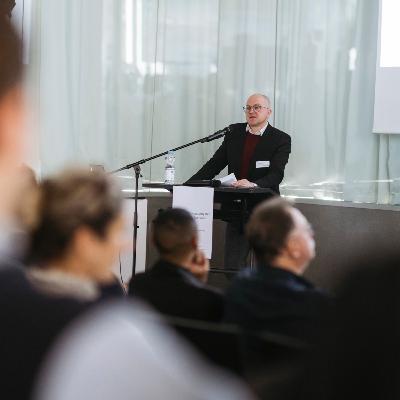
The opening of the 3rd Essen Symposium for Photography by Steffen Siegel, Professor for the Theory and History of Photography at Folkwang University of the ArtsWhat if speculation about photography’s future has alwaysshaped the medium’s presence? In his opening address, Steffen Siegel frames photography as a history of past futures, shaped by expectations, hopes, and projections – from early daguerreotype announcements to the launch of the iPhone. Speculation, he suggests, is a forward-looking practice with a double edge: it can generate insight, yet also distort perception. So understanding photography’s future requires a deep graspof its ruptures, reconfigurations, shifting material and epistemic conditions, rather than a simple linear narrative. What happens if the real question may not be whether speculation can mislead, but how engaging with its risks might reveal unexpected ways of understanding the medium? Join the conversation and leave a comment to speculate with Steffen and us. This session was recorded on February 4, 2026, on theoccasion of the 3rd Essen Symposium for Photography »What Will Photography Be? An Invitation to Speculate«, hosted by the Essen Center for Photography.
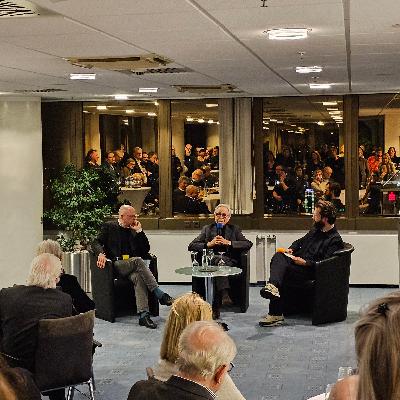
Eine Aufzeichnung des Künstlergesprächs zur Übernahme des Vorlasses mit Timm Rautert, Steffen Siegel (Folkwang Universität der Künste) und Malte Radtki (Museum Folkwang) Im November 2025 ist der künstlerische Vorlass des international einflussreichen Fotografen Timm Rautert ins Museum Folkwang umgezogen. Das Archiv umfasst über 9.000 Prints, 50.000 Diapositive, Raum- und Videoinstallationen – sowie alle Negative, Kontaktabzüge, Korrespondenzen und Publikationen. Bei einem festlichen Abendempfang auf Einladung der Stadt Essen präsentierte das Museum im Februar 2026 erstmals nahezu sämtliche Fotobücher aus über fünfzig Jahren künstlerischen Schaffens. Im Gespräch mit Steffen Siegel und Malte Radtki ordnete Timm Rautert diesen wesentlichen Teil seines Lebenswerkes ein. Warum ihn das einzelne schöne Bild nie interessiert hat. Wie viel Freiheit bleibt, wenn ein fotografisches Werk seine Form als Buch findet. Warum sein größter Dank den Menschen in Essen gehört. Timm Rauterts Antworten hören Sie in dieser Aufnahme vom 5. Februar 2026 in der 22. Etage des Essener Rathauses. Bildquelle: Zentrum für Fotografie Essen
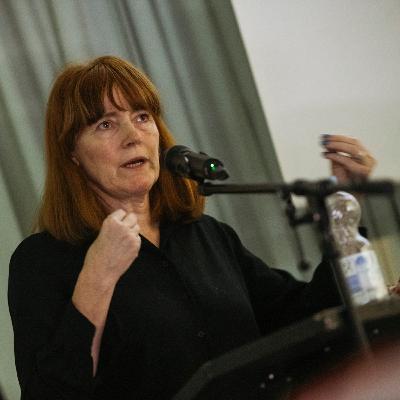
A lecture by Michelle Henning, Professor in Photography and Media, University of Liverpool Chair: Franziska Barth, Ruhr University Bochum & KWI – Institute for Advanced Study in the HumanitiesWhat if the core of photography’s future is about sensing, worlding, and shaping relationships? Michelle Henning examines how computational photography and generative AI transform everyday photography: Large tech companies don’t just offer technical items such as smartphones and digital cameras. They produce theories of photography, framing what counts as realism, authenticity, and social value. Michelle points out how the reinvention of the darkroom in photographic art opens up a contrarian philosophical model of what photography can be and mean.Follow the discussion to explore how photography can become a relational practice to connect humans, nonhuman entities. How can photography remain a space for mindful engagement, encounter, and critical reflection in an era of invisible pipelines and algorithmic shaping? Join the conversation and leave a comment to speculate with Michelle and us.This session was recorded on February 4, 2026, on the occasion of the 3rd Essen Symposium for Photography »What Will Photography Be? An Invitation to Speculate«, hosted by the Essen Center for Photography.Photo credit: Essen Center for Photography / Silviu Guiman
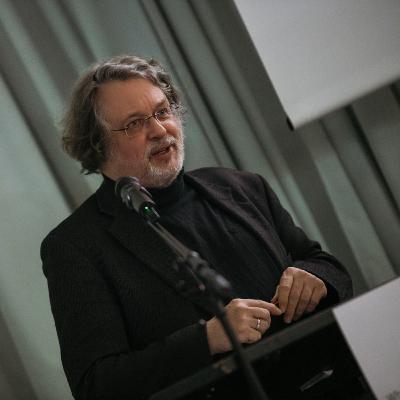
A lecture by Jens Schröter, Professor for Media Studies at the University of Bonn Chair: Franziska Barth, Ruhr University Bochum & KWI Essen – Institute for Advanced Study in the HumanitiesWhat if the future of photography is about measuring and reconstructing the unseen? Jens Schröter explores speculative but historically grounded futures of photography through two cutting-edge laboratory technologies: Ghost Imaging, which forms images via correlated or entangled light fields without direct contact with the object, and Non-Line-of-Sight (NLOS) Imaging, which reconstructs hidden scenes from scattered light. Both approaches, he argues, remain photographic because they rely on indexical traces of electromagnetic radiation, even when the final images are computationally rendered.Follow the discussion to see how these techniques expand what can be visible, raise military and surveillance questions, and challenge how we understand reference, trust, and authorship. What responsibilities and interventions are demanded, when photography can see around corners? Join the conversation and leave a comment to speculate with Jens and us.This session was recorded on February 4, 2026, on the occasion of the 3rd Essen Symposium for Photography »What Will Photography Be? An Invitation to Speculate«, hosted by the Essen Center for Photography.Photo credit: Essen Center for Photography / Silviu Guiman
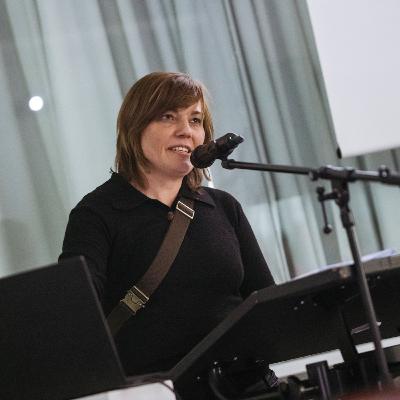
A lecture by Therese Schuleit, Curator at Museum of Photocopy, Mülheim/Ruhr Chair: Dr. Anja Schürmann, KWI – Institute for Advanced Study in the HumanitiesWhat if the future of photography is about technical inscription to create responsibility, intervention, and credibility in a world of generative images? In her lecture, Therese Schuleit positions photocopy as a precursor to generative systems, highlighting the distinction between »image taking« (capturing the world) and »image writing« (bureaucratic, technical inscription). Photocopy, she shows, has historically been tied to verification, control, and accountability, and its material and procedural logic prefigures many challenges of contemporary AI-generated imagery.Follow the discussion to see how copying practices shaped notions of authenticity, proof, and manipulation in past and presence. What can such a history of photocopy consequently teach us about authorship, trust, and intervention in AI future? Join the conversation and leave a comment to speculate with Therese and us.This session was recorded on February 4, 2026, on the occasion of the 3rd Essen Symposium for Photography »What Will Photography Be? An Invitation to Speculate«, hosted by the Essen Center for Photography.Photo credit: Essen Center for Photography / Silviu Guiman
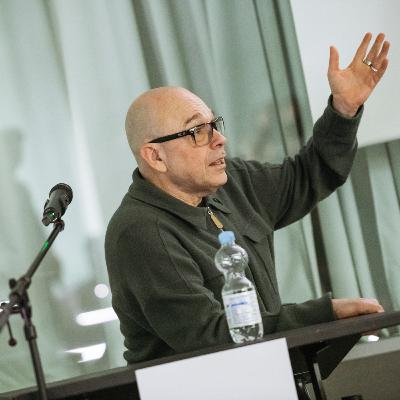
A lecture by Daniel Rubinstein, Professor Adjunct at the University of South-Eastern Norway Chair: Francisco Vogel, Folkwang University of the ArtsWhat if the future of photography means to anchor experience in the world? In his lecture, Daniel Rubinstein unfolds how photography has historically been grounded in real events. Even manipulated or ideologically shaped photographs operated within a space where truth could still matter. In contrast to this AI-generated images are not just faster cameras, but generated appearances without exposure, risk, or event. From psychoanalytic and political perspectives, Rubinstein explores how AI images disrupt symbolic processing, temporal integration, and relational witnessing, potentially flattening cultural and cognitive experience.Follow the discussion to consider how the loss of world-reference in images affects judgment, freedom, and social institutions. Can photography endure as a practice of witnessing in an era of images without events? Join the conversation and leave a comment to speculate with Daniel and us.This session was recorded on February 4, 2026, on the occasion of the 3rd Essen Symposium for Photography »What Will Photography Be? An Invitation to Speculate«, hosted by the Essen Center for Photography.Photo credit: Essen Center for Photography / Silviu Guiman
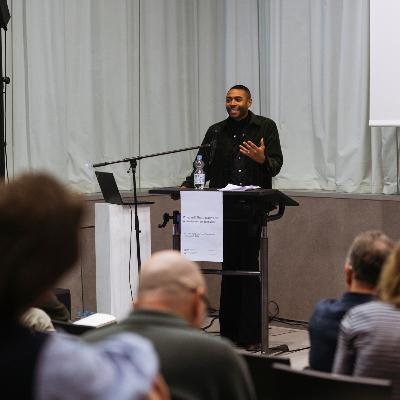
A lecture by Terrence Phearse, Studio Museum in Harlem & Institute for Doctoral Studies in the Visual Arts, Portland Chair: Mona Leinung, Folkwang University of the ArtsWhat if the core of photography’s future is about presence, recognition, and political witness? In his lecture, Terrence Phearse argues that generative AI transforms photography not merely technically nor aesthetically, but ontologically and politically. When images no longer rely on real-world existence, the structures of visibility and acknowledgment – historically vital for Black ontology – are threatened. With various historical biases from Kodak’s Shirley Cards to modern algorithmic misclassifications he demonstrates how code can amplify existing power structures.Follow this session to explore how images may look photographic but leave no trace of actual events, undermining photography’s promise as evidence. Can photography continue to resist »bad faith« (Sartre) when machines produce mass, context-free images? Join the conversation and leave a comment to speculate with Terrence and us.This session was recorded on February 4, 2026, on the occasion of the 3rd Essen Symposium for Photography »What Will Photography Be? An Invitation to Speculate«, hosted by the Essen Center for Photography.Photo credit: Essen Center of Photography / Silviu Guiman
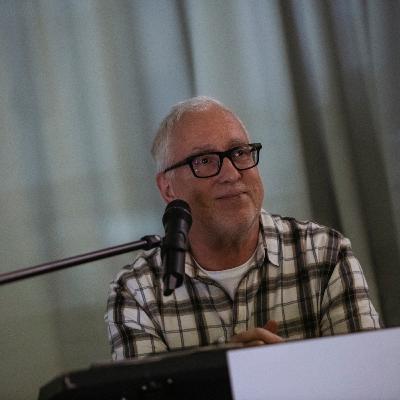
A lecture by André Gunthert, Professor at the École des Hautes Études en Sciences Sociales, Paris Chair: Mona Leinung, Folkwang University of the ArtsWhat if the future of photography means that photography itself shapes AI more than vice versa? In his lecture, André Gunthert explains how AI works by statistically remixing photographic, cinematic, and video images, imposing photorealism as a norm – even though it is only one style among many. Comparing today’s debates to past concerns over digital retouching, he notes that skepticism now lingers, partly because AI often produces images with deliberate intent to deceive.Follow the discussion to explore why the traditional »true vs. false« framework is too narrow, and why fiction must return as a key category, using realistic means without being judged as fraud. How can we cultivate the image literacy needed to navigate trust, fiction, and manipulation in a world of AI-generated visuals? Join the conversation and leave a comment to speculate with André and us.This session was recorded on February 4, 2026, on the occasion of the 3rd Essen Symposium for Photography »What Will Photography Be? An Invitation to Speculate«, hosted by the Essen Center for Photography.Photo credit: Essen Center for Photography / Silviu Guiman

Comments

Download from Google Play

Download from App Store
 United States