


 Claim Ownership
The Sri Lanka Podcast: Island Stories
Subscribed: 9Played: 113
Subscribe

© 2024 The Ceylon Press
Description
From elephants to sapphires, tea to cricket, Island Stories: The Sri Lanka Podcast explores a remote and secret Eden to discover the stories behind the things that make Sri Lanka, Sri Lankan.
46 Episodes
Reverse

Welcome to an episode of Island Stories: The Sri Lanka Podcast, brought to you by The Ceylon Press._________________________________________________________________________________________The search for Sri Lanka’s larger overlooked mammals is the subject of this podcast. Large – but not enormous, for this range of mid-sized mammals lies at the very heart of Sri Lanka’s overlooked mammal population as naturalists rush to spot elephants and leopards. Amongst the most unheeded of the island’s creatures are its otters, hares and anteaters. Famously family oriented and playful, the Ceylon otter is shy to the point of near invisibility. Not that this deterred their most famous fan, Henry Williamson, author of “Tarka the Otter” - “What is this life, if, full of care, we have no time to stand and stare?” he asked with a rhetorical flourish. Covered in dark brown fur and about a metre long, the Ceylon otter weighs in at 8 kilos and dines on fish. It is scrupulously hygienic, with specific areas of the otter domicile earmarked as otter loos – this despite the fact that their poo is said to give off a scent not unlike that of jasmine tea. Curiously, Sri Lanka lacks rabbits – but it does have a hare. Just the one. And an endemic one too. The Ceylon black-naped Hare is a mere 50 centimetres head to body tail and distinguished by a black patch on the back of its neck and huge scooped ears, large and lovely as salad servers. But more remarkable yet, with its dexterous overlapping and generously rounded scales, is the scaly anteater, a unique cross between an architectural marvel, a tank, and a chain-mail-clad Viking warrior. Measuring some 6 feet nose to tail, it makes its home in rainforest and grassland. It is a dedicated burrower, digging out burrows designed for sleeping, others for eating, and no doubt yoga, film-watching and partying too. It follows a strict diet – eating just ants and termites, or, at a push, beetles, its long sticky tongue an evolutionary triumph that is capable of digging into the deepest of insect nests. Sadly, these toothless mammalian marvels are teetering on the edge of being critically endangered, not helped by increasing deforestation. A still greater threat is poaching for their meat and its scales. Made of keratin, the same protein that forms our own hair and nails, their eye-catching body parts are internationally traded as aphrodisiacs or curios. A happier story is that of the crested porcupine. This creature is widespread, at home in most habitats right across Sri Lanka. It is highly territorial. When threatened, their sharp quills will spring up, their teeth will clack loudly and, emitting a most unpleasant smell, they will go on the attack with the unswerving dedication of an infrared homing missile. Widespread too are the island’s 4 mongoose species. The common Ceylon grey mongoose is the smallest. Shy around people, it is fearless with snakes, its kill strategy focused on tiring the snake by tempting it to make bites it easily avoids. Its thick, grizzled iron-grey fur and neuro-transmitting receptors leave it immune to snake venom; and for anyone living up-country, it is a fine companion to have around. Marginally more colourful is the brown mongoose – a species that comes in several iterations, each so marginally different as to be as impossible to tell apart as Herge’s Thomson and Thompson. The highland Ceylon brown mongoose, the Western Ceylon brown mongoose and the Ceylon brown mongoose are, to all but the most scrutinizing scientific eye, practically alike. Over 80 centimetres nose to tail with dark brown fur and black legs, and along black enviably tufted tail, they are of breathtaking beauty. Widespread though they are, seeing one is something of a challenge for they are introverted beasts, with a marked preference for deeper cover, dark forests and, like Greta Garbo, a penchant for being left alone. Also hermit like is the Ceylon ruddy mongoose. A retiring forest dweller, it has grizzled ruddy brown hair, a sleek body and a tail that ends in a flourish of black tufts. But the Versace of the mongoose world is the stripe-necked mongoose, sporting an outfit that marks it out as one of the island’s most striking mammals. A dark grey head morphs to reddish brown and grey on its neck before blooming into a heady grizzled covering of bouffant fur that gets redder and longer the further down the body it goes. A pink nose, black legs and a reddish tail that ends in a curved tuft of black hair make up the rest of this most alluring of beasts. Two mammals speak of Sri Lanka’s troubled colonial past, the most notable being the diminishing herds of feral donkeys found in Mannar, Talaimannar and Puttalam. These are the descendants of equine immigrants that entered the great port of Maathottam near Mannar - once the shipping gateway to the ancient Anuradhapura Kingdom. Arab traders were probably responsible for importing the beasts to carry their cargos inland. The species that lives here is said to be a direct descendant of the Nubian African wild ass, now extinct in its native Ethiopia and Sudan. Extinction also faces it in Sri Lanka. There are said to be fewer than 3,000 still alive, though a charity, Bridging Lanka, has stepped in to try and nurse them back to happier times. As sorry a tale can also be found among the Mannar ponies. Strung out to the west of Jaffna in the Palk Strait is the tiny coral island of Delft, bared fifty square miles and home to less than five thousand people. And five hundred wild ponies. Dotted with baobab trees, archaeological marvels from ancient to colonial times, and abundant wildlife, Delft has become the last refuge for the Sri Lankan wild pony, the direct descendant of the ponies exported to the island by the Portuguese and Dutch from Europe and their colonies in the East, to provide basic transportation. Left behind at Independence, and superseded by cars and lorries, they have carved out a fringe existence on the hot dry island, fighting off as best they can dehydration and occasional starvation. A more contented existence is enjoyed by Sri Lanka’s embarrassment of cats – civets, rusty spotted cats, fishing cats, jungle cats and of course leopards. Of all of these, the civet is by far the most interesting. When life was simple, long ago; and when beige, like black or white, came in just one colour choice, it was thought that the island was home to just one endemic civet. But scientists, zookeepers, and wildlife photographers have in the past 15 years worked hard to evaluate this snug assumption. By careful observation, the checking of paw prints, the measurement of bodies and assessment of markings (beige, off-beige or off-off beige), they have instead come to the conclusion – now widely accepted in the scientific community - that the country actually plays host to three endemic civets: the wet zone golden palm civet; the montane forests golden palm civet and the Dry zone palm civet. In fact, the debate about numbers is a passionate ongoing one, with some scientists now claiming that a fourth civet also merits separate recognition: the Sri Lankan mountain palm civet, found only in Dickoya, a refinement that makes the various divisions of...
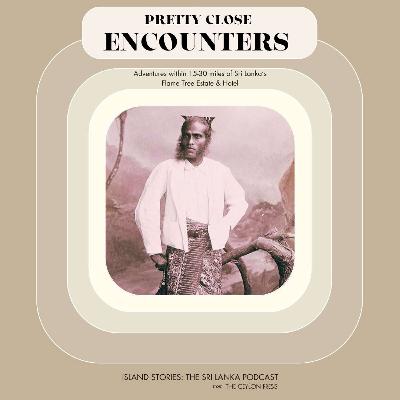
Pretty Close Encounters is a travelogue fixed on those attractions and activities that lie easily within a fifteen-to-thirty-mile journey from Sri Lanka’s Flame Tree Estate & Hotel. Almost two dozen strange and wonderous things lie within this radius, including the rumoured 5th century BCE tomb of the island’s first queen, the lost masterpiece of one of the world’s great carvers; the nemesistic battle field of a Portuguese king; some of the best mountain ranges for trekking; a bird sanctuary; a controversial orphanage for elephants; a temple cherished by the country’s first all-island king; the forest retreat of reclusive monks; the hidey-holes of a freedom fighting king famed for his boomerang resilience; the village of a latter day Robin Hood with Oscar-Award winning looks; the home of the bible of Buddhism; and an eccentric vertiginous jungle tower. But to get the level of things, we start 8,734 km from The Flame Tree Estate & Hotel at Kensington Palace’s Presence Chamber. Here, where English monarchs received foreign ambassadors, is a fireplace of limewood carvings and cherubs by Grinling Gibbons. No wood sculpturers are the equal of this Michelangelo of woodcarving, who immortalised Restoration England and his patron, Charles II with his “unequalled ability to transform solid, unyielding wood and stone into something truly ethereal. None - expect one practicing at a similar time in the middle of Sri Lanka - Delmada Devendra Mulachari. Mulachari is renowned for many things but the rarest by far is Embekke Devale, a 16 miles drive from The Flame Tree Estate & Hotel. A medieval masterpiece, the temple has withstood wars, weather and most especially the interminable conflict waged by the Portuguese and Dutch on the island’s last kingdom – in nearby Kandy. By the 1750s it was in a sorry state, its dilapidated walls noted by the rising young artist, Mulachari who lived nearby, his family, one of a number of Singhala artists from the South, having come north to seek work. Wood carver, sculptor, architect, artist, - Mulachari worked for the last three kings of Kandy; and most especially King Kirthi Sri Rajasinha whose 35-year reign - to 1782 – was preoccupied by restoring many of the hundreds of Buddhist temples destroyed in the colonial wars. In this the king was greatly helped by Mulachari., who built for him the Audience Hall and the Octagon in the Temple of the Tooth, and the Cloud Wall that surrounds its lake. Travellers, whether local or foreign, with a temple in mind, head with unfailing sureness to The Temple of the Tooth, and not Embekke Devale. But although just fifteen kilometres apart, the two temples are worlds apart in artistry. The Temple of the Tooth has a stolid, almost bourgeois respectability. By compassion, at Embekke Devale, you enter instead a magical world in which formality occupies but the smallest of parts. In every section, in every place, are the surviving 500 statues of the great artist, each a masterpiece in of itself. Exquisitely carved models of entwined swans and ropes, mothers breast feeding children, double headed eagles, soldiers, horses, wrestlers and elephants – all validate why this temple is famed across Asia for its world class carvings. But there is more. Fantasy intervenes. Erupting from a vein is a figure of a women; a bird takes on human attributes, a slight of hand revels that an elephant is a bull; another, that is a lion. Sixteen miles in the opposite direction you encounter Pinnewala Elephant Orphanage. Founded back in 1975, it is a very popular tourist attraction, but it has increasingly looked out of place in a modern world more respectful of animal welfare, especially that of wild animals. A report by Born Free, the wildlife charity which opposes the exploitation of wild animals in captivity, has cast a shadow across the claims made by the Orphanage. The charity’s report takes issue with the very term “orphanage,” explaining that their “breeding of more animals for the purpose of being kept in zoos, or sent to private collections or temples, clearly does not satisfy” the implication that their animals have been rescued. Its profit motivation, they claim, undermines their mission. They also take issue with the centre’s level of animal welfare. Their chaining of male elephants wounds the legs and the use of a spiked shark hook as a training tool is simply cruel. Why anyway, they ask, should elephants be trained at all? One recent tourist was to blog that “I passed numerous elephants chained in solitary confinement. Now, I can’t claim to understand elephant behavioural patterns fully but the fact they were shaking back and for and only doing repetitive movements disturbed me. They also looked like they were in deep distress.” Notwithstanding the amazing sight of scores of elephants bathing collectively in the river at set times of the day, many tourists opt instead to see elephants in their wild setting – in Minneriya, for example, a wildlife park near Dambulla. Though a longer drive, it offers grand sights that are still more unforgettable. Six miles away is the small Kurulu Kele Bird Sanctuary which, despite its proximity to Kegalle, nevertheless is famed for the sheer abundance of different species that live in its forest. A 25 mile drive from here takes you into trekking country. Protected by a necklace of high mountains - Alagalla Mountains, Bible Rock, Uthuwankanda, Devanagala, Ambuluwawa, the Knuckles and Hanthana - and surrounded by dense jungle ideal for guerrilla warfare, the Kandyan kingdom’s natural defences helped it withstand repeated invasions. The Alagalla Mountains, twenty miles from The Flame Tree Estate & Hotel, and to the west of Kandy is an especial trekkers’ paradise, offering its visitors a range of hard core or easy treks, the easiest being a hint of a path that begins at Pilimathalawa and ends at Pottapitiya. Its more off-road adventures including climbing, rock scaling, and navigating through forests. Its wide range of dry evergreen, montane, and sub-montane forests are home to many species of fauna and flora, including wild boar, monkeys here, squirrel, anteaters, porcupine, monitor lizard, tortoise – but it is especially noted for its 50 recoded bird species which include Sri Lankan junglefowls, Layard’s parakeets, and yellow-fronted barbets. A little over 15 miles from Alagalla is Bible Rock itself, a stunning example of a Table Mountain. Over 5,500 feet high, its curious open book shape inspired early Victorian missionaries to give it its canonical name, though 300 years earlier it performed a vital task as a look out post for the Kandyan kings, eager to spot the latest colonial invasions, especially those of the Portuguese. A classic series of bonfires, running mountain to mountain, starting here and ending close to Kandy was the trusted warning signal that was used, just like the famous Armada Fire Beacons in England in 1588. Steep though the climb is, it doesn’t take long to get to the top – and one of the best views in the country. 3A DEADLY WAR Some four miles away from Alagalla is the little town of Balana. Of the many attempts made to invade Kandy from 1574 to 1815, nine were to prove almost, but not quite, overwhelming. In 1574,...

Very Close Encounters are the subject of this guide - a travelogue fixed on those attractions, adventures and activities that lie easily within a 10-15 miles journey from Sri Lanka’s Flame Tree Estate & Hotel. Kipling believed that to understand a country you had to smell it. Especially the perfumes of its past. Yet the past is documented in so many different ways - in books, or architecture; in music or even food. In Sri Lanka, it is the temples that best hold its story. The island’s temples are far more than just places of worship. Read them right and you read the real record of the land. They are garrulous witnesses to its kings and wars, its festivals and customs, everything in fact that reflects back the country’s life for over two thousand years. Fortunately, two of its greatest medieval temples lie near at hand, together with a Buddhist temple that looks Hindu; a Hindu temple built by the last Buddhist king; a temple equally favoured by both religions; a Victorian church that’s escaped from the home counties - and the holiest Buddhist site on the island. Equally close is a mountain range beloved of trekkers; and one named for gnomes adorned by a vast statue; a lake beloved by cormorants and pelicans; a forest sanctuary for birds – and probably the best botanical garden in Aisa. In between these places are lands of a different sort – tea plantations; a farm famed for mushrooms; melancholy cemeteries and a battlefield where colonial ambitions met a bloody end. Close by is the island’s greatest surviving royal palace; frescos that tell tales centuries old; a rock pierced by a road; and an antique version of the Nine Arch Bridge. And for oniomanias there is a shop and museum dedicated to tea; a village dedicated to copper and brass and an antique shop that never ends. But let’s start with a song. All good days begin with a rousing hymn and this one starts with “All things bright and beautiful, All creatures great and small, All things wise and wonderful, The Lord God made them all.” So goes Mrs Cecil Alexander's anthem in “Hymns for Little Children,” published in that most revolutionary of years – 1848. But it is her second verse that calls most to twitchers and eager ornithologists. “Each little bird that sings,” it goes: “he made their glowing colours, He made their tiny wings.” It is a tune worth humming as you drive to UdawaththaKele Forest, 12 miles away from The Flame Tree Estate & Hotel and perched just above Kandy’s Temple of The Tooth. It is one of the country’s loveliest bird forests: remote, wild – but accessible. All creatures great and small live in its 104 hectares, along with orchids and ferns, four hundred and sixty plant species; butterflies, snakes, snails, lizards, toads, frogs, insects, monkeys, civet, deer, loris, boars, porcupine, the ruddy mongoose, giant flying squirrels, bandicoots, and bats. But it is of course the birds that draw most of all. Over eighty species have been recorded, many endemic, including Layard's parakeet, the yellow-fronted and brown-capped babblers, the Sri Lanka hanging parrot, the three-toed kingfisher, mynas, golden-fronted and blue-winged leafbirds, spotted and emerald doves, Tickell's blue flycatcher, the white-rumped shama, the crimson-fronted barbet, the serpent eagle, and brown fish owl. Appropriately, for a trip inspired by a hymn to animals, just beneath the forest lies the Church of St Paul, built in 1846, two years before Mrs Cecil Alexander's hymn was published. Over succeeding decades, the church’s terracotta bricks - now weathered to a red-ochre hue – would have echoed with the tuneful musical notation added to her hymn by William Monk. Monk’s great other hymn was “Abide with Me” – and that is precisely what this most home counties of Anglican churches has done. It has withstood more than the most expected tests of time. Just two years after its completion it weathered the shattering 1848 Matale Rebellion – and then all the succeeding wars and insurrections that beset the island, protected by vast gates of wrought iron fabricated far away in Edwardian England. Inside the dimly lit church is a majestic pipe organ donated by Muslim businessmen from Bradford, a silver-gilt communion set gifted by the King of England – and a blazing 1874 stained glass window of the Crucifixion, the Ascension, the Angel in the Tomb, and the Nativity, the gift of a planter’s widow. Outside, beyond its residual beam is Kandy Lake, and its prospect of a bracing walk. Known as the Sea of Milk, the lake is surround by a dramatic Cloud Wall across much of its three-kilometer circumference and is overhung by huge rain trees. Across its eighteen-metre depth lurk whistling ducks and monitor lizards, turtles, cormorants, egrets, pelicans, eagles, owls, herons, and numerous fish including an exotic and savage 9-foot-long alligator Gar – a fish with a crocodilian head, a wide snout, and razor-sharp teeth. A circuit of the lake starting at The Temple Of The Tooth itself takes you all the way round to the Temple’s back entrance where lies, most conveniently, Slightly Chilled, a hilltop bar slavishly dedicated to snacks and cold beers. Here also, just beside the temple’s back door, lies the entrance to the British Garrison Cemetery, created in 1817 - two years after the formal annexation of Kandy. It is home to almost two hundred souls, laid out like crazy paving, including John Robertson the last European to be killed by a wild elephant in Ceylon; William Robert Lyte, grandson of the author of "Abide with Me;” and the colonial ruler, Sir John D’Oyly whose penchant for sarongs and beards made him the country’s first foreign hippie. A visiting Englishman wrote that “a stranger visiting this spot would be charmed at the magnificent scenery which surrounds it. In this lonely spot lie many hundreds of kindly Scots, who cut off in the very prime and vigour of their manhood, sleep the sleep which knows no waking, under the rank weeds and wiry grasses which cover their neglected graves. Many a sad tale of hardship, agony, and pain, could the tenants of these nameless graves tell, were they permitted to speak.” In equal sorrow - if not the same disorder - lie two hundred of the eighty-five million victims of World War Two, intombed in perfect order at the flawlessly maintained Commonwealth War Graves Cemetery. Ceylon escaped much of the horrors of that conflict but rather eccentrically found itself the location of Southeast Asia Command, set up in Kandy under Lord Mountbatten to be in overall charge of Allied operations. Far from the real battlefield, Queen Victoria’s great grandson, found plenty of time to invent cocktails at the nearby Queens Hotel where he is still occasionally remembered. The hotel, once the Walauwa mansion of the British Governors, is now the hotel equivalent of an aging maiden aunt, chasing an elusive restoration as an improvised Jane Austen bride might a suitor. It’s bar, where somnambulance has evolved into a competitive sport, is the ideal spot to collapse in after a visit to the Kandy’s greatest and most overwhelming sites – the palace of its last kings and The Temple of The Tooth. These two places, though part of the same complex, are easily mixed up, a confusion that makes clear the unremitting opacity of the line between religion and state has always existed in the country.&nbs...

Welcome to an episode of Island Stories: The Sri Lanka Podcast, brought to you by The Ceylon Press._________________________________________________________________________________________Tiny mammals are the subject of this podcast – the search for Sri Lanka’s smallest and most overlooked mammals. But first a health warning – for fans of Hi, Hallo or Hola, this is not a story of Sri Lanka’s mammalian celebrities, its kings and queens, or its most photographed princelings. Rather, it is a tour of the island’s plebs: its most ordinary of mammals, the ones lost in the scramble to see elephants and monkeys, deer, leopards, wild boar, buffalo, even bears. These telegenic superstars were once enriched by yet more glamorous species, but of these little remains but memories etched on fossilized rocks. The island’s lions became extinct 38,000 years ago, if not more. Its tigers, hippos, and rhinos vanished ever further back. But what remains is more than sufficient - Asiatic elephants and Trump-like toque macaques; leopards, sloth bear, boars, buffalos and barking, hog, spotted, and sambar deer. This podcast is dedicated to those mammals that live far below the radar. Some are rhinestone-common, others rarer than Burmese rubies. So comprehensively overlooked, they have become the island’s lost mammals: the Cinderella quadrupeds that bipeds rarely notice. And endangered though so many of them are, they remain, like all Sri Lanka’s land mammals, a breeding ground for argument. The disputes start with attempts to settle the actual number of land mammals on the island. According to the International Union for Conservation of Nature, one hundred and three mammals, endemic or otherwise, are found across Sri Lanka – but that number is a red rag to the tens of thousands of scientists with a passion for post 1700 CE Linnaean taxonomy. Some argue for more, others for less. A much more relevant question is how many mammals are there likely to be in 2050. For survival is, of course, the critical question. As Darwin meant to say: “It is not the strongest or the most intelligent who will survive, but those who can best manage change.” And change is demanding profoundly impossible things of the country’s diminishing mammals. Over a third of the total on the International Union for Conservation of Nature’s list face such threats to their existence that they are more than likely to become extinct. Twenty-one species face so existential a threat that they are judged to be endangered. These include such iconic mammals as the Sri Lankan elephant, leopard and two of its most celebrated monkeys. Nine others are teetering on the edge of becoming extinct in the wild - including the sloth bear and golden palm civet. Six more, including the otter and the tufted Gray langur, are likely to become so vulnerable as to join these nine. That leaves just over half of Sri Lanka’s land mammals that are judged to be of least concern – including 13 shrews, mice, rats and 30 bats, and leaving what is left to own up to so little data as to be unclassifiable. “Sometimes,” said Seneca, “even to live is an act of courage,” a sentiment of particular relevance to the philosopher who had been ordered to kill himself by Nero but made such a hash of it that it took several attempts and many hours to accomplish. But suicide is a peculiarly human undertaking. For Sri Lanka’s land mammals, their march to the precipice of oblivion is one prompted not by them but by human actions - poaching, deforestation, urbanization, pollution and climate change. What you see today, however ordinary, is likely to be obliterated, tomorrow. Which makes their observation now such a privilege and a thrill – be it of a bat or rat, cat or shrew. Size, contrary to all rumours, really does not matter. Once you engage with any creature every bit as entitled to share your scrap of earth, you move from a human-centric view of life to something more universal; and with this perhaps, the conclusion that neither of you has a greater right to have things just your way. “The world,” noted Eden Philpotts, “is full of magic things, patiently waiting for our senses to grow sharper.” Bats, oddly enough, are the best place for an emergent Sri Lankan zoologist to start their observations, for Sri Lanka is bat country, its incredible range of environments supporting 30 of the world’s fourteen hundred bat species. But of the many bats and bat families that live here, keep your exacting eye focused on the appearance of just one. Should the Sri Lankan woolly bat fly across your binocular lens, you are among the blessed, for it is the country’s only endemic bat. This tiny creature, barely 50 milometers from head to tail, was first described by tea planter W.W.A. Phillips in 1932. One of Sri Lanka’s most notable early naturalists, Phillips was famous for paying villagers 5 cents for every live snake they brought to his house. His observations of the tiny woolly bat are as true today as they were back in the 1930s. They enjoy sleeping in curled up banana fronds. They have a preference for hills between five hundred to a thousand metres high. And as the decades have clocked by, fewer and fewer have been sighted. Endeminicness aside, it is hard to exclude from any Sri Lankan bat list the common flying -fox bat - the megabats of the bat world. With a wingspan of 1.5 metres and a weight of some 1.6 kilos, they effortlessly live up to their name. Nocturnal, fruit eating and curiously infecund (producing perhaps just one pup per year), they are an unmistakable part of any skyline – especially around city parks where they gather at dusk to hang off trees, discussing the day’s events with aristocratic nonchalance. Although unlikely to turn suddenly into airborne artillery, they are best kept at a distance, harbouring as they do such a wealth of diseases as to make biological warfare warriors jealous. Even more understated than bats are mice. The island is home to some 7 mouse species - but look out for just 3; and send for champagne and chocolate eclairs from the Boulangerie Utopie in Paris should you ever be so fortunate to see one of them. They are of course tricky things to spot – being so tiny. But harder still, for these particular 3 are (almost) rarer than unicorns. All three are endemic - Mayor’s spiny mouse; the exceptional Sri Lankan spiny mouse; and the almost equally rare Ceylon highland long-tailed tree mouse. The Ceylon highland long-tailed tree mouse was discovered in 1929 by the Dutch tea planter Adriaan Constant Tutein-Nolthenius. Little more than 21 centimetres in length, nose to tail, it is found in Sri Lanka’s hill country where it lives in trees, venturing out only by night, a timid and reticent nightclubber, never likely to dance shirtless. The Sri Lankan spiny mouse barely reaches 18 centimetres from nose to tail. Its reddish grey back and sides morph into white underparts, with huge gorgeous smooth scooped-out ears that stand like parasols above large dark eyes. It is a mouse to fall in love with. Mayor’s spiny mouse inhabits the smaller end of the mouse spectrum and comes in two variants, one which inhabits the hill country and one of whic...
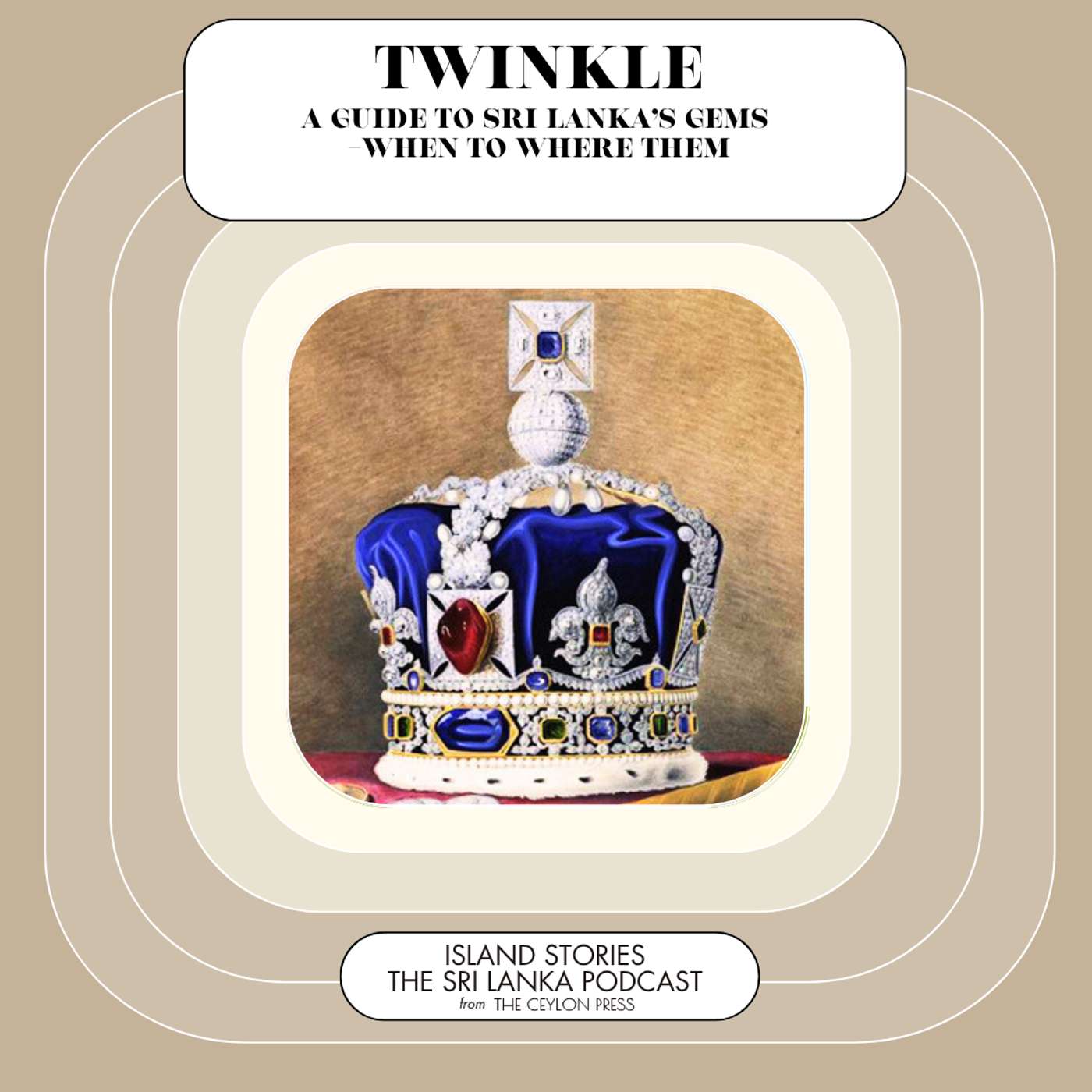
It was Shakespeare’s Enobarbus who remarked of Queen Cleopatra that “age cannot wither her nor custom stale her infinite variety.” But in this observation, Anthony’s wise and cynical confidence was only half right, for age is as much a skilful creator of variety as it is of value, if Sri Lanka’s famous gems are anything to go by. And Queen Cleopatra herself – apart from a nightclub in downtown Colombo and an elderly female leopard in Wilpattu – has yet to make much of a mark on the island. The island is home to 75 semi-precious or precious gems – including two precious stones, rubies and sapphires, the latter being the gem unmistakably twinned with in popular imagination. Among its better-known semi-precious stones are Spinels, Amethysts, Sapphires, Garnets, Rose Quartz, Aquamarines, Tourmalines, Agates, Cymophanes, Topazes, Citrines, Alexandrites, Zircons, and Moonstones. All are valued according to strict criteria: Cut, Colour, Clarity, and Carat (or weight). Thanks to the extreme age of its rocks (90% are between 500 and 2.5 million years old), Sri Lanka’s gems are so numerous that they often wash out onto floodplains and into rivers and streams. Indeed, the mining of alluvial deposits by simple water-winnowing river mining was for long the classic technique used to find gemstones, separating them from the river sand and clay by simple sluicing in wicker baskets. Tunnel mining represents a more scalable technique. Typically, pits 5 to 500 feet deep are dug, with tunnels excavated horizontally from them. The clay, sand, and gravel are then sluiced with water in conical baskets to separate the heavier stones, which settle at the base of the baskets. At a much more industrial level, backhoe earthmover machines, ablaze in their environmentally challenging acid yellow or orange livery, are used to excavate the topsoil. 25% of the country’s total land area is potentially gem-bearing, but the greatest concentration of mining is around the town of Ratnapura, which accounts for 65% of mined gems; the balance mostly comes from Elahera, a district in the North Central Province. The country’s gem mining history dates back at least to the 2nd century BCE, with mention of a gem mine in The Mahavamsa. However, if biblical rumours of King Solomon’s wooing of the Queen of Sheba with gifts of priceless Sri Lankan gems are to be believed, the country’s gem mines can be dated back at least another 700 years. In 550 CE a Greek trader, Cosmas, wrote that "the temples are numerous, and in one in particular, situated on an eminence, is the great hyacinth [amethyst or ruby], as large as a pine cone, the colour of fire, and flashing from a great distance, especially when catching the beams of the sun - a matchless sight". A later traveller to the island, Marco Polo, wrote in the 13th century CE that "the king of Ceylon is reputed to have the grandest ruby that was ever seen, a span in length, the thickness of a man's arm; brilliant beyond description, and without a single flaw. He gives them to the lapidaries who scrape them down until they split away from the ruby stones. Some of them are red, some yellow, and some blue, which they call nailam (saffires)". Today, the country’s gem industry is highly regulated, and its exports are among the country’s leading sources of foreign revenue, with sales rising from around $40 million in 1980 to over $473 million in 2022. This places it in 4th position, below Garments ($4.7 billion), Coffee, Tea & Spices ($1.6 billion), and Rubber ($1.06 billion). This phenomenal acceleration dates in part to two bouts of government intervention: the establishment of the State Gem Corporation in 1971 and the 1993 Gem and Jewellery Authority Act. By these moves, the government centralised and professionalised the issuance of gem-mining licenses and the leasing of government land for mining. They extended control over sales and exports and made it mandatory that gems discovered within mines could be sold at the government's discretion, but must instead be presented at public auctions, with the government receiving a 2.5% share of sales. The industry’s value chain is long. Gem miners sell their stones to dealers, who sell the rough rocks to cutter polishers. Historically, these have usually been Ceylon Moors, descendants of Arabian traders. The glittering stones are then sold to wholesalers and on to retailers, where the most significant profits are made. The two stones that stand as guardians of the jewellery vault in Sri Lanka are, of course, sapphire and ruby. So great is the affinity between Sri Lanka and its sapphires that the nation might legitimately put in for a name change to be better called Sri Sapphire. They are most typically blue – but can also pop up in black, colourless, grey, or even pink or orange – a variant known as padparadscha, from Padmaraga. The country also excels at producing Hot Pink Sapphires, a yellow sapphire, apparently a good deterrent against witchcraft, as well as orange and white ones. The gem accounts for 85% of the precious stones mined in Sri Lanka – but the colour variant that gets the most acclaim is the Ceylon Blue Sapphire, the blue of cornflowers, clear skies, and inestimable, sophisticated material contentment. Selling for $5,000 - 8,000 per carat, they are as much statements of investment as they are items of adornment: “A kiss on the hand may feel very, very good,” noted Anita Loos, “but a diamond and sapphire bracelet lasts forever”. Sri Lanka’s sapphires are found in alluvial deposits across the country, the very best from Elahera. Since Ptolemy noted their glittering existence, they are much favoured for crowns, thrones, diadems, and jewellery for First Nights and cocktail parties. Sri Lanka’s sapphires have won their place in global hearts since the very earliest times due to their exceptional clarity and transparency. For any wearer interested in absolute quality, they are the go-to source for best-bling, shorn as they are of the incipient vulgarity that often accompanies diamonds. Not coincidentally, Sri Lanka’s sapphires have given museums and auction houses jewels of such arresting quality as to gain themselves names and identities in their own right – including The Stuart Sapphire, still worn atop the crown of the reigning monarch of Great Britain. However, the oldest and loveliest is probably the Roman Aphrodite Sapphire now housed behind thick glass in Cambridge. Closely related to sapphires, the island’s rubies are almost as famous. Grey, hard, and brittle, known to scientists as Cr or No 24, the modest metal, chromium, is what gives rubies their red colour, and the metal its brush with glamour, high octane cocktail parties, and the odd coronation. Depending on the amount of chromium, the ruby shows every possible shade of red, but the pure, unmistakably fiery reds are the ones most cherished. Whilst the best of Sri Lanka’s rubies show off just these qualities, they often also come in a variety of pink, red with a dash of purple, a colour variant uniquely caused by the additional presence of iron. The ruby King Solomon gave to the Queen of Sheba is said to have come from Sri Lanka. The island’s rubies, Marco Polo later recorded in 1292, are “the size of a man’s arm”. Their unapologetic flashiness has long made them a favourite jewel for armour, crowns, scabbards, and religious statues– as well as necklaces, tiaras, broaches, rings, and bracelets.
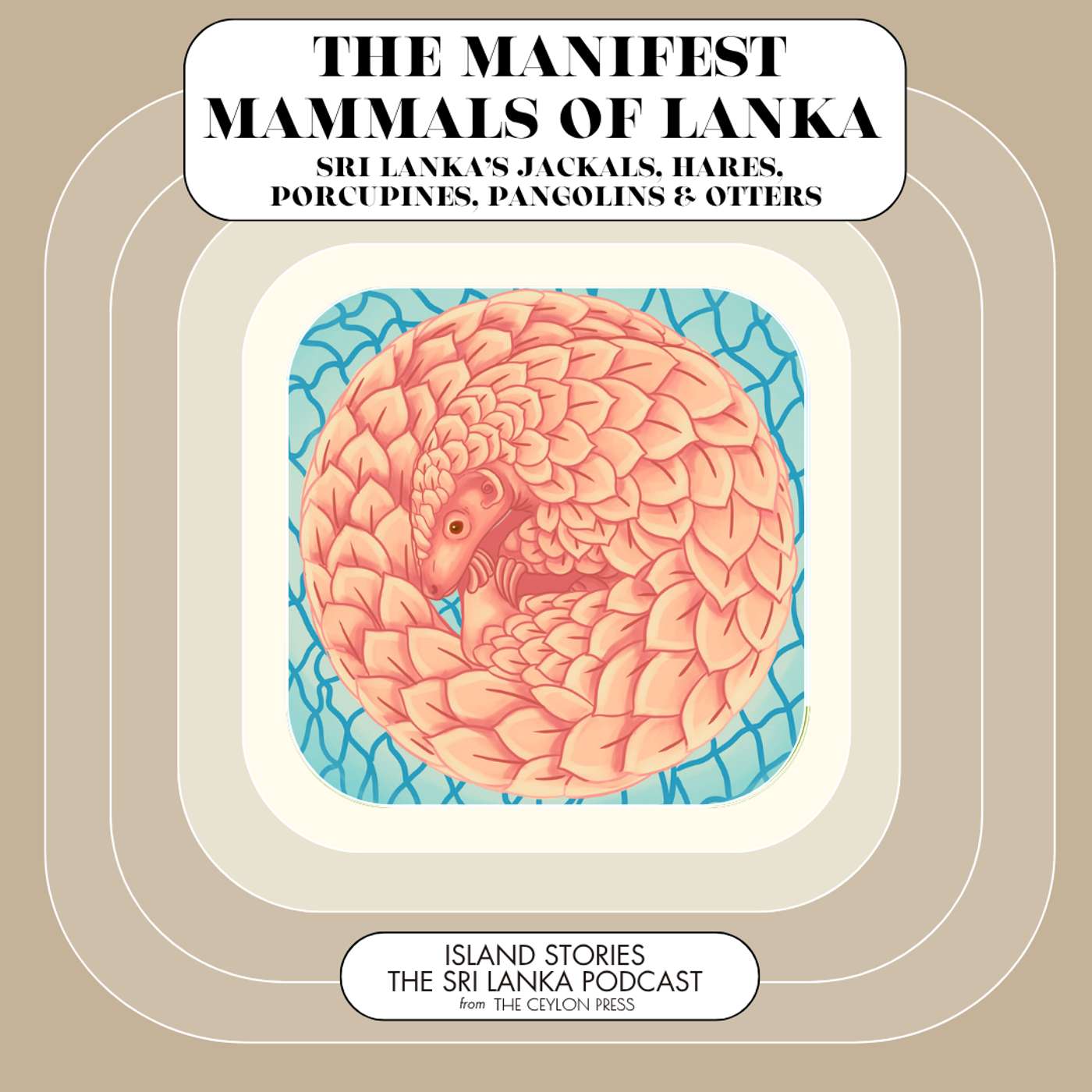
The most discerning of mammal spotters in Sri Lanka pursue neither elephants, monkeys, nor leopards. Instead, they seek encounters with those five mammals that live in plain sight almost everywhere – the ones that can be spotted from a tuk tuk, a veranda, a city park, or a riverbank. Free of drama, subterfuge, or infuriating modesty, all five can be added daily – indeed, repeatedly – to that invisible and life-affirming tally that tips life just a little further away from the claustrophobic norms of humankind. The first and most common of these creatures is the porcupine, known to the consternation of proto nationalists as the Indian Crested Porcupine. It is found right across Sri Lanka and India. Nikita Khrushchev, the bombastic Russian leader, was unexpectedly wise to the beast, stating to his enemies that “if you start throwing hedgehogs at me, I shall throw a couple of porcupines under you.“ Up to three feet long and sixteen kilos in weight, they are, like Khrushchev, highly territorial. When they feel threatened or their territory is unacceptably encroached upon, their sharp quills will spring up, and they will go on the attack. Nocturnal, and usually hidden in the burrows that are their homes, they are eager consumers of bark, fruit, berries, vegetables and almost all plants in gardens and plantations. Gratifyingly monogamous, their pregnancies last eight months, and the two to four cubs born live with the parents until they are two or three years old. Fossilised records from thousands of years ago show that the present porcupine once had an ancestor similar, though smaller, to its current form: Hystrix Sivalensis Sinhaleyus. No linguist has yet come forward to show whether or not this antique version of today’s porcupine would have been able to talk to its modern heir. But it is more than likely, not least because the language of porcupines is far removed from the vagaries that force most human languages to bend, evolve, or corrupt. Even when alone, porcupines are astonishingly chatty and keep themselves entertained with a wide range of grunts, whines, moans, snorts, and murmurs. Interporcupine communication occurs more naturally during the mating season, a time joyfully characterised by shattering shrieks and screams. Wailing and a clattering of teeth is a racket saved for predators. For one-on-one inter porcupine fights – more common when two males are in ardent courtship of a single female, they will add to their usual litany of noises a deafening set of howls and screams. Pangolins, however, the second of the island’s mammal species, or scaly anteaters as they are also called, have an almost wholly different array of sounds that they use to get through their day. Of the many blessings given to them by the good lord, sight, sadly, was not one of them. Their tiny eyes are covered by the thickest of eyelids - a sort of anti-termite defence – and their vision is poor to myopic. It seems that as the animal became ever more nocturnal, its eyesight decreased accordingly, proving once again that evolution, unlike one’s bank account, can always keep up with events. It is sound and smell, therefore, that give the beast all the guiding lights it needs to flourish. Their hearing is acute, and their noses, bristling with the most powerful of scent sensors, sit at the end of exceptionally long snouts. They can find their way into ant or termite nests, however far underground, eyes closed. Given that their sticky tongues can stretch for almost 28 inches, the blighted insects have little option but to surrender themselves gracefully as supper – some 70 million a year per pangolin, on the count of one exhausted scientist. On the auditory front, the pangolin repertoire of sound is all hisses, whimpers, snuffles, and sniffs – a breathier orchestration when compared to porcupines. If disturbed, they hiss and chuff in deep breaths. Snorting is often used in place of hello to a fellow pangolin, and happy, contented grunts accompany their dining. Pangopups whimper to communicate with their mothers. However, no one has yet deciphered the sheer variety of whimpers recorded to determine which whimper is slated for which kind of inter-family statement. Pregnancies last around two months, and the pangopup (for there is usually only one) gets carried on its mother’s tail until it can move around confidently. Pangolins reserve their most arresting sound for when they are most really alarmed. Curling into a ball, they rub their hard scales together to create a unique jungle maraca sound. This is often accompanied by the ejection of an exceptionally noxious, acid-smelling liquid distilled in glands near their anus. It is hard to clean off, the obvious lesson being, never shock a pangolin, especially before a date. But of course, the most immediately exciting thing about spotting a pangolin is not their smell or sound – but their looks. Clothed in dexterous overlapping and generously rounded scales, they are a unique cross between an architectural marvel, a desert tank, and a Viking warrior clad in chain mail. Measuring some fixed feet nose to tail, pangolins make their home in burrows in rainforest and grassland and even modest hill country - right across the Indian subcontinent and all across Sri Lanka. Even so, they may soon drop off the Manifest Mammals list as they have become increasingly threatened, not only by habitat loss affecting almost all animals on the island but also by illegal poaching. Its meat is seen as a luxurious bush meat to jazz up the jaded appetites of decadent diners. And its scales are prized in Chinese and traditional medicines for all manner of disorders for which there is not a single shred of supporting or validating evidence. Their skins are routinely butchered into rings, charms or crafted into grisly leather goods, like boots and shoes that shame their wearers more than they might be if caught dancing naked down Galle Face Green on the top of a big red bus. Such predatory and pointless threats are more understandably avoided by the third of the island’s manifest mammals – the jackal, with whom the word cherish has yet to find much of a home. “It is far better,” wrote Tipu Sultan, shortly before being killed by the future Duke of Wellington in Srirangapatna in 1799, “to live like a lion for a day than to live like a jackal for a hundred years”. The Sultan, who of course, saw himself as the lion, was merely channelling the unrelentingly poor press that jackals have endured since recorded time - in Arabic holy writ, the Bible; even in Buddhist Pali literature, which depicts them as inferior, greedy, cunning creatures. Despite accruing the sort of headlines beloved of the Daily Mail, the Sri Lankan Jackal is second only to the Leopard in the pecking order of island predators. And Sri Lankan it is, to its very paws, for the Sri Lankan jackal differences from its Indian cousin, the Soutth Indian Golden Jackal, by virtue of its marginally greater size, the rooted lobe on the inner side of the third upper premolar (a peculiarity to capture the attention of the more discerning spotters) and a darker less shaggy coat all round. It is a skilled hunter, and, like a wolf, a pack animal that will eat anything from rodents, birds, and mice to young gazelles, reptiles, and even fruit. It is also an admirable scavenger, good at tidying up any suppurating bit of animate mess that needs attention. Although f...
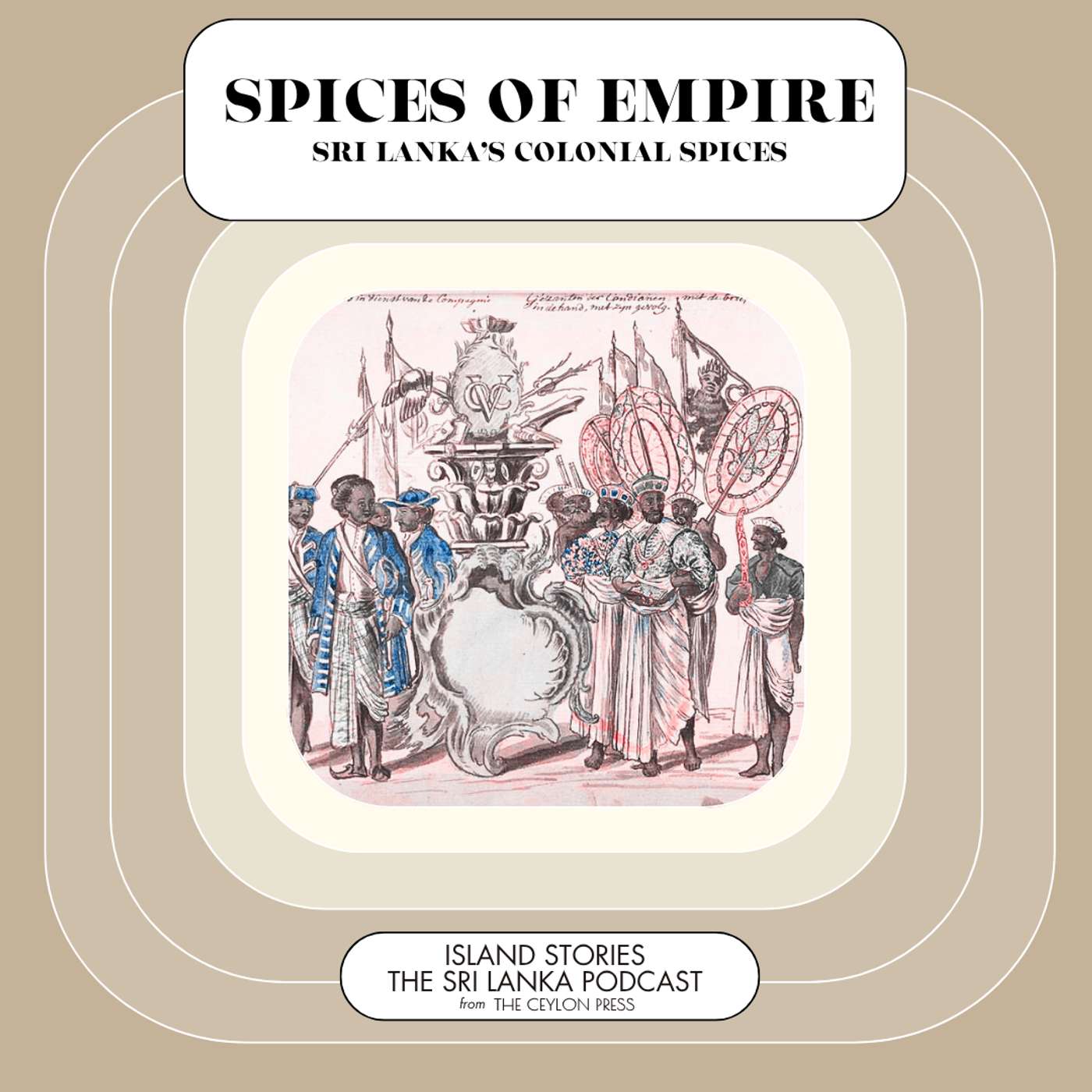
Sri Lanka’s generous habit of incorporating new ingredients is one of the more positive ways it has responded to the mixed impact of the island’s spice-mad colonial occupiers and traders. To the nine core spices indigenous to the island since the earliest of times, - cinnamon, pepper, long pepper, brindleberries, moringa, curry leaves, gutu kula, the blue butterfly pea flower, and turmeric – up to thirteen others have been introduced through the centuries and have become so commonplace as to be now classified as fully fledged residents. The list includes chilli, cloves, cardamom, ginger, coriander, cumin, fenugreek, pandam leaves, fennel, tamarind, nutmeg, mace, and vanilla. The most famous of these, chilli, a spicy vegetable widely used throughout Asia, only reached Asia in the past five hundred years, originating from Peru and Bolivia before being brought to the attention of a marvelling Spanish court by Christopher Columbus after his first voyage to the New World. In the diaries he kept on his journey, Columbus noted the existence of this new plant in an entry dated 15 January 1493, saying it was “a better spice than our pepper”. Within decades, chilli had become a commonplace plant in Spanish gardens. By the mid-fifteenth century, it was to be found as a cooking ingredient from Scandinavia to the Balkans. And almost as quickly, the plant also found its way to Sri Lanka, and other parts of Asia, due in large part to the Portuguese and their commercial thirst to control the Indian Ocean trade - and with it, its lucrative spice revenues. The spice’s adoption into Sri Lankan cooking came with an etymological twist for the Singhala term for pepper (“miris”) was transferred to chilli. Pepper was renamed “gam-miris” – literally “village pepper.” Its penetration across the island seems to have been slow if the journals of Robert Knox, the famous British captive of the King of Kandy, are anything to go by. Knox’s book, “The Historical Relation of Ceylon”, published in 1681, recorded just about anything that moved and most things that didn’t. And it fails to mention chilli. More than anything else, this probably indicated the limited reach of the Portuguese settlement, which never properly incorporated the highlands of the Kandyan kingdom. Rich in such vitamins as A, C and E, chilli’s natural chemical compounds, especially capsaicinoid, have prompted a wave of ongoing scientific research into harnessing it to promote weight loss, relieve pain from arthritis, reduce inflammation, control LDL (bad) cholesterol to lower the risk of strokes and heart attacks and regulate blood sugar. Some studies have also indicated its potential use in killing cancer cells. But it is, of course, for its taste and flavour that it is most widely celebrated. And in this regard, there are as many influences as there are outcomes. Different varieties of pepper, their ripeness, colour, drying process, and growing conditions – all influence how exactly they taste and smell. Smokey? Fruity? Grassy? Tart? Warm? Hot? Blistering? The vegetable’s extraordinary range and adaptability have ensured it can cover all these bases and more, making it one of the kitchen’s most flexible ingredients. From chilli pickle to chilli con carne, many dishes that incorporate chilli have become household favourites everywhere. Barely a dish in Sri Lanka fails to include it – from sambals and curries to the sweetly exquisitely spicy banana pepper curry - and of course Lunu Miris, one of the island’s top pickles, made from finely chopped onions, red chilli flakes, salt, lime juice, and Maldive fish, and able to go with just about anything. Foodies like to debate which cuisines tend to be hotter – Sri Lankan or Indian. But the answer is far from straightforward, as it all depends on which regions you have in mind: the Chettinad or Kandy, Galle or Rajasthan, Tamil Nadu or Jaffna? Three other spices, vanilla, nutmeg and its derivative, mace, also all arrived on the island courtesy of European colonists. Although not hatched from a single silver egg like the mythical Molionidai twins Eurytos and Kteatos, nutmeg and mace are, all the same, the conjoined twins of the spice world, being two quite separate kinds of spices that derive from the same plant, Myristica fragrans. The nutmeg part of it is the hard, round seed found within the fruit; it has a robust, musky flavour, woody, a little sweet, and unmistakably aromatic. The mace is the reddish-orange membrane that surrounds the seed, with a scent that hardened Olfactors would describe as floral, citrus, light, and delicate. The tree that bears them is slow-growing, deciduous, relatively narrow-spreading, but able to reach heights of 20 to 30 meters. As you would expect from such a special spice, the trees inhabit the fussy end of propagation, demanding rich, well-drained soil at around 500 meters, nicely distributed rainfall of about 2,500 mm per year, a decent amount of shade, especially in their first years, and temperatures that range from 20 to 30 degrees. The trees have a staggeringly limited commercial history, with all specimens worldwide deriving from plants that once grew only on the Banda Islands, a collection of islets that make up the 17,508 islands that comprise Indonesia today. Identified by the Portuguese as a primary source of revenue, the spice became one of the most tightly controlled monopolies of the Indian Ocean trade. The Arab traders who had been carrying and selling it across the region were muscled out, and until 1621, the Portuguese managed to keep trade in this spice to themselves. Naturally, this also meant a tight grip on production, and the various Portuguese governors across the East Indies took special care to ensure that no live plants escaped from Banda. When the Dutch eventually stormed the Banda Islands and wrested control of nutmeg from the Portuguese, little else really changed. The Dutch VOC Company maintained as tight a grip on the production, transport, and marketing of spices as its colonial predecessors did. This state of affairs continued until 1810, when the British captured most of the Dutch East Indies territories, including the Banda Islands. Although the islands were returned to the Dutch 4 years later, the British had by then taken particular care to uproot as many nutmeg trees as possible for distribution and regrowth across their own Empire – including Sri Lanka, which it formally gained in 1802 at the Treaty of Amiens. The monopoly was quietly ended a few years earlier, if reports of the French seizing a cargo of Dutch nutmeg trees and carrying them off to the Caribbean are to be believed. Either way, the nutmeg monopoly had been ended. By the early eighteenth century, the first nutmeg plantations in South Asia were recorded in Kerala, just across the sea from Sri Lanka itself, the work of an enterprising Scottish planter. Exactly when they came to Sri Lanka and where they were first planted is a matter of mildly rumbustious academic debate. The global market for both species is relatively small in value, oscillating around 250 million dollars annually, with half coming from Indonesia and Sri Lanka accounting for about five per cent of the total, mostly from small plantations around Kandy, Kegalle, and Matale. But not Galagedera, sadly, for the nutmeg trees that once grew here had to be removed to safeguard the life of the miniature schnauzers that also live on The Flame Tree Estate & Hotel. The spices’ active compound, myristicin, can easily kill a curious dog bent, as are our schnauzers, on chewing anything interesting they might find during their daily walks. B...
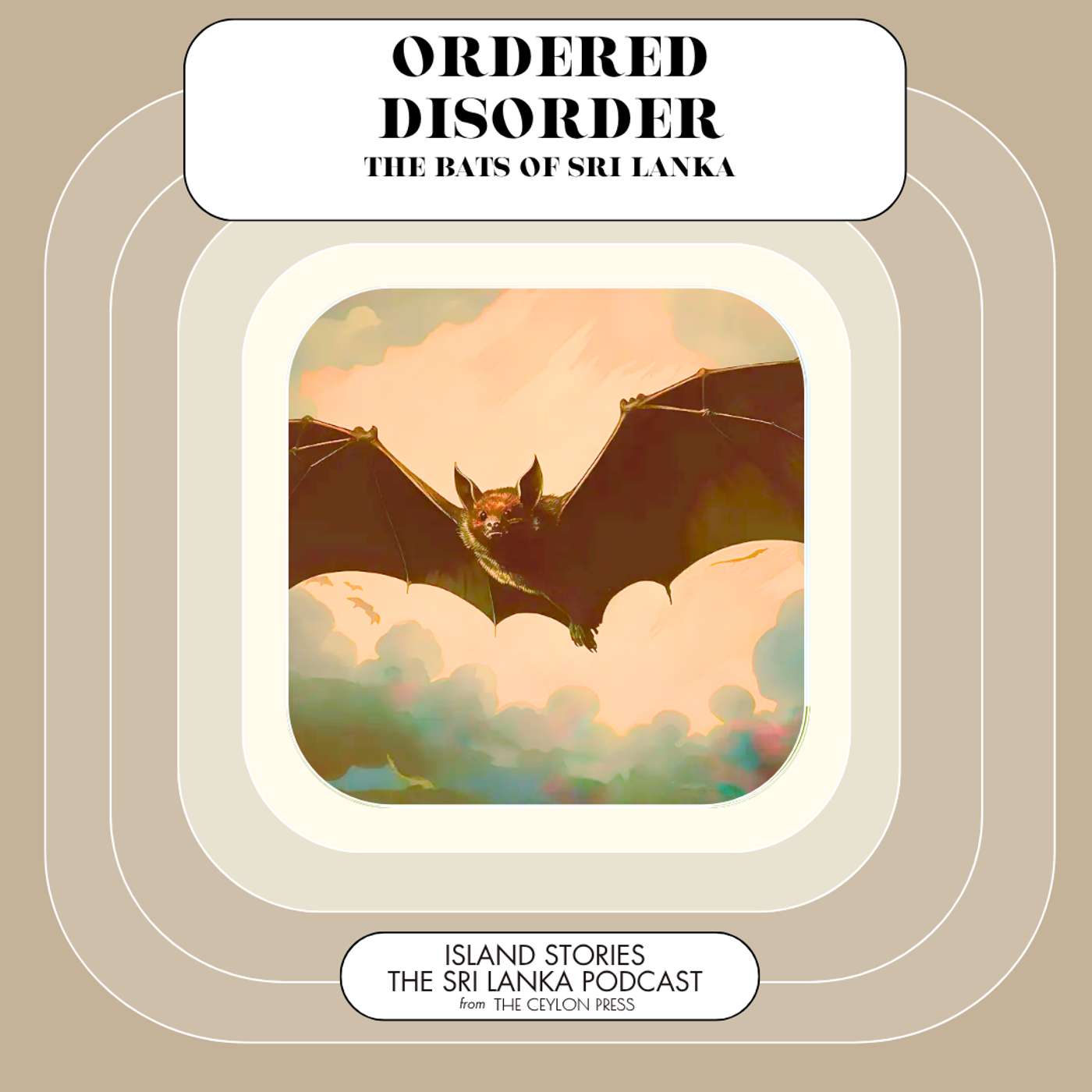
Cryptology, fractals, even Einstein’s Theory of Relativity – they all pale into bashful insignificance when compared to bat taxology. Between the kingdom within which a bat might exist, and the species to which it is classed as belonging, there are at least eight levels of mind-numbing grouping that bat scientists, or chiropterologists as they prefer to be called, pin their descriptions to. Unwilling to rest there, many then spend entire careers reordering the species, family and even the genus of these miniature mammals. The more daring go much further and bestow new subspecies divisions with all the generosity of a pool's winner. The net result is that this most tiny of all mammals has had - and continues to endure - more name changes than even the hapless city of Plovdiv in Bulgaria. This blameless city of some 350,000 souls, famous for its icon painting, has endured 11 name changes so far. Somewhat coincidentally, it is also renowned for its bats, which host over 20 species and regularly host Bat Nights to introduce its avian mammals to its two-legged ones. Short of dusting the animals with poisonous radioactive dust and equipping them with a miniature Kalashnikov, there is little else science can really do to make them more unapproachable, which is a terrible shame because bats – like lichen, coral, or bees - are among the world’s best indicator species, those that tell you relatively how healthy or not the environment really is. Chiropterologists aside, we ought to pay attention to what is going on in the bat world, for if what bats have to say is anything to go by, then we are in trouble. All around the world, bats are in decline. Facing a tsunami of pollution, habitat loss, climate change, and aggressive new farming techniques, bat numbers worldwide have plummeted, and the continued existence of almost one-third of their species is threatened. It is ironic that, in the face of such a burgeoning catastrophe, the number of identifiable bat species continues to grow – it is now over 1500. The counting of bat species in Sri Lanka is an art still much in the making, but all the signs are that, notwithstanding the overall decline in numbers, the country bats way above its weight. Though occupying barely 1% of the world's total landmass, Sri Lanka hosts well over 2% of the world's recognised bat species. Scientists are, of course, minded to disagree with one another most of the time; indeed, put just one Chiropterologist in a room by himself and you will foster dissent. This is especially true when it comes to nailing down the number of bat species that exist here. It was thought to be 28. Then 29. Several new bats were discovered. Older bats were reclassified. Today, the number appears to be 37, though like adolescents with mood swings, this can change in an instant and often does. But whatever family, genus, species, or subspecies they belong to, they all share certain bat-like traits. They all fly, for example. Bats are, of course, the only mammals able to truly fly, angels excepted and are famous for roosting upside down from their feet, viewing the world like happy drunks, a propensity made worse by their inferior vision. They all enjoy ultrasonic sound, and with this gift of supercharged hearing, they navigate the world with expert dexterity. Most live in large colonies and are much given to hibernation, a habit that accounts for their exceptionally long lifespan; one bat was recorded as living 41 years. Less happily, many are enthusiastic carriers of disease, especially those best able to leap from animals to humans. XSThe Extra Small BatsSri Lanka’s bats can best be divided into eight broad categories, the first of which are the tiny bats, the ones so extraordinarily petite that their bodies barely measure 2 to 3 centimetres. There are three bats in the XS range, the smallest being the Indian Pygmy Pipistrelle Bat, whose Latin name (mimus mimus) is all the guidance you really need to know relatively how tiny it is. Next up in size is the Painted Bat, sometimes known as the butterfly bat. Small though it is, the creature is also dazzlingly beautiful, with thick, bright orange fur all over, its wings decorated with black pyramids inset on orange lines, like stained-glass windows. Decidedly less glamorous is the rust brown Pungent Pipistrelle, common in SE Asia but rarely found in Sri Lanka. The more exacting scientists have long ago declared its few sightings here to have been avoidable mistakes. The third XS bat, Hardwicke's Forest Bat, is one of those wretched beasts whose existence has been especially tortured by name changes and reclassifications. The most recent occurrence was in 2018, when it was dragged out of one species and reallocated to another under the name The Malpas Bat. Unlike most other bats, Hardwicke's Forest Bat is something of a loner. It was named after the East India Company soldier, Major-General Thomas Hardwicke, a man as much noted for his love of natural history as for his determination to defeat Tipu Sultan in battles across India. Like many East India men, Hardwicke had a complicated domestic life, leaving behind five illegitimate children and two other daughters born to his Indian mistress. SBats of Small SizeEight bats populate Sri Lanka’s Small Bat category, their sizes averaging around 4 centimetres, with upper ranges for some of up to 6 centimetres. The Indian Pipistrelle stands out, despite its size, for its rampant fertility. Most bats give birth once a year – usually to a single pup. The Indian Pipistrelle, however, does this three times a year. Dull orange with a worrying tendency to beige, the Fulvus Roundleaf Bat follows bat reproductive norms more exactly, breeding in November, to produce a single pup who will take well over a year to gain sexual maturity. Little is known about the third XS bat, the Sri Lankan Leaf-Nosed Bat, as it was only identified as a new endemic species in 2025, its existence until then having been clumsily muddled up with other cousins and near cousins. Its tell-tale giveaways were its extra board nose, unusual ear shape, and a marginally different set of tiny head bones. The same sorry fate was to befall the Dekhan Leaf-Nosed Bat, which, until 2025, had been horribly confused with several other species to which it only had a nodding acquaintanceship. It is considered critically endangered, and most scientists believe it doesn’t actually exist in Sri Lanka at all. Most, that is, but not quite all. Such rarity does not haunt Schneider’s Leaf-nosed Bat, which lives in colonies of around 1000 mates in caves across Sri Lanka. The Rufous Horseshoe Bat, beautifully orange though it is, remains one to be avoided, being responsible for the 2002–2004 SARS outbreak. Van Hasselt’s Mouse-Eared Bat was named for the great biologist Johan Conrad van Hasselt, whose wretched reputation was such that almost everyone who joined him for expeditions into the unknown died or returned with a terminal illness, himself included. His little bat is unusual for its fondness for living alone near water. More social is Cantor's Leaf-Nosed Bat, named for a Danish zoologist more famous for having nailed the taxonomic complexities of Siamese fighting fish. MBats of Medium SizeFour baths fill the medium-size bat category, though medium means little more than between 5 and 5.5 centimetres body length at most. Of the four, the stand-out star is the Sri Lankan Woolly Bat, firs...
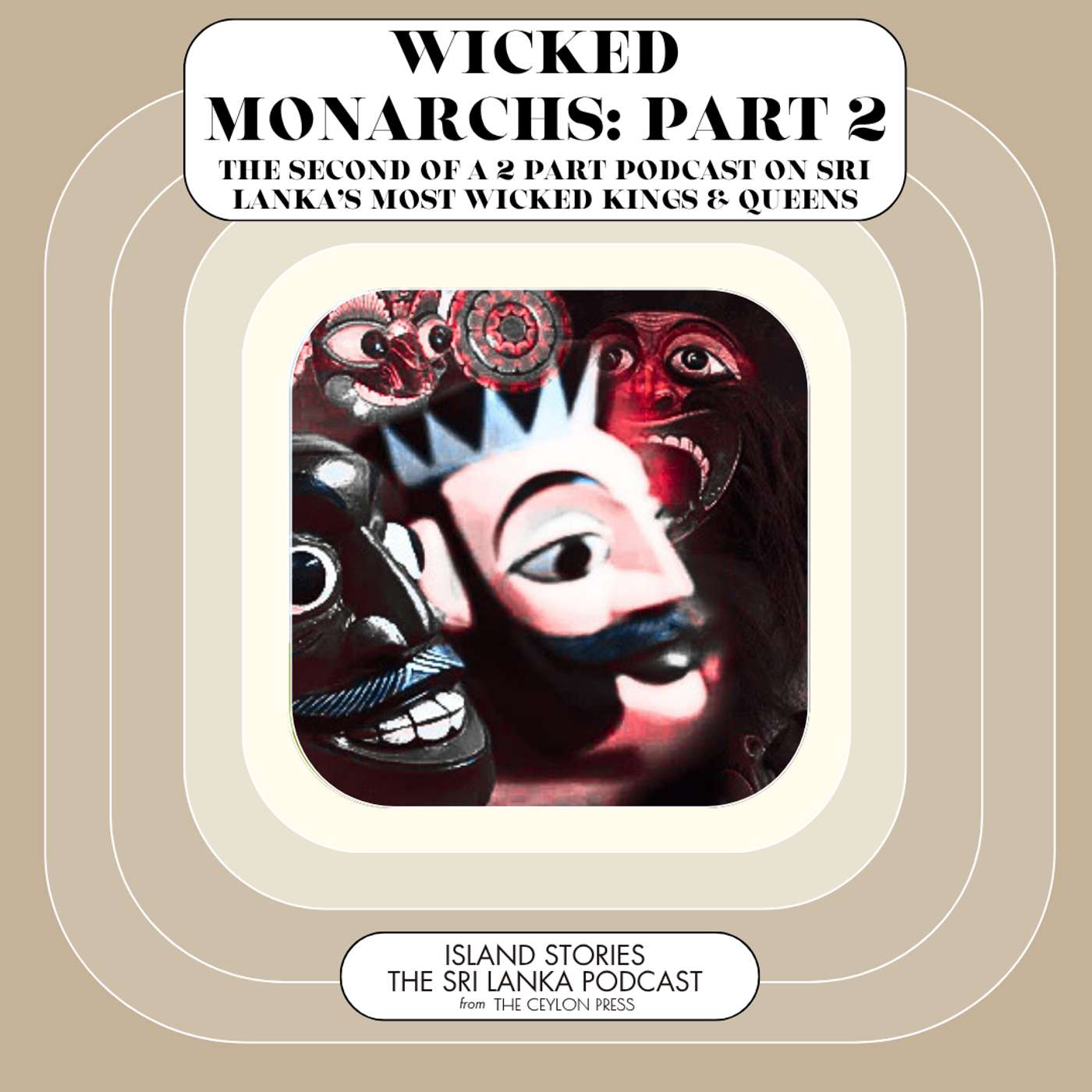
After the excesses of Prince Vijaya and Queen Annua, it is time to encounter our third candidate king and the winner of an abiding place in the island’s register of wicked monarchs. So little is actually known about Yassalalaka Tissa, King of Anuradhapura, that he almost fails to cut. And yet three key qualifications mark him, two of which are so beautifully distinctive as to ensure his remembrance for as long as anyone ever bothers to remember the island’s ancient kings. His path to power was so traditionally iniquitous that it has become an almost essential distinction for any candidate for this guide: he murdered his predecessor. Simply by virtue of his ascension, Yassalalaka Tissa makes the grade, though the ancient sources helpfully validate this by calling him “a vicious ruler.” But by virtue of his placement in the line of the founding Vijayan kings, his inclusion here offers an irresistible and matchless neatness to the account, for he was to be the last true Vijayan ruler. His own murder, in 60 CE, just 8 years after seizing the throne, brought to an end the royal dynasty that, more than any other, set up the country to be what it was. And what an ending it was, with its preposterous characteristics ranking third among the reasons to include in this guide. Yassalalaka Tissa's own reign suffered because his dynasty had never really recovered from overcoming the island’s third invasion by Tamil warlords between 103 and 89 BCE. This was to so weaken the kingdom as to fatally undermine its confidence and capability. It all started with yet another grubby and bloody power struggle that saw one brother kill another to grab the throne before passing it on – briefly – to yet another brother, Khallata Naga, who was himself to be dispatched by a fourth, Valagamba, in 103 BCE. It was a damned succession. Barely had Valagamba digested the celebratory when all the hounds of hell slipped their leads and the kingdom’s preeminent port, Mahatittha (now Mantota, opposite Mannar), fell to invaders. The third Tamil invasion of Sri Lanka was on. Valagamba fled, lucky to be alive and in a 14-year tableau reminiscent of Agatha Christie’s novel “Five Little Pigs”, the once grand Anuradhapura Kingdom was then manhandled to atrophy. Two of the Dravidians returned to India, leaving one of the remaining five, Pulahatta, to rule from 104-101 BCE. At this point, history struggles to keep up. Pulahatta was killed by Bahiya, another of the five remaining Dravidians and head of the army, who was in turn murdered in 99 BCE by Panayamara, the third Dravidian who had been unwisely promoted to run the army. Proving those who do not read history are doomed to repeat it, Panayamara was assassinated in 92 BCE by his general, the fourth Dravidian, Pilayamara. But by now, Valagamba, ever the comeback king, began his return, his guerrilla tactics toppling Pilayamara, who had lasted all of seven months on the throne, and then defeating the last of the Pandyan chiefs, Dathika. Valagamba’s return to power should have seen a long-lasting and confident restart for the dynasty. Still, too much blood had been spilt, and regicide had been so normalised as to undermine nearly every succeeding monarch with its malign and cancerous weight. Two periods over the next 130 years in particular were to be its undoing, the first being the chaos unleashed by the ambitions of Queen Annua herself, who murdered seven kings before being murdered in her turn. Just five kings later, chaos once again took hold when a civil war, promoted by one too many serial regicides, caught up with a king called Kanirajanu Tissa, who was to be dispatched in 33 CE by his successor, Chulabhaya, in time-honoured fashion. Dead within 2 years, Chulabhaya’s sister, Sivali, took the throne for 4 months before –, but by now a proper civil war had broken out, with all its attendant disasters, including leaving their kingdom itself utterly ruleless for periods of time. Sivali bobs up and down in the months succeeding her ascension, vying for control of the state in what looks like a three-cornered struggle between herself, her nephew Ilanaga and the Lambakarnas. By now, the Vijayan dynasty not only had to contend with itself but also with the much-put-upon and exasperated nobility, especially the Lambakarna family. Little about this period of Sri Lankan history is certain, except that from around 35 CE an uncensored civil war preoccupied the entire country, leaving it without any plausible governance. For a time, Ilanaga seemed to be ahead of the pack. But he then appears to have scored a perfect own goal by demoting the entire Lambakarna clan. This abrupt change in their caste, in a country increasingly rigidified by caste ideology, galvanised them into a full-scale rebellion. The king – if king he really was – fell and fled into the hill country, returning 3 years later at the head of a borrowed Chola army to take back his throne in 38 CE. Ilanaga’s reign lasted another 7 years before his son, Chandra Mukha Siva, succeeded in 44 CE – only to be murdered by his brother, and our third candidate in this guide, Yassalalaka Thissa, in 52 CE. The stage was now set for one of the most eccentric periods of island governance. With the ascension of the regicidal Yassalalaka Thissa, the last chorus of the Vijayan throne sounded, in Frank Sinatra style: “and now the end is near, and so I face the final curtain.” With a story too bathetic to be encumbered by inconvenient disbelief, The Mahavamsa recounts the bizarre end of this once-great dynasty in 60 CE. “Now, a son of Datta, the gate-watchman, named Subha, who was himself a gate-watchman, bore a close likeness to the king. And this palace-guard Subha did the king Yasalalaka, in jest, bedeck with the royal ornaments and place upon the throne and binding the guard's turban about his own head, and taking himself his place, staff in band, at the gate, he made merry over the ministers as they paid homage to Subha sitting on the throne. Thus was he wont to do, from time to time. Now, one day, the guard cried out to the king, who was laughing: `Why does this guard laugh in my presence?' And Subha, the guard, ordered to slay the king, and he himself reigned here six years under the name Subha Raja.” Despatched by his own lookalike, Yassalalaka Thissa, the last Vijayan king died, one hopes, seeing the unexpectedly funny side of assassination. King Subha’s own reign lasted 6 years, when, whetted by a 3-year rule back in 35 CE, the Lambakarna clan took royal matters back into their own hands and put the ex-palace guard to death. Some 200 years after all this dayglow-mad tale, we encounter our 4th candidate; villainous for sure but oddly sweet too – though not so sweet as to rule himself out from his rightful place in this guide. By the time Jettha Tissa I came to the throne, the Lambakannas, the dynasty that replaced the Vijayans, had already been in power for 60% of their reign. However, they were to regain power 245 years later and rule for a second term, this time for almost 300 years until the most significant Tamil invasion the island was to know eradicated their ...
 1
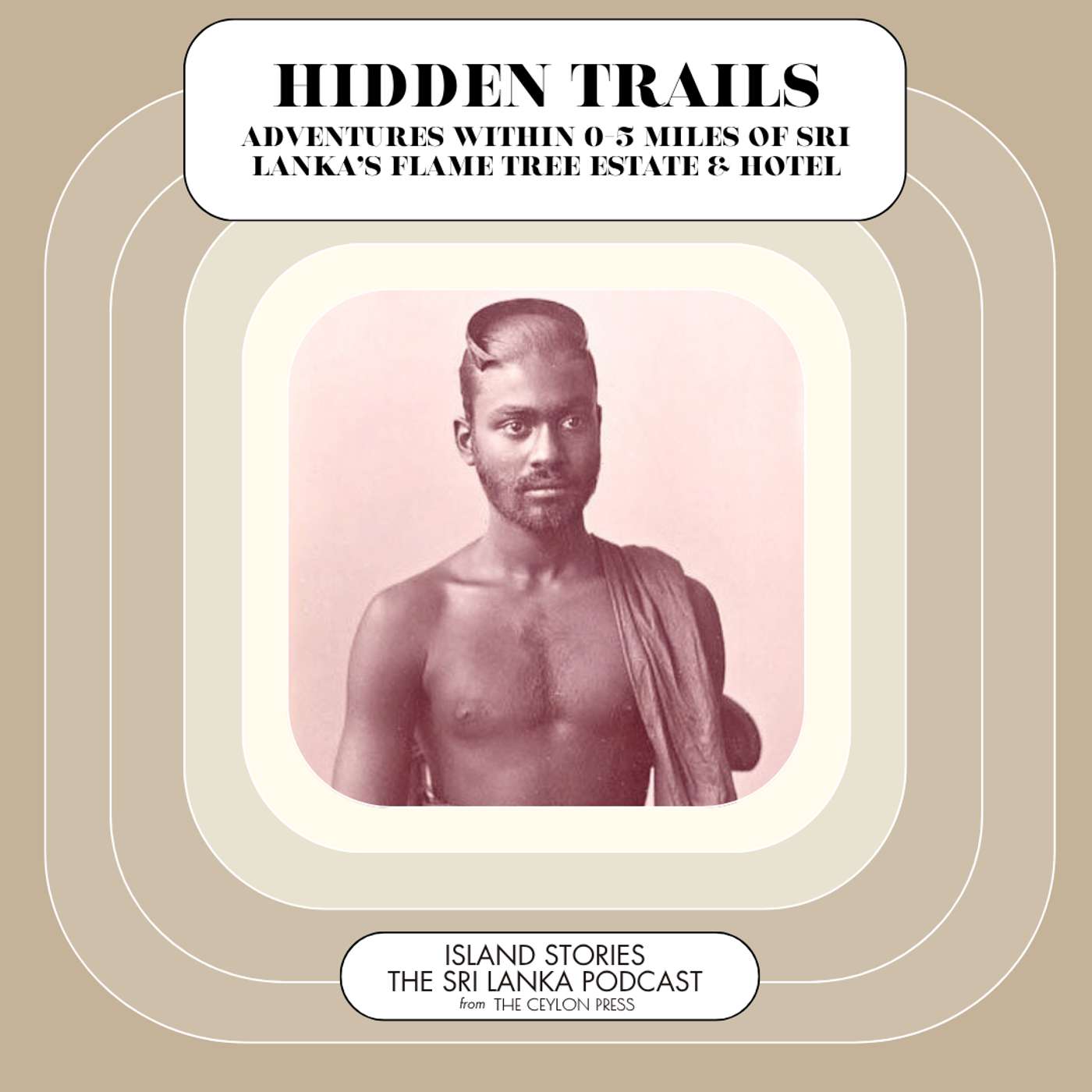
1Sacred temples, royal palaces, leopards, tea tasting, ancient frescos, sandy beaches, gourmet curries, tamarind martinis, whale watching, trekking, turtle fostering – these are the things that most visitors to Sri Lanka typically get up to. And they are lovely: very lovely. Well worth doing. But there’s more. Much more. “God saw everything that he had made, and indeed, it was perfect,” noted Moses with satisfaction in Genesis, and he must surely have had Sri Lanka in mind. Because what is special – most beautiful of all – is its ordinary life. The life you notice while driving its roads or walking its streets. And it is all that enables this life that is the subject of this little, most local of tours, a tuk tuk drive from Sri Lanka’s jungle retreat, The Flame Tree Estate & Hotel. This journey will take you behind the door of what makes Sri Lanka Sri Lanka – those aspects of life that matter most to most people: god, food, water, culture, education, crafts, and local lords. These are the things that motor this little Sri Lankan community, perched in the jungle and paddy on the edge of the highlands, as it does most others. As Bad Bunny, the rapper, said, “Simple goes a long way.” Especially here, far from the busy world. History has the hardest of times being heard in a tropical climate, which is no respecter of artefacts. Much has been lost. The haunting story of Dingiri Menika in Galagedera exemplifies this—the fate of this renowned local beauty is intertwined with that of Kandy’s last king. Selected to stimulate the moribund fertility of the last King of Kandy, Queen Dingiri Menika was kidnapped by his soldiers, garlanded with jasmine, and carried on elephants, drummers, and banner-bearers to a stake atop Bahirawa Kanda, or Gnome Mountain, now home to one of the tallest statues of Lord Buddha. Bound to a stake, she was meant to be a human sacrifice, though quite why anyone thought a feast such as this might make the despondent queen procreate is a mystery. Fortunately, the king’s elephant keeper got to Dingiri Menika first, rescued her, married her, in fact, and set up home with her in Welligalle Maya, in Cross Street, close to Kandy Super Phone, Ltd, a present-day mobile phone supplier. But although the king chose to terminate all future human sacrifice, his late-burgeoning liberal values were not destined to bring him any greater luck. Within a few years, he had been exiled to India, along with at least two of his four wives, the third of whom was to use her exile for bankrupting shopping sprees. Traces of the king remain in the museum in Kandy, but of the Galagedera home that housed his beautiful would-be sacrifice, there is none. Yet the world she inhabited is not yet gone, and this tour will try to pick out which aspects of it still live on. We will visit Mrs Liyange and the tiny preschool class of tiny singing children at the ancient monastic school of Galayawe Sri Suvi Suddharamaya. And Manju and his family beside their paddy fields and figure out all that happens to our sticky rice pudding before it gets to be anything of the sort. We will finger inscriptions so ancient they predate recorded Sri Lankan history with a script that fell out of use nearly two thousand years ago, when we call in on Gunadaha Rajamaha. This cave altar was the refuge of a king who symbolised the enduring and unique culture of the Sinhala nation that is Sri Lanka today, and who rescued the young Anuradhapura Kingdom. En route is a handloom workshop and a woodcarver, part of a great artistic tradition for which the Kandyan kingdom is famed. And an abandoned manor house dating back to the first years of British occupation. 2THE KING’S HIDING PLACE Hidden down tiny roads very close to the hotel is the ancient cave temple of Gunadaha Rajamaha, its lofty views and deep forest hinterland once home to one of Sri Lanka's most unlucky kings. Valagamba became King of Anuradhapura in 103 BCE, but had first to kill Kammaharattaka, his sibling’s murderer and chief general, before gaining what he regarded as his birthright - the crown. This he did, but little good came of it. Decades earlier, royal misrule had set the grand old kingdom of Anuradhapura on a path to utter disaster. Within months of taking power, a rebellion broke out in Rohana due to a devastating drought. The kingdom’s preeminent port, Mantota, across the Mannar Strait, fell to Dravidian Tamil invaders. And at a battle at Kolambalaka, the hapless King Valagamba was defeated, racing from the battlefield in a chariot lightened by the (accidental?) exit of his wife, Queen Somadevi. The king went into continual hiding - including here in Galagedera as he sought to build a guerrilla resistance to the invaders. His kingdom was now ruled by a series of Tamil kings who, between 103 BCE and 89 BCE, were either to murder one another or fall victim to the guerrilla campaign that now became ex-king Valagamba’s passion and priority. For 10 years of war, regicide, and rebellion cripped the land. The first three Tamil kings murdered one another, and Valagamba’s successful guerrilla campaign killed the final two. By 89 BCE, he had recaptured the throne/. He was to rule for a further 12 years, but his religious preoccupations, perhaps magnified by his long periods of hiding out in temple caves, set in motion the island’s first Buddhist schism. Over the following hundreds of years, the ancient little temple carried on; its caves gathering statues; its forest getting ever denser; and the walls of the rock within which it hides being chiselled with medieval drains to fend off the monsoon. Today it remains a place for solitude and prayer; a moment of stillness to carry with you, the lintel above the cave itself inscribed with a pre-Singhalese script – Brahmi, an alphabet that dates back to the 6th BCE in India. 3TEMPLE, SCHOOL, MUSEUM, PEACE A temple of a quite different sort is next on the tour. There is no agreed word to describe a hunger for temples, but any such human condition is most easily put to rest in Sri Lanka, the island that averages a temple or kovil every three miles or so. Ancient, famous, revered, enormous, historic, picking out just one to especially favour is no easy task. But the one I would pick out, for its abiding spirit of serenity, its simple good work, its connection to its community, and its halcyon calm, is Galayawe Sri Suvi Suddharamaya. Found off a tiny back road just a few kilometres from The Flame Tree Estate and Hotel, the temple is around 400 years old, dating back to King Rajasinha II, the collapse of the Portuguese occupation of the island, and the arrival of the Dutch. Within its grounds lie a lovely elongated mini stupa, over 100 years old; a dormitory for its monks; ponds of koi carp, a range of Buddhist alters; a Museum; public rooms for workshops and eating; a medical facility; and the ancient temple itself. It is overseen by Udawela Nanda Thero, whose kind and thoughtful character is almost all the argument you need to believe in the goodness of God. Half a century old, his family have presided over the temple since its earliest beginnings. Someone once said that anyone who loves books, dogs, and trees cannot be faulted for their essential goodness. And so it is here. Udawela Nanda Thero goes about his daily work, followed by his three adoring dogs, who ta...
This first episode of a three-part podcast is dedicated to finding the seven greatest wonders of Ancient Sri Lanka. Despite their iconic status, the original seven wonders of the ancient world fall short compared to the seven wonders of ancient Lanka, the subject of this podcast. The world’s first Seven Wonders were assembled in the 1st century BCE by the historian Diodorus of Sicily, with help from Herodotus, who began the tally 400 years earlier. Their list, focused on the Mediterranean and the Near East, comprised a garden, two tombs, two statues, a temple, and a lighthouse. It featured the Pyramids of Giza, the Hanging Gardens of Babylon, the Statue of Zeus at Olympia, the Temple of Artemis at Ephesus, the Mausoleum at Halicarnassus, the Colossus of Rhodes, and the Lighthouse of Alexandria. Sri Lanka’s list, though, is not all architecture with a nod to gardens – it is comprehensive, including a painting, a monastery, a book, a revolutionary new piece of technology that enabled a treasured dish, a shrine, a tree, and a lake. It covers about a thousand years of the island’s earliest period of recorded history, from around 500 BCE to 500 CE. Each item is more than a mere wonder, for each helped set the abiding characteristics of the nation that has been called many magical names before settling on “Sri Lanka “– the Sanskrit words for shining island. This apparent lexical borrowing is no random thing, for Sanskrit, a Bronze Age Indo-European language, is the lexis that has most influenced Sinhala, the language spoken by most Sri Lankans today. And its words, like the clues in an antique detective story, can be traced back to many others in European, Iranian, and North Indian languages. Orphan language, it is most certainly not. Its lexical connections demonstrate the astonishing antiquity of the island’s culture, and the seven wonders explored here connect the country not just to its past but also to its present. Invaded, occupied, plundered though it has been so often, there was ever something inimitably robust and resilient about its culture that ensured that the island, with each new renaissance, was able to use the best of its past to inform its future - with profound and confident certainty. The story starts, quite inappropriately, where it ends - when the ancient world itself came crashing to a bloody end around the base of a 1000-foot mountain in central Sri Lanka in 495 CE. With it ended one of the most notorious parties the world had yet enjoyed, one that, at 22 years, totally outlasted even Cleopatra’s Feast. The party was Gatsbyesque in its exuberant excess. More opulent than the Rothschilds’ surrealist ball of 1972; more majestic than the Shah of Iran’s 2,500-year dynastic celebrations the year before, this party, like the ancient world itself, raced to its corporeal end with all the aplomb of the last serving of the previous martini on board the Titanic. Of course, 500 CE is little more than a marker, a slender signal, a humble and iconic rounded-up figure that has been invented by historians eager to bring closure to the world of the Romans and Greeks, the Pharaohs, Assyrians, Hittites, Persians, or Han. But the date has stuck. Thereafter follow the medieval and early modern ages. And the later early modern age; even the later modern age, and our own post-modern age, an age shorn of parties, or glamour, decadent or otherwise. Sri Lanka’s 22-year end-of-history party followed exactly the dates of the reign of one of its most outrageous kings, an equatorial Nero with mesmeric hints, like the best of expensive wines, of other things - Vlad the Impaler; Nebuchadnezzar, Louis XIV. In joy, as Mark Twain observed, is sorrow - and Kashyapa, king, party giver, gourmand, and libertine, knew that his moment of doom was due to come sooner rather than later. Gazing across the plains from his high fortress walls in Sigiriya, he would have been presciently aware that his brother would eventually arrive to stop all the fun. And so he did. Commanding a specially recruited mercenary army from nearby India, Moggallana had come to take back what he considered his by right – the throne. The legitimate son of Dhatusena, one of the country’s most fabulous kings, as his heir, Moggallana would have looked forward to a reign of plenty after his father had chased the occupying Dravidian Tamils from the kingdom, and rebuilt the country, tank by tank, temple by temple. It was years of milk and honey (or Kittel) he had in mind – not penurious exile. But it was not to be. His half-brother, Kashyapa, played family politics with the skill of a card shark. He outmanoeuvred his brother and, with the help of the head of the army, deposed his father, Dhatusena. Had things ended there, we may never have heard of Kashyapa. He would just have been yet another one of the island’s numerous coup d'état kings. But with Oedipian or Macbethian instincts, Kashyapa went further. Much further. He began by entombing his father alive in his palace walls. For so distinguished a king, to be reduced to mere bricks and mortar was a shocking way to end a reign. And, to escape the widespread disapprobation this would have created, Kashyapa abandoned his capital of Anduraupura in much the same way as Tiberius had abandoned Rome for Capri, and headed for Sigiriya. Twenty-two years later, he was to watch his sibling nemesis gather on the plains below him, his army spilling out across the water gardens and pleasure terraces of his Alhambra-like palace. The day was to end with the death of Kashyapa and the extinction of all that Sigiriya stood for - one of Asisa’s most remarkable pleasure palaces; the venue for a lifestyle that made living one long, spectacular party. It's like, anywhere in Asia, was probably not seen again until the Kangxi Emperor built the Gardens of Perfect Brightness in the Old Summer Palace, outside Peking, some twelve hundred years later, in 1707. A capital for just one reign, Sigiriya was a cross between the Tivoli, Akhenaten’s Amarna, and the Brighton Pavilion. It enjoyed every last innovation and refinement available – and there were many. The most advanced water technology in the world powers its fountains, lakes, wells, streams, and waterfalls. Artists whose frescoes equalled those of the later and faraway Leonardo da Vinci painted their perfumed inhabitants. Nothing was denied it – nothing until the Moggallana denied it everything. The victorious brother returned the seat of government to the old capital, Anduraupura, like some brow-beaten and repentant deserter, ensuring that power was once again exercised with appropriate and demure propriety. Even so, the world that ended in that sibling fight, fought just five years before the official end of the ancient world, would have felt more like a bump than an earthquake to the Anduraupura kingdom’s subjects. Quite what these subjects numbered is the matter of modest academic dispute. It is likely to be far south of a million, which was the island’s population in 1800 CE.&...
Sri Lanka’s 14 great rivers offer a rarely explored opportunity to unearth its history and its most excellent dishes - morish reminders that rivers, being all about life, prove there is no better way to experience it than to eat or drink it. This was something that Winnie-the-Pooh’s dear friend Eeyore knew all about, having famously fallen into the river. “Oh, Eeyore, you are wet!” said Piglet, feeling him. Eeyore shook himself and asked somebody to explain to Piglet what happened when you had been inside a river for quite a long time.” Presented with a honey jar by Winnie the Pooh, Eeyore would have known what any Sri Lankan Vedda could have told him: that honey was not just yummy but perfect too for preserving meat. The Vedda, Sri Lanka’s Aboriginal community, still exists. Descended from the county’s Stone Age hunter-gatherers, they make up 1% of the population, a community with strong animist beliefs that has, against all the odds, retained some part of its distinctive identity. Honey and meat, wild at that, and mostly wild boar, is one of their preferred dishes, and the history of some of the very earliest Vedda tribes can be traced around the watershed of the Maduru Oya. At 136 kilometres, the Maduru Oya is the country’s eighth-longest river, collecting its waters in the mountains beyond Mahiyan ganaya, halfway from Kandy to the Indian Ocean at Batticaloa. The streams around its collection points are much revered, being said to have once hosted Lord Buddha himself, who came to settle a land and water dispute between warring Vedda tribes. Their fondness for wild boar has endured, and the meat is a popular curry dish in Sri Lanka – dark and spicy, marinated in turmeric, chilli, pepper, ginger, lemon grass and pandam leaves. Known as Ela Mas Curry, it is usually made as a dry curry, so that the gamey flavour of the wild boar dominates. All along the dry scrubland banks that enclose the Maduru Oya are the ruins of the outermost reaches of the Anuradhapura Kingdom – including 6th-century irrigation structures, bisokotuwas, built to maximise drainage - that it took the West a hundred years more to invent. The Maduru Oya drains out at Kalkudah, a small town surrounded by beaches, still abandoned since the end of the civil war. The Vedda were just the first of many people who appreciate the pivotal importance of the country’s rivers, for if ever a country can be said to have been made by its rivers, it is Sri Lanka. It was by harnessing their fecund power that its first kings fuelled their kingdom with the benefits of plentiful agriculture. Urbanisation, trade, religion, buildings, and society itself all emerged from a society that could grow its most basic crops with assured regularity. Indeed, so great was the sophistication of the techniques used to trap, store and distribute the waters across the kingdom that it allowed the kings to build, and go on building in Anuradhapura, the city that for almost 1,500 years would govern the island and whose bewitching influences would dazzle the kings and countries in lands right across the Indian Ocean. Water management became a national obsession. The Vedda developed this rare expertise, perfected during the Anduraupuran era. Rivers were dammed, massive tanks and reservoirs were dug, and canals and waterways were cut along gradients of breathtaking precision using a tank cascade system dating back to the first century BCE. Even the trees and bushes that grew along the water’s edge were carefully selected to deter evaporation and loss. It is therefore unsurprising that almost sixty per cent of the power generated now comes from hydroelectricity. No river best exemplifies this history than the Malvathu River. At 164 kilometres, the Malvathu is the country’s second-largest river and was what the Tiber was to Rome, the Thames to London, or the Nile to Egypt. Spilling from the streams around Dambulla and Sigiriya, it flowed onto Anuradhapura, connecting the capital with what Ptolemy mapped in the 2nd century CE as Medettu - the port of Mannar, the maritime gateway to the island. Much of the ancient port now lies beneath the sea - but once, through its roads and along the Malvathu River, came gems, pearls, cinnamon, elephants, and spices, packed for export. And back came a royal princess in the 5th century BCE to marry the country’s first Singhala king; warrior Tamil invaders; merchants and emissaries from Persia, China, and Rome. Today, the river knows no such glamour, harnessed by water resource schemes and travelling through lands long forgotten by the mainstream, to provide the workaday water solutions needed by the farmers and settlements around its banks. But in memory of those marvellous ancient royal times, is the inspirational Thirty Two Curry Feast, a dish favoured by the island’s early kings. This gargantuan feast required its partakers to eat 32 mouthfuls of red rice, each with a different curry. Fish, chicken, beef, lentils, jackfruit, and pumpkin – all were simmered, slow-cooked, roasted, steamed, and tempered with every possible spice, from tamarind, cinnamon, and fenugreek to pepper and coriander. Oceans of coconut milk were added. It's more modest and – from a medical point of view – acceptable, a descendant of the traditional Sri Lankan Village rice and curry – a capacious set of dishes that varies from place to place and fills many happy hours. Twenty-four massive dams and over 20 vast reservoirs lie behind modern Sri Lanka’s energy grid, backed up by over 60 smaller dams and 18,000 smaller tanks and reservoirs, many going back well over a thousand years. With an average rainfall of over 1,700 millimetres per year, Sri Lanka receives more rain than all European and most African and Asian countries. Dams and reservoirs are still being built today – with one especially massive new entrant slated for the waters of the Kumbukkan Oya. At 116 kilometres, the Kumbukkan Oya is the country’s twelfth-longest river, collecting its waters near the hill town of Lunugala and flowing out into the Indian Ocean at Kumana National Park through a series of shallow, brackish tanks. This is home to many visiting and endemic birds, including the black-necked stork, and the exhausted pintail snipe that will have travelled over 10,000 kilometres to escape the Siberian winter. Quite how the area will survive the proposed Kumbukkan Oya development project, which aims to create a reservoir of almost 50 million cubic metres of water, remains to be seen. The river collects its waters around Monaragala, a lush area in the south-east of the island, famous for the antiquity of its Muslim community. Muslims make up the second largest ethnic group here and have a history that goes back well over 500 years. The area is dotted with old mosques and shrines, its folklore rich with Islamic stories, and the countryside sprinkled with the distinct archaeology of the community. It is the perfect place to order up Watalappam – the island's most popular pudding. Made with eggs, coconut milk, jaggery, nutmeg and cardamom, the dessert arrived on the island with the Malay Moors, the Muslims of Indonesia who knew it as srikaya, a festive dish favoured for Eid. Not all of Sri Lanka’s guest arrivals or river folk were so benign. The Chinese, one of the island’s lesser-known invaders, can be traced to a river and to food: HBC, or Hot Butter Cuttlefish. This popular starter is made with deep-fried squid or cuttlefish and enliven...
Good parallels are not always obvious - and for Sri Lanka’s endemic mammals, the best one to hand is the notorious Forth Bridge, a cantilevered railway bridge across the Firth of Forth in Scotland. It was opened in 1890 by the then Prince of Wales himself, and workers still have to paint it. So too with Sri Lanka’s endemic land mammals. When you have finished counting them, you have to start over. Somewhere, with deft hands and glowing fervour, there is always to be found a scientist who has craftily and credibly reclassified the endemic civet into three distinct subspecies; or added in a shrew recently discovered to have one toe longer than the rest, or a bat readmitted to the hallowed list after a much-disputed and injurious explosion. Any number of endemic mammals between 19 and 40 is likely to be correct or totally wrong, depending on what the latest research papers say. The list of beasts presented in this account is, therefore, more of a vox pop than a static photograph. It errs evangelistically on the side of generosity. Of the 125 different species of land mammals that roam the island, about one-third are endemic, including rats, bats, civets, deer, mice, mongooses, leopards, monkeys, lorises, and squirrels. But by any calculation, that is an extraordinarily high number. Collectively, they may lack the innate glamour of a white tiger, the brooding menace of a yak, or the familial delight of a Highland Gorilla. Still, they exude instead a profound and pleasing subtlety, their apparent modest position in the Food Chain being as powerful an argument as any for cherishing what is unique. Unique – and threatened, for many, if not all, of the country’s endemic mammals are threatened by a rising tide of habitat loss, pollution, and climate change. And this is where these mammals’ lack of obvious glitz cuts against them. Who cares if a shrew vanishes, or a bat ceases to fly? Not enough people – yet. Mr Pooter notes in The Diary of a Nobody that "one never loses by a good address, " and so it is here, in a country so gladly patriotic, filled with creatures to celebrate. Bat identification has become one of this island’s more exciting pastimes. For decades, it was thought that the Sri Lankan Woolly Bat (Kerivoula Malpasi) was the country’s only endemic bat. This tiny creature, barely 50 mm from head to body, was first described by a tea planter, W.W.A. Phillips in 1932. It is said to enjoy sleeping in curled-up banana fronds on hills between 500 and 1000 metres, though its sightings are so rare that it has not been adequately assessed for a score on the IUCN list of endangered animals. His celebrity was, however, rocked when in 2022 a new medium-sized endemic bat was declared here - Phillip’s Long-Fingered Bat, which, until more eagle-eyed observers got to work, was long thought to be a run-of-the-mill Eastern Bent-Winged Bat. Little is known about the Sri Lankan Leaf-Nosed Bat, as it was only identified as a new endemic species in 2025; its existence until then had been clumsily muddled with other cousins and near cousins. Its tell-tale giveaways were its extra board nose, unusual ear shape, and a marginally different set of tiny head bones. Troubled by the sheer lack of scientific information about the behaviour of the Ceylon Spotted Deer (Axis Axis Ceylonensis), the Department of Zoology at Sri Lanka’s Eastern University conducted a detailed study of a particular population in Trincomalee. After months of observation, they concluded, reassuringly, that “their main activities were feeding and play.” Scientists are much divided on the subject of animal play, and tortured monographs have been written attempting to pin down the very concept of animal play. To some, it is merely an evolutionary byproduct; others claim it ensures animals teach one another about fairness and consequences. That the Sri Lankan Axis Deer should be minded to play at all is encouraging for it is an increasingly vulnerable species, its preferred habitats - lowland forests, and shrub lands – are shrinking, and with it the grasses, leaves, and fruit it lives on. Living in groups of 10 to 60 animals, their numbers are now counted in just a few thousand. They live in herds of up to one hundred and are seen by leopards, bears, crocodiles, jackals, and hungry villagers as living supermarkets of fresh meat. Standing up to a hundred centimetres high, their delicately white spotted fawn coats present them as everything a perfect deer ought to be, as is appropriate for an animal that is part of the island’s select few endemic mammals. Although known collectively as chevrotains or mouse deer, these tiny mammals are generic gypsies, the DNA actually nestling somewhere between that of a pig and that of a deer. Solitary and little more than 1 to 4 kilos in weight and 18 inches in head to body length, they are the world’s smallest hoofed mammals. They live scattered in the forests of Sri Lanka, gorgeous looking – although popular superstition adds the terrible caveat that a man who gets scratched by the hind foot of a mouse deer will develop leprosy. This has yet to be fully verified by scientists. Scientists, however, have spent a lot of time arguing over their endemic status and how they compare to their Indian cousin, the Indian chevrotain (Moschiola indica). The nearest in looks is the Sri Lankan White-Spotted Chevrotain - Moschiola meminna. Its separate identity was only confirmed as recently as 2005. White spots trail down its sides and back, and three white bands cross its rump. Although it can be seen right across the island and in good numbers, it is so secretive and nocturnal that actually spotting one is a challenge. Its smaller and no less endemic cousin in Sri Lanka is the Yellow-Striped Chevrotain (Moschiola kathygre). Its colouration is golden brown rather than whiteish brown. Several horizontal rows of yellow spots run along its flanks, with bolder stripes on its haunches. It mostly occurs in the wetter parts of southwestern Sri Lanka, particularly in rainforests, plantations, and rice paddies. The rarified world of mouse deer enthusiasts was rocked recently by reports of a possible third endemic chevrotain species from Horton Plains. It was found to be much larger than other chevrotains, and studies of its skull confirmed that it represented a new evolutionary lineage. But blood tests and other research are still being conducted to determine whether this Mountain Mouse Deer, known as Meeminna in Singhala, is a new endemic species. One of the island’s two civets, the Asian Palm Civet or Toddy Cat, is found in both India and Sri Lanka, but it is around the identification of the second palm civet that scientists get most excited. When life was simple, long ago, and when beige, like black or white, came in only one colour, it was thought that the island was home to just one endemic palm civet. But scientists, zookeepers, and wildlife photographers like Dhammika Malsinghe, Dr Wolfgang Dittus, Dr Devka Weerakoon, and Channa Rajapaksha have, over the past 15 years, worked hard to evaluate this assumption. By careful observation, the checking of paw prints, the measurement of bodies and assessment of markings (beige or off-beige), they have instead come to the conclusion – now widely accepted in the scientific community - that the country actually play...
“Once, when I was young and true,” wrote Dorothy Parker in 1926, “Someone left me sad; Broke my brittle heart in two; And that is very bad.” Fortunately, an early broken heart was not to be my fate. Gardens were. Plants. And especially trees. For it was gardens, not love, that occupied my childish imaginings. Gardens, I concluded, were all variants of a single standard – the best example to be found amidst the faultless flower beds of the governor’s house, in Madras, the Raj Bhavan. This was a proper garden. Built in the 1670s, its regimented perfection even extended into a deer park, whose trees were as disciplined as they were well-mannered. Of course, it helped that armies of gardeners tended them, but of these unsung heroes, little was ever said. Later, when I saw Versailles, it all came together. Gardens were actually houses, albeit with green bits. Over the years, I tested this theory: in window baskets overlooking Scotch House Corner, on Bayswater balconies, Welsh seaside cottages, and Oxfordshire villages. It seemed to hold. Until, that is, we set about gardening in the jungle. We had bought, incautiously and without any help whatsoever, a 25-acre Plantation north of Kandy in central Sri Lanka. It had been abandoned during the JVP uprisings. It's 1,000 high rocky hills stalled a Dutch army in 1765, and until the civil war, the estate stretched over 100 acres with three working elephants. When the estate agent had closed the deal, the estate had been reduced to 25 acres and a bewildering number of buildings, all of them as unstable as a Sunday morning drunk. Trees grew in rooms; animals lived on shelves. And rapidly, I realised that the real world was precisely like my childhood definition of a garden, only the other way around. Limitless green forest with the odd house attached – and forever fighting an unsuccessful campaign to keep nature at bay. Earth Org, the environmental news website, agrees, stating that despite the interminable assaults made upon it, nature is still the boss. Just 20% of Earth's land surface is either urban or farmed. So our jungle gardening is undertaken modestly, with the lightest of hearts, the boundary between wild and tamed conveniently blurred so that excesses on either side are easily tolerated. It’s a green version of the balance of power and an opportunity to see Nudge Theory in practice. Even so, this estate, having been abandoned for twenty years before we bought it, had sided a little too firmly with the jungle. The balance of power was extravagantly unbalanced. The estate road was undrivable; the plantations had become savage forests, and trees grew in its courtyards and buildings, guests occupying superior VIP suites. Pushing these boundaries back was like sailing down the Nile: a slow voyage, with plenty of opportunities to become distracted by everything that happens when you blink. But slowly, slowly, our gardening team reclaimed parts of the interior and created four different walks to take you around most of it. Some areas remain wild, unvisited for a decade at least, cherished no-go zones left to shy lorises and civets. Of these four walks, the gentlest of perambulations is The Home Garden Walk. This stroll begins just outside the main hotel office and porch, with both buildings shaded by THE PARROT DAKOTA, a tree named after New York’s towering Dakota Apartments. This Sri Lankan Dakota version is no less a Renaissance creation – a Java Cassia, or to give it its common name, The Pink Shower Tree. Flowering with puffs of Barbie pink clouds in April and May, it fruits and sheds its leaves in December. Our specimen is over 120 years old; its hollows and defensive height make it our leading parrot apartment block. Amongst its many tenants are rose-ringed, plum-headed and Layard’s parakeets – three of the world’s 353 parrot species. Layard’s parakeet is easy to spot, as it has a long, light-blue tail, a grey head, and a fondness for sudden, prolonged screeching. The green-all-over rose-ringed parakeet is a giveaway too - with a bright red beak and the slimmest of head rings. But the most striking is the male plum-headed parakeet. He is a stunner, his proud red head offset with purple and blue feathers. He would turn heads in any nightclub. Two other parrot species live on the island but have yet to be spotted here: The Alexandrine parakeet is similar to the rose-ringed parakeet – only much larger. It’s a bit of a city dweller. The other, the sparrow-small, endemic Sri Lankan hanging parrot or lorikeet is a rare creature: a twitcher’s crowning glory. All these birds can be found in G. M. Henry’s celebrated 1958 Guide to The Birds of Ceylon, which sits in the hotel library, together with some of his original watercolours. Henry was one of the last great ornithologists – the sort you would fight to sit next to at dinner. A discoverer as much as a describer of species, he wrote extensively about the island’s wildlife. Born on a tea estate in Sri Lanka in 1891, his bird guide is remarkable not only for its comprehensiveness but also for its entertainment. His descriptions are unforgettable and funny; of the lorikeet, he remarks, the bird is not simply another parrot but a convivial and restless one with highly ridiculous breeding habits. Reading his identifiers, you almost feel you have met the bird concerned at a party, conference, dentist’s waiting room or orgy. Close to our blushing Cassia is KASHYAPA’S CORNER, a small garden of Frangipani trees, named for the anonymous 5th-century mistress of Kashyapa, the king who built the Sigiriya pleasure palace, where he partied for 22 years before being murdered. Its frescoes show her holding the wickedly fragrant frangipani flowers – wicked, because, despite lacking nectar, their dreamy scent tricks moths into pollinating them. Arguments rage gently over whether there are 20 or 100 species of the tree, but none of this matters in Sri Lanka, where temple-goers have so eagerly adopted the plant that it is called the "Araliya" or "Temple Flower Tree". South American by origin, it spread around the world on the backs of gardening missionaries. However, this does nothing to explain how its flowers came to be depicted over 1500 years ago in Sigiriya. A small tree, rarely more than 20 feet high, it flowers in shades of red and yellow, white, and peach; and even when bare, it is as close to an architectural marvel as any tree can get. Stretching out beyond KASHYAPA’S CORNER is a croquet lawn, instead unwisely planted with Australian grass for its smoother velvety feel, but continually under siege by the more rampant and feisty Malaysian grass, which possesses the invasive qualities of pirates. A much-sheared golden dewdrop hedge surrounds it; the plant is liberally tolerant of the hardest pruning and has become something of a poster girl for tropical topiarists. Growing through them are a few dozen stately Queen Palms. We call them DONA CATHERINA’S PALMS, after the island’s most beguiling queen, Kusumasana Devi. Three times tempestuous queen of Kandy (1581 to 1613), Dona Catherina died of grief, outwardly Buddhist, inwardly Catholic. It was her bad luck to be caught up in the wars between the Portuguese and the kings of Kotte and Kandy, and as the last descendant of the original Kandyan kings, she was a...
Reservoir, tree, stupas. All came before this, ancient Sri Lanka’s fourth great wonder - a palace built to escape death and suffering. Built by the self-same great king, Dutugamunu, who commissioned the Ruwanweliseya, the oldest of Aurnadupura’s three great stupas, the Brazen Palace, or Lowamahapaya, was built between 161 BC and 137 BC. Its name, “brazen”, comes from the brass or copper roof tiles that covered it. For centuries, this was the island’s most magnificent building. The king had his architects draw up no-limit plans for an opulent palace-monastery, two hundred feet long, rising nine stories, each story punctured by a hundred windows. Observers spoke of the entire edifice containing a thousand rooms – an obvious exaggeration, but one that was not really required. For the building was, by any standards, a masterpiece. Inside the vast structure, golden pillars held up the roof of a special throne hall, its centrepiece an ivory throne centred between the titanic images of a golden sun, a moon and stars picked out in silver and pearls. The gilded roof glinted so fiercely in the sunlight that it could be seen from miles away. No expense was spared in its furnishings either. Even the water basins for washing feet and hands at its entrance were said to be of gold. Each floor of the building was given over for the use of monks in varying stages of sanctification as they travelled the Eightfold Path to Enlightenment. Naturally, the lowest floor, the Buddhist equivalent of Perfumes & Make Up in a Department Store, was reserved for those who had yet to achieve anything. If not quite the habitat of the hoi polloi, it was not that far off either. The second floor, however, was allocated for those who had mastered the Tripitaka – three texts in the Buddhist Pali Canon, primarily concerned with doctrinal requirements and monastic rules. It was only on reaching the third floor of this extraordinary structure that you could encounter monks who had made a real step change, for these had attained Sotapatti, the first stage of sanctification – an achievement made possible by having trounced indecision and an obsession with individuality, and rituals. The fourth floor was populated by monks who had contributed to this achievement by making serious inroads into eradicating all tendencies towards ill-will. And, more importantly, any thoughts of sensuality. On the fifth floor lived the Anagamin monks – those who were now seeking to overcome pride, restlessness, ignorance, fine things, and immaterial cravings to become an arhat. And above them all, in the upper stories of this temple of gold, lived the Arahats themselves. This lofty station, the goal of all practising Buddhists, was reserved for those who have finally achieved Nirvana. Not for them the irksome and interminable cycle of rebirth. Despite the building burning down, it was faithfully rebuilt in all its brilliance by King Saddha Tissa, Dutugemunu’s brother. Further repairs were carried out 120 years later, and a pavilion decorated with gemstones was added. But by the time of King Siri Naga I, sometime after 195 CE, the repairs carried out on this and other buildings in Anuradhapura were noticeably more modest in their goals. Buildings such as this one were made good, but reduced in size and scope, the easier for maintaining, perhaps, or maybe because there was just insufficient money to keep them as they had been first envisioned. It was, in its own grey and mildly dispiriting way, a metaphor for its time. Today, you need a rich imagination and a keen sense of history to imagine how the Brazen Palace would have looked – even in Siri Naga I’s time. Destroyed eight hundred years later in the tenth century by Tamil invaders, it is today reduced to one thousand six hundred granite columns set in forty rows – all that survives of its once colossal walls. As Shelley might have said had he added Sri Lanka to his well-documented French, Swiss, German, Dutch, and Irish holidays: “nothing beside remains. Round the decay of that colossal wreck, boundless and bare,” stretch yet more ruins, scrub, and jungle. Sri Lanka’s fifth great wonder is a mystery. Perishable, yet still found in almost every island household at some point in any week, its origins may be obscure. Still, historians appear to agree on one thing: it is uniquely Sri Lankan, originating here at some very distant point in the remote past before being adopted in many other parts of South Asia, and even further afield. Uniquely, it is also a wonder that can be constructed by almost anyone who knows how to boil rice. The recipe is simple. Once cooked, add coconut milk to the rice and cook for five more minutes, until no liquid remains. Then slice it into shapes – diamonds are a favourite - and leave it to cool and dry a little more. Kiribath, the dish's name, is the ultimate comfort food. And yet, like Dior’s little black dress, it is immensely versatile too. It can be served with anything: poached eggs, foie gras, curry, marmalade - but by far the best consumable accessory is Seeni Sambol, a sweet, tangy, caramelised onion flavoured with all the spices for which the island is so famous - tamarind, cinnamon, cardamom, cloves, curry and pandan leaves, chilli and turmeric. Most, if not all, the food made on the island can be found elsewhere: in India, of course, but also the Maldives, Malaysia, the Arab world, Portugal, Holland, and Britain. These shared dishes have, over the centuries, evolved into distinctly Sri Lankan dishes, but only kiribath seems to have begun its world journey from this island. It is also the only food item to have inspired a stupa – the Kiribath Vehera in Anuradhapura, a small, barely standing and much overlooked stupa of almost unimaginable antiquity that once was said to house the sacred tooth relic itself, whose own origins, like the dish itself, are equally opaque. Yet Kiribath’s very existence signifies several fundamental things about Sri Lanka that reach far further than mere corporeal cravings. Like so many other Asian countries, rice is the country’s staple food, more so even than bread in the West. Sri Lanka devours over 2.4 million metric tons of it annually. A semi-aquatic plant, rice needs water to grow, around 2,500 litres of it for every kilo of harvested rice. Had ancient Sri Lanka rested on the calibre of those distant aquatic laurels that gave rise to Panda Wewa in the 4th century BCE, the country would have evolved little further than a few modest kingdoms. To grow the vast amounts of rice that were needed, then and now, considerable advances in water technology were required. And these are best epitomised by bisokotuwas – cutting-edge sluices, their design and position modified and perfected by the kingdom’s hydrogeological engineers, the Quantum Computing scientists of their day. Their revolutionary innovations were far ahead of anything else in the world. They ensured that water could be released from a reservoir without putting so much pressure on the dam embankment that it would collapse. But at scale – for this was the breakthrough. The new sluice designs greenlit the possible size of reservoirs, allowing them to scale up to unprecedented levels; water in unimaginably large quantities could be coll...
Proper guidebooks to Kandy lay out, in fine anatomical detail, the history, economy, and topography of the place, its sites and services listed in a proper, functioning order. Sadly, this book does not do that. It is an improper guide, the documentation of a personal quest (sometimes a struggle) to understand a little of what really makes Kandy, Kandy; what is most especially worth seeing; and why. Kandy’s inimitable reputation belies the fact that the city is barely 500 years old, an adolescent in Sri Lankan terms, given that the country’s recorded history goes back with stylish ease for at least 2,500 years. Not that anyone dares tell Kandyites this particular fact. Kandy regards itself – and to be fair, is remarkably considered by much of the rest of the country – as Sri Lanka’s genuine soul. It's heart. This characteristic is not something acquired merely because it houses the island’s most precious possession – the tooth of Lord Buddha. It is also due to the city’s record of withstanding wave after wave of colonial invasions. Kandy was the last island kingdom to fall to foreigners. By the time of its formal capture, in 1815, it had already resisted and survived over 300 years of colonial rule that had engulfed the rest of the island. For over 3 centuries, the kingdom held firm. In doing so, it was able to foster, protect, and develop the distinctive Singhala culture that had once permeated the entire island. It kept the light burning. But it was ever a culture under threat. From the arrival of the first European soldiers, administrators, priests, businessmen and planters in 1505, the country’s priorities changed radically. Everything became secondary to making money – first from cinnamon and other spices; then from coffee and tea. No one has yet attempted to put a value on the goods the colonists shipped from the island. Still, given that 90% of the world’s cinnamon came from here, it is impossible to escape the conclusion that the money Sri Lanka generated for its occupiers was significant. Very big. And, the author of a recent book on crooks and thieves remarked: “all money corrupts, and big money corrupts bigly.” As the rest of the country was turned into a cinnamon-producing farm, Kandy stood out as a Sinhalese citadel, offering shelter to the rest of the country for all but the 133 years the British occupied it. This, more than anything else, is what makes Kandy so very important across the island. In a multicultural country still working on how best to present itself, this particular legacy is enduringly essential. It is, all the same, a city that demands your full attention, if you are ever to get beneath its interminable congestion; edifices inspired by recent Soviet style planning decisions; and traffic plans that donkeys could better. As stressed pedestrians pirouette on impossibly narrow pavements, cars hoot past on wide roads, once shaded by mara trees – before health and safety got to work. If ever there is a city weeping for love and attention, for common sense and courteous urban planning, it is Kandy. It is a city that has fallen victim to the grim concerns of business, bureaucrats, traffic warlords, and the unfulfilled promises of passing politicians. Nor is it a mecca for hardened shoppers. This most addictive of modern hobbies may have replaced religion in most other countries, but here, in this most religious of cities, it takes a back seat. Niche boutiques are few, though there is no shortage of shops stocked with the essentials. An old bazaar, the Kandy Bazaar, sells everything from bananas to bags, batiks to bangles. Kandy City Centre, a ten-storey mall in the city centre built in an almost inoffensive architectural style, offers a more sophisticated range of items. Bucking the trend is Waruna’s Antique Shop, a cavernous Aladdin’s Cave of marvellous discoveries, its shelves and drawers stuffed with ancient flags, wood carvings, paintings, jewellery, and curios. And then there is the very Sri Lankan approach to specialised products. Every so often, as you travel the island, you hit upon a village dedicated to the obsessive production of just one item. There is one that only does large ceramic pots. Another is lined with cane weavers. One, more perilously, is devoted to the creation of fireworks. Down south is one for moonstones; another for masks. And in Pilimathalawa, next to Kandy, is one dedicated to brass and copper. The ribbon village of shops and workshops keeps alive an expertise that goes back to the kings of Kandy, for whom they turned out bowls, ornaments, religious objects, and body decorations. Three hundred years later, the craftsman remains, melting and moulding, designing and decorating, stamping and sealing, engraving and polishing. A surer path to satisfaction is to park your purse and your cravings for new clothes, shoes, phone accessories, or mass-manufactured ornaments, and head for Kandy’s Royal Bar & Hotel. This old walawwa is typical of many of the buildings that haunt the city’s tiny, crowded streets, betraying, with hints of bashful sorrow, the remaining traces of striking 17th-, 18th-, and 19th-century vernacular architecture. Walauwas – or mansions are they are called in the West – abound in the city, as Kandyan nobles set up their family residences as close to the royal palace as possible. Proximity is power - but after the king was deposed, this particular force lost its draw, and their city address became of diminishing importance. The city’s greatest walauwe is now The Queen’s Hotel. It was first turned into a mansion for the British Governors, before becoming the hotel equivalent of an ageing maiden aunt, chasing an elusive restoration as an improvised Jane Austen bride might a suitor. It’s an unequalled site, on a corner overlooking both the temple, the lake, and the palace, that makes you want to go round and round the block to take it all in properly. Many other such buildings hide down other city streets, with balconies and verandas, screened windows, and opaque courtyards, squirrelled away behind shop hoardings that have yet to be bettered anywhere on the island for their chronic ugliness. Kandy is nothing if not the most secretive of cities. Its wonders reveal themselves best to those who look most. “Secrets,” noted James Joyce, “silent, stony sit in the dark palaces of both our hearts: secrets weary of their tyranny: tyrants willing to be dethroned.” But Kandy’s many secrets, held by old families in lofty mansions high above the city, in the unspoken concerns of the people who walk its streets, may be weary now, but they are most unwilling ever to be dethroned. Like threads you pick at, they unwind from way, way back - to explain almost everything. Here, history is not dead; not even sleeping or dazed. It is instead ever on the lookout. Before you even get to the city’s colonial tribulations, still less its modern-day ones, its deeper history is a still more byzantine tale of competing plot lines in which kings, caste, money, and religion, complete with such complexity as to make the Human Genome Project look like a walk in the park. Its first line of kings from the Siri Sanga Bo family wrested the kingdom’s independence from an older Sri Lankan kingdom. But beset by forcible catholic conversions, fever, and internal strife, they petered out, exhausted and baffled, in 1609, barely a hundred years later. Its subsequent kings, the Dinajara, descended from an aristocratic hill-country family. During this dynasty’s 150 yea...
Many of Sri Lanka’s indigenous spices are barely known outside the island; indeed, so far as Tesco, Walmart or Carrefour go, they remain inscrutable, ingredients of electrifying mystery. But collectively, they may well have been what Virginia Woolf had in mind when, as she sat for dinner with her husband, Leonard, the assistant government agent for the District of Hambantota - “one cannot think well, love well, sleep well, if one has not dined well." Sri Lanka’s lesser-known indigenous spices lend dishes a distinctively captivating flavour. The first of these reticent herbals is moringa, a short-lived, fast-growing, ten-metre-high tree, indigenous to India and Sri Lanka. It matures with good-tempered ease, demanding merely tropical temperatures, water, and good drainage. Barely known outside Asia and Africa, it is a spice to covet. Every part of the plant is edible. Its leaves can be used in salads or boiled like spinach. Its flowers make an excellent tea, and its seed pods, when young, are a rare alternative to asparagus. Its taste is grassy, a little bitter with an agreeable horseradish-like heat and flavour, which explains why it is also known as the horseradish tree. According to several authoritative scientific studies of the plant, it is ridiculously healthy as well. Its dried leaves offer seven times the Vitamin C of oranges, nine times the protein of yoghurt, ten times the Vitamin A of carrots, and fifteen times the potassium of bananas. It is widely used in Indian Ayurvedic medicine to mitigate heart disease and as an anti-inflammatory, anti-cholesterol, antidepressant, and antioxidant. It may also help you see better and grow more luxurious hair. The ancient Greeks used it in perfume. The Egyptian pharaohs depended on it for their complex death rituals. Warriors consumed it before battle. And with far less drama, it is widely used in Sri Lankan cooking and in many of the rice and curries made here on The Flame Tree Estate & Hotel. It is a favourite addition to all things fish, and it stars with the most incredible lustre in the island’s celebrated Spicy Drumstick Curry dish. But if it’s a touch of fusion food you are really after, go down the moringa-as-asparagus route. Collect young, tender pods around a foot long before they become too woody. Trim them into smaller asparagus-like lengths, add the onion, butter, and salt, and boil for 10 minutes. Then steam the pods in a marinade of oil, vinegar, sea salt, pepper, garlic, and parsley and enjoy them with all the sophisticated delight that made Louis XIV’s obsessive consumption of asparagus so memorable as to figure in every contemporary Versailles diary. Another of the island’s lesser-known spices is brindleberry – known here as Goraka, or to give it its full and formal Latin honorific, Garcinia gummi-gutta. It is the Lewis Carroll of the spice world for the White Rabbit must have had its mercilessly caustic taste in mind as he wandered through Wonderland: “The Queen of Hearts, she made some tarts, All on a summer day: The Knave of Hearts, he stole those tarts, And took them quite away!” It is a slow-growing rainforest tree that reaches about 20 meters in height, with dark, shiny leaves and rough, black bark. It is an unfussy plant, growing happily so long as it has its roots in deep, well-drained, slightly acidic, light clay soil. In Ayurvedic medicine, it is used to treat ulcers and digestive problems. Western medicine is now busy studying its hydroxycitric acid content to better design medicines that increase fat burning whilst simultaneously reducing fat accumulation and appetite. Some scientists also believe it can help manage cholesterol, stabilise blood sugar levels, and protect the body from cell damage.Goraka fruit, which resembles doll’s house-sized pumpkins, is first dried before its flesh is used in place of lime or tamarind to give dishes, especially fish dishes, a distinctly tart taste. The fruit badly needs this pre-preparation, as it is otherwise far too acidic to eat raw. Its most famous island offering is Ambulthiyal, the classic Sri Lankan sour fish curry, where, as part of a mix of spices, the fish turns the meat a stylish black as the walls of a Soho literary cocktail bar. Gotu Kola is another of the island’s demure indigenous species, something of a Mother Theresa amongst spices, awash with virtue and value. Known as pennywort or centella asiatica, it is a herbaceous perennial vegetable with small, round leaves that bud from soft stems, like a kind, apple-green version of watercress. It thrives in rich, moist soil, with plenty of shade and manure – the swampy edges of ponds are an especial favourite. The leaf has a subtle, earthy taste, sweet and bitter at once, and pairs exceptionally well with coconut. It is popular in traditional medicine, where it is believed to promote longevity and good vision. Modern science is catching up on the beneficial effects of its principal compounds – especially triterpenoid saponins, naturally occurring sugars. Studies suggest this has many applications: as an antiviral to inhibit the replication of viruses like herpes; as an antioxidant; as an anti-neoplastic to combat cancers; and to promote collagen production. Other studies are in progress to identify how it helps improve memory and support blood circulation.In Europe, Gotu Kola has yet to make the leap from specialist natural food shops to supermarkets, but here in Sri Lanka, almost any vegetable shop sells it. It stars in many island dishes, but the two most famous are as a sambal – a salad where it is combined with coconut, onions, lime, tomatoes, and pepper - and as a porridge. Kola Kanda, or Gotu Kola Herbal Rice Porridge, to give it its full and formal name, is a comfort food that is ridiculously easy to make. Red rice and a bit of garlic are boiled up. Gotu Kola and curry leaves are blended into a dust, strained, and added to the cooked rice with coconut milk. The gorgeous green porridge is poured into breakfast bowls, and served with a piece of sweet jaggery – and so begins a better day. Curry leaves, the small pinnate leaves of the sweet neem tree, are a commonplace ingredient in Sri Lanka and are no longer the Mr Quiet of the spice world, becoming ever better known outside of South and SE Asia and China. It has even made its first tentative appearance at Sainsbury's and Tesco. It is a straightforward plant, growing well from cuttings and root divisions and afraid of few, if any, animals. It reaches heights of around four meters quickly, as long as it’s got decent sun. It tolerates all soil types and prolonged periods of dryness. It gives all the dishes it touches an earthy citrus-like flavour and a scent as if lemon grass and star anise had been twinned in some ecstatic horticultural coupling. It is especially delicious when fried with cashew nuts. Picked and used fresh off the tree, like basil in Italian cooking or marjoram in Greek dishes, there is almost no South Asian dish to which it cannot be added to deepen both flavour and scent. It has long been a staple ingredient in Ayurvedic medicine for treating skin and hair problems and for combating indigestion, bloating, and constipation. Western science is studying its various chemical properties, especially its carbazole alkaloids, to improve cancer and anti-inflammatory therapies. Despite the racial slur implicit in its common name, kaffir lime," Citrus Hystrix, as it is known in more Latin quarters, is an indigenous plant right across South and Southeast Asia. It most probably gained its ill-starred name through the Bantu slaves brought to Sri Lanka by the Portuguese, who were known by the generic term “kaffirs.” One of its earliest appearances in Western literature is in Emanuel Bonavia’s 1888 book “The Cultivated Oranges, Lemons, etc. of India and Ceylon”. H.F. MacMillan also includes ...
Gods, Ghosts & and the faintest haunting of historical whispers of what was and - just about - still is, is the subject of this podcast, which delves beneath Trincomalee on Sri Lanka’s eastern seaboard. Haunted might be too strong a word for Trincomalee – but by any measure, the town, like the country, has more than its fair share of ghosts. And plenty of gods as well: all of them centre stage; stage left, stage right. Indeed, rarely, if ever, off stage. Not least Buddhism itself, the foremost and complex creed, is little different now from when it first arrived on the island in 236 BCE. From the ten-headed demon king Ravana of Lanka to the country’s founding father, a terrorising prince descended from lions, the island’s earliest creation myths feature a multitude of alarming divinities. Set beside them, the animist and ancestral spirits of the island’s original inhabitants, the Vedda, feature with almost kindly comfort. Kindness might be said to have been in short supply with much of what followed: the demanding Catholic dogmas of the early Portuguese invaders, the innumerable Hindu gods of the Tamils, the strict protestant god of the Dutch, and his Anglican iteration; the rigorous god of Islam, albeit with a more forgiving spirit among the Malay moors. And all are present in distant Trincomalee. But for a place so abundantly represented on any map, Trincomalee itself remains oddly invisible. It is not what it seems, a small town of passing consequence. Like a true aristocrat, it wears its reputation with uttermost modesty, restrained as a crown of sapphires under a hoodie. The great eastern port of the ancient kings, a later key link in the chain of European wars fought from 1652 to the downfall of Napoleon that turned South Asia British, it holds its history with absolute discretion, noticeable only if you look amongst its graves and within some of its almost vanished communities; in the scared walls of temples and buildings linked to the passage of its many gods, its forgotten kings and even great artists – all symbolised by the rare birds that flock to an overlooked lagoons north of the town. Whilst Sri Lankans and tourists alike cluster around the south coast, and a few choice parts of the centre of the island, barely any make it to this part of the east coast. Once part of the Rajarata, the homeland of the first island kings, Trincomalee and the east slowly became ever more isolated as the island’s development surged along the western seaboard, in the hill country, and in the far south. The modern world pushed it even further to a back seat - thirty years of civil war, a tsunami, and the troubled new decades of the twenty first century, years marked so extravagantly by the fact that it was an island off the town that was selected as one of the only remote safe spots to house a prime minster, toppled by the 2022 Aragalaya that saw so much old government swept aside. Two main roads lead into the town – the A12 from Anuradhapura and the A6 from Dambulla, both skirting a large wildlife park - whilst a third, the A15, leads towards the coastal villages of the south. None brings with them that dawning sense of bleak certainty that you are approaching an urban centre. There are no outlying suburbs or factory sites to speak of. Optimistic half-built retail outlets, busted petrol stations, billboards proclaiming glittering but affordable developments of villas and family homes: all are missing. A beautiful, sparse, and dry landscape borders the roads, ceding very occasionally to almost green forests. A most twenty-first-century silence grows as you cut through the countryside, arriving, almost without notice, at Trincomalee itself. And almost immediately, you find yourself driving along an esplanade, the sea on one side and a graveyard of miniature and broken architectural wonders on the other. Within it, most unexpectedly lies a monument connected to the world’s greatest novelist: Jane Austen, for the cemetery contains the grave of her favourite brother, Charles Austen - her “own particular little brother,” and the model for the manly and caring character of William Price in Mansfield Park.Etched indelibly across a wide rectangle of granite read the words “Sacred to the memory of His Excellency C.J. Austen, Esq., Champion of the Most Honourable Military Order of the Bath, Rear Admiral of the Red and Commander-in-Chief of Her Majesty’s Naval Forces on the East India and China Station, Rear Admiral Charles Austen CB. Died off Prome, while in command of the Naval Expedition on the river Irrawaddy against the Burmese Forces, aged 73 years.” Outliving his more famous sister by decades, Charles was an euthanistic reader of novels – especially hers; and it is perhaps no little accident that the brother of so great a writer should lie in gentle comfort here on an island whose contemporary writers have so recently burst like firecrackers over world fiction – from Sri Lanka itself of course, but also from Canada, Australia, the UK, the US or New Zealand, part of a raw diaspora created by civil war and corruption. Their fiction has become an unexpected global embassy, bringing humour, a unique sensibility and a sharp, ironic eye to the themes that preoccupy every great novel - from war, sex, fashion, addiction and love to loss, pets, the jungle, fame, fortune, and bankruptcy. And, of course, family; for in Sri Lanka, as almost nowhere else, the family really does come - inconveniently, beautifully, reassuringly, alarmingly - first. Family was close to Charles Austen’s heart far beyond his famous sister, for he created a scandal back home with his serial marriage to two sisters. But this failed to detract from his lasting memory, and he is remembered by one of his subordinates as stoic and dutiful to the end. “Our good admiral won the hearts of all by his gentleness and kindness while he was struggling with disease and endeavouring to do his duty as Commander-in-Chief of the British naval forces in these waters. His death was a great grief to the whole fleet. I know that I cried bitterly when I found he was dead.” All around his grave are earlier and later graves, mostly of British colonists, military officers and engineers who staffed this most distant part of the empire. Out of tombs and obelisks, which enhance the weathered details of Georgian architecture, grow trees and shrubs. Buffalo graze amidst them. “Home at last, thy labours done, “reads the tomb of Charles Frank Miller, who died aged 235 in 1899, “safe and blessed the victory won…angels now have welcomed thee.” It is rumoured that occasionally a few dedicated members of the Jane Austen society fly out to tend Charles Austen’s grave; but come more often they must, for within the next few decades the graveyard will be all but obliterated by weather and neglect, like the vanished church of St Stephen’s that once oversaw it all. In the placid residential suburbs north of the graveyard lives another fast-disappearing record of the island’s colonial times – this one linked to the Portuguese, who first came to the island in 1505. For here, around the self-contained streets of Palayittu live the last descendants of the island’s Burgher community – descendants of Portuguese and sometimes Dutch men and local women who still speak a remarkabl...
Einstein – or perhaps it was Sun Tzu – argued that the subtle is as subtle does. If they are correct, then the very existence of this podcast threatens the salient virtue of Sri Lanka’s most elusive animals with a terrible undoing. But it’s a risk worth taking. Big, bold, and marvellous though so much of what is immediately encountered in Sri Lanka, more wonderful even than all you might ever encounter here, is everything that at first sight looks most ordinary. Running alongside its elephants (the biggest in Aisa); its literature (Booker-winning); its literary (stratospheric); its politicians (megaphone-loving); its recorded history (2,500 years and counting); its leopards (larger than most); its spices (flawless), is a rare penchant for subtlety, the one virtue that – of course - dare not speak its name. Such reticence is remarkable. Alarming, pleasing, it is also, as the Apostle Paul might have said, something that "passeth all understanding, an innate national delicacy wrenched from centuries of struggle, sympathy, fatalism, and plenty. Wherever you look, you are likely to find a trove of detectably undetectable meanings which, however good or grim, are always so engrossing as to ensure that you need never run the risk of living a life so unexamined as to be barely worth living at all. And so it is with skinks. They are the most model of model metaphors for the country; symbols for a nuanced elusiveness that is much more inspiring than anything instantly evident. So small as to be ignored; so little studied as to be mysterious; so numerous as to be everywhere, they live a life somewhere between heaven and hell, like semi-fallen angels, perfect for always being not what they seem. If that is, they are ever noticed at all. For Sri Lanka’s skinks have a degree of subtleness that propels that immaterial attribute into the outer galaxy. Like the Mermaid in far-off Zennor, the island’s skinks live in plain sight, far beneath the radar. Never has there been a more perfect creature to win lasting acclaim as the country’s national animal than this, though the awarding of such an honour would, of course, destroy the very reason why skinks should be chosen to win it at all. Despite owning 1700 different species around the world, skinks are almost as obscure as sea potatoes. More snake-like than lizards, but with legs that no snake owns, with the face of tiny dragons, the agility of squirrels, and the impish intelligence of chameleons, they live all around us, minuscule glittering version of Rudolph Vanentino: sleek, elegant, nimble, and stylish. They can be seen in trees, rocks, grassland, buildings, jungles, scrub, and on the coast. The very antithesis of McDonald’s and every other soulless global brand, of the 31 skinks that call Sri Lanka home, a colossal 85% are to be seen nowhere else but here. But a word of warning – for the claim that the island is home to 31 different skink species is to court controversy. Modern science has done its level best to make skink counting almost impossible, given scientists' proclivity for reclassifying anything that ever once moved. Many claim there are 34 skinks here; others, far fewer. It all depends on which monograph or piece of field research can be said to have preceded all others. To make skink appreciation still more impenetrable, scientists have given these petite beasts the most wearisome of Latin names. It is as if some gargantuan global conspiracy born in the Ark itself has plotted to keep skinks out of sight and out of mind. This modest study of island skinks, elaborated here, seeks to repair some of the damage. Indeed, some skinks do their utmost best to present a rather grungy face to the world, eager to extend and protect their social isolation. The Toeless Snake Skink is an excellent example of this. Despite being well distributed across Sri Lanka, especially in the high forested parts of Kandy, its rather drab black-bronze countenance and complete absence of legs ensure that it is forever overlooked. Taylor's Lanka Skink is no better. Tiny – 43 mm in length and a little more – is endemic and commonplace in areas such as Sinharaja, the Knuckles, Gampola, and Hantana; it is dull bronze with the merest hint of a 5 o’clock shadow down its length. It was named after an obscure Missouri zoologist, Edward Taylor, an honour it shares with nine other reptiles, eleven reptile subspecies, eight amphibians, and a milk snake once rumoured to suck cow’s udders. Other island skinks, though, are more evidently in the catwalk category. The Common Dotted Garden Skink, happily widespread across Sri Lanka and the Indian subcontinent - even into Vietnam - proves that being common is no deterrent to being quite simply stunning. With its carrot-coloured tail and golden bronze body, it looks as if it has strolled out from the showrooms of Cartier or Bulgari. Indeed, any celebrity empathic enough to adopt one as a pet would have little compunction in not also taking it as a Plus-One to one of the better launch parties to which they are invited. Its striking appearance makes it relatively easy to spot, as does its uncommon size – varying from a tiny 34mm to a titanic 148mm. Beddome's Skink is another knockout. One of the nicer, albeit unintended, consequences of Richard Beddome setting off for Madras in 1848 to join the East India Company was his discovery of many new species. He was to give his name to a bat, three lizards, a gecko, two skinks, five snakes, a toad, four frogs, five plants, two slugs and a blind worm before retiring to Wandsworth over forty years after he had first made his dreamy adolescent way out east. His collections can still be seen in museums in London, Calcutta and Scotland, the legacy of an admirable naturalist hiding under the cover of an army officer. One of his skinks, Beddome's Skink, is still most easily found right across India and Sri Lanka, a modest 55mm in size and joyfully untroubled by the excesses of the modern world. It has four legs, each with four toes. With the Breton stripe French naval uniform, popularised by Coco Chanel as its distinctive markings, it is well placed at the high-fashion end of skinkdom. And here it can keep company with Dussumier's Litter Skink. Named for a 19th-century French zoologist, better known for his work on herrings, Jean-Jacques Dussumier’s skink, sometimes called the Litter Skink, is found not just in Sri Lanka but across southern India too, where it lives in most forest habitats below 500 metres. Somewhat solitary and unapologetically territorial, it is a thriving beast of no genuine conservation concern. About 50mm in length, it comes with the most fashionable of appearances. A tapering dark black stipe edges the sides of its body, which is otherwise a speckled bronze, and its tails fade from this into a brilliant tangerine. Another proven pin-up is Haly's Tree Skink. First discovered in Sri Lanka back in 1887 by an intrepid zoological double act, Haly & Nevill, Haly's Tree Skink later became embroiled in impassioned taxological arguments sparked by sightings of what was thought to be endemic to the island but later found in various parts of India. For decades, the argument went back and forth: it was endemic. No, it wasn’t. Currently, the consensus seems to be that it is – the Sri Lankan variant being sufficiently different to its Indian cousin as to be considered a separate species. But the debate, rather like a grumpy politician in opposition, is bound to explode again, fed by thirsty new findings. Bearing four feet and four toes on each limb, at a colossal 80mm, i...
Two hundred fifty years after the creation of the island’s first great wonder – the reservoir of Panda Wewa, the second took root - literally. Strictly speaking, this wonder was not homegrown – but rather an import that, in going native, came to symbolise everything about the land, then as now. No building this, nor even a book or garden, but a tree, a single tree – the Sri Maha Bodhi, The Tree Of Enlightenment, an A-list celebrity tree to outshine anything anywhere else in the world; not just Sri Lanka’s oldest living tree, but also the oldest recorded tree on earth. As a tree, it traces its lineage to the bodhi tree in Bihar, under which Lord Buddha sat sometime around 500 BCE before attaining his enlightenment, a nirvana of not inconsiderable benefits, including a complete understanding of the true nature of everything. Its illustrious history aside, the near relatives of bodhi trees are arguably more beautiful, including figs, banyans, breadfruits, jacks, and mulberries. But history is rarely written by the beautiful. It is the survivors who get to tell the story, and although there is no such thing as an average lifespan for a tree, the bodhi tree squats confidently at the end of the spectrum, living for up to 3,000 years. It can tell stories that would put Scheherazade herself to sleep. The bodhi still growing in Anuradhapura dates back to 236 BCE. At the time of its arrival, the country was still taking tentative, if immutable, steps as an embryonic nation, and its appearance was to coincide with the reign of the island’s eighth recorded king, Devanampiya Tissa. It arrived just a few years after Buddhism itself arrived on the island, propagated by Mahindra, the son of the Indian Emperor Ashoka. Clearly, the young missionary had painted a compelling picture of his new island abode in his letters home, for his sister, Sanghamitta, soon joined him. She brought with her a golden vase in which grew a sapling of Lord Buddha’s original Bodhi Tree. Accompanied by nuns and an entourage of useful craftsmen, Sanghamitta landed in the north of the island and was met by King Devanampiya Tissa himself. With some ceremony, he escorted the party to Anuradhapura along a road said to have been softened with white sand (an enhancement that the present-day Road Development Agency might take note of), and the Bodhi sapling was planted in the city’s Mahameghavana Grove. The world that this tiny tree then looked out upon was already more than a little magnificent. From its plot stretched a new and constantly enlarging city, the creation of Pandukabhaya, a staggering construction by any measure. As the ancient Athenians were putting the finishing touches to the Acropolis and the nascent Roman Republic issuing its first tentative laws, the palaces and structures commissioned by Sri Lanka’s first great king rose through the jungle, a tropical Versailles. Beyond its walls and moats stretched the Rajarata, the land ruled by the king, extending from the northern tip of the island to incorporate most of the island, with the likely exception of the impenetrable hill country and the far south – Ruhana. The small bodhi tree’s very survival depended on all the components of a flourishing nation – a caringly and calibrated civil service, and phenomenally effective water management to feed the growing state. This, in turn, was enabled by international trade, culture, writing, and an evolving language – Sinhala; by roads, hospitals, horticulture, and an engineering capability that could assemble large stone palaces and temples. Surrounded by such professionalism, it is little wonder it flourished, and, in a sense, arrived just as the party began. Many successive kings enriched the land on which it grew. Magnificent stone and later metallic statues were positioned around it, along with a fine canal and walls to protect it from wild elephants; a protective barrier, as recently as 1969, was mirrored by a golden fence. Now positioned on a high terrace, surrounded by four other terraces, its temple is one of the country’s most sacred sites, and from its vantage point it has borne witness to almost all of recorded island history: 2,300 years of it. The tree itself is managed by priests, supported by a committee, and a panel of experts and agencies within the government’s environment ministry. It has given rise to innumerable other direct descendants, thirty-two of which are notable trees in their own right. Three of the most prominent grow in temples in Colombo, Nuwara Eliya and Monaragala. One was planted near Kandy in 1236 by a minister of King Parakramabahu II, and several others by early Kandyan kings around 1635. Another, in 1472 near Colombo, was planted by a somewhat overwrought King of Kotte, Bhuvanaikabahu VI. Four in Trincomalee, planted in 1753, mark the moment Buddhism began to recover from the onslaught of colonisation. Two even have British associations. The future King Edward VII planted a bo tree in 1875 in Peradeniya Gardens during a state visit more associated with big game hunting and dancing girls; whilst in 1803, a British officer, Davy, hid in one to (briefly) escape a massacre in Kandy. The saddest, though, is one planted around 522 CE by a poet-loving king, soon to kill himself in grief for the murder of his friend, Kalidasa, a writer with a finer sense of poetry than he had for women. And although the Sri Maha Bodhi is in many respects a tamed and urban tree, it is also, by virtue of being a plant, an iconic symbol of the island’s remarkable biodiversity. Its very existence infers the exceptional quantity of Sri Lanka’s endemic species; its wide array of climatic zones; and ecosystems that include vast forests that still cover almost a third of the entire land. Almost 100 years later, a start was made on ancient Sri Lanka’s third great wonder – one that was to comprise Asia’s equivalent of the three great pyramids of Giza – the three great stupas of Anduraupura: the Ruwanweliseya, the Abhayagiri, and the Jetavanaramaya. Stupas are a structure exclusive to Buddhist countries. The shape is made for perfect skylines. Bells, bubbles, pots, lotuses – even heaps of paddy: Sri Lanka’s many thousands of stupas were built in a range of related shapes, and in such numbers that it is unlikely that a five-minute car journey anywhere in the country will fail to take you past one. They are still being constructed to this day – in Kandy, Kalutara and Kotmale, to name just three. Whatever their shape or age, they are outstanding architectural creations, mesmerisingly graceful as they rise over their visiting pilgrims, providing them with a place to meditate and a home for the relics and religious objects they venerate. And its three most important ones are found in the island’s heartland - Anuradhapura. The oldest of the trees is the Ruwanweliseya, built between 161 and 137 BCE by King Dutugamunu, and today stands at 103 meters. The first steps in its construction are told in extraordinary detail by the Mahavamsa Chronicle, which started “on the full moon day of the month of Vesak. King Dutugamunu had the workers dig a 7-cubit-deep excavation. He had soldiers bring in round stones and had them crushed with hammers. Crushed rocks were placed at the bottom of the excavation and compacted using elephants. The Elephants had their feet bound in leather to protect them. Fine clay was ...

Comments

Download from Google Play

Download from App Store
 United States