


 Claim Ownership
Think Editorial with Flavia Barbat
Subscribed: 0Played: 0
Subscribe

© Copyright 2026 Brandingmag®
Description
I stand where editorial and brands meet. Where writing and society meet. Where thinking and people meet. Since I was 23, I've been known as the editor-in-chief of Brandingmag, an independent and global journal narrating the discussion around branding with insightful sources of thought leadership from the industry. It's a platform that I dedicated to long-form, educational content at a time when the world became obsessed with short attention spans, content templates, and engagement metrics.
And guess what? It led to one of the most durable brand reputations I've ever seen.
What many people are only now discovering is that I've been applying the same mindset and principles to some of the largest brands on the planet, consulting them on their own editorial strategies. I know and believe in the power of communications, in building legacy through language—and I'm not the only one.
I launched Think Editorial out of a desire to share the brilliant conversations I have with people I'm privileged to meet. We're all communicating on a regular basis, and to probe that fact continues to bring me immense joy. Whether you focus on public relations, content strategy, marketing, or any other bridge between brand and audience, these dialogues will alter your thinking and your state for the better.
In fact, any person (regardless of role or goal) can benefit from some solid editorial thinking, especially nowadays. So, take a listen, leave a review, and follow along directly:
→ @flaviabarbat on LinkedIn
→ @thinkeditorial on Instagram & TikTok
—————————
{· Organic, 100% human-generated content
And guess what? It led to one of the most durable brand reputations I've ever seen.
What many people are only now discovering is that I've been applying the same mindset and principles to some of the largest brands on the planet, consulting them on their own editorial strategies. I know and believe in the power of communications, in building legacy through language—and I'm not the only one.
I launched Think Editorial out of a desire to share the brilliant conversations I have with people I'm privileged to meet. We're all communicating on a regular basis, and to probe that fact continues to bring me immense joy. Whether you focus on public relations, content strategy, marketing, or any other bridge between brand and audience, these dialogues will alter your thinking and your state for the better.
In fact, any person (regardless of role or goal) can benefit from some solid editorial thinking, especially nowadays. So, take a listen, leave a review, and follow along directly:
→ @flaviabarbat on LinkedIn
→ @thinkeditorial on Instagram & TikTok
—————————
{· Organic, 100% human-generated content
7 Episodes
Reverse
Brand strategist Jatin Modi, founder and CEO of Renaissance, joins Flavia to unpack what it truly means to build a brand that occupies the mind. Drawing on over a decade working with B2B companies across the globe, Jatin explores how positioning, narrative, and storytelling each serve a distinct function. From the psychology of belief to civilizational values and the rise of AI, this episode makes the case for brands and people rooted in truth and genuine conviction.(00:00) The role of brands as belief systems(03:36) How brand stories activate at the moment of choice(05:34) Demand capture vs. demand generation in B2B(08:21) Education as a powerful brand tactic(10:20) Positioning, narrative, and storytelling: what's the difference?(12:01) The problem with whitespace positioning(14:05) Marrying internal strength with customer perception(15:55) Top-down vs. ground-up brand discovery(19:46) When to bring in a branding partner (and when not to)(27:35) Why storytelling is always emotional—even in B2B(30:46) Tesla, Salesforce, and the power of narrative in the market(32:35) Can brands be truly authentic?(36:59) How civilizational values shape global brand communication(42:52) The observational sensitivity that makes great communicators(46:11) Writing for yourself first: Jatin's return to LinkedIn(49:40) Authentic voice vs. the LinkedIn guru playbook(52:42) AI, societal displacement, and the French Revolution parallel(55:34) When AI dupes both sides of the hiring table(57:36) Closing thoughts: truth, connection, and staying human
Content design expert Amanda Serfozo unpacks how the discipline has evolved from “web design” into a strategic, research-led pillar of user experience. Drawing on her journey, from agency work to leadership at Capital One, she reflects on how content design blends editorial precision with user-centered thinking. This episode also dives into why every word matters, the tension between content and visual design, and the ongoing work of advocating for clear, effective language.(00:00) UX writing vs marketing explained simply(05:46) Rethinking content and design roles(11:09) Why UX content needs stronger advocacy(17:06) How content design careers began(21:54) Why UX writing is harder than it looks(26:50) AI risks without human oversight(33:27) What defines a strong brand identity(42:05) Questioning data and insights(44:13) Balancing data with empathy(52:15) Light governance for direct brands(55:38) Designing flow, moments and ecosystems(01:00:05) Collaboration starts with clear briefs(01:05:30) Hiring for real problem solving(01:10:36) Closing thoughts and community support
Flavia Barbat sits down with Thomas Marzano, designer, strategist, and global brand leader behind the manifesto “Brand Constitutions,” to explore the fundamental shift in how people relate to technology and what agentic branding means for brand survival.As AI becomes the primary interface between human intent and the digital world, Thomas argues that the real conversation brands need to be having isn’t about optimization, it’s about survival. He shares his Legible-Lovable Law, the concept of a machine-readable Brand Constitution, and a practical playbook for brands of every size.(00:00) The AI shift brands are not talking about(08:37) From app to operating system: the direction of travel(16:00) Meaningful friction vs meaningless friction(23:49) The Legible-Lovable Law explained(32:41) Legibility: consistency, provenance, and trust(36:15) Lovability: codifying emotion for AI agents(43:53) The shortlist effect and the future of performance marketing(48:24) What happens to performance marketing and customer acquisition?(56:11) Introducing the Brand Constitution(01:01:16) The brand API for AI to understand your brand(01:10:19) Brand as a gaming engine: infinite, consistent, alive(01:19:39) Human creativity at the core of the brand constitution(01:22:32) What to do first: the 100-day plan for established brands(01:30:06) How smaller brands can compete in the agentic economyDownload the manifesto at bit.ly/BrandConstitutions

Welcome to another episode of the Think Editorial podcast. Flavia Barbat sits down with Harry Ashbridge, renowned for his work implementing public-facing writing guidelines at Monzo Bank and championing clear, effective writing across organizations.Together, they explore the blurred lines between writing, copywriting, content design, and UX, and why these disciplines should never operate in silos. Harry shares insights on building a strong writing culture, the limits of AI, and why empowering everyone to write well is key to consistent, customer-centric communication.(00:00) Unifying business writing silos(08:47) Rethinking how brands build trust(12:34) What writing really means across industries(18:08) In-house writing vs agencies(23:06) Building a strong writing culture(27:12) Writing vs speaking in real life(32:28) Keeping brand communication consistent(38:26) Writing with the customer at the center(46:47) Scaling a culture of good writing(53:04) Where AI writing tools fall short(57:01) Why it’s about “help, don’t fix”(01:00:23) Writing starts with knowing your audience
Dive into my conversation with Stefano Puntoni, a renowned professor of marketing at The Wharton School (part of the University of Pennsylvania) and co-director of the "AI at Wharton" center, which promotes research on the role of artificial intelligence in business. Professor Puntoni is privy to a lot of research applying behavioral science to innovations like algorithms and automation in order to better understand how they affect our consumption and lives. Which is why our discussion touches on: The difference between a customer and consumer, and why that matters now more than everThe emergence of the two internets, and the role of brands in that bifurcated futureThe ability of AI to accurately rank products and services based on public data (be it true or not)Why research says that AI can be more persuasive than humansHow society is now accepting one source of truth because of platforms like ChatGPTWhether AI is bringing more convergence or personalization to our conversations, consumption, and societyThe difference in and value of AI-generated empathy versus that of a humanAnd much, much more.P.S. If you enjoy this episode, be sure to leave a review and follow Think Editorial for notifications about future editions.
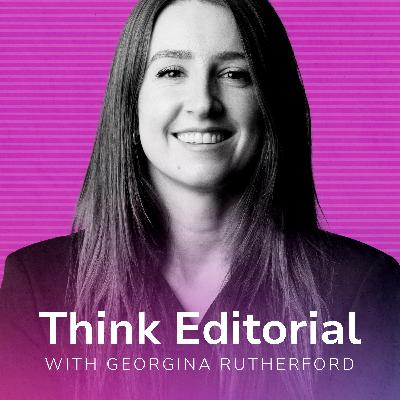
Dive into my interview with Georgina Rutherford, co-founder of Personally, an agency focused on building the personal brands of experts across all sectors—which, of course, means that she has a lot of experience with what works and what doesn't on channels like LinkedIn.Watch the full conversation to find out:How to build a personal brand strategy and keep thought leaders engaged throughout its executionThe pressure to create using AI (as if not doing so is taboo), and how to counter itThe importance of intentional writing, and how to foster it in your collaboration with thought leaders of all levelsThe concept of company-wide personal branding strategies, and how to build themWhat thought leadership really means, and what it’s notHow to counter the fear that stems from sharing one’s thoughts publiclyThe dos and don’ts of leveraging LinkedIn as a personal branding platformAnd much, much more.P.S. If you enjoy this episode, be sure to leave a review and follow Think Editorial for notifications about future editions.
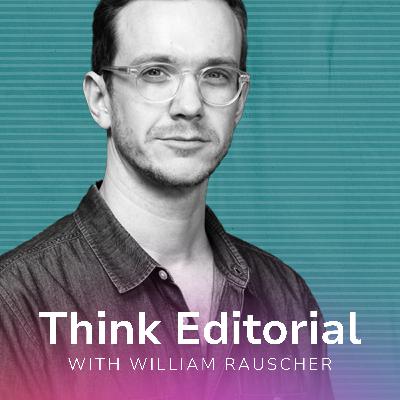
Dive into my interview with William Rauscher, verbal director at Wolff Olins, a global brand consultancy that specializes in corporate identity.This is a unique opportunity to learn from an industry leader whose experience and expertise helps bridge the gap between creativity, strategy, and storytelling—and more importantly, the role verbal identity plays in building your brand.Watch the full conversation to find out:Where verbal identity sits in relation to visual identity, and which one comes firstHow to identify a brand personality that connects deeply with your employeesThe different ways to include and manage stakeholders throughout the development processHow to internalize your verbal identity across the organization and get people excited about itA verbal identity’s tie into internal culture and human resourcesAnd much, much more.P.S. If you enjoy this episode, be sure to leave a review and follow Think Editorial for notifications about future editions.
Comments

Download from Google Play

Download from App Store
 United States