


 Claim Ownership
Even Shlomo - Rav Shlomo Carlebach zt"l on the Weekly Parsha
Subscribed: 1Played: 1
Subscribe

© 2026 Rav Shlomo Katz
Description
Rav Shlomo Katz explores the teachings of Rav Shlomo Carlebach zt"l on the Parsha with the sefer Even Shlomo
26 Episodes
Reverse
As Parshat Vayikra opens the world of korbanot, Rav Shlomo Katz and the chevra of Shirat David uncover a deeper truth from the Even Shlomo: the purpose of a korban was never only to express guilt. It was to bring a person back to clarity — to help them leave the Beit HaMikdash knowing more deeply what truly matters, what doesn’t, and who they really are.In this shiur, Rav Shlomo explores the inner meaning of charatah — regret — not as self-hatred, but as a revelation: this is not the real me. Drawing on Chazal, the Baal Shem Tov, and Reb Shlomo Carlebach, he explains how true teshuvah is not just feeling bad about what was done, but discovering that the sin never reflected the deepest רצון of the soul in the first place.From wartime clarity and the question of what is truly essential, to a haunting story from Berlin, the Titanic, and the hidden purpose of Levi’im singing in the Beit HaMikdash, this episode becomes a meditation on desire itself: not only what we don’t want, but what we do want — and how Vayikra helps us remember.----------For more Shuirim and Music from Rav Shlomo Katz, visit: https://ravshlomokatz.comJoin Rav Shlomo Katz's WhatsApp Community: https://chat.whatsapp.com/KHKOhhPaeHx5Kb74WL9L9a?mode=ems_copy_tCHAPTERS00:00 Opening Niggun: Divine Presence Fills and Sustains the World10:21 Introducing Today’s Special Shiur on Parshat Vayikra11:36 The Blessing of Prioritizing What Truly Matters13:03 Inner Essence of the Korban: Clarity After the Temple15:43 Current Turmoil: Storms, Bombs, and Spiritual Discernment18:27 Regret (Charatah) When Offering a Sacrifice25:45 Radomsk Chasid’s Tragic Tale in Berlin28:09 Existential Question: Who Are We Really?30:03 Baal Shem Tov on Regret and the Heart32:40 Scar Metaphor and Personal Reflection34:01 Family Neglect on the Titanic36:41 Reb Shlomo on Awakening and Desire38:59 Korban Discussion in Masechet Taanit44:49 Levi Music and Holy Nigunim Purpose46:41 Donald Trump & Achashverosh49:03 Closing Announcements and Shabbat Plans

As the war with Iran widens, Rav Shlomo Katz turns to one word in Parshat Ki Tisa that may define this moment more than any other: Ayeh — Where? Recent days have brought more Israeli strikes, Iranian missile attacks, and a growing sense that the conflict is both militarily real and spiritually overwhelming.In this shiur, Rav Shlomo explores Moshe Rabbeinu’s cry after the Golden Calf — “Har’eini na et kevodecha” — and the deeper avodah of “Ayeh mekom kevodo.” Drawing on Reb Shlomo Carlebach and Rebbe Nachman, he explains how the deepest question of faith is not pretending everything is clear, but daring to ask Hashem, from within the confusion, “Where is the place of Your glory?”From the aftermath of the Eigel HaZahav, to the hiddenness before Mashiach, to the spiritual danger of “smart” voices that speak falsehood in the name of truth, this episode is a call to stay focused, remain vulnerable, and turn confusion itself into a מקום כבודו — a place where Hashem’s presence can be revealed.----------For more Shuirim and Music from Rav Shlomo Katz, visit: https://ravshlomokatz.comJoin Rav Shlomo Katz's WhatsApp Community: https://chat.whatsapp.com/KHKOhhPaeHx5Kb74WL9L9a?mode=ems_copy_tCHAPTERS00:00 Opening Niggun and Prayer Invitation04:37 Favorite Davening Words and Staying Focused06:41 Introducing the Key Word Aye m'kom kevodo09:50 Moshe’s Monologue Bringing Down Rachamim12:32 Golden Calf, Mishkan, and Chronology Debate15:59 Divine Hiddenness Before Mashiach18:26 Future Intellectuals and the Call to Aye26:57 Finding Hashem's Honor in Our Relationship28:23 The World as a Spiritual Desert30:13 Is the Desert Journey Lechatchila or Bediavad?31:30 The Snake's Role in Humanity's Questioning32:39 Simple Faith vs. Tested Faith35:18 Ki Tisa: Begging Hashem’s Presence37:59 Final Encouragement to the Community
As Purim approaches, Parshat Zachor arrives first—an annual call not only to remember Amalek historically, but to recognize Amalek as a force that shows up while you’re already on the way.Rav Shlomo Katz and the chevra of Shirat David explore “asher karcha baderech” as the place where momentum gets sabotaged: the moment someone begins real growth, a convincing inner voice appears in the name of “realism,” “compassion,” and “I’m just trying to protect you”—and tells them to stop before they disappoint themselves again. Drawing on Rebbe Nachman (as brought by Reb Shlomo Carlebach), the shiur reframes Amalek as the cynicism that blocks follow-through, often disguised as care, sometimes from others, sometimes from friends, and often from within.The conversation expands from personal avodah (minyan, change, consistency, courage to finish) to the national story of starting strong and being stopped mid-journey, and ends with Purim’s deeper promise: not only that evil can be erased, but that it’s possible to live, if only for a day, inside a reality where the “it’ll never happen” voice is gone.----------For more Shuirim and Music from Rav Shlomo Katz, visit: https://ravshlomokatz.comJoin Rav Shlomo Katz's WhatsApp Community: https://chat.whatsapp.com/KHKOhhPaeHx5Kb74WL9L9a?mode=ems_copy_tCHAPTERS00:00 Personal Celebration and New Baby02:22 Prelude to Purim: Parshat Zachor Importance04:15 Challenge of Starting vs. Finishing05:56 Amalek as Metaphor for Incompletion08:42 Depth Behind Simple Hebrew Phrase10:36 Rebbe Nachman on Wholehearted Service13:27 Marriage Arrows: Cynical Chuppah Observers21:31 Friends as Courage Boosters23:02 Enemies Hidden Among Friends24:04 Friends Discourage New Ideas26:04 Friends as Greatest Enemies28:15 Yossi’s Arabic-Script Picture Story29:22 Amalek Among Decision Makers31:02 Courage to Finish What You Start33:30 Thoughts About People Reflect Thoughts About God39:06 Purim as Erasing Amalek42:17 Yom Kippur vs Purim Self-Reflection47:43 Purim as the holiday of those who remember49:21 ICC claims of Israeli genocide50:48 Remembering Amalek's historical threat52:01 Israel's solitary destiny prophecy53:30 Call to march with confidence
In Parshas Terumah, the Torah details the measurements of the Mishkan — broken numbers, halves, small dimensions. Why?In this powerful shiur, Rav Shlomo Katz and the chevra of Shirat David uncover a radical truth from Reb Shlomo: holy light doesn’t overpower small light. It awakens us to it.What’s the difference between holy money and unholy money? Between a big donation and a small one? Between psychedelic light and a tiny flashlight?From the Kotel built from “pennies” to the קול דממה דקה hidden inside the shofar blast, this teaching reframes how we see value, contribution, community, and even ourselves.----------For more Shuirim and Music from Rav Shlomo Katz, visit: https://ravshlomokatz.comJoin Rav Shlomo Katz's WhatsApp Community: https://chat.whatsapp.com/KHKOhhPaeHx5Kb74WL9L9a?mode=ems_copy_t

Rav Shlomo Katz and the chevra of Shirat David learn the shocking Midrash from Parshat Yitro that says Am Yisrael were sleeping the night before receiving the Torah. But Reb Shlomo Carlebach reveals something much deeper: it wasn’t laziness. It was small anava. The feeling of “Who am I to stand by Har Sinai?”And Moshe Rabbeinu comes tent-to-tent with one last message before Torah can be given:If you still see yourself as limited — if you’re still living inside “Beit Avadim,” the mindset of measuring and calculating what you think you’re capable of — don’t bother coming to Sinai.Freedom isn’t “I do what I want.” Freedom is: I stop measuring. I stop disqualifying myself. I learn to believe that if Hashem is asking it from me, He believes in me.This is the Torah of the night before Sinai: the moment we become people who can say Naaseh v’Nishma — not because we’re naïve, but because we’re finally free.----------For more Shuirim and Music from Rav Shlomo Katz, visit: https://ravshlomokatz.comJoin Rav Shlomo Katz's WhatsApp Community: https://chat.whatsapp.com/KHKOhhPaeHx5Kb74WL9L9a?mode=ems_copy_tChapters00:00 Opening + sponsorships / setting the tone02:40 Introducing Today’s Powerful Parshas Yisro Lesson06:28 Analyzing the Key Word “Vayotze” in the Pasuk08:40 Moshe’s Personal Mission: Visiting Every Tent09:50 Alexander Rebbe on Becoming Moshe’s Students13:04 Moshe’s First Argument with God over Leadership 16:16 Why Moshe No Longer Argues at Sinai18:13 Identifying the First Sign of a Slave23:05 Defining True Freedom versus Slavery26:29 Doing It Even When You Doubt Your Ability27:46 Marriage Prep: Overthinking Before the Commitment29:33 From Beit Avadim to Freedom: First Pasuk Insight30:58 Naaseh V’Nishma: Commitment Without…34:34 Moshe’s Speech Impediment and the…35:51 The Mitzvah to Tell Our Children About Exodus39:29 Bas Mitzvah Story: Learning Through a Young Woman41:05 Moshe’s Final Lesson Before Receiving the Torah
Parshas Bo is not just the story of leaving Egypt. It’s the inner blueprint of freedom.Rav Shlomo Katz and the chevra of Shirat David opens an Even Shlomo that sounds “insane” at first: why does the Torah say “וישאלו איש מאת רעהו” — “ask from your friend” — when it’s describing Egyptians who enslaved us? Why call them re’ehu at all?Because the night of Yetzias Mitzrayim wasn’t only an exit from suffering. It was a flash of Mashiach reality: a moment where Hashem’s light was so clear that no human being could be anyone’s master. Not Pharoah over Egypt. Not fear over your heart. Not people, not pressure, not addiction, not the invisible “dominions” that run our moods and reactions.From the Alter Rebbe fainting at his Seder table, to what freedom looked like in the tunnels of Gaza, to what it means to carry da’as Hashem until it spreads outward, this shiur reframes geulah as the deepest kind of relationship: Hashem shining into us, and us shining back.----------For more Shuirim and Music from Rav Shlomo Katz, visit: https://ravshlomokatz.comJoin Rav Shlomo Katz's WhatsApp Community: https://chat.whatsapp.com/KHKOhhPaeHx5Kb74WL9L9a?mode=ems_copy_tChapters00:00 Intro and Sponsor Shoutouts01:31 Choosing a Torah Topic for Parshas Bo03:26 Who Is the “Re’ehu” in the Commandment?04:40 Lenny Solomon Story and Cultural References07:14 Flipping the Traditional Pshat08:37 The Alter Rebbe’s Leil Seder12:51 Modern Freedom and the Possibility of Geula20:45 Egyptians’ View of the Night of Exodus24:17 Moshiach and the Filling of Daas25:59 Daas of Hashem Required for Global Peace27:40 Egyptians Recognized Hashem as Their Master28:42 Understanding “Re’ehu” — Asking an Equal30:55 One Night of Moshiach-Like Equality32:28 Breslover Chassid’s Tears and Dance36:24 Filling Ourselves with Daas to Bring Redemption
This week in Even Shlomo on Parshat Va’era, Rav Shlomo Katz and the chevra of Shirat David go straight into the cry so many of us are holding: “Ribono Shel Olam… for what? Haven’t we been through enough?” Moshe Rabbeinu asks it too — and the answer isn’t a slogan, it’s a demand: Geulah is not “back to normal.”Reb Shlomo teaches that the world’s “unnatural” situation can’t last forever — but the real question is what happens to us while we’re waiting. Do we settle for healthy, functional, status quo… or do we move into above nature: the place of an Eved Hashem, where Yiddishkeit isn’t routine, relationships aren’t “fine,” and a shul isn’t just a place to daven — it’s a center for dreaming Geulah.Through a piercing story of Reb Shlomo saving a life, and then meeting a lifeguard who saved 26 and didn’t shine at all, we learn the difference between doing something because it’s your job… and doing it with your pnimiyus. And we end with the charge that builds everything: accountability, patience, chaverus, and a Ruach Se’arah — a stormy spirit inside keilim — to carry this community (and our lives) beyond “normal.”----------For more Shuirim and Music from Rav Shlomo Katz, visit: https://ravshlomokatz.comJoin Rav Shlomo Katz's WhatsApp Community: https://chat.whatsapp.com/KHKOhhPaeHx5Kb74WL9L9a?mode=ems_copy_tChapters0:00 Opening dedication and sponsors1:17 Why does suffering continue?2:45 Moshe’s dialogue with Hashem4:36 Maharal: the unnatural has a limit7:43 Natural vs. normal (and “status quo”)13:12 Eved vs. Oved Hashem (Tanya)24:07 The nature of true revelation25:16 Moshe’s imagined dialogue with Pharaoh26:19 Moshe’s question: “For what?”27:58 Imagining a miracle in Iran29:09 Why continue suffering? Moshe’s inquiry30:54 Moshe seeks the nature of future redemption32:49 Call for deeper commitment35:55 Lifeguard story: “26 lives saved”37:00 Service as job vs. spiritual involvement45:18 Understanding Avodah Zarah (the “zarah to you” definition)46:34 Avoiding spiritual estrangement (not a stranger to God)48:19 Taking responsibility + helping the hungry49:29 Exodus vs. returning to Eretz Yisrael50:50 House of Love & Prayer vision52:39 Removing Avodah Zarah from our kehillah54:17 Ruach Se’arah (Rav Weinberger)55:36 Inner pulse of chevra for redemption
What happens when an enemy loses every shred of humanity?In a deeply personal and vulnerable Shemot shiur on Reb Shlomo’s birthday, Rav Shlomo Katz and the chevra of Shirat David confront the painful reality of our generation. Drawing from the Izhbitzer Rebbe (Mei HaShiloach), we explore the verse "The King of Egypt died." We learn that this does not merely refer to a physical death, but to the death of humaneness itself—a state where the enemy is no longer capable of basic human feeling.From the tunnels of Gaza to the hallways of the Knesset, we discuss the shattering of Western assumptions and the necessity of returning to the "Har Sinai Values" that define true morality. Rav Shlomo challenges us to look beyond the confusion of Western culture and "woke" terminology to ask the hard question: Have we actually woken up? We discuss the danger of falling back into the mindset of "it wasn't that bad" and the necessity of screaming out to Hashem. Featuring a powerful story from Rav Soloveitchik regarding the sanctity of life and insights from Rabbi Shlomo Riskin on the modern-day worship of Molech, this episode is a call to clear the fog, choose our side, and realize that true redemption begins when we stop tolerating the intolerable.----------For more Shuirim and Music from Rav Shlomo Katz, visit: https://ravshlomokatz.comJoin Rav Shlomo Katz's WhatsApp Community: https://chat.whatsapp.com/KHKOhhPaeHx5Kb74WL9L9a?mode=ems_copy_t

In Parashat Vayechi, Yaakov Avinu gathers his children for what feels like the ultimate “final download” — He’asfu… and I’ll tell you what will happen at the end of days. And then… it disappears. Nistalka mimenu haShechinah.In this shiur, Rav Shlomo Katz and the chevra of Shirat David learn a short but life-shaping Torah from Even Shlomo: sometimes the deepest clarity isn’t prophecy at all. It’s the holy not knowing that opens a person into yearning, into tefillah, into real closeness.We speak about what a parent wants most for their children, why “knowing how it’ll all turn out” can quietly shut down the heart, and why the night, when you can’t see clearly, can bring out the deepest kind of sight: “וכל עין לך תצפה” — a life of yearning.----------For more Shuirim and Music from Rav Shlomo Katz, visit: https://ravshlomokatz.comJoin Rav Shlomo Katz's WhatsApp Community: https://chat.whatsapp.com/KHKOhhPaeHx5Kb74WL9L9a?mode=ems_copy_t#rsk-vayechi
Parshat Vayigash is the moment the Ishbitzer says is the closest we can taste in this world to what it will feel like when Moshiach reveals himself.Because “Ani Yosef” isn’t just a plot twist. It’s the revelation that everything that looked like hester panim… everything that felt like an enemy… everything that seemed like punishment… was actually part of the process that “squeezed” a deeper YOU out of you.In this shiur, Rav Shlomo Katz and the chevra of Shirat David dive into the Even Shlomo which opens a daring question:If not every Jew is always living on the level of kodesh… could it be that every Jew is still Kodesh Kodashim?We explore:Why the Kodesh Kodashim is in Binyamin’s portion (not Yosef’s)The difference between being “holy” vs being Holy of HoliesWhy sinas chinam is uniquely incompatible with Kodesh KodashimReb Carlebach's radical lens: the Ba’al Teshuva doesn’t just need the Mikdash. He builds itWhat forgiveness looks like on the level of kodesh… versus kodesh kodashim, where the whole story dissolves----------For more Shuirim and Music from Rav Shlomo Katz, visit: https://ravshlomokatz.comJoin Rav Shlomo Katz's WhatsApp Community: https://chat.whatsapp.com/KHKOhhPaeHx5Kb74WL9L9a?mode=ems_copy_t#rsk-vayigash

Rav Shlomo Katz and the chevra of Shirat David open parshat Vayeshev in a way most of us never heard growing up. Instead of a childish tale of jealous brothers and a flashy coat, we meet two kings of Am Yisrael – Yosef and Yehuda – and an underground story of sacrifice, responsibility, and teshuva.Drawing on Ishbitz, Zohar and Reb Shlomo Carlebach, Rav Shlomo explores the possibility that Yosef actually prayed to be the one who goes down to the exile of Egypt, taking the chains of slavery so his father and brothers wouldn’t have to. The brothers, for their part, are not cartoon villains, but holy tribes testing whether Yosef is truly one of them, and sending him off with tears and blessings. Yosef blesses Yehuda with the power of teshuva; Yehuda blesses Yosef with the strength to remain a tzaddik in exile – and both brachos come true.From this hidden story of two kings, Rav Shlomo speaks to our own lives: what it means to carry pain for our family and our people, to do the right thing even when we know we’ll still need to do teshuva, and to hold both kochos – not falling, and getting back up when we do.----------For more Shuirim and Music from Rav Shlomo Katz, visit: https://ravshlomokatz.comJoin Rav Shlomo Katz's WhatsApp Community: https://chat.whatsapp.com/KHKOhhPaeHx5Kb74WL9L9a?mode=ems_copy_t
In this week’s Even Shlomo on the Parsha, Rav Shlomo Katz and the chevre of Shirat David walk with Yaakov into the darkest, most misunderstood place in the human heart – loneliness. “ויבשר יעקב לבדו" – Yaakov was left alone.” Reb Shlomo reads this night of wrestling not as a tragedy, but as the moment Yaakov’s deepest self is revealed on the night he receives the name Yisrael and gives every Jew the strength to stand alone until the dawn of Geulah.Rav Shlomo Katz unpacks:The difference between crushing loneliness and a holy state of being levadoHow the revelation of your soul is really “finding out what Hashem had in mind when He created you”Why you were never meant to be an “identical bagel” in shul – and how to discover the one shlichus no one else can doThe Tzanzer Rebbe’s radical teaching that the thing you most need in life cannot be written black-on-white in the Torah, so that you’ll have to seek it directly from HashemWhy real hisbodedus is not a mental-health “add-on,” but the place where Vayivaser Yaakov Levado becomes real in our own livesFor anyone who feels out of place, unseen, or “too different,” this shiur is a lifeline: a Torah that says your essential loneliness isn’t a mistake – it may be the only place your true name can be revealed.----------For more Shuirim and Music from Rav Shlomo Katz, visit: https://ravshlomokatz.comJoin Rav Shlomo Katz's WhatsApp Community: https://chat.whatsapp.com/KHKOhhPaeHx5Kb74WL9L9a?mode=ems_copy_t
In this week’s Even Shlomo on the Parsha, Rav Shlomo Katz learns a Beis Yaakov from Ishbitz on Yaakov Avinu’s first steps out into galus, and quietly rewrites our whole definition of “success.”We follow Yaakov as he leaves Be’er Sheva and discovers that when you’re searching for Hashem, every step on the way already fills you, unlike the Western model where nothing “counts” until you close the deal, get the money, or hit the goal. Rav Shlomo contrasts wanting money with longing for Hashem, shows how Shabbos and Matan Torah are tasted before they arrive, and opens up “ישמח לב מבקשי ה׳” as a blueprint for a different life: one where holy longing itself is already dveikus.Along the way we touch longing for a soulmate, Messianic fear, Zionism, and why, if your spiritual search just makes you angrier, you might be searching for the wrong thing altogether. This is a shiur for anyone burnt out on outcome-chasing who still feels a stubborn hunger for emes, for Geulah, and for a life where the journey with Hashem is not a consolation prize — it’s the point.----------For more Shuirim and Music from Rav Shlomo Katz, visit: https://ravshlomokatz.comJoin Rav Shlomo Katz's WhatsApp Community: https://chat.whatsapp.com/KHKOhhPaeHx5Kb74WL9L9a?mode=ems_copy_t
Parshat Toldot opens a door into spiritual speed. When Yitzchak asks, “ מַה־זֶּ֛ה מִהַ֥רְתָּ לִמְצֹ֖א בְּנִ֑י”—“How did you find it so fast?”—and Yaakov answers, “ כִּ֥י הִקְרָ֛ה ה׳ אֱלֹקיךָ לְפָנָֽי”—"Because Hashem has granted me good fortune"— Reb Shlomo Carlebach reads it as a secret of kefitzat haderech: the heart can shorten the road when there’s clarity, love, and the courage to truly see one another. We trace that current back to Eliezer’s “וָאָבֹ֥א הַיֹּ֖ום אֶל־הָעָ֑יִן” (arriving today at the well), showing how the right shlichut, aligned with kedushah, compresses what “should” take years.Rav Shlomo Katz and the chevra of Shirat David explore how Yitzchak’s inner sight during the brachot let him finally “meet” Yaakov, and how that recognition accelerates redemption on the clock of Jewish history. Toldot becomes a guide for our week: less waiting, more seeing; less delay, more doing.TakeawaysPractice “kefitzat haderech” in real life: choose one mitzvah and act now, not later.See someone fully today: name one thing unique/special about them and reflect it back.----------For more Shuirim and Music from Rav Shlomo Katz, visit: https://ravshlomokatz.comJoin Rav Shlomo Katz's WhatsApp Community: https://chat.whatsapp.com/KHKOhhPaeHx5Kb74WL9L9a?mode=ems_copy_t
Chayei Sara is the world after the Akeidah: how Avraham and Yitzchak walked back into life with new eyes, and how we’re meant to daven with those eyes today. Rav Shlomo Katz and the chevre of Shirat David learn a short, potent piece from Reb Carlebach's Even Shlomo about מיחדות—that inner point of “what’s special” inside every Jew—and why Yitzchak and Rivka’s shidduch had to be more than “compatible”; it had to be "special meets special."From Eliezer’s test at the well, to zeh Keili v’anveihu (a personal, beautiful connection to Hashem), to the way Yom Kippur → Sukkah → Simchas Torah reconnects us to that inner point, we map how to find our word in tefillah, our portion in Torah, and our way back when we’ve gone external.What you’ll hearWhy after the Akeidah, ordinary compatibility isn’t enoughHow to help our generation by linking Torah to each person’s unique nekudah (and why they’ll keep searching elsewhere until we do).A practical path: Yom Kippur restores the link → Sukkah expresses it → Simchas Torah rejoices in it.The chuppah image: the kallah “points”—zeh zivugi v’anveihu—and how to bring that clarity into daily avodah.TakeawaysAsk daily: What felt special in my davening today? One word.Give first honor to the inborn nekudah, and then coach behavior.Teach Torah by matching it to people’s inner point.If you feel disconnected: rebuild with the YK→Sukkah→Simchas Torah ladder----------For more Shuirim and Music from Rav Shlomo Katz, visit: https://ravshlomokatz.comJoin Rav Shlomo Katz's WhatsApp Community: https://chat.whatsapp.com/KHKOhhPaeHx5Kb74WL9L9a?mode=ems_copy_t
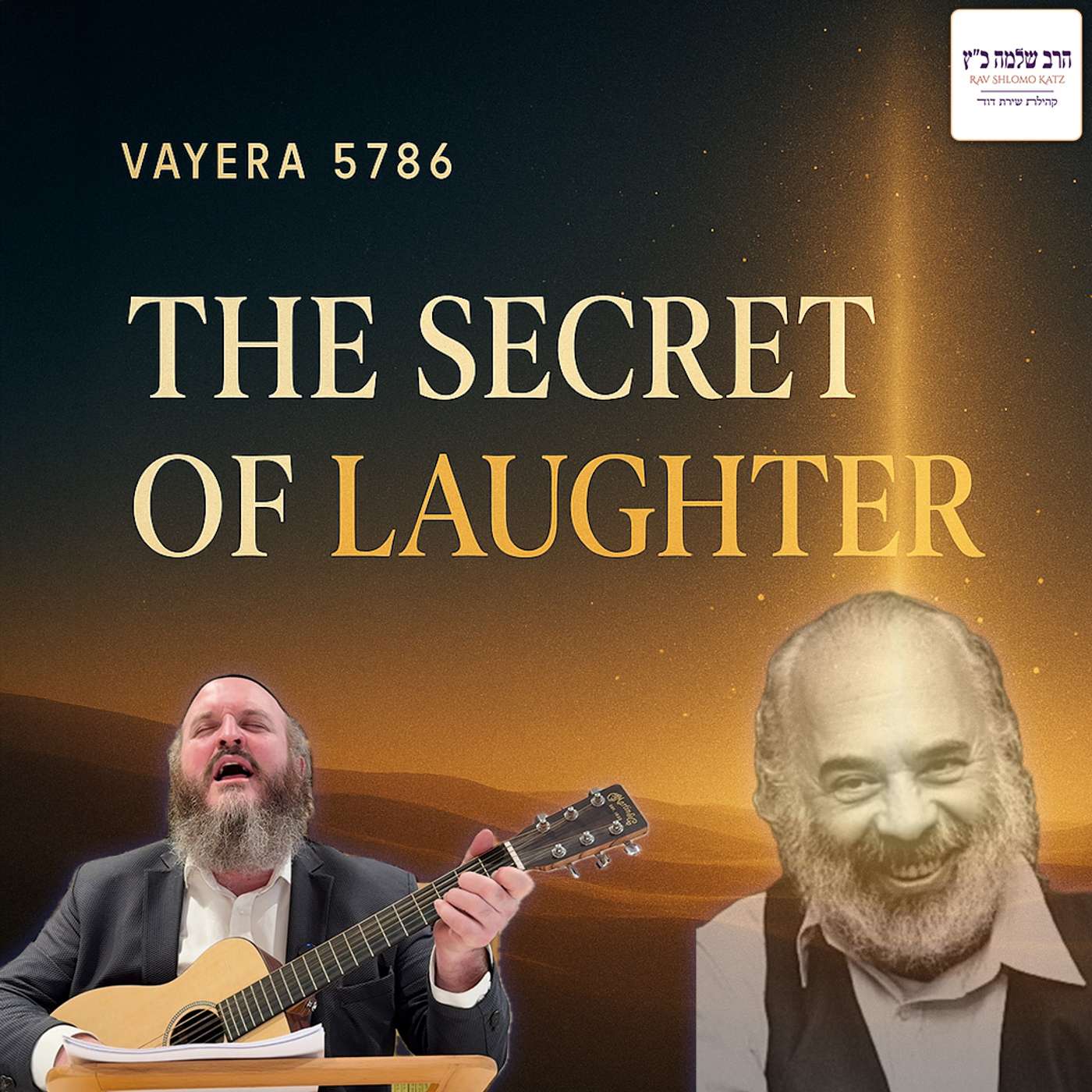
In Vayera, the name Yitzchak —“laughter”— opens a window into two kinds of kedushah: the holiness we build through our choices, and the inborn holiness that no failure can touch. On Reb Shlomo’s 31st yahrtzeit, we sing, remember, and learn how courageous love makes our days longer and our lives larger.Drawing from Even Shlomo, we explore why the world “burst into laughter” at Yitzchak’s birth: Avraham and Sarah toiled for years so a new truth could enter creation: that Jewish children are born holy. From there, we look at how we can learn to see that holiness in ourselves and in others, especially our children, even when it’s covered by dust.What you’ll hearNigunim from the archives and the yahrtzeit story that shaped this week’s learningThe two levels of kedushah: earned vs. inherent, and how to live with bothWhy Yitzchak’s birth changed human joy, and what “holy laughter” means in hard timesPractical avodah: courageous love, giving kavod to children, and listening for the place inside that already knows what to doTakeawaysYour inborn kedushah is untouchable; your choices uncover it.Holy laughter = the shock of seeing that goodness is real.Give first honor to a person’s inner holiness and then coach the behavior.----------For more Shuirim and Music from Rav Shlomo Katz, visit: https://ravshlomokatz.comJoin Rav Shlomo Katz's WhatsApp Community: https://chat.whatsapp.com/KHKOhhPaeHx5Kb74WL9L9a?mode=ems_copy_t
In Parshat Lech Lecha, Avraham Avinu begins the journey that defines what it means to be a Jew, and asks the question that still echoes through every generation: “במה אדע כי אירשנה” — “Hashem, how will I know that this Land is truly ours?”Rav Shlomo Katz and the chevra of Shirat David explore Reb Shlomo Carlebach’s teachings on the Even Shlomo, uncovering why Eretz Yisrael is the deepest and most complicated question in the world. Through the words of the Aish Kodesh, the Izhbitzer, and Reb Shlomo, we learn that the promise of the Land is not a guarantee — it’s a relationship. A relationship that can only survive when it rises מעל הבחירה — beyond choice. A connection that demands not just faith in Hashem, but a longing to hear directly from Him.#rsk-lech-lechaTakeaways: – The bond with the land of Israel mirrors the bond with Hashem — it only lasts when it’s beyond choice. – The hardest questions in faith aren’t a lack of belief; they’re part of how we stay in the conversation. – Our generation’s holy chutzpah — to want to hear directly from Hashem — is itself a sign of Geulah. – The question “Why is Eretz Yisrael so complicated?” isn’t a doubt — it’s a calling.----------For more Shuirim and Music from Rav Shlomo Katz, visit: https://ravshlomokatz.comJoin Rav Shlomo Katz's WhatsApp Community: https://chat.whatsapp.com/KHKOhhPaeHx5Kb74WL9L9a?mode=ems_copy_t
In one of the most hidden episodes of the Torah, Parshat Balak reveals a dimension of Hashem’s love that we never even knew was happening. Am Yisrael was entirely unaware while curses were being transformed into blessings, because Hashem simply refused to hear anything negative about His people.Rav Shlomo Katz and the chevra of Shirat David take us deep into the teachings of the Izhbitzer and Chazal, showing how the story of Bilam, the story of Iyov, and the Five Books of the Torah form a complete spiritual picture: what we feel when Hashem seems absent, and what Hashem feels when we seem absent. The answer? He’s always thinking about us.A perfect entry into the Three Weeks with clarity and compassion.
What happens when the well of connection dries up?Join Rav Shlomo Katz and the Chevra of Shirat David as they explore the mysterious link between Miriam HaNeviah and the life-giving waters that sustained Am Yisrael in the desert. Why did the water cease with her passing? What does it mean to “taste infinity” in a mitzvah, a relationship, or even a single word of Torah?From perfectionism in spirituality to the infinite power of a single drop of water, this shiur travels from Moshe’s grief to Miriam’s unique essence of chibur—connection. Through Chassidic stories, deep Torah from the Ba’er Miriam, and insights into emotional resilience, we are reminded that it’s not how “perfectly” we live, but how connected we remain—especially through our mistakes.Topics include:The danger of spiritual perfectionismHow a mitzvah touches infinityWhy the Jewish soul is rooted in the motherThe ongoing journey of Miriam’s wellWhat it means to be holy… but not connectedA must-listen for anyone longing for depth, gentleness, and reconnection.
What makes someone truly great? Is it perfection, success, or never making a mistake? Rav Shlomo Katz dives deep into Parshat Korach, uncovering profound insights from the teachings of Reb Leibele Eiger and Even Shlomo. Discover why genuine greatness isn't about always being right—but about the courage to admit when you're wrong. Explore the critical difference between truth and the "truth of truths," and learn how the ultimate test of character lies in embracing humility and vulnerability.This shiur illuminates what it truly means to be an איש אמת (a person of truth) in a world full of confusing messages, teaching us how to find real clarity and spiritual strength.#ParshatKorach #JewishWisdom #TrueGreatness #Emunah #Humility #ShlomoKatz

Comments

Download from Google Play

Download from App Store
 United States