


 Claim Ownership
Even Shlomo - Rav Shlomo Carlebach zt"l on the Weekly Parsha
Subscribed: 1Played: 1
Subscribe

© 2025 Rav Shlomo Katz
Description
Rav Shlomo Katz explores the teachings of Rav Shlomo Carlebach zt"l on the Parsha with the sefer Even Shlomo
17 Episodes
Reverse

In Parashat Vayechi, Yaakov Avinu gathers his children for what feels like the ultimate “final download” — He’asfu… and I’ll tell you what will happen at the end of days. And then… it disappears. Nistalka mimenu haShechinah.In this shiur, Rav Shlomo Katz and the chevra of Shirat David learn a short but life-shaping Torah from Even Shlomo: sometimes the deepest clarity isn’t prophecy at all. It’s the holy not knowing that opens a person into yearning, into tefillah, into real closeness.We speak about what a parent wants most for their children, why “knowing how it’ll all turn out” can quietly shut down the heart, and why the night, when you can’t see clearly, can bring out the deepest kind of sight: “וכל עין לך תצפה” — a life of yearning.----------For more Shuirim and Music from Rav Shlomo Katz, visit: https://ravshlomokatz.comJoin Rav Shlomo Katz's WhatsApp Community: https://chat.whatsapp.com/KHKOhhPaeHx5Kb74WL9L9a?mode=ems_copy_t#rsk-vayechi

Parshat Vayigash is the moment the Ishbitzer says is the closest we can taste in this world to what it will feel like when Moshiach reveals himself.Because “Ani Yosef” isn’t just a plot twist. It’s the revelation that everything that looked like hester panim… everything that felt like an enemy… everything that seemed like punishment… was actually part of the process that “squeezed” a deeper YOU out of you.In this shiur, Rav Shlomo Katz and the chevra of Shirat David dive into the Even Shlomo which opens a daring question:If not every Jew is always living on the level of kodesh… could it be that every Jew is still Kodesh Kodashim?We explore:Why the Kodesh Kodashim is in Binyamin’s portion (not Yosef’s)The difference between being “holy” vs being Holy of HoliesWhy sinas chinam is uniquely incompatible with Kodesh KodashimReb Carlebach's radical lens: the Ba’al Teshuva doesn’t just need the Mikdash. He builds itWhat forgiveness looks like on the level of kodesh… versus kodesh kodashim, where the whole story dissolves----------For more Shuirim and Music from Rav Shlomo Katz, visit: https://ravshlomokatz.comJoin Rav Shlomo Katz's WhatsApp Community: https://chat.whatsapp.com/KHKOhhPaeHx5Kb74WL9L9a?mode=ems_copy_t#rsk-vayigash

Rav Shlomo Katz and the chevra of Shirat David open parshat Vayeshev in a way most of us never heard growing up. Instead of a childish tale of jealous brothers and a flashy coat, we meet two kings of Am Yisrael – Yosef and Yehuda – and an underground story of sacrifice, responsibility, and teshuva.Drawing on Ishbitz, Zohar and Reb Shlomo Carlebach, Rav Shlomo explores the possibility that Yosef actually prayed to be the one who goes down to the exile of Egypt, taking the chains of slavery so his father and brothers wouldn’t have to. The brothers, for their part, are not cartoon villains, but holy tribes testing whether Yosef is truly one of them, and sending him off with tears and blessings. Yosef blesses Yehuda with the power of teshuva; Yehuda blesses Yosef with the strength to remain a tzaddik in exile – and both brachos come true.From this hidden story of two kings, Rav Shlomo speaks to our own lives: what it means to carry pain for our family and our people, to do the right thing even when we know we’ll still need to do teshuva, and to hold both kochos – not falling, and getting back up when we do.----------For more Shuirim and Music from Rav Shlomo Katz, visit: https://ravshlomokatz.comJoin Rav Shlomo Katz's WhatsApp Community: https://chat.whatsapp.com/KHKOhhPaeHx5Kb74WL9L9a?mode=ems_copy_t
In this week’s Even Shlomo on the Parsha, Rav Shlomo Katz and the chevre of Shirat David walk with Yaakov into the darkest, most misunderstood place in the human heart – loneliness. “ויבשר יעקב לבדו" – Yaakov was left alone.” Reb Shlomo reads this night of wrestling not as a tragedy, but as the moment Yaakov’s deepest self is revealed on the night he receives the name Yisrael and gives every Jew the strength to stand alone until the dawn of Geulah.Rav Shlomo Katz unpacks:The difference between crushing loneliness and a holy state of being levadoHow the revelation of your soul is really “finding out what Hashem had in mind when He created you”Why you were never meant to be an “identical bagel” in shul – and how to discover the one shlichus no one else can doThe Tzanzer Rebbe’s radical teaching that the thing you most need in life cannot be written black-on-white in the Torah, so that you’ll have to seek it directly from HashemWhy real hisbodedus is not a mental-health “add-on,” but the place where Vayivaser Yaakov Levado becomes real in our own livesFor anyone who feels out of place, unseen, or “too different,” this shiur is a lifeline: a Torah that says your essential loneliness isn’t a mistake – it may be the only place your true name can be revealed.----------For more Shuirim and Music from Rav Shlomo Katz, visit: https://ravshlomokatz.comJoin Rav Shlomo Katz's WhatsApp Community: https://chat.whatsapp.com/KHKOhhPaeHx5Kb74WL9L9a?mode=ems_copy_t
In this week’s Even Shlomo on the Parsha, Rav Shlomo Katz learns a Beis Yaakov from Ishbitz on Yaakov Avinu’s first steps out into galus, and quietly rewrites our whole definition of “success.”We follow Yaakov as he leaves Be’er Sheva and discovers that when you’re searching for Hashem, every step on the way already fills you, unlike the Western model where nothing “counts” until you close the deal, get the money, or hit the goal. Rav Shlomo contrasts wanting money with longing for Hashem, shows how Shabbos and Matan Torah are tasted before they arrive, and opens up “ישמח לב מבקשי ה׳” as a blueprint for a different life: one where holy longing itself is already dveikus.Along the way we touch longing for a soulmate, Messianic fear, Zionism, and why, if your spiritual search just makes you angrier, you might be searching for the wrong thing altogether. This is a shiur for anyone burnt out on outcome-chasing who still feels a stubborn hunger for emes, for Geulah, and for a life where the journey with Hashem is not a consolation prize — it’s the point.----------For more Shuirim and Music from Rav Shlomo Katz, visit: https://ravshlomokatz.comJoin Rav Shlomo Katz's WhatsApp Community: https://chat.whatsapp.com/KHKOhhPaeHx5Kb74WL9L9a?mode=ems_copy_t
Parshat Toldot opens a door into spiritual speed. When Yitzchak asks, “ מַה־זֶּ֛ה מִהַ֥רְתָּ לִמְצֹ֖א בְּנִ֑י”—“How did you find it so fast?”—and Yaakov answers, “ כִּ֥י הִקְרָ֛ה ה׳ אֱלֹקיךָ לְפָנָֽי”—"Because Hashem has granted me good fortune"— Reb Shlomo Carlebach reads it as a secret of kefitzat haderech: the heart can shorten the road when there’s clarity, love, and the courage to truly see one another. We trace that current back to Eliezer’s “וָאָבֹ֥א הַיֹּ֖ום אֶל־הָעָ֑יִן” (arriving today at the well), showing how the right shlichut, aligned with kedushah, compresses what “should” take years.Rav Shlomo Katz and the chevra of Shirat David explore how Yitzchak’s inner sight during the brachot let him finally “meet” Yaakov, and how that recognition accelerates redemption on the clock of Jewish history. Toldot becomes a guide for our week: less waiting, more seeing; less delay, more doing.TakeawaysPractice “kefitzat haderech” in real life: choose one mitzvah and act now, not later.See someone fully today: name one thing unique/special about them and reflect it back.----------For more Shuirim and Music from Rav Shlomo Katz, visit: https://ravshlomokatz.comJoin Rav Shlomo Katz's WhatsApp Community: https://chat.whatsapp.com/KHKOhhPaeHx5Kb74WL9L9a?mode=ems_copy_t
Chayei Sara is the world after the Akeidah: how Avraham and Yitzchak walked back into life with new eyes, and how we’re meant to daven with those eyes today. Rav Shlomo Katz and the chevre of Shirat David learn a short, potent piece from Reb Carlebach's Even Shlomo about מיחדות—that inner point of “what’s special” inside every Jew—and why Yitzchak and Rivka’s shidduch had to be more than “compatible”; it had to be "special meets special."From Eliezer’s test at the well, to zeh Keili v’anveihu (a personal, beautiful connection to Hashem), to the way Yom Kippur → Sukkah → Simchas Torah reconnects us to that inner point, we map how to find our word in tefillah, our portion in Torah, and our way back when we’ve gone external.What you’ll hearWhy after the Akeidah, ordinary compatibility isn’t enoughHow to help our generation by linking Torah to each person’s unique nekudah (and why they’ll keep searching elsewhere until we do).A practical path: Yom Kippur restores the link → Sukkah expresses it → Simchas Torah rejoices in it.The chuppah image: the kallah “points”—zeh zivugi v’anveihu—and how to bring that clarity into daily avodah.TakeawaysAsk daily: What felt special in my davening today? One word.Give first honor to the inborn nekudah, and then coach behavior.Teach Torah by matching it to people’s inner point.If you feel disconnected: rebuild with the YK→Sukkah→Simchas Torah ladder----------For more Shuirim and Music from Rav Shlomo Katz, visit: https://ravshlomokatz.comJoin Rav Shlomo Katz's WhatsApp Community: https://chat.whatsapp.com/KHKOhhPaeHx5Kb74WL9L9a?mode=ems_copy_t
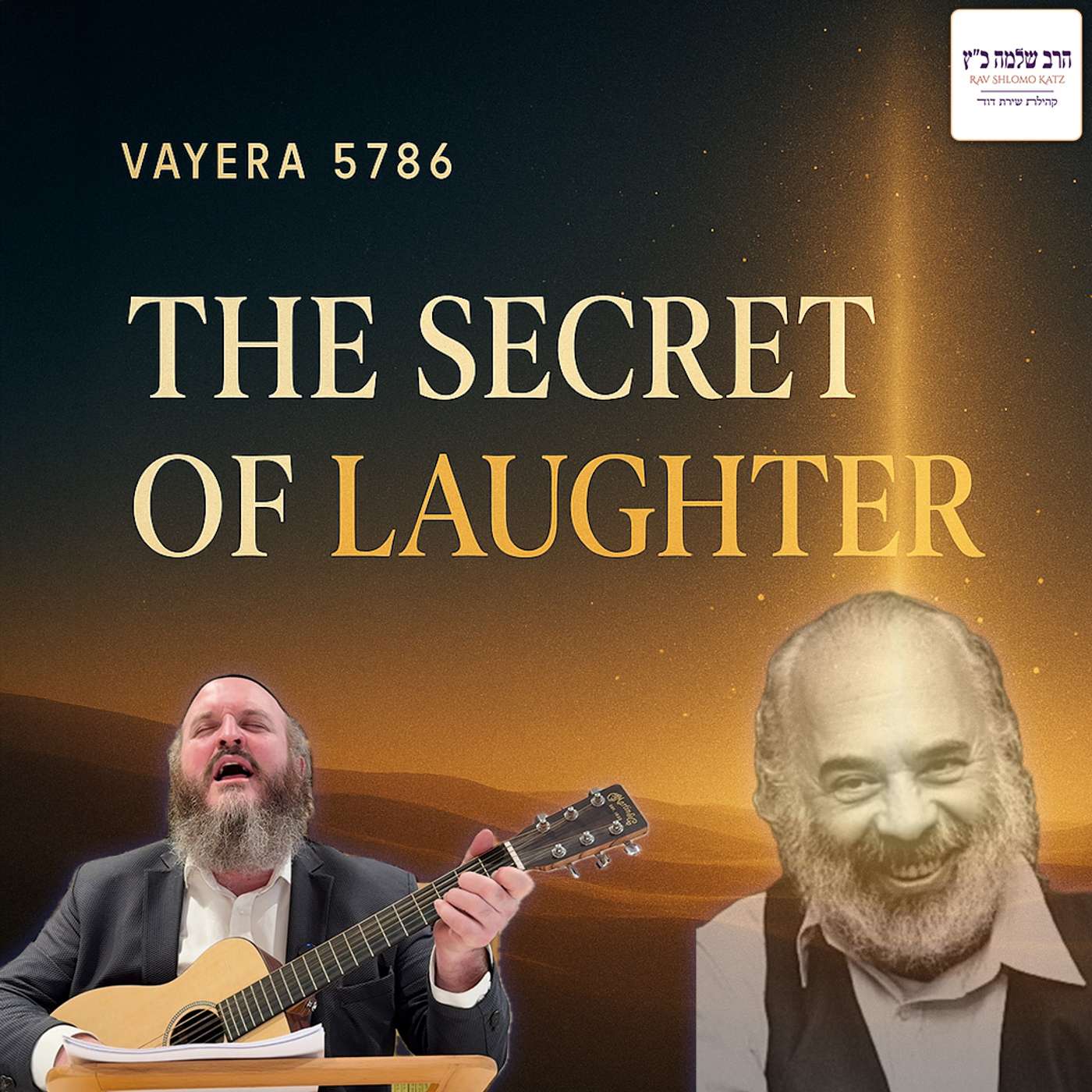
In Vayera, the name Yitzchak —“laughter”— opens a window into two kinds of kedushah: the holiness we build through our choices, and the inborn holiness that no failure can touch. On Reb Shlomo’s 31st yahrtzeit, we sing, remember, and learn how courageous love makes our days longer and our lives larger.Drawing from Even Shlomo, we explore why the world “burst into laughter” at Yitzchak’s birth: Avraham and Sarah toiled for years so a new truth could enter creation: that Jewish children are born holy. From there, we look at how we can learn to see that holiness in ourselves and in others, especially our children, even when it’s covered by dust.What you’ll hearNigunim from the archives and the yahrtzeit story that shaped this week’s learningThe two levels of kedushah: earned vs. inherent, and how to live with bothWhy Yitzchak’s birth changed human joy, and what “holy laughter” means in hard timesPractical avodah: courageous love, giving kavod to children, and listening for the place inside that already knows what to doTakeawaysYour inborn kedushah is untouchable; your choices uncover it.Holy laughter = the shock of seeing that goodness is real.Give first honor to a person’s inner holiness and then coach the behavior.----------For more Shuirim and Music from Rav Shlomo Katz, visit: https://ravshlomokatz.comJoin Rav Shlomo Katz's WhatsApp Community: https://chat.whatsapp.com/KHKOhhPaeHx5Kb74WL9L9a?mode=ems_copy_t
In Parshat Lech Lecha, Avraham Avinu begins the journey that defines what it means to be a Jew, and asks the question that still echoes through every generation: “במה אדע כי אירשנה” — “Hashem, how will I know that this Land is truly ours?”Rav Shlomo Katz and the chevra of Shirat David explore Reb Shlomo Carlebach’s teachings on the Even Shlomo, uncovering why Eretz Yisrael is the deepest and most complicated question in the world. Through the words of the Aish Kodesh, the Izhbitzer, and Reb Shlomo, we learn that the promise of the Land is not a guarantee — it’s a relationship. A relationship that can only survive when it rises מעל הבחירה — beyond choice. A connection that demands not just faith in Hashem, but a longing to hear directly from Him.#rsk-lech-lechaTakeaways: – The bond with the land of Israel mirrors the bond with Hashem — it only lasts when it’s beyond choice. – The hardest questions in faith aren’t a lack of belief; they’re part of how we stay in the conversation. – Our generation’s holy chutzpah — to want to hear directly from Hashem — is itself a sign of Geulah. – The question “Why is Eretz Yisrael so complicated?” isn’t a doubt — it’s a calling.----------For more Shuirim and Music from Rav Shlomo Katz, visit: https://ravshlomokatz.comJoin Rav Shlomo Katz's WhatsApp Community: https://chat.whatsapp.com/KHKOhhPaeHx5Kb74WL9L9a?mode=ems_copy_t
In one of the most hidden episodes of the Torah, Parshat Balak reveals a dimension of Hashem’s love that we never even knew was happening. Am Yisrael was entirely unaware while curses were being transformed into blessings, because Hashem simply refused to hear anything negative about His people.Rav Shlomo Katz and the chevra of Shirat David take us deep into the teachings of the Izhbitzer and Chazal, showing how the story of Bilam, the story of Iyov, and the Five Books of the Torah form a complete spiritual picture: what we feel when Hashem seems absent, and what Hashem feels when we seem absent. The answer? He’s always thinking about us.A perfect entry into the Three Weeks with clarity and compassion.
What happens when the well of connection dries up?Join Rav Shlomo Katz and the Chevra of Shirat David as they explore the mysterious link between Miriam HaNeviah and the life-giving waters that sustained Am Yisrael in the desert. Why did the water cease with her passing? What does it mean to “taste infinity” in a mitzvah, a relationship, or even a single word of Torah?From perfectionism in spirituality to the infinite power of a single drop of water, this shiur travels from Moshe’s grief to Miriam’s unique essence of chibur—connection. Through Chassidic stories, deep Torah from the Ba’er Miriam, and insights into emotional resilience, we are reminded that it’s not how “perfectly” we live, but how connected we remain—especially through our mistakes.Topics include:The danger of spiritual perfectionismHow a mitzvah touches infinityWhy the Jewish soul is rooted in the motherThe ongoing journey of Miriam’s wellWhat it means to be holy… but not connectedA must-listen for anyone longing for depth, gentleness, and reconnection.
What makes someone truly great? Is it perfection, success, or never making a mistake? Rav Shlomo Katz dives deep into Parshat Korach, uncovering profound insights from the teachings of Reb Leibele Eiger and Even Shlomo. Discover why genuine greatness isn't about always being right—but about the courage to admit when you're wrong. Explore the critical difference between truth and the "truth of truths," and learn how the ultimate test of character lies in embracing humility and vulnerability.This shiur illuminates what it truly means to be an איש אמת (a person of truth) in a world full of confusing messages, teaching us how to find real clarity and spiritual strength.#ParshatKorach #JewishWisdom #TrueGreatness #Emunah #Humility #ShlomoKatz
Join Rav Shlomo Katz as we dive deep into one of the most vulnerable, explosive, and essential teachings of the Ishbitzer Rebbe: the yearning for a lev basar — a heart of flesh.Why did Bnei Yisrael suddenly ask for meat in the desert, after witnessing the greatest miracles in history? Was it physical craving... or a spiritual cry to feel something again?Drawing from the teachings of Rav Shlomo Carlebach, the Ishbitzer Rebbe, and the prophetic vision of the Messianic era, Rav Shlomo challenges us to ask: Are we strong because we're tough, or are we strong because we're soft? What does it mean to be a Jew with a heart that feels — even when it hurts?In this shiur:Why the complaint for “meat” was really a cry for inner lifeWhat it truly means to serve Hashem with a lev basar — a heart that feelsHow leadership, vulnerability, and humility go hand in hand
Why does the Torah open Parshat Naso with בני גרשון—and why are they the ones who need their heads lifted?Join Rav Shlomo Katz as he dives deep into the Torah of Even Shlomo, the teachings of Rav Shlomo Carlebach, to reveal the inner world of those who feel cast out, rejected, or spiritually divorced from their source. What does it mean to feel מגורש—exiled, pushed away? And how does the Torah respond?Through the lens of the name גרשון, Rav Shlomo brings healing to anyone who’s ever felt like God wasn’t interested in them. We learn that lifting the head doesn’t just mean cheering someone up—it means elevating the way they think. Seeing exile not as rejection, but as preparation. Realizing that you can only be divorced from a place you were once deeply connected to.This is a Torah for those who feel spiritually stuck, who wonder if they’ve been left behind. It's for those who need another Har Sinai—a new revelation that reminds them: you were never really exiled. You just need to lift your head.In this shiur:Why the name Gershon holds the secret to spiritual returnWhat it really means to be "divorced" from GodHow the Levi'im were masters of lifting people out of despairWhy post-Shavuot is when we need Har Sinai the mostAnd how Rav Shlomo Carlebach’s Torah heals the souls of the “גם הם”—those who wonder if they’re still wantedThis teaching is from Even Shlomo on Sefer Bamidbar, with live reflection and depth from Rav Shlomo Katz.
Why did Rav Shlomo Carlebach call Sefer Bamidbar “The Book of Mistakes”?Join Rav Shlomo Katz as he reflects on the teachings of Even Shlomo, the Torah of Rav Shlomo Carlebach, revealing how Bamidbar is not just a book of wandering, but a book of becoming. From Moshe Rabbeinu’s failure to enter Eretz Yisrael to the downfall of the meraglim (spies), we learn that failure isn’t the end. It’s part of the path.As Rav Shlomo Carlebach writes, “The higher the goal, the more you’re going to fall on the way.” Rav Shlomo Katz brings these words to life, especially as we prepare for Shavuot, reminding us that Torah was given in the desert because only those who know they’re lost can truly hold on to it.In this shiur:Why Bamidbar is the “Book of Mistakes”The inner Torah of failure, growth, and humilityWhy even Moshe Rabbeinu’s failures matter—and how they teach us to keep goingHow to spiritually prepare for Matan Torah when you feel unworthyThis teaching is from Even Shlomo on Sefer Bamidbar, the collected Torah of Rav Shlomo Carlebach, with live commentary and reflection by Rav Shlomo Katz.
What does it mean to live with Hashem engraved in your soul?This shiur dives into the Torah of חקיקה — of engraving. Not just doing mitzvot, but becoming someone who can't not. Someone whose subconscious, whose smallest actions, carry Hashem’s light.Drawing from the teachings of Rav Shlomo Carlebach, the Izhbitzer, and Chazal, we explore what happens when the inner world becomes clean, when your heart cries out even before you speak.We talk about the power of פנימיות, of the צעקה של הלב, the scream of the heart that goes deeper than tefillah. And we ask the uncomfortable question: If this isn’t engraved in me and if I’m not living from that place, can I really stand at Har Sinai?
What if the greatest danger to your soul isn’t failure… but arrival?This week’s Torah hits a deeper nerve: what happens when the thing you begged for actually happens? You’re here. You’re holding it. Now what?What if we’ve stopped dreaming because we think we’ve already arrived?
Comments

Download from Google Play

Download from App Store
 United States