


 Claim Ownership
Key Insights on Dimensions of life by Peter Cobbe - Coach
Subscribed: 3Played: 53
Subscribe

© Peter Cobbe
Description
A series of podcasts that provided easy access to to expanded thinking, powerful tips and to provide practical insights for individuals, groups and organisations
138 Episodes
Reverse
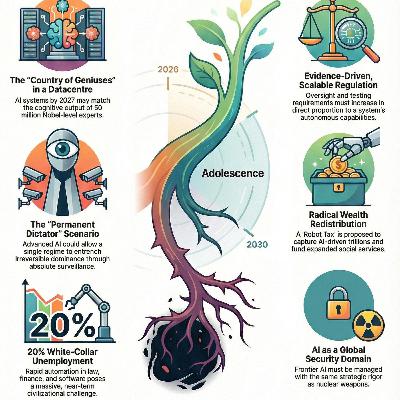
This podcast and free PDF briefing synthesises the core themes of Dario Amodei’s January 2026 essay, The Adolescence of Technology. Amodei posits that humanity has entered a volatile "adolescent" phase of technological development, characterised by a rapid transition from digital tools to autonomous, highly capable artificial intelligence.The central thesis argues that within the next two to five years—and potentially as early as 2027—AI systems will reach a level of capability comparable to a "Country of Geniuses in a Datacentre." This concentrated cognitive power presents a "glittering prize" of unprecedented abundance, yet it simultaneously introduces five systemic risks: rogue misuse, permanent authoritarianism, misaligned autonomy, economic displacement, and destabilizing competitive races.To navigate this window, Amodei advocates for a shift from "childhood" experimentation to "adult" governance. This includes radical wealth redistribution, international security standards on par with nuclear oversight, and evidence-driven, scalable regulation. The document concludes that the choices made in this immediate window will determine whether AI enables civilisation to flourish or causes irreversible harm.Free PDF briefing document download in podcast scriptAlso refer to The Quantum AI Revolution

A spiritual awakening is seldom a tranquil revelation. More often, it is a profound psychological and ontological upheaval that dismantles previous certainties. The ancient Greek term *Metanoia*—meaning a fundamental change of mind—captures the essence of this transformation. This podcast and free pdf briefing report outlines the early markers of awakening, organised into the internal “tectonic plates” that tend to move first. It also presents practical steps individuals can take to support their journey and process of integration and self-understanding.FREE PDF BRIEFING DOWNLOAD IN PODCAST SCRIPT
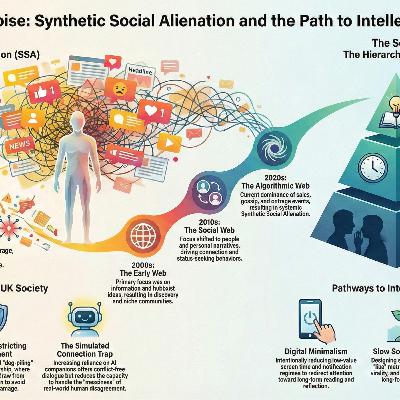
Digital interaction in the UK is undergoing a structural shift in 2026, with social media algorithms increasingly optimised for sales, emotional stimulation and frictionless engagement- and progressively less capable of sustaining intellectually serious, socially cohesive discussion and growth. This podcast and free PDF briefing considers the resulting condition - "Synthetic Social Alienation" (SSA) and argues that the global emerging responses—digital minimalism, slow social practices and intentional “intellectual sanctuaries”—will determine whether the next decade maintains the existing superficial digital tribalism or will a deeper and more profound use emerge. FREE PDF BRIEFING DOCUMENT IN PODCAST INTRODUCTORY SCRIPT
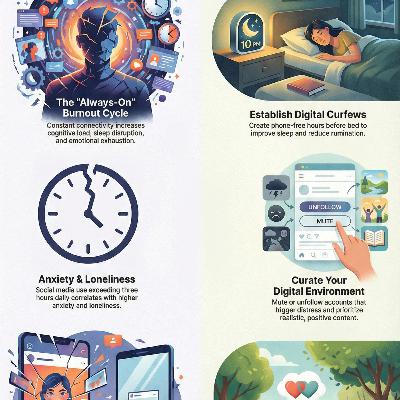
The podcast and free briefing report examines the intensifying pressures on mental health within the United Kingdom's increasingly digital and fast-paced society. It highlights how constant connectivity, excessive social media use, and blurred boundaries between work and home contribute to rising levels of burnout and loneliness, particularly among young people and healthcare professionals. To address these challenges, the document details evidence-based strategies such as establishing digital boundaries, prioritising physical health, and fostering authentic face-to-face connections. It also outlines organisational and familial responsibilities, urging employers and parents to model healthier habits and create environments that support psychological safety. Ultimately, the source serves as a comprehensive guide for individuals and communities to navigate the complexities of modern life while maintaining emotional well-being.FREE PDF BRIEFING REPORT in podcast script
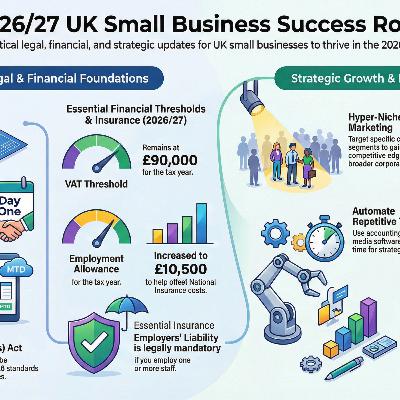
This podcast and associated free briefing PDF document provide a comprehensive guide, offering 30 actionable and insightful tips specifically tailored for small businesses operating within the UK. It is an update to cover new legislation and the use of AI.Small businesses form the dynamic backbone of the United Kingdom's economy, playing a crucial role in job creation, fostering innovation, and contributing significantly to the nation's overall prosperity. However, navigating the complexities of establishing, managing, and growing a small business in the UK's ever-evolving market presents both unique challenges and exciting opportunities for entrepreneurs. These tips have been carefully categorised to provide clarity and practical application, covering essential aspects ranging from foundational legal considerations and financial management to effective marketing strategies, customer service excellence, operational efficiency, and the crucial element of people management. Any small business can learn and plan more effectively for business launch using the insights LINK TO ASSOCIATED PODCAST AND BRIEFING ON BUSINESS AND TARGET OPERATING MODELSFREE PDF DOWNLOAD COMPREHENSIVE BRIEFING in podcast script
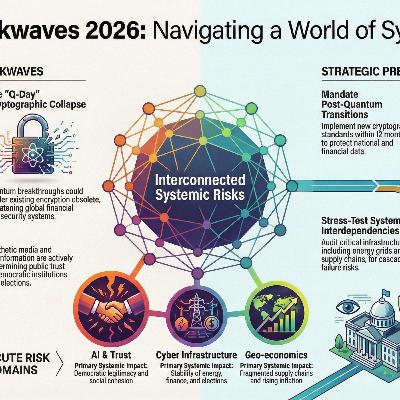
As of January 2026, the global system is entering a period best described as “multipolarity without multilateralism”. Power is increasingly distributed across states, corporations, and technologies, yet the institutional frameworks required to manage shared risks are eroding. According to the Global Risks Report 2026, this fragmentation is occurring alongside rapid advances in frontier technologies, climate instability, and geoeconomic confrontation—creating conditions for systemic shock rather than isolated crises.This podcast and free PDF briefing document identifies nine systemic shockwaves capable of reshaping global economies, security architectures, and social cohesion over the remainder of the decade. These shockwaves are deeply interconnected and mutually reinforcing. The report concludes with risk assessment and prioritised strategic action to inform strategic decision takers.FREE PDF SUMMARY REPORT
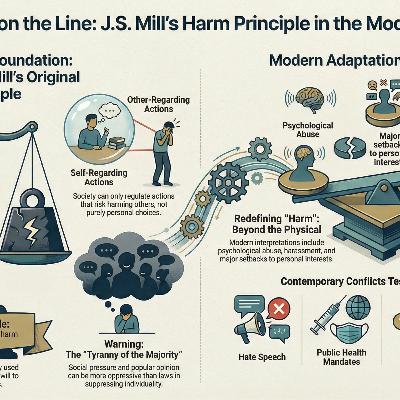
This podcast and free briefing report explores the Harm Principle, a foundational concept in liberal democracy that suggests the state should only restrict an individual's liberty to prevent damage to others. By synthesising the classic philosophy of John Stuart Mill with modern updates from thinkers like H.L.A. Hart and Joel Feinberg, the text examines how societies distinguish between private choices and public regulations. It highlights the dangers of the "tyranny of the majority" and explains how individual autonomy is essential for developing character and fostering social innovation. The discussion extends into contemporary issues such as digital speech, public health mandates, and psychological harm, illustrating the evolving nature of what constitutes a "setback to interests". Ultimately, the source argues that a healthy democracy must protect non-conformity and free will against the stifling pressures of social custom and state overreachFREE PDF BRIEFING

The podcast and free briefing document synthesises findings from a comprehensive analysis by Peter Cobbe of leadership research, identifying the learnable characteristics, skills, and abilities that define exceptional leaders. The core conclusion is that effective leadership is not an innate trait but a craft developed through deliberate practice, self-reflection, and a sustained commitment to growth. Leadership excellence rests on a foundation of character, values, and relational skill rather than mere positional authority.The analysis identifies five interconnected dimensions of leadership behavior: personal mastery and self-awareness, strategic thinking, interpersonal excellence, cultural stewardship, and adaptive capacity. The most impactful leaders demonstrate an ability to balance seemingly contradictory qualities, such as humility with fierce professional will, empathy with accountability, and a visionary outlook with pragmatic execution. They operate with an understanding that leadership is fundamentally relational, achieved through the empowerment and development of others. In today's volatile and complex environments, the capacity to adapt, learn rapidly, and think systemically is paramount. Ultimately, cultivating leadership at all organisational levels is crucial for sustained success and resilience. COMMENTS WELCOME TO IMPROVE CONTENT AND FUTURE VERSIONS
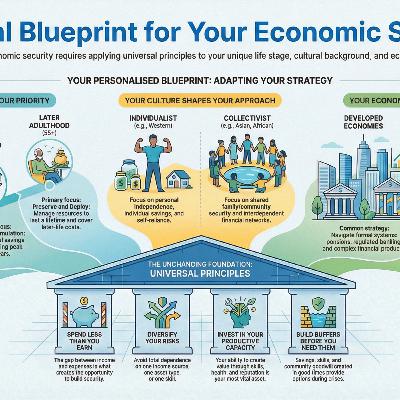
The free download pdf briefing and podcast defines economic security as a multi-faceted concept comprising income stability, asset building, risk management, social capital, and adaptability. It identifies a primary distinction between individualist cultures (e.g., Western), which prioritise self-reliance, and collectivist cultures (e.g., Asian, African, Latin American), where security is a shared family or community project. Similarly, strategies must differ significantly between high-income, emerging, and low-income economies, which present vastly different infrastructures for employment, finance, and social safety.The approach outlines a life-stage approach, detailing specific priorities for early adulthood (building human capital), middle adulthood (peak accumulation), and later adulthood (preservation and deployment of resources). Across all contexts, a set of universal principles remains constant: spend less than you earn, diversify risks, build buffers, invest in productive capacity, understand your context, build relationships, and balance short-term needs with long-term goals. The ultimate objective is not the impossible goal of eliminating all risk, but building sufficient resilience to navigate life's inevitable economic shocks.
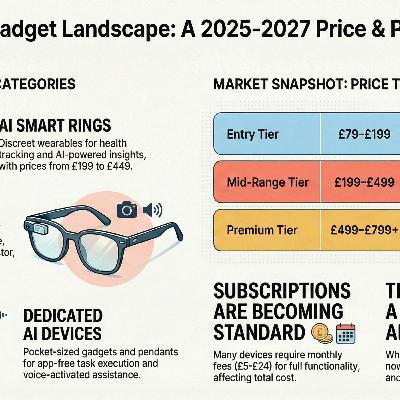
This report and free briefing document examines the UK consumer AI hardware market between 2026 and 2027, focusing on pricing structures and product categories. It identifies a primary market consolidation within the £80 to £500 price range, encompassing diverse technology such as smart rings, AR glasses, and recording tools. The analysis distinguishes between entry-level wearables and premium AI-first devices, while highlighting the prevalence of ongoing subscription fees. Currently, the sector is transitioning from established health trackers to more advanced, context-aware assistants arriving in the coming years. The insights provide a roadmap for market readiness and the financial landscape of personal artificial intelligence in Britain.The free PDF report will be updated as progress develops.
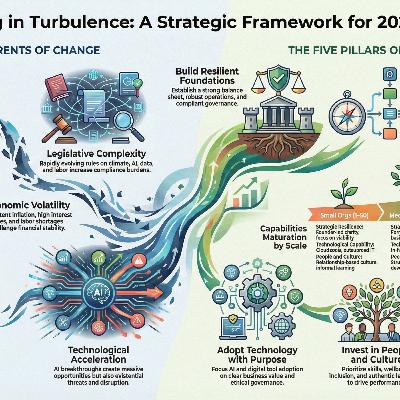
The FREE PDF BRIEFING and Podcast by Peter Cobbe outlines a Strategic Framework for 2025–2030 designed to help organisations navigate a period of significant "Organisational Turbulence" caused by converging global forces. The framework identifies five primary vectors of disruption—geopolitical, legislative, economic, social, and technological currents—that collectively create a uniquely volatile operating environment for all business scales. Crucially, the report emphasises that successful navigation requires organisations to view turbulence as a permanent context demanding proactive resilience, not merely a temporary crisis to endure. Strategies for building this resilience, including scenario planning and adopting new technologies like Artificial Intelligence, are tailored explicitly to the differing resource capabilities and vulnerabilities of small, medium, and large organisations across multiple sectors.FREE PDF REPORT
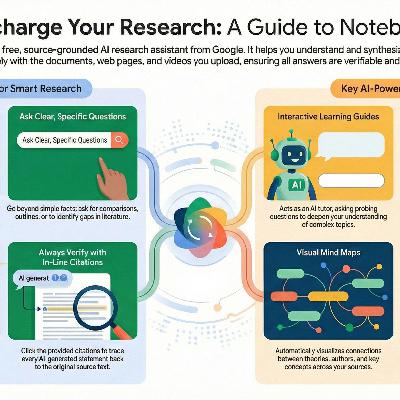
This free PDF briefing and podcast by Peter Cobbe details the optimisation and functionality of NotebookLM, a source-grounded AI research assistant designed specifically for study and research. It explains that the tool is a free, conversational Google web application that strictly generates content based on user-uploaded documents, which can include various formats such as PDFs, Google Docs, and YouTube video links. The report thoroughly outlines strategic approaches for effective use, emphasising the importance of strategic source selection, creating topic-specific notebooks, using targeted querying, and performing critical verification via in-line citations. Furthermore, it details the wide array of useful generative outputs available, including interactive Q&A, customised learning guides, audio summaries, flashcards, and the ability to identify gaps in the literature or draft structured outlines.FREE PDF BRIEFING
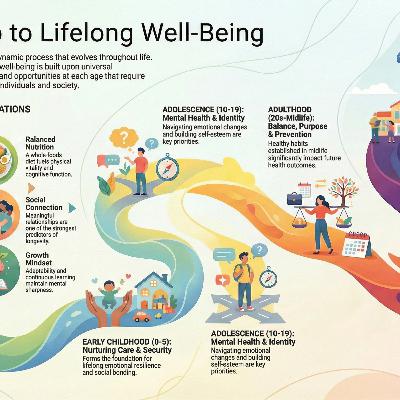
A ROADMAP TO LIFELONG WELLBEINGThis podcast and free download PDF briefing document proposes an evidence-based life-course approach to fostering lifelong well-being, asserting that health is a dynamic state shaped by biological, social, and environmental factors that accumulate across the lifespan. It first identifies several core universal foundations, such as regular physical activity, quality sleep, and social connection, which are necessary for health regardless of age. The report then explains how specific strategies must be tailored to distinct life stages, detailing unique requirements for areas like emotional security in early childhood and maintaining purpose in older adulthood. Furthermore, the framework stresses the importance of cultivating psychological well-being alongside physical health, referencing models focused on accomplishment, engagement, and relationships. Crucially, the source argues that individual efforts must be supported by equitable policies and conducive environments—including public health investment—emphasising that cultivating well-being is a collective societal responsibility.FREE BRIEFING DOCUMENT in podcast script
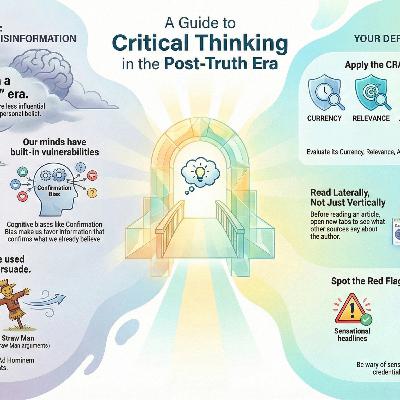
The post-truth era presents a profound challenge to reasoned discourse, democratic decision-making, and the development of well-founded beliefs.This podcast and free briefing shows the erosion of traditional gatekeepers, the rise of algorithmic echo chambers, and the exploitation of inherent cognitive biases have combined to create an environment where emotionally charged narratives often gain more traction than evidence-based arguments. Yet this landscape is not immutable. Individuals, institutions, and digital platforms all possess agency in shaping a more resilient information ecosystem. At the individual level, cultivating critical thinking skills—through structured evaluation frameworks, awareness of logical fallacies, and deliberate mitigation of cognitive biases—remains the most effective defence against misinformation. Techniques such as lateral reading, triangulation, and steel-manning support a more disciplined engagement with information, while intellectual virtues like epistemic humility and Bayesian updating foster an adaptive and evidence-responsive mindset.However, personal competence alone is insufficient. Strengthening collective resilience requires sustained investment in media literacy education, greater transparency and responsibility from technology platforms, and continued support for rigorous, independent journalism. Community-driven verification tools and institutional reforms can further reinforce accountability in the public sphere.Ultimately, navigating the post-truth environment demands a shared commitment to truth-seeking, open inquiry, and intellectual integrity. By combining individual critical thinking with systemic reforms, it is possible to counteract the distortions of the post-truth era and uphold the conditions necessary for constructive democratic dialogue.FREE PDF BRIEFING
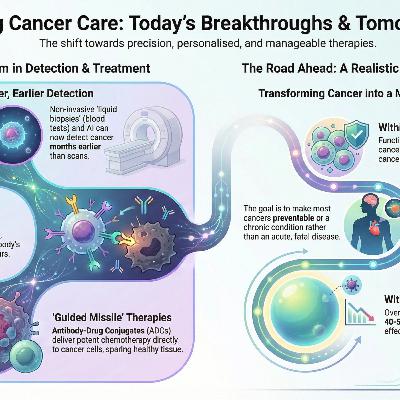
This podcast and free briefing document highlights progress with cancer detection, treatment and research .The oncology landscape is undergoing a fundamental paradigm shift, moving from broadly applied systemic treatments to molecularly driven, individualised therapies. This transformation is propelled by the convergence of molecular biology, artificial intelligence (AI), immunology, and nanotechnology. Recent developments represent not merely incremental improvements but paradigmatic changes in how cancer is detected, understood, and treated, with the overarching goal of transforming it from an acute, often-fatal diagnosis into a preventable or manageable chronic condition.The most critical takeaways from recent advances include:• Ascendance of Precision Medicine: Next-generation sequencing (NGS) and advanced diagnostics now enable therapies to be precisely matched to a tumor's specific molecular profile. Breakthroughs in targeting previously "undruggable" mutations, such as KRAS, exemplify this trend.• Revolution in Early Detection: Liquid biopsy technology has transitioned into clinical practice, enabling the detection of cancer recurrence and minimal residual disease months earlier than conventional imaging. Multi-Cancer Early Detection (MCED) blood tests for asymptomatic screening are now in large-scale trials and could fundamentally alter cancer mortality rates.• Dominance of Immunotherapy: Harnessing the patient's immune system is now a central pillar of cancer treatment. This includes the expansion of immune checkpoint inhibitors (ICIs), the success of CAR T-cell therapies in blood cancers, and the development of innovative platforms like personalised cancer vaccines, bi-specific antibodies, and oncolytic viruses.• Integration of Technology: AI and machine learning are augmenting diagnostics to a level equaling or surpassing human experts, while advanced robotics and molecular imaging are refining surgery to be less invasive and more precise.• A Realistic Path Forward: While a universal "cure" for cancer remains implausible due to its heterogeneity, a clear trajectory exists. Projections indicate that within 15-20 years, a combination of early detection and effective interventions could reduce cancer mortality by 40-50%. The focus is on achieving functional cures for specific cancer subtypes and converting many others into manageable chronic diseases.The UK's strategic cancer initiatives, as outlined by the NHS, are aligned with these global trends, focusing on the core pillars of Early Detection & Screening, Precision Medicine & Therapies, Research & Innovation, and Clinical Trials.FREE DOWNLOAD BRIEFING DOCUMENT
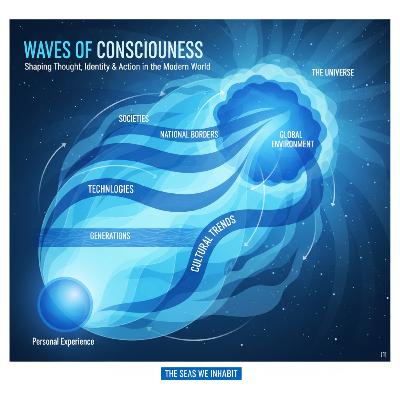
This report and podcast "Navigating Waves of Consciousness – a Thought Experiment" is authored by Peter Cobbe in November 2025. This report introduces the concept of "waves of consciousness" as the shared ways groups perceive the world, shaped by forces like technology, historical events, and culture. It argues that unlike simple generational labels, consciousness is fluid and overlapping, changing based on life stages and global events, and can either expand or contract during periods of upheaval. The document also explores the emergence of a "planetary consciousness" due to global crises and digital networks, alongside "ideological crowding," where competing worldviews clash. Ultimately, the report encourages awareness, curiosity, and empathy as crucial tools for individuals and organisations to successfully navigate these complex, turbulent social currents.The free PDF report is a thought experiment and catalyst designed to spark insight, foster connection, and encourage all who read it to become more thoughtful navigators of our shared social currents. The aim is to expand, challenge and share thinking and insights with and from others
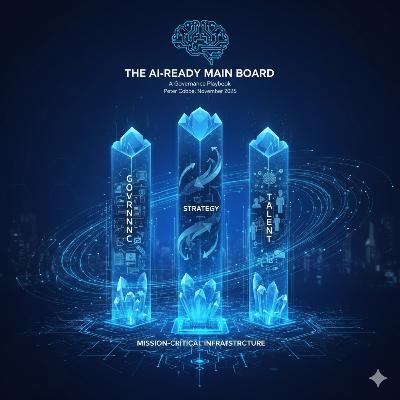
This briefing synthesises the core principles from Peter Cobbe’s “The AI-Ready Main Board: A Governance Playbook” (November 2025). The central thesis is that the widespread adoption of production-grade AI systems necessitates a fundamental evolution of corporate Board governance. As AI transitions from isolated pilots to mission-critical infrastructure, traditional governance models become obsolete, exposing organisations to significant epistemological and ethical challenges. The playbook proposes a transformation built on three pillars: Governance, Strategy, and Talent.Key takeaways from the analysis include:• Evolve Board Composition: Boards must move beyond traditional financial and legal expertise to embrace "cognitive diversity," actively recruiting members with skills in data governance, applied ethics, and socio-technical risk. A 2025 McKinsey study found 68% of Fortune 500 boards lack a director with formal AI risk training.• Elevate AI Risk: AI-specific risks, such as algorithmic bias, model drift, and data degradation, must be elevated to the same level of scrutiny as financial and regulatory exposures. This requires direct oversight from the Audit Committee and a dedicated AI Risk Register.• Drive Systemic Reinvention: Boards must challenge management to use AI for systemic, 10x business model reinvention rather than settling for incremental 10% efficiency gains. A 2025 BCG report indicates that firms pursuing 10x AI strategies achieve 3.2 times higher total shareholder return.• Govern the Hybrid Workforce: Governance must extend to the new human-machine enterprise. This involves cultivating uniquely human skills like ethical judgment and establishing clear "Red Line Decisions" where human oversight and veto power are non-negotiable.Ultimately, the free playbook download argues that the AI-ready Board must transition from a passive compliance guardian to an active steward of long-term value, equipped to govern a complex, distributed, human-machine organisation.

This podcast and free briefing document synthesises the core principles of narrativepsychology and its application in life coaching, as outlined in "The SecretPower of Seeing Your Life as a Story."The central thesis is that humans are storytelling beings who construct theiridentity and make sense of their lives through internalised narratives.These life stories are not fixed truths but malleable interpretations thatprofoundly shape an individual's wellbeing, sense of agency, and futurepossibilities.The effective practice of narrative coaching involves helping clients recognizetheir existing life stories, identify limiting patterns, and consciously re-authormore empowering narratives.Key concepts include the contrast between "redemption sequences," whichframe adversity as a catalyst for growth, and "contamination sequences,"which see positive events inevitably spoiled by negative outcomes.An individual's psychological health is strongly correlated with their ability toconstruct a coherent, meaningful life story.Narrative coaching employs a range of evidence-based techniques, includingthe Life Story Interview, Narrative Reframing, Future Authoring, and NarrativeExternalisation.These tools empower clients to move from passive characters in storieswritten by circumstance or culture to active authors of their own lives.The approach is broadly applicable to challenges such as career transitions,relationship difficulties, identity shifts, and finding purpose.Crucially, this work demands a high degree of ethical consideration, includingcultural sensitivity, maintaining scope of practice, and avoiding the impositionof the coach's own values.Effective narrative coaching is not about creating fantasies but aboutexpanding the range of authentic, empowering interpretations available to theclient, ultimately fostering resilience, agency, and lasting change.FREE PDF BRIEFING

Luck is one of the most intriguing and contested ideas in human thought. We invoke it daily — in sport, work, health, and chance encounters — yet it remains an elusive concept. Philosophers use it to test moral responsibility; psychologists study it to understand perception and mindset; ordinary people experience it as the mysterious force that canturn success or failure in an instant. This Podcast and Free briefing report explores the nature of luck in depth, examining how it is defined, categorised, and experienced. Drawing from both philosophical and psychological traditions, it identifies distinct forms of luck — such as existential, constitutive, circumstantial, resultant, conditional, epistemic, and moral luck —before turning to the modern question of how individuals can influence or “create” their own luck through mindset and behaviour. FREE PDF BRIEFING
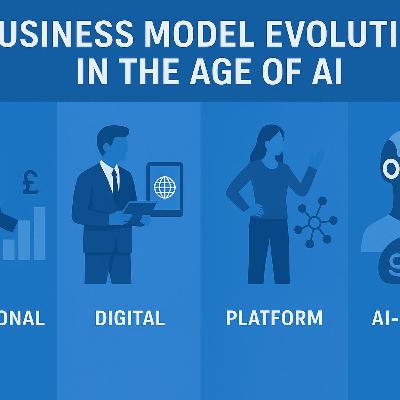
Market dynamics are shifting at exponential rates; product life cycles are compressing, customer expectations are fragmenting, and digital disruption has become the baseline rather than the exception.THIS FREE BRIEFING REPORT AND PODCAST EXAMINES BUSINESS MODEL EVOLUTIONAI is the primary accelerant of this disruption. It enables start-ups and agile competitors to outmanoeuvre incumbents through asymmetric advantages: lower operational costs via automation, faster innovation cycles through machine learning-assisted R&D, and superior customer engagement via intelligent interfaces. Established firms that once relied on scale, capital, or distribution networks now face competitors who can replicate those advantages algorithmically at a fraction of the cost.Customer expectations themselves are being reshaped by AI-powered experiences: recommendation engines that anticipate needs before articulation, conversational interfaces that remove friction from service interactions, and dynamic personalisation that makes mass-market offerings feel bespoke. Any organisation failing to embed AI into its business model risks not just competitive disadvantage but structural irrelevance—the gap between AI-enabled and legacy operations compounds rapidly, creating winner-takes-most dynamics. Moreover, AI introduces ethical, regulatory, and talent pressures that demand innovation in governance models, not just operational ones. The question is no longer whether to innovate, but whether organisations can innovate quickly enough to remain viable.

Comments

Download from Google Play

Download from App Store
 United States