


 Claim Ownership
Friday 420 Podcast: Home Cannabis Cultivation
Subscribed: 2Played: 4
Subscribe

© Michel Navedo
Description
Homegrowers International is proud to present the Friday 420 Podcast, where professional cultivators come and share their experience and knowledge.
www.hellohi.org
www.hellohi.org
30 Episodes
Reverse

On this week’s Friday 420, I sat down with Damian Michalski, Chief Cultivation Officer and Co-founder of Evergreen Medica to discuss why the transition to LED lighting has been secretly killing grower yields. Damian reveals that he’s seen up to a 40% increase just by following this one metric. Find out what rubisco is and how you can control your environment to grow your biggest crops yet. Get full access to Homegrowers International at www.hellohi.org/subscribe

When he started Buttheadz Grow Shop in 2021, Erick Engelhart had a hard time finding someone who’d rent to him because the stigma against cannabis in Missouri was so strong. Today, their nonprofit Buttheadz Growers Club has donated thousands of pounds of vegetables to local food banks through their “Cans for Clones” program and community gardens. The club even hosts classes for the local Boy Scouts, teaching them gardening skills so they can earn merit badges. Erick and I chatted about his soil company Buttheadz Living Soil which uses cotton burr compost and rice hulls from local farms. The upcycled waste is aged for three years and turned into high quality compost, giving it new purpose and keeping it out of local landfills. Eric Englehart and the Buttheadz Growers Club are creating a brighter future for their community and inspiring us all to make a positive impact on others. This holiday season, please consider making a donation to your local food bank to help keep a family from going hungry.*Food banks feed over 46 million people in the US annually. Get full access to Homegrowers International at www.hellohi.org/subscribe

On the latest episode of “Friday 420,” I sat down with Canadian cannabis genetics advisor and researcher Dwight Diotte for an illuminating discussion on the origins and evolution of autoflowering cannabis. Dwight has been breeding ruderalis plants for the last 40 years, and we covered everything from their geographical origins and unique growth patterns to the flavor profile and effect of a pure ruderalis plant. Dwight talked about the essential role his late friend, the renowned cannabis breeder Nevil Schoenmakers, played in cross-breeding ruderalis with modern varieties, and shared advice for cultivators on how to properly grow and breed autoflowers.Check out the full conversation! Get full access to Homegrowers International at www.hellohi.org/subscribe

For this special Friday 420 Christmas Edition, I had the pleasure of talking to three Emerald Triangle farmers to hear about their unique and festive 12 Jays of Christmas collaboration. This beautifully designed box is filled with 12 joints from 12 small-batch, craft cannabis farms that are part of the Humboldt County Growers Alliance - an organization that aims to spotlight the quality and heritage of the cannabis grown in this region.Patricia broke down Sun Roots Farm’s amazing closed-loop system, which runs on DEM Pure certification standards and even earned them a Certified Wildlife Habitat designation. We heard about the Mendo Mystic legacy from Matt, who is now farming the land his dad started growing cannabis on back in 1983. Matt is keeping the family legacy alive, ensuring their flower meets organic certification standards under California’s strict OCAL program. And Craig discussed the sustainability efforts he’s implemented for Talking Trees Farms, including the innovative home-compostable packaging he’s designed for his prerolls. Learn how to get your 12 Jays of Christmas box and support Emerald Triangle craft cannabis! Happy Holidays! Get full access to Homegrowers International at www.hellohi.org/subscribe

This week, I sat down with the legendary Jorge Cervantes (George Van Patten), a man whose books have influenced generations of growers over the last 40 years. Jorge shared the challenges of self-publishing his first book, Indoor Marijuana Horticulture, in 1983, and the dangerous process of writing books on cannabis cultivation in the 80s and 90s, when government raids and customs officials banning his books were common.Now, after decades of pioneering, Jorge is turning his focus to the future of cannabis cultivation. His new educational platform is meant to be a guiding light in cannabis cultivation research, a place where experience and science collaborate to help evolve our understanding of the plant. Check out the full interview to learn about Jorge’s incredible journey educating millions on the joys of growing cannabis and his plans for the next chapter in cultivation research and education. * You can help Jorge name his new website! Submit your idea and be entered for a chance to win a signed copy of The Cannabis Encyclopedia. Get full access to Homegrowers International at www.hellohi.org/subscribe

I recently had the chance to sit down with Dominique van Gruisen, founder of Innexo, a research organization based in the Netherlands dedicated to deepening our understanding of cannabis cultivation. Dominique shared how they facilitate an exchange of knowledge through their regular “Acceleration Days,” where researchers, innovators, and industry professionals connect at their facility to share and discuss their latest findings. Our conversation covered Innexo’s important work on inter canopy lighting and the “no veg” method, techniques that can accelerate growth cycles and increase efficiency and output. We also talked about their work on seed fingerprinting, which uses spectral analysis to determine both the sex and the phenotype of cannabis seeds. Learn more about the ground-breaking work Innexo is doing in cannabis cultivation research. Get full access to Homegrowers International at www.hellohi.org/subscribe

This week’s guest, John Bayes, AKA Green Bodhi, is a renowned cannabis breeder with over 2 decades as founder and owner of Green Bodhi Genetics in Eugene, Oregon. John has built a reputation for creating some of the highest quality strains in the industry based on a massive library of old-school genetics, with an emphasis on West Coast classic strains.John’s a world-class grower and brings a high level of conscious, intentional care to his plants. His work is heavily influenced by the Buddhist principles that guide his “Intentional Horticulture” philosophy. He’s now taking this commitment to mindfulness and quality to new international projects, including a series of upcoming wellness retreats in Malta and an EU launch of his Green Bodhi seed line. Check out the full video and bring some mindfulness into your garden! Get full access to Homegrowers International at www.hellohi.org/subscribe

This week on Friday 420 we are honored to welcome to the show a legend in cannabis genetics, Scott Blakey, a.k.a. Shantibaba. Scott is one of the architects of the modern cannabis seed industry, founding operations like Greenhouse Seed Company, and Mr. Nice Seed Bank in the 90s in Holland. He applied his rigorous breeding methods to develop some of the first high-CBD, low-THC strains, effectively pioneering the multi-billion dollar CBD industry.Today, Scott is embracing what he calls the industry’s “second wave.” He now holds medical cannabis licenses in Switzerland and is happily back in the “white jacket,” focused on genetics and quality control at his own family run farm.We’ll journey back to Amsterdam in the 90s, hear Scott’s advice for modern cannabis geneticists and his vision for where the cannabis industry is heading. Don’t miss this masterclass on the roots of modern cannabis genetics, watch the full interview! Get full access to Homegrowers International at www.hellohi.org/subscribe

I had a great conversation with Max Majot, Technical Manager at Royal Queen Seeds, about the cannabis industry’s future, his take on interviewing Mike Tyson, and the major shift happening at Royal Queen Seeds from seed bank to seed producer.Max argued that while industrial production is necessary, the industry’s focus on metrics like high THC is a pitfall. We agreed the challenge ahead is ensuring that as the industry scales, quality is preserved and respected for the end user, rather than optimized for a lab report.Watch the full video! Get full access to Homegrowers International at www.hellohi.org/subscribe

I learned so much about magic mushrooms last week speaking with certified mycologist and founder of Mystic Fruits, Cody Reeves. We covered some great topics like strain specific effects, microdosing, and the various ways mushrooms are being used medicinally and therapeutically. Check out the full video to learn more about these fantastic fungi! Get full access to Homegrowers International at www.hellohi.org/subscribe

I had such a great conversation last Friday with Judi Nelson and Walter Wood of Sol Spirit Farm. Here are a few things I learned about their organic, regenerative cannabis farm: * They met at a Jerry Garcia memorial and were inspired by their time as forest activists to live more sustainably. * They are unique in their use of Jadam Korean natural farming techniques, creating their own fertilizers and microbial solutions from materials on their land.* Their commitment to sustainability also extends to their compostable packaging and innovative container take-back program.Judi and Walter share a deep spiritual connection to the cannabis plant, and it was so refreshing to hear about some of the ways they infuse love and positive energy into their work. Check out the full video! Get full access to Homegrowers International at www.hellohi.org/subscribe

I thought growing cannabis for 23 years was a long time, but it was so cool to sit down with someone who’s been cultivating it twice as long as I have! Tony Grech’s journey growing this plant began in San Francisco in the 60s when he picked up a copy of Bill Drake's "The Cultivator's Handbook." Here are a few other things we found out:* Tony’s been practicing organic, living soil cannabis cultivation for over 50 years!* His love for long-flowering sativas runs deep and he believes that patience is key to unlocking their full potential.* His family's brand, Budularo, is getting lots of love right now for bringing the old-school landrace and haze varieties back to the California market.Tony shared so much great plant wisdom in our conversation, watch the full video! Get full access to Homegrowers International at www.hellohi.org/subscribe

I recently sat down with Guy Rocourt, the visionary behind Papa & Barkley and CLEA Midlife Wellness, for a conversation that challenged some of the biggest conventions in the industry. We dove into the art of making truly strain-specific edibles, including how to preserve terpenes and other compounds to create an infusion that tastes and feels like the flower it came from. The conversation took a personal turn as we discussed how our wives are using cannabis to manage symptoms of menopause and some of the specific products they’ve found effective. Guy also shared a powerful argument for why "medical" and "recreational" are fundamentally flawed terms holding the industry back.Watch the full interview! Get full access to Homegrowers International at www.hellohi.org/subscribe
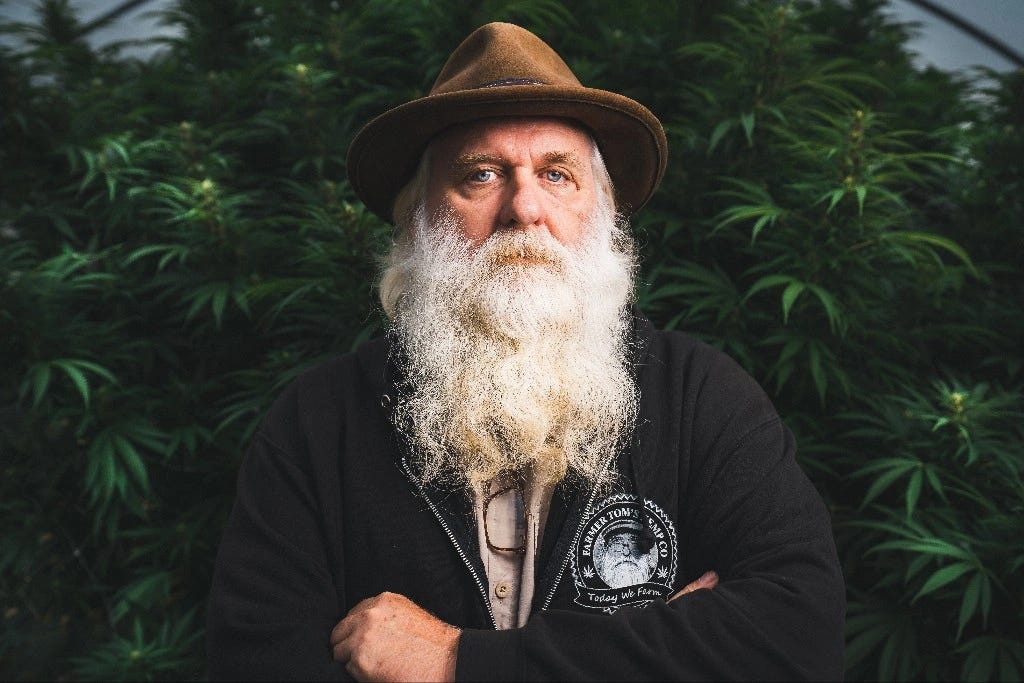
Last Friday, I had the honor of sitting down with a true cannabis pioneer, Farmer Tom Lauerman. We journeyed back to the very beginning of medical cannabis in the U.S., as Tom shared stories from his time co-founding one of the first medical collectives in San Diego in 1997. We learned about the high-profile police raid that shut down his collective in 1999, an event that, for many, would have been the end of the road, but for Farmer Tom, was just one chapter in a lifelong fight.Farmer Tom and I shared our views on the evolution of the industry, from a patient-first, compassionate care model to the commercialized, adult-use market we see today. Tom spoke with passion about the community-focused approach that’s largely missing in modern cannabis, as well as the erosion of patient rights in the face of big business. We talked about his current work with Irvine Labs and his advocacy for the "Heroes of the Green" - the activists who risked their lives to ensure safe access for all. Tom’s journey is a testament to the passion and perseverance that has always fueled our cannabis community. Get full access to Homegrowers International at www.hellohi.org/subscribe

Last week, I had the pleasure of catching up with my friend and masterful home grower, Jim Berry, for a complete breakdown of his "HomeGrown Season 8." Jim’s growing style blends organic principles with high-tech tools, and he walked us through his whole process, from clones to supercharging living soil with a carefully managed regimen of salt-based nutrients and biostimulants."I pulled almost eight pounds, I believe, out of two lights."We got into some of the tech Jim uses to get such incredible results, like his use of sensors to monitor the nutrient level and water content of his soil, as well as the real-world challenges every grower deals with, like a pH crash he had early in flower, and the steps he took to save the crop. Jim’s journey is an awesome guide for any of us looking to push the boundaries of our home gardens. Check out our full conversation! Get full access to Homegrowers International at www.hellohi.org/subscribe

Indica vs. sativa? What defines craft cannabis? Last week, in my conversation with veteran cultivator and consultant Mike Bruno of Golden Ocean Solutions, we tackled some controversial topics in the cannabis industry. The conversation quickly centered on a crucial issue: the need for genetic diversity in a market saturated with high-THC candy/gas strains. We both agreed that the future is bright for craft cannabis, drawing a parallel to the craft beer boom, but it will take consumer education and a demand for the unique, high-quality experiences that are achieved through growing with care and intention.We also chatted about how growing cannabis is therapeutic, and how the symbiotic relationship between a grower and their plants is a vital part of what makes home and craft cannabis so special. Get full access to Homegrowers International at www.hellohi.org/subscribe

Last week, I had the pleasure of speaking with Dave Perkins, CEO of the family-owned brand Budularo, whose 3,000 sq ft greenhouse in Mendocino, California, specializes in growing long-flowering cannabis varieties. Dave’s passion for long-flowering cannabis was sparked by his father-in-law, Tony, a legacy grower with over 50 years of experience, who made a surprise appearance and shared the origin of the "Budularo" name.At the heart of our discussion was the "Pearls" variety, a unique phenotype of the Destroyer strain (Thai/Colombian/Mexican) that Tony had been searching for since the 1970s, seeking to replicate the transcendent experience of old-school Thai stick. These plants, which can take up to 18 weeks to flower (twice as long as modern hybrids) followed by up to nine-months to cure, produce long, delicate stems with small, resin-covered buds.So why go to all this trouble with extended flowering and curing times? The answer, as both Dave and Tony testified, lies in the development of complex cannabinoid and terpene profiles, resulting in a unique spectrum of flavors—from gassy and diesel to sweet and piney—and effects that are unattainable in faster-finishing strains. They described these varieties as "sipping weed," perfect for creative pursuits and offering profound medicinal benefits for conditions like MS and depression. Their work is a reminder that in the world of cannabis, sometimes the most rewarding experiences come to those who are willing to wait. Get full access to Homegrowers International at www.hellohi.org/subscribe

This week, my guest, Ras Ramon “Brother Ben” Adams, shared some deeply personal insights into the cultivation, preservation, and medicinal use of South African landrace cannabis. Here are just a few of the things I learned during our enlightening talk: * South Africa was the first country to outlaw cannabis 100 years ago.* Cannabis was probably brought to South Africa by the Phoenicians in the 10th century.* Slaves carried the famous “Durban” strain (predecessor of Durban Poison) from Asia to South Africa on those vessels.* The Pondoland region of South Africa is estimated to have over 20,000 legacy cannabis farmers. Watch my full conversation with this South African cannabis pioneer and learn more about the roots of cannabis in Africa and the ongoing fight to preserve its heritage. Get full access to Homegrowers International at www.hellohi.org/subscribe

My talk with cannabis pioneer Kevin Jodrey last week started with a simple question—what makes high-quality cannabis?—but quickly evolved into a conversation about the very soul of the industry. Kevin directed cultivation for one of the first medical cannabis dispensaries in California in 2008. For him, it wasn't just about providing clean, effective medicine. He shared powerful stories of opening his doors to patients with stigmatized diseases like AIDS, giving them not just cannabis, but a place to feel human and valued. This culture of care, where the primary goal was to help people, stands in contrast to today's market-driven realities, which pressure cultivators to chase high THC percentages and aesthetics.Ultimately, Kevin argues that the true power of cannabis lies not in its potency or look, but in its ability to heal and foster humility and connection. It’s a reminder that cultivating cannabis should be rooted in a profound sense of responsibility to the people and the community it serves. Get full access to Homegrowers International at www.hellohi.org/subscribe

Last week, I spoke with Xavier Gaya, principal consultant for Avitas Global, about the unique challenges of growing long-flowering cannabis varieties at home. These strains, with landrace lineage from equatorial regions like Asia, Africa, and Central America, are known for their vigorous, tall growth - adaptations for competing for sunlight in dense jungles. While these traits make them resilient in the wild, they can present a significant challenge for indoor growers, especially those with limited space.Xavier shared several key techniques for managing these plants indoors. He also revealed that the final, and perhaps most crucial, phase is the post-harvest cure. Unlike modern hybrids that are ready in weeks, these old-school hazes demand a patient cure of up to six months for their complex aromas of leather, sandalwood, and incense to fully emerge. Ultimately, growing long-flowering cannabis is a labor of love, requiring patience, skill, and a willingness to embrace a months-long commitment. For those who persevere, the reward is a sublimely complex and vintage smoke, a truly unique experience that stands apart from the fast-finishing varieties common in today's market.Homegrowers International is a reader-supported publication. To receive new posts and support my work, consider becoming a free or paid subscriber. Get full access to Homegrowers International at www.hellohi.org/subscribe

Comments

Download from Google Play

Download from App Store
 United States