DiscoverMatters of Consequence: Meaningful Conversations for Curious People
Matters of Consequence: Meaningful Conversations for Curious People
Claim Ownership

Matters of Consequence: Meaningful Conversations for Curious People

Author: Michael Hanf

Subscribed: 2Played: 2
Share

Description

Matters of Consequence is a podcast about leadership, society, and the decisions that shape our world.


Hosted by Michael Hanf, the podcast features in-depth conversations with people whose work and lived experience offer a way into some of the difficult questions facing individuals, organizations, and society. What happens when we have to make choices under uncertainty? When do we take responsibility, challenge established systems, or live with consequences we could not fully anticipate?


Guests come from very different worlds. Michael speaks with scientists and artists, activists and authors, business leaders and policymakers. Other conversations take us into healthcare, education, humanitarian work, technology, and entrepreneurship. What matters is not only what someone does, but the person behind the role: what they have experienced, what they believe, what they struggle with, and how these experiences shape the decisions they make.


The conversations move across many of the questions shaping society today. They explore leadership and democracy, climate change and sustainability, psychology and social change. They also look at how technology and AI are changing our lives, how misinformation affects society, and what happens when systems such as healthcare, education, and business come under pressure.


Some episodes begin with major societal challenges. Others start with deeply personal experiences. They might explore caring for someone with dementia, living through disaster, confronting political extremism, fighting for the right to compete, questioning expertise, or deciding when following the rules is no longer enough.


At the centre of the podcast are questions of agency and responsibility. How much influence do we really have over the systems around us? What happens when personal values collide with professional responsibilities? How do people make difficult decisions when there is no clearly right answer? And what does it mean to keep acting when change is slow, uncertain, or comes at a personal cost?


Michael brings more than two decades of experience in strategy, systems thinking, sustainability, and organizational transformation to these conversations. His interview style creates space for guests to think aloud, challenge their own assumptions, and follow unexpected paths rather than delivering polished talking points. The result is thoughtful, honest discussions that value curiosity over certainty and complexity over simple answers.


Whether the conversation is about rebuilding trust after disaster, caring for a loved one with dementia, confronting political extremism, navigating climate anxiety, questioning expertise, defending free expression, or making difficult leadership decisions, each episode asks what it means to act when the stakes are real and the answers are not always clear.


Matters of Consequence is for people interested in thoughtful conversations about how we navigate complexity, how society is changing, and what shapes the choices we make. Conversations that don't necessarily provide answers, but might leave us with better questions.


Hosted on Acast. See acast.com/privacy for more information.
67 Episodes
Reverse
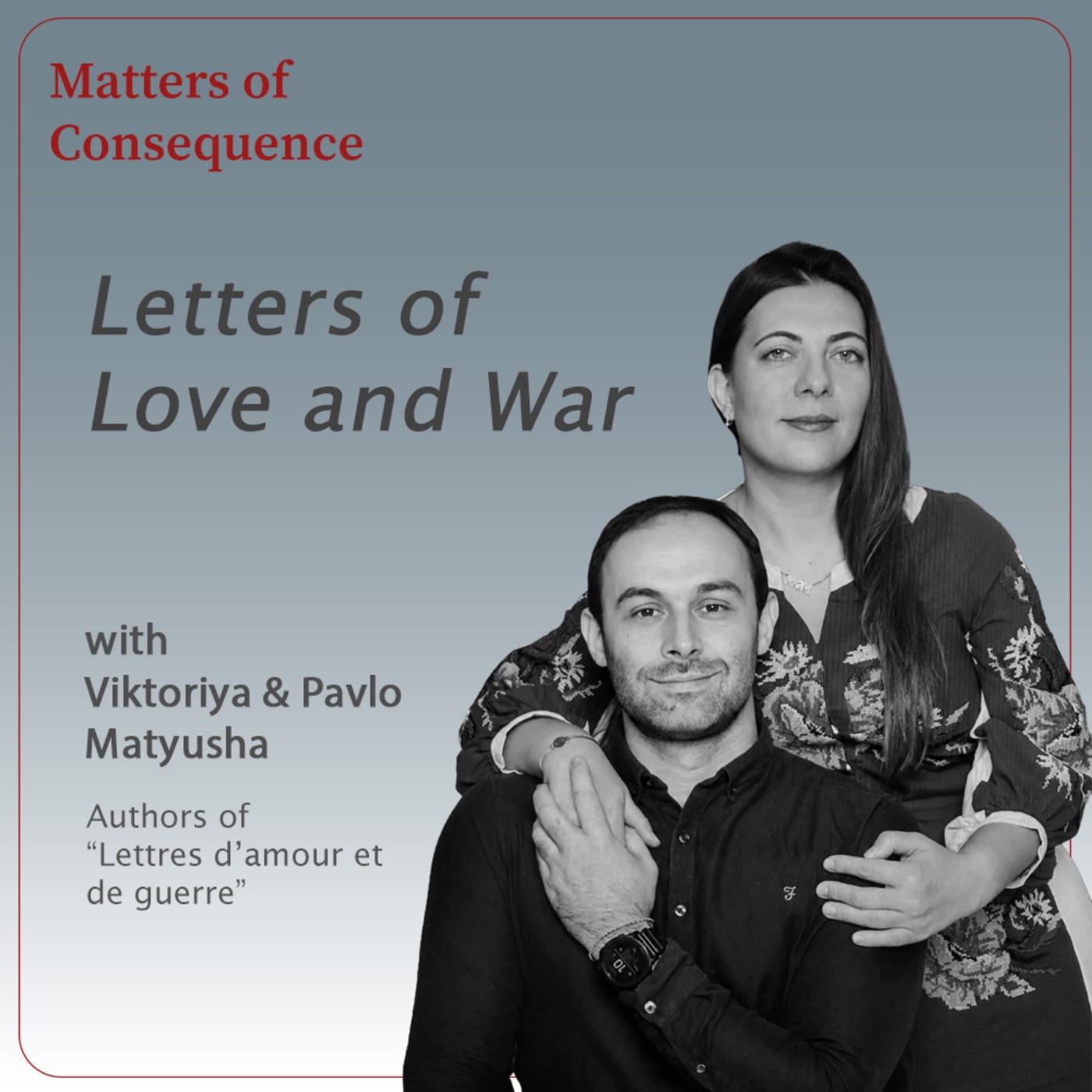
What happens to a family when one parent enlists in a war he was not required to fight, and the other flees to another country with four children? In this episode of Matters of Consequence, recorded at the Helsinki Book Fair, Michael speaks with Viktoriya and Pavlo Matyusha, authors of Letters of Love and War, about the decisions that pulled their family apart and the letters that slowly brought it back together.When Russia invaded Ukraine, Pavlo was 40, a father of four, and not required to serve. He enlisted anyway, promising to stay six months. Viktoriya left with the children to France, and waited. The six months became more than a year, and the distance began to change them both. At the breaking point, Viktoriya filed for divorce, not to end the marriage, but as a desperate move to bring Pavlo home. It was during that same period that they began writing letters to each other, at first as a way to say what fast messages could not carry, later as the raw material of a book that has since traveled far beyond Ukraine.Together, they talk about what their family was before February 2022, the moment each of them understood there was no way back, and how a correspondence that started under a journalist's framework became the place where they could finally be honest. They reflect on what it meant to invite strangers into their most private words, and why they believe letters did what conversations could not.Why listen?Hear an honest conversation about two decisions made under extreme uncertainty: to fight, and to leave.Explore what war does to a relationship, from silence and fatigue to a divorce filing that was really an ultimatum of love.Understand why writing slowly, by hand, in letters, carried what instant communication could not.Discover how a couple reflected publicly on the most intimate crisis of their lives, and why they did not regret it.See beyond the headlines of the war in Ukraine, into the everyday life, relationships, and trade-offs of the people living it.Whether you have followed the war in Ukraine, live with the consequences of displacement and separation, or have ever wondered how much a relationship can carry, this conversation offers a deeply personal account of a family holding itself together through words. Viktoriya's closing thought stays with you long after the episode ends: love will always prevail.Keywords: war in Ukraine, Letters of Love and War, Viktoriya Matyusha, Pavlo Matyusha, family separation, exile, displacement, love letters, relationships under pressure, military service, veteran families, Ukraine, Helsinki Book Fair, divorce, reconciliation, correspondence, decisions under uncertainty, Matters of Consequence podcast Hosted on Acast. See acast.com/privacy for more information.
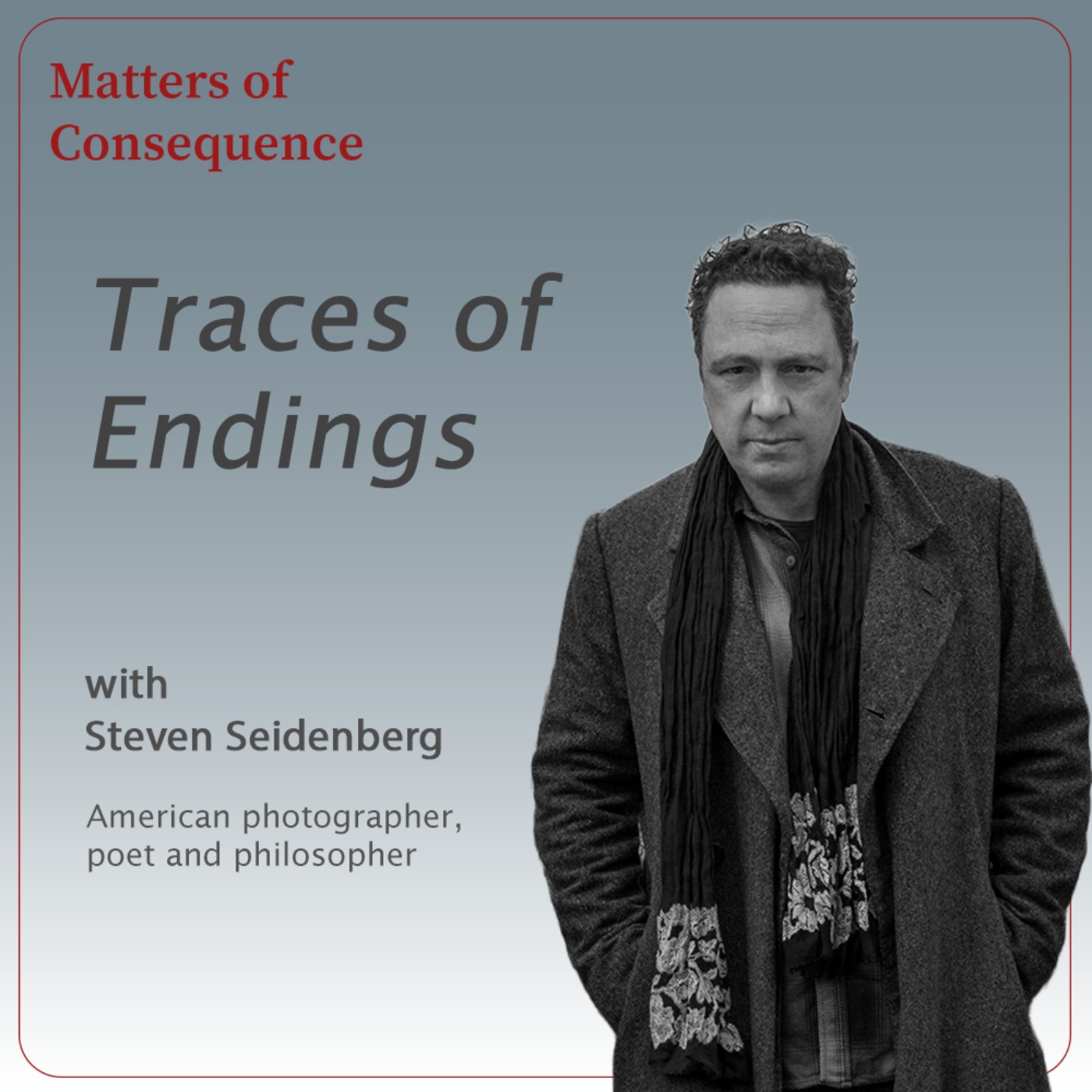
What happens when someone spends a lifetime walking into the places the rest of us hurry past? Steven Seidenberg photographs empty houses, vacant lots, and abandoned spaces. His camera never shows people. It shows what they leave behind.In this episode of Matters of Consequence, Michael Hanf speaks with Steven Seidenberg, an American photographer, poet, and philosopher, about a life spent facing what most of us avoid: that nothing lasts. From abandoned houses of Italy's failed post-war land reform to a migrant tent city behind a Rome train station, Steven's work documents the traces of lives that moved on, and the hope that remained in the spaces they left.Steven explains why he believes taking a photograph is always photographing the dead, and why he refuses to put a human figure in the frame. He reflects on the moment he learned that Baobab, the tent city he had documented, had been cleared by the police, and what those images mean to the people who lived there. And he shares a perspective that reframes the whole question: the temporary nature of everything is not the enemy of happiness and love, but the very condition for them.Why listen?Explore what abandoned spaces can tell us about the lives lived inside them, and about our own.Understand why a photographer who documents endings calls his work an attempt to show hope rather than decay.Hear how the traces we leave behind, from dinner tables to photographs, become the story that outlasts us.Discover how impermanence, rather than being a source of despair, can become the ground for love and ethical living.Reflect on what remains of a life when everything around it is a site of future abandonment.Whether you work in art and culture, have ever walked past an abandoned house and wondered about the lives inside, or simply find yourself thinking about what we leave behind, this conversation offers a quiet and deeply human reflection on impermanence, memory, and the traces that outlive us all.Keywords: Steven Seidenberg, impermanence, absence, abandoned spaces, photography, philosophy, The Architecture of Silence, Home Truth, Riforma Fondiaria, Italian South, abandoned houses, migrant tent city, Baobab, traces of life, memory and space, ruin aesthetics, transience, mortality, meaning-making, art and impermanence, Matters of Consequence podcast. Hosted on Acast. See acast.com/privacy for more information.
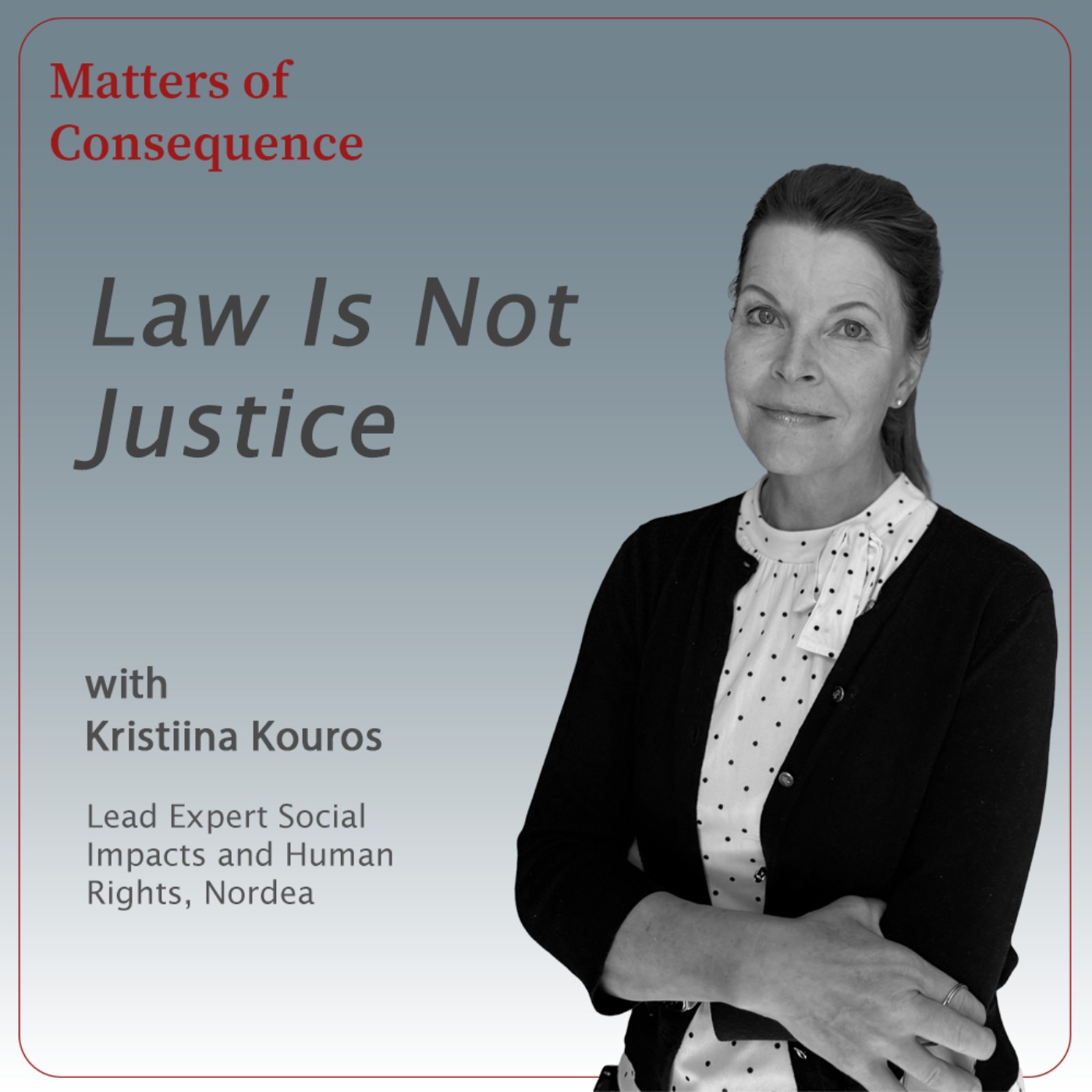
What happens when someone spends a career defending human rights from every side of the table, and the world still seems to be moving in the wrong direction?In this episode of Matters of Consequence, Michael speaks with Kristiina Kouros, Lead Expert Social Impacts and Human Rights at Nordea, about a career spent advancing human rights across NGOs, national institutions, politics, consultancy, and now the financial sector. Her path began with a choice she made in a train on the way to university: to study justice, not law. That distinction has guided her ever since, from grassroots projects against racism and violence to representing 170 human rights organizations in the negotiations behind the UN Guiding Principles on Business and Human Rights, and finally to bringing human rights into corporate decision making.Kristiina shares what she has learned from each transition, why she believes no single actor in society holds the power to change things alone, and where corporate accountability still falls short, from invisible supply chains to communities not being listened to. She also explains the personal ethos behind it all: "I value life", in all its forms. Despite the sadness of the times, she remains hopeful, and she leaves us with a simple encouragement: everyone's actions make a difference, and with 8 billion of us, small steps can add up to a huge leap towards better.Why listen?Hear a rare career spanning media, NGOs, national human rights institutions, consultancy, and corporate leadership, and how each role changed her perspective on human rights.Understand the gap between human rights frameworks and the realities of implementing them in business, from due diligence processes to value chain transparency.Explore why power sits with no single actor in society, and why businesses, governments, NGOs, and individuals have to work together.Learn what is changing now, as the UN Guiding Principles become national law through the French Duty of Vigilance, the Norwegian Transparency Act, and the German Supply Chain Act.Reflect on the personal ethos of someone who has spent decades looking at the darkest sides of humanity, and still describes herself as a happy person who marvels at life.Whether you work in sustainability or human rights, lead a business making decisions with far-reaching impacts, or simply want to understand what it takes to advance human rights in an uncertain world, Kristiina's story offers a grounded and deeply human perspective on justice, responsibility, and the value of life.Keywords: human rights, business and human rights, UN Guiding Principles, corporate accountability, ESG, social sustainability, human rights due diligence, supply chain responsibility, financial sector, Nordea, corporate sustainability, human rights law, lived experience, systems change, Kristiina Kouros, Matters of Consequence podcast Hosted on Acast. See acast.com/privacy for more information.
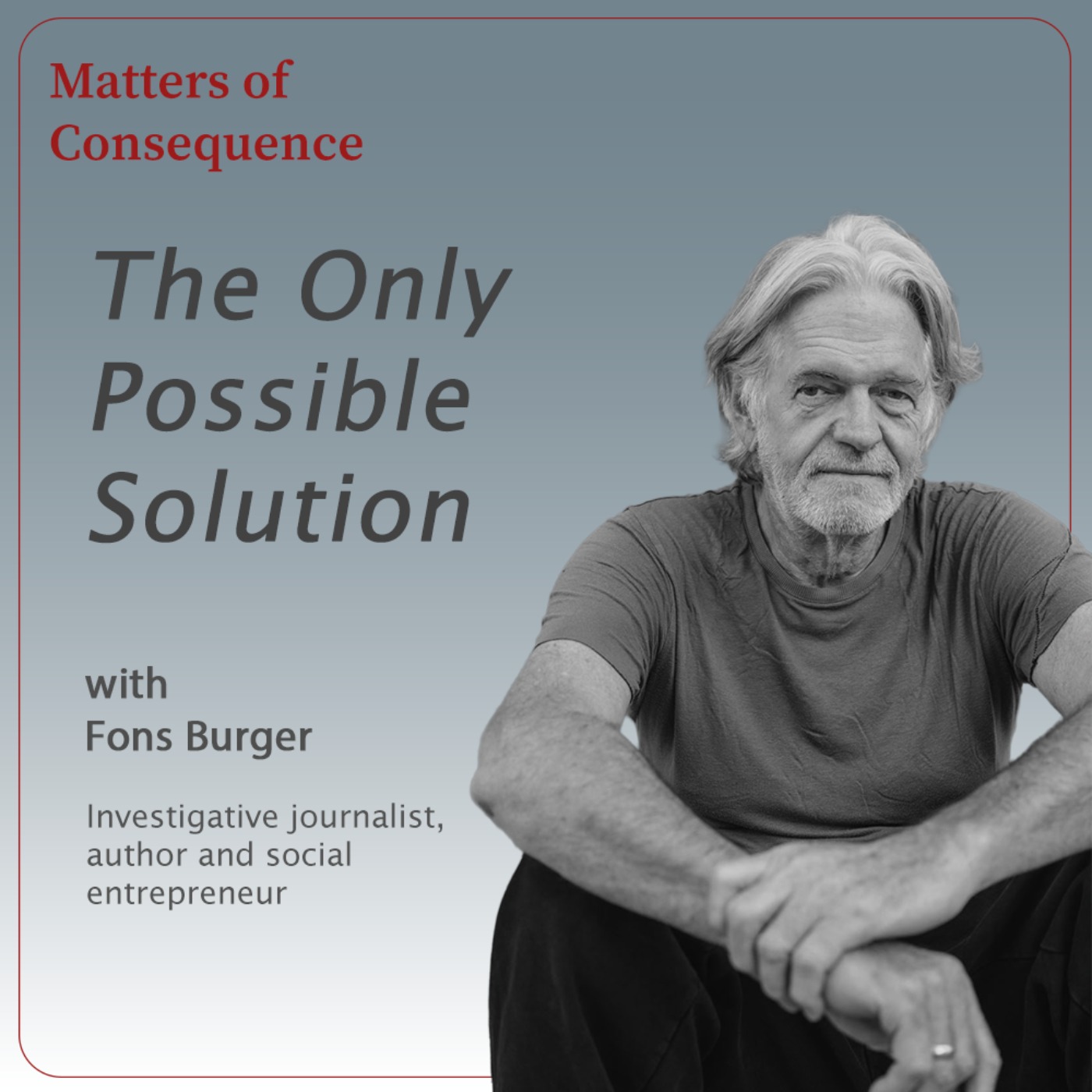
What if the biggest problems of our time are not separate problems at all? In this episode of Matters of Consequence, Michael speaks with Fons Burger, journalist, systems thinker, farmer, and author of The Only Possible Solution: How to Shape the Future for Our Next Generations, about why climate change, inequality, and the loss of trust in institutions are symptoms of the same underlying system failures, and why fixing one crisis in isolation so often creates new problems elsewhere.Fons has lived many lives, including editor-in-chief of a major magazine, photographer, musician, founder of an institute educating journalists in the Global South, goat farmer in Nepal, and now permaculture farmer in Spain. Out of that long journey came a simple but uncomfortable observation, the world is full of brilliant solutions, but the people behind them live in silos, each surrounded by walls too high to see over. In his book, he argues that the space between those silos is where the real work lies.Together, Michael and Fons explore what it means to face a system crisis that has been centuries in the making, why we keep reaching for short-term fixes instead of deeper change, and how looking back at today from the year 2125 can change the decisions we make now. Fons also talks about his newborn grandson, to whom the book is dedicated, the limits of individual action, and why hope only counts when it is active.Why listen?Understand why climate change, inequality, biodiversity collapse, and institutional distrust are interconnected rather than separate crises.Explore the silo problem: why experts with holistic ideas still work in isolation, and what keeps systems stuck.Learn what back casting from 2125 reveals about the choices we are making today.Reflect on the trade-off between short-term convenience and a liveable future for the next generations.Discover what one person can actually control, and why active hope matters more than optimism.Whether you work in sustainability, policy, business, or are simply trying to make sense of a world where every crisis seems connected to the next, this conversation offers a calm and clear-eyed perspective on what it takes to think in systems, and what each of us can still do. Fons' story is ultimately a reminder that the future is not something that happens to us, but something we shape, one decision at a time.Keywords: systems thinking, interconnected crises, climate change, inequality, sustainability, holistic solutions, system change, silos, expertise, future generations, back casting, long-term thinking, active hope, circular economy, permaculture, journalism, Fons Burger, The Only Possible Solution, Matters of Consequence podcast. Hosted on Acast. See acast.com/privacy for more information.
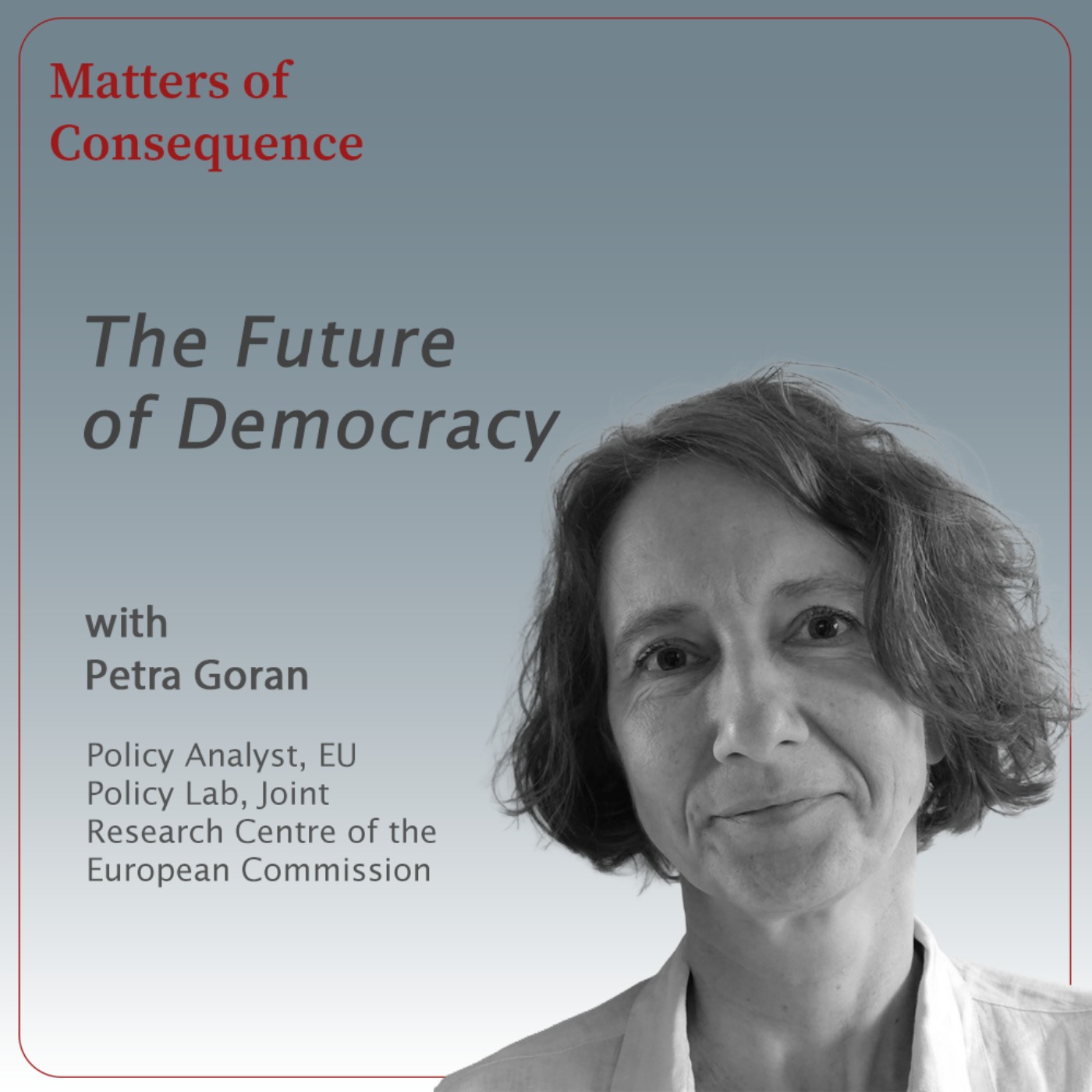
What does it mean to defend democracy while reimagining it for the future? In this episode of Matters of Consequence, Petra Goran, Policy Analyst at the EU Policy Lab, part of the EU’s Joint Research Centre, explores how foresight methodologies can help societies navigate the complexities of democratic resilience. Drawing on her work on the Futures of EU Democracy and Resilience: The Future of Europe as Seen by EU Citizens reports, Petra dives into the tensions shaping Europe’s future and the role of trust in governance.Petra shares insights from the #OurFutures project, where citizen stories reveal the emotional and systemic dimensions of Europe’s democratic challenges. She discusses scenarios like AI-Facilitated Direct Democracy and Technocratic Government Overreach, challenging assumptions about how democracy can adapt to a rapidly changing world. Through her research, Petra highlights the importance of listening to citizen voices, balancing tradition and innovation, and understanding why resilience requires both systemic reform and long-term thinking.Why listen?Explore how foresight methodologies can help societies defend and reimagine democracy in the face of rising authoritarianism and institutional distrust.Understand the tensions between security and openness, and how they shape Europe’s ability to build a resilient future.Discover how citizen narratives from the #OurFutures project reveal the emotional and systemic dimensions of democratic challenges.Learn why trust between citizens and policymakers is the foundation of a resilient democracy, and how it can be built and maintained.Reflect on the unresolved questions of how to balance tradition and innovation, and why foresight is a tool for systemic transformation.Whether you are a policymaker, a citizen engaged in democratic processes, or simply interested in the future of governance, Petra’s insights offer a thoughtful and deeply human perspective on the challenges and opportunities of reimagining democracy.Keywords: foresight, democracy, EU policy, citizen engagement, resilience, strategic autonomy, technocracy, citizen agency, trust in governance, #OurFutures, Futures of EU Democracy, democratic renewal, systemic transformation, Petra Goran, Matters of Consequence Hosted on Acast. See acast.com/privacy for more information.
loading
Comments