DiscoverNarcissism At Work
Narcissism At Work
Claim Ownership

Narcissism At Work

Author: Other Box

Subscribed: 9Played: 79
Share

Description

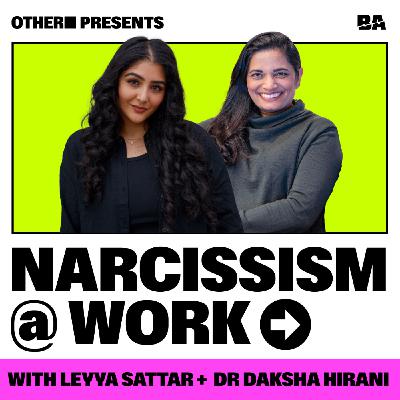
Narcissism At Work is the essential podcast for anyone who has felt like their boss or colleague was gaslighting them, their HR team protected the problem, or their workplace felt more like a mind game than a job. Hosted by award-winning social impact entrepreneur Leyya Sattar and clinical psychologist Dr. Daksha Hirani, this series pulls back the curtain on toxic workplace behaviours driven by narcissistic abuse. From manipulation and control to blame-shifting and burnout, we unpack the behaviours that thrive in toxic cultures and show you how to break free.


Each episode combines expert insight with real-life stories to help you spot the red flags, set better boundaries, and rebuild your sense of self. Whether you’re stuck in a toxic team or recovering from a narcissistic workplace, Narcissism At Work gives you the clarity, language, and tools to call it out and take your power back.


Honest, empowering, and grounded in real expertise, this podcast cuts through the buzzwords to expose the subtle tactics narcissists use to climb, and how you can rise above them.


Hosted on Acast. See acast.com/privacy for more information.

18 Episodes
Reverse
What happens when harm comes from someone you expected to feel safest with? When your shared identity becomes the very weapon used against you? In this final Listener Letter, Jay shares the story of his short-lived “dream job” under a charismatic Black female founder known for championing diversity. Within seven weeks, the role left him emotionally broken, suicidal, and doubting his sense of masculinity and identity.This episode explores what it means to experience narcissistic abuse from within your own community, and the devastating effects of progressive language being used as a smokescreen for harm. It also examines the psychological toll of trying to be the “good man” in environments that punish gentleness, humility or empathy.Expert InsightClinical psychologist Dr. Daksha Hirani offers compassionate, trauma-informed insight into:Why people weaponise identity (race, gender, power) to protect their image while abusing others behind the scenesThe masculinity myth: how society and workplaces distort what it means to be a "good man"How guilt can be used to silence victims within communitiesWhy shared identity does not guarantee shared values or safetyPractical recovery tools: journaling for validation, therapeutic support, and radical self-trustKey themesWeaponised Identity: When race, gender, and progressiveness are used to shield toxic behaviourProgressive Abuse: The dissonance between public values and private actionsCommunity Guilt: The fear of being disloyal by calling out harm from someone within your communityMasculinity & Vulnerability: How “being a good man” can become a survival strategy and how it’s exploitedEmotional Fallout: From humiliation and burnout to suicidal ideation and therapyRebuilding Self-Worth: How to regain confidence after gaslighting, betrayal, and shameWhy this episode mattersThis episode goes where many don’t: into the deeply taboo topic of harm within marginalised communities, and the confusion, grief, and guilt that comes with it. Jay’s story asks difficult questions about complicity, silence, and who deserves protection. It’s also a powerful exploration of how Black men, in particular, are pressured to soften themselves in professional settings, only to be punished, dismissed, or manipulated. Bonus episodesListener Letters are real stories submitted by the Other Box community, sharing lived experiences of navigating toxic workplaces and narcissistic dynamics. Each letter is anonymised, read aloud, and followed by expert insight from clinical psychologist Dr. Daksha Hirani. Together, we unpack the behavioural patterns at play and share tools for clarity, support and recovery.We hope these real-life accounts allow you to recognise the signs sooner and start focusing on how to reclaim your life. Support the PodcastIf this episode resonated with you:Subscribe and leave us a reviewShare with friends, family, or colleaguesFollow us on socials for more insights and behind-the-scenes content (@otherbox) You can connect with Other Box: otherbox.co/podcast for further resources. Narcissism At Work is a co-production from Other Box and Breaking Atoms. Subscribe to get new episodes as soon as they drop. Hosted on Acast. See acast.com/privacy for more information.
In our final episode, we explore what it actually means to build a healthy workplace, shifting our focus from toxic behaviours to constructive solutions. We welcome back clinical psychologist Dr. Daksha Hirani and our special guest, Raakhi, Other Box’s HR consultant.So, what does psychological safety look like? How do we promote leadership that centres empathy, accountability, and emotional intelligence, and stop toxic traits from contaminating workplace culture? It’s not enough to just survive narcissistic environments; we want to help you build better ones.If you’ve ever asked yourself, “What would it actually look like to work somewhere safe, respectful, and human?”, this episode is for you.What we cover:Distinguishing between what healthy leadership vs toxic leadership look likeThe difference between psychological safety and performative cultureThe risk of relying on one person to carry out cultural changeWhy DEI must be built into systems, not left to personalitiesThe need for accountability processes — even when a narcissist has leftSupporting teams through grief, exhaustion, and confusion after abuseHow to rebuild trust from the bottom upReferences and Frameworks MentionedThe Power of Psychological Safety: Creating environments where people feel safe to speak up, fail, and growSigns of False Belonging: When connection is rooted in fear, guilt, obligation, or overidentification with the missionBoundary Setting in Practice: Scripts, habits, and mental reframes to protect energy without shutting down Quote Highlights“Healing a workplace after narcissistic harm isn’t just about getting rid of one person, it’s about unlearning the culture that enabled them.” Raakhi Tanvi“Belonging isn’t something you perform, it’s something you practice, over time, in safe spaces.” Leyya Sattar“Accountability isn’t punishment. It’s the most loving thing a workplace can do for its people.” Dr. Daksha HiraniWhy it matters:Whether you're still stuck in a toxic workplace, in recovery, or leading a team yourself, this episode offers a roadmap. You can rewrite the narrative. Culture is built moment by moment, and it begins with how we treat each other when no one is watching.Support the PodcastIf this episode resonated with you:Subscribe and leave us a reviewShare with friends, family, or colleaguesFollow us on socials for more insights and behind-the-scenes content (@otherbox) You can connect with Other Box: otherbox.co/podcast for further resources Narcissism At Work is a co-production from Other Box and Breaking Atoms. Subscribe to get new episodes as soon as they drop. Hosted on Acast. See acast.com/privacy for more information.
In this week’s Listener Letter, we meet Dani, who shares their experience of a working relationship that spanned eight years, one that began in mutual respect and creative fire, and slowly devolved into manipulation, emotional intimidation, and a cycle of abuse that nearly destroyed their marriage and mental health. It’s a painfully honest account of what it’s like to work side-by-side with a narcissist as your co-founder or collaborator. As the stakes got higher, the gaslighting became more brutal, and the writer found themselves slowly absorbing the narcissist’s traits, from bullying, controlling, and drinking alcohol to cope.What happens when we lose ourselves in the name of loyalty, reputation, or protecting something we helped build? And how do we forgive ourselves when survival morphs us into someone we barely recognise?Expert InsightClinical psychologist Dr. Daksha Hirani offers compassionate, trauma-informed insight into:The idealise–devalue–discard cycle common in narcissistic abuseHow trauma bonding and avoidance behaviours (like drinking, people-pleasing, or becoming aggressive) become survival responsesThe difference between manipulation masked as admiration and genuine partnershipWhy grief, self-forgiveness and radical acceptance are essential to healingKey themesComplicity and Enabling: Dani saw themselves as anti-toxic leadership, yet found themselves protecting abuse out of fear and loyaltyManipulation as Maintenance: Compliments, gifts, and praise were used after abuse to reset power dynamicsTrauma Responses: Mirroring narcissistic traits (e.g., passive-aggression, control, drinking) as a form of survivalReputation over Reality: The fear of damaging the company’s image kept the abuse hidden and unchallengedPsychological Spillover at Home: Dani’s personal life suffered deeply from mental health crises, alcohol misuse, and family breakdownWhy this episode mattersThis story will resonate with founders, creatives, managers, and anyone who has stayed in toxic dynamics longer than they should, especially when success, identity, or loyalty is on the line. Dani’s story shows how long-term exposure to narcissistic abuse erodes your values, your behaviour, and your sense of self. And it highlights the most painful part of all: realising you were complicit in harm while trying to survive it.Bonus episodesListener Letters are real stories submitted by the Other Box community, sharing lived experiences of navigating toxic workplaces and narcissistic dynamics. Each letter is anonymised, read aloud, and followed by expert insight from clinical psychologist Dr. Daksha Hirani. Together, we unpack the behavioural patterns at play and share tools for clarity, support and recovery. We hope these real-life accounts allow you to recognise the signs sooner and start focusing on how to reclaim your life.Support the PodcastIf this episode resonated with you:Subscribe and leave us a reviewShare with friends, family, or colleaguesFollow us on socials for more insights and behind-the-scenes content (@otherbox) You can connect with Other Box: otherbox.co/podcast for further resources. Narcissism At Work is a co-production from Other Box and Breaking Atoms. Subscribe to get new episodes as soon as they drop. Hosted on Acast. See acast.com/privacy for more information.
What happens when trying to protect yourself at work gets twisted into “not being a team player”? Or when being firm gets labelled as “aggressive”?In Episode 7 of Narcissism At Work, Leyya and Dr. Daksha Hirani unpack how to set boundaries in environments where narcissistic dynamics thrive. From subtle manipulation to outright sabotage, we explore the tactics that leave people feeling unsafe, hypervigilant, or scared to speak up, and what you can do about it.Dr. Daksha outlines how to spot narcissistic behaviour at the peer level, how to deal with emotional baiting and boundary violations, and why guilt, self-doubt, and trauma bonding keep us stuck. We also discuss practical ways to protect your mental health when the people around you won’t respect your limits and how to get clear on what is, and isn’t, your responsibility.Whether you’re being isolated, undermined, or constantly made to question yourself, this episode is for anyone who’s had their empathy exploited in a workplace built on power games.Key Themes:Boundary Violations: Why narcissistic colleagues push limits and how to hold your ground.Guilt and Trauma Bonding: The emotional traps that keep you compliant, over-functioning, and quiet.Gaslighting and Undermining: How narcissists create confusion and destroy confidence.Protective Tools: How to document patterns, detach your identity from abuse, and set limits with clarity.The Body Knows: Listening to anxiety, dread, and physical cues as warning signals.Quote Highlights“The key here is knowing yourself. What do you need to look after yourself? Anything that comes in the way of this would require a boundary.” – Dr Daksha Hirani“So many of us end up staying for years, clinging onto the hope that things will get better. We gaslight ourselves. We justify the chaos.” – Leyya SattarWhy it matters:Workplace abuse is often subtle, systemic, and dismissed as “just a clash of personalities.” But when manipulation, gaslighting, and boundary violations become the norm, the impact on our mental health, identity, and ability to trust again runs deep. This episode unpacks the insidious nature of narcissistic behaviour at work, how it operates, why it’s so hard to leave, and what recovery actually requires.Whether you're feeling emotionally drained, questioning your reality, or stuck in a cycle of self-blame, this episode offers both clarity and compassion. With expert insight from clinical psychologist Dr. Daksha Hirani, we explore trauma bonding, DARVO, boundary setting, and the role of systems (like HR and legal) in upholding or dismantling abuse.This isn’t just about identifying bad bosses, it’s about reclaiming your power, trusting your body’s signals, and learning how to heal without hardening. It’s for anyone who’s been silenced, second-guessed, or simply wants to build healthier, safer workplaces.Support the PodcastIf this episode resonated with you:Subscribe and leave us a reviewShare with friends, family, or colleaguesFollow us on socials for more insights (@otherbox) You can connect with Other Box: otherbox.co/podcast for further resources Narcissism At Work is a co-production from Other Box and Breaking Atoms. Please make sure to subscribe, rate and share too!  Hosted on Acast. See acast.com/privacy for more information.
In this bonus episode, Faisa writes in as a manager whose confidence was shattered by a direct report who consistently blurred the line between vulnerability and manipulation. From rejecting basic feedback and weaponising mental health language, to quietly shifting blame and undermining leadership through conflicting narratives, this experience explores what happens when managers, especially empathetic, conscientious ones, find themselves unable to do their job for fear of being seen as "cold," "mean," or "sabotaging."This story is a must-listen for anyone navigating emotionally complex team dynamics, and a vital reminder that toxic dynamics aren’t exclusive to senior-level roles.Expert InsightClinical psychologist Dr. Daksha Hirani offers compassionate, trauma-informed insight into:The concept of weaponised incompetence and how empathy can be used against youHow to reclaim your voice, your confidence, and your authority as a managerWhen guilt is unjustified, and how to separate emotional manipulation from support needsPractical tips for documentation, boundary setting, and healing from leadership traumaKey themesWeaponised Vulnerability: Using mental health language to deflect responsibility or silence accountabilityGaslighting and Narrative Control: Contradicting stories to different people, making the manager seem unstable or unkindGuilt + Gendered Power Dynamics: The fear of being seen as "sabotaging" a junior woman's career, especially as a woman in a senior roleLoss of Confidence in Leadership: Lingering anxiety, fear of managing again, and emotional burnoutHow to Reclaim Trust in Yourself: Practical tools to navigate manipulation while staying true to your valuesWhy this episode mattersNot all narcissistic dynamics look like shouting CEOs. Some are quiet, confusing, and disguised as wellness, vulnerability, or even friendship. Faisa’s story sheds light on the often invisible burnout that comes from managing someone who continually avoids accountability while presenting themselves as the victim. It’s a form of gaslighting that leaves empathetic leaders questioning their instincts, doubting their decisions, and, too often, abandoning leadership altogether.Bonus episodesListener Letters are real stories submitted by the Other Box community, sharing lived experiences of navigating toxic workplaces and narcissistic dynamics. Each letter is anonymised, read aloud, and followed by expert insight from clinical psychologist Dr. Daksha Hirani. Together, we unpack the behavioural patterns at play and share tools for clarity, support and recovery. We hope these real-life accounts allow you to recognise the signs sooner and start focusing on how to reclaim your life. Support the PodcastIf this episode resonated with you:Subscribe and leave us a reviewShare with friends, family, or colleaguesFollow us on socials for more insights and behind-the-scenes content (@otherbox) You can connect with Other Box: otherbox.co/podcast for further resources. Narcissism At Work is a co-production from Other Box and Breaking Atoms. Subscribe to get new episodes as soon as they drop. Hosted on Acast. See acast.com/privacy for more information.
Have you ever left a job feeling like a shell of yourself—anxious, exhausted, second-guessing everything, and unsure how it got so bad?In this episode of Narcissism at Work, Leyya and Clinical Psychologist Dr. Daksha Hirani explore the deep, often invisible toll that narcissistic abuse takes on the body and mind. From chronic stress and anxiety to adrenal fatigue and disconnection from self, this conversation unpacks the nuanced psychological and physical fallout of being in close proximity to narcissists.You’ll hear why these symptoms often go unnoticed or are misdiagnosed, how survivors become stuck in fight, flight and freeze responses, and how trauma-informed tools like ACT therapy can help people reclaim their power and rebuild trust in their own bodies. The episode also offers practical first steps for anyone currently trapped in a toxic job or relationship dynamicReferences and Frameworks MentionedWHO (World Health Organisation)Polyvagal Theory (Stephen Porges)ACT Therapy (Acceptance and Commitment TherapyInternal Family Systems (IFS)EMDR Therapy (Eye Movement Desensitisation and Reprocessing) for trauma releaseThe “STUF” Framework from ACT(Sensations, Thoughts, Urges, Feelings)Quote Highlights“They will feed your fears and position themselves as the only person who can help you get what you need.” – Dr. Daksha Hirani“I’ve always seen myself as a strong, brave, competent person. I couldn’t understand how I let it get so bad. But now I realise it’s not about weakness, it’s about how expertly these people play on our C.R.A.P. and target people for their strengths, NOT weaknesses.” – Leyya SattarWhy it matters:Far too many people endure chronic stress and trauma at work without naming it for what it truly is: abuse. When the harm is coming from someone charismatic, successful, or in a position of power, it often gets minimised or normalised leaving targets anxious, burned out, and disconnected from their sense of reality and self.This episode breaks that silence. It gives language, context, and validation to what many have wrongly dismissed as “just work stress.” It reframes healing not as a return to who you were, but as a reclamation of agency…one that starts in the body, rewires the nervous system, and reconnects you to your core values.For anyone stuck in a toxic workplace, questioning their gut, or simply feeling “off,” this episode offers both clarity and direction. It’s a map back to yourself.Support the PodcastIf this episode resonated with you:Subscribe and leave us a reviewShare with friends, family, or colleaguesFollow us on socials for more insights (@otherbox) You can connect with Other Box: otherbox.co/podcast for further resources.Narcissism At Work is a co-production from Other Box and Breaking Atoms. Please make sure to subscribe, rate and share too! Hosted on Acast. See acast.com/privacy for more information.
In this Listener Letter, we hear from Hannah, a former employee who found herself working under the same narcissistic CEO twice, a decade apart.At first, she returned believing things would be different. But what followed was an extreme environment of control, gaslighting, public humiliation, and 24/7 surveillance dressed up as “remote flexibility.”From forced video calls all day long, to aggressive outbursts, retaliation for speaking up, and weaponising therapy-speak to silence disagreement, this story is a chilling reminder of how narcissistic leadership infects a company’s entire culture.Expert InsightClinical psychologist Dr. Daksha Hirani offers deep, trauma-informed insight into:How narcissistic leaders use image management, fear and false morality to maintain powerWhy they target high performers, and punish anyone who exposes the truthThe nervous system toll of long-term psychological abuse at workHow to manage anxiety and emotional safety when you can’t just leaveWhat to do when you’re dealing with someone who will never be accountableKey themesPerformative values and moral grandstanding by toxic leadersPsychological manipulation disguised as professional developmentSurveillance, control, and digital coercion in remote workBlame-shifting, retaliation, and long-term traumaWhy this episode mattersHannah’s experience reveals that sometimes, it’s not just the outbursts or gaslighting that do the most damage; it’s the slow erosion of trust in yourself. The fear. The second-guessing. The quiet shrinking.For anyone who’s ever frozen when a Slack message popped up, stayed silent in meetings to avoid punishment, or delayed updating LinkedIn out of fear, this episode offers solidarity, clarity, and a path forward.Bonus episodesListener Letters are real stories submitted by the Other Box community, sharing lived experiences of navigating toxic workplaces and narcissistic dynamics. Each letter is anonymised, read aloud, and followed by expert insight from clinical psychologist Dr. Daksha Hirani. Together, we unpack the behavioural patterns at play and share tools for clarity, support and recovery.We hope these real-life accounts allow you to recognise the signs sooner and start focusing on how to reclaim your life. Support the PodcastIf this episode resonated with you:Subscribe and leave us a reviewShare with friends, family, or colleaguesFollow us on socials for more insights and behind-the-scenes content (@otherbox) You can connect with Other Box: otherbox.co/podcast for further resources. Narcissism At Work is a co-production from Other Box and Breaking Atoms. Subscribe to get new episodes as soon as they drop. Hosted on Acast. See acast.com/privacy for more information.
Is HR complicit?

Is HR complicit?

2025-07-2141:09

Have you ever dealt with an HR team that protects toxic leaders and silences the people they hurt? In this episode of Narcissism at Work, we explore how narcissism can show up not just in individuals but in entire systems. From performative DEI to HR structures that enable abuse, we unpack how power and progressive language can be used as tools of control. While many HR teams do great work, we’re focusing on what happens when that’s not the case.This week, I’m joined by Dr. Daksha Hirani and special guest Raakhi, Other Box’s HR consultant, to explore what happens when toxicity becomes institutionalised and what needs to change.What we cover:Why harmful behaviours often go unchallenged, especially when "golden" employees bring in revenue or hold a high status.The myth of HR neutrality and how internalised fear can prevent necessary action.The role of NDAs and settlement agreements in silencing victims.How narcissists exploit race, gender, neurodivergence, and other identities for performative allyship.How to spot red flags in leaders and avoid becoming a “flying monkey.”The importance of documentation, pattern recognition, and building peer support.Tools like S.T.U.F. (Sensations, Thoughts, Urges, Feelings) to reconnect with your truth.References and Frameworks MentionedCRAP: (Criticism, Rejection, Abandonment, Punishment) core fears exploited in narcissistic abuse.FOG: (Fear, Obligation, Guilt) tactics used by narcissists to manipulate.S.T.U.F: (Sensations, Thoughts, Urges, Feelings) a self-awareness tool to ground yourself in reality."Flying Monkeys": Narcissistic abuse term for bystanders who unknowingly enable the abuser. Quote Highlights“Your workplace culture is your reputation.” Raakhi Tanvi “You are not making this S.T.U.F up. You know what you know.” Dr. Daksha Hirani “Even if you can’t name names, you can still speak your truth.” Leyya SattarWhy it matters:HR is often positioned as the safeguard of workplace wellbeing, yet too often, it becomes the buffer that protects toxic leaders and colleagues instead of the people they harm. When toxicity infiltrates HR, the very systems meant to ensure fairness, safety, and accountability can end up enabling abuse and silencing staff. By exploring this tension, we wanted to show how systemic narcissism hides in plain sight and what needs to shift to rebuild trust, integrity, and actual inclusion at work.Support the PodcastIf this episode resonated with you:Subscribe and leave us a reviewShare with friends, family, or colleaguesFollow us on socials for more insights and behind-the-scenes content (@otherbox) You can connect with Other Box: otherbox.co/podcast for further resources Narcissism At Work is a co-production from Other Box and Breaking Atoms. Subscribe to get new episodes as soon as they drop. Hosted on Acast. See acast.com/privacy for more information.
In this bonus episode, we hear from Mo, a husband whose life and marriage were shaken by his wife’s narcissistic boss. From emotional manipulation, faux-therapeutic language to reframe abuse as care, to cult-like loyalty and isolation, Mo recounts the mental toll of watching his partner be drained of confidence and convinced that she was the problem. This letter reveals how narcissistic abuse at work doesn’t just affect employees; it can tear through homes, relationships, and mental health.Psychologist Dr. Daksha Hirani offers compassionate insight into why narcissistic leaders target high-performing individuals, how they isolate them from their support systems, and what recovery can look like for both the direct victim and their loved ones.Why this episode matters:Mo’s story highlights that narcissistic abuse at work is rarely contained to the office. The manipulation, gaslighting, and emotional harm ripple outward, sometimes even threatening the bonds we hold most dear.If you’ve ever questioned yourself while watching someone you love unravel under toxic leadership, this story may offer insight, solidarity, and hope.Listener Letters are real stories submitted by the Other Box community, sharing lived experiences of navigating toxic workplaces and narcissistic dynamics. Each letter is anonymised, read aloud, and followed by expert insight from clinical psychologist Dr. Daksha Hirani. Together, we unpack the behavioural patterns at play and share tools for clarity, support and recovery.We hope these real-life accounts allow you to recognise the signs sooner and start focusing on how to reclaim your life. Connect with Other Box: otherbox.co/podcast for further resources | @otherboxSubscribe to get new episodes as soon as they drop.Narcissism At Work is a co-production from Other Box and Breaking Atoms. Hosted on Acast. See acast.com/privacy for more information.
On this episode of Narcissism At Work, we're diving into what happens when a respected visionary founder turns into a source of emotional manipulation, fear, and chaos. Startups are often praised for their innovation and drive, but they can also be prime territory for narcissistic behaviours, cleverly disguised as passion, purpose, and progress. We're joined by clinical psychologist Dr. Daksha Hirani to break down how narcissistic entrepreneurs weaponise values like "resilience" and "loyalty," using charm, ambition, and even therapeutic language to exploit trust and blur boundaries.What we cover:When charisma and “big vision” mask control and abuseRed flags in startup culture e.g. love bombing, mirroring, gaslighting, and burnoutWhy narcissists are drawn to entrepreneurial roles How values like “grit” and “purpose” are twisted to justify exploitationEmotional debt, blurred lines, and the illusion of family in toxic work culturesHow to set boundaries, break free from trauma bonding, and protect your peaceWhy it matters:These environments don’t just hurt careers, they destabilise lives. And because they’re often masked by ethical branding or progressive language, many people don’t realise what’s happening until the damage is done.Connect with Other Box: otherbox.co/podcast for further resources | @otherboxSubscribe to get new episodes as soon as they drop.Narcissism At Work is a co-production from Other Box and Breaking Atoms.  Hosted on Acast. See acast.com/privacy for more information.
Bonus episode 3 explores the story of Rani, whose dream job at a supposedly inclusive workplace quickly turned into a toxic nightmare. What started as feeling “seen” and championed by a senior colleague spiralled into emotional manipulation, weaponised feedback, and guilt-laced control.Rani's letter uncovers how narcissistic individuals often use the illusion of support to gain influence, only to later gaslight, undermine, and erode confidence through chaos, contradiction, and shame.What we cover:How narcissists perform allyship while creating impossible expectationsMeetings as control tactics: time-wasting, dominance, and emotional exhaustionThe link between narcissistic abuse and mum guilt, overworking, and burnoutHow the promise of “the dream” and future-faking is used to keep people hooked and disempoweredThe emotional toll of being constantly emotionally and mentally disorientated, even when the facts don’t add upWhy this episode matters:Rani’s story highlights that abuse isn’t always obvious. It can masquerade as support or empowering language. However, if it undermines your confidence, well-being, or values, consider it a red flag.Listener Letters are real stories submitted by the Other Box community, sharing lived experiences of navigating toxic workplaces and narcissistic dynamics.Each letter is anonymised, read aloud, and followed by expert insight from clinical psychologist Dr. Daksha Hirani. Together, we unpack the behavioural patterns at play and share tools for clarity, support and recovery.We hope these real-life accounts allow you to recognise the signs sooner and start focusing on how to reclaim your life. Connect with Other Box: otherbox.co/podcast for further resources | @otherboxSubscribe to get new episodes as soon as they drop.Narcissism At Work is a co-production from Other Box and Breaking Atoms.  Hosted on Acast. See acast.com/privacy for more information.
We’ve all heard of toxic bosses, but what about colleagues who exhibit narcissistic traits? In this episode of Narcissism At Work, Leyya and clinical psychologist Dr. Daksha Hirani explore the less talked-about, but just as damaging, impact of narcissism among our peers. From backstabbing and silent smear campaigns to credit-stealing and emotional manipulation, this episode dives deep into the warning signs and psychological fallout of working with a narcissistic colleague.What we cover:How narcissistic colleagues manipulate to compete, control, and undermineRed flags that you might be working with someone who’s not as supportive as they seemSmear campaigns, love bombing, and subtle sabotage tacticsWhat healthy competition looks like, and where the line gets crossedThe toll this takes on team trust, collaboration and creativityMental health impacts, including trauma symptoms, grief, and isolationTools like the DEEP method to protect yourselfWhy it matters:Toxic colleagues can slowly chip away at your confidence, relationships and reputation. This episode offers language, clarity, and strategies for reclaiming your power.Plus:Real-life scenarios of narcissistic dynamics at workPractical tips to spot the red flags and protect yourselfA reminder that you’re not imagining it and you’re not aloneResources mentioned: World Health Organisation (www.who.int/)‘The Body Keeps The Score’ by Bessel van der KolkConnect with Other Box: otherbox.co/podcast for further resources | @otherboxSubscribe to get new episodes as soon as they drop.Narcissism At Work is a co-production from Other Box and Breaking Atoms.  Hosted on Acast. See acast.com/privacy for more information.
We're sharing the story of Aisha, a professional who entered a role at a start-up sold as inclusive and progressive, only to be met with manipulation, erratic behaviour, and emotional abuse by a narcissistic leader. Aisha describes being gaslit, love-bombed, and constantly destabilised through inconsistent feedback, intrusive WhatsApp messages, and power plays tied to vulnerability. The episode touches on themes like the illusion of inclusion, weaponised empathy, and the erosion of confidence under narcissistic leadership, particularly when masked as ‘empowered’ startup culture. Dr. Daksha Hirani offers psychological insights on boundary-setting, journaling for self-validation, and how to move forward while honouring your values and worth.Listener Letters are real stories submitted by the Other Box community, sharing lived experiences of navigating toxic workplaces and narcissistic dynamics.Each letter is anonymised, read aloud, and followed by expert insight from clinical psychologist Dr. Daksha Hirani. Together, we unpack the behavioural patterns at play and share tools for clarity, validation, and recovery.We hope these real-life accounts allow you to recognise the signs sooner and start focusing on how to reclaim your life. Connect with Other Box: otherbox.co/podcast for further resources | @otherboxSubscribe to get new episodes as soon as they drop.Narcissism At Work is a co-production from Other Box and Breaking Atoms. Hosted on Acast. See acast.com/privacy for more information.
The Narcissistic Boss

The Narcissistic Boss

2025-06-3025:32

How do you know when you're working for a narcissist? In this episode of Narcissism At Work, host Leyya and clinical psychologist Dr. Daksha unpack the subtle, and not-so-subtle, signs of narcissistic behaviour in professional settings. From love bombing to identity theft, we explore the mirroring tactics narcissists use to draw people in, disarm them, and gain their trust. We also dig into how these behaviours escalate over time, impacting your confidence, decision-making, and workplace wellbeing.What we cover:How narcissists "mirror" your identity and values to create false trustWhy early admiration can quickly turn into controlWhat to look out for in narcissistic bosses, colleagues, or clientsHow gaslighting shows up at work The psychological toll of long-term manipulation and confusionThe emotional cost of staying silent or second-guessing your realityDr. Daksha explains:The impact of narcissistic behaviour on your nervous systemHow cognitive dissonance and denial keep people stuckWhy many survivors experience trauma symptoms long after the narcissist is gonePlus:Real-life scenarios of narcissistic dynamics at workPractical tips to spot the red flags and protect yourselfA reminder that you’re not imagining it and you’re not aloneConnect with Other Box: otherbox.co/podcast for further resources | @otherboxSubscribe to get new episodes as soon as they drop.Narcissism At Work is a co-production from Other Box and Breaking Atoms. Hosted on Acast. See acast.com/privacy for more information.
In this bonus episode of Narcissism At Work, we hear from Anna, a high-performing professional stuck in a toxic workplace led by a manipulative, narcissistic boss. Her story explores the chronic fear, power imbalances, and emotional exhaustion that define narcissistic abuse at work, particularly for women and people of colour. Through cycles of love-bombing and devaluation, Anna begins to lose her sense of self, despite outward success. Dr. Daksha Hirani offers expert insight into the psychology of trauma bonding, intermittent validation, and how to rebuild boundaries. This episode is a vital reminder: you’re not imagining it, and you’re not alone.Listener Letters are real stories submitted by the Other Box community, sharing lived experiences of navigating toxic workplaces and narcissistic dynamics.Each letter is anonymised, read aloud, and followed by expert insight from clinical psychologist Dr. Daksha Hirani. Together, we unpack the behavioural patterns at play and share tools for clarity, validation, and recovery.We hope these real-life accounts allow you to recognise the signs sooner and start focusing on how to reclaim your life. Connect with Other Box: otherbox.co/podcast for further resources | @otherboxSubscribe to get new episodes as soon as they drop.Narcissism At Work is a co-production from Other Box and Breaking Atoms. Hosted on Acast. See acast.com/privacy for more information.
What Is Narcissism?

What Is Narcissism?

2025-06-2337:12

In our first episode, we unpack one of the most misused words in modern psychology: narcissism, and explain how it shows up in the workplace. While the term is often thrown around, we dig beneath the surface with expert insight from Clinical Psychologist Dr. Daksha Hirani, who has 25+ years of experience supporting people impacted by narcissistic abuse.We explore:What narcissism really means (and what it doesn’t)The difference between narcissistic traits and Narcissistic Personality Disorder (NPD)Why workplaces, especially high-achieving or high-pressure ones, can become fertile ground for narcissistic behaviourThe origins of the term "gaslighting" (and why it still matters today)Key research, including the Wolchyk and Antonella Somma studiesHow narcissistic abuse affects your mental health, including symptoms of PTSD, anxiety, and depression, as outlined by the World Health OrganisationExamples of narcissistic dynamics at workCoping strategies like Grey Rocking and Yellow Rocking (and how they differ)How narcissists mirror and manipulateThe long-term emotional and psychological toll of working under or alongside narcissistic individualsWhether you're dealing with a narcissistic boss, co-founder, or colleague, this episode gives you language, clarity, and a starting point for healing.Connect with Other Box: otherbox.co/podcast for further resources | @otherboxSubscribe to get new episodes as soon as they drop.Narcissism At Work is a co-production from Other Box and Breaking Atoms. Hosted on Acast. See acast.com/privacy for more information.
Welcome to the second trailer for Narcissism At Work, a podcast series created to break the silence around narcissistic abuse in professional settings. In this trailer, we introduce our bonus Listener Letters episodes. Real stories submitted by the Other Box community, sharing the lived experience of navigating toxic workplaces and narcissistic dynamics.When you’re in the middle of narcissistic abuse, especially at work, it’s easy to doubt yourself. You minimise the experience. You gaslight yourself. You wonder: “Was it really that bad?” These stories are a powerful reminder that you’re not imagining it, and you’re not alone. Each letter is anonymised, read aloud and followed by clinical insight from psychologist Dr. Daksha Hirani, who helps unpack the behaviours and patterns at play, offering clarity, validation, and tools for recovery.We hope these real-life accounts allow you to recognise the signs sooner and start focusing on how to reclaim your life. Connect with Other Box: otherbox.co/podcast for further resources | @otherboxSubscribe to get new episodes as soon as they drop.Narcissism At Work is a co-production from Other Box and Breaking Atoms. Hosted on Acast. See acast.com/privacy for more information.
Welcome to the first trailer for Narcissism At Work, a brand-new podcast hosted by award-winning social impact entrepreneur Leyya Sattar and clinical psychologist Dr. Daksha Hirani. In this sneak peek, we introduce the toxic patterns and power plays that narcissists use to manipulate, control, and gaslight others in professional settings, from subtle digs to full-blown psychological warfare.You’ll hear why this podcast matters now more than ever, and what inspired Leyya and Dr. Daksha to shine a light on the psychological games that often go unchecked at work. Whether you’re questioning a colleague’s behaviour or recovering from a toxic culture, this series will help you spot the signs, understand the dynamics, and start reclaiming your power.This isn’t just a podcast. It’s a toolkit for self-protection and clarity in workplaces where narcissism thrives. Subscribe now so you can stay one step ahead and hear all the new episodes as soon as they're released. Hosted on Acast. See acast.com/privacy for more information.
Comments 
loading