


 Claim Ownership
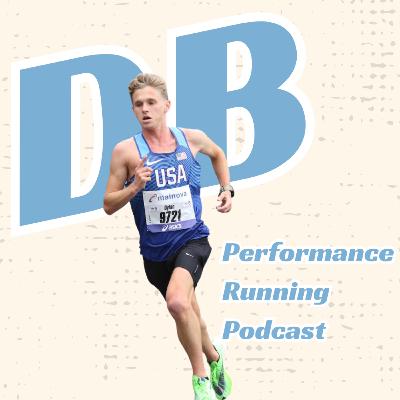
DB Performance Running Podcast
Subscribed: 0Played: 0
Subscribe

© Dylan Belles
Description
Hi, I'm Coach Dylan Belles! Over the past decade, I've trained with and learned from some of the best athletes in the world. Now, I’m sharing those experiences—both as a runner and a coach—with you. This podcast sheds light on training, racing, and the insights I’ve gained along the way. Whether you're one of my current athletes or just curious to learn ways you can train better (or perhaps differently), I invite you to join in and enjoy the ramblings!
82 Episodes
Reverse
In this episode, I break down what some of the best runners in the world are doing to maximize their training so they can handle more total quality work across the week.We get into the Norwegian method, double threshold training, and the real reason intensity control is becoming such a big part of modern distance running. I also share how this approach has impacted my own training and the athletes I coach, along with how you can start applying it yourself.
In this episode, I sit down with my good friend, Kameron Harder, a physical therapist, endurance athlete, and someone who spends a lot of time helping athletes stay healthy and perform better. We get into the role strength training should actually play in a runner’s routine. We talk about why it matters, how it helps reduce injuries, and what it can do for your performance if you approach it the right way.Kam's Website 👉 https://ridgeathleticsaz.com/Kam's Instagram 👉https://www.instagram.com/ridgeathleticsaz/https://www.instagram.com/ridgeathleticsaz/
Happy Friday! In today's episode you will get an update on my coaching + training, and several thoughts from my run this morning which includes - why steady runs are important, how to run with good form when you're tired, avoiding lazy strides, my thoughts on the ASICS Megabast, and the controversy from the USATF Half Marathon Champs
There’s a workout professional marathoners use all the time that most runners don’t fully understand - alternation sessions designed to train lactate clearance.I’ve used these sessions throughout my own build as a 2:16 marathoner and 2x Olympic Trials qualifier, and they’ve consistently been some of the best indicators of race readiness for the distance
When's the right time to change your training paces? Maybe not when you think!
Have you bonked after Mile 20 in the Marathon? I have!In today's episode, I'm going to walk through why we might bonk after mile 20 in the marathon, and leave you with a few ways in which you can work towards avoiding it next time!
Welcome! In today's podcast, I give you a full breakdown of my thoughts on the Puma Fast-R Nitro Elite 3 as a marathon shoe! These racing shoes have blitzed their way onto podiums and personal bests this past year, forcing their way into consideration as the fastest shoe on the market. But, is it? And is it the best shoe for you? Let's talk about it!
Recap from the past week's worth of racing, 4 workouts of the week, and tips for your training - all packed into one episode!
I give a full breakdown of my 2:17:44 & 12th place performance at the 2026 Chevron Houston Marathon
The treadmill gets dismissed as a last-resort option-or worse, as “not real running.” In this episode, we take a deeper look at what treadmill training actually does, what the research says about how it compares to running outdoors, and why it can feel harder even when the physiology is similar.We talk about biomechanics, heat stress, pacing perception, and injury risk, explain where treadmill running truly differs from outdoor running, and walk through when those differences help versus hurt. You’ll learn why the 1% incline rule isn’t a universal fix, how indoor heat load quietly changes training stress, and why the treadmill can be one of the best tools for threshold work, hill training, winter consistency, and race simulation-if it’s used correctly.
In this episode, I break down the concept of muscle tension, and explain why race-week training should preserve useful tension rather than eliminate it. We’ll look at the difference between fatigue and readiness, why the nervous system detunes faster than aerobic fitness, and how overly passive tapers dull coordination and stride quality.You’ll learn how short, controlled faster running keeps the body responsive without adding fatigue, how to approach race week with intention, and what “ready” should actually feel like when you step to the line.If you’ve ever felt fresh but sluggish on race day, this episode will change how you think about tapering.
When the race is over, motivation often fades-and that’s where many runners lose momentum and find themselves on a negative trajectory. How can we change that?This episode reframes the off-season as a critical training phase, not complete downtime. You’ll learn how to replace race-driven motivation with purpose, build structure without burnout, and set practical goals that keep progress moving when there’s no start line in sight. I'll break down how to train with intent during lighter periods of the year, and how to use the off-season to create lasting gains for your next training cycle.
Masters athletes aren’t fragile, but they do recover differently. In this episode, we break down what actually changes with age, why VO₂max decline drives performance loss more than threshold or economy, and how smart intensity placement keeps progress moving. We cover recovery limits, strength training, volume breakpoints, and why consistency across the year matters more than hero weeks.
VO₂max training is often misunderstood and misapplied.In this episode, i'll talk you through the basics of VO₂max intervals, VO₂ kinetics, and why many HIIT workouts fail to deliver the intended aerobic stimulus. Using recent research comparing long versus short VO₂max intervals, I'll help explain why time spent near VO₂max matters more than pace, heart rate, or perceived effort.We also explore how VO₂max training fits into marathon preparation, why it plays a supporting, non-dominant role, and how to use it strategically without compromising endurance development or recovery.
Hey hey! Today, I'm talking heavily on the topic of LT1 and why building training around this intensity can help provide all the good stuff that will elevate your marathon race time. I'll break down why marathon pace may be overrated (but still important) and also how to specifically build LT1 training into your program for your next marathon.
Hill training has been a staple of great coaching for more than 70 years, long before sports science could explain why. In this episode, we break down every major type of hill workout - short neuromuscular sprints, medium aerobic-power repeats, long sustained climbs, and uphill threshold sessions.We explore the science behind each, the historical foundations from coaches like Lydiard, Cerutty, Bowerman, and Canova, and why hills often deliver bigger benefits with less stress than flat intervals.If you want to build strength, improve running economy, raise your aerobic ceiling, and train harder without breaking down, this is your blueprint.
In this episode, I'll help break down why running more miles - when done the right way - creates some of the most reliable breakthroughs in endurance for runners of all ability levels. I'll talk briefly about historical high mileage programs, basic physiology, and steps you can take to improve your mileage starting from scratch.
Recap from the New York City Marathon, Indy Monumental Marathon, BAA Half, Valencia Half & More!Stick around to check out 5 workouts of the week, and a few quick-hitting training tips and thoughts that you can apply to your training today.
Here's my full breakdown on the 2025 Marathon experience! From pre-race, mid-race, to post-race, I lay out everything I did to plan, prepare, and execute this amazing race.
In today's episode, I will walk through the idea of taking structured down weeks in training. We will explore:What exactly is a down weekWhy would you take a down week Why wouldn’t you take a down week How often would you take a down weekHow to not get worried about losing fitness when taking a down week

Comments

Download from Google Play

Download from App Store
 United States