


 Claim Ownership
Coins & Coins & Coins
Subscribed: 4Played: 15
Subscribe

© All rights reserved.
Description
Explore the fascinating world of U.S. Classic Commemorative Coins, minted between 1892 and 1954. This era includes 144 silver issues—primarily half dollars—along with a single quarter and dollar. Highlights include iconic pieces such as the 1892 World’s Columbian Exposition half dollar and the 1954 George Washington Carver/Booker T. Washington half dollar.
These coins commemorate significant events and influential figures in American history, from the World’s Columbian Exposition to the Old Spanish Trail. While complete mintage data for every coin and mint may not always be available, we’ll examine key examples and explore the factors that affect their value and collectibility.
Join us as we uncover the rich history and striking designs that make these classic commemoratives a favorite among collectors.
These coins commemorate significant events and influential figures in American history, from the World’s Columbian Exposition to the Old Spanish Trail. While complete mintage data for every coin and mint may not always be available, we’ll examine key examples and explore the factors that affect their value and collectibility.
Join us as we uncover the rich history and striking designs that make these classic commemoratives a favorite among collectors.
14 Episodes
Reverse

The Buffalo nickel is one of the most recognizable coins in American history—but behind its iconic design is a story filled with art, controversy, rare coins, famous minting mistakes, and a few mysteries that collectors are still debating today.In this episode of Coins Coins Coins, we explore the history of the Buffalo nickel, also known as the Indian Head nickel, produced by the United States Mint from 1913 to 1938. Discover how sculptor James Earle Fraser created the design, the mystery surrounding the Native American portrait, and the story of the American bison that inspired the reverse.We also dig into some of the most collectible Buffalo nickels, including the legendary 1937-D Three-Legged Buffalo, the rare 1918/7-D overdate, the 1926-S Buffalo nickel, and other key dates and varieties.You’ll learn why so many Buffalo nickels are missing their dates, why the beautiful design caused headaches for the U.S. Mint, how collectors evaluate Buffalo nickels today, and why the design eventually disappeared from circulation—only to return decades later.Whether you’re an experienced coin collector or just discovering numismatics, this is the remarkable story behind one of America’s greatest coins.Coins Coins Coins — People. Places. Stories. Coins.The Buffalo nickel is one of the most recognizable coins in American history—but behind its iconic design is a story filled with art, controversy, rare coins, famous minting mistakes, and a few mysteries that collectors are still debating today.In this episode of Coins Coins Coins, we explore the history of the Buffalo nickel, also known as the Indian Head nickel, produced by the United States Mint from 1913 to 1938. Discover how sculptor James Earle Fraser created the design, the mystery surrounding the Native American portrait, and the story of the American bison that inspired the reverse.We also dig into some of the most collectible Buffalo nickels, including the legendary 1937-D Three-Legged Buffalo, the rare 1918/7-D overdate, the 1926-S Buffalo nickel, and other key dates and varieties.You’ll learn why so many Buffalo nickels are missing their dates, why the beautiful design caused headaches for the U.S. Mint, how collectors evaluate Buffalo nickels today, and why the design eventually disappeared from circulation—only to return decades later.Whether you’re an experienced coin collector or just discovering numismatics, this is the remarkable story behind one of America’s greatest coins.Coins Coins Coins — People. Places. Stories. Coins.
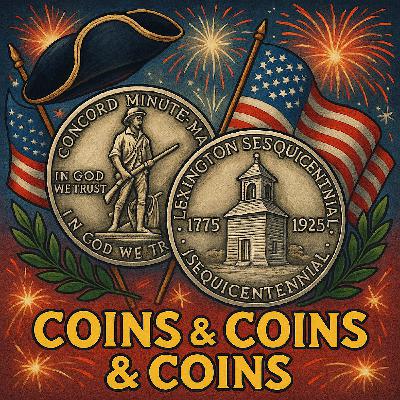
In this episode of Coins & Coins & Coins, we dig into a coin that commemorates one of the most important turning points in American history—the 1925 Lexington-Concord Sesquicentennial Half Dollar. Struck to honor the 150th anniversary of the first battles of the American Revolutionary War, this coin was more than a piece of silver—it was a patriotic souvenir sold to fund local celebrations in Massachusetts.We’ll explore the design choices behind this historic coin, from the iconic "Minute Man" statue on the obverse to the Old Belfry on the reverse. Though packed with symbolism, the coin's artistic merits sparked debate, and not everyone was impressed with its final look.With over 160,000 coins minted and sold for just $1 at the time, it’s now one of the more affordable classic commemorative coins for collectors today. Whether you're new to coin collecting or just a fan of American history, this episode offers a look into how one coin connects art, patriotism, and memory of “the shot heard 'round the world.”
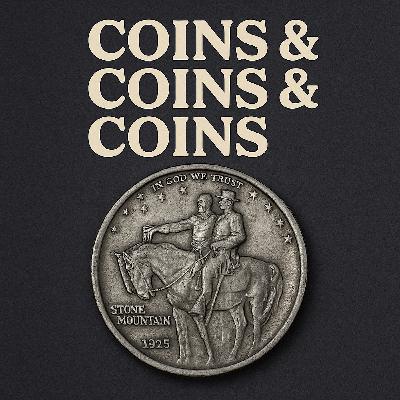
Step into the complex history of the 1925 Stone Mountain Memorial Half Dollar—one of the most controversial coins in U.S. commemorative history. This silver half dollar, minted in Philadelphia, features Confederate Generals Robert E. Lee and Stonewall Jackson, and was created to fund the Stone Mountain Confederate monument in Georgia. Designed by Gutzon Borglum—who later sculpted Mount Rushmore and was associated with the Ku Klux Klan—the coin reflects deep ties to white supremacy and institutional racism of the era.Backed by the United Daughters of the Confederacy, the fundraising campaign—dubbed the “Harvest Campaign”—distributed coins based on white population and bank deposits. Despite over 2 million coins minted, nearly half were melted due to poor sales and growing national controversy.On this episode of Coins & Coins & Coins, we unpack the coin’s design, symbolism, historical context, and modern collectibility. From Civil War memory to the politics of public monuments, this episode explores how a seemingly simple coin became a lightning rod for cultural conflict—then and now.If you’re a coin collector, history buff, or curious listener, this is one story you won’t want to miss.
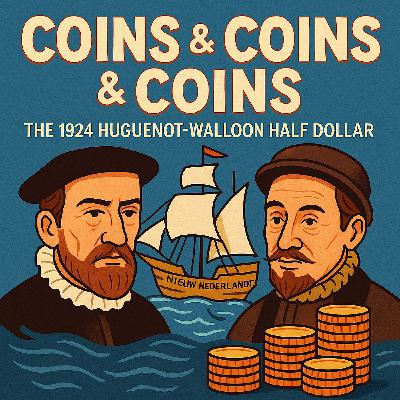
In this episode of Coins & Coins & Coins, we explore the fascinating and controversial story behind the 1924 Huguenot-Walloon Tercentenary Half Dollar. Issued to commemorate the 300th anniversary of the founding of New Netherland (present-day New York), this U.S. commemorative coin honors the arrival of Protestant Huguenot and Walloon settlers aboard the Nieuw Nederlandt in 1624. Designed by George T. Morgan—famed for the Morgan Dollar—the coin features busts of Admiral Gaspard de Coligny and William the Silent, spiritual leaders who never actually set foot in the New World.Backed by the Federal Council of Churches of Christ in America, the coin sparked debate over the separation of church and state and was criticized for promoting religious propaganda. It also drew fire for featuring historical figures who had no direct link to the 1624 voyage. With over 55,000 unsold coins eventually released into circulation, the Huguenot-Walloon Half Dollar became both a collector’s item and a case study in the politics of U.S. commemorative coinage.Join us as we unpack the symbolism, controversy, and collectibility of one of the most debated coins in American numismatic history. A must-listen for coin collectors and history lovers alike!
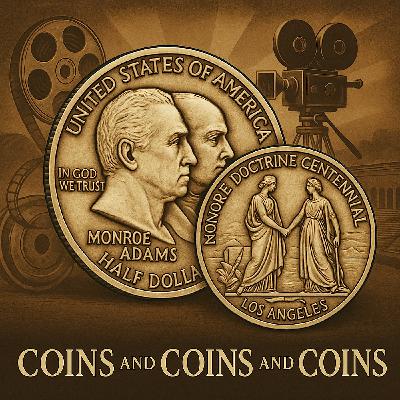
🎙️ Discover the Story Behind the 1923 Monroe Doctrine Centennial Half Dollar on Coins & Coins & Coins! This episode explores a fascinating intersection of history, Hollywood, and U.S. coinage. Struck to honor the 100th anniversary of the Monroe Doctrine, this commemorative half dollar featured Presidents James Monroe and John Quincy Adams and was tied to a grand—but ultimately failed—Los Angeles exposition.Designed by Chester Beach and minted in San Francisco, the 1923 coin was part of a public relations effort by the troubled Hollywood film industry. The exposition promised pageantry, historical reenactments, and even plans to produce educational films, but financial failure led to many coins entering circulation at face value.We’ll dive into the coin’s controversial design, its limited success, and the congressional debate that questioned the dignity of U.S. commemorative coinage. Learn how this silver half dollar became a symbol of overambition, market saturation, and artistic controversy.Perfect for numismatists, history buffs, and collectors alike, this episode uncovers the little-known legacy of the Monroe Doctrine Centennial Half Dollar. 💰🇺🇸

Comments

Download from Google Play

Download from App Store
 United States