


 Claim Ownership
B2B No Bull
Subscribed: 0Played: 0
Subscribe

© 2025
Description
Conversations about marketing communications for B2B marketers.
19 Episodes
Reverse
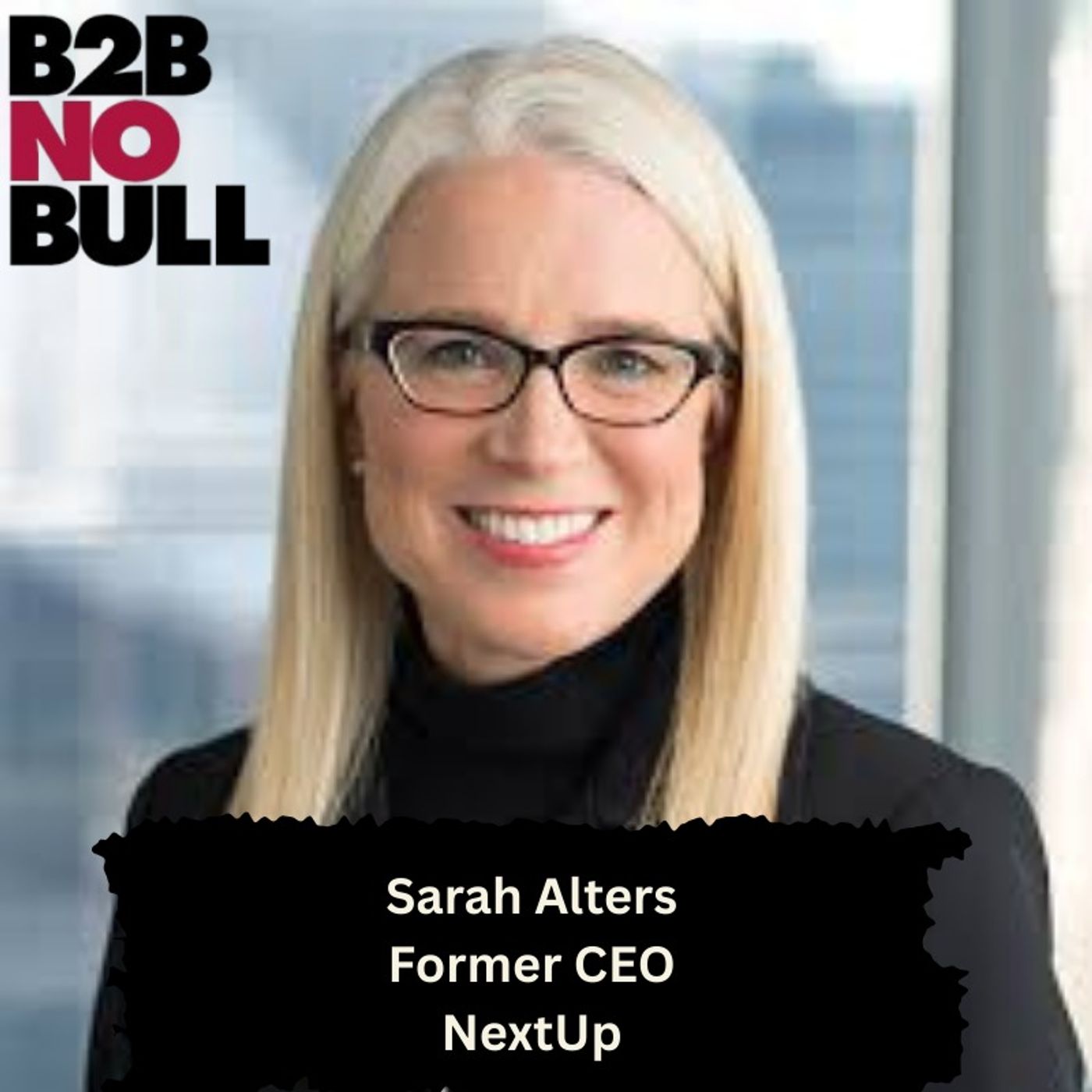
In this episode of B2B No Bull, hosts Liz and Mark Brohan tackle the evolving—and increasingly messy—state of Diversity, Equity, Inclusion, and Belonging (DEIB). Joined by transformational growth advisor Sarah Alter, former CEO of NextUp, the conversation reframes DEIB from a political flashpoint to a business imperative.
Alter explains how legal challenges—first in higher education, then in corporate America—have pushed some companies to scale back, go “stealth,” or rebrand DEIB efforts around performance metrics. But she argues the core objective hasn’t changed: organizational alignment.
Using examples from companies like Target, Costco, Johnson & Johnson, Coca-Cola, Delta Air Lines, Best Buy, and Nestlé, she highlights how leaders who stay focused on mission alignment, employee engagement, and innovation often see stronger business outcomes.
Alter outlines two key leadership actions:
Tie cultural initiatives directly to measurable KPIs (retention, productivity, innovation).
Drive alignment from the CEO down through structured tools like BlueSpark’s Organizational Performance Survey (OPS).
She also shares insights from the “Beyond Allies” program, built on the 70-20-10 learning model and emotional intelligence principles, emphasizing that culture change requires practice—not just policy.
The takeaway? Alignment—not acronyms—drives results. And companies that treat employees as whole people, investing in mental health, affinity groups, and resilience, are positioning themselves for sustainable success.
Resources & References Mentioned
NextUp – Leadership development and the “Beyond Allies” program
BlueSpark – Organizational Performance Survey (OPS)
Breakthrough T1D (formerly JDRF)
Orphans of the Storm – Capital campaign initiative
University of Chicago Booth School of Business – Mentioned in discussion of employee benefits trends
Highlight Quotes
“Alignment—not acronyms—is what drives business results.”
“If DEIB isn’t connected to KPIs like retention, productivity, and innovation, it won’t stick.”
“Culture change isn’t a webinar—it’s a muscle. You build it through practice, partnership, and leadership from the top.”
Produced by: Flint RockArt by: Brohan ProductionsMusic licensed through: Flint Rock
The State of DEIB: From Backlash to Business Alignment
In this episode of B2B No Bull, hosts Liz and Mark Brohan tackle the evolving—and increasingly messy—state of Diversity, Equity, Inclusion, and Belonging (DEIB). Joined by transformational growth advisor Sarah Alter, former CEO of NextUp, the conversation reframes DEIB from a political flashpoint to a business imperative.
Alter explains how legal challenges—first in higher education, then in corporate America—have pushed some companies to scale back, go “stealth,” or rebrand DEIB efforts around performance metrics. But she argues the core objective hasn’t changed: organizational alignment.
Using examples from companies like Target, Costco, Johnson & Johnson, Coca-Cola, Delta Air Lines, Best Buy, and Nestlé, she highlights how leaders who stay focused on mission alignment, employee engagement, and innovation often see stronger business outcomes.
Alter outlines two key leadership actions:
Tie cultural initiatives directly to measurable KPIs (retention, productivity, innovation).
Drive alignment from the CEO down through structured tools like BlueSpark’s Organizational Performance Survey (OPS).
She also shares insights from the “Beyond Allies” program, built on the 70-20-10 learning model and emotional intelligence principles, emphasizing that culture change requires practice—not just policy.
The takeaway? Alignment—not acronyms—drives results. And companies that treat employees as whole people, investing in mental health, affinity groups, and resilience, are positioning themselves for sustainable success.
Resources & References Mentioned
NextUp – Leadership development and the “Beyond Allies” program
BlueSpark – Organizational Performance Survey (OPS)
Breakthrough T1D (formerly JDRF)
Orphans of the Storm – Capital campaign initiative
University of Chicago Booth School of Business – Mentioned in discussion of employee benefits trends
Highlight Quotes
“Alignment—not acronyms—is what drives business results.”
“If DEIB isn’t connected to KPIs like retention, productivity, and innovation, it won’t stick.”
“Culture change isn’t a webinar—it’s a muscle. You build it through practice, partnership, and leadership from the top.”
Produced by: Flint RockArt by: Brohan ProductionsMusic licensed through: Flint Rock
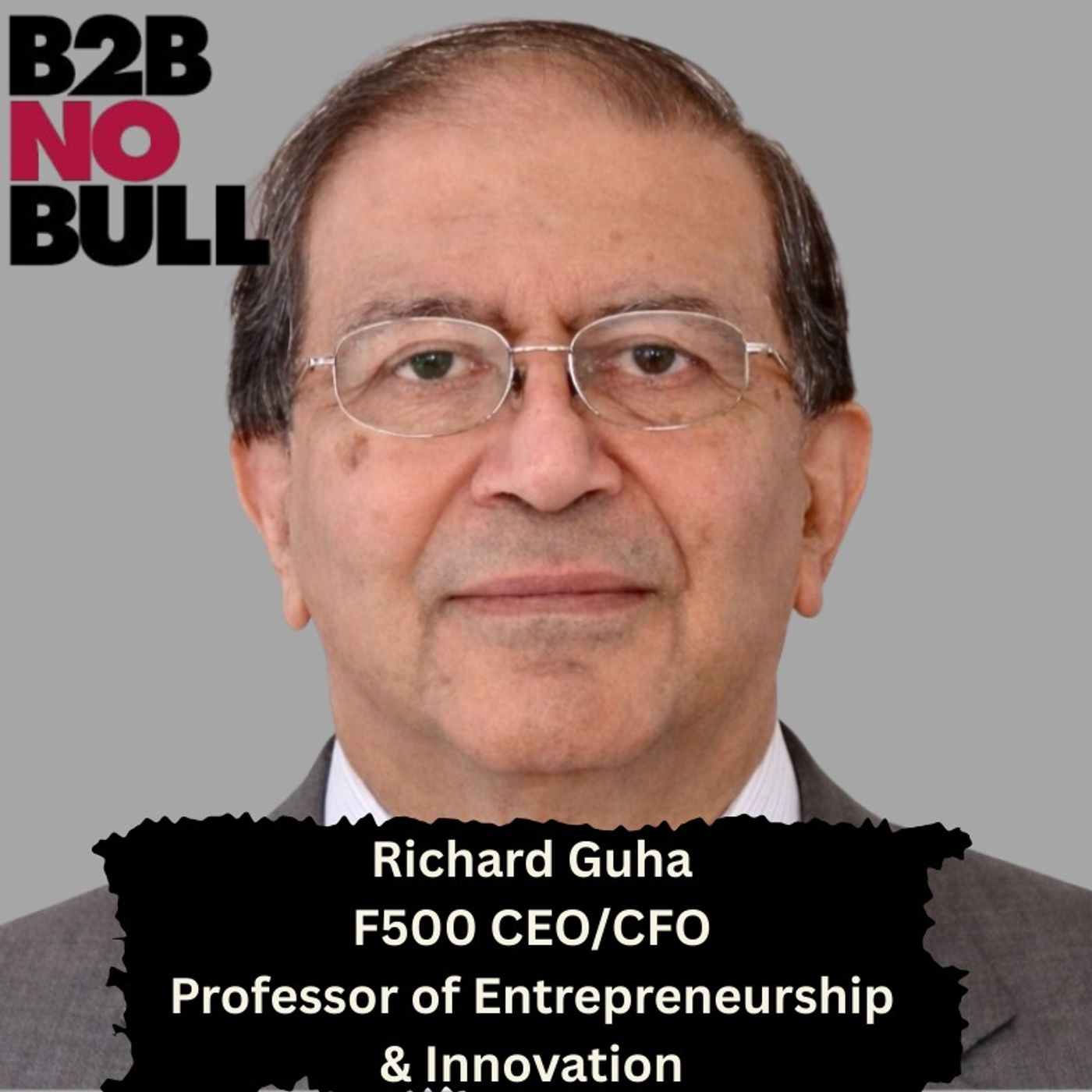
In this episode of B2B, No Bull, hosts Liz Brohan and her brother Mark Brohan are joined by innovation veteran Richard Guha, whose 45+ year career spans four continents, multiple C-suite roles, startups, boardrooms, and classrooms. Together, they unpack a hard truth: most companies don’t struggle with innovation because they lack ideas—they struggle because they don’t understand the real problems worth solving.Richard challenges the myth that innovation is about big brainstorming sessions, flashy product launches, or chasing the latest technology. Instead, he argues innovation is a diagnostic discipline rooted in listening deeply to customers, understanding unmet needs, and applying technology as an enabler—not the driver. Through vivid examples from energy, manufacturing, CPG, software, and retail, he shows how breakthrough ideas often emerge from customer pain points, adjacent industries, and overlooked byproducts.The conversation explores why large organizations resist innovation, how culture and leadership signals can either unlock or kill new ideas, and why innovation must be team-driven and top-down. Richard also draws sharp distinctions between innovation and entrepreneurship, emphasizing that sustainable growth comes from curiosity, data, and constant engagement with the market. This episode is a masterclass in practical, human-centered innovation for B2B leaders.Resources & References MentionedASML – Semiconductor manufacturing leader spun out of Philips3M & the McKnight Principles – A long-standing model for corporate innovation cultureWayfair – Example of leadership staying close to customer insight through call-center engagementHighlight Quotes“Innovation isn’t a brainstorming exercise—it’s a diagnostic process rooted in understanding real customer pain.”“Technology should never drive the idea. The need comes first; technology simply enables it.”
Produced by: Flint RockArt by: Brohan ProductionsMusic licensed through: Flint Rock
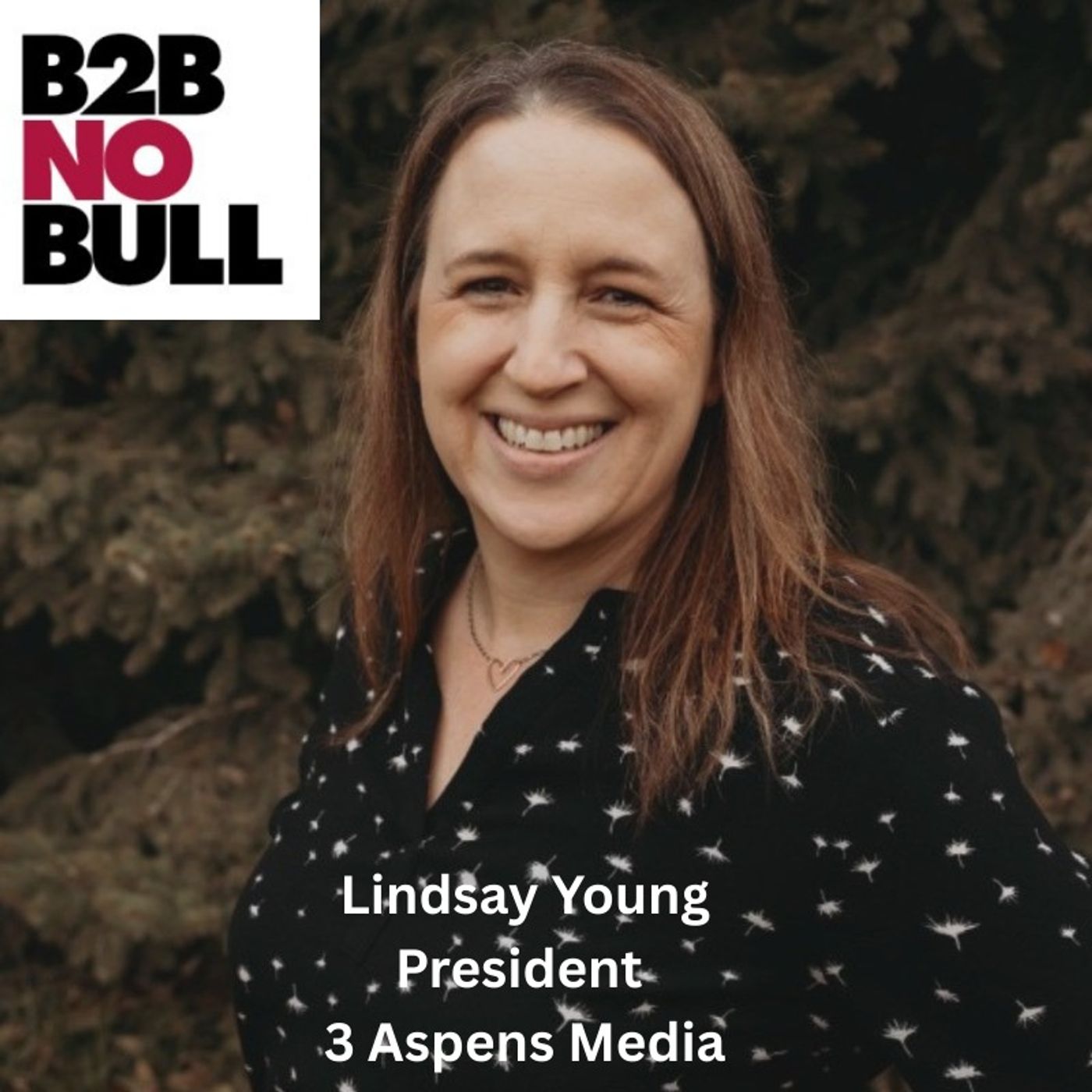
In this solo episode of B2B, No Bull, host Liz Brohan welcomes Lindsay Young, President of 3 Aspens Marketing, for a deep dive into why storytelling still matters in B2B—especially in an AI-saturated world.
Liz and Lindsay unpack how SEO-driven content and automation have slowly drained the soul from B2B marketing, replacing human insight with keyword-stuffed noise. While AI can accelerate workflows, Lindsay argues it should never replace thinking, empathy, or original insight. At its best, storytelling helps prospects see themselves in the narrative—reflecting their real pains, messy processes, and hard-won wins.
The conversation explores how brands can reinvigorate storytelling through customer interviews, frontline sales insights, and original research. Lindsay shares practical advice on choosing quality over quantity, making long-form content worth the reader’s time, and repurposing “evergreen” stories across marketing, PR, and sales enablement. A standout theme is embracing the “messy middle” of customer journeys—being transparent about challenges rather than polishing everything to perfection.
The episode closes with a fast-paced “Bull or Noble” segment tackling hot takes on AI, authenticity, long-form content, and whether storytelling really works in B2B (spoiler: it does). This episode is a reminder that even in a tech-driven era, great B2B marketing still starts—and ends—with humans.
🔗 Resource Links / Reference Materials
Harvard Business Review – Storytelling That Moves People
https://hbr.org/2014/06/storytelling-that-moves-people
Content Marketing Institute – B2B Storytelling Best Practices
https://contentmarketinginstitute.com/articles/b2b-storytelling/
Edelman Trust Barometer (for credibility, research, and authenticity insights)
https://www.edelman.com/trust-barometer
Highlight Quotes
“AI can speed up marketing—but it can’t replace thinking, empathy, or a story worth telling.”
“Nobody ever read a white paper that changed their life. Storytelling works when people see themselves in it.”
“B2B buyers aren’t afraid of complexity—they’re afraid of surprises. Show them the messy middle.”
Produced by: Flint RockArt by: Brohan ProductionsMusic licensed through: Flint Rock
In this episode of B2B No Bull, Liz and Mark Brohan dive headfirst into the “black hole of marketing” with returning guest Cindy Greenglass, President of Livingston Consulting Strategies. The conversation tackles one of the most urgent challenges facing B2B marketers today: how buyers get answers in an AI-driven world—and what happens when your brand isn’t part of those answers.The group introduces answer marketing and answer optimization, clearly distinguishing them from traditional SEO. While search delivers lists and rankings, answer optimization delivers recommendations—exactly what modern buyers expect from generative AI tools. As Cindy explains, SEO isn’t going away, but it’s no longer enough on its own.The discussion explores how marketers can anticipate buyer questions by mining internal data from customer service, sales conversations, events, and chat logs, then using AI prompts to uncover the questions buyers haven’t even articulated yet. The episode also covers the rise of AI agents, proprietary “walled garden” data, and why answer marketing is becoming a true source of competitive differentiation.The key takeaway: B2B marketers must stop pushing content and start engineering answers—or risk disappearing into the black hole.🔗 Resources & References MentionedAndy Crestodina (Orbit Media) – AI for B2B Content & Lead Generation + Prompt LibrariesOrbit Media Blog – Practical guidance on AI, content, and digital strategyGoogle Gemini / Generative AI Search Tools – Examples of answer-driven discoveryHighlight Quotes“Search gives you a list. Answer optimization gives you a recommendation—and that’s what buyers want now.”“If AI is answering your buyer’s questions and your brand isn’t part of the answer, you’re already behind.”“The future of B2B marketing isn’t more content—it’s better answers, powered by better prompts.”
Produced by: Flint RockArt by: Brohan ProductionsMusic licensed through: Flint Rock
In this episode of B2B No Bull, Liz and Mark Brohan dive into the ever-evolving world of public relations in B2B marketing with veteran PR leader Randy Pitzer, who has spent over three decades shaping communications for major global brands. Randy explains how PR still leads the pack in credibility thanks to third-party validation — something advertising can’t replicate — even as digital channels and AI reshape how stories are told and amplified.The conversation explores the growing confusion between paid vs. earned media, the fading art of pitching journalists with real news value, and the need for PR pros to measure impact more meaningfully. Randy also shares powerful stories where editorial coverage directly led to multimillion-dollar deals, proving PR’s role in driving business outcomes — not just brand awareness.They discuss PR’s place inside the modern marketing mix, why simple storytelling beats jargon every time, and how AI may enhance research and execution but can’t replace true relationship-building. Randy’s closing takeaway? PR’s core mission hasn’t changed: tell compelling, credible stories — clearly and honestly.This episode is a must-listen for CMOs, PR leaders, and B2B marketers seeking to sharpen their credibility engine and reconnect PR activity to real-world value. 3 Resources or References MentionedEdelman Trust Barometer (measuring trust in institutions and brands)University of Missouri School of Journalism (Randy’s journalism foundation)Aviation Week (example of high-impact industry editorial coverage) Three Highlight Quotes“Earned media is the credibility engine. A real article from a trusted source is worth more than a hundred ads — because someone else is telling your story.”“AI may help write and research PR — but it can’t build relationships or convince a journalist your story matters. That human role isn’t going away.”“Keep it simple. Tell a real story. If people can’t understand what you do in one sentence, PR — and sales — will never work.”
Produced by: Flint RockArt by: Brohan ProductionsMusic licensed through: Flint Rock
In this eye-opening episode of B2B No Bull, Liz and Mark welcome an unexpected but powerful ally for marketers: financial astrologer and former commodities expert Susan Gidel of Susan G Says. Susan blends her backgrounds in ag-econ, futures markets, and marketing with deep astrological expertise to help B2B professionals make smarter, better-timed decisions.Susan breaks down how planetary movements—especially Mercury retrograde and the Moon’s shifting signs—affect communication, timing, creativity, and emotional resonance in marketing. She explains why Mercury retrograde isn’t a disaster, but a period ideal for review, relaunching, and reconnecting. She also discusses how the Moon’s sign can dramatically influence email open rates, sharing a real client test that saw an 86% lift in subject line performance simply by aligning with lunar energy.Listeners learn how corporations can use astrology through company birth charts, annual planning aligned with planetary transits, and team-building through elemental strengths (fire, earth, air, water). With younger generations already embracing astrology in their financial and career decisions, Susan encourages marketers to see astrology as an additional, data-informed lens—one that can provide a competitive edge, improve timing, and strengthen team dynamics.Resources / References MentionedMercury Retrograde Calendars – via astrology apps (e.g., TimePassages, Co–Star, or similar).Moon Void-of-Course Trackers – astrology apps and calendars used to schedule or avoid key work.Farmer’s Almanac – historical reference to agricultural timing and weather prediction.Highlight Quotes“Ignore the moon and you’re leaving open rates on the table.”“Mercury retrograde isn’t a crisis — it’s your chance to review, relaunch, and reconnect.”“Astrology is just another set of metrics to help marketers make smarter, better-timed decisions.”
Produced by: Flint RockArt by: Brohan ProductionsMusic licensed through: Flint Rock
In this fast-paced episode, Liz and Mark sit down with Patricia Velasquez, B2B Strategy & Insights Lead at Google, to unpack how AI, automation, and real-time data are rewriting the rules of market research. Patricia explains why traditional surveys and quarterly decks—once the backbone of insight-gathering—are now the rear-view mirror in a market moving too quickly for backward-looking analysis.She reveals three forces reshaping B2B research today: AI-powered insight tools, synthetic panels, and multimodal signals (voice, visual, behavioral). Together, they shift organizations from “ask and wait” to “observe and adapt.” Patricia offers a practical starting playbook for mid-size companies: instrument digital touchpoints, use AI-enhanced platforms already available, and operate in fast, agile learning loops.The conversation also digs into the emotional side of B2B buying—how trust, confidence, and human validation matter more than ever. Patricia shares a look at emerging frontiers like intent-based targeting, AI co-pilots, and agentic research that proactively surfaces insights and strengthens storytelling.Her final message: treat research as a living system, not a static report. Learn faster than the market, stay curious, and use AI as a force multiplier—never a replacement for human judgment. Resources MentionedThink with Google (industry insights & research)Google Trends (real-time search behavior)LinkedIn – Patricia Velasquez (connect with the guest)
Produced by: Flint RockArt by: Brohan ProductionsMusic licensed through: Flint Rock
In this episode of B2B No Bull, hosts Liz and Mark Brohan welcome back Scot Wingo, co-founder of ChannelAdvisor and CEO of RefyBuy, for a deep dive into the implementation side of agentic AI. Building on their last discussion, Scot explains how marketers can move from internal automation to “outside-in” strategies that help their products get discovered and purchased through AI-driven commerce engines like ChatGPT, Perplexity, Microsoft Copilot, and Google Gemini.Scot outlines practical steps B2B marketers can take now — from unblocking AI crawlers to optimizing product detail pages and leveraging deep content for LLMs — all to ensure their products appear in next-generation search. He stresses that marketers already possess the tools they need, but time is short: within six months, AI-driven traffic could rival or replace traditional SEO.The conversation covers monitoring product visibility, avoiding data-blocking missteps, and why the next evolution of B2B marketing blends technology, transparency, and human creativity.Resources Mentioned:Microsoft CopilotGemini by GooglePerplexity AITweet-Length Highlights:“Don’t block the bots — blocking AI crawlers today is like blocking Google in 2005.” — Scot Wingo“Agentic AI won’t end agencies — it’ll just make them smarter, smaller, and faster.” — Scot Wingo“Marketers already have the tools. The trick is to use them before AI traffic leaves you behind.” — Liz Brohan
Produced by: Flint RockArt by: Brohan ProductionsMusic licensed through: Flint Rock
In this fast-paced episode of B2B. No Bull., hosts Liz Brohan and Mark Brohan are joined by longtime tech innovator and “serial e-commerce troublemaker” Scot Wingo, co-founder of ChannelAdvisor and CEO of Refibuy, to unpack what Agentic AI really means for marketing and business.Scott breaks down how AI has evolved from simple automation to “agents” that act autonomously—learning, reasoning, and completing tasks without human prompts. He explains how this shift is transforming marketing, commerce, and customer behavior far faster than most realize. As he puts it, “We’ve gone from search engines to answer engines,” meaning marketers must rethink SEO, SEM, and customer engagement in a world driven by conversational AI.The episode explores why Agentic AI is more than hype, how it will reshape the buyer journey, and what B2B marketers can do now to prepare—like optimizing for GenAI Engine Optimization (GEO) and leveraging agents internally for efficiency.Listeners will gain a clear, no-bull foundation on this next AI frontier and what it means for the future of marketing.🔗 References / Resources Mentioned:Refibuy – Scott Wingo’s AI development companyOpenAI’s ChatGPT – The catalyst for the Agentic AI revolutionAnthropic’s Claude – AI model introducing agent-to-agent communicationScot's slides: file:///C:/Users/robt_/AppData/Local/Microsoft/Windows/INetCache/Content.Outlook/076HPHJN/b2b_no_bull_pod.pdf💬 Highlight Quotes:“We’ve moved from search engines to answer engines—and that changes everything for marketers.” 🚀 #B2BNoBull“Agentic AI isn’t hype—it’s the next revolution in how business gets done.” 🤖“Marketers who lean into AI now won’t lose their jobs—they’ll become indispensable
Produced by: Flint RockArt by: Brohan ProductionsMusic licensed through: Flint Rock
In this episode of B2B No Bull, hosts Liz and Mark Brohan sit down with Mark Schneider, Founder and CEO of RSW/US, to unpack the evolution of B2B marketing agencies—and the growing pains that come with it. Schneider, a veteran in agency business development and client matchmaking, gets candid about why many agencies still struggle with differentiation and positioning.They discuss the ongoing identity crisis of “full-service” agencies, the importance of owning a niche, and why marketers are tired of hearing agencies talk only about themselves. The conversation dives into how agencies can lead clients through digital transformation and AI adoption, build thought leadership that adds real value, and focus on strategic partnerships instead of trying to be everything to everyone.From staying ahead of the tech curve to proving ROI, Schneider emphasizes that agencies must evolve—or risk being left behind. As Liz puts it, “If your homepage could be copy-pasted onto 50 other agency sites—you don’t have a position.”Resources MentionedRSW/US Agency New Business BlogThe Motion AgencyEMBAS Consulting🔥 Highlight Quotes“If your homepage could fit 50 other agencies—you don’t have a position.” – Liz Brohan“Agencies that talk less about themselves and more about client challenges win the day.” – Mark Schneider“AI won’t replace agencies—but agencies that ignore AI will replace themselves.” – Mark Schneider
Produced by: Flint RockArt by: Brohan ProductionsMusic licensed through: Flint Rock
In this lively episode of B2B No Bull, hosts Liz and Mark Brohan dig into one of the toughest challenges B2B marketers face: selling ideas into their own organizations. Why is it so difficult to get the boss—and sometimes even sales teams—to buy in? To help unravel the problem, they welcome Cyndi Greenglass, President of Livingston Consulting Strategies, adjunct instructor at West Virginia University, and co-host of Marketing Horizons.Cyndi brings a wealth of experience to the conversation, showing why marketers often fail at the very thing they’re supposed to be good at—communication. She challenges listeners to stop hiding behind acronyms, learn the language of business, and build relationships with finance leaders to understand what really drives the company. From finding unexpected insights in retention metrics to learning how to present data without “puking numbers,” Cyndi provides clear, practical advice for becoming a trusted voice at the leadership table.The group also explores the generational shift in B2B buying, the rise of “answer marketing,” and why self-service expectations are reshaping the customer experience. This no-nonsense conversation will leave you with fresh ideas—and maybe even some homework. Resource LinksLivingston Consulting StrategiesMarketing Horizons PodcastHonor Flight Chicago Highlight Quotes “Marketers fail at internal communication because we don’t speak the language of business. Start by learning what drives your CFO.”“Don’t puke your data—interpret it. Insight, not numbers, gets you a seat at the table.”“Retention isn’t boring—it’s financial impact. Losing just 10% of customers can sink the business.”
Produced by: Flint RockArt by: Brohan ProductionsMusic licensed through: Flint Rock
From Mad Men to Modern Men: Reinventing B2B Marketing with Mark PickettOn this episode of B2B No Bull, Liz and Mark Brohan sit down with Mark Pickett, Co-Founder of The Black Phoenix Group, to explore how legacy B2B companies can finally shake off outdated tactics and step into the digital era.Mark’s journey from Marine Corps combat veteran to marketing executive to investor in niche manufacturing and distribution firms gives him a unique perspective on transformation. He pulls no punches when it comes to what B2B marketers still “suck at”: understanding how the business really makes money and proving marketing’s role in driving revenue.Together, the hosts and guest dive into:Why industrial and legacy firms lag a decade behind in marketing technology.How to align sales and marketing by showing tangible, quick wins.Why marketers must speak the language of leadership and connect investment to measurable outcomes.The art of telling compelling, modern stories while respecting decades-long customer relationships.If your company is still relying on faxes, flip phones, and “we’ve always done it this way,” this episode will show you the mindset and tools to scale smarter, sell faster, and finally bring marketing into the modern era.Resources & ReferencesThe Black Phoenix Group – Mark Pickett’s firm specializing in industrial and niche manufacturing investments.KPMG – One of Mark’s past corporate leadership stops.U.S. Marine Corps – Where Mark’s leadership journey began. Highlight Quotes“B2B marketers don’t just need more tools—they need to understand how the business actually makes money.”“Industrial marketing is a decade behind—but the right tech stack can scale demand 100 to 1.”“Sales wants results. Marketing’s job is to prove it can ring the register.”
Produced by: Flint RockArt by: Brohan ProductionsMusic licensed through: Flint Rock
Leadership isn’t about titles, it’s about showing up—and in today’s high-pressure business climate, that can make or break performance. In this episode of B2B No Bull, hosts Liz and Mark Brohan welcome Barry Litwin, accomplished CEO and transformation leader, to talk about how great leadership drives growth, execution, and real results. Barry is currently CEO of Test Equity.Barry has led billion-dollar businesses across retail and distribution, delivering bold transformations at companies like Global Industrial, Adorama, and Party City. He brings to the table a proven model for scaling growth, turning around struggling organizations, and aligning teams around what matters most.Listeners will hear Barry’s Five-by-Five Framework—a strategy model that connects long-term vision (the North Star) to five must-win priorities over three years. He breaks down how to avoid the “strategy wish list” trap, and instead, focus resources where they move the needle.But strategy alone isn’t enough. Barry details his three-part operating system for accountability: HUB Meetings for weekly metrics, Initiative Reviews for big priorities, and one-on-ones that build trust and unblock execution. He also shares how his Claw Back Plan helps businesses recover when they’re off-plan, without panic or finger-pointing.From leading high-stakes “Big Bets” like a Salesforce CRM rollout, to establishing a cadence of clear communication that keeps boardrooms and breakrooms aligned, Barry delivers a masterclass in practical leadership. His advice is simple but powerful: be present, communicate deliberately, and build systems that keep momentum alive.Whether you’re a CEO, marketer, or team lead, this episode is packed with tools you can use to lead like it truly matters. Resource LinksBarry Litwin on LinkedIn – https://www.linkedin.com/in/barrylitwinGlobal Industrial – https://www.globalindustrial.comB2B No Bull Podcast – https://b2bnobull.com Highlight Quotes “Strategy isn’t everything—execution is. That’s where most companies break down.” – Barry Litwin“People don’t want perfect leaders. They want present ones.” – Barry Litwin“Momentum starts with presence. Leadership is about showing up, not hiding in the deck.” – Barry Litwin
Produced by: Flint RockArt by: Brohan ProductionsMusic licensed through: Flint Rock
Produced by: Flint Rock
Art by: Brohan Productions
Music licensed through: Flint Rock
Produced by: Flint Rock
Art by: Brohan Productions
Music licensed through: Flint Rock
In this insightful episode of B2B No Bull, hosts Mark, Mary and Liz welcome Klaus Werner, a seasoned marketing executive, to explore the evolving role of the fractional Chief Marketing Officer (CMO). Klaus breaks down why companies, especially small to mid-sized ones—are increasingly hiring CMOs on demand: cost efficiency, flexibility, and the ability to cut through internal bureaucracy.He describes the core responsibilities of a fractional CMO as driving fast, meaningful change and execution. “Quick impact” is the goal, and that means building trust fast, identifying low-hanging fruit, and aligning teams.Klaus credits the pandemic and the rise of remote work technologies for accelerating the adoption of this model.Klaus shares his playbook for success: conduct a rapid discovery, assess organizational needs, deliver quick wins, and build consensus.He provides a standout case study branding an industrial distributor with a bold identity and a NASCAR sponsorship. Despite internal resistance, the campaign boosted brand awareness and opened key industry doors.Listeners also hear about how aspiring fractional CMOs can break into the field through personal branding, speaking engagements, and thought leadership on platforms like LinkedIn.Klaus closes by weighing the pros (diverse challenges, fast impact) against the cons (inconsistent work) and emphasizes that success hinges on a company’s willingness to embrace change. 🔗 Resources & References Mentioned Werner.klaus@gmail.comRosetta (acquired by Publicis) – Where Klaus learned the consulting playbook.NASCAR – Branding and sponsorship strategy.Nielsen Logo Exposure Tool – Used to measure sponsorship media value.LinkedIn – www.linked.com/in/klauswerner/ Quotes“Fractional CMOs are hired for impact—fast, flexible, and free from internal red tape.”– Klaus Werner “COVID made fractional the new normal. Remote tech removed barriers, and companies embraced agile leadership.”– Klaus Werner “Success starts with courage. If a company can’t commit to change, no CMO—fractional or full-time—can help.”– Klaus Werner
Produced by: Flint RockArt by: Brohan ProductionsMusic licensed through: Flint Rock
Welcome to of B2B No Bull! Hosts Liz Brohan, Mary Olivieri, and Mark Brohan are joined by Justin Racine - Principal, Unified Commerce Strategy at Perficient—for a dynamic conversation about how to adapt marketing to attract and retain the Millinnium buyer. Justin explains how his interest in customer experiences started at a young age working at that golf course where he learned a whole bunch about customer experience. It taught him what consumers in general look for and what they want and different personas and behaviors and actions. Justin describes the roots of learning about customers: It’s rooted in consumer psychology and the behaviors that drive people to make decisions and, and why things like cognitive dissonance are what marketers use to create opportunities for folks to buy. One of his examples from the medical product space: create moments of interaction that are empathetic but also useful to that consumer. How has that evolved? You need to truly understand what your consumers and customers want at their core, and then find ways to leverage digital technologies and solutions to deliver on them. How would you describe your focus? Build experiences that surprise and delight consumers based on their needs, but also drive revenue. What is the main purpose? To convert in a way that aligns to who consumers are, and that really is what drives people to come back for repeat purchases. Mark describes a sea change in B2B purchasing: 70% of all B2B buyers that are driven by millennials are not happy with the experience they get on a B2B website. Justin clarifies purchasing data: You know, a B2B buyer likely buys under an account number. They probably purchase through POS, they may not order with credit cards, but have you captured other demographic information around that buyer? Do you know what age group that they're in? Do you know what previous products they've purchased? You know what channel they shop in? Do they shop online or through the app or through customer service? Justin describes another starting point for data collection: A B2B brand should start to collect that data, and start to understand the average age of a person if they can, and start to pull all that information in. Because while a lot of B2B buyers want similar things, each business-to-business brand is unique and different. There are different pricing formulas, there's different ordering workflows, there's different order approvals, collaborative buying environments, all these things come into play. Digging pretty deep on demographic data is needed. Can you speak a little bit to the buyer's journey? Yeah, I think the biggest thing is really understanding each B2B use case. :Justin give another medical products example: a lot of organizations are going to buy vinyl gloves or buy hand sanitizer on a week in, week out basis that doesn't necessarily need a lot of high touch from a sales person or a lot of personalization. It's really just. Rinse and repeat orders. Now in the future world, a personal shopping assistant agnostically, can order that for someone without them having to log into the website. Justin explains how to align with the customer journey. The customer journey is when you pull in all the different touch points and the behavioristic elements that a customer is telling you about including what they're interested in. Justin provides an example: Let's say a hospital needs to order 50 new hospital beds, um, they might mention to their salles rep that in three months we're going to need to put out a bid for 50 hospital beds, which is hundreds of thousands of dollars. Justin describes how to leverage that information: That sales rep should then take that information and enter it into the CRM that they have. And in the world of connected unified commerce that CRM should now guide future experiences. When Joe authenticates on that B2B portal to start showing him banners on hospital beds. And emails should have similar product content along with capturing all of his behaviors that he has on that site, on that portal. This should be going back to the sales rep so he can see what products he's looking at, what brand he might have an affinity towards, and then that sales rep can help guide them on the journey that, that that person has in an omnichannel way. What are B2B marketers doing wrong right now? I think a lot of B2B organizations don't dig in super deep on consumer behavior. They're focused on other elements. Also I think a lot of B2B organizations have elements or experience design that are legacy and they're not updated. Justin speaks to the need to update sites and systems. Justin mentions technology to consider: Using things like live chat agents or personal shopping agents and the world of personalization. This will facilitate a lot of upsell and cross sells. What else should marketers focus on? Affinity products that make the most sense. I'd say those are the biggest areas I see people not spending as much time on. But a lot of the clients I've worked with recently are really focusing on the direct-to-consumer path. Justin explains the pros and cons. The pros are that you have new revenue streams coming in direct with consumers, and in theory you can cut out distribution which in theory could be much higher profitability for the organization. The cons are that the core group distributors who are your customers too and that you've built your business on will feel threatened and they'll say, well, what do you mean you're selling direct to my customer? That's my customer. That's not yours.And how can you do that effectively? A couple of different ways. One. You can only offer certain products direct to consumer. Maybe it's new products you're launching, maybe you're testing them out and you want to see what they do in the market. So new product innovations could go direct to consumer before it goes to your broader audience. Justin provide insights on how to tell the distributors: Here's how you can message to the current customers: Hey, you're still our customer. We're just testing products out in the space. These are new items that we're, we want to see how they do, and that's going to help us improve the product development lifecycle so that when we give it to you, Mr. And Mrs. Distributor, we know what the right price point is for MSRP or map pricing that you can recommend to your customer. Um, so that's one way of being transparent and breaking silos down. Another way is that you can go direct to consumer if your pricing strategy is in lockstep as well too. If I sell something to a distributor for $10 a case, then maybe I sell it to the end user consumer at. $15 a case, right? So you can ensure that your pricing strategy, you're not undercutting your distribution partners or your retail partners, that if someone wants to buy it direct, you know they can, but it's going to be at a higher price. Justin gives examples: What I will say though, is that if you follow the historical mindset of big retail brands of where they're at today, like Nike as an example. Nike used to sell through retail and now there's Nike stores on every corner, and now there's a Nike website that you can buy directly. You can still buy Nike in Finish Line or you know these other stores? So. there's a point that comes where the manufacturer says, okay, our end user customers are telling us they want to have conversations directly with our brand. We got to give them that. Is there still life for retailers or distributors in the middle? Yeah, probably because people are still going to go there especially if there are loyalty points or other incenttives. There's enough market share to spread around. So it has to be done very delicately. I spend all my day talking to manufacturers and distributors on the B2B side. And the user experience is top of mind. and the millennial buyer is not a solo individual. It's a team. That team is 3.5 to seven members and they're cross-functional with the organization. So, why are B2B sellers not giving these millennial buyers the experience they want? Because they don't realize the buying power or the buying persuasion that millennial buyers want. You know, price isn't king. It's experience. Justin explains experience economics. Consumers will spend more on an experience than they will on a cup of coffee. We complain about egg price and coffee prices, but why don't we ever complain when we want to take our family to a trip to Europe or Disney World that costs thousands of dollars? In fact, we're happy to shell the money out. Why is that? What's the psychology behind that? The psychology is that we as consumers, like experiences. So if you're a B2B organization. You want to create stickiness with customers and you don't want them to leave. Price is important. Sure. But if you create an experience that makes it easy for them to do the things that they want to do. As an example, Justin uses: A personal shopping agent that agnostically is a AI agent that will place an order for you. You don't have to log in and do it, it just sends you a text and you reply with like, yes, looks good. That makes it easy. Those are the types of things B2B organizations need to be looking at to introduce. Justin gives other insights into the B2B buyer: I also think that some of the things that the B2B buyer is looking for are ways to help them take information to their executive team or to their leadership, or even just their boss. And are there ways that they can take some of the things that you've just told us about and make it an important step that their organization has to take? How do they sell that in? Yeah, I think the biggest thing that we try to focus on at Proficient and, and just in general is showing the ROI of it, right? So like, if you want to leverage, like, Hey, we're gonna use an AI personal shopping agent to place orders, you know, that's gonna save me five hours or 10 hours a week, that I'm gonna be able to focus in on
Welcome to episode #1 of B2B No Bull! Hosts Liz Brohan, Mary Olivieri, and Mark Brohan are joined by Velinda Cox—President of Sound Horizon LLC and former VP of eCommerce & Digital Transformation at Konica Minolta—for a dynamic conversation about what it really takes to lead change in today’s fast-moving business world.Velinda gets right to the point: digital transformation isn’t just about adopting new tools—it’s about completely reimagining how we work. And the pace of change? It’s only getting faster.So, what’s holding companies back? According to Velinda, it often comes down to fear. Fear of the unknown. Fear of failing. And sometimes just the comfort of the status quo. She’s seen firsthand how critical it is for organizations to embrace a growth mindset—from leadership all the way down.One of her key insights? You’ve got to get the right people on board early. Velinda calls it “getting them in the boat.” Ask questions. Understand where the resistance is coming from. And then align around the benefits. It’s not about pushing—it’s about pulling everyone together.Of course, selling new ideas to companies that are hesitant to invest in change isn’t easy. Velinda explains how balancing investment with measurable savings can help build the business case.Mark brings up a great question: Is digital transformation just a trendy buzzword? Not to Velinda. She makes it clear—if you’re not transforming, you’re falling behind. Just look at what happened to Sears, Blockbuster, and Kodak.When it comes to real-life examples of transformation, Velinda has plenty to share. And she doesn’t shy away from the hard truths. Transformation is messy. It’s complicated. But it’s necessary.So where does marketing fit into all of this? According to Velinda, marketing is central. It’s not just a department—it’s a driving force behind change. But with that comes big questions, like who owns the data and who’s ultimately responsible for making sense of it all?Velinda also addresses the challenge of siloed channels and the importance of breaking down barriers so teams can collaborate more effectively.On the tech side, the list of tools available for transformation is growing by the minute. But which ones are actually worth investing in? Velinda shares her perspective on the most promising platforms and technologies.And yes, the conversation turns to AI. What does it mean for branding when companies start using AI-generated images? Velinda’s take might surprise you!Mark calls out the “crap factor,” citing a recent survey about AI being used mostly for basic tasks. Are marketers truly tapping into AI’s potential, or are we just scratching the surface?Velinda believes it’s all about balance. AI is a powerful assistant—but humans have to lead. Data is essential, yes, but so is clear, consistent communication. That’s how you manage real change.To wrap it up, Velinda shares two powerful takeaways for building an effective transformation process—simple, practical, and actionable.A huge thank-you to Motion Agency and EMBAS Consulting for making this episode possible.Follow B2B No Bull on your favorite social platforms and check out every episode at www.B2BNoBull.com
Produced by: Flint RockArt by: Brohan ProductionsMusic licensed through: Flint Rock
Comments

Download from Google Play

Download from App Store
 United States