


 Claim Ownership
Game Play Sport with Rahul, Arvind, and Kailash
Subscribed: 1Played: 4
Subscribe

Description
From gully cricket to gym bros, fan meltdowns to vanishing playgrounds—Game Play Sport unpacks how India plays, pauses, and powers through.
Hosted by Rahul De and Arvind Bharathi BN from Azim Premji University, and Kailash Koushik from Christ University, this new series explores how our ideas of game, play, and sport are evolving. What do they mean in today’s India? Who gets to participate, and how do trends in fitness, infrastructure, and fandom shape our everyday relationship with movement?
13 Episodes
Reverse
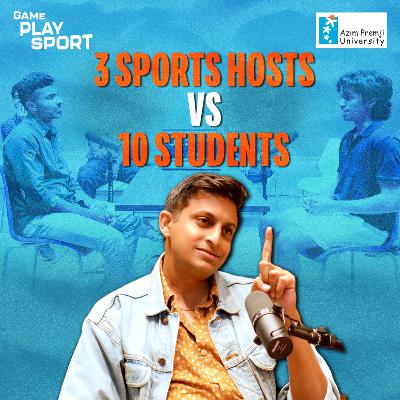
Is India chasing the right dream when it comes to sports — or have we lost our way? In this explosive finale of Game Play Sport on Radio Azim Premji University, our 3 sports hosts Rahul De, Arvind Bharathi B N & Kailash Kaushik take on ten outspoken students in a high-stakes, Jubilee-style Surrounded debate. From malls replacing playgrounds to Esports players being called athletes, this episode unpacks the biggest ideological battles shaping India’s sporting culture today. 🔥 Debates Inside the Episode Malls Over Maidaans: Are we trading childhood play for consumerism? One Gold Medalist vs a Billion Active People: What counts as national success? Medals Over Motion: Why are young athletes burning out? Esports: Athletes, addicts, or the future of Indian sport? This is not just about games. It’s about public health, youth identity, and whether India values movement or medals more. Special thanks to all the students of Azim Premji University who participated! Featuring Rahul De • Arvind Bharathi • Kailash Kaushik ✨ A Radio Azim Premji University Original 👇 Comment below: Are we building a healthier nation — or just chasing podiums?

India competes across the world — at the Olympics, Asian Games, Commonwealth Games, and countless individual tournaments — with delegations far smaller than its population and talent pool suggest. The real issue isn’t performance. It’s the harsh, uneven journey that pushes most young athletes out long before they enter any official system.In this episode of Game Play Sport, we follow the story of Raziya Khan, midfielder for Odisha FC, who first discovered football when Teach For India fellows brought the sport into her school. Her earliest memory is of playing football with a bottle filled with stones — a symbol of how little infrastructure existed, and how much imagination was required to dream.From there, Raziya travelled hours every day to reach practice, balanced schoolwork with training, and carried the emotional load of wanting something her environment wasn’t designed to support. Her journey mirrors what athletes in individual sports face too — from runners training before sunrise, to wrestlers and boxers commuting long distances, to badminton and athletics hopefuls fighting for basic access.We explore why India sends small teams to global events, why many talented children leave sport before they ever compete, and what it would take to build a sporting pipeline worthy of India’s size and ambition.Watch the full episode and rethink the journey behind every athlete we celebrate.#IndianSports #Olympics #AsianGames #CommonwealthGames #WorldChampionships #RaziyaKhan #OdishaFC #WomenInSport #IndividualSports #FootballIndia #TeachForIndia #SportsAccess #SportsForChange #AzimPremjiUniversity
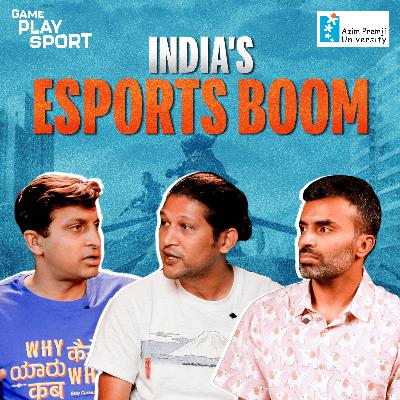
India is home to over half a billion gamers — from PUBG to Valorant, from mobile cricket to FIFA — yet still struggles to find its footing in the global esports arena. In this episode of Game Play Sport, Aravind, Kailash, and Rahul sit down with Ram Seshadri, producer and avid gamer, and Sudhen Wahengbam,esports commentator, to explore why India’s massive gaming population hasn’t translated into world-class esports success.The discussion journeys through India’s unique gaming culture — from cyber cafés to the era of mobile dominance — and asks tough questions: Why do micro-transaction models that work elsewhere fail here? How did the Waves OTT Summit and the Asian Games put esports on the national map? And what can India learn from countries like Brazil, Denmark, and South Korea, where esports athletes like FalleN are celebrated like traditional sports heroes?Ram unpacks the landscape of modern esports — fighter games,first person shooter games,, battle royales, sports games, multiplayer online battle arena (MUBA), and real-time strategy games — explaining why India’s fragmented digital infrastructure and low per-user spending make sustainability difficult. Sudhen reflects on perception and policy: how parental anxiety, uneven regulation, and limited institutional backing hold the ecosystem back. Yet both see hope in the mobile gaming revolution, where India already leads the world in downloads.Watch “Can India Become a Global Esports Powerhouse?” and discover what it will take for India to turn play into purpose, and gamers into athletes.Special thanks to Ram Seshadri and Sudhen Wahengbam for the interviews.Special thanks to Ram Seshadri and Sudhen Wahengbam for the interviews.Discover more shows in English, Hindi, and Kannada: https://azimpremjiuniversity.edu.in/radio-azim-premji-universityFollow us on Instagram: @radioazimpremjiunivCredits:Akshay Ramuhalli, Bruce Lee Mani, Gorveck Thokchom, Kishor Mandal, Kruthika Rao, Narayan Krishnaswamy, Prashant Vasudevan, Ram Seshadri, Sananda Dasgupta, Sanoob Puliyanchali, Seema Seth, Shraddha Gautam, Supriya Joshi, and Velu Shankar.
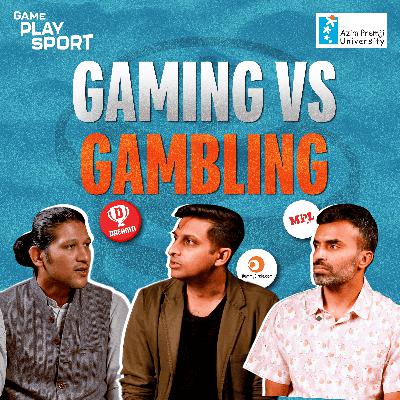
Dream11’s fall has reignited a major debate in India’s gaming world — is it skill or gambling?With the new Online Gaming Act 2025 being passed, the government is redrawing boundaries around real money gaming, raising crucial questions for players, companies, and policymakers alike.In this episode of Game Play Sport by Radio Azim Premji University, we explore:What the Online Gaming Act 2025 really meansWhy Dream11’s fall changed the real money gaming landscapeHow to distinguish gaming vs gambling in India’s digital eraThe future of fantasy sports, e-gaming, and play for profit🎧 A deep dive into ethics, law, and the economics of play in India.#Dream11 #OnlineGamingBill #RealMoneyGaming #GamblingVsGaming #FantasySports #MPL #OnlineGamingIndia #DigitalIndia #SportsEconomy #GamePlaySport #RadioAzimPremjiUniversity #GamingInIndia #GamingRegulation #India2025
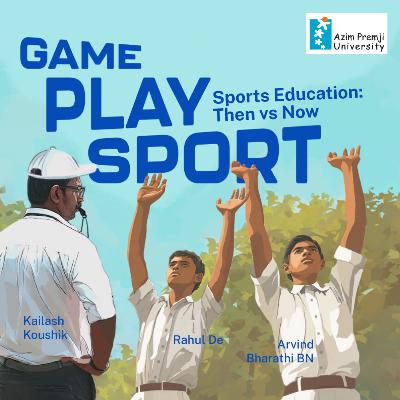
Are We Killing the Joy of Play? Are we pushing kids too hard, too soon? In this episode of Game Play Sport, Arvind, Kailash and Rahul talk with Chelston Pinto about why India’s sports education system needs more unstructured play and age-appropriate training and how Indian kids are burning out and what needs to be done to fix it. Discover how the National Education Policy puts sports at the heart of schooling, why early specialization can harm kids, and what even Neeraj Chopra’s injuries teach us about overtraining. Learn how schools, parents and workplaces can create spaces for kids to run, climb and kick — and make movement a lifelong habit. The episode also explores the Long-Term Athlete Development model — starting with pure movement and fun in the early years (0–6), building fundamental strength and coordination (6–9), and only then introducing structured, non-competitive play after 10. He explains why boys and girls need separate training post-puberty as they peak at different ages and develop differently. Early sports specialization — especially without a foundation of unstructured play — can lead to injuries, burnout and even kids walking away from sports altogether. Watch “Are We Killing the Joy of Play?" and find out how to raise healthier, happier kids here.Special thanks to Chelston Pinto for the interview. Discover more shows in English, Hindi, and Kannada: https://azimpremjiuniversity.edu.in/radio-azim-premji-university Follow us on Instagram: @radioazimpremjiuniv Credits: Akshay Ramuhalli, Bruce Lee Mani, Gorveck Thokchom, Kishor Mandal, Kruthika Rao, Narayan Krishnaswamy, Prashant Vasudevan, Ram Seshadri, Sananda Dasgupta, Sanoob Puliyanchali, Seema Seth, Shraddha Gautam, Supriya Joshi, and Velu Shankar.
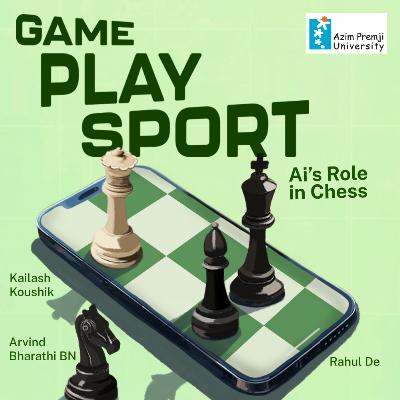
From Brute Force to AI Models: How Chess Learned to Play SmarterIn 1997, the chess world shook when Garry Kasparov lost to IBM’s Deep Blue — a brute-force machine built to calculate millions of moves per second. Fast forward to today, and AI has moved beyond raw calculation to self-learning models like AlphaZero that teach themselves strategy.In this episode of Game Play Sport, guest Kedar Kulkarni takes us through the journey of chess and AI — how a 1,500-year-old game didn’t die when machines became stronger, but instead adapted, evolved, and even became more popular.What can other sports learn from this? Can cricket, football, or even esports embrace AI in the same way?Watch the full episode and discover how AI is rewriting the rules of the game#Chess #ArtificialIntelligence #Kasparov #DeepBlue #AlphaZero #Stockfish #SportsAndAI #GamePlaySport #AIFuture #ChessHistory

Where Will Children Play? The Future of Indian Sport Across Indian cities, children are running out of places to play. Grounds are being built over, parks restrict ball games, and schools often skip playgrounds altogether. At the same time, private academies are flourishing—raising performance levels but also putting access behind a fee. In this episode of Game Play Sport, hosts Rahul, Arvind and Kailash are joined by Manuja Veerappa, senior sports journalist with The Times of India. Together, they explore the disappearance of playing spaces in Bengaluru, the rise of private academies, and what these shifts say about India’s sporting priorities. Can India protect play for all—or will it belong only to those who can pay? Watch the full episode now!
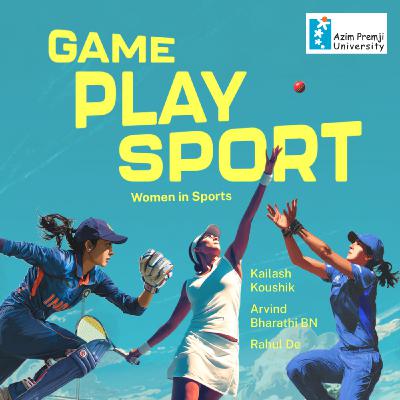
In this episode of Game Play Sport, we dive into the evolving story of India’s sports pay gap—how the difference in salaries and prize money between male and female athletes is finally starting to close. From the BCCI’s landmark equal pay announcements for women cricketers to the growing visibility of female athletes in badminton, wrestling, and football, we break down why this shift matters for gender equality in Indian sports today. We are joined by Aradhana and Shravanti Mokashi — sisters, former state-level badminton players, and now coaches — who’ve spent decades navigating the realities of being women in a space still dominated by men. We also unpack: What Is the Gender Pay Gap in Indian Sports & Why Did It Persist So Long? The Rise of Women’s Sports Sponsorship and Corporate Support The Influence of Saina Nehwal, Jwala Gutta & Ashwini Ponnappa In Shaping The Next Generation of Female Athletes The Economics Behind Equal Pay: Can It Last? Watch this eye-opening discussion on gender equality, pay parity, and the challenges still ahead for women athletes in India. From cricket to the Olympics, discover how India is leading the way toward true sports pay equality—and what it means for the next decade of Indian athletes.
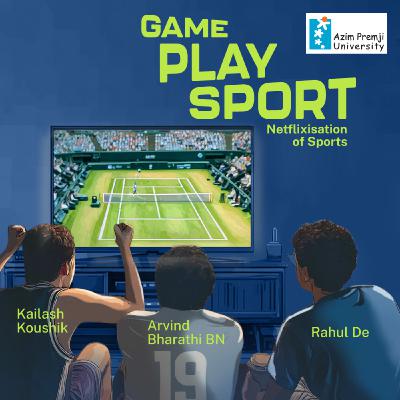
In this episode of Game Play Sport, we dive into how OTT platforms have changed the way Indians experience sports — shifting the focus from just scores and stats to drama, storylines, and spectacle. Sports Are the New Reality TV — And OTT Made It Happen. From behind-the-scenes docuseries to slow-motion replays and cinematic narratives, sport today feels more like a show than ever before. We explore why streaming is not just changing how we watch sports, but why we watch it in the first place. Our hosts also talk about: Why Sports Now Feel Like Reality TVThe Netflix Effect: How Streaming Built Star Power All Access, All Drama: What Sports Docuseries Are Really Selling Are We Watching for the Match or the Myth? Don’t miss this sharp and timely conversation about how OTT platforms are rewriting the playbook for Indian sports fans, only on Radio Azim Premji University. Tune in NOW!Special thanks to Manuja Veerappa for the interview. Discover more shows in English, Hindi, and Kannada: https://azimpremjiuniversity.edu.in/radio-azim-premji-university Follow us on Instagram: @radioazimpremjiuniv Credits: Akshay Ramuhalli, Bruce Lee Mani, Gorveck Thokchom, Kishor Mandal, Kruthika Rao, Narayan Krishnaswamy, Prashant Vasudevan, Ram Seshadri, Sananda Dasgupta, Seema Seth, Shraddha Gautam, Supriya Joshi, and Velu Shankar. #GamePlaySport #Netflix #ott #Podcast #EducationAndSport #StayCurious #RadioAzimPremjiUniversity
In this episode of Game Play Sport, Rahul De, Kailash Kaushik, and Arvind Bharathi BN dive into fan anger in sports and the emotional core of Indian sports fandom. From Angry Rant Man’s YouTube meltdowns to the infamous 1996 Eden Gardens riot, our relationship with sport often crosses the line from passion to rage. In order to unpack this, we speak with Ryan Thomas Philips, a computational neuroscientist and Assistant Professor at Azim Premji University about how fans closely tie their identity and self-worth to their teams. They also talk about: What Goes On In Your Brain During Tense Sporting Moments! How Sports Commentary Has Changed Over The Years! How Catharsis Plays A Big Role In Fan Anger How Big An Arsenal Fan Is Rahul? Watch this incredibly insightful conversation about what fan anger in sports looks like & how fans closely tie their identity to their favourite sports teams… Tune in NOW! _____________________________________________________________________________________________ Special thanks to Ryan Thomas Philips for being part of this episode. Identification Test Research Article: https://www.researchgate.net/publication/232572704_Sports_fans_Measuring_degree_of_identification_with_their_team Credit: Akshay Ramuhalli, Bruce Lee Mani, Gorveck Thokchom, Kishor Mandal, Kruthika Rao, Narayan Krishnaswamy, Prashant Vasudevan, Ram Seshadri, Sananda Dasgupta, Seema Seth, Shraddha Gautam, Supriya Joshi, and Velu Shankar. Acknowledgements: Video: Person smashing keyboard | Video by Pexels Images: Arsenal Red Bistro Mug | Image courtesy: Arsenal Direct Arsenal 25/26 Home Jersey | Image courtesy: Arsenal Direct Arsenal Mousepad – | Image courtesy: Hepsiburada News Articles: Naomi Osaka withdraws from French Open after media boycott | The Guardian, May 31, 2021 Australia beat India in one of the best Tests to take series lead | Al Jazeera, December 30, 2024 India beats New Zealand by four wickets in Champions Trophy final | Al Jazeera, March 9, 2025 Cricket World Cup: India’s heartbreak after loss to Australia | BBC News, November 20, 2023
In this bonus episode of Game Play Sport, we take a closer look at gym culture—who it was built for, and how it has changed.Our conversation with Shwetambari Shetty, founder of My Third Space, traces how fitness spaces that once felt intimidating and exclusionary—especially for women—have slowly evolved into more welcoming environments. She reflects on how strength training was long seen as “not for women,” how both men and women were unsure of how to navigate gym equipment, and why group classes played a key role in making people feel more comfortable and connected.This episode is not just about fitness—it’s about the cultural shift in how we view the gym floor, and how movement can become more accessible when it’s designed for community, not just performance.___________________________________________________________________________________________Discover more shows in English, Hindi, and Kannada: https://azimpremjiuniversity.edu.in/radio-azim-premji-universityFollow us on Instagram: @radioazimpremjiunivCredits: Akshay Ramuhalli, Bruce Lee Mani, Gorveck Thokchom, Kishor Mandal, Kruthika Rao, Narayan Krishnaswamy, Prashant Vasudevan, Ram Seshadri, Sananda Dasgupta, Seema Seth, Shraddha Gautam, Supriya Joshi, and Velu Shankar.
In this episode of Game Play Sport, we explore how India’s gym culture has shifted—from basement weight rooms and bodybuilding ideals to wellness-focused routines and group classes. Shwetambari Shetty, founder of Third Space, joins the conversation to reflect on why gyms have felt intimidating for many, and how fitness trends are shaping access, comfort, and community today. They also talk about: Listen now to understand what India’s changing fitness culture reveals about inclusion, gender, and who gets to move.___________________________________________________________________________________________ Discover more shows in English, Hindi, and Kannada: https://azimpremjiuniversity.edu.in/radio-azim-premji-university Follow us on Instagram: @radioazimpremjiuniv Credits: Akshay Ramuhalli, Bruce Lee Mani, Gorveck Thokchom, Kishor Mandal, Kruthika Rao, Narayan Krishnaswamy, Prashant Vasudevan, Ram Seshadri, Sananda Dasgupta, Seema Seth, Shraddha Gautam, Supriya Joshi, and Velu Shankar.
Why did we stop playing? Somewhere between growing up, sitting for exams, and cheering from the sidelines, most of us swapped the playground for the couch. In this opening episode of Game Play Sport, hosts Rahul De, Associate Professor, School of Arts and Sciences, Azim Premji University; Kailash Koushik, Assistant Professor, Department of Media Studies, Christ University; and Arvind Bharathi BN, Assistant Professor, School of Arts and Sciences, Azim Premji University, dust off old definitions and ask a simple question: what’s the difference between game, play, and sport? Is gully cricket with its ever-changing rules still a game? Is catching a frisbee in the park just play? And when does it all turn serious, with coaches, scorecards, and medals?The trio takes us on a lively ride through childhood nostalgia, adult hang-ups, and society’s odd relationship with sports. Why does India cheer so much and play so little? What happens to fun when competition enters the room? And what if our schools treated play as essential, not extra? This episode is not just about sport, but about reclaiming the joy of movement—rules or no rules.Credits: Akshay Ramuhalli, Bruce Lee Mani, Gorveck Thokchom, Kishor Mandal, Kruthika Rao, Narayan Krishnaswamy, Prashant Vasudevan, Ram Sheshadri, Sananda Dasgupta, Seema Seth, Shraddha Gautam, Supriya Joshi, and Velu Shankar
Comments

Download from Google Play

Download from App Store
 United States