


 Claim Ownership
Waterbodies
Subscribed: 1Played: 16
Subscribe

© Copyright 2025 False Creek Friends Society
Description
False Creek is a cherished centrepiece of Vancouver, for locals and tourists alike. But, it is also often maligned as being dangerously polluted and devoid of its historically vibrant marine ecology.
On this podcast (recorded on-location in False Creek), we're platforming expert conversations to foster a deeper, mutual relationship between people and urban waterways, and amplify local voices shaping public policy.
As beautiful as False Creek is today, we know it could be so much more tomorrow. As the former site of heavy industry, these waters have been recognized as needing significant rehabilitation for almost a century. We dream of a False Creek that is safely swimmable, resilient to rising sea levels, an embodiment of Indigenous and community co-governance, and a place of thriving human culture and biodiversity.
Not only is a better False Creek possible, its responsible stewardship will lead to myriad co-benefits for the people of Vancouver: improving public mental and physical health, fostering climate change resilience, and furthering reconciliation with Musqueam, Squamish, and Tsleil-Waututh First Nations.
Visit FalseCreekFriends.org to learn more or to get involved.
On this podcast (recorded on-location in False Creek), we're platforming expert conversations to foster a deeper, mutual relationship between people and urban waterways, and amplify local voices shaping public policy.
As beautiful as False Creek is today, we know it could be so much more tomorrow. As the former site of heavy industry, these waters have been recognized as needing significant rehabilitation for almost a century. We dream of a False Creek that is safely swimmable, resilient to rising sea levels, an embodiment of Indigenous and community co-governance, and a place of thriving human culture and biodiversity.
Not only is a better False Creek possible, its responsible stewardship will lead to myriad co-benefits for the people of Vancouver: improving public mental and physical health, fostering climate change resilience, and furthering reconciliation with Musqueam, Squamish, and Tsleil-Waututh First Nations.
Visit FalseCreekFriends.org to learn more or to get involved.
7 Episodes
Reverse
Sea level rise, combined with increasingly powerful storm surges, threatens catastrophic flooding to the homes and business along the shores of False Creek. Vancouver's world-famous seawall has already begun to crumble under the waves.The shoreline of False Creek today is, frankly, unprepared for the climate of tomorrow. The transformation of this city is certain, but we can do more than just endure it — we can be its co-creators. Today’s anchor, Mutuma, is sitting down with Angela Danyluk and Tom Lancaster to discuss the challenges and the opportunities of that transformation. Tom Lancaster is the General Manager of Granville Island, one of the city’s most iconic locations, and one at particular risk of flooding. The diverse needs of Granville Island’s tenants are, in some ways, a microcosm of the entire city.Angela Danyluk is a Senior Sustainability Specialist at the City of Vancouver, the manager of Climate Adaptation & Equity, and was the project manager for the Sea2City Design Challenge: which, through community collaboration, produced a gorgeous vision for 4 key sites along False Creek: combining shoreline rewilding with urban development, and laying out a framework for how we can not just cope, but thrive with our future tides.In this episode, we’re diving into how facing climate change can make our city (and False Creek) better for everyone.
It's widely assumed that False Creek is so polluted that it is devoid of life. We’re here to say, in fact, no — False Creek is ALIVE!In this episode, anchor Matt Brown sits down with Chris Harley and Colleen Kellogg, to discuss the ways we can conceive of different levels of biodiversity, the features of False Creek (both physical and social) that affect it, the impacts of climate change, how False Creek could become a Living lab, and the 2022 BioBlitz: a community science survey that revealed over 500 different forms of life in False Creek — including some new to science!Chris Harley is a professor in the Zoology Department in the Institute for Oceans and Fisheries at UBC, and studies the impact of climate change on rocky coasts. He leads the Harley Lab, where he and his students investigate how climatic factors and biological relationships interact to create ecological patterns in time and space.Colleen Kellogg is a Research Scientist and Microbial Oceanographer with the Hakai Institute. Her research focuses on studying plankton communities and microbial ecology in coastal margins.Explore the 2022 False Creek BioBlitz on iNaturalist, and find the eDNA and other data on the Hakai Institute's GitHub— — —Learn more about the False Creek Friends Society, and get involved at https://falsecreekfriends.org/Join our newsletter for updates and volunteer opportunities at https://falsecreekfriends.org/newsletter
Environmental personhood promises to enshrine natural entities (for instance, bodies of water) as legal persons, with their own rights and standing. It's a concept grounded in many Indigenous ways of relating to nature, and is popularly understood as a means to protect nature's interests under otherwise extractive or destructive economic and legal systems. But, in the absence of a deeper social and legal reimagining, is it enough?Today's anchor Mutuma brings us into conversation with Kai Chan and Stepan Wood, asking: if False Creek could speak, how would we hear it?Stepan Wood is the Canada Research Chair in Law, Society and Sustainability, and Director of the Centre for Law and the Environment at the Allard School, UBC. He was recently awarded a Wall Fellowship for his efforts exploring how Indigenous and settler laws can work together to promote healthier relationships between humans and nature, and between settler and Indigenous societies.Kai Chan is the Canada Research Chair in Rewilding and Social-Ecological Transformation, and a Professor at the Institute for Resources, Environment and Sustainability at UBC, where he runs CHANS Lab (Connected Human-and-Natural Systems). He is also co-founder of CoSphere, a Community of Small-Planet Heroes, and is the host of his own podcast by the same name.
False Creek was once a place of abundant food, and we believe it can be once again.In this episode, we explore a big vision for False Creek's future — one that includes engaging educational opportunities, decolonization, and ultimately, the return of food sovereignty to these shores and waters.We also discuss the need for deep community democracy, and a brief history of how False Creek took the shape it is today. Leona Brown is a Gitxsan and Nisga’a mother of 3 children, of the Fireweed House and the Killerwhale Clan, an Indigenous Independent Cultural Facilitator, and a food sovereignty activist and advocate working with the Vancouver Urban Food Forest Foundation and the False Creek FriendsZaida Schneider is the president of the False Creek Friends Society, captain of the Seren Claer, an educator, and a retired TV journalist (where he covered national politics, technology, and social issues)— — —Learn more about the False Creek Friends Society, and get involved: https://falsecreekfriends.org/Join our newsletter for updates and volunteer opportunities: https://falsecreekfriends.org/newsletter
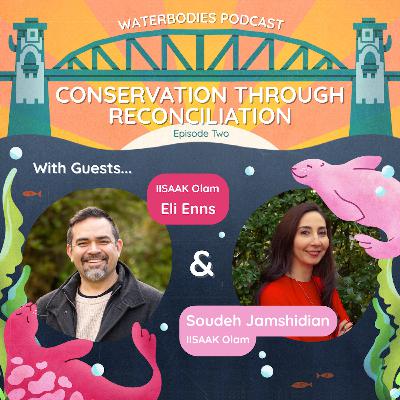
"Environmental conservation" has meant many things: the protection of at-risk species and ecosystems, but also the eviction and exclusion of Indigenous peoples and lifeways.In this episode, Eli Enns and Soudeh Jamshidian (both of the IISAAK Olam Foundation) sit down with anchor Mutuma to discuss new frameworks for conservation that centre Indigenous wisdom — specifically, the concept of an IPCA or Indigenous Protected and Conserved Areas, which Eli helped to create.Plus, a multi-layered perspective of jurisdiction; approaching environmental stewardship with both a concept of rights and responsibilities; the importance of good faith dialogue in an "ethical space"; and finally, Eli offers a proposal for how we might fund ecological integrity in False Creek.— — —Learn more about the IISAAK Olam Foundation at https://iisaakolam.ca/Read the Indigenous Circle of Elders Report: https://www.icce-caec.ca/wp-content/uploads/2022/07/PA234-ICE_Report_2018_Mar_22_web.pdfAnd dive deep into IPCAs with the IPCA Knowledge Basket https://ipcaknowledgebasket.ca/Special thanks to our friends at the Small Planet Heroes podcast https://www.cosphere.net/podcastLearn more about False Creek Friends at https://falsecreekfriends.org/and sign up for our newsletter: https://falsecreekfriends.org/newsletter — —Produced and recorded by Mendel SkulskiTheme Music by Jonathan Kawchuk, mix by Paul EvansEditing by Greg Sures, Riley Byrne, and Mendel SkulskiCover Artwork by Aline MonjardimWordmark by Madison ReidAdditional Cinematography by Mary Paquet, Fernando Lessa, Johannes Fast
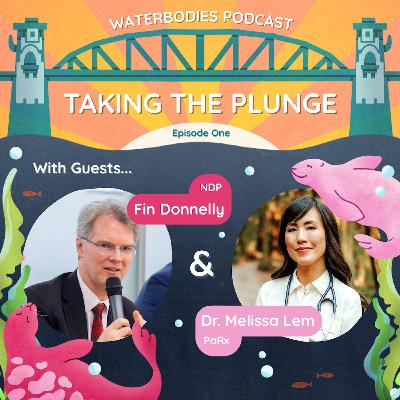
In our debut episode, anchor Matt Brown is joined by Dr. Melissa Lem and Fin Donnelly to discuss why access to clean “blue spaces” is vital for our health, communities, and climate future, and why community advocacy is essential to delivering it. Connecting with nature, including water bodies such as False Creek, fosters a virtuous cycle of stewardship and well-being: we protect what we love, and what we love protects us.As we envision a False Creek that is safely swimmable, we consider the goal of it becoming Canada’s first National Urban Marine Park — a living lab blending Indigenous knowledge, Western science, community stewardship, and innovative design to make our city healthier and more resilient.Dr. Melissa Lem is a family physician, President of the Canadian Association of Physicians for the Environment, and Director of PaRx: Canada’s national nature prescription program powered by the BC Parks Foundation. She is recognized internationally as a leader at the intersection of natural spaces and human well-being.Fin Donnelly is a dedicated advocate for waterways: as a former MLA, Member of Parliament & Coquitlam City Councillor; as an athlete: having twice swum the entire 1400 kilometre length of the Fraser River; as a founder of the Rivershed Society of BC; and now as the Fraser Riverkeeper for Swim Drink Fish Canada.Learn more about the False Creek Friends Society and get involved at https://www.falsecreekfriends.orgSubscribe to our newsletter to be the first to know about news, events, petitions, volunteer opportunities, and other ways to support False Creek’s future → https://www.falsecreekfriends.org/newsletter— — —Produced and recorded by Mendel SkulskiTheme Music by Jonathan Kawchuk, mix by Paul EvansEditing by Greg Sures, Riley Byrne, and Mendel SkulskiCover Artwork by Aline MonjardimWordmark by Madison ReidAdditional Cinematography by Mary Paquet, Fernando Lessa, and Johannes Fast
Welcome to Waterbodies — a podcast from the Friends of False Creek.On this podcast (recorded on-location in False Creek), we're platforming expert conversations to foster a deeper, mutual relationship between people and urban waterways, and amplify local voices shaping public policy.We're calling for False Creek to be included in Canada’s 30 by 30 conservation goals through designation as a National Urban Marine Park with Indigenous co-governance. Nestled next to our city’s most densely populated neighbourhoods, and crossed by nearly a quarter of a million commuters every day, False Creek is Vancouver’s most significant interface with the Pacific Ocean. It is beloved by residents and tourists alike, but has been recognized as needing significant rehabilitation for over a century. Responsible and visionary stewardship of these waters will have innumerable co-benefits:For Public HealthAccess to vibrant natural spaces, both blue and green, has been repeatedly shown to significantly improve human mental and physical well-being, and support a virtuous cycle of care for our environment.For Indigenous ReconciliationReconciliation is more than a slogan where False Creek is concerned. Courts have found that the 1913 eviction of Squamish People from their village, Sen̓áḵw, was outright fraud. There is important and ennobling work still to be done - especially following the concept of “Conservation Through Reconciliation” where everyone benefits, including the vast array of marine life that someday will thrive again.For More-than-Human Beings We now know that this living body of water is a natural entity with potential legal rights. False Creek nurtures a vast range of lifeforms that have the right to thrive, to be left alone. False Creek Friends is committed to the United Nations Sustainable Development goals that proclaim the Rights of Nature.For Climate ResilienceSea level rise and climate-related storm surges pose significant risks to Vancouver's coastal areas, including parts of downtown, the False Creek Flats and along the Fraser River. Softening the shoreline must be an integral part of Vancouver's flood management.For Sport and LeisureCurrently False Creek waters are classified by government as only safe for “secondary contact” - meaning you should not get wet. And yet thousands of recreational paddlers do get splashed, and some get sick. The uncertainty needs to be eliminated so everyone can jump in without fear.For Environmental & Social JusticeHuman access to the marine area of False Creek largely benefits a privileged class that can afford to be on the water. And yet, in 2023, the government of Canada passed a law that everyone has a right to a healthy environment. A...
Comments

Download from Google Play

Download from App Store
 United States