


 Claim Ownership
TOTIM Exposures
Subscribed: 0Played: 0
Subscribe

© TOTIM
Description
TOTIM Exposures is a forum for photojournalists and industry adjacent professionals to interview featured contributors to the TOTIM app. Each episode covers the photographer’s background, career path, and approach to their work. Conversations focus on photographic technique, the purpose and intention behind each story, and a detailed debrief of how the story was produced and executed. The podcast is intended for anyone interested in the process and challenges of documentary photojournalism.
totim.substack.com
totim.substack.com
17 Episodes
Reverse
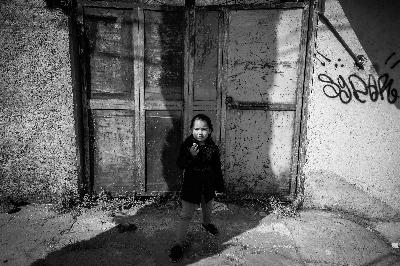
We begin 2026 with a six-part series centered around themes of place, movement, and conflict. These issues demand deeper human-centered context, as displacement, political instability, and environmental pressure increasingly define daily life for millions.To Experience “Substitute Mother” DOWNLOAD TOTIM APPIn episode 017 of Exposures, documentary photographer Greta Rico speaks with Sofía Aldinio about the personal and investigative foundations of her long-term project Substitute Mother. Rico explains how the work began after the murder of her cousin, which revealed a largely overlooked consequence of femicide in Mexico: the children left behind and the women who step in to raise them. Through years of close documentation, Rico examines the social, emotional, and economic realities faced by these families while reflecting on the ethical responsibilities and psychological toll of photographing trauma within one’s own community. The conversation also touches on Rico’s broader approach to documentary practice and the working methods that shape her projects. She discusses how curiosity and research often guide the beginning of her work, as well as the importance of building long-term relationships with the communities she photographs. Rico also reflects on the emotional realities of documentary storytelling and the need for photographers to acknowledge and care for their own psychological well-being while working on difficult subjects. Greta RicoGreta Rico is a documentary photographer and visual storyteller whose work focuses on gender-based violence, human rights, and the systemic effects of inequality in Mexico and Latin America. With a background in journalism and international cooperation, she uses long-form photographic narratives to explore how institutional failures impact the lives of women and marginalized communities.Her work has been supported by the International Women’s Media Foundation, National Geographic Society, and Open Society Foundations, among others. Greta is a member of Women Photograph and has been selected as a fellow with the Magnum Foundation, CatchLight, and World Press Photo’s 6x6 Global Talent Program. Her photography has been exhibited in Mexico, the United States, and Europe, and published in outlets including The Washington Post, Bloomberg, and El País.Sofia AldinioSofía Aldinio is a documentary photographer and visual storyteller whose work focuses on migration, climate, cultural identity, and the changing relationship between people and land. Her projects often center on individuals and communities adapting to environmental and political pressure, with an emphasis on intimate, long-form storytelling. Originally from Argentina and based in the U.S.-Mexico borderlands, Sofía works across Latin America and the American West.She is a CatchLight Local Fellow, a National Geographic Explorer, and a recipient of support from the National Geographic Society and the International Women’s Media Foundation. Her work has been featured in publications including The New York Times, High Country News, and Yes! Magazine, and exhibited in community spaces, museums, and educational settings. In addition to her documentary work, Sofía facilitates storytelling workshops with youth and migrant communities, focusing on self-representation and narrative agency.To Experience “Substitute Mother” DOWNLOAD TOTIM APPTOTIM is a new, nonprofit initiative built to support and amplify a global and diverse community of visual storytellers. We rely on your support to bring under-reported stories to light and sustain vital, independent documentary photography. Please consider a charitable, tax-deductible gift. Get full access to TOTIM at totim.substack.com/subscribe

We begin 2026 with a six-part series centered around themes of place, movement, and conflict. These issues demand deeper human-centered context, as displacement, political instability, and environmental pressure increasingly define daily life for millions.In Episode 16 of Exposures, Tracy Dong speaks with Salgu Wissmath about Reassemblage, her photographic study of the Vietnamese-German diaspora in Berlin.Dong situates the project within her family history: her father, a former South Vietnamese lieutenant, was forced to destroy photographs documenting his military service before fleeing as a boat refugee. The absence of that archive shaped her practice, positioning photography as a means of reconstructing memory.To Experience “Movement” DOWNLOAD TOTIM APPTracy DongTracy Dong is a Berlin-based, lens-based artist whose work is grounded in memory, resistance, and the poetics of diaspora. Drawing from her Southeast Asian heritage and diasporic lived experience, her practice examines how identity, belonging, and cultural memory are shaped and reshaped across borders and generations. With a principal focus on intimate depictions of marginalized subcultures, she proposes subversion and resistance to oppressive systems through deliberate documentation.Salgu WissmathSalgu Wissmath is a nonbinary Korean American photographer whose work bridges documentary, editorial, and conceptual storytelling. Originally from Sacramento, California, they are currently based in San Antonio, Texas. Their current work explores the intersections of mental health, queer identity, and faith using a conceptual documentary approach. Salgu’s editorial work has been published in The New York Times, The San Francisco Chronicle, The San Antonio Express-News, The Wall Street Journal, The Guardian and NPR amongst others.TOTIM is a new, nonprofit initiative built to support and amplify a global and diverse community of visual storytellers. We rely on your support to bring under-reported stories to light and sustain vital, independent documentary photography. Please consider a charitable, tax-deductible gift. Get full access to TOTIM at totim.substack.com/subscribe
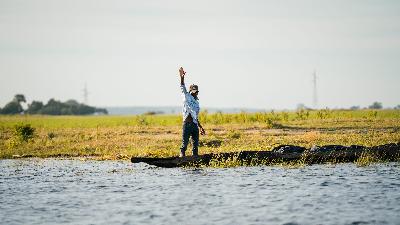
We begin 2026 with a six-part series centered around themes of place, movement, and conflict. These issues demand deeper human-centered context, as displacement, political instability, and environmental pressure increasingly define daily life for millions.In Episode 15 of Exposures, Zambian photographer Chona Mwemba turns his attention to a force so constant it often disappears from view: everyday motion. Not migration as crisis but the quiet, continuous circulation of people, labor, culture and influence that binds Zambia together.Developed over several years and across extensive travel throughout the country, Movement observes how people traverse rivers, roads, islands, and rural corridors—and how those movements quietly transmit values, traditions, politics and mutual understanding. Mwemba frames movement not simply as a physical act, but as a mechanism for cultural continuity and social stability.In this conversation, Mwemba reflects on his own path into photography, his instinct to photograph from distance and without spectacle, and his belief that movement shapes how information spreads and how empathy forms. The images resist urgency, instead asking the viewer to slow down and recognize the labor, endurance and dignity embedded in daily transit despite the structural realities.This episode offers a deeper look at Movement as both a photographic series and a social inquiry rooted in observation, restraint and a profound respect for the lived rhythms of Zambian life.To Experience “Movement” DOWNLOAD TOTIM APPAbout Chona MwembaChona Mwemba is a self-taught Zambian photographer with a deep love for capturing everyday life moments that cannot be replicated. The rawness and richness of his subjects and their environments serve as a personal reminder to always see the beauty of life regardless of geography. His work has been featured on platforms such as the BBC and The Times (UK). Through his work he strives to portray Zambia in a positive light. With this series of images he aspires to bring to life the beauty and strength of the Zambian people across the country, highlighting their gracious, resilient and amiable nature.David LarsenDavid Larsen is a South African photographer, journalist, and the founder ofAfrica Media Online, established in March 2000. Based in Cape Town, he focuses on documenting African stories, promoting digital archiving and training photographers across the continent. Larsen is also involved in promoting African photographers through various initiatives and awardsTOTIM is a new, nonprofit initiative built to support and amplify a global and diverse community of visual storytellers. We rely on your support to bring under-reported stories to light and sustain vital, independent documentary photography. Please consider a charitable, tax-deductible gift. Get full access to TOTIM at totim.substack.com/subscribe
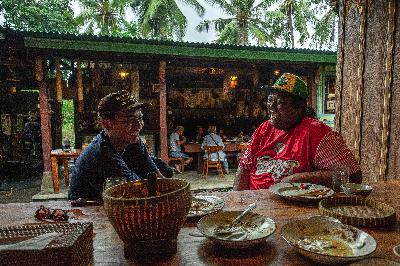
We begin 2026 with a six-part series centered around themes of place, movement, and conflict. These issues demand deeper human-centered context, as displacement, political instability, and environmental pressure increasingly define daily life for millions.In Episode 014 of Exposures DJ Clark speaks with Alex Gist about A Conspiracy of Guileless Humanity, Gist’s recent body of work developed in northern Bali. The conversation traces the project’s origins, from an initial workshop encounter to a sustained period of immersion inside a small, locally rooted restaurant that quietly resists the norms of contemporary culinary culture.Gist reflects on his path into documentary photography—shaped by years of long-distance bicycle travel, wilderness work, and academic study in religion—and how those experiences inform his interest in ways of living that remain closely tied to land, ritual, and community. The discussion moves through process and ethics: staying long enough for trust to form, the role of writing and voice alongside images, and the distinction between simply documenting a place and embedding oneself within it.The episode also considers the broader conditions facing emerging documentary photographers today, including sustainability, funding, and the value of slow, human-centered work in an increasingly automated media environment. To Experience “A Conspiracy of Guileless Humanity” DOWNLOAD TOTIM APPAlex Gist Alex Gist is a documentary photographer and producer whose work examines socially and environmentally sustainable ways of living, with particular attention to how such practices persist, adapt, or resist modern systems characterized by isolation and consumption. His approach foregrounds communities and individuals whose relationships to land and to one another offer alternative models to dominant modes of extraction and disconnection, positioning these practices as critical responses to humanity’s growing estrangement from the natural world.DJ Clark DJ Clark is a multimedia journalist, educator, and visual storyteller based in Hong Kong. With more than two decades of experience in international journalism, he has worked as a producer, photographer, and video journalist for outlets including China Daily, The Economist, and BBC World Service. Clark is also the director of multimedia at the Asia Center for Journalism and a long-time mentor with World Press Photo and Pathshala South Asian Media Institute, where he has trained and collaborated with emerging photographers across Asia and beyond. His work focuses on empowering local voices and advancing innovative approaches to visual storytelling.TOTIM is a new, nonprofit initiative built to support and amplify a global and diverse community of visual storytellers. We rely on your support to bring under-reported stories to light and sustain vital, independent documentary photography. Please consider a charitable, tax-deductible gift. Get full access to TOTIM at totim.substack.com/subscribe
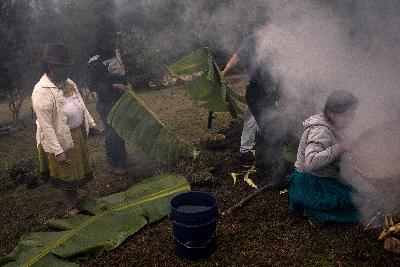
We begin 2026 with a six-part series centered around themes of place, movement, and conflict. These issues demand deeper human-centered context, as displacement, political instability, and environmental pressure increasingly define daily life for millions.In Episode 013 of Exposures Ecuadorian photojournalist and visual artist Johis Alarcón speaks with documentary photographer Greta Rico to discuss her documentary project, I Am, Still.The episode traces the personal, political and spiritual foundations of the project of I Am, Still which emerged during the early months of the COVID-19 pandemic. What began as a deeply personal inquiry became a broader exploration of young Indigenous people who choose to remain with their ancestral home, blending modern education and technology with ancestral knowledge, memory and responsibility to the land. The discussion also situates the work within wider struggles over land, displacement, environmental extraction and cultural survival across Latin America and offers essential context for I Am Still—not only as a photographic project, but as a lived philosophy rooted in place, family, and inter-generational identity.Johis AlarconJohis Alarcón is a freelance photojournalist and visual storyteller based in Ecuador whose work focuses on social justice, human rights, and gender-related issues. She is a National Geographic Explorer and a member of Ayün Fotógrafas, Fluxus Foto, Visura.Co, Fotoféminas, and Women Photograph. Her work has been published by The New York Times, Bloomberg, The Guardian, Reuters, UN Women, and others, and has been exhibited internationally. Alarcón has received numerous fellowships and awards, including recognition from the Magnum Foundation, World Press Photo, and FotoEvidence. She currently works on assignments, teaching and long-term personal projects.Greta RicoGreta Rico is a documentary photographer and visual storyteller whose work focuses on gender-based violence, human rights, and the systemic effects of inequality in Mexico and Latin America. With a background in journalism and international cooperation, she uses long-form photographic narratives to explore how institutional failures impact the lives of women and marginalized communities.Her work has been supported by the International Women’s Media Foundation, National Geographic Society, and Open Society Foundations, among others. Greta is a member of Women Photograph and has been selected as a fellow with the Magnum Foundation, CatchLight, and World Press Photo’s 6x6 Global Talent Program. Her photography has been exhibited in Mexico, the United States, and Europe, and published in outlets including The Washington Post, Bloomberg, and El País.TOTIM is a new, nonprofit initiative built to support and amplify a global and diverse community of visual storytellers. We rely on your support to bring under-reported stories to light and sustain vital, independent documentary photography. Please consider a charitable, tax-deductible gift. Get full access to TOTIM at totim.substack.com/subscribe
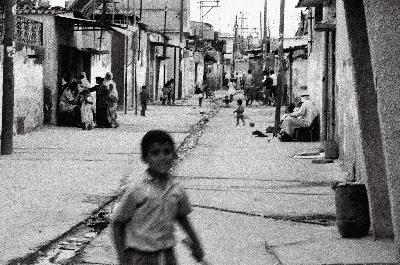
To Experience “Shaboura” DOWNLOAD TOTIM APPIn episode 012 of Exposures, photojournalist Tasneem Alsultan speaks with veteran visual journalist DJ Clark about Shaboura, a formative body of work produced in Gaza in the early 1990s that emerged from Clark’s decision to relocate to Palestine during the First Intifada, a choice that shaped his career and his understanding of proximity in conflict reporting . Clark reflects on living and working in Gaza under occupation, focusing on the Shaboura refugee camp, an area marked by intense resistance and everyday resilience. They discusses the material realities of film-era photojournalism, the evolving risks faced by journalists, and the stark contrast between reporting then and the lethal conditions confronting reporters in Gaza today. The conversation broadens to examine Clark’s later commitment to education and mentorship as a means of supporting local storytellers and restoring context, nuance, and humanity to visual journalism. DJ Clark DJ Clark is a multimedia journalist, educator, and visual storyteller based in Hong Kong. With more than two decades of experience in international journalism, he has worked as a producer, photographer, and video journalist for outlets including China Daily, The Economist, and BBC World Service. Clark is also the director of multimedia at the Asia Center for Journalism and a long-time mentor with World Press Photo and Pathshala South Asian Media Institute, where he has trained and collaborated with emerging photographers across Asia and beyond. His work focuses on empowering local voices and advancing innovative approaches to visual storytelling.Tasneem AlsultanTasneem Alsultan is a Saudi-American investigative photographer and visual storyteller whose work explores women’s rights and social dynamics in Saudi Arabia and the Gulf region. Her work has been published in The New York Times and National Geographic amongst others.Tasneem became the first Arab female Global Ambassador for Canon in 2018, a Catchlight fellow in 2019, was voted the ‘Princess Noura University Award for Excellence’ in the Arts Category and received honourable mention for the Anja Niedringhaus Courage in Photojournalism. In 2020, she cofounded Ruwa Space, a platform to support visual creatives and offer education and consultation across the Middle East & North Africa. She’s a member of Rawiya women’s Middle Eastern photography collective.TOTIM is a new initiative built to support and amplify a global and diverse community of visual storytellers. As a nonprofit platform, we rely on your support to bring under-reported stories to light and sustain vital, independent photojournalism around the world. Please consider a charitable, tax-deductible gift. 🙌 Get full access to TOTIM at totim.substack.com/subscribe
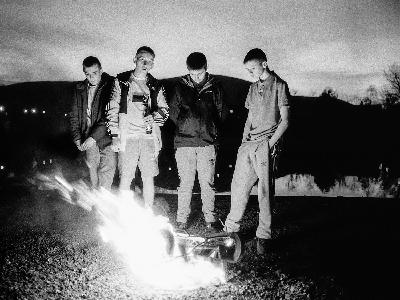
To Experience “Youth of Belfast” DOWNLOAD TOTIM APPIn epidsode 011 of Exposures, Veejay Villafranca talks with documentary photographer Toby Binder about his long-term project Youth of Belfast. They discuss how this important and maximally acclaimed work developed over many years, how slow the early stages were and how gaining access and trust took time (and cigarettes).Toby and Veejay also discuss the practical side of documentary photography today, including access, funding and how the industry has shifted. The episode gives a direct, honest look at how projects like Youth of Belfast are actually made and why sustained, long-form coverage remains extremely valuable. Youth of Belfast is now available on the TOTIM app. Toby BinderToby Binder is a German documentary photographer known for long-term projects focused on youth, social issues, and everyday life in divided or marginalized communities. He continues to develop long-form documentary projects across the world.Veejay VillafrancaVeejay Villafranca is a Manila-born documentary photographer and lecturer. He began as a staff photographer at Philippines Graphic before freelancing for AFP, Reuters, and Getty.TOTIM is a new initiative built to support and amplify a global and diverse community of visual storytellers. As a nonprofit platform, we rely on your support to bring under-reported stories to light and sustain vital, independent photojournalism around the world. Please consider a charitable, tax-deductible gift. 🙌 Get full access to TOTIM at totim.substack.com/subscribe
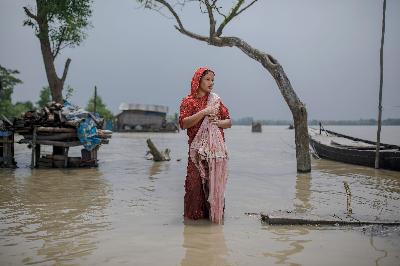
To Experience “Vanishing With the Waves” DOWNLOAD TOTIM APPIn episode 010 of Exposures, Bangladeshi photojournalist K M Asad joins DJ Clark to reflect on his journey from a student at Pathshala South Asian Media Institute to becoming one of Southeast Asia’s most respected visual storytellers and a World Press Photo Award winner. Trained under the legendary Shahidul Alam, Asad came of age in a generation of photographers determined to tell their own country’s stories from within.In conversation with Clark, Asad reflects on the evolution of Bangladeshi photography, the importance of patience and proximity and why local photographers remain essential to the truth and impact of visual journalism.K M AsadK M Asad is an independent documentary photographer and photojournalist based in Dhaka, Bangladesh. His long-term project Vanishing with the Waves earned him a World Press Photo Award and international recognition for its powerful portrayal of communities living on the frontlines of rising seas. Asad’s work has appeared in TIME, The Guardian, and National Geographic and others.DJ ClarkDJ Clark is a multimedia journalist, educator, and visual storyteller based in Hong Kong. With more than two decades of experience in international journalism, he has worked as a producer, photographer, and video journalist for outlets including China Daily, The Economist, and BBC World Service. Clark is also the director of multimedia at the Asia Center for Journalism and a long-time mentor with World Press Photo and Pathshala South Asian Media Institute, where he has trained and collaborated with emerging photographers across Asia and beyond. His work focuses on empowering local voices and advancing innovative approaches to visual storytelling.Support TOTIM: TOTIM is a new initiative built to support and amplify a global and diverse community of visual storytellers. As a nonprofit platform, we rely on your support to bring under-reported stories to light and sustain vital, independent photojournalism around the world. Please consider a small, charitable, tax-deductible gift. 🙌 Get full access to TOTIM at totim.substack.com/subscribe
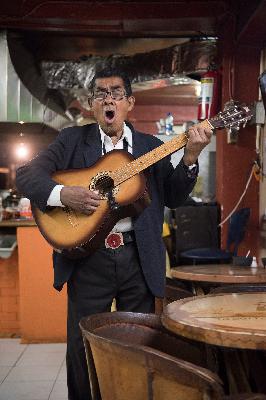
To Experience “El Inquilino” DOWNLOAD TOTIM APPPhotographer and educator Tom Griggs joins TOTIM to discuss El Inquilino, a series made in Mexico City during the COVID-19 pandemic. Originally planning a short stay, Griggs spent three years photographing daily life as the city quieted and adapted. He describes how the project evolved from his background in fine art into a form of expanded documentary, blending observation and subjectivity to capture the mood of isolation and stillness. Griggs reflects on his process of shooting thousands of images, editing them into cohesive sequences and allowing time and memory to shape his understanding of the work. El Inquilino offers a sublimely intimate portrait of life in a city during a strange and extraordinary time.Exposures 009 Hosted by TOTIM Founder/ Director Luke Mertz Get full access to TOTIM at totim.substack.com/subscribe
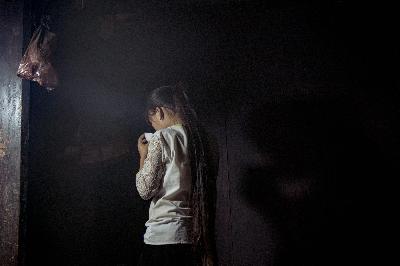
To Experience “Child Brides of China” DOWNLOAD TOTIM APPIn Episode 008 of Exposures, Yen Duong discusses her project Child Brides of China, which documents the trafficking of Vietnamese girls into forced marriages. The work examines the socioeconomic and structural factors that sustain these networks, including gender imbalance, poverty, and limited legal protections. Duong also reflects on her broader career as a photojournalist, covering issues of migration and social inequality and how years of work across Vietnam have shaped her approach to documenting human rights issues with deep sensitivity. The conversation addresses the practical and ethical challenges of reporting on human trafficking, the psychological toll of prolonged exposure to traumatic subject matter and the importance of trauma-informed training and mental health support in helping journalists manage the emotional demands of sustained fieldwork.Yen DuongYen Duong is a Berlin-based photojournalist whose work addresses larger issues of migration, climate change, and social inequality. Before relocating to Berlin, she spent years reporting from Hanoi and Saigon, covering stories on human trafficking, environmental disasters, and the effects of rapid urbanization on marginalized communities. Her photography and reporting have been published in The New York Times, The Guardian, The Atlantic, The Wall Street Journal, Al Jazeera, ProPublica, and Rest of World, among others. A member of Women Photograph and Diversify Photo, she has received awards and support from the Pulitzer Center, One World Media, and the Dogma Collection for her long-term projects.Salgu WismathSalgu Wissmath is a nonbinary Korean American photographer whose work bridges documentary, editorial, and conceptual storytelling. Originally from Sacramento, California, they are currently based in San Antonio, Texas. Their current work explores the intersections of mental health, queer identity, and faith using a conceptual documentary approach. Salgu’s editorial work has been published in The New York Times, The San Francisco Chronicle, The San Antonio Express-News, The Wall Street Journal, The Guardian and NPR amongst others. Get full access to TOTIM at totim.substack.com/subscribe
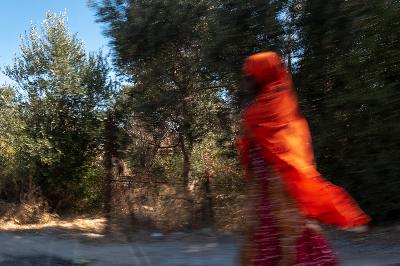
To Experience “The Olive Grove” DOWNLOAD TOTIM APPIn Episode 007 of Exposures, MaryLynne Wrye speaks with Yen Duong about her project The Olive Grove, documenting life in and around the refugee camps on the island of Lesvos. Their conversation explores the harsh realities within the camp, the ethical challenges faced by photographers working with vulnerable communities, and the dangers and responsibilities that come with long-term commitment to such a story. Wrye’s work is a sustained effort to bring visibility to and amplify the humanity of people caught in crisis.MaryLynne WryeMaryLynne Wrye is an artist working across photography, writing and sound. Her experiences on the borderland of Lesvos, Greece, inform her ongoing research and long-term project on displacement. She holds graduate degrees from the Royal College of Art and the Slade School of Fine Art and her work has been exhibited internationally and collected by institutions including the Guggenheim Museum Library and the Metropolitan Museum of Art.Yen DuongYen Duong is a Berlin-based photojournalist whose work addresses larger issues of migration, climate change, and social inequality. Before relocating to Berlin, she spent years reporting from Hanoi and Saigon, covering stories on human trafficking, environmental disasters, and the effects of rapid urbanization on marginalized communities. Her photography and reporting have been published in The New York Times, The Guardian, The Atlantic, The Wall Street Journal, Al Jazeera, ProPublica, and Rest of World, among others. A member of Women Photograph and Diversify Photo, she has received awards and support from the Pulitzer Center, One World Media, and the Dogma Collection for her long-term projects. Get full access to TOTIM at totim.substack.com/subscribe

To Experience “Saudi Tales of Love” DOWNLOAD TOTIM APPIn Episode 006 of Exposures, Tasneem Alsultan discusses her project Saudi Tales of Love, where she documents the private, often unseen experiences of love, marriage, and divorce in Saudi Arabia. Her work challenges stereotypes by highlighting the personal stories of women navigating tradition, modernity and social change. Through intimate portraits and candid narratives, Alsultan opens a window into questions of identity, freedom, and resilience. Her story is now available on the TOTIM app.Tasneem AlsultanTasneem Alsultan is a Saudi-American investigative photographer and visual storyteller whose work explores women’s rights and social dynamics in Saudi Arabia and the Gulf region. Her work has been published in The New York Times and National Geographic amongst others.Tasneem became the first Arab female Global Ambassador for Canon in 2018, a Catchlight fellow in 2019, was voted the ‘Princess Noura University Award for Excellence’ in the Arts Category and received honourable mention for the Anja Niedringhaus Courage in Photojournalism. In 2020, she cofounded Ruwa Space, a platform to support visual creatives and offer education and consultation across the Middle East & North Africa. She’s a member of Rawiya women’s Middle Eastern photography collective.Camille Farrah LenainCamille Farrah Lenain is a French-Algerian documentary and portrait photographer. She relocated from Paris to New Orleans in 2013, where she teaches at Tulane University and works on long-term projects that challenges societal preconceptions, exploring the notions of stereotypes, collective memory, and plural identities.Her work has been published in The New York Times, Rolling Stone, The Marshall Project, The Washington Post, T Magazine, Sierra Magazine, The Bitter Southerner and Libération amongst others. Get full access to TOTIM at totim.substack.com/subscribe

To Experience "Park Fire’ 24" DOWNLOAD TOTIM APPIn Episode 005 of Exposures, Noah Berger discusses his career as a photojournalist and his extensive coverage of California’s wildfires. He reflects on the technical and safety challenges of working in hazardous fire zones while offering insights into both his process and the broader professional responsibilities of reporting on natural disasters. His story, Park Fire ‘24, is now available on the TOTIM app.Noah BergerNoah Berger is an award-winning San Francisco based photojournalist well known for his extensive coverage of the state’s wildfires. He has worked at length with the Associated Press as well as The New York Times, and National Geographic. In 2021, he shared a Pulitzer Prize for Breaking News Photography for coverage of the protests following George Floyd’s murder. Salgu WismathSalgu Wissmath is a nonbinary Korean American photographer whose work bridges documentary, editorial, and conceptual storytelling. Originally from Sacramento, California, they are currently based in San Antonio, Texas. Their current work explores the intersections of mental health, queer identity, and faith using a conceptual documentary approach. Salgu's editorial work has been published in The New York Times, The San Francisco Chronicle, The San Antonio Express-News, The Wall Street Journal, The Guardian and NPR amongst others. Get full access to TOTIM at totim.substack.com/subscribe
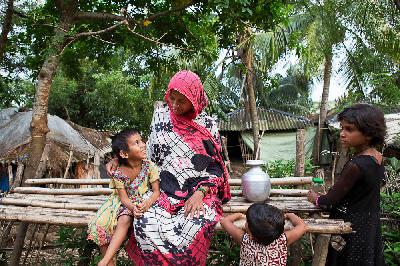
To Experience "Life on the Edge" Pt. 1 DOWNLOAD TOTIM APPIn Episode 004 of Exposures, Natisha Mallick discusses her reporting in rural West Bengal, India, where she documents the high risks of childbirth in communities with limited or no access to medical care. Mallick’s work explores the resilience of mothers, the role of unofficial caregivers, and the systemic gaps that contribute to one of the highest maternal mortality rates in the world. Her story, Life on the Edge, is now available on the TOTIM app.Natisha MallickNatisha Mallick is a documentary photographer and data visualization specialist based in London. Her work focuses on underreported social issues, with a particular interest in public health and marginalized communities. She has documented maternal health challenges in rural West Bengal and other stories highlighting systemic inequities. Her photography has been featured in Spiegel Online, The Wire, The Quint, The Irish Times, and L’Œil de la Photographie.Tasneem AlsultanTasneem Alsultan is a Saudi-American investigative photographer and visual storyteller whose work explores women’s rights and social dynamics in Saudi Arabia and the Gulf region. Her work has been published in The New York Times and National Geographic.TOTIM is subscriber-supported. To receive new posts and to help amplify this work, consider becoming a free or paid subscriber. Get full access to TOTIM at totim.substack.com/subscribe

In Episode 003 of Exposures, Greta Rico interviews documentary photographer Seth Berry about his work in Honduras. Berry shares his multi-year effort to document the harsh realities of life in the Aguan Valley — a region of natural beauty overshadowed by corporate exploitation and government complicity. His story, In the Valley of Death, is now available on the TOTIM app.Seth Berry Seth is a documentary photographer based in Honduras. His work is focused on human rights issues and cultural resistance in Central America and beyond. In Honduras, he explores the root causes of migration, where the people suffer from extreme poverty, a corrupt government, and violence towards environmentalists and indigenous cultures. His work has been featured in The Intercept, The Nation, Vice World News, The Guardian and Al Jazeera,Greta RicoMexican Documentary Photographer, Journalist and Educator focused on issues related to; gender, environment, climate change and food. Her work focuses on exploring new social representations in contemporary visual culture. Her work has been published in Leica Photographie International, The New York Times, The Washington Post, The Guardian, The Women's Media Center, The HuffPost, El País and Lado B.TOTIM is an audience supported nonprofit. To receive new posts and support this work, consider becoming a free or paid subscriber. Get full access to TOTIM at totim.substack.com/subscribe
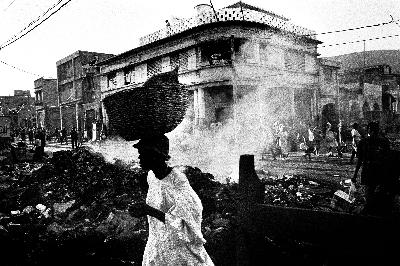
To Experience "Coup d'état" DOWNLOAD TOTIM APPIn episode 002 of Exposures, photojournalist Tasneem Alsultan interviews Eros Hoagland about his decades long career as a conflict photographer including his work in Haiti covering the violent overthrow of the government of Jean-Bertrand Aristide. “Coup d'état” is now available on the TOTIM app.Eros HoaglandEros Hoagland is a California-born photojournalist whose work spans global conflict zones—from El Salvador and Iraq to Haiti, Mexico, Colombia and beyond—capturing narratives on political and social upheaval. His work has been published in the The New York Times, Time, Newsweek and Der Spiegel amongst others.Tasneem AlsultanTasneem Alsultan is a Saudi-American investigative photographer and visual storyteller whose work explores women’s rights and social dynamics in Saudi Arabia and the Gulf region. Her work has been published in The New York Times and National Geographic.This Substack is reader-supported. To receive new posts and support this work, consider becoming a free or paid subscriber. Get full access to TOTIM at totim.substack.com/subscribe
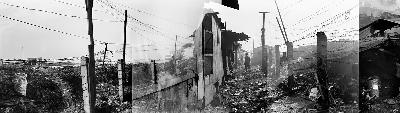
To Experience “Signos” DOWNLOAD TOTIM APPIn episode 001 of Exposures, photojournalist DJ Clark interviews Veejay Villafranca about his work covering the ecological and humanitarian fallout of Typhoon Haiyan in the Philippines. “Signos” is now available on the TOTIM app.Veejay VillafrancaVeejay Villafranca is a Manila-born documentary photographer and lecturer. He began as a staff photographer at Philippines Graphic before freelancing for AFP, Reuters, and Getty. DJ ClarkDJ Clark is a Hong Kong–based multimedia journalist with over 30 years of experience in video, photography, audio, and writing. His work has appeared in The Economist, BBC and National Geographic, and he’s the recipient of numerous awards, including World Press Photo’s Interactive of the Year in 2020.This Substack is reader-supported. To receive new posts and support this work, consider becoming a free or paid subscriber. Get full access to TOTIM at totim.substack.com/subscribe
Comments


Download from Google Play

Download from App Store
 United States