


 Claim Ownership
 Hapitalist
HapitalistSubscribed: 3Played: 19
Subscribe

© Russell Nohelty
Description
At Hapitalist, we turn stressful businesses into easeful joy engines. Make the money you want while staying true to your values. Interviews and lessons about joy, happiness, and money.
www.hapitalist.com
www.hapitalist.com
56 Episodes
Reverse

Can I bribe you to subscribe? I am not above bribing you to subscribe to my Hapitalist podcast. It’s quick, painless, and won’t ruin your day. All you have to do is: * Go to this link. https://gleam.io/gAphv/hapitalist-podcast-giveaway* Subscribe to the podcast on Apple or Spotify. * Enter to win a $25 Amazon gift card. Plus, then you have a new podcast to listen when I sporadically and chaotically release them. Basically, everyone’s a winner, but legally I should say there is only one winner, though. * Listen on the app of your choiceRussell sits down with Chelle Honiker — publisher, vibe coder, and what Russell calls “the queen of vibe coding in the author industry” — fresh off a three-week international event sprint through Savannah, London, and Ireland. What starts as a state-of-the-industry conversation pivots into a live tech problem-solving session, a breakdown of how Chelle built a full author operating system from scratch with no traditional programming background, and a broader argument for why right now is the best time in history to be an independent creative.What Chelle Saw at Three EventsThe industry is splitting. On one side: authors paralyzed by AI anxiety, frustrated by discoverability problems, convinced the gold rush is over. On the other: authors using AI to do translations they never had bandwidth for, launch new pen names, and run lean solo operations that outperform teams of ten. At the Ireland Publishing Show, one author demonstrated a new pen name launched in January — no email list, no existing audience — that cleared €7,000. He wrote the book with AI, edited it himself, and wasn’t shy about it.Russell’s take: the gold rush has always been “behind us.” That story is as old as the industry. The real variable isn’t the market. It’s the story you’re telling yourself about what’s possible.The Mindset ArgumentBoth Russell and Chelle spent time on this, and it’s core Hapitalist territory: the brain is not that smart. It processes whatever you feed it and starts looking for evidence to confirm it. Tell it the gold rush is over and it will find proof everywhere. Tell it there’s opportunity and it starts finding that instead.The practical upshot: refusing to engage with AI entirely doesn’t just cost you one tool — it costs you the curiosity that leads to the next unexpected thing. Chelle’s frame: “Let the bots do the boring so you can do the brilliance.”On AI ethics — both acknowledged the minefield is real. But Russell pushed on the double standard: if AI is your hard line, are you also auditing your payment processor? Your book retailer? Barnes & Noble wiped out indie bookstores. Amazon was once the scrappy underdog. No company stays the good guy forever. The move is to make clear-eyed business decisions for yourself, not to pick a villain and stop thinking.What Is Storyteller OS?Chelle vibe-coded a full author business platform in roughly four months of intensive work — somewhere around 600 hours of development, built with Claude Code, with an assist from one other programmer on bug reports. The result is an all-in-one system that replaces the scattered tool stack most authors live with:* Writing studio — write, edit, export, push directly to BookFunnel or Lulu* Social media — create posts, manage a content calendar, connect up to 13 platforms* Email — replaces MailerLite and similar tools; authors control their own sending through Amazon SES keys, which cuts costs significantly* Direct sales — built-in storefront, or it manages existing WooCommerce/Shopify setups* Business intelligence — review tracking, reader database, analyticsThe original vision was a central command center that integrated with existing tools. Reality from beta users pushed it further: at the price point she’s charging, it needs to replace those tools, not just organize them. She pivoted. That’s the advantage of building your own software — you can.Her big audacious goal: 1,000 indie authors running million-dollar businesses from one platform. find it at: https://storytelleros.com/The Live Problem-Solving SessionThis is where the episode got genuinely useful. Russell mentioned he’s been trying to connect Substack (where paid subscribers live) to a separate community hub — and has been told repeatedly by developers that it’s impossible because of how Stripe handles financial data.Chelle’s answer: it’s not impossible. It’s a webhook.When someone subscribes through Stripe, Stripe fires a webhook. You build your hub to catch that webhook, create an account, and trigger whatever automation you want. No Zapier. No Make.com. No N8N. No additional payment processor. The Stripe transaction has everything you need to power the rest of it.Russell’s reaction was essentially a live “I hate everything” moment — because he’d just been about to pay for a platform to solve the exact problem that a webhook solves. Chelle’s note: with agentic AI, the era of no-code automation tools being the answer is largely over. She spent two years evangelizing Make.com workflows. Three months ago she stopped using them entirely.The Closing ArgumentThe episode ends where it started: unlimited choice is the new constraint. For most of publishing history, your options were basically hamburger, hot dog, or sausage — work within the platform or don’t work at all. That’s gone. The problem now isn’t that there aren’t enough options. It’s that people don’t know what they want, and that uncertainty reads to their brain as impossibility.Russell’s wife’s line closes it out neatly: almost everything always works out for almost everyone, almost all the time. Stop optimizing for the five worst minutes of your day. The creative person who decided to make things independently already did the hardest part. The rest is figuring out what you actually want and building toward it — which is a much better problem to have.3 Takeaways* The gold rush was never behind you. It’s a story your brain tells when it’s scared. 7 billion people, unlimited money, renewable resource. Feed your brain differently.* Vibe coding changed the math. Non-technical founders can now build their own tools, own their own stack, and pivot in real time based on what actual users need. That’s an asymmetric advantage over anyone still waiting for the right platform to exist.* The webhook is the answer. If you’ve been told you can’t connect two platforms because of payment data — you probably can. Ask about webhooks before you pay for another integration tool.Find Chelle and everything she does at chellehoniker.com. AI Summit: April 21–22. This is a public episode. If you'd like to discuss this with other subscribers or get access to bonus episodes, visit www.hapitalist.com/subscribe

* Listen on the app of your choiceHonestly, you’ll probably want to just skip to about minute 27 or so of this one when it goes straight into a coaching call and you see in real time how Russell’s brain works, and how it all clicks into place in 30 minutes. In this one, Russell sits down with Jermaine, a serial founder whose current passion project, Heirlight, an AI-powered estate planning app, grew out of a deeply personal place: trying to understand his mother before she passed. What starts as a conversation about death, legacy, and memory transforms in the second half into a candid coaching session where Russell holds up a mirror to Jermaine’s product, messaging, and the gap between what he says he’s building and what his website actually says.Jermaine built the first version of Heirlight as a Mandarin-language chatbot so his mom — who was anxious about retirement and unclear on her own finances — could tell her life story in her own language. Four months of conversations later, he realized he had the raw material to build her an estate plan. She passed away three months after he started building the app.The conversation opens into something broader: both Russell and Jermaine have lost parents, and both had the experience of either trying — and failing — to capture those stories before it was too late, or just barely succeeding. The throughline is that understanding someone’s past unlocks empathy for who they became. Russell connects this to his own father, his stepmother, his grandmother with dementia at 92. Jermaine connects it to a recording he made of his grandmother in 2017 that reshaped his understanding of his entire family.The emotional core of Heirlight, as Jermaine describes it in the first half, isn’t estate planning at all — it’s connection and remembrance.At around the midpoint, Jermaine invites Russell to just look at his website and give it to him straight. What follows is one of the more honest product critiques you’ll hear on a podcast.🔍 What Russell Saw on the SiteRussell pulled up Heirlight.com live and flagged the disconnect immediately:* The hero headline: “Make your will in 27 minutes”* Supporting copy: state-specific, bank-level encryption, unlimited updates, free lawyer referralHis reaction: “27 minutes is a long time. Bank-level encryption — I don’t care about this at all. Free lawyer referral confuses me because I thought you were making my will.”More pointedly: “We’ve talked for roughly an hour across two calls, and you never once talked about making a will or the fact that it’s quick.”💡 The Core TensionJermaine’s product is mission-driven. His messaging is pain-point-driven. Those are two different apps, and right now the website is selling the wrong one.Russell’s framework: every product is really about the transformation it delivers. “Make a will in 27 minutes” is a task completion. That’s not a powerful transformation. The real transformation Jermaine kept describing — feeling grounded, feeling like a responsible adult, preserving stories your grandchildren will hear after you’re gone — that’s nowhere on the page.“The thing you said for the first 25 minutes of this talk is not this site.”🧭 Key Coaching Insights* Your referral users aren’t your ideal customer. Most of Heirlight’s growth comes from word-of-mouth, and those users come because it’s “easy.” But Russell pushed back: it’s not easy because it’s fast — it’s easy because it’s natural language. People are telling stories. That’s the thing. And yet the app currently buries the conversational part behind the rigid will-building flow.* You’re playing a game you can’t win. Competing on speed and task-completion puts Heirlight in the same lane as every other will-maker. Russell was blunt: “You are going to lose that game because they are already winning it.” But shifting the axis — making Heirlight the app that helps you tell the story behind the will — puts it in a category of one.* There’s almost no risk to going all in on the thing when you have good cashflow. Because Jermaine has a profitable freight forwarding business funding his life, he has rare runway to take asymmetric creative risk. Russell’s challenge: “You are constraining yourself from taking the actual risks you want to take because your brain says businesses do business things.”* The order of operations matters. Currently: rigid legal questions first → natural language/storytelling after. Russell’s suggestion: flip it. Let people tell stories first, then surface the will questions gradually — one per day over four weeks if needed. Let the will be the thing that emerges from the conversation rather than the thing that gates it.* Make it shareable and collaborative. Wills are hard partly because people don’t have all the answers alone. What if you could “phone a friend” — loop in a sibling to help answer two questions? What if a story got cleaned up by AI and you could share it with family? What if your niece could comment and say “that’s not what happened”? That’s a product people talk about.* The face problem. Jermaine revealed he’s been reluctant to put his own story front and center because two teammates quit their jobs to build this with him — and it feels narcissistic to make it about himself. Russell reframed it: “They didn’t follow you because this was the best idea ever. They followed you because of you.” The story doesn’t have to be Jermaine’s exclusively — but someone’s story has to be there. If not his, find a customer whose story can stand in.🎯 Russell’s Parting Challenge“What I would love to see next time is what you talked about in the first half of this call to be on this page.”The episode ends with Russell going full pitch mode — framing wills not as legal documents but as storytelling apparatuses. Every item in a will has a story behind it. 70% of Americans don’t have a will not because they’re lazy, but because wills feel cold, impersonal, and bureaucratic. Heirlight’s bet — if it leans into what Jermaine actually built — is that wills can be the most personal thing you ever make.“Wills are about how we take bits of our identity and give them to other people and hope they can carry little pieces of us around with them forever.”3 Takeaways for Founders* Your messaging should sound like you on your best day — not like a product spec sheet. If you’d never describe your company the way your homepage does, something’s off.* The transformation > the feature. “Make a will in 27 minutes” is a feature. “Feel grounded enough to stop avoiding the hardest conversation” is a transformation. Sell the second thing.* Asymmetric risk requires asymmetric positioning. If you’re not going to win by playing it safe, you might as well play it weird and true.Heirlight is currently live in California. You can try a draft for free at https://heirlight.com/en/podcast/hapitalist This is a public episode. If you'd like to discuss this with other subscribers or get access to bonus episodes, visit www.hapitalist.com/subscribe

Hi, I was a guest on a livestream by my friends at One Brilliant Arc (OBA) this week, and I said a lot of words. Here are some of my best takeaways. I was pretty animated in this one, and I’m still on fire even now typing this bit to you. Everyone Has the Same Four ProblemsDoesn’t matter if you’re publishing novels, drawing comics, running a tech company, or selling tarot decks — the problems are the same. The HAPI Compass breaks them down:* H — Project blocks. Things intrinsic to the work itself that you and your team can fix without anyone else’s help. Bad cover. Weak blurb. A third-chapter structure problem. Before you do anything else, fix the thing.* A — Audience blocks. You’ve got the right product but you’re talking to the wrong people, on the wrong platforms, or your list was built for a completely different version of what you do.* P — Prioritization blocks. Doing too many things, doing the wrong things, doing things in the wrong order. This one’s everyone’s problem, always.* I — Income blocks. Your conversion is broken. Not your audience size — your actual sales mechanism.The reason most people stay stuck is that they misidentify which block they have. And the solutions are often opposite. If you have an audience block, you need to lower the barrier to entry and get more visible. If you have an income block, you need to raise prices and get more exclusive. Apply the wrong solution and you make things worse.You’re Playing on Someone Else’s AxisEvery platform gives you a set of rules. Substack has one. Amazon has one. TikTok has one. Those rules exist because they maximize the platform’s revenue, not yours.The problem isn’t that platforms define their own axis. They should. The problem is that most of us just believe it — and play entirely within a game designed for someone else to win.Your job is to define your own axis. What does winning actually look like for you? What activities give you the best return on energy? Once you know that, you can use a platform without being owned by it.You Have to Learn the Rules Before You Can Break ThemThere’s a version of “going your own way” that’s actually just not knowing what you’re doing. Real creative freedom, like absurdism and surrealism is harder than playing it straight, not easier. It requires that you understand exactly what you’re departing from and why, and that you can bridge the gap for your reader or audience.Frank Gehry said 85% of what he does is the same as every other architect — gravity, logistics, construction. The 15% is where he has freedom. That’s true in writing, marketing, and building an author business.You pick your medium, you work within its constraints, and you find your 15%.Authenticity Has a Practical DefinitionAuthenticity isn’t a vibe. Here’s how I think about it: Can I sell this for the next ten years without hating my life?Your books are something you have to talk about for a decade. Your brand is something you have to live with every day. Most early-career authors have no concept of how long ten years actually is.For me, something is authentic when:* I like it* I get a positive feedback loop from doing it* It flows out of me without a lot of effort to containIf you have to think about whether something is authentic, it probably isn’t. Your authenticity is you being “back on your bullshit” — the thing your friends recognize immediately as you doing your thing again. The work is figuring out how to make that broadly palatable and position it as a sail, not an anchor.Chaos Needs a ContainerSome people are naturally chaos-oriented. They want to make music and fashion and photography and woodwork all at once. The default advice is “pick a lane.” That advice is often wrong for that person.The better question is: what container is big enough to hold all of it?If your chaos spills beyond your monetization structure, that’s a problem. But if you can build a container — a brand, a publication, a body of work — that’s broad enough to be unmistakably you, then the chaos becomes your competitive moat. Nobody else can replicate the specific combination of things you are.The goal is to plant your flag so clearly that when you pivot or shift or get weird, your audience comes along because there’s nowhere else to get what you offer.Anyone Can Do It, Even if Not Everyone Can.Can you make a living as a writer? Yes. Will it look the way you currently imagine it? Probably not.The math is simple: $100K is 100 people at $1,000, or 300 people at $300, or 4 companies at $25K. The hard part isn’t finding those people once — it’s building a mechanism that keeps finding new ones, because even your biggest fans don’t follow you as closely as you think. (When’s the last time you bought a book from the author who meant the most to you in childhood?)The goal isn’t to be locked into “books forever.” The goal is to build enough time affluence that you can do what you want, when you want — and then reinvest that into the work that matters most to you right now.Know What Era You’re InGrowth era or monetization era? These are different modes with different strategies, and you can’t run them both at full throttle simultaneously.In a growth era: maximize visibility, lower barriers, build the audience. In a monetization era: increase exclusivity, refine conversion, deepen the relationship with the people already there.The most important thing is honesty with yourself about which one you’re actually in — and what you actually want. Not what sounds good, not what the platform is incentivizing. What do you want right now, and what’s the most energy-efficient path to that specific thing?One Brilliant Arc is a story coaching and editing service. If you’re working on a story that matters and need help getting it out of your head and into the world, check them out.If you want to go deeper on any of this framework, everything I covered lives inside Frictionless Growth — which you get free just for subscribing to Hapitalist. We do live sessions twice a month if you want to bring your specific situation. This is a public episode. If you'd like to discuss this with other subscribers or get access to bonus episodes, visit www.hapitalist.com/subscribe

* Listen on the app of your choiceI’ve been trying to understand tarot for years, but every time I tried to learn it, nothing stuck. It’s hard for me to see the framework until I break it down and rebuilt it for my weird brain. So, that’s what I did. I broke it down to first principles and rebuilt it in a language I already understood.This episode is all about the process I used to build this deck, the underlying methodology, and pulled it all together in less than a month (after working on it for 2+ years). This is the first time I’ve demoed the methodology live. You can download the whole system, and the digital deck, at: https://www.hapitalist.com/p/tarotIf you’d like to see more, you can also book a free 15-minute tarot reading on our consulting page here: https://tidycal.com/noheltyrTakeaways1. If you don’t understand a system, reverse-engineer it. Sometimes the problem isn’t that a framework is wrong. It’s that you’re trying to memorize outcomes instead of understanding mechanics. When you rebuild something in a language you already understand, you stop borrowing authority and start developing your own.2. Most business problems can be reduced to their major constraint. If you can identify which one is actually blocked, you stop throwing effort at the wrong layer.3. Friction is not failure. Don’t panic just because something feels heavy. You determine whether it’s early, misaligned, or complete. Those are very different states.4. You cannot integrate what you refuse to release. This is the one most entrepreneurs resist. We will optimize, repackage, and rebuild endlessly to avoid admitting that something has expired. Sometimes the block isn’t effort. It’s attachment.5. Interruption is underrated. The value of something like tarot isn’t mysticism. It’s disruption. It interrupts your favorite coping mechanism long enough for you to see what you’re avoiding. This is a public episode. If you'd like to discuss this with other subscribers or get access to bonus episodes, visit www.hapitalist.com/subscribe

* Listen on the app of your choiceThis episode is part of the January Joy(ful) Growth Club with Russell and Claire program I’m running with Claire Venus ✨. Join and get access to special challenge and interviews all month.Join by clicking here.In this episode, we’re joined by education entrepreneur and writer Michael Simmons to explore a radically different way of thinking about work, learning, and growth.We start with a deceptively simple question: What if making a living didn’t have to feel miserable? From there, the conversation opens into practical and philosophical territory. We talk about how many people you actually need to support a sustainable life, why fractional work and contracting are often safer than they look, and how entrepreneurship can offer more freedom than traditional employment if you approach it creatively.Michael shares his own journey through ambition, burnout, and reinvention, including building a seven-figure education company in his twenties, and burning out because he didn’t enjoy the day-to-day work required to sustain it. That experience led to a major shift: choosing curiosity and energy as filters for what he works on, rather than goals alone. When he began writing only what he was genuinely excited about, everything changed—traction, resonance, and sustainability followed.From there, we dig into deeper ideas about learning and expertise. We talk about why it’s no longer possible, or desirable, to know everything, and why the future belongs to people who understand distributed responsibility: recognizing both the keys you hold and the locks you don’t. Rather than idolizing lone experts or pretending everyone has all the answers, real progress happens when people bring their specific knowledge together.The conversation moves fluidly between AI, intuition, education, and systems thinking, touching on why the things that feel like “cheating” are often your greatest strengths, how we add by subtraction as we mature, and why so many people are over-armored for battles they’re no longer fighting.If you’ve ever felt overwhelmed by how much there is to know, pressured to optimize yourself into exhaustion, or stuck believing work has to be hard to be valuable, this episode offers a generous reframe: you don’t need all the answers—you just need to know which ones are yours.Here are 5 grounded, actionable takeaways from the conversation with Michael Simmons, written to land clearly at the end of the episode:* Design your income around fewer people, not more. You don’t need thousands of customers to build a sustainable life. Explore models like fractional work, contracting, or high-trust relationships where a small number of people pay for deep value.* Let curiosity be a filter, not a reward. If you consistently dread the daily actions required by your goals, something is misaligned. Prioritize work you’re genuinely curious about and energized by—momentum follows engagement.* Trust the things that feel like “cheating.” The actions that feel easiest to you are often your highest leverage skills. If they work, double down instead of abandoning them for something harder.* Stop trying to know everything and build relational intelligence instead. Expertise now lives in networks, not individuals. Focus on knowing what you know, knowing what you don’t, and knowing who to turn to when you need the missing pieces.* Add by subtraction as you mature. Regularly audit the armor you’re still carrying from earlier seasons of your life or business. Keep what protects you now and consciously shed what no longer serves you. This is a public episode. If you'd like to discuss this with other subscribers or get access to bonus episodes, visit www.hapitalist.com/subscribe

* Listen on the app of your choiceThis episode is part of the January Joy(ful) Growth Club with Russell and Claire program I’m running with Claire Venus ✨. Join and get access to special challenge and interviews all month.Join by clicking here.In this conversation, we’re joined by artist and writer Elin Petronella from Follow Your Gut to talk about intuition, energy, and what it really takes to build a joyful creative life over the long term.Elin shares what it looks like to stay in business as an artist for more than a decade, across countries, life seasons, motherhood, burnout, and reinvention, without forcing herself into rigid systems that slowly drain the joy out of the work. At the center of the conversation is the idea that if you want to keep creating, you have to become ruthless about what works for you and what doesn’t.We talk about why creators often cling to strategies that are hard but ineffective, while abandoning the things that feel easy and work. We unpack return on energy investment, how to balance “guaranteed” work with space for delusional experiments, and why knowing when something isn’t likely to work is just as important as optimism.The conversation also explores shame around slowing down, pivoting, disappearing, or changing direction, and how external expectations can quietly push artists into building golden cages of their own design. Elin reflects on learning to trust her intuition again after burnout, recognizing when misalignment shows up as over-explaining, and why creating, privately or publicly, is often the fastest way back to clarity.We dive into ecosystems, creative operating systems, and why some paths look chaotic from the outside but make perfect sense internally. We talk about building your own arbitrage instead of chasing trends, why originality isn’t something you find but something that emerges over time, and how everything you make eventually connects, even if it only makes sense in hindsight.If you’re an artist or creator wrestling with consistency, visibility, pivots, or the fear that stepping off the hamster wheel will make everything collapse, this episode is a powerful reminder that alignment isn’t indulgent, it’s how you stay in the game.Here are 5 clear, grounded, actionable takeaways that match the tone and substance of the conversation with Elin Petronella:* Get ruthless about return on energy, not just money. Regularly name which activities drain you and which ones give energy back, even if they aren’t immediately profitable. Long-term sustainability depends on keeping energy-generating work in the mix.* Balance guaranteed work with delusional experiments. Make sure part of your workload reliably pays the bills, then intentionally reserve space to try things that might not work. Creativity dies when either side crowds out the other.* Treat over-explaining as a misalignment signal. If you find yourself constantly justifying a pivot or decision, pause. That urge often means you’re acting from conditioning instead of intuition.* Stop forcing consistency across seasons. You’re allowed to disappear, slow down, or change mediums as your life changes. What looks chaotic from the outside often creates coherence over time.* Keep creating, even when it’s private. Creation is how you stay connected to your intuition. If you stop making things altogether, clarity gets harder, not easier, to find. This is a public episode. If you'd like to discuss this with other subscribers or get access to bonus episodes, visit www.hapitalist.com/subscribe

* Listen on the app of your choiceThis episode is part of the January Joy(ful) Growth Club with Russell and Claire program I’m running with Claire Venus ✨. Join and get access to special challenge and interviews all month.Join by clicking here.In this conversation, we’re joined by artist and illustrator Adam Ming from Ten Minute Artist to talk about what it actually means to build a creative life that fits how you work, not how you think you should work.Together, we explore the quiet tension many artists feel between joy, sustainability, growth, and why forcing yourself into someone else’s model is often the fastest path to burnout.Using Adam’s experience as a working illustrator and creator, we unpack the myth that artists are fundamentally “different” from everyone else, and how that belief can quietly keep people stuck. Making art is creative, but sharing it, selling it, and building a life around it is still entrepreneurship. Once you radically accept that, everything gets clearer.We talk through ideas like:* why ease is often mistaken for cheating,* how identifying your personal “magic trick” can stabilize both income and energy,* the difference between how you operate day-to-day and how you actually grow,* and why repeating what works isn’t selling out, it’s refinement.The conversation also dives into scale paths, ecosystems, positive feedback loops, and why copying someone else’s strategy almost never works unless you share their temperament, constraints, and incentives. Growth isn’t about doing everything—it’s about doing the right few things, consistently, in a way that nourishes you.If you’re an artist, writer, or creator who feels like you’re working hard but still swimming upstream, this episode offers a grounded reframe: build the way you’re built and let joy do the heavy lifting.Here are 5 clear, actionable takeaways tailored to this conversation and suitable to drop at the end of the episode:* Identify your “magic trick” and keep using it. Pay attention to the thing that consistently works for you—the action that feels easier and produces results. Don’t abandon it just because it feels repetitive or unglamorous.* Separate how you operate from how you grow. How you like to work day-to-day isn’t always the same as how your work spreads. Figure out both, then design your strategy around that intersection.* Stop copying people with different temperaments. If a strategy drains you, it’s probably not yours—even if it works for someone you admire. Growth models only work when they match your energy, constraints, and incentives.* Cut the work that isn’t working. If something hasn’t produced a positive feedback loop after sustained effort, it’s not “discipline”—it’s drag. Let it go and reinvest that time into higher-leverage actions.* Trust ease when it’s backed by results. Ease isn’t cheating. When something feels natural and moves the needle, that’s your signal to double down, not look for something harder. This is a public episode. If you'd like to discuss this with other subscribers or get access to bonus episodes, visit www.hapitalist.com/subscribe

* Listen on the app of your choiceThis episode is part of the January Joy(ful) Growth Club with Russell and Claire program I’m running with Claire Venus ✨. Join and get access to special challenge and interviews all month. Join by clicking here.In it, I sat down with Seth Werkheiser from SOCIAL MEDIA ESCAPE CLUB to talk about why social media is making people miserable, and how it’s not actually helping most of us build sustainable creative careers.We talked a lot about:* Why creators keep chasing scale before they’re ready for it* Why people want the audience now without putting in the reps. * Why “nobody cares” is actually one of the best places you can start. * And why building something small, slow, and human often beats trying to impress strangers on the internet.One of my favorite threads in this conversation was that musicians don’t build careers by going viral once. They build them by playing to five people on a Tuesday night, learning what works, getting better, and slowly expanding outward. That model works for authors, artists, and entrepreneurs too, but social media keeps convincing us to skip the middle.We also dug into why email lists matter, why platforms always get worse over time, and why you should never confuse attention with access. At the end of the day, a thousand followers you can’t reach is worth far less than a hundred people who actually opted in.At its core, this episode is about choosing work that compounds instead of work that drains you. It’s about trading performative growth for durable growth. And it’s about remembering that success is a trailing indicator, you only see it after the work has already been done.If you’ve been feeling burned out, behind, or like you’re doing everything “right” but nothing is clicking, this conversation might help you recalibrate what actually matters—and where your energy is best spent.Key takeaways* “Nobody cares” is a gift. When the stakes are low, you get to practice, experiment, and make mistakes without pressure. That’s how you build skill and confidence before scale.* Reps beat reach. Playing to five people, hosting a small Zoom call, or writing for a tiny list builds muscles that going viral never will.* Success comes after the work, not before it. People don’t blow up out of nowhere—they just make the invisible work look sudden in hindsight.* Attention isn’t the same as access. If you can’t reach your audience directly, you don’t actually have one.* Energy exchange matters. If a platform consistently gives you less back than you put in, it will eventually drain your joy—no matter how “important” it seems.* Build where you can leave without it damaging you. Platforms change. Owned channels travel with you.If you want growth that actually feels good, start by asking a different question—not “How do I get bigger?” but “Where does my energy come back to me?”That question changes everything. This is a public episode. If you'd like to discuss this with other subscribers or get access to bonus episodes, visit www.hapitalist.com/subscribe

* Listen/subscribe on Apple* Listen/subscribe on Spotify* Listen/subscribe on Pocketcasts* Listen/subscribe on YoutubeIn this episode, we kick off the new year by slowing down on purpose. This episode is all about our new January Joy initiative we’ll be talking about all month as part of our Joyful Growth Club. Join at:https://www.joyfulgrowthclub.substack.com/Rather than jumping straight back into optimization, output, and “doing it right,” we talk about what it actually means to grow with joy—and why joy isn’t the opposite of ambition, discipline, or sustainability. It’s often the prerequisite for all three.We explore the idea that a rich creative life isn’t just about happiness or meaning, but also psychological richness: the kind that comes from doing hard, stretching, sometimes uncomfortable things that still move us forward. That tension between ease and challenge, rest and momentum runs through the entire conversation.From there, we dig into practical realities creators are quietly wrestling with:* Why ads can feel exposing (and how to approach them without betraying your nervous system),* How audience growth can become destabilizing if it isn’t tethered to boundaries,* And why “return on energy investment” matters just as much as return on money.We talk candidly about burnout, visibility, paid work, boundaries, and the invisible labor of holding space for other people—especially online. We unpack why sustainability isn’t about forcing the thing you love to carry everything, and how building systems that support you creates room for rest, depth, and long-term creative freedom.This episode also introduces Joyful Growth Club, our shared January-long experiment in community, collaboration, and conscious growth—daily posts, live conversations, challenges, and a final masterclass designed to help creators find momentum without self-erasure.If you’ve ever felt torn between wanting more and wanting peace, worried that slowing down meant giving up or whether joy can coexist with real growth…This conversation is for you.Here are 5 actionable takeaways you can take away from this one:* Audit your return on energy, not just results. For the next week, notice which activities give you energy back (ideas, clarity, momentum) and which quietly drain you, even if they “work.” Start shifting time toward the former.* Choose one boundary to enforce this month. Pick a single boundary and make it explicit. Boundaries aren’t about controlling others; they’re about protecting your capacity to keep showing up.* Stop forcing the thing you love to carry everything. Identify one way your creative work could be buttressed, repurposed, systematized, or supported, so it doesn’t have to perform nonstop to justify its existence.* Design growth that fits your nervous system. If a tactic makes you freeze, avoid, or spiral, don’t push harder. Break it into lower-stakes steps (e.g., awareness before conversion, presence before pressure) until it feels workable.* Reconnect with the people who are already there.Instead of chasing numbers, spend time learning who your current audience, their names, patterns, and reasons they stay. Depth builds stability faster than scale. This is a public episode. If you'd like to discuss this with other subscribers or get access to bonus episodes, visit www.hapitalist.com/subscribe

* Listen/subscribe on Apple* Listen/subscribe on Spotify* Listen/subscribe on Pocketcasts* Listen/subscribe on YoutubeThis is the recording from December’s Path of Least Friction presentation. While I didn’t record the breakthrough sessions, I took a video of the presentation bit for you.It breaks down your path of least friction, the place where your natural strengths, joy, and effort align to produce disproportionate results with less unnecessary struggle.After working with authors, creators, entrepreneurs, tech companies, and even street performers, I’ve found that everyone essentially faces the same challenge: they keep hitting blocks and have no idea how to move through them or where to start.PDF slide downloadDownloadIndividual slidesAnimated GIF: 10 second timer This is a public episode. If you'd like to discuss this with other subscribers or get access to bonus episodes, visit www.hapitalist.com/subscribe

* Listen/subscribe on Apple* Listen/subscribe on Spotify* Listen/subscribe on Pocketcasts* Listen/subscribe on YoutubeThis week, I’m bringing you sneak peek into Craft Con, a free two-day virtual summit I’m hosting with my friends at Plotdrive happening Thursday, Nov. 20 and Friday, Nov. 21.Craft Con is all about helping authors break through their biggest creative blocks whether you’re stuck in the middle of your novel, struggling to start a story you’ve been dreaming about, or just feeling totally burnt out as the year winds down.I interviewed 12 of my most amazing friends about the blocks they face, how they got through them, and most importantly, how they would train you to get through them as well. We’ll be talking to amazing, superstar writers Ines Johnson, Johnny Truant, Melissa Storm, Joe Nassise, Kevin McLaughlin, Jennifer Hilt, Heather Hildenbrand, Mal Cooper, Lee Savino, Jennifer Probst, Alex Dobrenko, and Kern Carter. You’ll hear from bestselling authors who’ve been in the trenches, facing every kind of writing block, from losing momentum and getting tangled in the messy middle to doubting their own talent, and the strategies they used to break through and become successful.All registrants will also receive the Blockbreaker Digital Bundle for free, packed with tools and ebooks from our speakers to crush your own writing blocks!The Blockbreaker Bundle includes The Zero to Sixty Author: One Road to Writing Success (ebook) by Kevin McLaughlin, The Write Naked Affirmation Deck by Jennifer Probst, Book Launch Checklist and Marketing Quickstart Guide by Lee Savino, Manifest Your HEA (ebook) by Heather Hildenbrand, and How to Write Irresistible Books That Readers Devour (ebook) by me.In today’s episode, I’ve pulled together some highlight moments—golden nuggets from those interviews that’ll light a fire under you and remind you: you’re not alone in this.✅ And the best part? You can join us live at Craft Con for free.Register now and you’ll also get the Blockbreaker Digital Bundle—ebooks, checklists, and tools from our speakers designed to help you crush your own creative blocks.Register here: 👉 https://luma.com/obukrp1hWhether you’re stuck, stalled, or just creatively scattered, this event will help you reset, refocus, and finally get that book done.🎙 Now, let’s jump into the highlight reel. This is a public episode. If you'd like to discuss this with other subscribers or get access to bonus episodes, visit www.hapitalist.com/subscribe
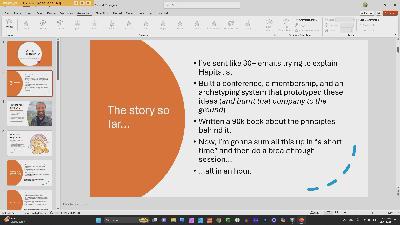
* Listen/subscribe on Apple* Listen/subscribe on Spotify* Listen/subscribe on Pocketcasts* Listen/subscribe on YoutubeI ran a live breakthrough session at Author Nation, which meant I needed to introduce the whole Hapitalist system to people who’d never heard of it before. If you want to download that presentation, including a framework for running your own breakthrough session, you can do so here. Otherwise, here is the vibe of what’s in the video if you just want to read it. I’ve been writing about and studying creative businesses for 15+ years, and this is everything I’ve learned about building a successful creative career, condensed into one digestible system.Most authors feel stuck not because writing is hard, but because they’re solving the wrong problem with the wrong strategies.You’re pouring energy into building an audience when your real bottleneck is clarity about what you’re writing. Or you’re agonizing over your next book idea when what you actually need is a monetization strategy that doesn’t make you feel like a sellout.Hapitalist is how we break that cycle.* What we really mean when we say “why is this so hard?” isn’t “why can’t this be easy?” Easy is a measure of difficulty, and if we wanted something easy, we wouldn’t become authors. What we actually mean is “why is there so much friction?” Easy measures difficulty, but ease measures friction.* Easeful work removes unnecessary struggle, aligns with your natural strengths, and makes your effort matter. It’s still work, but it’s the right work, moving you forward instead of spinning your wheels in place. Most “this is hard” moments are actually “why am I stuck?” moments. The difficulty isn’t the problem. The friction is. When you’re stuck, more effort just digs the rut deeper.* Getting unstuck means finding the path of least friction that increases meaningful progress without eliminating effort entirely. Imagine yourself as a Jenga tower. Frictionless growth is when you find that block that slides out with barely a touch.* There are five paths we’ve watched authors repeatedly use to achieve frictionless, easeful growth: Virality (writing to market/social media), Thought Leadership (blogs/podcasts.speaking), Big Spectacle Launches (Kickstarter/virtual summits), Evangelism (ARC teams, Influncer marketing, referrals), and Partnerships (shared worlds, anthologies, publishing deals).* At least one of those paths will very likely give you frictionless growth. You can succeed with any of these, but spending 100% of your time in the most frictionless path will lead to the most growth in the least time. You might get growth from several strategies, but one will give you the most growth, which is where you should focus. * This is almost certainly the one that’s also the most fun for you and the one you enjoy most, because you’ll be getting a positive feedback loop, possibly for the first time in your entire career. Once you have one flowing beautifully, the other paths amplify and augment your growth.* It’s not that you can do anything, but that there’s something inside that you already love, which can lead to frictionless growth, and we just have to find it. Think of it a bit like Anton Ego’s famous line from Ratatouille “Not everything inside you can lead to frictionless growth; but frictionless growth could come from anywhere.”* Each of those paths has five stages. In Stage 1, you’re too overwhelmed/paralyzed with fear to do anything. In Stage 2, you are doing things, but none of them work particularly well. In Stage 3, you’ve found one thing that works really well, but you’re weighed down with a bunch of stuff that doesn’t work. In Stage 4, you’re honed in on what works, but capped out on how much you can grow. In Stage 5, you’re expanding and thriving.* If you’re in Stage 1, then your goal is to do anything. If you’re in Stage 2, then your goal is testing all the thing to find something that works. If you’re in Stage 3, then your goal is to shed things that don’t work. If you’re in Stage 4, then your goal is to start expanding into new paths. If you’re in Stage 5, then your goal is to build your team. * It is nearly impossible to grow your audience and monetize your work at the same time. The growth side means investing to reach more people and lower friction. The monetization side means maximizing revenue now through paywalls, premium pricing, and exclusive access, which inherently raises friction and limits reach. Both are valid, but they directly contradict each other. To grow, you need to reduce friction. To monetize, you need to increase friction. Pinpoint where you are on this spectrum, choose your path, and do it completely. Are you in a growth era or a monetization era? * Author business challenges usually show up in four buckets, which we call the HAPI Compass. (H)eart challenges come from the ideas, projects, and creative work that light you up and resonate deeply with who you are. (A)udience challenges come from the people ready to champion, amplify, and ultimately buy your work. (P)rioritization challenges form around choosing (or failing to choose) one high-leverage move at a time, letting wins compound, and buying yourself runway for the next right thing. (I)ncome challenges revolve around the revenue that funds your life and fuels your creative work.* Your biggest challenge will almost certainly form around one of those buckets, but we’re horrible at recognizing which one is really blocking us. We constantly misdiagnose them in ourselves. Misdiagnosis leads to solutions that make things worse. You double down on marketing when you need to clarify your message. If you have a challenge growing your audience, you can’t fix it with solutions designed to make you more money. They’re at odds with each other.* You can only solve challenges by using solutions designed to fix them. (A)udience solutions won’t fix (H)eart challenges, (I)ncome solutions won’t fix (P)rioritization challenges, etc. If you want to solve your biggest challenges, you need to use the right solutions, which means you need to know what your biggest challenge is right now, and almost nobody does, especially about themselves.The Hapitalist approach helps you pinpoint the most easeful path forward, narrow your place on the growth-monetization spectrum, identify your true bottleneck, and match the right solution to the right problem.Do this well, and you solve the vast majority of author business challenges without expending any additional effort. In fact, you’ll probably save effort by cutting back on things that don’t work for you.Yet it’s impossible to see this in ourselves, and to keep ourselves on track, which is why you need a community, preferably one trained on the same methodology as you and run by somebody who knows what they are doing. * Hence the bi-monthly breakthrough sessions to make sure you’re on track and to course correct. * Hence the digital brain to give you feedback between sessions and show you what to do next in real time. * Hence the collection of world-class resources to help you make the most of the path you choose to achieve the most frictionless growth possible.Every author joins us with something holding them back, whether that’s a mindset block, a marketing problem, a confidence issue, or a missing skill. That’s your lock. But everyone also shows up with keys from things they’ve already solved, overcome, or mastered. You might not have the key for your own lock, but you absolutely have one that can open someone else’s. And in doing so, you often find the clarity to open your own. The real magic happens when we use our keys and start unlocking each other’s locks.Why is community strategically important, instead of just feel good vibes? Because if you’re in stages 1-3, then you’re lock will probably be opened by somebody in the same success path but further along on their journey. If you’re in stages 4-5, then your lock will probably be opened by somebody in a different ecosystem doing something completely different than you. You are one human, going through one lived experience, consuming one person’s media, with one person’s brain. You’re gonna miss things, discount important things you don’t understand, and have questions that make perfect sense to somebody else. Sure, you could study things and maybe figure it out, or you could ask a group of people trained on the same methodologies as you, who know what to look for, and they can give you the right answer in a few minutes. You’re not stuck because this business is “hard.” You’re stuck because you’re solving the wrong problem, or solving the right problem with the wrong strategy, or solving the right problem at the wrong time.You’re stuck because you’re trying to do it alone.The path forward isn’t about working harder. It’s about working in alignment with your strengths, your season, your actual bottleneck, and the ecosystem where your particular gifts thrive.That’s what easeful means.And yes, it still takes effort, but it’s effort that compounds into momentum instead of friction that grinds you down. This is a public episode. If you'd like to discuss this with other subscribers or get access to bonus episodes, visit www.hapitalist.com/subscribe

* Listen/subscribe on Apple* Listen/subscribe on Spotify* Listen/subscribe on Pocketcasts* Listen/subscribe on YoutubeI’ve known (Wheeler Dealer) Maggie Beeler for years. I took her out to breakfast the first year we met and she was incredibly charming, if a little naive. Still, I wish I had an ounce of her ambition and direction at her age. Since then, she’s shed the naivete and evolved into a true creative force We’ve both been in the trenches of this author life long enough to know that success doesn’t come from a single launch or viral post. It comes from relentless iteration, big ideas, and the willingness to make weird shit that lights us up. So when Maggie and I caught up at Author Nation this year, and she told me she was getting into consumables, I had to ask: “WTF is a consumable, Maggie?” So, I had her on the podcast to figure it out, and realized that I had been in consumables for years before even Maggie thought it was cool. We absolutely talked about that, but the real lesson I took away was that creative brands don’t have to grow by force. They can grow by opening doors that already want to open.That’s what Maggie did, and it’s what I kept circling back to on the call. Before we get into the takeaways, make sure to check out her new consumables brand on Kickstarter1. Expansion happens when you stop telling yourself “it has to look like X.”Most authors think brand expansion means:* merch* character art* special editions* pins* whatever the last successful author didMaggie didn’t do any of that. TropeTails didn’t come from a marketing plan. It came from something she genuinely does for fun: mixing drinks and hanging out with authors.The joy came first. The business came second. That’s the part most creators skip.2. Follow the path of least resistance, which is probably where your enthusiasm already is.TropeTails didn’t require Maggie to become someone else.She didn’t reinvent her brand. She didn’t contort her author identity. She didn’t “rebrand” to fit a niche.She just expanded outward from something she already loved. That’s the direction creative expansion is supposed to go.If you’re dragging your feet, that’s not expansion. That’s punishment.This is the whole point of Hapitalist, and our new Frictionless Growth Challenge. We’ll be hosting the first one on December 1st. Sign up for free at frictionlessgrowth.com3. The best expansions are the ones you don’t overthink.Maggie didn’t sit down and say “Time to build a parallel CPG ecosystem and leverage adjacent markets.”No. She made TropeTails because it sounded fun. She made the drink mixes because readers asked for an easier version than going to buy a bunch of ingredients.Expansion isn’t about being clever. It’s about recognizing when something wants to grow.4. You don’t need permission to expand. You need curiosity.I kept saying during the interview how impressed I was that she just… did it.No drama. No fear. No branding consultant. No committee vote. She followed a thread of curiosity, and that’s the permission slip we ALL forget we have:If it delights you, you’re allowed to make it. If your audience responds, you’re allowed to expand it.5. Expansion doesn’t betray your brand. It reveals more of it.Maggie didn’t “leave” YA fantasy to make TropeTails. She didn’t abandon her books. She didn’t pivot away from fiction. She just added another dimension of herself into the brand.Your brand is not your genre. Your brand is you.Maggie simply widened the circle.And it still feels like her.Actually, it feels more like her.The whole time we were talking, I kept thinking: “This is what creative expansion is supposed to feel like.”Not obligation. Not pressure. Not algorithm-chasing. Not “I guess I should make merch because everyone else is.”Instead, it should be filled with joy, curiosity, play, and alignment.Expansion that comes from joy is sustainable. Expansion that comes from pressure burns you out.That’s the real lesson from the interview.Not the recipes. Not the launches. Not the mixes. Not even TropeTails itself.The lesson is that your brand grows wherever you feel most alive.What do you think? Let us know in the comments. This is a public episode. If you'd like to discuss this with other subscribers or get access to bonus episodes, visit www.hapitalist.com/subscribe

* Listen/subscribe on Apple* Listen/subscribe on Spotify* Listen/subscribe on Pocketcasts* Listen/subscribe on YoutubeRecently, Substack added drip campaigns for “bestsellers”, which means it will probably be launched to everyone in a month or two. Claire Venus ✨ and I jumped on a call (because we’re nerds about this stuff) and talked through the new feature we’ve both been waiting for this for… years, honestly.Drip sequences are standard on basically every email platform—ConvertKit, MailerLite, ActiveCampaign, you name it. Substack, on the other hand, has always been more minimalist. For better or worse.Until now, if you wanted automation, you had to jerry-rig it with Zapier and some elbow grease, which is what I had to do. I built my own system off-site just to do basic onboarding.Now, Substack finally lets you do it natively, which means you can now…* Greet your new subscribers properly* Introduce them to your world without chaos* Let your back catalog breathe againAll without manually onboarding every new reader, which is tedious and unscalable. The only thing worse is dropping new subscribers into the middle of your newsletter with zero context. If someone lands on your publication from a promo, a podcast, or a book backmatter, they’re not necessarily going to “get it” right away.If they don’t know your vibe, your values, or your universe, they’re just confused.And confused people unsubscribe.Drip campaigns help solve that. They let you:* Slowly onboard people into your world* Share the why behind your work* Build a relationship over time* …without having to remember to do it every timeThis doesn’t have to be a great burden either. I walk you through how to take your About page, slice it into 3–5 short emails, and schedule those as your welcome sequence very quickly.This doesn’t have to be some elaborate, 12-email sales funnel. This isn’t ClickFunnels. It’s Substack. You’re building trust, not closing a $10,000 coaching deal.Drip campaigns won’t magically 10x your revenue or convert 43% of subscribers into superfans overnight. (If it does, call me.)But it will:* Clarify your message* Reduce churn* Make new people feel like they belong* Let you step away from your laptop and breatheThat last one? Kinda matters.🎯 Key Takeaways from the Podcast EpisodeTopic: Substack Drip Campaigns* Drip campaigns help you make a better first impression.New readers shouldn’t have to guess what you’re about. A welcome sequence sets expectations, shows off your best work, and builds trust from day one.* Substack finally lets you automate onboarding—natively.No more Zapier hacks or outside platforms. You can now guide new subscribers through your ecosystem without lifting a finger after setup.* You don’t need a complex funnel—just 3–5 solid emails.Break up your About page. Highlight a few core ideas. Point to key posts. Invite people to go deeper. That’s enough to start.* Automation ≠ cold or impersonal.Done well, it’s actually more considerate. It’s the difference between ghosting your readers and greeting them at the door.* If you don’t onboard readers, you’ll lose them.People unsubscribe when they don’t “get” your work. Drip campaigns reduce churn and increase engagement.* Use this sequence to soft-sell without sounding salesy.Once someone understands your mission, they’re more open to becoming a paid subscriber, buying a book, or joining your world long-term. This is a public episode. If you'd like to discuss this with other subscribers or get access to bonus episodes, visit www.hapitalist.com/subscribe

* Listen/subscribe on Apple* Listen/subscribe on Spotify* Listen/subscribe on Pocketcasts* Listen/subscribe on YoutubeIn this power-packed session, USA Today bestselling author Russell Nohelty sits down with Shiv Chibber from Kit to break down the exact email marketing system that powers Russell's business—using automation, segmentation, and recommendations to nurture, segment, and monetize a large and loyal audience.Together, they explore how authors can build robust email ecosystems using Kit’s tools, starting from reader acquisition and ending with automated sequences that run on autopilot for years. If you're looking for a smart, sustainable way to grow your reader base and revenue—this episode is your playbook.🧠 Key Takeaways:1. Start With a Strong Entry Point (Lead Magnet)* Russell uses a prequel novella to invite readers into his 12-book Godsverse series.* The novella is offered for free in exchange for an email address using BookFunnel or Kit's native landing pages.* It’s critical to start building your list as early as possible—even if you only have one book.2. You Need More Than 1,000 True Fans* The “1,000 true fans” concept sounds nice, but you need thousands more casual or curious readers to get there.* Russell has added over 250,000 email addresses across his career.* “There are no bad email subscribers” when you own the platform and can segment intelligently.3. Use Tags Like a Pro* Every reader gets tagged based on how they entered the list—what book they downloaded, what promo they saw, what preferences they selected.* Kit allows unlimited tagging and segmentation, so readers can self-select (e.g., “no Kickstarter emails” or “fiction only”).* This creates hyper-relevant messaging without annoying subscribers.4. Automations Are Leverage, Not Labor* Once automations are set up, Russell doesn’t have to touch them again.* New subscribers are automatically added to the right sequence, get the right welcome, and receive offers at the right time.* “Pitching a perfect game” means every new reader gets your best work, in the right order, with no manual effort.5. Segment by Interest and Intensity* Kit allows readers to choose how often they hear from you—weekly, monthly, or launches only.* You can also funnel them into interest-based sequences (e.g., the Godsverse vs. Ichabod Jones), preventing email fatigue and boosting engagement.* Russell even uses poll-based branching to segment further, keeping the experience customized.6. Use Recommendations to Grow Faster* Kit's creator network allows reciprocal email recommendations—think of it like the LinkedIn of authors.* Russell has gained nearly 300 subscribers just from being recommended by other creators in the system, without lifting a finger.* It’s a fast way to collaborate, especially with fellow authors inside niche communities like Author Stack.7. The “Forever Sequence” Strategy* Russell calls his email sequences "forever sequences"—essentially slow-release content machines.* For nonfiction (like Author Stack), he repurposes entire books into multi-year weekly drips.* This means years of valuable content queued up for new subscribers, building long-term trust and engagement.If you’re tired of hustling on social media and want something more sustainable, email—done right—is the answer. This episode reveals how to build a system that scales your reach and revenue without burning you out. Whether you’re writing fiction or nonfiction, just starting out or scaling up, Russell’s Kit strategy offers a roadmap to owning your platform, building true connection, and selling without shouting. This is a public episode. If you'd like to discuss this with other subscribers or get access to bonus episodes, visit www.hapitalist.com/subscribe

Let’s be real. Most advice about growing on Substack feels either too vague to be useful or too hacky to feel good. That’s why we decided to do something different.We’re not outside observers. We live in this ecosystem. We talk to creators every day, see what’s working in real time, and watch what quietly fizzles out once the hype dies. So instead of theorizing, we sat down and gave each strategy a gut-level, real-world rating, based on what we’ve actually seen succeed (and what’s quietly destroying people behind the scenes).This is not a list of silver bullets. It’s an honest look at what’s getting traction right now, what’s sustainable long term, and what’s just noise. Every tactic we rate below came up in our conversation, and got scored on a 10-point scale.Easy is without difficulty, easeful is without friction. So, what can you do without friction?1. The "X More Subscribers Until Y" Notes StrategyExample: “Only 17 more until I hit 1,000!”Russell: “It works. It’s dumb, but it works.”Erin: “I’m on the fence, but I’m going with six. It does work.”This is the ‘milestone begging’ strategy. It leverages urgency and social proof—just enough to make people think, "Oh sure, I’ll help you hit that number.”We’ve seen it pop. But it’s got no longevity. It doesn’t build trust or excitement. It’s a party trick.* Our Take: While this strategy can offer a quick "jolt" of new subscribers and create a sense of excitement , we've found it's generally not effective for long-term engagement. It can feel a bit "dumb" if overused, and historically, this type of plea hasn't sustained growth across platforms.Our Rating: ★★★★★★☆☆☆☆ (6/10)Summary: A shallow bump. It’s a sugar high, not a growth plan.2. Posting 3-10 Times a Day on NotesAKA “The Blitzkrieg of Content” strategyRussell: “Maybe a 10/10 at the beginning… but it’s probably a 6/10 for the long haul.”Erin: “If it burns you out and makes you miserable, it’s just not worth it… I might go six.”This is the most chaotic-good strategy on this list. It works, especially if you’re in launch mode, if your energy is high, or if you’re trying to build early momentum. It creates visibility. It feeds the algorithm. Sometimes one Note pops, and the rest don’t.But the toll? Brutal. This is where burnout grows legs.* Our Take: The effectiveness here heavily depends on your energy and the context. If it burns you out and makes you miserable, it's simply not worth it, as there are better alternatives. While it can lead to new followers and potential subscribers, overexposure can lead to your audience gets saturated and turns away. It can be a 10/10 at the beginning to ride an initial wave, especially when leading up to a specific launch or program, but it's unsustainable as a 24/7 strategy.Our Rating: ★★★★★★☆☆☆☆ (6/10)Summary: Use in sprints, like leading up to a launch. Not your forever strategy.3. Niching DownNarrowing your content focus to a very specific topic or audienceRussell: "I'm going to rate it a nine of 10."Erin: "Yes, totally. Agree."Niching down isn’t just smart, it’s survival. Especially early on, it tells the world what bucket to put you in. It makes it easy for others to recommend you: “Oh, you should read them, they’re the X person.” More importantly, it makes you legible inside the creator ecosystem. Other writers know what you do and what you don’t. That creates space for collaboration instead of competition.Can you niche back up later? Sure. But until your voice becomes the brand, specificity is your best friend.* Our Take: Niching down is a powerful growth strategy, provided you understand its core purpose: to help people easily categorize and recommend you ("you're the X person"). More importantly, it helps the broader ecosystem, including other creators and collaborators, know exactly where to "slot you in". This allows you to offer additive value without overlapping with existing content in the ecosystem. While it's crucial at the start, you might eventually "niche back up" as your platform grows.* An Exception: An exception exists for exceptionally strong writers with a highly recognizable voice, where their personality becomes the niche, rather than a specific topic. Honorable mentions to Alex Dobrenko`, Badreads, and Ash Ambirge.Our Rating: ★★★★★★★★★☆ (9/10)Summary: If you have big growth goals and you’re not niching down, you’re making it harder for people to share you.4. Creating Pop-Up Publications for Specific ProjectsTemporary Substacks tied to launches, summits, or special eventsErin: "At least a nine out of 10. I think it's so effective."Russell: "Yeah, 10 out of 10. I think it's killer."This strategy hits hard. Think: a Substack just for a summit, an anthology, or a collaborative project. We’ve both seen this explode reach. Why? Because it creates a focused, time-bound container that people can get excited about without having to commit long-term.Even better: it lets you explore topics that don’t fit neatly into your main publication, without diluting your brand. And pop-ups often become a gateway—people show up for the event and stick around for your other work.* Our Take: We're huge fans of this strategy. We've seen it work incredibly effectively for projects like the "Sparkles on Substack Summit" and the "10K Secrets" anthology. It's a killer strategy because it allows you to hyper-focus on a specific project, even if it's not meant to last forever, leading to exponential growth. It integrates well with niching down by allowing you to pursue topics outside your main publication. These pop-ups also serve as excellent entry points for new readers who might be intimidated by a broad publication with years of content.* Hot Tip: Funnel the people you attract with these pop-up publications toward your ongoing newsletter, or the next pop-up you have on deck!Our Rating: ★★★★★★★★★★ (10/10)Summary: High-leverage, low-risk, wildly effective. Do this.5. Focusing on Free Subscribers First, Then PaidBuild the free list before you pitch anythingRussell: "That is an enormous, like, successful win. 7 out of 10."Erin: "It just makes it so much easier when you go to launch anything paid."This one’s all about playing the long game. The bigger your free list, the warmer your paid leads. Simple as that. We’ve seen creators like Tom Orbach grow huge free lists (think 40k+), then flip on monetization and rake in five figures in a week.But the trick is you need a real offer. You can’t just hope people throw you money because they like your vibes. The free-to-paid pathway only works if it’s paired with intention, timing, and clarity.* Our Take: This is a nuanced strategy, but it can be highly successful. We've seen examples like Tom Orbach building a 40,000-person free mailing list before launching a paid product and generating significant revenue in a short time. The key lies in having a clear launch plan and a specific paid offer. Continually generating free subscribers fills a "bucket" of potential paid leads, making conversion much easier. While typical conversion rates are 1-3%, a much higher rate might indicate you're not expanding your reach enough. Ultimately, having a paid offer, even if small, allows for crucial experimentation and avoids the pressure of needing a massive launch later.Our Rating: ★★★★★★★☆☆☆ (7/10)Summary: Grow the free list first, but only if you’ve got a paid plan to follow it up.6. The "Recommend for Recommend" (Reciprocal Recommendations) StrategyReciprocal recommendations without authentic alignmentErin: "I think that's like a two out of 10."Russell: "Agree. It’s not a real community."This one lives at the intersection of cringe and collapse. It sounds good in theory—“I’ll recommend you if you recommend me”—but in reality, it builds nothing. It’s the equivalent of those “follow for follow” trains that ruined Instagram.If you genuinely love someone’s work? Recommend them. But don’t turn it into a transaction. That erodes trust, both with your audience and your peers.* Our Take: This strategy involves agreeing to recommend other publications in exchange for them recommending yours. We disapprove of this approach. It’s disingenuous unless you genuinely appreciate the other person's content, comparing it to unhelpful "everyone recommend each other" dynamics found in some social media groups. Authentic recommendations don't require a quid pro quo.* An Exception: If you have had previous positive interactions with the person you want a recommendation from, and if you both are just starting out or have near-equal subscriber counts, you may be able to get away with this strategy. The trick is to already be recommending their newsletter before reaching out for reciprocation. Bonus points if you keep it super low-pressure and send them a specific article of yours they might be particularly interested in.Our Rating: ★★☆☆☆☆☆☆☆☆ (2/10)Summary: If you have to ask for it, it probably doesn’t belong in your sidebar.7. Collaborative Articles / Guest Posting / Guest SwapsWriting for other publications or hosting writers on yoursRussell: "Somebody, someone letting you post on their publication is like about the biggest form of trust and validation that you can get... 11 out of 10. I think people should be doing this at least once a month... you are missing the best growth engine."Erin: “I’m with you, 11/10 for me. Collaborations for the win.”This is the most underrated power move in the ecosystem. When someone lets you publish on their Substack, that’s not just exposure—it’s endorsement. It’s trust transfer. You’re being introduced to a warm audience by someone they already believe in.Guest swaps are the real magic. You both write for each other, you both win, and it cuts your weekly writing load in half. Especially powerful between creators at the same stage of growth.* Our Take: This strategy involves contributing content to other publications ("writing for other people") or hosting others on your own. Collaborations are truly the biggest form of trust and validat

* Listen/subscribe on Apple* Listen/subscribe on Spotify* Listen/subscribe on Pocketcasts* Listen/subscribe on YoutubeSubstack is having a moment, but not everyone is thriving. In this deeply honest episode, Claire Venus and Russell Nohelty dig into what’s actually working on Substack in 2025, what’s changed, and how it fits into a larger creative business ecosystem.This isn’t a “growth hack” chat. It’s a clear-eyed look at:* What’s broken in creator culture* What’s confusing about Substack as a platform* And what still works if you approach it with clarity, systems, and community🧠 Key Lessons from the Episode:1. Substack is one channel—not the whole systemClaire and Russell emphasize that Substack should be part of a broader strategy—not your only strategy. It’s a tool that shines when it complements other efforts like events, collaborations, and direct sales.“You can’t expect Substack to do all the heavy lifting. It works best when it’s integrated.” —Claire2. Collaboration drives visibilityThey revisit their own collaboration (including co-writing How to Build a World-Class Substack) as a major catalyst for both growth and resilience—proof that momentum compounds when creators combine audiences and skills intentionally.3. Substack Notes = Social, Not SalesThe episode gets real about Notes: it’s a useful tool for presence and light interaction, but it’s not a reliable direct sales channel. It’s closer to social media than it is to a monetization engine.“Notes is great for connection—but it’s not where the money comes from. That still takes real content, relationships, and offers.” —Russell4. Business chaos is part of growthVAT nightmares, exploding tech stacks, unexpected breakdowns—it’s all in there. But these moments of chaos helped both hosts refine what they actually wanted from their platforms, including Substack.“I nearly walked away. But that breakdown brought so much clarity.” —Claire5. Succeeding on Substack through collaborationYou and Claire discuss how your collaboration (starting with the Substack book) led to shared momentum, credibility, and audience crossover. Claire even notes that many of her paid subscribers came from the energy created through those collabs.“Substack grew because of that—it grew because of our connection, because of people like Jason who amplified it.”6. The importance of clarity in audience and positioningClaire talks about how defining her audience ("creative business owners trying to reach the next income tier") helped her stabilize her messaging and offerings. That’s directly tied to sustainable Substack growth.“Now I'm much clearer that I'm serving creative business owners... not just writers.”7. Burnout and rebuilding as a growth catalystYou both discuss how moments of total burnout—especially surrounding business complexity (like VAT or course structures)—led to a deeper realignment with what your platforms were for. That realignment fueled more strategic growth, including through Substack.8. Substack as a central, stabilizing platformIt’s clear that Substack isn’t mentioned as a silver bullet, but as a platform where clarity, connection, and consistency pay off, especially when used for community-building and collaborative projects.🚀 If You’re Trying to Grow on Substack, Start Here:* Define your ecosystem role (Are you a Desert? A Tundra? Something else?)* Treat Substack as your hub, not your whole machine* Use Notes to build light connections—but focus your energy on the newsletter itself* Collaborate early and often—growth is exponential when you share momentum* Be willing to burn it down and rebuild with intention💬 Favorite Quote:“This year’s been wild. The swings are bigger—the wins, and the meltdowns. But the platform is stronger too, if you use it right.” —Russell This is a public episode. If you'd like to discuss this with other subscribers or get access to bonus episodes, visit www.hapitalist.com/subscribe

* Listen/subscribe on Apple* Listen/subscribe on Spotify* Listen/subscribe on Pocketcasts* Listen/subscribe on YoutubeThis is our first joint live broadcast since the end of Writer MBA, and we’re kicking it off with a bang. Joining Russell Nohelty are two powerhouse guests:* Monica Leonelle, author, strategist, and creator of The World Needs Your Passion—and longtime advocate for author empowerment.* Greg Keogh, Head of Creator Partnerships of Curios, a direct sales platform helping authors regain control of their digital revenue, reader data, and distribution.This wide-ranging, tactical conversation dives deep into the changing landscape of indie publishing—and what comes next. We talk about how authors are being squeezed out of the digital economy by big tech platforms, and how Curios is stepping in to provide a viable alternative.If you’ve ever felt like Amazon, Audible, Spotify, or KU were siphoning off too much of your work for too little return, this episode is for you.🔍 What We Talk About* Why the ebook and audiobook markets are starting to resemble the streaming music industry (and why that’s a huge problem)* How platforms like Kindle Unlimited and Findaway Voices are quietly leading authors down a path of diminished profits and control* The origins of Curios, a tech-forward platform that gives authors:* 100% of their sales revenue* full ownership of reader data* a clean, discoverable storefront* and cash incentives to try it out (seriously, you get paid to test it)* Monica’s take on why this moment mirrors what happened in the music industry 15 years ago—and what authors need to do now to avoid the same fate* Russell’s case for “going wide with everything” and treating author visibility like musicians treat gigging and guest spots: be everywhere, own your data, and diversify your attention* Why owning the chain of custody of your reader relationships is the most important move an author can make in 2025💡 Key Takeaways✅ Digital direct sales are not just viable—they’re essential. Platforms like Curios remove the middlemen and give authors the data, money, and flexibility they need to build sustainable careers.✅ The streaming model is dangerous for authors. Kindle Unlimited and audiobook streaming pay micro-cents per interaction—authors are trading control and profit for scale, and the math doesn’t work out.✅ Being early matters. Just like early adopters won Substack Notes and built empires on Kickstarter, authors who join platforms like Curios now will be best positioned as discoverability grows.✅ Author success is increasingly collaborative. The era of solo career-building is over. Sharing tools, knowledge, and platforms is how we survive and thrive.✅ Test everything, invest wisely. Even if you’re already on Amazon or Substack or WooCommerce, trying a new platform with zero downside (and a $50 upside) is a strategic play.🎧 Listen now if you’re ready to rethink your digital strategy, reclaim your reader relationships, and explore what the post-Writer MBA era of authorship really looks like.🛠️ Want to check out Curios? Visit Curios (and get paid for setting up your store).📬 Subscribe to The World Needs Your Passion by Monica Leonelle for deep dives on writing and direct sales.✍️ And of course, subscribe to The Author Stack to stay on the bleeding edge of indie publishing strategy. This is a public episode. If you'd like to discuss this with other subscribers or get access to bonus episodes, visit www.hapitalist.com/subscribe

* Listen/subscribe on Apple* Listen/subscribe on Spotify* Listen/subscribe on Pocketcasts* Listen/subscribe on YoutubeIn this episode of The Author Stack, Russell Nohelty breaks down a critical reason why many writers struggle to build true connection with their audience—despite being good (or even great) at their craft.Russell focuses on the Forest archetype from the Author Ecosystem model, explaining that true connection isn’t about charisma or visibility—it’s about giving your readers a shared language to connect with each other. Forest authors don’t have to lead membership communities or be constantly online. Instead, they create cultural context through their work—think Hogwarts houses, Hunger Games districts, or inside jokes that only fans would understand.“It’s not about making people love you. It’s about making them feel seen, and giving them the tools to build community without you having to be there.”Russell challenges the idea that personal presence is the key to success. Instead, he argues that lasting connection comes from helping readers feel like part of something larger than themselves. He shares examples from his own experience—of readers unsubscribing not because the work is bad, but because it no longer aligns with their transformation.A key takeaway? If your work isn’t sparking discussion or growth, it’s likely not because you’re not talented—it’s because you’re not providing the language or emotional resonance people need to talk about your work with others.This episode dives deep into:* Why connection is about resonance, not reach* How to identify if you’re the right conduit for a reader’s transformation* What sets Forests apart from other author archetypes like Grasslands* The danger of centering yourself in your community—and what to do instead* Why it’s okay if readers grow out of your workUltimately, Russell encourages writers to look at their work through the lens of shared meaning and emotional alignment—not just skill or output. If you’ve ever felt like your work isn’t landing the way it should, this episode might just be your wake-up call.📌 Bonus tip: Visit this link to discover your own author archetype and learn how to better align your marketing with your natural strengths. This is a public episode. If you'd like to discuss this with other subscribers or get access to bonus episodes, visit www.hapitalist.com/subscribe

* Listen/subscribe on Apple* Listen/subscribe on Spotify* Listen/subscribe on Pocketcasts* Listen/subscribe on YoutubeThis week on the show, Russell Nohelty is joined by none other than Tyler James, creator of the ComixLaunch podcast—an essential resource for indie comic creators navigating Kickstarter. In this candid conversation between two seasoned creators, they peel back the curtain on what it really takes to succeed in the crowdfunding trenches.🔥 Episode Highlights🎯 Why ComixLaunch ExistsTyler created ComixLaunch in 2015 with one goal: to be the world’s leading podcast on comic book crowdfunding. He accomplished that by niching hard into the Kickstarter space before anyone else was doing it—and built an empire from there. Weekly episodes, masterclasses, coaching, masterminds—he's done it all.📚 Turning 10 Years of Wisdom Into a BookFor years, fans asked Tyler, “When’s the book coming?” Now, to mark the 10th anniversary of ComixLaunch, Tyler’s finally pulling back the curtain on his full system. After running nearly 40 successful campaigns, he’s creating the resource he wished he had at the start: a book that captures everything he’s learned so far.🧠 Launch Smarter, Not HarderEven after dozens of campaigns, Tyler still prints out his planning worksheets, daily journals, and post-launch debriefs. Why? Because repetition doesn’t equal mastery—reflection does. He shares how systematizing your launch not only reduces stress, but amplifies results.🤝 Sustainability Over BurnoutBoth Russell and Tyler are obsessed with long-term thinking. They’ve seen creators crash and burn chasing one big hit. This episode reinforces the ComixLaunch ethos: launching is a skill, not a gamble. If you can learn it, you can scale it.🛠️ The Power of Process Over InspirationDespite his experience, Tyler still relies on structured tools like daily journals, planning templates, and post-launch debriefs for every campaign. He emphasizes that success isn’t about getting inspired—it's about following a consistent, repeatable process that evolves with each launch.🛠️ Creator Takeaways from This Episode* Niche until it hurts. Dominate a narrow category before trying to scale.* Build systems, not just strategies. Having a repeatable plan will keep you sane and productive.* Document everything. Each campaign teaches you something—only if you reflect.* Teach what you do. If you’ve launched successfully, someone else wants to learn how. Capture and share your knowledge.📚 The ComixLaunch Book is Coming…Tyler’s upcoming book isn’t just another how-to—it’s a legacy project. Ten years of field-tested, creator-first Kickstarter strategy, distilled into one complete manual. If you’ve ever wanted to stop winging your launches and start mastering them, this will be your new go-to resource.Back the Kickstarters here: * Comic Book Crowdfunding Planner 🚀 Workbook by ComixLaunch* How to Thrive as a Writer in a Capitalist Dystopia This is a public episode. If you'd like to discuss this with other subscribers or get access to bonus episodes, visit www.hapitalist.com/subscribe

Comments

Download from Google Play

Download from App Store
 United States