


 Claim Ownership
Q & A, Hosted by Jay Nordlinger
Subscribed: 375Played: 11,968
Subscribe

© Jay Nordlinger
Description
Jay Nordlinger is a journalist who writes about a range of subjects, including politics, foreign affairs, and the arts. He is the music critic of The New Criterion. He is a senior resident fellow at the Renew Democracy Initiative, and a contributor to its publication, The Next Move. His guests are from the worlds of politics and culture, talking about the most important issues of the day, and some pleasant trivialities as well.
www.jaynordlinger.com
www.jaynordlinger.com
525 Episodes
Reverse
Don Williams—Donald Mace Williams—is a writer. A poet, a novelist, a journalist, a translator, and so on. A real man of letters. He has been steeped in poetry all of his life. When he and his family were living in tents during the Depression, he had Mark Van Doren’s Anthology of World Poetry at his side. That amounts to an education, in one volume.But Williams went on to have a lot more education, in the classroom and beyond.He was born in Texas on “Black Thursday”—October 24, 1929, when the stock market crashed. He has titled one of his novels “Black Tuesday’s Child.” (Note the switch of days. “Black Tuesday,” in 1929, was five days after the 24th.) Another novel is The Sparrow and the Hall, set in medieval England.Speaking of old England—very, very old England—Williams is a translator of Beowulf: here.Further dipping into Williams, here is a volume of poetry (his own). Here are poems of Rilke, which he has translated. Don has had a productive life.One of his first loves was music, a love that of course endures. He studied singing, and his brother became a pianist. And what goes with songs but poetry? Poetry in a great range of languages.Robert Frost is a poet who has meant a lot to Williams. So have a good many others, some of whom we discuss.In our Q&A, we talk about all sorts of things. It’s a treat to hear Don recite poetry—his own and others’. He has a wonderful voice, a voice redolent of Texas (and perhaps other parts of the country too, as Don has lived all over).There are a couple of questions I forgot to ask him. So, I asked him by e-mail, afterward. And he gave me written answers. Would you like to hear him?I asked him something like this: “You have taught writing. I’m not sure how I would do it. I mean, I could work with someone’s copy. I could edit it and show him what I was doing. I did that for years. But teaching writing? Really teaching it, the way you would teach math or history? I’m not sure how I’d go about it.”Don answered,I tried to teach writing for a good many years, both on newspapers and in college journalism classes. When I was the writing coach for The Wichita Eagle, I sat with reporters and went over their stories line by line, suggesting this or that change and commending phrases I liked. Every day, also, I wrote comments on that day’s stories and passed them out. I’m not sure I improved anybody’s writing either way. I think I usually, over the years, found exactly the same things to quibble over or praise in a reporter’s work that I had found at the start.What I hope may have helped writers write better is a couple of maxims that helped me from my first days as a reporter. One was home-grown. My dad, who had been a reporter and editor among many other things, told me, “Don’t say, ‘He attempted to accomplish the difficult matters,’ say, ‘He tried to do the hard things.’” And though I never worked for The Dallas Morning News, I knew what the signs in the newsroom said: “Write Like You Talk.” Not quite good grammar, but just the right tone. If I did teach anyone to be a better writer, I imagine it was by promoting those directives and others like them.Yes. For many years, people have asked me (something like), “How should I write?” And I tend to say, “Write like you talk (and gussy it up a little bit, if that seems wise). Don’t try to have a ‘writing voice’ separate from your actual voice—your way of speaking. Writing is speech written down, basically. You write it down so that others, who aren’t with you, can hear it.”On meeting me, readers have often said, “You talk like you write, and you write like you talk!” I really can’t do otherwise. I mean, I can, but it sounds stiff.Bill Buckley wrote exactly like he talked. (He would want me to say “as he talked.”) So did Norman Podhoretz. So did David Pryce-Jones. I could go on …Another thing I wanted to ask Don Williams was, “Who are your favorite singers?”The answer:When I started voice lessons, at 16, my ideal was the young John McCormack, who, even on the acoustic 78 r.p.m. discs that I bought for a quarter each at the Salvation Army store in Denver, sang beautiful, perfectly free tones such as no tenor I’ve heard since then has produced. Later, I added to my list of ideal singers the Danish tenor Aksel Schiøtz, a wonderfully warm-voiced and tasteful artist.But the singer who made the greatest impression on me in live recital was Leontyne Price. I dislike routine standing ovations, because if you do them for every performer, how do you show your enthusiasm for great ones? But when Price ended her program with “Summertime” from Porgy and Bess, I jumped up, yelling—and then fell back into my seat because my knees were so weak. A glorious sound.Two notes, please: John McCormack was the favorite singer of the late, great Martin Bernheimer, the music critic and scholar. (For my appreciation of Martin, written in 2019 when he passed away, go here.)Note 2: Don says, “… the singer who made the greatest impression on me in live recital was Leontyne Price.” Same.Back to our podcast: There are a couple of technical glitches in it—well, not glitches, but curiosities, let’s say. Don is using a friend’s Zoom set-up, so it has her name on it, not his. I myself am zooming in and out, somehow. (I guess zooming goes with Zoom.) My app has switched itself to some setting, in mysterious fashion. I’ll see whether I can un-switch it.But forget tech. The main thing is to meet—to get to know—Donald Mace Williams, which is a pleasure to do.Q&A is the podcast of this site, Onward and Upward. The site is supported by readers and listeners. To receive new articles and episodes—and to support the work of the writer and podcaster—become a free or paid subscriber. Many thanks to you. Get full access to Onward and Upward at www.jaynordlinger.com/subscribe
As I say in my introduction, Tom Malinowski has had a long and varied career: in the State Department, the White House, Congress, and elsewhere. I hugely enjoyed my hour of talking with this fellow. I think you will as well.He began life in Poland, in 1965. Is he related to Bronisław Malinowski, the great anthropologist—indeed, a founder of that field? Yes: the anthropologist was Tom’s great-great-uncle.Before deciding on a college, Tom visited the University of Chicago. (UC was a seat of anthropology.) “I found, to my surprise and delight, that one of the main intro freshman classes was ‘Marx, Freud, and Malinowski.’ I’m, like, ‘Hello!’”At some point, Tom visited a place that few of us have ever been to: Papua New Guinea. There, “Malinowski” is a very important name.When he was six, Tom moved with his mother and stepfather to America—to New Jersey. Still, he would be caught up in the drama of Poland—the Solidarity movement, martial law, etc.—as I was. (I am two years older than Tom.)In the summer of 1981, he was in Poland and actually met Lech Wałęsa, the Solidarity leader. A Polaroid picture was taken of the two of them, and signed by Wałęsa. Tom still has it.“I was always politically connected,” he says. “I had an awareness of communism and what it was and why it needed to be resisted, and why the United States of America had a special role in the world.”“That is kaput, apparently,” I remark. Malinowski is a little more generous or philosophical.“People grow up with different experiences,” he says. We are far removed from the World War II and early Cold War generations. They had experiences that were “eye-opening and ass-kicking.” Young people are living through their own times. May they, too, have their eyes opened and their asses kicked, in a good way.Young Malinowski went to Berkeley and then, as a Rhodes Scholar, to Oxford. He studied with, among others, Timothy Garton Ash, “the great chronicler of Eastern Europe and the struggles for democracy,” as Malinowski puts it.Viktor Orbán, the prime minister of Hungary, went to Oxford on a George Soros scholarship. (I’m not sure he mentions that much.) This was a little before Malinowski, but they met once.Malinowski is not at all surprised that Orbán became what he became.In our Q&A, Malinowski and I talk a little party politics: R’s and D’s. I say to him, “You may think this is bad of me, Tom, but I’m a little surprised that you became a Democrat. I was, and am, a roaring Reaganite, and you became a Democrat, which you’re allowed to do. It’s a free country. But why, and when?”Malinowski gives a good and interesting answer, having to do with family and other things.He worked for tough-minded Democrats—men and women who were tough-minded about foreign policy in particular. He was an aide to Daniel Patrick Moynihan in the Senate. “He could be a jerk,” says Malinowski, “but he was brilliant, and he expected a lot of the people who were working for him,” in a way you could respect and admire.Malinowski regards his stint in Moynihan’s office as his graduate school, “even more than my time at Oxford.”In the State Department, he worked for Clinton’s two secretaries of state: Warren Christopher and Madeleine Albright. Christopher was a canny lawyer and negotiator—a problem-solver and dealmaker par excellence. He was not one for the “stage,” however.Albright, on the other hand, was one for the stage. She enjoyed representing the United States ’round the world. She was big on promoting American values. Malinowski notes that he and she “had the East Europe thing in common.” (Albright was born in Prague, in 1937.)In the White House, Malinowski worked as senior director of the National Security Council. He then worked for Human Rights Watch. Later, he was an assistant secretary of state.And in 2018 he ran for Congress, winning. He served two terms. He was defeated in 2022 and again last month, in a primary. That was a weird one. AIPAC came in to portray him as pro-ICE and pro-Trump. Again, a weird one.We talk about politics both narrow and broad. I myself am not much of a believer in “American exceptionalism”—not anymore. I think we’re vulnerable to the same ills as everyone else. The same temptations, the same extremisms. The same fevers.How can the human material differ from place to place, and time to time? We Americans aren’t extraterrestrials.But leadership matters of course—for good or ill. Lincoln spoke of appealing to “the better angels of our nature.” Demagogues appeal to the worse.Malinowski points out that the technology of social media is designed to appeal to our worse angels—our worst. This technology has had a terrible effect, on Americans and everyone else.“So, we’re not exceptional in that way,” says Malinowski, “but we’re still the only country in the world that has the power and occasionally the predilection to do unselfish things for the common good.”Eventually, we talk about the Iran war (the current one) and the Ukraine war. Malinowski met Volodymyr Zelensky before the war began (the full-scale war). He was not filled with confidence. That is, Malinowski was not confident about Ukraine’s leadership.But Zelensky was put to the test, as few statesmen are. And “he’s the leader of the Free World right now,” says Malinowski. I agree.“The stakes in Ukraine remain astronomical,” says Malinowski. “This is the fight for the survival of the international system. And this is a fight where a great power invaded Europe, and the Ukrainians have been literally putting their bodies between us and arguably our most dangerous adversary in the world, protecting us, protecting our European allies, making it so that all we have to spend is money, as they spend their lives.”We are incredibly lucky, if we only knew it.Tom Malinowski and I close our Q&A with memories of John McCain, whom we both admire and whom Tom knew well. This podcast is for—well, lovers of history from the mid–20th century on. My thanks to Malinowski for doing it.Q&A is the podcast of this site, Onward and Upward. The site is supported by readers and listeners. To receive new articles and episodes—and to support the work of the writer and podcaster—become a free or paid subscriber. Many thanks to you. Get full access to Onward and Upward at www.jaynordlinger.com/subscribe
Dalibor Roháč began life in Slovakia, or Czechoslovakia. He is now a senior fellow at the American Enterprise Institute, in Washington. His Ph.D. is in political economy. He says that his role is to explain Europe to Americans and, increasingly, America to Europeans.In our Q&A, we talk about the “old days”: Czechoslovakia, Havel, the “velvet divorce,” “lustration,” and so on. We also talk about the “new days,” or current days: Robert Fico, the prime minister in Slovakia; Viktor Orbán, the prime minister in Hungary; Andrej Babiš, the president in the Czech Republic. Which of these men likes Putin most?The Ukrainian struggle is, among other things, the great nationalist cause of this century. Ukrainians are fighting and dying to hang on to their country: its freedom, its independence. They are fighting to defend their very right to exist. Yet many people in the Free World who style themselves “nationalists” are sympathetic to Putin and hostile to Ukraine. How can this be?One can imagine an organization: “Nationalists for the Russian Empire” (or “Soviet Empire”).In any event, Mr. Roháč and I touch on this question. And at the end, I ask him to say a few words about the United States—how we are faring and what our prospects might be.For many years now, I have learned from this fellow. He has knowledge, wide and deep. And he has judgment—even nuance (dread word).As I mention in our podcast, he shares a name with an opera by Smetana: Dalibor, which is rarely seen or heard, but definitely worth knowing. I wrote about it a little in an article last September.Smetana aside, enjoy Dalibor Roháč.Q&A is the podcast of this site, Onward and Upward. The site is supported by readers and listeners. To receive new articles and episodes—and to support the work of the writer and podcaster—become a free or paid subscriber. Many thanks to you. Get full access to Onward and Upward at www.jaynordlinger.com/subscribe
One of the writers I read most regularly is Clay Risen. He writes obituaries for the New York Times. Another way to say that is, he is a composer of mini-biographies, week after week.He has also worked as a political writer. And he has authored ten books, on various subjects: including the American civil rights movement, Theodore Roosevelt, McCarthyism, and whiskey.In our Q&A, we spend some time on Roosevelt. What a fascinating, and multifaceted, man. We also talk about his growing up—Clay’s, that is (but TR’s too, come to think of it). Clay is from Nashville. Actually from Nashville.I have known many Nashvillians, but they have been people who moved there.The bulk of our conversation, we spend on obituaries—their whys and wherefores. As my regular readers know, I love obits. It’s not that I’m macabre. No. I’m sorry the person has died. I just love life stories.Consider a couple of things. (1) Maybe my favorite genre, in the book world, is biography and autobiography. (2) My attention span is possibly—possibly—getting a little shorter, what with blogposts and tweets and all.Therefore, obits are pretty much made for me.Many years ago, I talked with Bob Bork about the New York Times. He had given up reading the paper, out of political disgust. But there was one section he could not give up, and would not give up: the obits.He was addicted (and so, I suppose, am I).What are the ingredients of a good obituarist? Clay Risen touches on the main ones. You have to be curious—curious about people, curious about life, in all of its diversity, and weirdness. You have to be an absorber of information. It helps to be a fast learner. And you have to be sensitive.There are family members to consider—survivors of the deceased. Is it nice, or right, to speak ill of the dead? No. At the same time, an obit is not a eulogy. An obit requires biographical honesty.An obituarist for the New York Times has a special burden: the Times obit will be the “obit of record,” the obit that people will turn to, for years and years.“Hey, what was the deal with that John Smith fella? Hang on, let me Google the New York Times obit.”I think of music criticism (as I tell Clay in our podcast). The Times is more or less the trade journal of classical music. There is a lot riding on a Times review. There is extra weight on the shoulders of a Times critic—he can hurt someone.I really can’t, which is a relief. Which frees one up, really.Anyway, they are a very interesting subject, obits. And Clay Risen is a very interesting talker about them, and many another subject as well. You will enjoy his company. A literate, learned, genial man.At the end of our Q&A, I ask him whether he’s glad to be an obits writer in our present era—rather than a political reporter, say. “Yes,” he answers, “a thousand times yes.”I get it!Q&A is the podcast of this site, Onward and Upward. The site is supported by readers and listeners. To receive new articles and episodes—and to support the work of the writer and podcaster—become a free or paid subscriber. Many thanks to you. Get full access to Onward and Upward at www.jaynordlinger.com/subscribe
Some years ago, I was looking into Stephen Harper, who was then the prime minister of Canada. David Frum said to me something like this: “You’ll want to talk to Jason Kenney. He’s a conservative intellectual who does politics.” That was a very good suggestion.Well, Mr. Kenney is my latest guest on Q&A. For almost 20 years, he served in his country’s House of Commons. Have I said—have I been clear—that Kenney is a Canadian? Well, he is (of Irish extraction).Under Harper, Kenney held various ministerial positions, including minister of defense. Later, he was premier—governor, in essence—of Alberta.And he is an excellent conversationalist.I want to know: Have Donald Trump and the Republican Party done wonders for Canadian patriotism? Is Canadian patriotism at something like an all-time high? Yes, says Kenney, but he adds a caveat or two.In Quebec, there are renewed rumblings of secession. And there are similar rumblings in Alberta.Jason Kenney and I take a walk down Memory Lane—to 1992 and the famous line, or once-famous line, “It’s the Sun wot won it.”Britain’s Conservatives had beaten the Labour Party, and the tabloid (the Sun) was taking credit for it.Well, was it Trump and the Republicans “wot won it” for Mark Carney and the Canadian Liberals last year? Oh, yes. The Conservative Party was miles ahead in the polls, until Trump et al. began their out-of-left-field belligerence toward Canada.In our Q&A, Jason Kenney and I talk about Canadian identity, and its relationship to America. We also touch on a trio of Canadian authors: Alice Munro, Margaret Atwood, and Robertson Davies.Plenty of prime ministers come up: Lester Pearson, Pierre Trudeau, John Turner, Brian Mulroney, Jean Chrétien, Harper, Justin Trudeau, Carney.By the way, do you recall that Fidel Castro was a pallbearer at Pierre Trudeau’s funeral? He was—and Kenney encountered that tyrant in an elevator …Early in our conversation, I ask Kenney how he became a conservative. Well, for one thing, his first roommate in college had a subscription to National Review. And young Kenney sneaked glances at Bill Buckley and others.Which could have an effect on a person (as it did on many of us).We talk about Ukraine. Canada has a substantial Ukrainian population, or a Ukrainian-Canadian population. Canada has been strong in support of Ukraine and clear-eyed about Putin. And yet, some Canadians have the same media habits as some Americans.So, as in America, you get people who, in Kenney’s words, “regard Vladimir Putin as the savior of Western civilization and Christendom, and Volodymyr Zelensky as a war criminal.”I would have thought the Canadian Right less vulnerable to that than the American Right, but maybe not.Jason Kenney has spent a lot of time—a lot of time—on immigration and associated issues. Associated issues? I mean assimilation, multiculturalism, identity—all that. For about five years, Kenney was Canada’s minister of citizenship, immigration, and multiculturalism.We talk a bit about these issues—and Kenney quotes Tony Blair, who said something like this: “Host countries have a duty to be welcoming, and newcomers have a duty to integrate, and that duty involves the duty to follow the law.”Kenney and I also talk about health care. Canada has one system, we Americans have another (if “system” is the right word). What the hell should be done in this messy, complicated, maddening, and very important field?Unsurprisingly, Kenney has some smart, informed things to say on the subject. It is possible to have a basic guarantee of coverage—with a flexibility that allows for private care.In our conversation, we do not cover the waterfront, exactly, but we have a good long walk on the beach. You can learn a lot from this fellow. He reminds me of Britain’s Daniel Hannan: an intellectual—a conservative intellectual, or a classical-liberal one—who does politics.Enjoy.Q&A is the podcast of this site, Onward and Upward. The site is supported by readers and listeners. To receive new articles and episodes—and to support the work of the writer and podcaster—become a free or paid subscriber. Many thanks to you. Get full access to Onward and Upward at www.jaynordlinger.com/subscribe
I’ll quote from my introduction:… our guest today is Michael Feinberg, a former FBI agent who is now a writer and editor with Lawfare. With the FBI, he won a slew of awards and commendations, but was forced out last year when the regime of Kash Patel and Dan Bongino came in. He wrote about all this in a moving article called “Goodbye to All That.” Mr. Feinberg, of course, borrowed his title from Robert Graves.He grew up in the Chicago suburbs—in “John Hughes territory,” as I call it. In fact, many of Feinberg’s friends—plus his sister—appeared as extras in John Hughes films.Feinberg went to Brandeis University and then Northwestern’s law school. He was a conservative with a libertarian bent. He read Reason, National Review, The Weekly Standard. He was a member of the Young Friends of The New Criterion.The whole bitsy, as we’d say in the Midwest.Oh, here’s another thing: “I was probably one of the few people, in their twenties, who sat through the entirety of Kenneth Clark’s Civilisation in a public library.”Mike was practicing law. One day, the family threw a surprise birthday party for his grandfather, who was turning 90. One guest at the party was the honoree’s brother, age 87. The two of them were reminiscing about how they joined the Army after Pearl Harbor.And Mike thought: I was in my first year of law school on 9/11. But I did not change the course of my life at all. Maybe I should do something more public service–oriented.The FBI it was.Feinberg spent a lot of time countering the influence of the Chinese government. He worked with many different types in the FBI. We discuss all that. And what happened to the Bureau with the onset of the second Trump administration.Are there still good people—real professionals—in the FBI? Can the damage be repaired, at some point in the future? What have we lost, and how long might it take to rebuild it?We spend some time on the Epstein scandal. “Scandal” is far too light a word. “Abomination,” “horror.” We also spend some time on ICE. Is this how a law-enforcement agency should behave? Some do behave that way, says Feinberg—but not in countries, or under regimes, that we Americans generally seek to emulate.At the end of our conversation, we talk about a big question, almost a sentimental one: “where we are.” What has become of our country. Mike cites the parable of the Prodigal Son. And he looks forward to a kind of national homecoming.It was a real pleasure to talk with this fellow, and to learn about the FBI from him, and I’m glad he is “in the arena,” contributing in the ways available to him. He doesn’t have a gun and a badge anymore—or at least not a badge—but he certainly has tools.Q&A is the podcast of this site, Onward and Upward. The site is supported by readers and listeners. To receive new articles and episodes—and to support the work of the writer and podcaster—become a free or paid subscriber. Many thanks to you. Get full access to Onward and Upward at www.jaynordlinger.com/subscribe
Last Friday, there was a day-long event at Princeton: the Aaron Friedberg Retirement Colloquium. Participants included a range of the professor’s colleagues and students (present and past). Friedberg has had a full, busy career.He is a professor of politics and international affairs. Among his books is A Contest for Supremacy: China, America, and the Struggle for Mastery in Asia. As I say in my introduction, he has had a stint or two in government, including two years in the office of Vice President Dick Cheney.In our Q&A, we talk about some personal things. Friedberg is from Pittsburgh, and he grew up in an academic family. He went to Harvard, for college and graduate school, studying with Samuel P. Huntington, Stanley Hoffmann, Ernest R. May, and others.(You could learn a lot from those fellows—and Aaron did.)We talk about people and events from history. The Holocaust, of course, must be reckoned with, to the extent it can. Friedberg is a great admirer of Churchill. He was not perfect—who is?—but we were lucky to have him (“we” the world).In due course, Professor Friedberg and I talk about life on campus. Has he experienced a Wokistan? (No.) And we talk about “where we are”: where international relations stand.The United States, Russia, China ... It has been a good run since 1945, despite conflagrations: a U.S.-led international order. With America turning its back on that order, apparently, what might come next?Will it be “might makes right,” “the law of the jungle,” and “spheres of influence”?It is a good time to talk with Aaron Friedberg, and I’m glad I have done so. I think readers and listeners will be too.Q&A is the podcast of this site, Onward and Upward. The site is supported by readers and listeners. To receive new articles and episodes—and to support the work of the writer and podcaster—become a free or paid subscriber. Many thanks to you. Get full access to Onward and Upward at www.jaynordlinger.com/subscribe
This is an important moment in Iran: people are out in the streets, demanding change; the dictatorship is murdering them by the thousands. I definitely wanted to talk with Marina Nemat, a woman I have known and admired for many years.She is a dissident from Iran. Since 1991, she has lived in Canada. You will see, in our podcast, that she is in a picture-perfect Canadian setting—like from a movie. But her thoughts are with Iran.Marina was 13 when Khomeini’s revolution took power. At 16, she was arrested. For more than two years, she was kept in Evin Prison, one of the most horrific places on earth. I have heard Marina describe it as “the high school from hell.”In exile, she has published two books: Prisoner of Tehran and After Tehran: A Life Reclaimed. This summer, she will publish another book, a historical novel: Mistress of the Persian Boarding House.In our podcast, she remembers the revolutionary times of the late 1970s. And she relates those times to today. “Déjà vu,” she says. The end of the Islamic Republic may be at hand. Then again, it may persist, on and on. Who knows?Marina Nemat does know this: there needs to be a transition to democracy. Whether she will ever be able to return to her native country—even for a brief visit—she can’t know.“My grandmother escaped the Russian Revolution in 1917,” she says. “She died when I was seven. So, this is 53 years ago.” Marina continues:“I remember, before her death, before she got sick, she always said, ‘The communist murderers will be gone and I will go home one day.’ And she never did. She was buried in Tehran.”Over the years, at various turns, I have done several podcasts with Marina Nemat. I have always found a conversation with her not only informative but moving, too. I bet you will find the same. Grateful for Marina.Q&A is the podcast of this site, Onward and Upward. The site is supported by readers and listeners. To receive new articles and episodes—and to support the work of the writer and podcaster—become a free or paid subscriber. Many thanks to you. Get full access to Onward and Upward at www.jaynordlinger.com/subscribe
I have known Linda Chavez for many years, and have read her for even longer. Do you know I had a hard time introducing her? I really did. This is what I wound up saying:... our guest is Linda Chavez—whose life has been so multifaceted, it takes a while to sum up.She has held several governmental positions. She ran for the U.S. Senate. She is the founder and chairman of the Center for Equal Opportunity. She is the vice-chairman of the Renew Democracy Initiative.She is a policy analyst. A columnist. A book-author. Her autobiography, An Unlikely Conservative, is outstanding. She has now written a novel: The Silver Candlesticks. It has a subtitle: A Novel of the Spanish Inquisition.The Silver Candlesticks tells the story of the author’s family—her father’s side. A fascinating story it is.That family has been in the United States—or what became the United States—for many, many years. How many? Well, Linda puts it this way: By the time the colonists got around to signing the Declaration of Independence, her family had been here for almost 200 years.Beat that, as Bill Buckley would say.So, is Linda Chavez a “Heritage American,” to use the new nativist jargon? She is an American, and she loves this country’s heritage: the principles and ideals embodied in our founding.She has spent a lot of time on the issue of immigration, and we discuss it a bit in our Q&A. We also discuss the phrase “equal opportunity”—as in the name of her organization, the Center for Equal Opportunity. She is eloquent on that phrase, that concept, as on everything else.At the end of our podcast, I ask her an embarrassing question—but not so embarrassing that I don’t ask it. It is a question that has been asked in every generation: “Are we losing America?”We never have. But—is some worry in order? Linda is, again, darn eloquent.Every time she talks, it’s like a civics lesson. I will now stop typing so you can listen to her.Q&A is the podcast of this site, Onward and Upward. The site is supported by readers and listeners. To receive new articles and episodes—and to support the work of the writer and podcaster—become a free or paid subscriber. Great thanks. Get full access to Onward and Upward at www.jaynordlinger.com/subscribe
When it comes to questions of U.S. foreign policy—when it comes to questions of world affairs in general—there are certain people I always want to hear from. One of them is Nick Burns—R. Nicholas Burns—the veteran U.S. diplomat.Let me quote from my introduction to this new Q&A:He is what you might call a “generalist.” He has served in many capacities and many places. He has studied, and worked on, a wide range of issues.When he was a new Foreign Service officer, he was in Africa and the Middle East. At the White House, he worked in Soviet, then Russian, affairs. He was State Department spokesman. He was ambassador to Greece, and ambassador to NATO. He was an undersecretary of state. Most recently—from 2022 to 2025—he was ambassador to China.Before going to China, he taught at Harvard’s Kennedy School. Where he is once more.In our Q&A, we range widely, with Burns speaking crisply and analytically and me kind of sputtering and emoting. But I very much enjoyed our conversation—and learned from it—and I believe others will too.We talk about China: the government’s aims, the persecution of the Uyghurs, the shackling of Hong Kong, the fate of Taiwan.We talk about Ukraine and Russia. And about NATO and Europe.And, of course, we talk about the United States: our character, our choices.Maybe I could paste a few samples, paraphrasing Mr. Burns. At the outset of our conversation, I ask whether China aspires to be a global hegemon, in addition to a regional one.Burns:I don’t think the Chinese, in their heart of hearts, believe that they can be the world’s greatest power in five to ten years. But I do think that’s an aspiration. You know, they’re very fixed on anniversaries. And 2049 will mark the centennial of the takeover of China by Mao Zedong and the Communist Party.So, to be a global hegemon—or the global hegemon—by that year is one of the Party’s ambitions.“But even sooner than that,” Burns continues, “there’s no question in my mind that China wishes to become—aims to become, is determined to become—the strongest power in the Indo-Pacific.” And “that means overtaking the United States.”Charles Krauthammer used to say that decline is a choice—for us Americans, that is. Does Burns agree? Yes, “because there’s human agency,” he says, “and we determine, in a democracy, what our priorities are.”At times, the United States has been outward-looking, and at other times, inward-looking. We had better be careful where, and how, we look.Burns became U.S. ambassador to NATO in August 2001. On September 12, members of the alliance invoked Article 5—which says, in essence, “An attack on one is an attack on all.” President Bush’s national security adviser, Condoleezza Rice, remarked to Burns, “It’s good to have friends in the world.”In our Q&A, Burns says,We are so powerful—and I’m proud that we’re powerful, I love our country, I want us to be strong—but we often need friends in the world. If we try to go it alone, against Putin or Xi Jinping ...Burns continues,China is a peer power, in all senses. Russia is a peer power in the nuclear-weapons realm. But if you add our allies—the European allies and NATO, the East Asian allies—we democratic countries are stronger. We can keep the peace through deterrence. And that’s probably the most important lesson I’ve learned since I started as a lowly intern for the State Department in West Africa in 1980.Here is Burns on Taiwan: “I do not believe that the takeover of Taiwan by the government of the People’s Republic is inevitable.” He elaborates.Here is Burns on the war in Europe:It’s disheartening to see the United States position itself as some kind of neutral mediator between the aggressor, Putin, and the victim, Zelensky; the aggressor, the Russian state, and the victim, the people of Ukraine. We have to be on the side of the people of Ukraine, because Putin has crossed the most important red line in global politics: You cannot go into someone else’s country and overtake it by force and get away with it—especially given Russia’s history and Soviet history over the last 100 years or so.These days, the U.S. State Department acts like a branch of the Republican National Committee. Last month, the department issued the following pronouncement:This Thanksgiving, we’re grateful for President Trump. Because of his bold and visionary leadership, our nation commands respect on the world stage.Six days later, the department issued another pronouncement:This morning, the State Department renamed the former Institute of Peace to reflect the greatest dealmaker in our nation’s history.Welcome to the Donald J. Trump Institute of Peace. The best is yet to come.Nick Burns has served under six presidents and nine secretaries of state—Republicans and Democrats. And he knows you take an oath to the Constitution, not to a party or man. He is stirring on this subject, in our Q&A, as on all the other subjects.Which include the U.S. Agency for International Development and our “radios”—including Radio Free Asia, which meant a lot to people in China, among other countries. Says Burns,I don’t get it. We’re in a competition with China, and we have just basically destroyed the institutions that were helping us to compete.At the end of our conversation, Burns puts in a word for immigration—one of the things that have “made us a great, great nation.” Nick’s paternal grandparents came from Ireland, poor as hell. Teenagers, both. Their grandson has represented America in capitals all over the world.If I had my way, he’d be secretary of state. But his students at the Kennedy School are lucky to have him, and we in podcast-land are lucky to have him too. I could edit this podcast to make it sleek(er)—but I have left in my fumblings and ramblings and interruptions. There are technical glitches, too—some “freezing,” some inadvertent self-muting. Moreover, the podcast could be shorter, tighter.But I am presenting it “as is,” and I will now stop typing and let you listen, when you have the time.Q&A is the podcast of this site, Onward and Upward. The site is supported by readers and listeners. To receive new articles and episodes—and to support the work of the writer and podcaster—become a free or paid subscriber. Great thanks. Get full access to Onward and Upward at www.jaynordlinger.com/subscribe
Gambling on sports is as old as sports, no doubt. Cavemen must have gambled, somehow, when it came to tossing sticks or what have you. Jumping to the 20th century, we in America had the Black Sox scandal of 1919.In recent times, however, sports gambling seems to have swept the nation. It is ubiquitous—and as easy as flicking a finger on your phone. FanDuel and other such companies are raking it in. And gambling takes a terrible toll: on individual gamblers and on sports itself.This is the opening topic of this new sportscast, featuring my main gurus, David French and Vivek Dave.We move on to the issue of college conferences. Do you know which schools belong to which conferences at this point? Does it make sense for UCLA and Rutgers to be in the same conference? The one school is in southern California and the other is in New Jersey, some 2,800 miles away.Even in the jet age, that’s a haul.We also talk about the “coaching carousel.” A head coach jumps from one school to another—one team to another—even before post-season play begins. Is that any way to run a railroad? Is it ethical, admirable?Other topics include the downfall of the Michigan football coach, the reaction of Notre Dame to its exclusion from the playoff, and the increasing irrelevance of bowl games.Often, sports issues are societal issues. This point came to mind as I was listening to David and Vivek today.They are endlessly knowledgeable and a pleasure to listen to. I have decided to open the comments section to everyone (not just paid subscribers). So, if you’d like, weigh on in.Q&A is the podcast of this site, Onward and Upward. The site is supported by readers and listeners. To receive new articles and episodes—and to support the work of the writer and podcaster—become a free or paid subscriber. Great thanks. Get full access to Onward and Upward at www.jaynordlinger.com/subscribe
In my introduction to this Q&A, I say,... our guest today is David Frum, the writer. What does he write? Books and articles, about history, politics, culture, and so on. He is almost the definition of a generalist.He works for The Atlantic and hosts The David Frum Show. He can be found at DavidFrum.com.Also, he and I are old colleagues and friends. And yet, I learned something, during our latest Q&A. He went to the National Music Camp, in Interlochen, Michigan, in the summer of ’76. I myself am an Interlochen kid. (My first summer there was ’77.)David was at camp on July 4, 1976, America’s bicentennial day. That was also the day of the raid on Entebbe—the military operation in which Israeli commandos rescued hostages at the airport in Uganda. David’s mother called him at camp, to tell him this news.Barbara Frum, let me say, was one of the most prominent newscasters in Canada (where David was brought up).Our subject in this latest Q&A is both a timely one and a timeless one (unfortunately): antisemitism. (Isn’t that a dumb word, by the way, for Judenhass, or hatred of Jews? And yet, David explains, it is a useful one in our time.)Earlier this week, David tweeted,Republicans are having a big, public argument about the antisemitism that has contaminated their party. Democrats aren’t.He added,“Their antisemites are vile neo-Nazis. Our antisemites bring exciting new energy to our party!”In our Q&A, we talk about Nick Fuentes and the Right, and Zohran Mamdani and the Left. (I do not mean to equate Fuentes and Mamdani, let me quickly say.) We talk about how Left and Right draw near to each other, or blend. We talk about what antisemitism is—its nature.Can there be anti-Zionism without antisemitism? In theory, sure. Populism without antisemitism, nationalism without antisemitism? Of course. But in practice ...The world is lousy with conspiracy theories. Not all of them relate to Jews, needless to say. But funny how conspiracy theories tend to veer, before long, in one direction ...In this conversation, David Frum talks both intellectually and personally. One can learn a lot. And though our subject is deadly serious, there are streaks of humor.I am grateful, as always, to and for David.Q&A is the podcast of this site, Onward and Upward. The site is supported by readers and listeners. To receive new articles and episodes—and to support the work of the writer and podcaster—become a free or paid subscriber. Great thanks. Get full access to Onward and Upward at www.jaynordlinger.com/subscribe
For many years, a favorite guest of Q&A has been Daniel Hannan, the British writer and politician—since 2021 a member of the House of Lords. In this new Q&A, Dan is sitting in the Royal Gallery, in Parliament. (I am sitting at home.)Bill Buckley taped some episodes of Firing Line in the Sistine Chapel. I can’t see myself podcasting from that room; but I enjoyed looking at Dan in the Royal Gallery, via Zoom.My conversation with Hannan is wide-ranging, as usual. We talk about the British monarchy, and its meaning to the United Kingdom. (Of course, it has different meanings to different Brits.) We talk about the nature of democracy, in its multiple forms (constitutional monarchy being one of them).Many countries are seeing the rise of populism, and worse. Hannan wonders whether “the tide is going out on the culture of democracy.” People will accept the results of elections if their side wins, of course. And if their side does not?We touch on Nigel Farage, Nick Fuentes, and others. We talk about antisemitism and philosemitism. The Ukraine war, too. Brits as a whole have been foursquare behind Ukraine and against Putin. This makes a contrast with the United States.Our conversation is leavened by poetry: Philip Larkin and Robert Conquest—and Shakespeare. Dan closes with some lines from Richard II. A joy and a privilege, and an education, to sit with Daniel Hannan.Q&A is the podcast of this site, Onward and Upward. The site is supported by readers and listeners. To receive new articles and episodes—and to support the work of the writer and podcaster—become a free or paid subscriber. Great thanks.. Get full access to Onward and Upward at www.jaynordlinger.com/subscribe

In my introduction to this Q&A, I say,... our guest today is a college student—a senior at Stanford—and a journalist already, believe it or not. We have known each other for some time. He is John R. Puri—more formally, John Raj Puri.Isn’t that a great moniker?John comes from Des Moines, where he has seen the Iowa caucuses up close. Early on, he was drawn to politics and public affairs. When he was in elementary school, he learned the names of the presidents, in order—their full names, including middle names. When John was eight, his brother and his parents dressed up as Batman characters for Halloween. John dressed up as Richard Nixon.You think I’m kidding? Photographic proof, thank you very much:Later, when John learned more about Mr. Nixon, he decided that, if he had been a voter in 1972, he would have voted for John Ashbrook in the Republican presidential primaries.In due course (a Buckley phrase), John found, well, William F. Buckley Jr., Milton Friedman, Thomas Sowell, George F. Will, and others.Doing this Q&A, I ask John about politics on campus, to the extent that politics plays a part in campus life. (How big a part, really, is the question.) I also ask him what concerns him the most, in the arena of politics. His answer: the durability of our “constitutional design.” He is a man of 1776 and 1789, he says (alluding to the Declaration of Independence and the U.S. Constitution).John R. Puri, it seems to me, is a throwback of a conservative—a wonderful throwback—and he may well give you hope for the future, as he does me.“I’m glad you exist,” I tell him at the end. I sure am.Q&A is the podcast of this site, Onward and Upward. The site is supported by readers and listeners. To receive new articles and episodes—and to support the work of the writer and podcaster—become a free or paid subscriber. Great thanks. Get full access to Onward and Upward at www.jaynordlinger.com/subscribe
Jeff Jacoby is now part of the furniture—part of the furniture of American journalism, certainly of opinion journalism. Since 1994, he has written a column for the Boston Globe. That is extraordinary longevity in the media. You can also find him at (where else?) jeffjacoby.com.Though Jeff is a fixture in Boston, he comes from Cleveland. He regards himself as an Ohioan in Boston (as I regard myself as a Michigander in New York).Jeff is a conservative, of the pre-2016 variety. To a degree, he has held down the conservative fort in New England these past 30 years.With the regnant Right today, he has many differences, obviously. Maybe the biggest has to do with immigration—which he regards as a boon to our country.... on a personal level, I’m the son of an immigrant, and I’m the father of an immigrant, and I’m the father-in-law of an immigrant. And I grew up in a community where I was surrounded by immigrants. I have a feeling for the value and the contribution of immigration to American society.Not long ago, words such as those were standard-issue. Now they are fighting words.In our Q&A, Jeff and I talk about various subjects, including the media, the Ukraine war, and music. At the end, I ask him to tell one of my favorite stories—a story he told me long ago, about a trip he took with his father to Auschwitz.An adornment to our scene, a blessing on it: Jeff Jacoby.Q&A is the podcast of this site, Onward and Upward. The site is supported by readers and listeners. To receive new articles and episodes—and to support the work of the writer and podcaster—become a free or paid subscriber. Great thanks. Get full access to Onward and Upward at www.jaynordlinger.com/subscribe
This new Q&A has two guests. With me gabbing too, it is a three-way convo. My guests are Bill Kristol and David French, those sharp and experienced political writers, and two of the people I most value.You are, by now, familiar with “the Politico story”—the report from Politico about Young Republican leaders and what they say in their private (formerly private) chats.This is dark, obnoxious stuff—to call it illiberal would be kind.I have written a column about this matter, here. In it, I ask some questions that I have now put to Kristol and French: Was it ever thus? Can you draw a straight line from Reagan conservatism to Trumpism and today’s GOP?(I say no—firmly, vehemently no.)In our Q&A, we talk about our experiences in college and grad school. We ask: Was the “Reagan Right” a “real Right”? Or was it an exceptional, ephemeral Right, a classical-liberal Right, now engulfed by nationalism, populism, and worse?In 2002, not long after 9/11 and the beginning of the War on Terror, Michael Walzer wrote a famous essay, famously titled: “Can There Be a Decent Left?” Well, can there be? Can there be a decent Right?We address those questions, too.Between the wars, in 1935, Sinclair Lewis wrote his novel It Can’t Happen Here. I always resented this book, starting with its title (an ironic one). My former resentment aside: Can it? Can Americans be seduced by fascism and other dark isms, same as other peoples?David French, in particular, notes the rising popularity of Nick Fuentes. I mention Fuentes in my column today. He is more popular, more influential, than should make any of us comfortable.A free society, an open society, is a relative rarity in human history. We wonder—French, Kristol, and I—whether we can “keep” this republic (to borrow Franklin’s word).You can learn a great deal from Bill Kristol and David French. I long have. Make time for this meandering, meaty discussion. I think you will find it worthwhile.Q&A is the podcast of this site, Onward and Upward. The site is supported by readers and listeners. To receive new articles and episodes—and to support the work of the writer and podcaster—become a free or paid subscriber. Great thanks. Get full access to Onward and Upward at www.jaynordlinger.com/subscribe
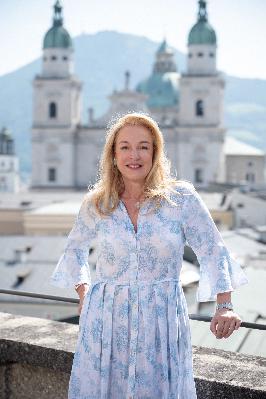
Kristina Hammer is the president of the Salzburg Festival—which in Salzburg, and Austria, and Europe, and the music world, is a very big deal. She grew up in Germany—the Black Forest—and studied in Mainz and Vienna. As a business executive, she worked in the department-store field for a while. And in cars: Aston Martins, Jaguars, Mercedes-Benzes, and other fine autos.Get this: She had a role in bringing the Aston Martin back into the Bond movies. (I think that 007 had been driving a BMW for a bit.)Kristina Hammer has led a busy and multifaceted life, and she has interesting things to say about a range of subjects.Her life has always been filled with music. She first visited Salzburg when she was five or six. Her grandmother had taken her. Kristina went to the Marionette Theater to see The Magic Flute. She soon “graduated” to other performances.In the course of our conversation, I bring up the subject of fundraising—fundraising and sponsorship. I recount a conversation I had with Beverly Sills, years ago. (Sills, to remind you, was a soprano, and one of the most famous opera singers in the world. In fact, she was a celebrity, certainly in America. After her retirement from singing, she served as an arts administrator.)“I raised $100 million for the March of Dimes,” she told me. (I might mention that both of Sills’s children were severely handicapped.) Back then, a hundred mil meant something, trust me. “Medical causes do better than music,” she continued. “If you have some disease to cure, you’re not going to want to fork over millions for another production of La bohème.”But! “But I say in all my speeches, ‘Art is the signature of civilization.’” And Sills was successful in raising money for the arts, as she was in her sundry other endeavors.I have typed enough. You will want to hear Kristina Hammer. Unfortunately, my technology was imperfect. She is softer in volume than I would like. (I am loud as ever, I’m sorry to say. Booming.) But she is plenty audible and well worth it.This episode concludes my series from the Salzburg Festival. Q&A will resume with other guests, in other sectors, shortly.Q&A is the podcast of this site, Onward and Upward. The site is supported by readers and listeners. To receive new articles and episodes—and to support the work of the writer and podcaster—become a free or paid subscriber. Great thanks. Get full access to Onward and Upward at www.jaynordlinger.com/subscribe
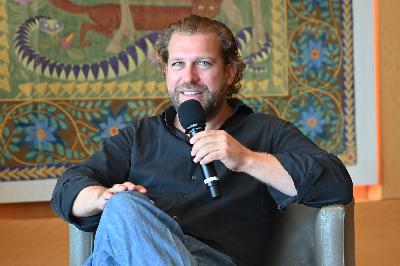
Julian Prégardien is a tenor from Germany—despite his French-looking name. On his father’s side, he is Belgian, Italian, and Dutch. “A true European,” he says, a real mixture. One of his ancestors is Sweelinck, an important composer in pre-Bach days.I talked with Prégardien at the Salzburg Festival, while conducting interviews for the Salzburg Festival Society. He was singing Mozart at the festival. And in this sit-down, I open with a question about Mozart.Prégardien is fascinating on this composer, as on several others. I will paraphrase:I think the challenge that comes with singing Mozart is that you better follow his idea and not exaggerate your own idea about what is in the music. Mozart is something that lies perfectly between subjectivity and objectivity of expression. To serve Mozart is quite a challenge: vocally, mentally, artistically, and as a human being.Mozart can never be about you. It has to be about the composer and his ideas.Prégardien is a leading Don Ottavio, a character in Mozart’s opera Don Giovanni, and many people think that Ottavio is a thankless part (despite two great arias). Ottavio is thought of as weak and bland.Comments Julian Prégardien:I would say the image of Don Ottavio reveals a problem of our modern society, because to say that a supportive man is weak is something we should have overcome in the 21st century.Don Giovanni should not be adored, because he’s the bad guy. Don Ottavio’s the good guy. He is husband material.Mozart and Da Ponte [his librettist] are holding up a mirror to society. They are saying, “I bet you like Don Giovanni more than you do Don Ottavio. You better think about that.”Prégardien grew up in Limburg, a medieval town in Hesse. Limburg was spared bombing in World War II. Prégardien owns an apartment in a house built in the 15th century.He was part of the boys’ choir in town, a choir co-founded by his grandfather. Interesting man, his grandfather. Owing to an accident, he had a wooden leg. He sold walking sticks. He met a woman who sold umbrellas and walking sticks, and she became his wife, Julian’s grandmother.They had a son Christoph, Julian’s father—one of the greatest lyric tenors of our time.Did Christoph teach Julian? He had the good sense to let the boy go his own way. Naturally, Christoph was an influence on Julian. He “idolized” his father, he tells us, and still does. But Julian is not a carbon copy. Each singer is his own man.By the way, father and son don’t argue about who has the more beautiful voice. They agree: Christoph’s father, and Julian’s grandfather, had the most beautiful tenor voice of them all.I ask Julian, “Did you listen to any pop singers growing up?” Oh, yes, many. He names some German singers, including Herbert Grönemeyer. There was also the Kelly Family. And boy bands, including NSYNC, Caught in the Act, and the Backstreet Boys. Prégardien also mentions Nirvana and Kurt Cobain.A special treat is that the tenor sings a line or two of a few songs. Pop singers are lucky that Prégardien doesn’t encroach on their territory, professionally.As he is moving on the subject of Mozart, he is moving—very moving—on the subject of Bach. He has sung Bach his entire life. He and Bach have been constant companions.Prégardien says,He is a miracle. He was a giver all of his life. It was never about him. He signed most of his music “Soli Deo gloria” [Glory to God alone]. The buildings that he can construct with his music are both human and divine.We also talk about Schubert. And the fortunes and fashions of the music industry. At the end, I ask him to give me some of his favorite singers. He names quite an assortment.Andreas Scholl, the countertenor. Thomas Hampson, the baritone. Bryn Terfel, the bass-baritone. (His Rodgers & Hammerstein album!) The sopranos Pia Davila, Sabine Devieilhe, Dorothee Mields, and Jeanine De Bique. And Frank Sinatra and Amy Winehouse.And his father, Christoph.On all of these people, and on our various subjects, Julian Prégardien is thoughtful and interesting. One can learn a lot from him. And simply enjoy him. I’ll stop typing now and let you listen.Q&A is the podcast of this site, Onward and Upward. The site is supported by readers and listeners. To receive new articles and episodes—and to support the work of the writer and podcaster—become a free or paid subscriber. Great thanks. Get full access to Onward and Upward at www.jaynordlinger.com/subscribe
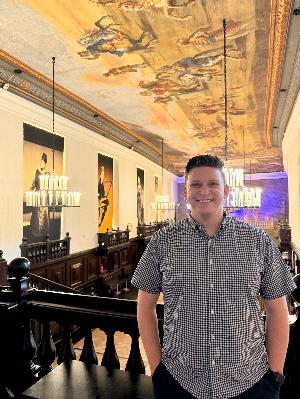
Aryeh Nussbaum Cohen is an American countertenor—a singer from Brooklyn, N.Y. How do you pronounce that first name? As he explained to me, think of three letters: R-E-A. “Ar-ee-é” (with the stress on the first syllable.) And his last name is not “Cohen” but “Nussbaum Cohen.” Delightful guy. Excellent conversationalist. I have sat down with him at the Salzburg Festival.I begin by asking—for all our sakes—“What’s a countertenor?” I will give his answer in slight paraphrase:In classical music, a countertenor is still a bit of a rarity, but in pop music, it’s something we’re completely used to. It’s just a man singing in a range we traditionally associate with a woman. A range that is sometimes called “falsetto.” In pop music, you’re used to hearing the Bee Gees or Michael Jackson. Lots of male pop stars sing high like that.How did Aryeh get launched, so to speak? If I have understood correctly, he was ten, and he attended the birthday party of a fellow ten-year-old—Elias. The party was American Idol-themed. There was a karaoke machine. And Aryeh’s number was “Respect,” the Aretha Franklin hit. He really let ’er rip.And Elias’s mother, Frances, was amazed. “That’s a voice,” she said. She urged Aryeh’s parents to do something about it. She badgered them at school pickups and synagogue. Finally, they said, “Okay, okay,” and put him in a children’s choir.That choir was not run-of-the-mill. They sang backup for—get this—Billy Joel, James Taylor, Sting, and Elton John. “I joke that I peaked at 13,” says Aryeh.He also sang as a cantor. So did Richard Tucker and Jan Peerce (Rubin Ticker and Jacob Pincus Perelmuth), who became world-famous tenors.Aryeh went to LaGuardia High School, a.k.a. the Fame school. Fellow students at the time included Ansel Elgort and Timothée Chalamet. He then went to Princeton, planning to go into law and politics. But something happened: he saw an opera (La bohème at the Met, in the Zeffirelli production). He thought, I want that.He got it (though maybe not La bohème, which is not countertenor-friendly).Near the end of our conversation, I ask him about his favorite singers. He names Lorraine Hunt Lieberson, the late mezzo-soprano. So did Fleur Barron, on an earlier Q&A. Aryeh Nussbaum Cohen goes on to name some rockers, pop artists, et al.Crosby, Stills & Nash. Dylan. The Punch Brothers, with Chris Thile. Andrew Bird. Lake Street Dive. Brandi Carlile.Aryeh and his wife have a four-month-old, Eli, who’s already bouncing around to Beyoncé.I greatly enjoyed talking with ANC—not “African National Congress” but “Aryeh Nussbaum Cohen”—and I believe you will enjoy him too.Q&A is the podcast of this site, Onward and Upward. The site is supported by readers and listeners. To receive new articles and episodes, become a free or paid subscriber. Great thanks to all.. Get full access to Onward and Upward at www.jaynordlinger.com/subscribe
Rainer Honeck occupies an interesting, and important, perch: he is a concertmaster of the Vienna Philharmonic. I have sat down with him at the Salzburg Festival, in a series of conversations hosted by the Salzburg Festival Society. It was a privilege to talk with Mr. Honeck. He rarely gives interviews. He lets his violin do the talking. He also claims he is not very good in English—but he can certainly express himself, as you will hear.Mr. Honeck is a native Austrian, a member of a distinguished musical family. (His brother Manfred is the conductor of the Pittsburgh Symphony Orchestra.) The Honecks are distinguished, yes, but they were not born with silver spoons in their mouths. Far from it. They are musical “Horatio Algers,” I would say. They were privileged in the following respect: their father loved music, and immersed his children in it. (The Honecks’ mother died early on.)The first question I ask Rainer Honeck is a basic one: What does a concertmaster do? The first thing he says is: Well, you have to be a good player. At least as good as the ones sitting behind you. Otherwise, you have problems.I would think.Over the years, I have talked with many violinists, and I usually ask, “Did you have models growing up? Violinists you especially admired and prized?” Often, they name Oistrakh or Heifetz (or both). (Younger ones tend to name Anne-Sophie Mutter.) Honeck says “Arthur Grumiaux,” the Belgian. Grumiaux was from a working-class family, but he was an aristocrat of the violin, an exemplar of taste.I might note here that Rainer Honeck is a soloist and a chamber-music player, in addition to a concertmaster. He is a conductor, to boot.What other questions? Well, Honeck plays a Stradivarius—does the quality of an instrument matter? Yes, all other things being equal. But the quality of the player is what really counts.The Vienna Philharmonic is one mighty orchestra in the German-speaking world—and the world at large—and the Berlin Philharmonic is another. They are the big kahunas, you could say. What is the difference between their sounds?Honeck says that the Vienna Phil is a “team-player orchestra.” They listen closely to one another, achieving unity. This comes, in part, from playing in the opera. (The Vienna Phil is the “pit band” for the Vienna State Opera, as well as a concert orchestra.) The Berlin Phil? They strive for unity too, of course—but they are also an orchestra of brilliant soloists.Naturally, I ask Mr. Honeck about conductors he has worked under. He has very interesting things to say about Carlos Kleiber, Herbert von Karajan, and Leonard Bernstein, among others.He has a lot to impart, and now I should stop typing and let you listen to Honeck himself. A rich musical resource.Q&A is the podcast of this site, Onward and Upward. The site is supported by readers and listeners. To receive new articles and episodes, become a free or paid subscriber. Great thanks to all. Get full access to Onward and Upward at www.jaynordlinger.com/subscribe

Comments

Download from Google Play

Download from App Store
 United States