


 Claim Ownership
Misgav Mideast Horizons Podcast
Subscribed: 6Played: 69
Subscribe

© 2025 Misgav Institute for National Security
Description
“Misgav Mideast Horzions”, a podcast by the Misgav Institute for National Security, is designed for anyone who wants to understand the quickly-changing realities of the Middle East, beyond the headlines, slogans and noise. Hosts Lahav Harkov and Asher Fredman speak with newsmakers, agenda-setters and top experts to not only explain the burning issues and critical developments in the region, but to highlight future opportunities and trends. The Misgav Institute is Israel’s leading national security policy center, dedicated to shaping a Middle East future of security, stability, prosperity and peace.
32 Episodes
Reverse
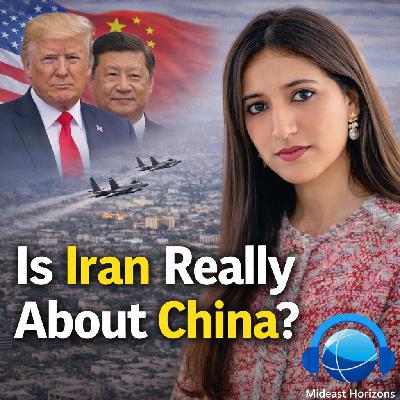
Is Operation Epic Fury a regional conflict, or a testing ground for a new global order?
In this episode of Mideast Horizons, hosts Asher Fredman and Lahav Harkov are joined by Zineb Riboua to discuss the hidden layers of Operation Epic Fury and its role in U.S.-China global competition.
Zineb, a Research Fellow at the Hudson Institute, reveals how Beijing has helped build Iran’s missile arsenal and mass surveillance systems, and used the Islamic Republic as a "laboratory" to test financial channels designed to bypass Western sanctions. She also discusses how the Iran war can help shape an Abraham Accords 2.0, and the unique role that Morocco can play.
In the first segment, Asher and Lahav break down the strategic significance of the strike on Ali Larijani, who served as a crucial bridge between Iran’s military and political leadership, discuss a potential ground operation in Lebanon, and address the bizarre wave of online conspiracy theories, including claims that Prime Minister Netanyahu has been replaced by AI.
Key Topics Discussed:
• The China Connection: Why China views Iran as a strategic partner and shield.
• The Indo-Pacific Pivot: How a successful operation against Iran could finally allow the U.S. to focus its resources on Beijing.
• "Third-Worldism" & Propaganda: Why anti-Western ideologies are becoming more attractive in the West than in the Middle East.
• Abraham Accords 2.0: Deepening coordination between Israel and Arab states.
• Regional Deradicalization: Utilizing the Moroccan model of deradicalization to reshape the future of Gaza.
• Lebanon on the Brink: The potential for a broader ground invasion against Hezbollah.
• The Sahel "Black Swan": The overlooked threat of Al-Qaeda’s expansion in West Africa and its implications for the West.
For critical insights on Iran, follow the Misgav Institute on X: @MisgavINSen.
Please like and share this episode! Send your questions and comments to MideastHorizonsPodcast@gmail.com.
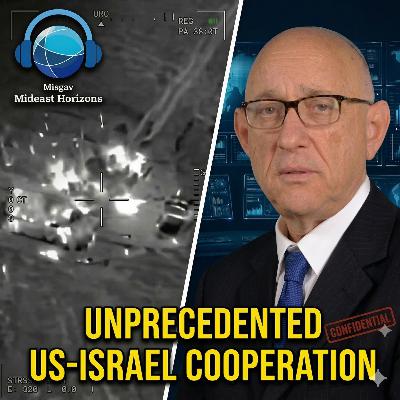
Former Israeli National Security Adviser and Senior Fellow at the Foundation for Defense of Democracies, Prof. Jacob Nagel, joins Mideast Horizons for a wide-ranging conversation on the war with Iran, unprecedented US-Israel cooperation, and the future of the Middle East. With Asher Fredman and Lahav Harkov, he discusses how Israel and the United States are coordinating across intelligence, air power, logistics, and “science-fiction” technologies - and shares what victory against Iran could look like.
In the first segment of this episode, Lahav and Asher share insights on the potential timeline of the Iran war, the ayatollah regime’s survival strategy, Israel’s resilience, and why serious people should not go on Piers Morgan’s show.
Prof. Jacob Nagel is Israel’s former National Security Advisor and head of the National Security Council. He currently heads the Technion – Israel Institute of Technology’s Center for Security Science and Technology. He is also a Senior Fellow at the Foundation for Defense of Democracies. Following a more than 40-year career in the IDF, Defense Ministry, and Prime Minister’s Office, Prof. Nagel was selected to chair Israel’s national commissions on the security budget and IDF force build-up, and on artificial intelligence.
For critical insights on Iran and the changing Middle East, follow the Misgav Institute on X: @MisgavINSen.
Please like and share this episode! Send your questions, comments, and suggestions for future podcast topics and guests to MideastHorizonsPodcast@gmail.com.
Can the UN be repaired - or should it be defunded and replaced?
In this episode of Mideast Horizons, former Israeli Minister and Ambassador to the UN Gilad Erdan joins Asher Fredman for a candid, no-holds-barred conversation about the failure of the UN system, the future of Gaza, and the historic opportunity now facing the U.S. and Israel in Iran.
Ambassador Erdan pulls back the curtain on his four years at the UN, describing an organization that is “broken and corrupt” and dominated by non-democratic regimes. As PM Netanyahu meets with President Trump, Erdan argues that we are facing a "watershed moment” in which the U.S. and Israel must focus on one goal: regime change in Tehran.
Topics covered:
The UN Exposed: Why the UN is beyond repair and why the U.S. should defund it.
The Trump Opportunity: Why a new Iran “deal” isn’t enough - and why the West must support the Iranian people in their efforts to topple the ayatollahs.
Gaza’s Future: Erdan explains why the PA must have no role in Gaza, and why international forces cannot be relied upon to oversee Hamas’s demilitarization.
The Communications War: A candid look at Israel’s failure to prioritize public diplomacy and the urgent steps needed to strengthen Israel’s international standing.
Resilience Under Fire: Erdan’s new mission as Global President of Magen David Adom and how his ambulance teams prepare for incoming Iranian missiles.
What’s Next? Erdan discusses his plans for the future, including his intention to return to politics.
Don’t miss this insider’s look at the global diplomatic battlefield! Watch, share, and subscribe to Mideast Horizons for more in-depth conversations with leading policymakers and strategic thinkers. You can send comments or suggestions to mideasthorizonspodcast@gmail.com.
In this episode of Misgav Mideast Horizons, hosts Asher Fredman and Lahav Harkov sit down with Dr. Ariel Admoni - one of Israel’s leading experts on Qatar - for a deep dive into the most controversial actor in the Middle East today.
Is Qatar merely a mediator between warring sides - or something far more strategic and dangerous?
Dr. Admoni, a Senior Fellow at the Jerusalem Institute for Strategy and Security, explains Qatar’s decades-long relationship with the Muslim Brotherhood, its hosting and financing of Hamas leadership, and how Doha has positioned itself as the “default” intermediary for the United States - from Gaza to the Taliban to the Houthis. We examine whether Qatar’s role reflects good-faith mediation or a sophisticated strategy to legitimize terror actors while expanding its global influence.
The conversation explores:
Qatar’s ideological and financial ties to the Muslim Brotherhood
Whether Al Jazeera functions as an independent media outlet or a Qatari state instrument
How Qatar leverages education, universities, aid, and media to shape Western discourse
Qatar’s influence operations in Washington and Europe
The controversy surrounding “Qatargate” in Israel
Whether Qatar could ever join the Abraham Accords
The strategic risks of Qatari involvement in post-war Gaza
Dr. Admoni argues that Qatar’s power lies not in overt confrontation, but in subtle, long-term influence - shaping academic narratives, political incentives, and media ecosystems across the West.
In the opening segment, Asher and Lahav analyze the latest developments regarding Iran and the possibility of renewed U.S.–Iran negotiations, Israel’s strategic timeline vis-à-vis Iranian missile and air defense rebuilding, Israel’s surprising economic resilience in 2025, and the debate over how democracies should combat rising antisemitism.
Subscribe and follow Misgav Mideast Horizons for fresh insights into the most critical security and diplomatic issues facing Israel and the Middle East! You can send comments or suggestions to mideasthorizonspodcast@gmail.com.
In this powerful episode of Mideast Horizons, recorded on the eve of International Holocaust Remembrance Day, hosts Asher Fredman and Lahav Harkov sit down with Arsen Ostrovsky, Misgav Institute Senior Fellow and Head of the Sydney Office of the Australia/Israel & Jewish Affairs Council (AIJAC).
Arsen shares his harrowing firsthand account of surviving the Bondi Beach terror attack, which claimed the lives of fifteen innocent people gathered for a Chanukah celebration. As gunfire rang out and victims lay wounded around him, Arsen was shot in the head and believed he might never see his wife and daughters again. His survival, which doctors later described as a miracle, has reshaped his personal mission and intensified his resolve to combat antisemitism worldwide.
The conversation explores the explosion of antisemitism since October 7, how anti-Zionism increasingly serves as a mask for anti-Jewish hate, and how unchecked incitement led to Islamist violence. Arsen discusses the lessons that the global Jewish community, Australia, and all democracies must learn from the deadly attack.
The episode also delves into the rise of AI-generated disinformation, the role of social media companies and governments in confronting online hate, the rise of Holocaust distortion, and strategies for defending Israel in the international legal and diplomatic arenas.
In the first part of this episode, Lahav and Asher discuss the challenges and opportunities presented by President Trump’s Board of Peace, the danger of Israeli concessions in Syria, developments in Iran, and the deeper trends driving Saudi Arabia’s increasingly hostile stance towards Israel and the UAE.
This is a sobering, courageous, and ultimately hopeful conversation about resilience, responsibility, and the urgent need for moral clarity and bold action in the fight against antisemitic hate.
Please subscribe and share the Misgav Mideast Horizons podcast! You can send comments or suggestions to mideasthorizonspodcast@gmail.com.
In this episode of Misgav Mideast Horizons, we sit down with Isaac “Yitz” Applbaum - one of the most experienced investors in Israeli technology and a key figure at the intersection of Israeli, American, Saudi, and Emirati innovation - for a wide-ranging conversation on the future of defense tech, regional cooperation, and the U.S.–Israel relationship.
Yitz, Chair of Kinetica Partners and Senior Advisor to the Saudi Minister of Communications, IT, and Space, shares his remarkable personal journey from Brooklyn to Israel to the GCC, and explains why he believes Israel–Saudi normalization is coming sooner than most people think. Drawing on years of firsthand experience in the Gulf, he outlines where cooperation between Israel and Saudi Arabia could be transformational - particularly in defense, healthcare, AI, agtech, and water - and why the combination of Israeli innovation and Saudi scale could be a true “100X” moment.
We also dive deep into the global defense tech boom following October 7, and what it means for Israel’s economy, innovation ecosystem, and international standing. Yitz explains why countries like Germany, Japan, and the United States are increasingly looking to Israel not just to buy systems, but to co-develop and co-invest in next-generation defense technologies. He discusses the rise of early-stage defense startups, the role of elite IDF talent, and what Israel’s government can do to better support this rapidly growing sector.
In the latter part of the conversation, we explore how U.S.–Israel defense cooperation could evolve beyond traditional military aid toward deeper partnerships, joint projects, and large-scale initiatives. Yitz also reflects personally on October 7, the surge in antisemitism on both the Left and the Right, and how it has changed the way he engages with the world.
In the first part of the episode, we go beyond the headlines to discuss the latest developments related to President Trump’s Board of Peace, Gaza, the Iran protests, Josh Shapiro and the Harris campaign, and deepening UAE–India ties.
This is a candid, insider discussion on technology, alliances, and the future of the Middle East—with someone who is helping shape all three.
Listen now, share the episode, and rate it 5 stars wherever you get your podcasts! You can send comments or suggestions to mideasthorizonspodcast@gmail.com.
Is it time for Israel to wean itself off of American military aid? According to former Israeli Ambassador to the U.S. Michael Oren, the answer is a resounding yes.
In this episode of Misgav Mideast Horizons, hosts Lahav Harkov and Asher Fredman are joined by Dr. Michael Oren—historian, diplomat, and former deputy minister—for a provocative conversation on the future of the U.S.-Israel alliance, Iran, and potential flashpoints between Trump and Netanyahu. Oren argues that U.S. aid has rendered Israel "less than sovereign" and exposed the Jewish state to dangerous pressure during wartime.
Oren also provides a historian’s perspective on the collapse of the Iranian regime and Israel’s current geopolitical strength, and sets the record straight on one of the most controversial conspiracy theories in U.S.-Israel history: the USS Liberty incident.
In this episode, Michael Oren discusses:
The Case for Independence: Why U.S. aid is actually a subsidy for American arms manufacturers—and why weaning Israel off it is essential for national survival.
The Iranian End-Game: Why the regime is a "shell of what it was," and the possibility of a deal where regime elements turn on the Ayatollahs to survive.
The USS Liberty: A definitive, historical debunking of the conspiracy theories surrounding the 1967 friendly-fire tragedy.
Campus Antisemitism: Why the "old methods" of fighting Jew-hatred in academia—shaming and educating—no longer work.
The "Day After" in Gaza: The strategy Israel should adopt with regards to the International Stabilization Force.
In the opening segment: Lahav and Asher analyze the latest psychological warfare coming out of Tehran, including "poetic" threatening text messages sent to Israelis. They also discuss the chaotic succession battle looming in the Palestinian Authority, what the latest developments teach us about Trump’s national security doctrine, and the life and legacy of late archaeologist Gabriel Barkay.
Listen now, share the episode, and rate it 5 stars wherever you get your podcasts! You can send comments or suggestions to mideasthorizonspodcast@gmail.com.
As we kick off 2026, the Iranian regime finds itself at its most vulnerable point in 47 years. Following the devastating "12-Day War" that exposed the regime's military weakness, and amidst a crushing economic collapse, the Iranian people are rising up with renewed courage.
In this episode of Misgav Mideast Horizons, hosts Lahav Harkov and Asher Fredman are joined by Mehrdad Marty Yousefiani, an Iranian-American strategic communications expert and former chief strategic counselor to Crown Prince Reza Pahlavi. Drawing on his deep ties to actors on the ground and in the Iranian diaspora, Marty takes us inside the current protests, explaining why this wave is fundamentally different from the past – and what the Day After could look like.
In the opening segment, Lahav and Asher take stock of the start of 2026—looking at Israel’s surprising economic and societal resilience, the political and demographic debates shaping the year ahead, and the fast-moving regional dynamics that are putting Tehran under unprecedented pressure.
Topics Discussed:
The "Emperor Has No Clothes": How Israel’s air superiority during the "12-Day War" shattered the regime's image of power.
It’s the Economy: Why the collapse of the rial and the "Bazaar strikes" are posing an existential threat to the Ayatollahs.
The "Do No Harm" Doctrine: Marty’s critical advice for President Trump and Prime Minister Netanyahu on how to support the Iranian people without tainting their movement.
The Day After: Visions of a pluralistic, democratic Iran and the restoration of "fraternal relations" with Israel.
Israel at 2026: Lahav and Asher analyze Israel's economic success—boasting a $64k GDP per capita—and the internal political shifts as the country moves past the war.
Don't miss this insider’s look at the crumbling of the Iranian regime and what a free Iran could mean for the entire Middle East.
Chapters
00:00 - Opening: The End of the Iranian Regime?
01:06 - Welcome to Misgav Mideast Horizons
02:30 - Israel 2026: The Economic Miracle ($64k GDP) vs. Social Challenges
10:41 - The "Maduro Effect": Does Venezuela’s Fall Signal the End for Iran?
13:50 - Guest Intro: Who is Marty Yousefiani?
14:14 - Inside the New Iranian Revolution
18:15 - Why This Time is Different: The "Bazaar Strikes" & Economic Collapse
23:00 - Is the Regime Cracking? Signs of Instability in the IRGC
27:35 - After the "12-Day War": How Israel’s Air Superiority Exposed the Regime
32:30 - Trump’s Warning: How the Capture of Maduro Shook the Ayatollahs
35:55 - "Do No Harm": Critical Advice for Netanyahu & Trump on Supporting Iran
39:25 - Who Replaces the Mullahs? Pahlavi, Republicans & The Opposition Coalition
43:10 - The Day After: A Vision for Peace & Trade Between Israel and a Free Iran
Listen now, share the episode, and rate it 5 stars wherever you get your podcasts! You can send comments or suggestions to mideasthorizonspodcast@gmail.com.
 1
1Following Israeli Prime Minister Netanyahu’s high-stakes meeting with U.S. President Donald Trump, the world is asking: What really happens when the cameras turn off and the doors close?
In this episode of Misgav Mideast Horizons, hosts Lahav Harkov and Asher Fredman are joined by Ari Harow, former Chief of Staff and diplomatic advisor to Prime Minister Netanyahu. Drawing on his years of experience in the room where it happens, Harow takes us inside the dynamics of the Trump–Netanyahu relationship and explains how their ties and interests will shape what comes next in Gaza, Iran, and beyond.
In the first part of the episode, Lahav and Asher discuss the strategic implications of the ongoing anti-regime protests in Iran, the growing tensions between Israel and Turkey, and Israel’s bold diplomatic recognition of Somaliland.
Topics Discussed:
• The “Three Ps”: Harow reveals the formula that defines foreign policy success—policy, politics, and personal—and how Trump and Netanyahu are currently aligned on all three.
• What Comes Next: The American and Israeli positions on the “day after” in Gaza, the realities of disarmament, and the threats from Iran.
• The Florida Strategy: Why Netanyahu’s extended stay in Palm Beach is about more than just winter weather—it’s a strategic move to solidify ties with evangelicals and the Jewish community.
• The Public Diplomacy Crisis: Harow offers a candid critique of Israel’s public diplomacy, arguing for a total overhaul of how the Jewish state communicates with the American public.
• Politics vs. Security: A look at the accusation that Netanyahu’s war decisions are politically motivated—and the complex reality of governing during an existential conflict.
Don’t miss this insider’s guide to Israeli decision-making and the future of U.S.–Israel relations.
Listen now, share the episode, and rate it 5 stars wherever you get your podcasts! You can send comments or suggestions to mideasthorizonspodcast@gmail.com.
Is a new war between Israel and Iran approaching—and what could trigger it?
In this episode of Misgav Mideast Horizons, Asher Fredman speaks with Dr. Yossi Mansharof, one of Israel’s leading experts on Iran, about the growing risk of an Iran–Israel war and the possibility of wider regional conflict.
As Israeli Prime Minister Benjamin Netanyahu prepares to meet U.S. President Donald Trump, Dr. Mansharof argues that the key question is no longer if Israel and Iran will clash again - but when. He analyzes Iran’s efforts to rebuild its military capabilities, the regime’s deepening internal crises, and whether regime change in Iran is a realistic strategic objective for Israel and
the United States.
The discussion also explores Iran’s evolving tactics, including cyber operations, recruitment of Israeli citizens, and threats to Israeli and Jewish targets worldwide—along with what Washington and Jerusalem must do now to avoid being strategically surprised.
The conversation then turns to Hezbollah and Lebanon: whether the Lebanese state has the will or capacity to disarm Hezbollah, how Iran is working to rebuild its most important terror proxy, and a strategy for weakening Hezbollah’s grip on Lebanese society.
A clear-eyed and urgent conversation about Iran, Israel, Hezbollah, and the most dangerous security challenges facing the Middle East today.
Listen now, share the episode, and rate it 5 stars wherever you get your podcasts! You can send comments or suggestions to mideasthorizonspodcast@gmail.com.
In the wake of the horrific antisemitic terror attack at Bondi Beach in Sydney—and amid a global surge in anti-Jewish violence— Lahav and Asher speak this week with former Israeli Special Envoy for Combating Antisemitism Michal Cotler-Wunsh about the “eighth front” of the war that Israel and the Jewish People are facing. Cotler-Wunsh—now CEO of the International Legal Forum—delivers a bracing, no-holds-barred assessment of how antisemitism has been normalized, why anti-Zionism is today’s most dangerous strain of this ancient hatred, and how governments, universities, and social media platforms are failing to enforce their own laws and policies.
Cotler-Wunsh lays out the concrete legal, policy, and law-enforcement measures democracies must adopt now—starting with the full implementation of the IHRA definition of antisemitism—and explains how international law has been hijacked and weaponized against Israel and other democracies fighting terror. Cotler-Wunsh also warns about the malign role of state actors such as Qatar and Turkey, whose Islamist propaganda and funding fuel extremism.
In the episode’s opening segment, Lahav and Asher reflect on how the Bondi attack hit close to home, including the injury of Misgav Senior Fellow Arsen Ostrovsky. Asher also shares firsthand insights from recent reserve duty in Gaza, recounting the discovery of Hamas uniforms, training manuals, and stolen pillows from an Israeli hospital inside the home of a Hamas terrorist.
This is a sobering but urgent conversation about courage, effective action, and why antisemitism is not just a Jewish problem—but a warning sign for every democracy.
Listen now, share the episode, and rate it 5 stars wherever you get your podcasts! You can send comments or suggestions to mideasthorizonspodcast@gmail.com.
In this episode of Mideast Horizons, Lahav Harkov and Asher Fredman speak with Dr. Yuval Steinitz, former cabinet minister and now chairman of Rafael Advanced Defense Systems, about how Israeli technology has shaped the multi-front war of the past two years. Steinitz discusses how Iron Dome, developed by Rafael, has prevented mass casualties and national paralysis by maintaining an exceptionally high interception rate. He describes the recent 12-day war with Iran as “the most technological conflict ever in human history,” highlighting Israel’s surprise strikes and rapid achievement of air superiority over Tehran.
Steinitz presents Rafael’s next breakthrough: the Iron Beam, the first system capable of downing rockets, missiles, mortars and drones with lasers. He outlines how the technology will push interception rates toward 100 percent while reducing the cost of each shot to only a few dollars. He also discusses deepening U.S.-Israel defense cooperation.
In the opening segment, Lahav and Asher examine instability along both the Gaza and Lebanon borders. They describe the realities on both sides of the “yellow line” inside Gaza, note Hezbollah’s increased activity a year after the Lebanon ceasefire, and address Iran’s economic and water crises. Domestically, they analyze Prime Minister Netanyahu’s unprecedented request for a presidential pardon and the political questions surrounding upcoming elections.
Listen now, share the episode, and rate it 5 stars wherever you get your podcasts! You can send comments or suggestions to mideasthorizonspodcast@gmail.com.
In this episode of Mideast Horizons, Lahav Harkov speaks with Haras Rafiq, Vice President of the Institute for the Study of Global Antisemitism and Policy, about ISGAP’s new report on the Muslim Brotherhood’s strategic expansion into the West. Rafiq traces the Brotherhood’s evolution from Hassan al-Banna to Yusuf al-Qaradawi and outlines Tamkeen, its long-term doctrine for gaining institutional influence in liberal democracies. He explains how the movement pursues political entry, narrative control, and the reshaping of Muslim communities, and further discusses how groups such as CAIR emerged from this ecosystem. He warns that antisemitism framed as anti-Zionism has become a key recruitment tool and that Islamist ideas have spread in part because Western societies hesitate to confront them.
Rafiq highlights Qatar’s central role as the Brotherhood’s remaining state patron, from Al Jazeera’s dual-track messaging to extensive funding of U.S. universities and describes how ISGAP investigations have begun exposing these soft-power networks. He addresses President Trump's directive to explore designating Brotherhood chapters as foreign terrorist organizations and discusses methods for effectively pushing back against Islamist influence.
In the introductory segment, Lahav maps the history of the Muslim Brotherhood in Israel, tracing its early influence under the Grand Mufti, the emergence of Hamas from its Gaza branch, and the later split between the Northern Branch and the Southern Branch (Ra’am) inside Israel. She explains how the Southern Branch positioned itself as a pragmatic political actor while the Northern Branch was banned for its ties to Hamas and discusses the recent uproar over Islamic Movement charities accused of funneling funds to Hamas-linked entities.
Listen now, share the episode, and rate it 5 stars wherever you get your podcasts! You can send comments or suggestions to mideasthorizonspodcast@gmail.com.
Former Israeli Chief of Staff, Defense Minister and Alternate Prime Minister Benny Gantz joins Mideast Horizons for one of his most candid and comprehensive interviews since October 7.
In this wide-ranging conversation with Asher Fredman, Gantz lays out his new security doctrine, insists that Hamas will be disarmed, and discusses Israel’s evolving strategy toward Iran, the Palestinian Authority, and the Abraham Accords.
Gantz breaks down:
Why Israel cannot return to the pre–October 7 security paradigm.
Whether an international force can really demilitarize Gaza.
What happens if Hamas refuses to disarm.
The day after Mahmoud Abbas and the looming crisis in the West Bank.
How Israel should prepare for a regional defense alliance with Saudi Arabia and its Abraham Accords partners.
The strategic lessons from past Gaza wars — and why Israel must adopt a new “strategic initiative” pillar.
The future of U.S.–Israel military cooperation and debates over American aid.
Israeli politics and the need for a State Commission of Inquiry into the events that led to October 7.
Direct, thoughtful, and at times blunt, Gantz offers a rare inside look into his thinking about the next five years, the risks ahead, and what it will take to secure Israel’s future.
Listen now, share the episode, and rate it 5 stars wherever you get your podcasts! You can send comments or suggestions to mideasthorizonspodcast@gmail.com.
In this episode of Mideast Horizons, Lahav Harkov speaks with Dr. David Wurmser, who served as senior advisor to U.S. Vice President Dick Cheney and special assistant to Under Secretary of State John Bolton. Wurmser offers a rare, behind-the-scenes portrait of Cheney during the Iraq War, recalling his frustration with policymakers who distanced themselves from the conflict when it became politically difficult, and his enduring sense of duty toward the soldiers serving there.
Wurmser reflects on divisions within the Bush administration that shaped the Iraq War strategy. The conflict between advocates of overwhelming force and those favoring a lighter footprint, which relied on supporting a local or exile Iraqi army to take the lead, left the United States caught between conflicting approaches, ultimately harming the war effort. He critiques the broader American impulse to pursue rapid social transformation in the Middle East, arguing that genuine reform must be gradual and organic. Addressing claims that Israel encouraged the invasion, he stresses that Israeli officials “vehemently opposed” it and repeatedly warned Washington that Iran, not Iraq, was the true danger.
Exploring the intellectual roots of neoconservatism, Wurmser traces its evolution from the moral clarity of the Reagan era to its post–Cold War misapplication, suggesting that one of the Iraq War’s central flaws was “overconfidence in the Iraqi people.” Finally, he revisits the much-debated “Clean Break” paper he co-authored for Benjamin Netanyahu in 1996, clarifying that it did not advocate an American war but called for Israel to assume greater strategic self-reliance and act as a confident, integrated Western ally. “It was the inversion of what people say it was,” he concludes, arguing that Israel had matured from a state in need of protection to a strategic pillar of the West.
Listen now, share the episode, and rate it 5 stars wherever you get your podcasts! You can send comments or suggestions to mideasthorizonspodcast@gmail.com.
In this episode of Mideast Horizons, Lahav Harkov speaks with Jonathan Greenblatt, CEO of the Anti-Defamation League about the rise of antisemitism and political extremism in the U.S. following Zohran Mamdani’s election as mayor of New York. Greenblatt calls Mamdani’s victory historic but troubling, highlighting his record as an anti-Zionist activist who has celebrated convicted terrorists and promoted boycotts of Israel.
Greenblatt details the ADL’s response: a public tip line for antisemitic incidents, expanded research tracking hate in New York, and a “Mamdani Monitor” to follow municipal policies and appointments affecting Jewish residents. He warns that antisemitic incidents are at record highs, and that Jewish and Israeli New Yorkers increasingly fear expressing their identity in public.
He stresses the ADL’s nonpartisan mission, noting its work with and criticism of both Republican and Democratic administrations, and highlights the challenges of combating online hate amplified by social media algorithms.
In the first segment, Lahav recounts the saga of Israel’s Military Advocate General, who is accused of ordering the leak of a video showing alleged abuse of a Palestinian detainee at Sde Teiman detention camp. The 2024 release sparked global outrage and debate over Hamas prisoners. Lahav explains how police found she had orchestrated the leak, leading to her suspension, disappearance, and arrest, and how the scandal has shaken confidence in Israel’s legal system.
Listen now, share the episode, and rate it 5 stars wherever you get your podcasts! You can send comments or suggestions to mideasthorizonspodcast@gmail.com.
In this powerful episode of Mideast Horizons, Lahav Harkov and Asher Fredman speak with Josh Hammer, senior editor-at-large at Newsweek, syndicated columnist, and author of Israel and Civilization: The Fate of the Jewish Nation and the Destiny of the West. Hammer dissects the growing ideological rift inside the MAGA movement—between conservatives who see America and Israel as joint pillars of Judeo-Christian civilization, and a “woke Right” drifting toward isolationism, conspiracy theories, and even antisemitism.
He discusses how voices such as Tucker Carlson and Candace Owens have turned their platforms into vehicles for anti-Israel narratives, and why their attacks on Christian Zionists reveal a deeper cultural struggle over faith, truth, and the moral foundations of the West. Hammer argues that defending the U.S.–Israel alliance today means defending the very biblical inheritance that underpins Western civilization, and suggests a new path forward for Jewish-Christian solidarity and combatting antisemitism.
In a moving reflection, Hammer speaks about his late friend Charlie Kirk, describing his courage, loyalty, and deep biblical faith, and the importance of carrying forward his legacy of building bridges between Jews and Christians. He also discusses Candace Owens’ libelous claim that he had foreknowledge of Kirk’s assassination.
In the first segment, Lahav and Asher discuss the ceasefire breakdown in Gaza, Jordanian King Abdullah’s remarks about the limits of a proposed Muslim-led stabilization force, and the realities of Hamas’s continuing control over much of the population. They analyze the Qatari regime’s deep ideological support for terrorism as evidenced by the recently surfaced posts of Qatari spokesman Majed al-Ansari, and explore the risks that Gaza could become a new front in a wider Middle East conflict. Finally, they turn to Israeli politics, assessing the Netanyahu government’s fragile coalition, the looming Haredi draft crisis, and the early maneuvering ahead of possible elections.
Listen now, share the episode, and rate it 5 stars wherever you get your podcasts! You can send comments or suggestions to mideasthorizonspodcast@gmail.com.
In this gripping episode of Mideast Horizons, Asher Fredman speaks with Ahmed Fouad Alkhatib, a Gazan analyst and reform advocate now based in Washington, DC, whose family has lived through every stage of Gaza’s tragedy. Ahmed shares his deeply personal story of loss, survival, and determination to speak truth about Hamas’s rule and the grim reality facing ordinary Gazans after the ceasefire.
He describes how Hamas has reasserted its control through brutal retribution and violence, even as Gaza lies in ruins. Al-Khatib offers a sobering assessment of the group’s enduring power and the challenge of bringing about its disarmament, despite growing opposition to its rule. He outlines his plan for an effective international stabilization force — with real authority, extensive capabilities, and broad international backing — as the most realistic path toward restoring order.
Looking ahead, he argues that Gaza’s future depends not on slogans but on a new mindset of radical pragmatism: a turn from resistance to rebuilding, from victimhood to responsibility, and from endless conflict toward a vision of coexistence and renewal.
Listen now, share the episode, and rate it 5 stars wherever you get your podcasts! You can send comments or suggestions to mideasthorizonspodcast@gmail.com.
On this week’s episode of Mideast Horizons, Lahav and Asher speak with Prof. Kobi Michael, one of the world’s top experts on Israeli-Palestinian relations, who served as a founding Commander of the Israeli-Palestinian security cooperation apparatus. Prof. Michael, who today serves as a Senior Fellow at the Misgav Institute for National Security, argues that Hamas’ DNA will not allow it to truly change, and that the terror group has no intention of demilitarizing. He presents a plan for establishing an alternative to Hamas in parts of Gaza, and for working with President Trump to ensure continued close U.S.-Israel cooperation even in the face of renewed terror activity in the Strip.
Prof. Michael also draws on his vast experience to analyze the challenges and threats likely to arise from the Palestinian Authority in Judea and Samaria (West Bank) in the near future. He suggests potential paths forward toward realizing Palestinian national aspirations in a way that does not endanger the security of the State of Israel.
In the first segment, Lahav and Asher discuss overlooked aspects of President Trump’s speech to the Israeli Knesset, and of the “Declaration for Enduring Peace and Prosperity” signed by the U.S., Egypt, Qatar, and Turkey at Sharm el-Sheikh. They analyze the current prospects for expanding the Abraham Accords and regional cooperation, including with Indonesia. They also explore the key issues and complexities that will arise in the upcoming stage of negotiations on Phase 2 of President Trump’s 20-point plan.
Listen now, share the episode, and rate it 5 stars wherever you get your podcasts! You can send comments or suggestions to mideasthorizonspodcast@gmail.com.
In this episode, Lahav and Asher speak with Dr. Victoria Coates, former Deputy National Security Advisor under President Trump and now Vice President at The Heritage Foundation, about the Trump peace plan’s chances for success and its impact on the future of U.S.-Israel relations. Dr. Coates explains why the U.S.-Israel alliance is vital to American national security, how to counter antisemitism on college campuses, and what role Israel should play in America’s strategy vis-à-vis China.
In the first segment, Lahav and Asher delve into Hamas’ response to Trump’s peace plan and its implications for the next stage of negotiations. They also analyze Israel’s successes and failures in handling the PR challenge posed by the latest Gaza flotilla, led by Greta Thunberg, and discuss the potential timeline for upcoming Israeli elections.
Listen now, share the episode, and rate it 5 stars wherever you get your podcasts! You can send comments or suggestions to mideasthorizonspodcast@gmail.com.

Comments

Download from Google Play

Download from App Store
 United States