


The Humanitarian Lens
Subscribed: 8Played: 46
Subscribe

© Doctors Without Borders / MSF USA
Description
The Humanitarian Lens is a podcast produced by Doctors Without Borders/Médecins Sans Frontières (MSF) USA. Each episode explores humanitarian crises through the first-hand experience of our staff caring for people affected by conflict, epidemics, natural and human-made disasters, and other emergencies in more than 70 countries around the world.
6 Episodes
Reverse

After a flood destroyed a newly stocked pharmacy in South Sudan, Urshula Edwards got a call: “Could you get on a plane?” Edwards is a supply chain coordinator who has worked in 19 countries with Doctors Without Borders/ Médecins Sans Frontières (MSF). She talks with host Chigo Ahunanya about how logistics and supply chain are essential to humanitarian response. Whether it’s salvaging medication by canoe from a flooded pharmacy, responding to the needs of 70,000 refugees arriving in Burundi during a fuel crisis, or building an inflatable hospital, teams of logisticians and supply chain humanitarian workers power MSF’s work around the globe. Learn more about our work and about professional opportunities with MSF at doctorswithoutborders.org.

In Haiti’s capital, Port-au-Prince, ongoing clashes between armed groups and police have disrupted daily life for many residents, including their access to health care. Health infrastructure and water and sanitation services have also been affected, with dire consequences for community health. On this episode of The Humanitarian Lens, host Elias Primoff speaks with Tirana Hassan, CEO of Doctors Without Borders/Médecins Sans Frontières (MSF) USA, about her experience during her recent visit to Port-au-Prince. Hassan describes what she saw at an MSF mobile clinic where many patients seek treatment for conditions linked to limited access to clean water, and the key role of Pran Men'm, a clinic for survivors of sexual violence. At Tabarre Hospital — home to Haiti's only burns center — Hassan learned about the experiences of MSF's Haitian staff who live in the same communities where they are working. Content warning: This episode includes discussion of sexual violence. The Humanitarian Lens is a podcast from MSF USA that looks into the world's most urgent humanitarian emergencies through the experiences of MSF aid workers.

Contraception is often framed as a political issue. In humanitarian settings, it is essential health care. In this episode of The Humanitarian Lens, host Chigo Ahunanya speaks with Dr. Julia McDonald, a family medicine physician, about how MSF provides contraception care in contexts facing conflict, displacement, and limited access to health services. Drawing on her work with Doctors Without Borders/ Médecins Sans Frontières (MSF) in Ethiopia, Democratic Republic of Congo, Central African Republic, and Nigeria, Dr. McDonald shares how MSF teams address barriers to care such as distance, misinformation, and stigma. The conversation also explores person‑centered and trauma‑informed care, patient autonomy, and why access to accurate information is critical for reproductive and maternal health.
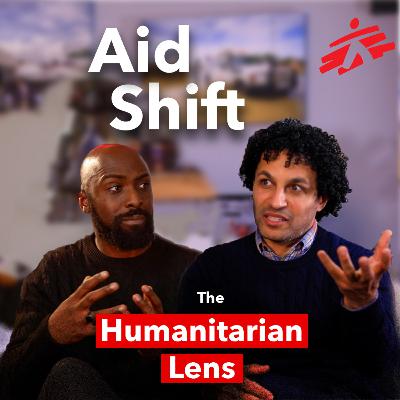
On this episode of the Humanitarian Lens podcast, MSF International President Dr. Javid Abdelmoneim speaks with host Chigo Ahunanya about the impact of US policy changes and funding cuts that upended humanitarian aid and global health programs over the past year. MSF does not accept US government funding, but our teams have witnessed the devastating impacts on the communities we assist: Clinics closed. Medicines sat stranded at ports. Health workers lost their jobs. Dr. Abdelmoneim talks about his experience working with community-based organizations in Sudan a year ago, right after the aid cuts were announced. He also shares insights about how changes to global health and humanitarian aid financing impact our teams, our patients, and communities already suffering from abuse and neglect. The Humanitarian Lens is a podcast produced by Doctors Without Borders/Médecins Sans Frontières USA that looks into the world’s most urgent humanitarian emergencies through the experiences of our aid workers. Note: This episode was recorded on December 15, 2025. 00:00–01:10 — How MSF responds to the changing humanitarian landscape01:10–02:10 — Examining the impact of humanitarian aid funding cuts02:10–08:13 — Javid’s firsthand experience of the cuts in Sudan08:13–12:51 — How funding cuts disrupt health ecosystems where MSF works12:51–15:00 — The changing humanitarian landscape15:00–18:57 — The impact on HIV, tuberculosis, and malaria care18:57–21:55 — How MSF is adapting to these global shifts21:55–23:17 — The impact of rising healthcare costs23:17–24:42 — The communities most affected by funding cuts24:42–30:58 — Javid’s vision for the future of MSF
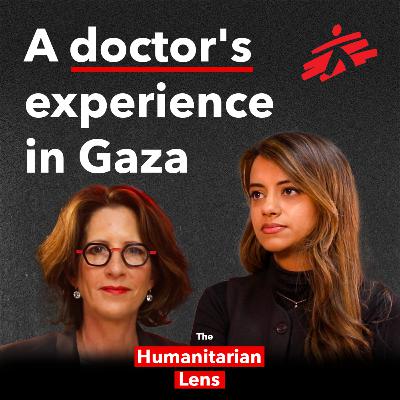
On this episode of the Humanitarian Lens podcast, host Avril Benoît speaks with Dr. Aqsa Durrani, a US-based pediatrician and epidemiologist, whose latest assignment was at an MSF field hospital in Deir al-Balah, in central Gaza. Dr. Durrani describes the immense suffering of civilians across the Gaza Strip after more than a year and a half of an all-out war and a brutal siege. Israeli forces are systematically destroying the conditions necessary for Palestinian life. During her assignment, from February 24 through April 24, 2025, Dr. Durrani and her colleagues treated patients of all ages for injuries from airstrikes, burns, fractures, and gunshot wounds, among others. The vast majority of patients she saw were women and children. Learn more about MSF’s response in Gaza on our website: https://www.doctorswithoutborders.org/latest/our-response-israel-gaza-war The Humanitarian Lens, a new podcast from Doctors Without Borders/ Médecins Sans Frontières (MSF) USA, explores the world’s most urgent humanitarian emergencies through the experiences of MSF aid workers. Follow MSF USA on social media for updates about Gaza and our medical humanitarian work in over 70 countries around the world. Instagram / LinkedIn / BlueSky 00:00-00:28 - The vast majority of patients we were seeing were women and children.00:28-01:04 - Today we're looking at Gaza through a humanitarian lens.01:09-02:31- Why Dr. Aqsa Durrani took the assignment to Gaza.02:31-05:18 - What it was like entering Gaza.05:18-08:50 - Dr. Durrani's role and the kinds of cases she saw.08:50-10:54 - Obstacles to accessing medical care and a story about a particular patient. 11:22-14:44 - The heartache of patients' situations and stories about patients who lost their family members.14:44-18:18 - The lack of food in Gaza.18:18-20:23 - The systematic nature of attacks on health care in Gaza.20:23-22:10 - Coming back to the US after being in Gaza.22:10-23:01 - Dr. Durrani's Palestinian colleagues in Gaza: "If they have hope, who are we not to have hope?"#DoctorsWithoutBorders #HumanitarianLens #Podcast

Comments

Download from Google Play

Download from App Store
 United States