


 Claim Ownership
The LeanScaper Podcast
Subscribed: 10Played: 238
Subscribe

© 2026 LeanScaper
Description
The LeanScaper Podcast is where serious landscape leaders go to grow.
If you want new school systems for an old school industry, expertly crafted interviews with world class experts, endless inspiration you’ve come to the right place.
Hosted by Benji Carlson and Mark Bradley. New Episodes release every Monday, on every platform.
58 Episodes
Reverse
Your business can be crushing it while your money falls apart at home — and one quietly drains the other.Mike Michalowicz, author of Profit First and nine other books, breaks down the system from his newest book, The Money Habit — think Profit First for your personal life, built on six bank accounts that work with how your brain is actually wired instead of against it.For a landscape business owner, this is the missing half of the equation: your company is only ever as healthy as your finances at home — and when one side struggles, it quietly drains the other.IN THIS EPISODE:- Why budgets fail every time — and the "woolly mammoth" wiring that makes preserving money first the only thing that actually sticks- The six foundational accounts (Income, Needs, Wants, Dreams, Fix/Future, Emergency) and how to split every dollar the moment it lands- How to help your team get better with money without ever prying into their paychecks — and what their financial stress is quietly costing you🎟 Mike is headlining the LeanScaper Finance Intensive in Nashville, October 5–6. Grab your seat → https://leanscaper.com/events/finance-intensive
You took the two-week vacation, came back, and the business was still standing — so you decided you'd solved owner dependency. A buyer looks at those same two weeks and sees the opposite.Adam Coffey, bestselling author and CEO, has built billion-dollar companies and personally bought 58 of them — and he can usually tell in the first hour on site whether an owner has built a real asset or just a very demanding job.For a $1M–$10M landscape operation where every real decision still routes through the owner, that one dependency is quietly capping both your enterprise value and how big you can grow.IN THIS EPISODE:- Why the two-week vacation test measures the wrong thing — and the sharper "coverage vs. judgment" diagnostic a buyer actually uses to see if the business can run without you.- The 30-20-10 rule Adam runs on the first read of any company, and why a $100M business earning 7% is "a dog with fleas" while a leaner one is worth digging into.- Where private-equity money is really flowing in the trades right now, and what an independent should build over the next three years while AI enhances the crew instead of replacing it.🎙 Adam kicks off Day Two of the LeanScaper Finance Intensive in Nashville (Oct 5–6) with his talk, From Operator to Empire BuilderRegister at LeanScaper.com/events0:00 — Build a Company Worth Owning0:53 — The Owner Dependency Test6:52 — The 30-20-10 Rule9:21 — Why Investors Buy Good Businesses14:42 — The Rule of 13020:06 — From Operator to Empire Builder22:35 — From $1.5M to $31M25:12 — Private Equity Loves Blue Collar26:52 — How AI Changes the Trades30:17 — What Owners Should Focus On34:39 — What 58 Acquisitions Taught Adam37:17 — Closing Thoughts
Your books can be perfectly accurate and still leave you guessing on every decision that actually costs money.Arron Bennett, Founder of Bennett Financials, has looked under the hood of hundreds of contracting businesses and can usually name the constraint before the owner can.At $1M-$10M, one wrong pricing or hiring call doesn't cost you a quarter — it costs you a year of growth.IN THIS EPISODE:Why an unreconciled balance sheet makes your P&L wrong too — including the client who had to recognize $500K of hidden revenue after four bad years.The 1-to-4 salary cap: every dollar of labor should return four in revenue, and why a close rate above 40% means you're priced too cheap.How equipment bought on a loan for the tax deduction empties your bank account while your P&L still shows profit you owe taxes on.
Two people run the business. Only one decision gets made. That's the math that quietly wears down most husband-and-wife companies in this industry.Caleb & Brittany Auman have run Auman Outdoor together for fifteen years, and now host Together in the Trades — an event built for the couples doing exactly this.The company gets the cadence, the roles, and the escalation path. The marriage gets whatever's left. Whichever one has structure ends up governing the other.IN THIS EPISODE:- The tells that you're already off the same team — and why the dangerous version is quiet, not loud.- Why couples don't grow apart: one keeps learning, the other stops. What that looks like from the outside, and the free 20-minute exercise that starts closing the gap.- The $45,000 excavator Caleb bought right after they had a baby. Good idea? Listen to the episode to find outCheck out togetherinthetrades.com to learn how you can attend0:00 — Why Couples Feel Unseen1:17 — Running a Business Together7:02 — Together in the Trades9:44 — Three Keys for Couples10:35 — Getting on the Same Team17:21 — Become a Student of Yourself21:02 — Growing Together as Partners25:56 — Practical Tools for Your Relationship28:59 — Choose Your Hills to Die On32:32 — How Priorities Change Over Time34:14 — Preventing Conflict Before It Starts36:06 — Believe the Best in Your Spouse
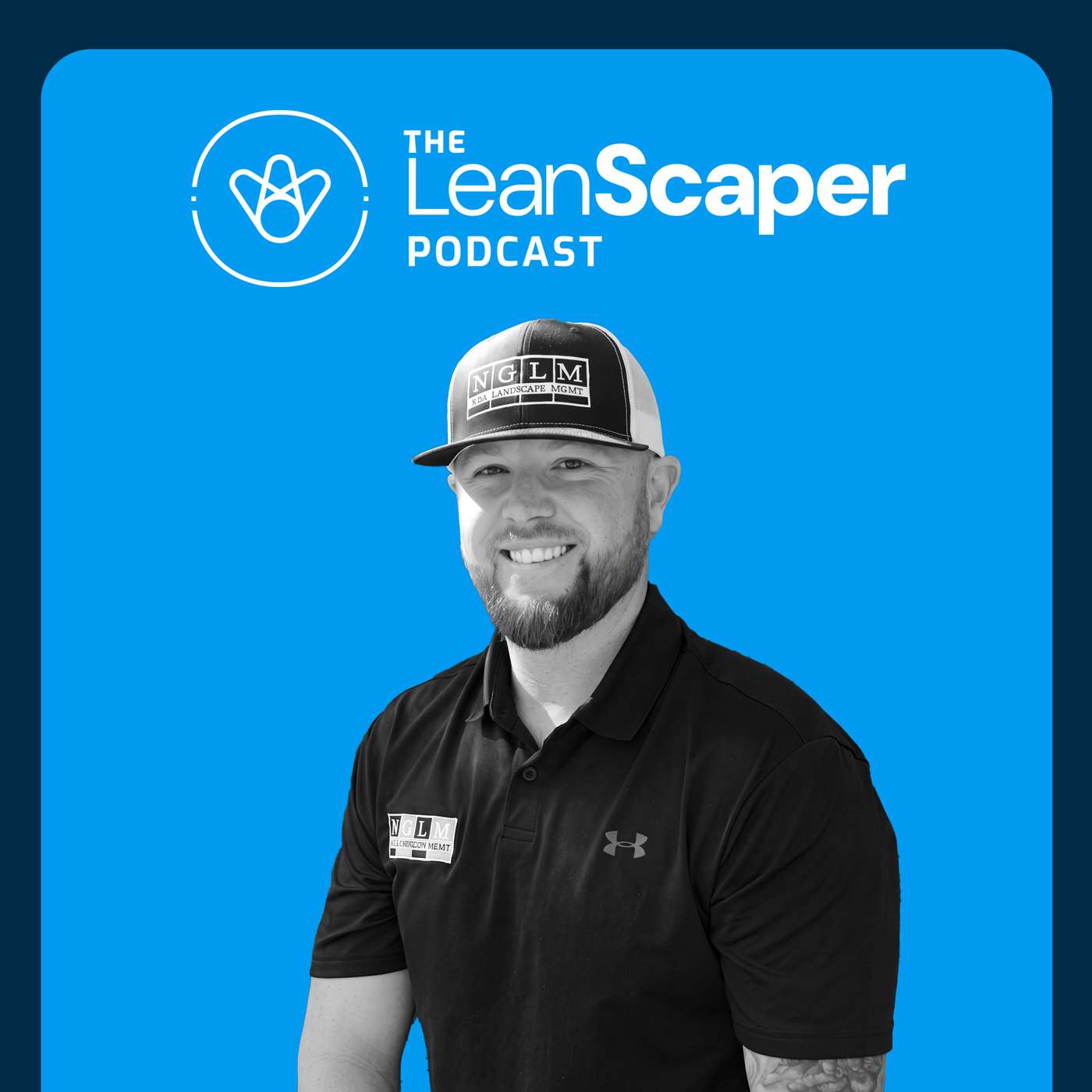
Commercial maintenance is the recurring, sticky revenue every landscaper wants — the stuff that makes a business worth buying — but from the outside it looks like a grandfathered club with no door in.Jeremy Talboy, founder of North Georgia Landscape Management, built a $9M four-division operation from a standing start knowing no one, and he lays out the exact engine he used to crack the commercial world.For a $1M–$10M landscape company, commercial maintenance is what turns unpredictable project revenue into a recurring book of business — and real enterprise value when it's time to sell.IN THIS EPISODE:Why the regional property manager with 15 properties is the one relationship that unlocks a portfolio — and how to actually get in front of them.The 15-office-visits-a-month scorecard Jeremy runs his business development team on, plus the exact hire profile that wins the role.How he prices customer service as the product (the Chick-fil-A vs. McDonald's math) to earn more dollars per minute than bigger competitors.

Comments

Download from Google Play

Download from App Store
 United States