DiscoverProperty Developers Playbook
Property Developers Playbook
Claim Ownership

Property Developers Playbook

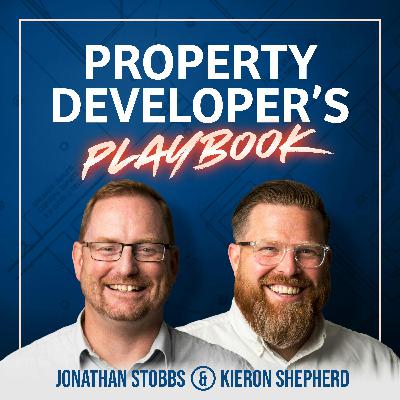
Author: Jonathan Stobbs & Kieron Shepherd

Subscribed: 2Played: 0
Share

Description

Property Developers Playbook is your go-to podcast to the world of property development and investment. Hosted by Jonathan Stobbs and Kieron Shepherd, who both have experience as developers and as main contractors, this podcast dives into the strategies, challenges, and rewards of real estate development. 

Whether you're a contractor looking to transition into development or an investor looking to scale, each episode provides actionable insights, dos and don’ts, and first-hand experiences from those on the ground. Join us as we interview top developers, tackle common pitfalls, explore innovative solutions, and discuss the mindset required to thrive in property development.

Property Developer’s Playbook is more than just advice; it’s a blueprint for unlocking your potential in property development. Tune in to start building your knowledge, confidence, and your success.

43 Episodes
Reverse
In this episode, Jonathan and Kieron dive deep into the analytical engine of property development: deal appraisal and financial modeling. Moving beyond the excitement of finding a site, the duo breaks down the core components of a professional appraisal, from Gross Development Value (GDV) and build costs to finance fees and section 106 agreements.  KEY TAKEAWAYS The fundamental goal of an appraisal is to work backward from the GDV, subtracting all costs (build, finance, professional fees, and profit) to determine the maximum price you can pay for the land. While lenders often look at ‘profit on cost’, developers should also aim for a ‘profit on GDV’ between 23% and 25% (typically equating to 30% on cost) to ensure a healthy buffer. Always model worst-case scenarios, such as build costs rising by 10% or GDV dropping by 5%, to see if the project remains viable under pressure. An industry-standard 10% contingency is non-negotiable for most lenders and serves as a vital safety net for unforeseen "abnormals" like moving underground drains or trees. Presenting a professional "offer pack" with detailed numbers to an agent or vendor builds credibility and justifies why your offer might be lower than the asking price. BEST MOMENTS "Property development is a numbers game. This clarity gives you more confidence when you go and make those offers because you come across more credible." "A spreadsheet is only as good as the data that goes in it. It can't magic answers for you; if you put in bad data, you're going to get bad results." "Don't get too emotional, this is a business. Keep it simple, stupid." "I'd rather make an offer that works for you than try to just buy the work." "The first time you get in a car, you're like, 'How do I do everything?' The more you do [appraisals], the quicker it becomes just like driving." HOST BIOS Jonathan is a property developer and entrepreneur with a background in finance and construction. Originally from South Africa, he holds degrees in Accounting and Auditing and relocated to England in 2003. He gained financial and operational experience at firms such as RSM, Prudential, and Baker Tilly before transitioning into property. Since 2014, Jonathan has managed major commercial-to-residential conversions and new build developments, particularly across the South West. His analytical mindset and on-the-ground experience help listeners navigate the property world with confidence. Kieron is a construction expert and entrepreneur with over 20 years of industry experience. Starting as a mason, he went on to found Shepherd Construction in 2012, delivering projects across both the public and private sectors. From extensions to luxury new builds, Kieron has earned a reputation for quality, precision, and strong leadership. As Managing Director, he’s involved in every stage—from design to delivery—offering a no-nonsense, deeply practical perspective to anyone looking to build with success. https://www.facebook.com/jonathan.stobbs.7/ https://www.linkedin.com/in/jonathanstobbs/ https://www.instagram.com/jonathan.stobbs/ https://www.facebook.com/kieron.shepherd.73 https://www.linkedin.com/in/kieron-shepherd-83b979aa/ https://www.instagram.com/kieron__shepherd/ https://www.propertydevelopersplaybook.co.uk/ Book your seat now on our 3 day live event Property Developers Bootcamp https://www.propertydevelopersiq.co.uk/pdblive
In this episode, Jonathan and Kieron break down the complexities of securing property development finance in 2026. The duo explores the ‘capital stack’, explaining the roles of equity, senior debt, and mezzanine finance, while comparing the pros and cons of working with brokers versus going directly to lenders. They share their understanding of the various fees involved, from arrangement and exit fees to monitoring surveyors, and learn exactly what lenders are looking for, including credible exit strategies and developer track records.  KEY TAKEAWAYS Development funding typically consists of developer equity, senior debt (usually 65-70% of Gross Development Value), and potentially ‘stretch senior’ or mezzanine finance to bridge gaps. Brokers offer access to a wider market and handle ‘packaging’ the deal, while going direct can save on fees and help build long-term institutional relationships. Developers must account for a wide array of costs beyond interest, including arrangement fees, exit fees, commitment fees, legal fees for both parties, and valuation fees. Lenders care most about a credible Plan A exit strategy, the developer’s experience/team, and having ‘skin in the game’ through equity or planning uplift. Over-communicating with lenders and being realistic about build costs and timelines (including a 10% contingency) is vital to preventing defaults and high-interest penalties. BEST MOMENTS "Securing funding is one of the biggest bottlenecks in property development. It’s not just a loan; it’s structured risk." "For a newbie, it can be quite daunting, especially when you're borrowing hundreds of thousands or millions for a project, not just a home." "Lenders aren't just funding the project; they're funding the risk profile of the developer." "You’re looking for this person [a broker] to be almost just outside of your team but still part of it." "Every development project is a business, and like every business, you need a plan, and you need to know how you plan to repay." HOST BIOS Jonathan is a property developer and entrepreneur with a background in finance and construction. Originally from South Africa, he holds degrees in Accounting and Auditing and relocated to England in 2003. He gained financial and operational experience at firms such as RSM, Prudential, and Baker Tilly before transitioning into property. Since 2014, Jonathan has managed major commercial-to-residential conversions and new build developments, particularly across the South West. His analytical mindset and on-the-ground experience help listeners navigate the property world with confidence. Kieron is a construction expert and entrepreneur with over 20 years of industry experience. Starting as a mason, he went on to found Shepherd Construction in 2012, delivering projects across both the public and private sectors. From extensions to luxury new builds, Kieron has earned a reputation for quality, precision, and strong leadership. As Managing Director, he’s involved in every stage—from design to delivery—offering a no-nonsense, deeply practical perspective to anyone looking to build with success. https://www.facebook.com/jonathan.stobbs.7/ https://www.linkedin.com/in/jonathanstobbs/ https://www.instagram.com/jonathan.stobbs/ https://www.facebook.com/kieron.shepherd.73 https://www.linkedin.com/in/kieron-shepherd-83b979aa/ https://www.instagram.com/kieron__shepherd/ https://www.propertydevelopersplaybook.co.uk/ Book your seat now on our 3 day live event Property Developers Bootcamp https://www.propertydevelopersiq.co.uk/pdblive
In this episode, Kieron and Jonathan discuss the evolving landscape of site finding in 2026. While the core principles of development remain steady, the tools and technologies available to developers have shifted significantly. The duo explores traditional methods like direct vendor letters and building relationships with agents, while highlighting how new software and AI integration are streamlining the research process. KEY TAKEAWAYS Traditional methods like direct-to-vendor letters and building strong relationships with both residential and commercial agents remain effective, though they now require a more targeted approach. Modern software (like Nimbus Maps or Searchland) and AI tools are excellent for quickly rejecting bad deals, but they don't replace the need for human judgment and ‘gut feel’. Landowners are more informed about planning potential in 2026, which can lead to higher price expectations and the need for more complex structures like joint ventures. Site finding is a continuous business process, not a one-off task. Maintaining a pipeline of potential deals is crucial for better negotiation leverage. Developers should focus on controlling land through options or conditional contracts rather than outright ownership to minimise financial and planning risk. BET MOMENTS "The fundamentals haven't changed, but the speed and tools have." "The tools don't find the deals; they remove bad ones faster." "Consistency beats cleverness." "Site finding is a pipeline; it's not a one-off task." "Developers don't just find sites, they create them." HOST BIOS Jonathan is a property developer and entrepreneur with a background in finance and construction. Originally from South Africa, he holds degrees in Accounting and Auditing and relocated to England in 2003. He gained financial and operational experience at firms such as RSM, Prudential, and Baker Tilly before transitioning into property. Since 2014, Jonathan has managed major commercial-to-residential conversions and new build developments, particularly across the South West. His analytical mindset and on-the-ground experience help listeners navigate the property world with confidence. Kieron is a construction expert and entrepreneur with over 20 years of industry experience. Starting as a mason, he went on to found Shepherd Construction in 2012, delivering projects across both the public and private sectors. From extensions to luxury new builds, Kieron has earned a reputation for quality, precision, and strong leadership. As Managing Director, he’s involved in every stage—from design to delivery—offering a no-nonsense, deeply practical perspective to anyone looking to build with success. https://www.facebook.com/jonathan.stobbs.7/ https://www.linkedin.com/in/jonathanstobbs/ https://www.instagram.com/jonathan.stobbs/ https://www.facebook.com/kieron.shepherd.73 https://www.linkedin.com/in/kieron-shepherd-83b979aa/ https://www.instagram.com/kieron__shepherd/ https://www.propertydevelopersplaybook.co.uk/ Book your seat now on our 3 day live event Property Developers Bootcamp https://www.propertydevelopersiq.co.uk/pdblive
In this episode, Jonathan Stobbs and Kieron Shepherd delve into the five core myths surrounding property development that often deter aspiring developers. Jonaathan & Kieron discuss misconceptions such as the need for substantial personal funds, the perceived safety of small developments compared to larger ones, and the belief that experience is a prerequisite for success in the field. KEY TAKEAWAYS Myth of Money Requirement: It's a common misconception that you need a lot of your own money to start in property development. In reality, you can leverage other people's money (OPM) through investors, family, or friends, and you only need a small amount of your own funds for initial costs like legal fees. Risk in Development Size: Smaller developments are often perceived as safer than larger ones, but risk is more about margins and complexity rather than size. Experience is Not Mandatory: Many believe that you need extensive experience to be a successful developer. However, surrounding yourself with a knowledgeable team can compensate for your lack of experience. Development is More Than Building: Property development encompasses various stages beyond just construction. Developers can add value through land sourcing, planning, and even selling sites before construction, allowing for multiple exit strategies. Investor Relationships Matter: While returns are important to investors, building trust and maintaining strong relationships is crucial for long-term success.  BEST MOMENTS "Most of what people believe comes from social media headlines or speaking to people down at the pub who have no clue." "You do need a bit of money, but it doesn't have to be your money. It's OPM, other people's money."  "Risk isn't about the size; I think it's all about the margins and complexity and buffers." "You don't have to build five houses out to build another five houses out to build another ten."  "Returns attract investors. Trust keeps them." HOST BIOS Jonathan is a property developer and entrepreneur with a background in finance and construction. Originally from South Africa, he holds degrees in Accounting and Auditing and relocated to England in 2003. He gained financial and operational experience at firms such as RSM, Prudential, and Baker Tilly before transitioning into property. Since 2014, Jonathan has managed major commercial-to-residential conversions and new build developments, particularly across the South West. His analytical mindset and on-the-ground experience help listeners navigate the property world with confidence. Kieron is a construction expert and entrepreneur with over 20 years of industry experience. Starting as a mason, he went on to found Shepherd Construction in 2012, delivering projects across both the public and private sectors. From extensions to luxury new builds, Kieron has earned a reputation for quality, precision, and strong leadership. As Managing Director, he’s involved in every stage—from design to delivery—offering a no-nonsense, deeply practical perspective to anyone looking to build with success. https://www.facebook.com/jonathan.stobbs.7/ https://www.linkedin.com/in/jonathanstobbs/ https://www.instagram.com/jonathan.stobbs/ https://www.facebook.com/kieron.shepherd.73 https://www.linkedin.com/in/kieron-shepherd-83b979aa/ https://www.instagram.com/kieron__shepherd/ https://www.propertydevelopersplaybook.co.uk/ Book your seat now on our 3 day live event Property Developers Bootcamp https://www.propertydevelopersiq.co.uk/pdblive
In this episode, Jonathan and Kieron dive deep into the world of construction contracts, focusing on the industry-standard JCT (Joint Contracts Tribunal) and the more collaborative NEC (New Engineering Contract). They discuss why having a legal framework is essential for managing risk, cost, and timelines in property development, and also share highlight the importance of thorough administrative processes and clear scopes of work to avoid disputes.  KEY TAKEAWAYS The JCT is the most common standard form of contract in UK construction, widely recognized by contractors, lenders, and solicitors for its clear structure. You cannot simply reuse a JCT contract; each document has a unique ISBN and must be purchased and filled out specifically for each new project to be legally valid. Under a D&B contract, the contractor takes responsibility for the design team, which can relieve pressure on the developer regarding aesthetic and technical decisions. A contractor should never perform work outside the original scope without a formal, documented instruction from the contract administrator, as verbal agreements can lead to unpaid disputes. While JCT is standard, the NEC contract offers a more collaborative approach and can allow for more flexible payment terms, such as deposits or down payments. BEST MOMENTS "Effective what you're agreeing is what happens in worst case scenario. Who will effectively be deciding the tribunal element of who's in the right in terms of how you move forward." "Don't try to trip each other up. You're working as a team. It’s not about finding loopholes." "Contracts allocate risk; they don't remove it. They just try to mitigate the risk as much as possible for both parties." "Poor administration causes more issues than poor wording. It needs to be administered correctly." HOST BIOS Jonathan is a property developer and entrepreneur with a background in finance and construction. Originally from South Africa, he holds degrees in Accounting and Auditing and relocated to England in 2003. He gained financial and operational experience at firms such as RSM, Prudential, and Baker Tilly before transitioning into property. Since 2014, Jonathan has managed major commercial-to-residential conversions and new build developments, particularly across the South West. His analytical mindset and on-the-ground experience help listeners navigate the property world with confidence. Kieron is a construction expert and entrepreneur with over 20 years of industry experience. Starting as a mason, he went on to found Shepherd Construction in 2012, delivering projects across both the public and private sectors. From extensions to luxury new builds, Kieron has earned a reputation for quality, precision, and strong leadership. As Managing Director, he’s involved in every stage—from design to delivery—offering a no-nonsense, deeply practical perspective to anyone looking to build with success. https://www.facebook.com/jonathan.stobbs.7/ https://www.linkedin.com/in/jonathanstobbs/ https://www.instagram.com/jonathan.stobbs/ https://www.facebook.com/kieron.shepherd.73 https://www.linkedin.com/in/kieron-shepherd-83b979aa/ https://www.instagram.com/kieron__shepherd/ https://www.propertydevelopersplaybook.co.uk/ Book your seat now on our 3 day live event Property Developers Bootcamp https://www.propertydevelopersiq.co.uk/pdblive
Today, Jonathan and Kieron challenge the industry standard of traditional tendering. Speaking from both developer and main contractor perspectives, they dissect the inefficiencies, hidden costs, and frustrations of the ‘cheapest wins’ mentality. Jonathan and Kieron propose a more collaborative, transparent approach that prioritises realistic budgeting, early engagement, and building long-term partnerships over competitive tension. KEY TAKEAWAYS Traditional tendering often rewards unrealistically low bids that lead to cost overruns later. The lowest initial price rarely equals the best final value. Sharing your actual budget and proof of funds early builds trust and saves everyone time. Treat contractors as partners, not adversaries. Don’t just look at the price on a spreadsheet. Interview potential contractors (via Zoom or in person) to gauge compatibility, experience, and honesty. To get accurate apples-to-apples comparisons, provide a bill of quantities rather than just raw drawings. This ensures everyone is pricing the same scope of work. Involve main contractors and quantity surveyors during the design phase. Their input on buildability and material costs can prevent expensive redesigns later. BEST MOMENTS "The lowest initial price rarely equals the best final value." "Treat contractors with respect and intelligence. If you start that conversation of allowing that contractor to ask those really important questions, we want the business." "You don't win at construction by buying the cheapest. You win by buying certainty." "Cheap isn't what you want. That level of cheap is you just asking for problems. We know our product." "It's about building long-term partnerships. If you do something well with a developer or customer or main contractor, you're going to use them again." HOST BIOS Jonathan is a property developer and entrepreneur with a background in finance and construction. Originally from South Africa, he holds degrees in Accounting and Auditing and relocated to England in 2003. He gained financial and operational experience at firms such as RSM, Prudential, and Baker Tilly before transitioning into property. Since 2014, Jonathan has managed major commercial-to-residential conversions and new build developments, particularly across the South West. His analytical mindset and on-the-ground experience help listeners navigate the property world with confidence. Kieron is a construction expert and entrepreneur with over 20 years of industry experience. Starting as a mason, he went on to found Shepherd Construction in 2012, delivering projects across both the public and private sectors. From extensions to luxury new builds, Kieron has earned a reputation for quality, precision, and strong leadership. As Managing Director, he’s involved in every stage—from design to delivery—offering a no-nonsense, deeply practical perspective to anyone looking to build with success. https://www.facebook.com/jonathan.stobbs.7/ https://www.linkedin.com/in/jonathanstobbs/ https://www.instagram.com/jonathan.stobbs/ https://www.facebook.com/kieron.shepherd.73 https://www.linkedin.com/in/kieron-shepherd-83b979aa/ https://www.instagram.com/kieron__shepherd/ https://www.propertydevelopersplaybook.co.uk/ Book your seat now on our 3 day live event Property Developers Bootcamp https://www.propertydevelopersiq.co.uk/pdblive
In this episode, Jonathan and Kieron debunk the common myth that being a property developer requires you to actually build houses. They break down the full development lifecycle, from sourcing land to securing planning permission, and explain why ‘building’ is actually just one of several potential exit strategies. The duo discuss the benefits of exiting early, such as selling sites with planning permission to reduce risk, and why the old ‘rule of thirds’ for calculating profit no longer applies in today’s market.  KEY TAKEAWAYS Construction is often the last stage of development, and you do not have to undertake it to be successful; many developers specialise solely in sourcing land and achieving ‘planning gain’ before selling the site. While building out a site typically offers the highest profit margin, it also carries the most risk regarding construction costs and market changes. Selling a site with planning permission is a ‘shorter game’ that allows you to realise profit sooner with less exposure. The old rule of thumb (33% land cost, 33% build cost, 33% profit) is outdated. A more realistic breakdown today is often 20% purchase price, 50% build costs, 20% profit, and 10% finance/anomalies. When working with investors, treat the planning approval stage as a checkpoint. This gives everyone the option to decide whether to sell the site and take the profit now or proceed to the construction phase. Successful development requires the ability to pivot. You might intend to build, but personal circumstances or market conditions might make selling the site (‘flipping’) a smarter financial move at the time. BEST MOMENTS "In reality, building is often the last stage in property development. There are multiple exits before you actually get to start building." "Some people just specialise as property developers in planning gain. They find a piece of land, sort out the planning, and then sell it on to another developer." "Building is ultimately just one method of extracting the value from the site." "A bird in the hand is better than two in the bush. Cash in the hand is better than cash in the land." "People used to do the whole 'third, third, third'. We don't do that anymore. It's probably a bottom line 20% conservative on your profit." HOST BIOS Jonathan is a property developer and entrepreneur with a background in finance and construction. Originally from South Africa, he holds degrees in Accounting and Auditing and relocated to England in 2003. He gained financial and operational experience at firms such as RSM, Prudential, and Baker Tilly before transitioning into property. Since 2014, Jonathan has managed major commercial-to-residential conversions and new build developments, particularly across the South West. His analytical mindset and on-the-ground experience help listeners navigate the property world with confidence. Kieron is a construction expert and entrepreneur with over 20 years of industry experience. Starting as a mason, he went on to found Shepherd Construction in 2012, delivering projects across both the public and private sectors. From extensions to luxury new builds, Kieron has earned a reputation for quality, precision, and strong leadership. As Managing Director, he’s involved in every stage—from design to delivery—offering a no-nonsense, deeply practical perspective to anyone looking to build with success. https://www.facebook.com/jonathan.stobbs.7/ https://www.linkedin.com/in/jonathanstobbs/ https://www.facebook.com/kieron.shepherd.73 https://www.linkedin.com/in/kieron-shepherd-83b979aa/ https://www.propertydevelopersplaybook.co.uk/ Book your seat now on our 3 day live event Property Developers Bootcamp https://www.propertydevelopersiq.co.uk/pdblive
Today, Jonathan and Kieron welcome Grant Shepherd from Alter Architects. Grant shares his journey from landscape designer to architect, detailing his experiences working with various property developers and the importance of collaboration in the industry. They discuss the nuances of architectural design, the significance of effective communication between architects and developers, and the challenges of balancing creativity with budget constraints. KEY TAKEAWAYS Successful property development relies on effective collaboration between architects and developers. Understanding each other's perspectives and terminologies can lead to better project outcomes. Decisions made in the early stages of a project significantly impact the final build cost and overall success. It's essential to assemble the right team and establish clear communication from the outset. Creating spaces that foster community engagement and cater to the needs of residents, especially youth, is vital. Good architecture should not only focus on aesthetics but also on enhancing the quality of life for users. Familiarity with local and national planning policies is critical for architects. This knowledge helps navigate the complexities of securing planning approvals and ensures that projects align with regulatory requirements. Efficient layouts and thoughtful design can add value to a project. Architects should focus on maximising space and functionality while being mindful of budget constraints, ensuring that designs are both practical and appealing. BEST MOMENTS "For us, that was second nature. We grew up with a father who was very creative and he was a landscape gardener." "I think the key thing is that what we come across a lot is that developers don't want to do measured surveys." "I think the critical thing is that those buildings are good returns." "You are the maker of dreams. You are turning their ideas and wishes and wants into reality." VALUABLE RESOURCES https://alterarchitects.co.uk/ https://www.linkedin.com/in/grant-shepherd-arb-maarch-5a79a889/ HOST BIOS Jonathan is a property developer and entrepreneur with a background in finance and construction. Originally from South Africa, he holds degrees in Accounting and Auditing and relocated to England in 2003. He gained financial and operational experience at firms such as RSM, Prudential, and Baker Tilly before transitioning into property. Since 2014, Jonathan has managed major commercial-to-residential conversions and new build developments, particularly across the South West. His analytical mindset and on-the-ground experience help listeners navigate the property world with confidence. Kieron is a construction expert and entrepreneur with over 20 years of industry experience. Starting as a mason, he went on to found Shepherd Construction in 2012, delivering projects across both the public and private sectors. From extensions to luxury new builds, Kieron has earned a reputation for quality, precision, and strong leadership. As Managing Director, he’s involved in every stage—from design to delivery—offering a no-nonsense, deeply practical perspective to anyone looking to build with success. https://www.facebook.com/jonathan.stobbs.7/ https://www.linkedin.com/in/jonathanstobbs/ https://www.facebook.com/kieron.shepherd.73 https://www.linkedin.com/in/kieron-shepherd-83b979aa/ https://www.propertydevelopersplaybook.co.uk/ Book your seat now on our 3 day live event Property Developers Bootcamp https://www.propertydevelopersiq.co.uk/pdblive
In this episode, Jonathan and Kieron delve into the often-overlooked challenge of mindset in property development. As they wrap up their mini-series on the Top 10 Challenges developers face, they emphasise the importance of resilience, mental health, and the ability to navigate pressure in the industry. The duo discusses the significance of setting goals, managing risks, and the value of having a supportive team and mentors. KEY TAKEAWAYS Success in property development heavily relies on having a positive mindset and the ability to navigate pressure and challenges. Developers must cultivate resilience to handle the stresses and uncertainties of the industry. Property development involves managing and mitigating risks rather than avoiding them. It's essential to assess risks for each development and make calculated decisions to move forward. Building a strong team and network is crucial. Collaborating with experienced professionals, mentors, and peers can provide support, guidance, and different perspectives, which are vital for overcoming challenges. Developers need to prioritise their mental and physical health. Taking breaks, engaging in hobbies, and maintaining a healthy lifestyle can help manage stress and prevent burnout. Each development project serves as a learning opportunity. By reflecting on past challenges and successes, developers can improve their decision-making and approach future projects with greater confidence. BEST MOMENTS "You don't build houses before you build resilience." "Success in development isn't about avoiding pressure. It's about learning to perform under it." "It's about how you deal with setbacks. There's always going to be a solution." "You need to have that kind of resilience. If something goes wrong, it's how can you bounce back from that quickly." "You can't just stick your head in the sand because that's never going to attract investment." HOST BIOS Jonathan is a property developer and entrepreneur with a background in finance and construction. Originally from South Africa, he holds degrees in Accounting and Auditing and relocated to England in 2003. He gained financial and operational experience at firms such as RSM, Prudential, and Baker Tilly before transitioning into property. Since 2014, Jonathan has managed major commercial-to-residential conversions and new build developments, particularly across the South West. His analytical mindset and on-the-ground experience help listeners navigate the property world with confidence. Kieron is a construction expert and entrepreneur with over 20 years of industry experience. Starting as a mason, he went on to found Shepherd Construction in 2012, delivering projects across both the public and private sectors. From extensions to luxury new builds, Kieron has earned a reputation for quality, precision, and strong leadership. As Managing Director, he’s involved in every stage—from design to delivery—offering a no-nonsense, deeply practical perspective to anyone looking to build with success. https://www.facebook.com/jonathan.stobbs.7/ https://www.linkedin.com/in/jonathanstobbs/ https://www.facebook.com/kieron.shepherd.73 https://www.linkedin.com/in/kieron-shepherd-83b979aa/ https://www.propertydevelopersplaybook.co.uk/ Book your seat now on our 3 day live event Property Developers Bootcamp https://www.propertydevelopersiq.co.uk/pdblive
In this final episode of 2025, Jonathan and Kieron reflect on the lessons learned from the past year, and discuss their goals for 2026. They explore various goal-setting strategies, including the SMART framework and the significance of behaviour goals, while also addressing the challenges of instant gratification in today's society. They also share insights on effective networking, building a strong team, and the necessity of reviewing progress regularly. KEY TAKEAWAYS Emphasising the importance of setting realistic and achievable goals, particularly in property development, while also recognising the need for flexibility and adaptability in timelines. Focusing on activity-based goals, such as analysing a certain number of sites per week and attending networking events, to drive results rather than solely concentrating on outcome goals. Highlighting the significance of building a strong network and team, including finding the right professionals to collaborate with, which can enhance the success of property development projects. Encouraging regular reviews of progress and adjustments to goals, as well as celebrating small wins to maintain motivation and recognise achievements throughout the year. Advocating for a life-work balance where personal life takes precedence, and work is structured around it, ensuring that enjoyment and fulfillment are prioritised in both professional and personal endeavours. BEST MOMENTS "2025 taught us a lot. It's kind of taking those lessons and making sure we don't make the same mistakes, but actually growing and scaling from that." "You need to have certain activity goals that you need to be doing, analysing 10 sites per week to be able to submit a certain number of offers per month." "You want to be a yes man, but this is also quite a hard thing because people don't know, until you know, you don't know how far is too far." "Celebrate your small wins. A lot of people don't celebrate. We do a fist bump and then we kind of move on, rather than actually saying, okay, let's reward ourselves for doing something amazing." "The exit of a development should be also the start of the development. You should be reviewing each stage at every stage." HOST BIOS Jonathan is a property developer and entrepreneur with a background in finance and construction. Originally from South Africa, he holds degrees in Accounting and Auditing and relocated to England in 2003. He gained financial and operational experience at firms such as RSM, Prudential, and Baker Tilly before transitioning into property. Since 2014, Jonathan has managed major commercial-to-residential conversions and new build developments, particularly across the South West. His analytical mindset and on-the-ground experience help listeners navigate the property world with confidence. Kieron is a construction expert and entrepreneur with over 20 years of industry experience. Starting as a mason, he went on to found Shepherd Construction in 2012, delivering projects across both the public and private sectors. From extensions to luxury new builds, Kieron has earned a reputation for quality, precision, and strong leadership. As Managing Director, he’s involved in every stage—from design to delivery—offering a no-nonsense, deeply practical perspective to anyone looking to build with success. https://www.facebook.com/jonathan.stobbs.7/ https://www.linkedin.com/in/jonathanstobbs/ https://www.facebook.com/kieron.shepherd.73 https://www.linkedin.com/in/kieron-shepherd-83b979aa/ https://www.propertydevelopersplaybook.co.uk Book your seat now on our 3 day live event Property Develoeprs Bootcamp https://www.propertydevelopersiq.co.uk/pdblive
Today, Kieron and Jonathan take a look back at the challenges, lessons, and successes of their 2025 as they approach the Christmas season. They discuss their ambitious goals for the year, including various development projects such as Woodlands Ponsanooth, St. James Court, and Luxstowe House, while sharing insights on navigating the complexities of property development. The duo highlights the importance of building strong relationships with investors and landowners, as well as the value of collaboration in overcoming obstacles. They also touch on the launch of their podcast, plans for a Property Developers Bootcamp, and the expansion of their media company, POM Media. KEY TAKEAWAYS It's important to take time to reflect on the past year, assessing both successes and challenges. This practice can provide valuable insights and help in setting future goals. Managing multiple development projects can be complex, especially when dealing with issues like planning, financing, and unforeseen complications such as contamination testing. Patience and adaptability are crucial. Strengthening relationships with existing investors and building new ones has been beneficial. Engaging with investors through site visits can help validate project potential and foster trust. The launch of new initiatives, such as a podcast and a property developers bootcamp, has expanded outreach and provided additional resources for aspiring developers. Collaboration and leveraging team skills are essential for growth. The construction industry has faced challenges due to economic uncertainty and market stagnation. Staying positive and proactive in building relationships and seeking opportunities is vital for navigating these conditions. BEST MOMENTS "2025 was a year full of challenge, uncertainty, opportunity, and growth. Today we're breaking down how it was for us and what we've learned from it." "The bloody refinancing process has taken its toll, hasn't it? It's taken ages, hasn't it? Everything just seems to take a lot longer." "It's a way of trying to work out how to make the site easy to build. Just because something's got planning doesn't mean it's buildable." "One of the lessons was, try not to change the goalposts midway. It'll be a lot easier." "If you don't reflect, you don't think of it like that, do you? Lots of homes we're building." HOST BIOS Jonathan is a property developer and entrepreneur with a background in finance and construction. Originally from South Africa, he holds degrees in Accounting and Auditing and relocated to England in 2003. He gained financial and operational experience at firms such as RSM, Prudential, and Baker Tilly before transitioning into property. Since 2014, Jonathan has managed major commercial-to-residential conversions and new build developments, particularly across the South West. His analytical mindset and on-the-ground experience help listeners navigate the property world with confidence. Kieron is a construction expert and entrepreneur with over 20 years of industry experience. Starting as a mason, he went on to found Shepherd Construction in 2012, delivering projects across both the public and private sectors. From extensions to luxury new builds, Kieron has earned a reputation for quality, precision, and strong leadership. As Managing Director, he’s involved in every stage—from design to delivery—offering a no-nonsense, deeply practical perspective to anyone looking to build with success. https://www.facebook.com/jonathan.stobbs.7/ https://www.linkedin.com/in/jonathanstobbs/ https://www.facebook.com/kieron.shepherd.73 https://www.linkedin.com/in/kieron-shepherd-83b979aa/ https://www.propertydevelopersplaybook.co.uk/ Book now onto our Property Developers Bootcamp https://www.propertydevelopersiq.co.uk/pdblive
Today, Jonathan and Kieron delve into the ninth challenge property developers face: dealing with NIMBYs (Not In My Backyard), community and stakeholder engagement, and turning objections into opportunities. They discuss the importance of proactive community engagement, emphasising that it's not just a tick-box exercise but a crucial part of the development process. They highlight the value of early consultations with local councils and stakeholders to mitigate potential conflicts and foster goodwill. KEY TAKEAWAYS Engaging with the community early in the development process is crucial. Developers should proactively communicate their plans to local residents and stakeholders to mitigate objections and foster goodwill. Developers need to comprehend the psychology behind NIMBY (Not In My Backyard) sentiments. Many objections stem from emotional attachments to views or local character, and addressing these concerns can help in gaining community support. By holding public consultations and providing clear information about developments, developers can manage the narrative surrounding their projects. This proactive approach helps counter negative speculation on social media and builds a positive perception. Utilising visual aids such as CGI and 3D walkthroughs can help residents better understand proposed developments. This transparency can alleviate fears and misconceptions about how a project will impact their surroundings. Developers should communicate the broader benefits of their projects, such as affordable housing and public realm improvements. By showcasing how developments contribute to the community, they can shift the focus from objections to positive outcomes. BEST MOMENTS "Objections can derail timelines, you know, planning approvals and finance." "It's trying to find that balance from a developer's point of view, you're trying to create homes for other people, and they're just trying to protect theirs." "If you do these public consultations, you're actually able to manage the narrative rather than dealing with the fire." "You can't create community in place if they're not on board." "You can't afford community engagement, but you can approach it strategically." HOST BIOS Jonathan is a property developer and entrepreneur with a background in finance and construction. Originally from South Africa, he holds degrees in Accounting and Auditing and relocated to England in 2003. He gained financial and operational experience at firms such as RSM, Prudential, and Baker Tilly before transitioning into property. Since 2014, Jonathan has managed major commercial-to-residential conversions and new build developments, particularly across the South West. His analytical mindset and on-the-ground experience help listeners navigate the property world with confidence. Kieron is a construction expert and entrepreneur with over 20 years of industry experience. Starting as a mason, he went on to found Shepherd Construction in 2012, delivering projects across both the public and private sectors. From extensions to luxury new builds, Kieron has earned a reputation for quality, precision, and strong leadership. As Managing Director, he’s involved in every stage—from design to delivery—offering a no-nonsense, deeply practical perspective to anyone looking to build with success. https://www.facebook.com/jonathan.stobbs.7/ https://www.linkedin.com/in/jonathanstobbs/ https://www.facebook.com/kieron.shepherd.73 https://www.linkedin.com/in/kieron-shepherd-83b979aa/ https://www.propertydevelopersiq.co.uk/ https://www.propertydevelopersplaybook.co.uk/
In this episode, Jonathan and Kieron unveil an exciting new initiative: their upcoming Property Developers Bootcamp. Drawing from the feedback received over 28 episodes, they address the common challenges faced by aspiring property developers, such as lack of confidence, knowledge of the industry, and the importance of building a reliable team. The bootcamp aims to provide a structured, hands-on learning experience, offering attendees a clear roadmap to navigate the complexities of property development. KEY TAKEAWAYS Success in property development relies heavily on building a strong team, including architects, planners, contractors, and solicitors. Collaboration and support from experienced professionals can help newcomers navigate the complexities of the industry. A new bootcamp is being introduced to provide hands-on education for aspiring property developers. This program aims to offer a clear roadmap, practical experiences, and networking opportunities to help participants gain confidence and take their first steps in property development. The bootcamp will cover a structured seven-step formula for property development, including site discovery, evaluation, viability assessment, legal engagement, financing, optimisation, and profit management. This comprehensive approach is designed to equip attendees with the necessary skills and knowledge. Many potential developers face fears and uncertainties about starting their journey. The bootcamp aims to address these concerns by providing a supportive environment where participants can learn from real developers and gain insights into overcoming common obstacles. The bootcamp emphasises the importance of networking, allowing attendees to connect with like-minded individuals, potential investors, and industry professionals. Building relationships in this environment can lead to joint ventures and collaborative opportunities in the future. BEST MOMENTS "Property development is a team sport. You need to have people around you who can share the same vision and support program effectively to help you get there." "The bootcamp gives them a clear roadmap, hands-on learning, and case studies to build confidence and take the first step into property development." "It's about building that confidence that anyone can do this. If you want to put your mind to it and are willing to put the work in, anyone can do it." "You don't have to have all the money in the world to be able to do it. Any business goes and raises money, and you're just doing this in property development." "The A-team, or A-teams are built in training, not on game day. Developers are no different." HOST BIOS Jonathan is a property developer and entrepreneur with a background in finance and construction. Originally from South Africa, he holds degrees in Accounting and Auditing and relocated to England in 2003. He gained financial and operational experience at firms such as RSM, Prudential, and Baker Tilly before transitioning into property. Since 2014, Jonathan has managed major commercial-to-residential conversions and new build developments, particularly across the South West. His analytical mindset and on-the-ground experience help listeners navigate the property world with confidence. Kieron is a construction expert and entrepreneur with over 20 years of industry experience. Starting as a mason, he went on to found Shepherd Construction in 2012, delivering projects across both the public and private sectors. From extensions to luxury new builds, Kieron has earned a reputation for quality, precision, and strong leadership. As Managing Director, he’s involved in every stage—from design to delivery—offering a no-nonsense, deeply practical perspective to anyone looking to build with success. https://www.facebook.com/jonathan.stobbs.7/ https://www.linkedin.com/in/jonathanstobbs/ https://www.facebook.com/kieron.shepherd.73 https://www.linkedin.com/in/kieron-shepherd-83b979aa/ BOOK NOW - http://www.propertydevelopersiq.co.uk/
In this episode, Jonathan and Kieron delve into the top challenges faced by property developers, focusing on the critical themes of design, sustainability, and value engineering: Building Smart, Not Expensive. They discuss the importance of balancing aesthetic appeal with budget constraints, emphasising the need for effective collaboration between architects and contractors from the outset. KEY TAKEAWAYS Design and Budget Alignment: Property developers must ensure that architectural designs align with budget constraints from the very beginning. Collaboration with Architects and Contractors: Developers should involve architects and main contractors in discussions about design and materials early on. Value Engineering: Value engineering is about optimising design choices to enhance value without compromising quality. It involves making informed decisions about materials and construction methods that can save costs while still meeting design and sustainability goals. Understanding Market Needs: Developers must be aware of the target market and design properties that meet the needs and preferences of potential buyers. Sustainability Considerations: As building regulations evolve towards sustainability, developers need to incorporate energy-efficient systems and materials into their designs.  BEST MOMENTS "Over-design, the silent profit killer. Architects often design for beauty, not budget. Designing for their own portfolios, their own ego." "Value engineering isn't downgrading. It's optimising and making the best use of what you've got." "Good design adds value. Overdesign destroys profit." "You need to be that person who is orchestrating, bringing a QS with you to maybe have a sit-down as we do." "Every line on a drawing either adds value or adds cost; your job is to know the difference." HOST BIOS Jonathan is a property developer and entrepreneur with a background in finance and construction. Originally from South Africa, he holds degrees in Accounting and Auditing and relocated to England in 2003. He gained financial and operational experience at firms such as RSM, Prudential, and Baker Tilly before transitioning into property. Since 2014, Jonathan has managed major commercial-to-residential conversions and new build developments, particularly across the South West. His analytical mindset and on-the-ground experience help listeners navigate the property world with confidence. Kieron is a construction expert and entrepreneur with over 20 years of industry experience. Starting as a mason, he went on to found Shepherd Construction in 2012, delivering projects across both the public and private sectors. From extensions to luxury new builds, Kieron has earned a reputation for quality, precision, and strong leadership. As Managing Director, he’s involved in every stage—from design to delivery—offering a no-nonsense, deeply practical perspective to anyone looking to build with success. https://www.facebook.com/jonathan.stobbs.7/  https://www.linkedin.com/in/jonathanstobbs/  https://www.facebook.com/kieron.shepherd.73  https://www.linkedin.com/in/kieron-shepherd-83b979aa/ https://www.propertydevelopersplaybook.co.uk/
In this episode of the Property Developer's Playbook Mini Series on the Top 10 Challenges in Property Development, Jonathan and Kieron dive into the critical challenge that distinguishes successful developers: Project Management and Delivery: Running the Site, Not Letting It Run You. They emphasise that even the best contracts and systems are useless if people don't communicate effectively, noting that poor coordination is the main reason most projects fail. KEY TAKEAWAYS Communication is the Biggest Hurdle: Poor coordination and communication, not bad sites or bad deals, are the primary reasons why most property development projects fall apart. The Program is Fundamental: You should never start a construction project without a clear program (Gantt chart), as having "No program equals no control" over time, costs, and resources. It is beneficial to prepare both an internal working program and a client program. Clearly Define Roles & Accountability: Every team member's roles and responsibilities must be defined early in a simple format, like a RACI matrix (Responsible, Accountable, Consulted, Informed), to prevent a "blame loop". Document Everything (Especially Variations): Use central, cloud-based systems (like Google Drive or Dropbox) for document control to ensure the entire team is working from the correct and latest version of the drawings. Verbal agreements on variations must be immediately documented and priced to prevent disputes. Manage Subcontractor Relationships: Keep subcontractors happy by paying promptly and sharing the project program with them, as this gives them sight of the plan and helps them manage their own work schedule, ultimately preventing costly delays. BEST MOMENTS "The truth is, the best systems and contracts mean nothing if the people don't communicate." "If you're already at the blame game point, you've all failed." "According to McKinsey Global Institute, large construction projects take 20% longer to complete and run up to 80% over budget... largely due to poor project management and coordination." "The whole idea of the program is to make sure that everything doesn't clash. Trades don't overlap, deliveries aren't missed, and the long lead times aren't forgotten on products." "If you don't run the site, the site will run you." HOST BIOS Jonathan is a property developer and entrepreneur with a background in finance and construction. Originally from South Africa, he holds degrees in Accounting and Auditing and relocated to England in 2003. He gained financial and operational experience at firms such as RSM, Prudential, and Baker Tilly before transitioning into property. Since 2014, Jonathan has managed major commercial-to-residential conversions and new build developments, particularly across the South West. His analytical mindset and on-the-ground experience help listeners navigate the property world with confidence. Kieron is a construction expert and entrepreneur with over 20 years of industry experience. Starting as a mason, he went on to found Shepherd Construction in 2012, delivering projects across both the public and private sectors. From extensions to luxury new builds, Kieron has earned a reputation for quality, precision, and strong leadership. As Managing Director, he’s involved in every stage—from design to delivery—offering a no-nonsense, deeply practical perspective to anyone looking to build with success. https://www.facebook.com/jonathan.stobbs.7/ https://www.linkedin.com/in/jonathanstobbs/ https://www.facebook.com/kieron.shepherd.73 https://www.linkedin.com/in/kieron-shepherd-83b979aa/ https://www.propertydevelopersplaybook.co.uk/
In this episode, Jonathan and Kieron sit down for an interview with Jo Morgan, a partner at Coodes Solicitors, Head of their commercial property development department. Jo shares her insights on the critical legal aspects of property development, emphasising the importance of thorough due diligence and the potential pitfalls developers often encounter. They covers essential topics such as the significance of heads of terms, the necessity of bespoke contracts, and the common legal mistakes that can derail projects. KEY TAKEAWAYS Developers should conduct thorough due diligence on services and access before committing to a deal. This includes checking utility searches and understanding the implications of planning conditions. Establishing clear heads of terms is crucial. It helps streamline negotiations and ensures that all parties are on the same page regarding the terms of the deal, preventing costly delays and misunderstandings later on. Engaging a solicitor who specialises in property development is essential. They bring valuable local knowledge and expertise that can help navigate complex legal issues and avoid potential pitfalls. Contracts should be detailed and precise to avoid ambiguity. Developers must pay close attention to clauses related to deposits, best endeavours, and timing to ensure they can meet their obligations and avoid disputes. Maintaining good relationships with sellers and other parties involved in the deal can be beneficial. Trust can influence negotiations and lead to smoother transactions, as sellers may prefer working with developers they trust over those offering the highest bid. BEST MOMENTS "Most of my clients would say to me, Jo, can you just make it as simple as possible? But the reality is you want to be able to rely upon the detail of it." "We know legal and compliance can make or break a project. So today we're here going to dig into what developers need to know before signing anything." "If there's been long, difficult negotiations to get to heads of terms, that's usually a red flag. A difficult seller can end up cost spiralling." "When it comes to heads of terms, converting that into a legal contract does seem to overcomplicate things from a layman's point of view." "Always check your plan. I've seen the red line go far beyond what the seller actually owns, which can be problematic." HOST BIOS Jonathan is a property developer and entrepreneur with a background in finance and construction. Originally from South Africa, he holds degrees in Accounting and Auditing and relocated to England in 2003. He gained financial and operational experience at firms such as RSM, Prudential, and Baker Tilly before transitioning into property. Since 2014, Jonathan has managed major commercial-to-residential conversions and new build developments, particularly across the South West. His analytical mindset and on-the-ground experience help listeners navigate the property world with confidence. Kieron is a construction expert and entrepreneur with over 20 years of industry experience. Starting as a mason, he went on to found Shepherd Construction in 2012, delivering projects across both the public and private sectors. From extensions to luxury new builds, Kieron has earned a reputation for quality, precision, and strong leadership. As Managing Director, he’s involved in every stage—from design to delivery—offering a no-nonsense, deeply practical perspective to anyone looking to build with success. https://www.facebook.com/jonathan.stobbs.7/ https://www.linkedin.com/in/jonathanstobbs/ https://www.facebook.com/kieron.shepherd.73 https://www.linkedin.com/in/kieron-shepherd-83b979aa/ https://www.propertydevelopersplaybook.co.uk/ https://coodes.co.uk/profile/jo-morgan/
Jonathan and Kieron dive into one of the most critical, yet often underestimated, parts of development: legal and compliance risks. They note that every deal starts and ends with legals, and most project issues can be traced back to legal matters that weren't spotted early enough. This episode covers crucial areas like title issues, restrictive covenants, ransom strips, overage clauses, and the importance of thorough due diligence. KEY TAKEAWAYS In the high-risk, high-reward world of property development, the money is made in the margins, but it is protected in the paperwork. Every deal starts and ends with legal work, from due diligence to sales. Thorough due diligence is crucial to spot title issues like restrictive covenants, ransom strips, rights of way, easements, and heritage building restrictions, which can severely limit or complicate a project. Legal processes cannot be rushed; do things 'right' rather than 'right now'. Legal and regulatory delays are among the top three reasons UK development projects overrun. Developers must understand the implications of Stamp Duty Land Tax, VAT on construction (including the 0% rate for new builds and 5% for conversions), and setting up the correct company structure (SPVs, holding companies) for optimal tax savings and legal protection. Stay updated on the Building Safety Act, CDM regulations, and evolving sustainability requirements like EPC standards and Net Zero designs, as these significantly affect design, materials, and overall project cost and accountability. BEST MOMENTS "In property development, the money's made in the margins, but it's protected in the paperwork." "Most project issues trace back to something legal that wasn't spotted early enough." "If you get hurdles, it's looking at different routes, discussing with people who can help you come up with solutions. Think outside the box." "A good commercial solicitor is seeing ten different other things or scenarios that we haven't even thought of... and that's ultimately what a really good commercial solicitor is meant to do." HOST BIOS Jonathan is a property developer and entrepreneur with a background in finance and construction. Originally from South Africa, he holds degrees in Accounting and Auditing and relocated to England in 2003. He gained financial and operational experience at firms such as RSM, Prudential, and Baker Tilly before transitioning into property. Since 2014, Jonathan has managed major commercial-to-residential conversions and new build developments, particularly across the South West. His analytical mindset and on-the-ground experience help listeners navigate the property world with confidence. Kieron is a construction expert and entrepreneur with over 20 years of industry experience. Starting as a mason, he went on to found Shepherd Construction in 2012, delivering projects across both the public and private sectors. From extensions to luxury new builds, Kieron has earned a reputation for quality, precision, and strong leadership. As Managing Director, he’s involved in every stage—from design to delivery—offering a no-nonsense, deeply practical perspective to anyone looking to build with success. https://www.facebook.com/jonathan.stobbs.7/ https://www.linkedin.com/in/jonathanstobbs/ https://www.facebook.com/kieron.shepherd.73 https://www.linkedin.com/in/kieron-shepherd-83b979aa/ https://www.propertydevelopersplaybook.co.uk/
Today, Jonathan and Kieron take a look at the critical topic of market risk in property development. They discuss how economic changes, interest rate fluctuations, and local market shifts can significantly impact profitability for developers. The duo emphasises the importance of proactive planning and exploring multiple exit strategies to mitigate risks. KEY TAKEAWAYS Market risk in property development is influenced by economic changes, interest rates, and local market shifts. Developers cannot control these factors but can plan for them to mitigate their impact on profitability. Conducting thorough research on comparables, absorption rates, and local market conditions is crucial. Developers should avoid assumptions about demand and ensure they understand the target market before proceeding with projects. Developers should consider multiple exit strategies, such as build-to-sell, build-to-rent, or tenant buyer options. This flexibility allows for better adaptation to changing market conditions and helps manage cash flow effectively. It is essential to stress test financial projections, including sales values and construction costs, to prepare for worst-case scenarios. Maintaining a working capital pot can provide liquidity to navigate unexpected challenges. Establishing and maintaining strong relationships with brokers, agents, and investors is vital. Open communication and transparency about market conditions and project status can lead to better collaboration and support during uncertain times. BEST MOMENTS "Market risk rewards those who plan for the worst and build for the best." "The best developers understand you can't eliminate the risk, but you can at least plan for it." "You need to know how to pivot, but we're going to be talking about how to plan best and a few little pointers." "You can't control the market, but you can control your response and how you react to it." "One of the biggest mistakes is assuming demand without checking real comparables and absorption rates." HOST BIOS Jonathan is a property developer and entrepreneur with a background in finance and construction. Originally from South Africa, he holds degrees in Accounting and Auditing and relocated to England in 2003. He gained financial and operational experience at firms such as RSM, Prudential, and Baker Tilly before transitioning into property. Since 2014, Jonathan has managed major commercial-to-residential conversions and new build developments, particularly across the South West. His analytical mindset and on-the-ground experience help listeners navigate the property world with confidence. Kieron is a construction expert and entrepreneur with over 20 years of industry experience. Starting as a mason, he went on to found Shepherd Construction in 2012, delivering projects across both the public and private sectors. From extensions to luxury new builds, Kieron has earned a reputation for quality, precision, and strong leadership. As Managing Director, he’s involved in every stage—from design to delivery—offering a no-nonsense, deeply practical perspective to anyone looking to build with success. https://www.facebook.com/jonathan.stobbs.7/ https://www.linkedin.com/in/jonathanstobbs/ https://www.facebook.com/kieron.shepherd.73 https://www.linkedin.com/in/kieron-shepherd-83b979aa/ https://www.propertydevelopersplaybook.co.uk/
Today, Jonathan and Kieron interview Rebecca Boyde, an ex-local authority planning officer turned consultant, shares her insights into the often complex and frustrating world of property development and planning. With a focus on the challenges developers face, Rebecca discusses the importance of having the right team in place, the necessity of engaging with local communities, and the pitfalls of cutting corners in the planning process. KEY TAKEAWAYS Having the right professionals around the table is crucial for successful planning applications. This includes not just architects but also planning consultants, ecologists, and other specialists relevant to the project. Engaging with the local community early in the planning process can significantly impact the outcome of applications. Listening to community concerns and addressing them can help build relationships and reduce opposition. Developers need to be educated about the planning system and its complexities. Failing to follow proper procedures can lead to costly enforcement actions and delays. Conducting pre-application discussions with local authorities can help clarify potential issues and streamline the application process. This proactive approach can save time and resources. New developers should be aware that property development is not an easy path to quick profits. It requires persistence, resilience, and a willingness to learn from failures, as not every application will be successful. BEST MOMENTS "It's about being educated about it and understanding what can happen if you don't follow it. It can be so much worse, the benefits of it massively outweigh not doing it." "My first one is not having the right people around the table. My biggest pate is hiring an architect to do a planning consultant's job." "If you don't do a pre-app, they won't discuss the application with you. You'll just get a refusal." "People come into it because people think it's easy. That is not the reality. And I think people need to be educated." GUEST LINKS https://ctcplanning.co.uk/ www.instagram.com/ctcplanning/ https://www.linkedin.com/in/rebecca-boyde-92561626/ HOST BIOS Jonathan is a property developer and entrepreneur with a background in finance and construction. Originally from South Africa, he holds degrees in Accounting and Auditing and relocated to England in 2003. He gained financial and operational experience at firms such as RSM, Prudential, and Baker Tilly before transitioning into property. Since 2014, Jonathan has managed major commercial-to-residential conversions and new build developments, particularly across the South West. His analytical mindset and on-the-ground experience help listeners navigate the property world with confidence. Kieron is a construction expert and entrepreneur with over 20 years of industry experience. Starting as a mason, he went on to found Shepherd Construction in 2012, delivering projects across both the public and private sectors. From extensions to luxury new builds, Kieron has earned a reputation for quality, precision, and strong leadership. As Managing Director, he’s involved in every stage—from design to delivery—offering a no-nonsense, deeply practical perspective to anyone looking to build with success. https://www.facebook.com/jonathan.stobbs.7/ https://www.linkedin.com/in/jonathanstobbs/ https://www.facebook.com/kieron.shepherd.73 https://www.linkedin.com/in/kieron-shepherd-83b979aa/ https://www.propertydevelopersplaybook.co.uk/
In this episode, Jonathan and Kieron take a look at one of the most challenging aspects of property development: planning permission and the associated regulations. They discuss the frustrations developers face when navigating the complexities of planning applications, including the impact of local authorities, ecological considerations, and the often lengthy approval processes. KEY TAKEAWAYS Navigating the planning process is one of the toughest aspects of property development due to its unpredictability and the various hurdles developers face, such as local regulations and community opposition. Conducting thorough due diligence before purchasing land is crucial. This includes understanding local plans, policy contexts, and planning history, as well as consulting with planning professionals. Having the right team in place, including planning consultants and architects, is essential. They should be knowledgeable and proactive in finding solutions rather than presenting obstacles. Development is often a delayed gratification process. Developers need to be patient and resilient, as planning applications can take months or even years to be approved. Engaging with local communities early in the planning process can help mitigate opposition and improve project outcomes. Public consultations and transparency about contributions to the community can foster goodwill. BEST MOMENTS "You must hold planning title, i.e. planning permission to do any kind of development on it." "It's just taken way out, it's just too far, it's just crazy." "You need to figure a different way out, all because of bats." "You want someone who's coming up with solutions, not brick walls." "Planning is one of the toughest parts of development because it's unpredictable." HOST BIOS Jonathan is a property developer and entrepreneur with a background in finance and construction. Originally from South Africa, he holds degrees in Accounting and Auditing and relocated to England in 2003. He gained financial and operational experience at firms such as RSM, Prudential, and Baker Tilly before transitioning into property. Since 2014, Jonathan has managed major commercial-to-residential conversions and new build developments, particularly across the South West. His analytical mindset and on-the-ground experience help listeners navigate the property world with confidence. Kieron is a construction expert and entrepreneur with over 20 years of industry experience. Starting as a mason, he went on to found Shepherd Construction in 2012, delivering projects across both the public and private sectors. From extensions to luxury new builds, Kieron has earned a reputation for quality, precision, and strong leadership. As Managing Director, he’s involved in every stage—from design to delivery—offering a no-nonsense, deeply practical perspective to anyone looking to build with success. https://www.facebook.com/jonathan.stobbs.7/ https://www.linkedin.com/in/jonathanstobbs/ https://www.facebook.com/kieron.shepherd.73 https://www.linkedin.com/in/kieron-shepherd-83b979aa/ https://www.propertydevelopersplaybook.co.uk/
loading
Comments