DiscoverThe Good Food CFO podcast
The Good Food CFO podcast
Claim Ownership

The Good Food CFO podcast

Author: The Good Food CFO

Subscribed: 14Played: 246
Share

Description

Join Food Industry Finance Expert Sarah Delevan as she breaks down the need-to-know financial concepts for running a profitable food business, shares case studies and lessons from around the food industry, and highlights the many different ways to build a successful food business on your own terms through conversations with founders and industry experts.

thegoodfoodcfo.substack.com
170 Episodes
Reverse
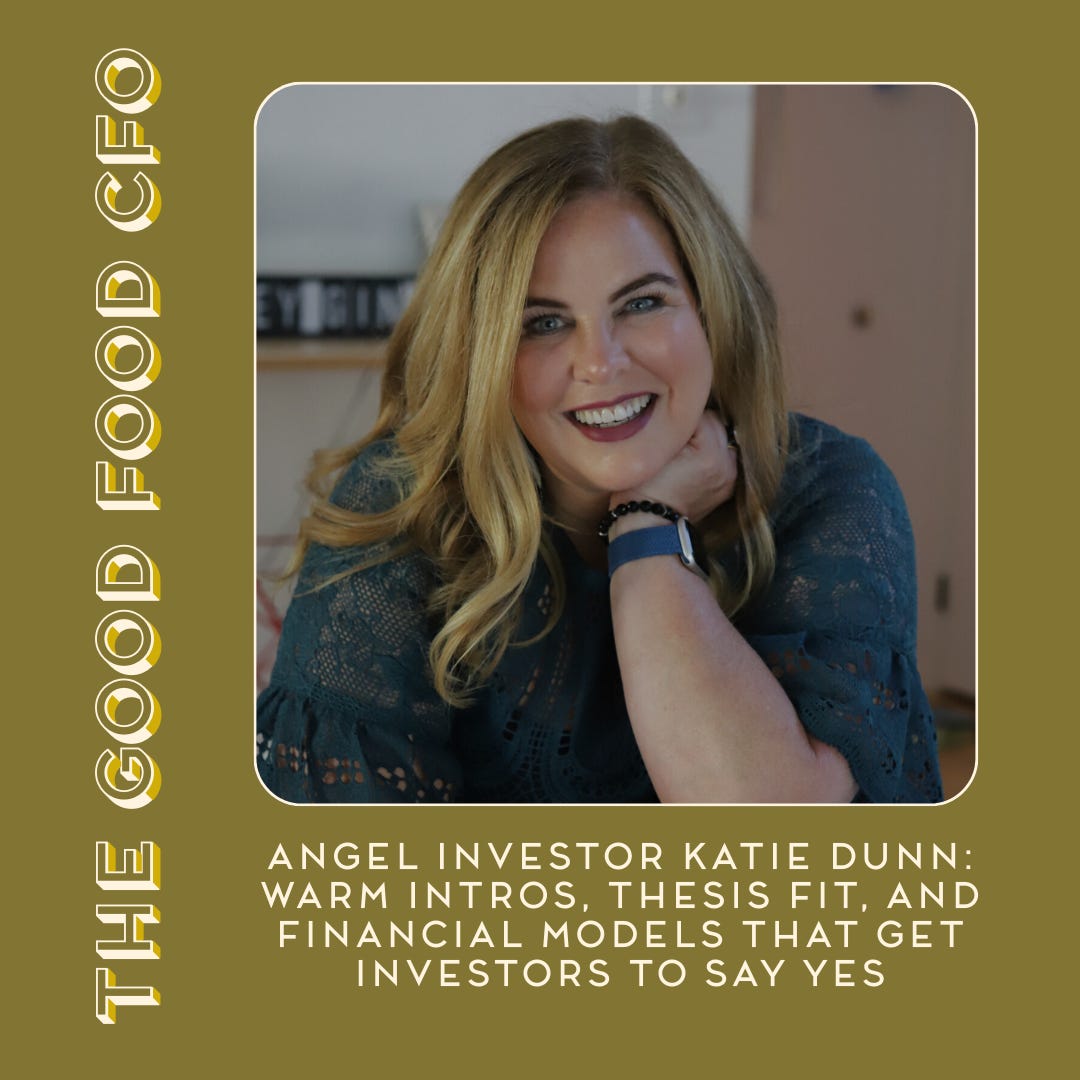
Most food founders think fundraising means perfecting your pitch deck. Angel investor Katie Dunn says you’re starting in the wrong place.In our conversation, Katie breaks down the three fundamentals that actually get investors to meet with you, and say yes: understanding investor thesis (and why it saves you from wasting time), leveraging warm introductions instead of cold pitching, and building a financial model that shows exactly how you’ll reach profitability.We cover the investment basics every founder needs to know—what a safe note actually is, why angels want equity, and whether regional brands can get funded (spoiler: yes, but with different deal structures). Katie also shares her strong recommendation on why your first hire should be finance, not marketing, and how to make it ridiculously easy for investors to want to help you.If you’re considering fundraising or just want to understand how investment actually works in food CPG, this episode gives you the straight talk you need.Connect with Katie:Website: katiedunn.comAdvisory Board: The Masthead StrategyLinkedIn: Katie DunnInstagram: @iamkatiedunnTikTok: @iamkatiedunnJoin The Good Food CFO Community:Follow us on Instagram: @thegoodfoodcfoWatch on YouTube: @thegoodfoodcfo This is a public episode. If you'd like to discuss this with other subscribers or get access to bonus episodes, visit thegoodfoodcfo.substack.com/subscribe
Building a profitable food business without investors isn’t just possible—it’s a strategic choice.Sarah sits down with Daniel Goetz, founder of Good Pop, who’s bootstrapped his popsicle brand for 16 years by prioritizing profitability over growth headlines.Daniel shares practical strategies that kept Good Pop alive and thriving:* Why he sold just 4 popsicles at his “big launch” (and what happened next)* The 3am working capital discovery that kept his business going* Why he focused on going “deep not wide” with retail expansion* How to get packaging and ingredient suppliers invested in your visionHear how forcing profitability from day one shaped every business decision—and why Daniel chose this path after watching funded peers struggle under investor pressure.Connect with Daniel:Website: GoodPopInstagram: @GoodPopLinkedIn: @Daniel GoetzThe Good Food CollectiveJoin The Good Food CFO Community:Follow us on Instagram: @thegoodfoodcfoWatch on YouTube: @thegoodfoodcfoBecome a Member: BABOYOT This is a public episode. If you'd like to discuss this with other subscribers or get access to bonus episodes, visit thegoodfoodcfo.substack.com/subscribe
Sarah sits down with Shelley Elkovich, co-founder and CEO of For Bitter For Worse, to explore the financial strategy behind building a profitable specialty beverage brand. Shelley shares how self-manufacturing became a dual revenue stream through contract manufacturing, allowing her to control costs while generating additional income.The conversation reveals practical insights on sustainable growth versus rapid expansion, how to filter customer feedback without compromising your vision, and the strategic decisions that kept this non-alcoholic cocktail brand resilient through major market shifts. Discover how Shelley evaluates each growth opportunity and makes decisions that prioritize long-term sustainability over short-term wins.Shelley also graciously offered our listeners 20% off their products using the code Sarah20 on their website!Connect with Shelley:Website: For Bitter For WorseInstagram: @forbitterforworseLinkedIn: Shelley ElkovichAmazon: Shop For Bitter For WorseJoin The Good Food CFO Community:Follow us on Instagram: @thegoodfoodcfoWatch on YouTube: @thegoodfoodcfoBecome a Member: BABOYOT This is a public episode. If you'd like to discuss this with other subscribers or get access to bonus episodes, visit thegoodfoodcfo.substack.com/subscribe
Sarah shares real stories from beta testers using The Good Food CFO financial strategy software for the first time:* A founder running five sales channels discovered their revenue tracking wasn’t set up to support strategic decision-making* A 16-year bakery owner finally understood where profit actually goes when monthly debt payments take it right back out* A founder learned why categorizing marketing expenses as cost of goods sold makes their numbers nearly impossible to interpretThe software isn’t just a tool—it’s revealing the blind spots that most founders don’t even know they have. Tune in for practical insights about organizing your financial foundation and unlocking better decision-making in your business.Want this same clarity in your food business? Join our waitlist for 50% off your first month’s subscription.Join The Good Food CFO Community:Follow us on Instagram: @thegoodfoodcfoWatch on YouTube: @thegoodfoodcfoBecome a Member: BABOYOT This is a public episode. If you'd like to discuss this with other subscribers or get access to bonus episodes, visit thegoodfoodcfo.substack.com/subscribe
Can you build a CPG brand without chasing unicorn status? Kelley Scanlin, founder of Pure Simple Foods (parent to Lark-Ellen Farm and Purely Sprouted), shares how she grew from farmer’s market beginnings to operating a state-of-the-art manufacturing facility—all while refusing to compromise on quality.Sarah and Kelley dig into the strategic path most founders overlook, exploring:* Why regional growth beats racing for national distribution* How mission and values guide major business decisions (including which distributors to work with)* The evolution from founder to CEO and knowing your end game from day one* Why slow, intentional scaling protects quality and profitability* The reality check every founder needs: you don’t have to be the next RX Bar* Building with strategy first—not just hoping for viral growthKelley’s honest perspective on defining success differently offers a refreshing alternative to the “grow fast, exit big” narrative. This conversation redefines what CPG success can look like when you build on your own terms.Join The Good Food CFO Community:Follow us on Instagram: @thegoodfoodcfoConnect on LinkedIn: @sarahdelevanWatch on YouTube: @thegoodfoodcfoBecome a Member: BABOYOT This is a public episode. If you'd like to discuss this with other subscribers or get access to bonus episodes, visit thegoodfoodcfo.substack.com/subscribe
Margins matter—but what’s the rest of the financial strategy that transforms good margins into actual profitability and positive cash flow?Sarah lays out the complete three-part framework behind “Profit by Design,” the philosophy helping food founders escape the 70% failure rate. Beyond product margins, you need clarity on your true operating expenses and the ability to build financial scenarios that answer critical questions: How many units do I need to sell to break even? How much capital will this really take? How long until I stop reinvesting?Sarah shares the story of a baker whose scenario modeling revealed she’d need to bake cookies around the clock just to break even—saving her from launching an unsustainable business. Learn why planned losses are easier to navigate than surprises, how to know if you’re on or off track each month, and why having this complete financial roadmap transforms entrepreneurship from constant uncertainty into strategic execution.This is the missing link between understanding your margins and building a food business that actually works financially.Join The Good Food CFO Community:Follow us on Instagram: @thegoodfoodcfoWatch on YouTube: @thegoodfoodcfoBecome a Member: BABOYOT This is a public episode. If you'd like to discuss this with other subscribers or get access to bonus episodes, visit thegoodfoodcfo.substack.com/subscribe
Farmers markets offer food founders the chance to capture high margin sales —but it only matters if you know how to make them profitable. In this episode, Sarah sits down with Catt Fields-White, nationally recognized farmers market expert and founder of the InTents National Farmers Market Conference, to answer real questions from Good Food CFO listeners about maximizing farmers market revenue.What You’ll Learn:* Why Catt told one cookie vendor to raise prices five times before adding production capacity* The margin advantage of farmers markets vs. wholesale distribution (and why it matters for cash flow)* Logistics for selling at 7+ markets weekly: staffing, delivery, and storage solutions* Simple display changes that directly impact sales (including the pricing psychology most vendors miss)* What to do before walking away from an unprofitable market, and moreThinking about launching, growing or revamping a farmer’s market business? This episode is for you!Join The Good Food CFO Community:Follow us on Instagram: @thegoodfoodcfoConnect on LinkedIn: @sarahdelevanWatch on YouTube: @thegoodfoodcfoBecome a Member: BABOYOT This is a public episode. If you'd like to discuss this with other subscribers or get access to bonus episodes, visit thegoodfoodcfo.substack.com/subscribe
What if the secret to massive food business profits isn't growing revenue first? Sarah reveals a counterintuitive "grow last" strategy that transformed a seasonal business from $19K to $107K monthly profits in just two years.This client's 14% gross profit margins were a ticking time bomb – every new sale was actually creating bigger losses. But instead of the typical "sell more" advice, Sarah implemented a radical two-year approach that flipped conventional growth wisdom upside down.Year 1 Strategy: Fix everything inside the business first. Sarah walks through the unsexy but profit-generating work that most founders skip. Revenue stayed flat while profits more than doubled – proving the model worked before scaling.Year 2 Strategy: Revenue growth. But rather than finding new customers or opening a new locations, the goal was to maximize customer value.Tune in as Sarah breaks down her profit assessment process and all the details of the financial and operations strategy that resulted in 5X profit growth.Join The Good Food CFO Community:Follow us on Instagram: @thegoodfoodcfoConnect on LinkedIn: @sarahdelevanWatch on YouTube: @thegoodfoodcfoBecome a Member: BABOYOT This is a public episode. If you'd like to discuss this with other subscribers or get access to bonus episodes, visit thegoodfoodcfo.substack.com/subscribe
What if the secret to a profitable food business isn't scaling bigger, but growing smarter? Sarah challenges the "grow fast or fail" mentality that's crushing food entrepreneurs, revealing why 75% of VC funded businesses fail and sharing a proven approach to sustainable growth.You’ll meet two food founders who made the counterintuitive decision to right-size their businesses - one contracting from national to regional distribution, another strategically eliminating sales channels. The result? Better cash flow, higher profit margins, and businesses they actually love running again.Discover the three warning signs that your business needs right-sizing, why gross profit margins below 50% slowly drain your cash flow, and the specific financial tools Sarah uses to help founders evaluate whether contracting could transform their bottom line. You'll hear practical strategies for building a financially sustainable food business that works for you, not against you. Plus: inspiring updates on where these founders are today- including one successful business exit and a beautiful rebrand that's thriving.Financial Strategy Software is coming soon! Get on the waitlist now at thegoodfoodcfo.com/waitlistJoin The Good Food CFO Community: Follow us on Instagram: @thegoodfoodcfo Connect on LinkedIn: @sarahdelevan Watch on YouTube: @thegoodfoodcfo Become a Member: BABOYOT This is a public episode. If you'd like to discuss this with other subscribers or get access to bonus episodes, visit thegoodfoodcfo.substack.com/subscribe
While most founders obsess over store count, Kartik Das, Founder of Doosra is building repeatable revenue systems. Rather than chasing new accounts Kartik focused on just 15 core retail partners and developed a multi-channel strategy that generates predictable cash flow.Sarah and Kartik dive deep into Doosra’s financial playbook: the 90-day cash flow planning system that breaks large expenses into daily decision points, strategic use of 0% APR credit cards for working capital, and community crowdfunding. Discover why Kartik deliberately turned down major retail opportunities and how he validates market demand through methodical testing rather than expensive guesswork.From creative funding solutions to building systems that scale without burning cash, this episode delivers financial insights food entrepreneurs can use to build financially sustainable businesses.Learn more about DoosraWebsite: www.eatdoosra.comInstagram: @eatdoosraJoin The Good Food CFO Community: Follow us on Instagram: @thegoodfoodcfo Connect on LinkedIn: @sarahdelevan Watch on YouTube: @thegoodfoodcfo Become a Member: BABOYOT This is a public episode. If you'd like to discuss this with other subscribers or get access to bonus episodes, visit thegoodfoodcfo.substack.com/subscribe
The Good Food CFO is launching first-of-its-kind financial strategy software built exclusively for food founders! After seven years of perfecting her approach with hundreds of clients, Sarah's taking everything she knows about building profitable food businesses and turning it into powerful software that doesn't exist anywhere else.This isn't another generic financial tool trying to serve everyone. In this episode Sarah is sharing the three core features launching in the initial version of the software, including a growth simulator that lets you test scenarios for growing your food business before making moves. Adding a new sales channel? Considering a new product? Run the numbers and see when you'll break even, when you’ll become profitable and how much capital you'll need to get there.Sarah shares why she swore she'd never be a tech founder (and what finally changed her mind), how winning June's $10,000 Amber Grant is accelerating development, and her bigger vision to use the software to prove local food businesses deserve serious investment. The software is launching soon! The waitlist is now open - hop on to be the first to know when the Beta version is available. Get on the waitlist today at thegoodfoodcfo.com/waitlistJoin The Good Food CFO Community: Follow us on Instagram: @thegoodfoodcfo Connect on LinkedIn: @sarahdelevan Watch on YouTube: @thegoodfoodcfo Become a Member: BABOYOT This is a public episode. If you'd like to discuss this with other subscribers or get access to bonus episodes, visit thegoodfoodcfo.substack.com/subscribe
What if accepting failure could actually free you to build a stronger food business? Sarah talks with Alyssa Fernandez, founder of Ollin, who is revolutionizing premium baking by filling the gap between conventional and gluten-free cake mixes with Texas-based ancient grain blends.Alyssa shares how she spent 18 months perfecting her heritage grain strategy before launch, why she's deliberately learning every aspect of her business before hiring, and her "bullets before cannonballs" approach to regional expansion. From identifying an underserved market to embracing the discomfort of cold-calling buyers, Alyssa shares raw insights about building a mission-driven CPG brand while staying market-smart. This episode provides essential wisdom for founders navigating the realities of food entrepreneurship.Connect with Ollin:Website: Ollinyall.comInstagram: @ollinyallLinkedIn: Alyssa FernandezJoin The Good Food CFO Community: Follow us on Instagram: @thegoodfoodcfo Connect on LinkedIn: @sarahdelevan Watch on YouTube: @thegoodfoodcfo Become a Member: BABOYOT This is a public episode. If you'd like to discuss this with other subscribers or get access to bonus episodes, visit thegoodfoodcfo.substack.com/subscribe
Poppi's $1.95B exit is being hailed as the new "North Star" for food entrepreneurs – but Sarah isn't buying the headlines.When she dug into the reported investor returns, the math literally doesn't work. Forbes reported returns that would individually equal the entire acquisition price – a mathematical impossibility. But if major publications can't do basic math on these deals, what else are we getting wrong?With $39 million invested over seven years to fuel Poppi's rapid growth from Shark Tank to nationwide distribution, this wasn't a bootstrap success story. Sarah traces the money trail and questions who actually won in this deal. Was it the founders who built the company, or the investors who funded the journey?As more independent food brands get absorbed by giants like PepsiCo, entrepreneurs need to know the real financial playbook – not the fairy tale version making headlines.All findings discussed in this episode are opinions based on publicly available reporting. We've compiled every article, press release, and data source we referenced so you can do your own research and draw your own conclusions.Food Republic: Mother Beverage/Poppi, here’s what happened after Shark TankThe Wall Street Journal: Small Investor Group Scores 88-Fold Return in Poppi SaleSpace Funding: How $105,000 Invested in Poppi Turned Into $9.5 Million: The Power of Early-Stage InvestingFood Navigator: Poppi closes $13.5m funding round led by CAVU Ventures and backed by celebrity investors: 'Poppi is the modern soda for the next generation'Forbes: Viral TikTok Prebiotic Soda Brand Poppi Raises $25 Million Series B To Expand Nationwide Through DSDTaste Radio: How A Four-Letter Word Sparked Poppi’s Billion-Dollar TrajectoryBevNet: Best of 2023Forbes: Poppi Investors Russell Westbrook, 24KGoldn Cash In On $2B PepsiCo DealPress Release from Pepsi Co.Join The Good Food CFO Community: Follow us on Instagram: @thegoodfoodcfo Connect on LinkedIn: @sarahdelevan Watch on YouTube: @thegoodfoodcfo Become a Member: BABOYOT This is a public episode. If you'd like to discuss this with other subscribers or get access to bonus episodes, visit thegoodfoodcfo.substack.com/subscribe
What happens when nostalgia meets innovation? Sarah sits down with Joe Nicchi, founder of CVT Soft Serve, who transformed a simple craving for East Coast soft serve ice cream into a nationwide success now in 3,000 stores.After investing $150,000 in a vintage 1961 truck to bring authentic East Coast soft serve to LA, Joe spent years building cult-like brand loyalty. Then came the pivotal moment: when Jeff Bezos installed CVT's machine in his home, Joe realized he needed to democratize access to quality soft serve. Enter his revolutionary solution – soft serve pouches that deliver the truck experience anywhere, no machine required.Sarah and Joe explore essential strategies for emerging food brands:* Protecting margins like "your life depends on it"* Building regional brand loyalty before retail expansion* Innovation through packaging, not trendy product flavors* Landing on shelves without traditional trade spend using velocity data * Being open about your vision to leverage unexpected opportunitiesFrom breast milk storage bag prototypes to venture backing (you read that right!), Joe's journey proves that sometimes the best business opportunities come from solving your own problems – and being willing to admit when luck plays a role in success.Learn more about CVT Soft ServeWebsite: CVTsoftserve.comInstagram: @cvtsoftserveJoin The Good Food CFO Community: Follow us on Instagram: @thegoodfoodcfo Connect on LinkedIn: @sarahdelevan Watch on YouTube: @thegoodfoodcfo Become a Member: BABOYOT This is a public episode. If you'd like to discuss this with other subscribers or get access to bonus episodes, visit thegoodfoodcfo.substack.com/subscribe
Your inventory numbers are telling a story - but do you know how to read it?  In this episode, Sarah answers listener questions about inventory turnover ratio - the metric that reveals whether your products are converting to cash or quietly draining your resources. She shows how to turn a confusing ratio like "2.75" into clear insights - that inventory turnover ratio means it takes your business 146 days to sell through the product on your shelves. The eye-opener: Sarah shares how a rapidly growing meat company with impressive revenue was hemorrhaging cash because they had eight months of chicken inventory collecting freezer rent. Listen in to learn: Step-by-step calculations for both accrual and cash-based businesses Why industry benchmarks miss the point And how to interpret your number based on lead times, growth plans, and cash runway.  Essential listening for food entrepreneurs ready to make data-driven inventory decisions that protect cash flow. BABOYOT Member Spotlight: Amber Stevenson of Rosebud's Real Food Learn more at www.rosebudsrealfood.com   Join The Good Food CFO Community:  Follow us on Instagram: @thegoodfoodcfo  Connect on LinkedIn: @sarahdelevan  Watch on YouTube: @thegoodfoodcfo  Become a Member: BABOYOT   This is a public episode. If you'd like to discuss this with other subscribers or get access to bonus episodes, visit thegoodfoodcfo.substack.com/subscribe
What happens when you choose to 'control your growth' instead of racing to expand? Sarah sits down with Ilay Karateke, co-founder and CEO of Bezi, the labneh brand redefining growth through meticulous data collection and strategic expansion. Ilay shares her unconventional approach: launching direct-to-retail in handpicked New York stores, doing her own distribution, and running 5-10 demos weekly while tracking every data point. Every retail partner and expansion move is calculated to maintain profitability while building brand equity.  The conversation reveals practical strategies for cash flow positive growth: How Bezi operates without brokers or distributors Why premium retailers outperform bodegas for brand positioning  Using demo performance data to drive every expansion decision For founders questioning whether strategic growth can compete in today's rush-to-scale environment, this episode proves building on your own terms creates sustainable momentum. Learn more about Bezi Website: Eat Bezi Instagram: @eatbezi   Join The Good Food CFO Community:  Follow us on Instagram: @thegoodfoodcfo  Connect on LinkedIn: @sarahdelevan  Watch on YouTube: @thegoodfoodcfo  Become a Member: BABOYOT This is a public episode. If you'd like to discuss this with other subscribers or get access to bonus episodes, visit thegoodfoodcfo.substack.com/subscribe
You asked, Sarah is answering! We love these listener Q&A episodes, and today's cost of goods sold questions are absolute gold. First up: When Google gives you two different definitions for the same term, which one should you trust? Sarah breaks it down and explains gross profit margin vs. net profit margin and which should be your starting point for healthy food business cash flow. Then, we hear from a food founder who thinks they're "double charging" themselves for labor. Spoiler alert – they're not, but Sarah's explanation about theoretical COGS versus actual P&L numbers will probably change how you think about your own spreadsheets. The episode wraps with insights from a recent live Q&A where tiered pricing sparked a fascinating conversation among members. One founder wants to simplify their pricing structure due to rising & fluctuating costs, while another realized tiered pricing may be a benefit. Hear Sarah’s recommendation on how they should determine their best pricing strategies.  Keep those questions coming – we read every single email! You can reach us at hello@thegoodfoodcfo.com   Join The Good Food CFO Community:  Follow us on Instagram: @thegoodfoodcfo  Connect on LinkedIn: @sarahdelevan  Watch on YouTube: @thegoodfoodcfo  Become a Member: BABOYOT   This is a public episode. If you'd like to discuss this with other subscribers or get access to bonus episodes, visit thegoodfoodcfo.substack.com/subscribe
Ever wondered why finding a co-manufacturer feels impossibly difficult? Sarah sits down with Julia Megson, CEO of ReScale, who reveals the shocking reality that co-manufacturers receive about 100 inquiries monthly but only work with one to two brands from that entire pool. Julia's unique background – from auditing over 100 contract manufacturers at Trader Joe's to founding a tech platform specifically for emerging food brands – gives her unparalleled insight into what actually works in co-manufacturing partnerships. She breaks down why this process is more like sales than shopping, and how treating it as a relationship-building exercise can save you up to 30% on production costs. The episode uncovers game-changing strategies most founders never hear: why you should delay your co-manufacturing search as long as possible to strengthen your negotiating position, how to use simple email templates that achieve a 65% response rate (compared to the typical 10%), and why creating competition between manufacturers can dramatically reduce your costs. Julia also tackles the controversial topic of minimum order quantities, revealing they're often negotiable barriers rather than hard equipment limitations. For founders currently overwhelmed by demand but hesitant to make the manufacturing leap, she provides a clear framework for knowing when you're ready and how to present yourself as the kind of partner co-manufacturers actually want to work with. This episode delivers the insider knowledge that could transform your approach to scaling production and building the manufacturing relationships that will fuel your growth.    Learn more about ReScale: Website: tryrescale.comRead the Blog   Join The Good Food CFO Community:  Follow us on Instagram: @thegoodfoodcfo  Connect on LinkedIn: @sarahdelevan  Watch on YouTube: @thegoodfoodcfo  Become a Member: BABOYOT   This is a public episode. If you'd like to discuss this with other subscribers or get access to bonus episodes, visit thegoodfoodcfo.substack.com/subscribe
In this eye-opening episode, Sarah breaks down the harsh food distributor chargeback reality that many founders don't discover until it's too late. Using a real-world example of a brand that invoiced KeHE for $68,267 but received only $13,345 (just 19.5%), she dissects exactly where that money went. From the surprising "initial PO" payment policy that can delay your first check for 3-6 months, to the specific chargebacks that consumed 80% of a brand's revenue, Sarah provides the financial transparency food entrepreneurs desperately need before signing distribution agreements. The episode explores several chargeback categories including intro allowances, free fills, spoilage allowances, and promotional fees – revealing how these can quickly transform an exciting distribution opportunity into a significant cash flow challenge. Sarah shares practical strategies for surviving the distribution onboarding process, emphasizing the importance of “velocity over doors” and suggesting regional distributors as potentially more transparent alternatives to national giants. Tune in for an essential financial reality check that could save your food business from a costly distribution mistake or help you prepare properly for sustainable growth through distribution channels. For content like this delivered straight to your inbox, join our mailing list!    Join The Good Food CFO Community:  Follow us on Instagram: @thegoodfoodcfo  Connect on LinkedIn: @sarahdelevan  Watch on YouTube: @thegoodfoodcfo  Become a Member: BABOYOT   This is a public episode. If you'd like to discuss this with other subscribers or get access to bonus episodes, visit thegoodfoodcfo.substack.com/subscribe
Ever wonder how a food business thrives for four decades without compromising on quality? Sarah sits down with culinary visionary Ariane Daguin, who transformed America's specialty meat landscape with just $15,000 and an unwavering commitment to sustainability. Ariane shares the unvarnished truth about building D'Artagnan from the ground up. She walks us through those challenging first ten years managing tight cash flow, explains why turning down certain growth opportunities actually strengthened her business foundation, and describes the strategic "shotgun clause" she used when buying out her partner who wanted to prioritize rapid growth over maintaining quality standards. For food entrepreneurs navigating today's rising costs and economic uncertainty, Ariane offers practical wisdom: "Don't panic. Whatever goes down goes back up." She explains why economic downturns can become valuable moments to reassess, reinvent, and differentiate your business from competitors. Now mentoring the next generation through her Germinators program while building a new sustainable farm venture with her daughter, Ariane continues sharing insights that food founders won't find in typical business resources. This episode delivers straightforward financial guidance from someone who's weathered four decades of economic cycles while staying true to her founding principles.   Connect with Ariane Daguin AOOA Farm Website: alloneoneall.org Instagram: @arianedaguin Germinators: Learn More   Join The Good Food CFO Community:  Follow us on Instagram: @thegoodfoodcfo  Connect on LinkedIn: @sarahdelevan  Watch on YouTube: @thegoodfoodcfo  Become a Member: BABOYOT This is a public episode. If you'd like to discuss this with other subscribers or get access to bonus episodes, visit thegoodfoodcfo.substack.com/subscribe
loading
Comments