



 Claim Ownership
UNAPOLOGETIC with Ashfaaq Carim
Subscribed: 71Played: 1,579
Subscribe

© 2025 UNAPOLOGETIC
Description
UNAPOLOGETIC is a show that unapologetically looks at the life, times and views of some unapologetic and not so unapologetic humans. Hosted by Ashfaaq Carim
75 Episodes
Reverse
In this episode of UNAPOLOGETIC, historian Abdallah Marouf connects the dots between the closure of Al-Aqsa, Israel’s ultra-right, Pete Hegseth, the dangerously expanding war in Iran, and the belief in a coming Messiah.He explains how a once-marginal religious Zionist movement now holds real political power in Israel, and how its vision of rebuilding the Temple and hastening the Messiah is shaping events on the ground.We explore the closure of Al-Aqsa, the rise of extremist factions, divisions within Israeli society, and the role of US evangelicals in reinforcing these ideas.Marouf breaks down competing Jewish interpretations of the Messiah, the red heifer, and the Temple Mount, and why some believe a world war may be necessary to trigger the end times.
In this episode of UNAPOLOGETIC, Mamoun Fandy, former professor of politics at Georgetown University and current head of the Global Strategy Institute in London, breaks down the escalating conflict involving Israel, the United States, and Iran.He argues this is not one war, but three overlapping wars, each with its own logic: regime change, regional dominance, and economic pressure. Together, they risk destabilising the Middle East and severely disrupting the global economy.We explore how this conflict could weaken entire states, threaten Gulf economies, and reshape global power, potentially benefiting actors like China.Beyond the headlines, this is a conversation about escalation, miscalculation, and why this may be a war that no one truly wins.
In this episode of UNAPOLOGETIC, Rabbi Elhanan Beck delivers one of the most striking critiques of Zionism and the current Israeli-US wars in Gaza, Lebanon, and Iran, you'll hear. He argues that, according to the Torah, the state of Israel has no right to exist, and goes further—describing Benjamin Netanyahu as “Amalek,” a force that pulls people away from God. The Rabbi also claims that if necessary, Israel would use nuclear weapons and that “no price is too high,” even suggesting they would kill millions to secure their goals. We explore the theology behind these views, including the Messiah, the Temple, and the idea of Greater Israel - alongside his belief in Jewish-Muslim coexistence.
In this episode of UNAPOLOGETIC, Dr. Roy Casagranda unpacks 125 years of Iranian history - from the 1901 oil concession and the fall of the Qajar dynasty, to the rise of the Pahlavis, the 1953 CIA-backed coup, the 1979 Islamic Revolution, the Iran–Iraq War, and the emergence of the IRGC, the reform movement in Iran and the JCPOA. He then connects this history to the present moment - where a US-Israel war on Iran threatens to escalate into a much wider far-reaching war.
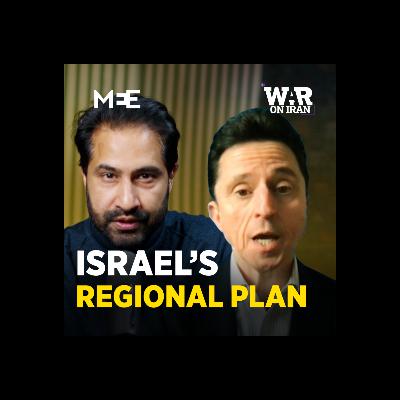
Neil Quilliam, who is a political analyst at Chatham House, joined the UNAPOLOGETIC podcast to discuss how Israel is plunging the USA, the GCC and Iran into an all-out war.By continuing to kill credible leaders and hit key economic infrastructure in Iran, it is diminishing the opportunity for this war to end via a settled compromise, and antagonising Iran to lash out with retaliatory strikes against its neighbours who also host US bases in the region.Who or what will rein Israel in?
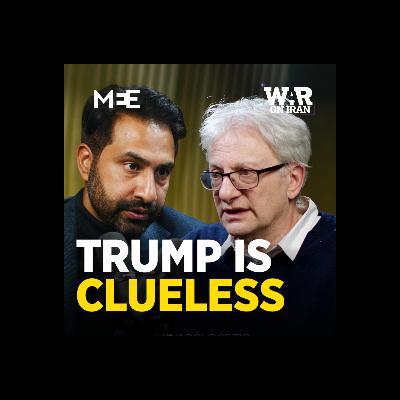
David Hearst, editor in chief of Middle East Eye, appeared on the UNAPOLOGETIC podcast to discuss how Donald Trump may be losing control of the war he started against Iran.When will the war end? Will Benjamin Netanyahu and Trump achieve their goals? What will happen to the Iranian government? What is the future of relations between the GCC and Iran? Could the conflict escalate into a regional war - and could Israel resort to using a nuclear weapon if it finds itself losing?
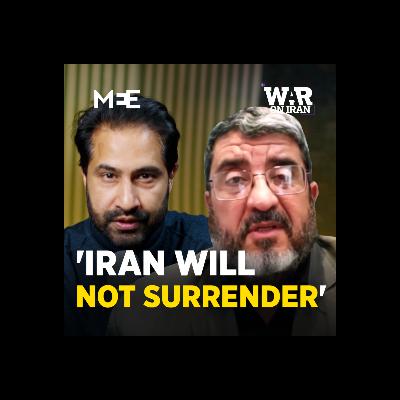
Foad Izadi is a professor of communication at Tehran University. He has been making the rounds across broadcasters recently where he generally conveys the Iranian government’s position.He spoke to UNAPOLOGETIC to discuss the rationale behind Iran’s defence strategy, how he sees Iranian society rallying behind the Iranian state under this attack, the legacy of US-Iranian relations, Iran’s own exercising of ‘brute’ foreign policy, as well as Israel’s attempt to fashion the region according to its own designs.
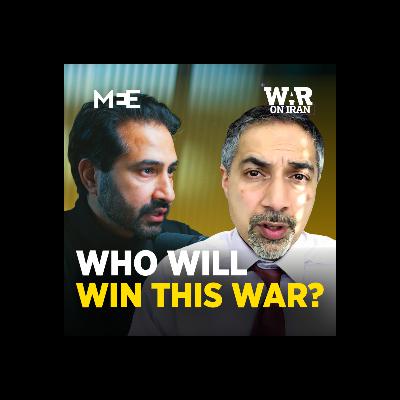
In this episode of UNAPOLOGETIC, we speak to foreign policy analyst Trita Parsi of the Quincy Institute about how long the US-Israel war on Iran will likely last and what its consequences will likely be. The conversation examines Iran’s incentives to keep fighting, Trump’s political calculations, pressure from Gulf states, Netanyahu's opportunism, and how powers like China and Russia may respond if the war drags on
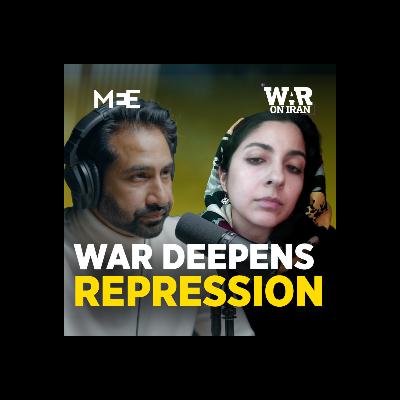
In this episode of UNAPOLOGETIC, we speak to writer and activist Hoda Katebi about the war involving Iran, the United States and Israel, and the complex political forces shaping Iran’s future. Katebi argues that the Iranian government is deeply repressive, but also warns that foreign intervention by the US and Israel risks strengthening that repression rather than weakening it. She explains why many Iranians reject both the Islamic government and attempts to reinstall the Pahlavi monarchy, and why outside military pressure can undermine internal democratic movements. The conversation also explores the fear many Iranians are experiencing as bombing escalates and communication with family members inside Iran becomes difficult. Katebi reflects on her own Iranian American identity, growing up in the United States after 9/11, and how those experiences shaped her political views.

Gulf security expert Andreas Krieg, a senior lecturer at King’s College London, joined the UNAPOLOGETIC podcast to discuss Iran’s response to the US-Israel war against it and the potential ramifications of it.

In this episode of UNAPOLOGETIC, we speak to writer, historian, and lifelong anti-imperialist Tariq Ali about the state of the US empire in an increasingly unstable world. From Trump’s erratic posture on Iran to the long arc of American imperial power, Ali places today’s crises in a deep historical context—stretching from Iran in 1953 to Afghanistan, Iraq, Libya, and Gaza. The conversation examines how US power has adapted rather than declined, how Trump differs from previous presidents in style rather than substance, and why imperial violence is now increasingly exposed rather than hidden. We explore the limits of American dominance, the rise of China as an economic counterweight, and whether the global balance of power is truly shifting. Ali also reflects on Gaza, Western complicity, Arab state paralysis, and what he describes as a process of recolonisation in the Middle East—alongside the dangers and possibilities that lie ahead.
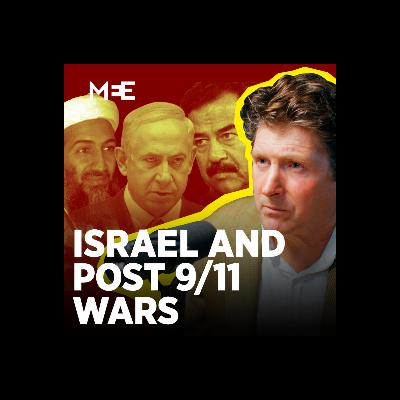
In this episode of UNAPOLOGETIC, retired UK major general Charlie Herbert reflects on 34 years of military service, including Iraq and Afghanistan, and explains how those experiences shaped his views on Israel, Western power, and why he now calls Israel’s actions in Gaza genocide. Chapters 00:00 Intro 02:30 Military Silence Explained 11:30 Gaza And Genocide 22:00 Strategic Failure Israel 33:00 Iraq And Afghanistan 44:30 Western Intervention Hubris 55:30 Power Hypocrisy West 1:06:30 Why Wars Fail 1:17:30 What Justice Requires
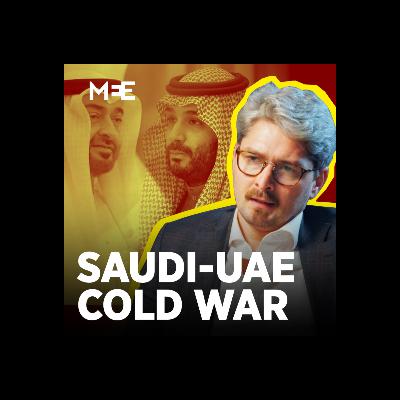
Andreas Krieg - a leading Gulf security expert - joined the UNAPOLOGETIC episode once again. This time, Andreas tried to unpack for us just how impactful the Saudi-UAE cold war is, why it is occurring and what and where are the fault lines of their differences. And what this cold war means for the USA, Israel, Iran and other actors in the region. UNAPOLOGETIC is hosted by Ashfaaq Carim Chapters 00:00 Intro 02:00 Iran Pressure Politics 11:00 Trump And Iran 21:00 Israel Chaos Strategy 30:00 Emirati Iran Calculus 39:00 Emirati Regional Project 49:00 Saudi Strategic Pushback 59:00 Cold War Fault lines 1:09:00 Israel Strategic Exposure 1:20:00 Regional Order Ahead
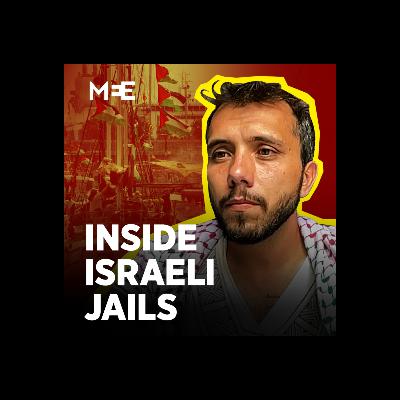
Brazilian activist and one of the organisers of the Global Sumud Flotilla Thiago Avila joins UNAPOLOGETIC.He recounts his detention by Israeli forces after being aboard one of the flotilla boats intercepted by Israel in international waters while en route to break the siege of Gaza.Avila describes the moments leading up to the interception at sea and his arrest, and details the conditions he and other activists faced while held in Israeli detention.He reflects on nightly raids inside prison cells, the use of intimidation and fear, and the psychological tactics used against the activists.UNAPOLOGETIC is hosted by Ashfaaq Carim.Chapters: 00:00 Intro 02:10 The Gaza flotilla mission 06:45 Interception at sea and arrest 13:30 First hours in Israeli detention 20:10 Prison conditions & interrogations 28:40 Shotguns, lasers & psychological warfare 34:20 The moment fear broke 38:50 Solidarity & resistance inside prison 43:30 Chanting “Free Palestine” after raids 48:40 'Nothing compared to what Palestinians endure'
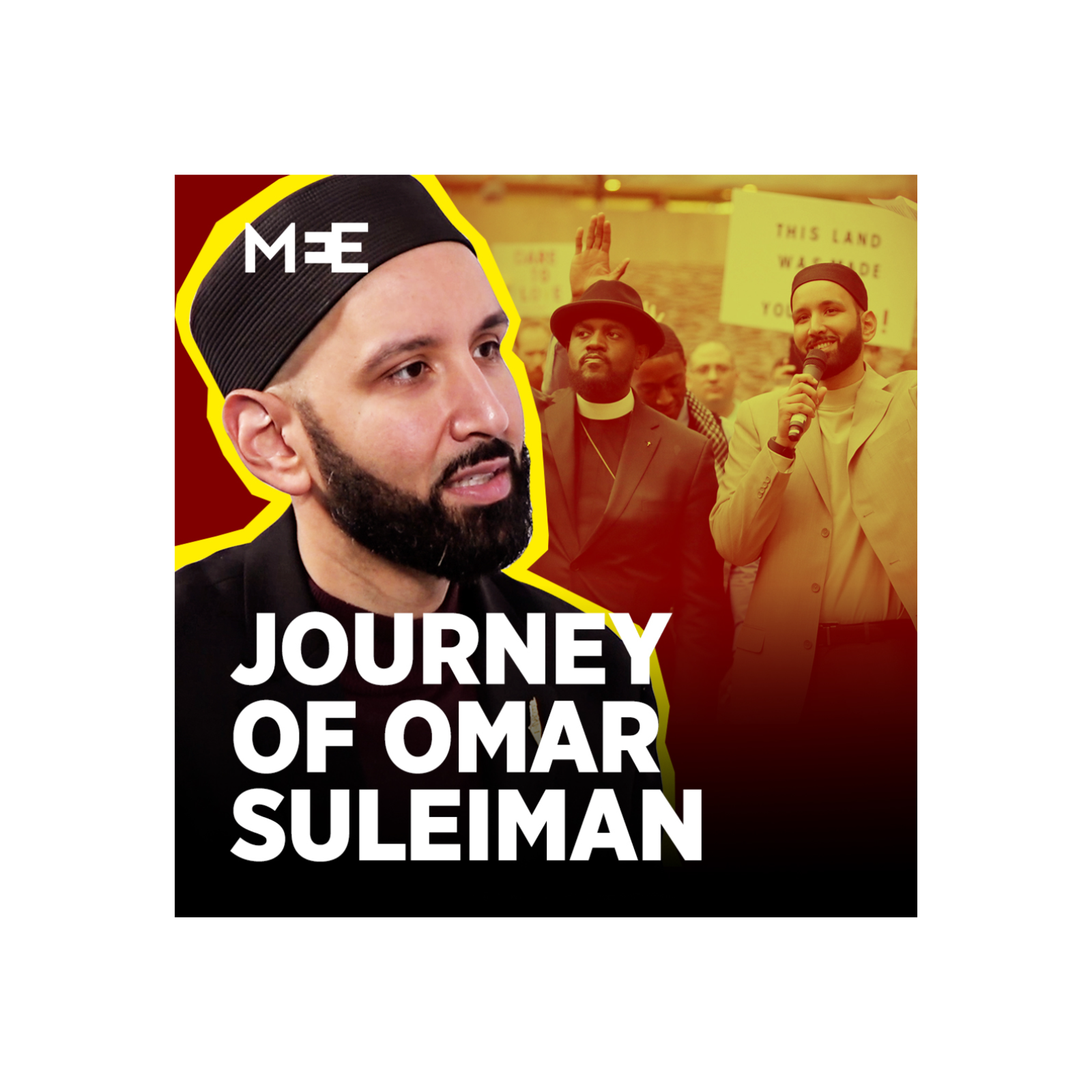
In this conversation with UNAPOLOGETIC, Imam Omar Suleiman reflects on two decades of global politics, the Palestinian struggle, Islamophobia in America, and the meaning of justice in a collapsing world order. Through personal stories of exile, family history, racism, 9/11, and spiritual grounding, he offers a deeply human account of how identity, faith, and political reality have shaped his life. This episode moves between the intimate and the global - from his parents’ journey through displacement, to the trauma and resilience of Palestinians and Syrians, to the shifting political landscape in the US and the rising generational support for Palestine. Omar Suleiman argues that despite oppression, people power is growing, Zionist propaganda is weakening, and justice - while it may take a while - in his view remains inevitable. Chapters 0:00 Intro & Soundbites 2:03 Gaza & Global Indifference 8:11 Childhood & Exile 13:05 Media After 9/11 16:40 Family & Diaspora Roots 23:28 Homeland & Entry Denied 27:03 Syria’s Turning Point 36:42 U.S. Politics & Islamophobia 41:34 Final Reflections
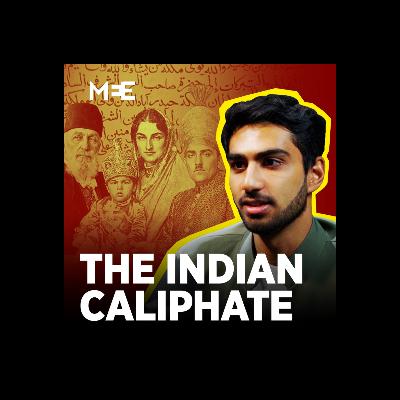
In this episode of UNAPOLOGETIC, we speak with journalist and historian Imran Mulla about his gripping new book The Indian Caliphate: Exiled Ottomans and the Billionaire Prince.The conversation uncovers a forgotten plot to relocate the Ottoman caliphate to India after its abolition in 1924 — a story involving exiled Ottoman royalty, the fabulously wealthy but austere Nizam of Hyderabad, British imperial paranoia, and an audacious vision for a modern, post-imperial caliphate rooted in the subcontinent.Imran walks us through the hidden alliances between Ottoman exiles and Indian Muslim thinkers, the astonishing marriage engineered to fuse two royal houses, the political stakes of Hyderabad’s autonomy under the British, and how the dream of an Indian-centred caliphate was ultimately crushed by partition and rising nationalism.This episode is a sweeping look at empire, modernity, loss, cosmopolitanism, and the forgotten place of India at the centre of the Islamic world — and why recovering this history matters today. UNAPOLOGETIC is hosted by Ashfaaq CarimChapters 0:00 Intro & Soundbites 2:00 Tomb in Rural India 9:00 How This Story Began 18:00 Reinventing the Caliphate 27:00 Hyderabad, Empire and Wealth 36:00 Archives, Travel and Tomb 45:00 Partition, Federation and Palestine 54:00 Empire, Freedom and Violence 1:03:00 Princes, Princesses and Exile 1:12:00 Modernist Pan-Islamic Politics 1:21:00 Anglicised Radicals at Oxford 1:30:00 What History Taught Imran 1:39:00 Writing the Book, Closing
 1
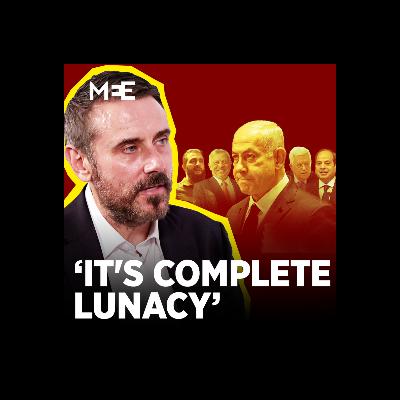
1In this UNAPOLOGETIC episode from the Doha Forum, investigative journalist Jeremy Scahill examines how Israel has carried out a campaign that many experts believe meets the legal and moral definitions of genocide in Gaza, while simultaneously insisting that Palestinians must not resist and that neighbouring states must demilitarise. Scahill situates Israel’s assault within a wider history of US militarism, privatised warfare, and the global security industry, showing how Gaza has become a testing ground for surveillance, weapons and siege tactics.We also discuss the collapse of the 2025 cease-fire, the regional implications of Syria’s political shift, and the contrasting strategies of Gulf states as the war reshapes regional power.Jeremy Scahill is co-founder of The Intercept and author of Blackwater: The Rise of the World’s Most Powerful Mercenary Army and Dirty Wars: The World Is a Battlefield.
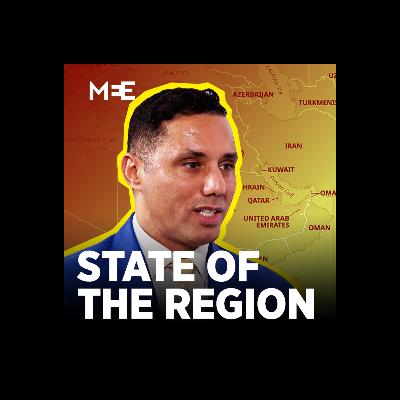
Recorded at the Doha Forum, this episode of UNAPOLOGETIC is in conversation with political scientist Dr. Omar Ashour examines the shifting landscape of the Middle East through three major developments: Syria’s transformation under Ahmed Al-Sharaa, Israel’s ongoing genocide in Gaza, and the widening regional divide illustrated by the UAE’s military support for separatist groups versus Qatar’s increasingly active diplomatic strategy. Ashour breaks down how these dynamics are reshaping alliances, security calculations, and narratives of power across the region. We explore for how long Syria’s new leadership scan continue to allow Israel to bomb it with impunity, how the genocide in Gaza has redrawn regional moral and political lines, and why Gulf states are pursuing sharply divergent approaches to influence. Dr. Omar Ashour is the author of The De-Radicalization of Jihadists, Bullets to Ballots and How ISIS Fights and is a leading expert on military behaviour, armed groups, and security studies.
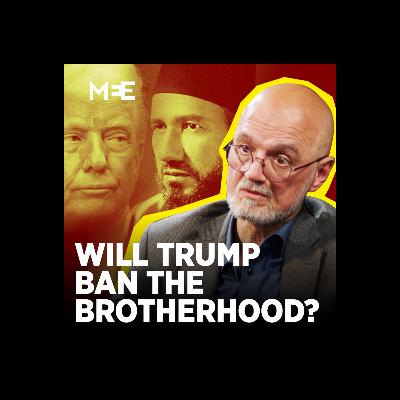
In this episode of UNAPOLOGETIC, political strategist and CEO and founder of the Cordoba Foundation, Anas Altikriti speaks to us about the history of the Muslim Brotherhood and why Trump is looking to now proscribe the organisation in Egypt, Lebanon and Jordan. We examine how the Brotherhood evolved, why authoritarian governments frame it as a threat, and how Western policymakers adopted those narratives. Altikriti discusses Britain’s review of the organisation, the limits of proscription laws, and why banning political movements often strengthens regional dictatorships rather than weakening them. The conversation also explores wider issues: political Islam, public misconceptions, the role of civil society, and how counter-extremism frameworks shape policy. A clear, structured look at an organisation widely debated but rarely understood.Chapters:00:00 Opening and introduction 07:40 What is the Muslim Brotherhood 15:20 Why regimes fear it 22:55 UK review and findings 31:10 Misconceptions about Islamism 39:05 Authoritarian influence abroad 47:00 Proscription laws explained 55:10 Counter-extremism as politics1:03:00 Public narratives and bias 1:10:55 Civil society and power 1:18:20 Western policy contradictions 1:26:15 Future of the movement 1:34:30 Final reflections and outro
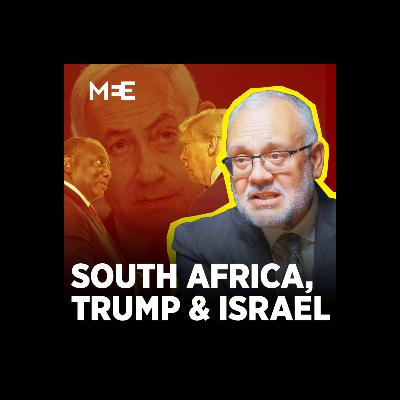
Former South African ambassador to the United States Ebrahim Rasool sits down with Ashfaaq Carim for an unflinching conversation on power, punishment, and principle. Rasool explains how South Africa’s ICJ genocide case against Israel triggered U.S. retaliation—from tariffs to blocked HIV/AIDS funding—while dismantling the “white genocide” narrative pushed by Trump-aligned networks.He also traces the global resurgence of white supremacism, drawing on South Africa’s struggle history to show why Gaza has become the defining moral battleground of our time. The discussion explores MAGA’s evolution, collapsing U.S. soft power, student uprisings, and the growing fractures inside Western politics.From BRICS realignments to ethnic cleansing and global solidarity, Rasool attempt to provide a historically grounded analysis of the world as it is—and where it may be heading.Chapters 00:00 Intro 03:14 Washington appointment tensions 06:09 Maga and lobby pressure 09:10 White genocide narrative 10:14 Timeline of U.S. retaliation 19:40 U.S. wars and isms 39:26 Pro-Israel tactical schisms emerging 43:32 Lessons from apartheid 46:04 ICJ soft power victory 58:07 BRICS and geopolitics 01:14:37 Israel’s endgame and personal reflections

Comments

Download from Google Play

Download from App Store
 United States