


 Claim Ownership
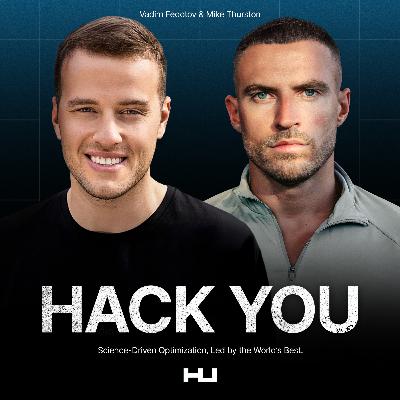
Hack You
Subscribed: 4Played: 57
Subscribe

© Vadim Fedotov, Mike Thurston
Description
Co-hosted by Mike Thurston and Vadim Fedotov, Hack You is a space for real conversations with world-class experts on what you can do to optimise your health and performance.
22 Episodes
Reverse
Dr Anthony Chaffee is a carnivore diet advocate who hasn't eaten fibre in a decade, and this conversation exposes how the plant-based food industry was founded by a religious movement obsessed with suppressing sexual urges, why tobacco companies now run most processed food manufacturers, and what actually happens to your body when you eat only meat.This reveals what changes in your bloodwork after going carnivore, why grain-finished beef is still better than any plant alternative, and how your brain's central governor of fatigue might explain the carb-performance debate better than actual glycogen needs.Timestamps00:00 Introduction01:32 Why diet confusion exists despite overwhelming research02:41 The rise of processed food and tobacco company tactics03:19 Kellogg’s plant-based roots and anti-pleasure ideology08:54 Carnivore and keto diets outperform in clinical trials09:53 Meat misrepresented in nutritional epidemiology studies15:21 How satiety and taste regulate meat consumption20:06 Step-by-step transition from balanced diet to carnivore21:35 Why ketosis might be our natural metabolic state24:59 How to phase out the most toxic plants and foods30:51 Making carnivore work while travelling and dining out36:06 How to choose meat quality and get enough fat40:06 Common mistakes and the problem with low-fat carnivore46:43 Debunking constipation myths and carb-loading culture47:52 Physical performance after proper keto adaptation54:07 Strategic carb use and the central governor theory58:04 Bloodwork changes to expect on a carnivore diet59:37 Hormone and thyroid health transformations01:07:37 Do carnivore diets require supplementation?01:10:07 Final thoughts on creatine and performance hacksDISCLAIMERNothing shared on this podcast is a substitute for professional medical guidance. Please consult a healthcare professional before making any health or lifestyle changes.Hack You Media→ Instagram: https://www.instagram.com/hackyoumedia/→ TikTok: https://www.tiktok.com/@hack.you.media?lang=en→ More from Hack You: https://hackyou.media/#aa19104a-abc1-4697-b0f5-0e81e47e60c5Follow VadimInstagram: https://www.instagram.com/vadim_bioniq/?hl=enBioniq: https://www.bioniq.com/Follow MikeYouTube: https://youtube.com/MikeThurstonInstagram: https://www.instagram.com/mikethurston/?hl=enFirst Things THRST: https://www.youtube.com/FirstThingsThrstFollow AnthonyInstagram: https://www.instagram.com/anthonychaffeemd/?hl=enWebsite: https://www.howtocarnivore.com/
Dr. Torbjörn Ögéus healed his own career-ending knee injury by building a centrifuge from a table fan and injecting himself over 100 times. Now he’s exposing why most stem cell clinics are doing it wrong.You’ll hear why IV stem cell drips usually fail, how spark cells (very small embryonic-like stem cells) stored in your body since you were an embryo could hold the key to regeneration, and how apheresis and exosomes are reshaping what’s possible in regenerative medicine.This one’s packed with new science, wild case studies, and a peek into the next decade of healing and human performance.00:00 Introduction03:00 How a failed knee surgery led to Torbjörn’s first experiment07:23 Why stem cells are suddenly everywhere and still misunderstood10:08 Three main types of stem cells and their real risks13:30 Why IV stem cell treatments often don't work as promised16:14 Discovering a new type of stem cell in adult blood22:58 The breakthrough of multiplying stem cells outside the body26:06 Exosomes explained and why they matter for longevity30:41 Exosome treatment effects across the whole body35:28 Using exosomes for skin and hair instead of Botox38:03 Who stem cell therapy is right for, and who should avoid it43:02 Surprising results from stem cell tests, including “spiritual” healing46:45 How stem cells are combined with other tools to treat joints50:10 Other surprising conditions improved with exosome therapy54:55 The problem with unregulated stem cell treatments59:16 Can apheresis detox your blood, or is it hype?01:04:11 The future of regenerative medicine and what comes nextDISCLAIMERNothing shared on this podcast is a substitute for professional medical guidance. Please consult a healthcare professional before making any health or lifestyle changes.Hack You Media→ Instagram: https://www.instagram.com/hackyoumedia/→ TikTok: https://www.tiktok.com/@hack.you.media?lang=en→ More from Hack You: https://hackyou.media/#aa19104a-abc1-4697-b0f5-0e81e47e60c5» Follow VadimInstagram: https://www.instagram.com/vadim_bioniq/?hl=enBioniq: https://www.bioniq.com/» Follow MikeYouTube: @MikeThurstonInstagram: https://www.instagram.com/mikethurston/?hl=enFirst Things THRST: @FirstThingsThrst» Follow Dr. Torbjörn ÖgéusInstagram: https://www.instagram.com/slsnu/?hl=enWebsite: https://www.sls.nu/enFocus
» Produced by Hack You Media: pioneering a new category of content at the intersection of health performance, entrepreneurship and cognitive optimisationInstagram: https://www.instagram.com/hackyoumedia/Website: https://hackyou.media/After years of Bayesian thinking and updating beliefs based on data, Menno Henselmans proves that frequency beats volume concentration, carb-loading before workouts is mostly psychological, and the average gym-goer leaves 6–7 reps in reserve — basically just doing warmup sets.You’ll hear why training a muscle twice a week hits the sweet spot (with diminishing returns after that), how eating right before bed is fine if you're used to it, and what happens when blood pressure monitoring reveals white coat hypertension.Tune in for why creatine doesn’t work for a third of people, how one hour less sleep can cut your gains by 50%, and why waking up at 4AM to be “productive” is ruining your willpower and nutrient partitioning, not making you Arnold.00:00 Introduction02:20 Menno’s evidence-based approach to hypertrophy and fat loss05:18 Updated protein recommendations for maximum muscle growth07:21 Fasted training revisited with new research findings16:55 Full-body training vs bro splits: what actually works21:02 Weekly frequency sweet spot for strength and hypertrophy25:05 The real deal with reps in reserve and training to failure30:50 Most overrated lifts for hypertrophy and better alternatives35:39 Two-a-day workouts and lessons from elite athletes38:56 Longer rest intervals and how to train more efficiently44:35 Cardio, step count, and actual metabolism myths50:06 Strength training’s long-term edge over cardio for fat loss57:50 Intermittent fasting, cheat meals, and psychological downsides01:05:35 Eating before bed, nutrition myths vs what matters01:07:53 Top three supplements that actually move the needle01:12:23 Why most people don’t need electrolytes or added sodium01:16:45 Blood pressure, testing cadence, and silent health risksDISCLAIMERNothing shared on this podcast is a substitute for professional medical guidance. Please consult a healthcare professional before making any health or lifestyle changes.Hack You Media→ Instagram: https://www.instagram.com/hackyoumedia/→ TikTok: https://www.tiktok.com/@hack.you.media?lang=en→ More from Hack You: https://hackyou.media/#aa19104a-abc1-4697-b0f5-0e81e47e60c5» Follow VadimInstagram: https://www.instagram.com/vadim_bioniq/?hl=enBioniq: https://www.bioniq.com/» Follow MikeYouTube: https://www.youtube.com/mikethurstonInstagram: https://www.instagram.com/mikethurston/?hl=enFirst Things THRST: https://www.youtube.com/firstthingsthrst» Follow MennoInstagram: https://www.instagram.com/menno.henselmans/?hl=enWebsite: https://mennohenselmans.com/
After analysing data from thousands of Whoop users — including elite athletes — Kristen Holmes (@TheLine-Podcast) proves that bypassing your natural pressure for sleep comes at a massive cost to recovery, HRV, and performance.You’ll hear why perceiving your day as threatening instead of challenging destroys your sleep quality, how Zone 2 training is actually a recovery modality (not exercise), and what happens when you fight sleepiness and get a second wind that crushes your melatonin and growth hormone release.Tune in for her jet lag protocol, why meal timing matters more than most people realise, and the single behaviour that improves almost every health metric: consistent sleep timing.00:00 Introduction05:30 Why sleep consistency matters more than sleep duration11:06 Circadian misalignment and lifestyle stress in the UAE14:31 How your perception of stress affects your recovery17:29 Using breathwork like the physiological sigh to lower stress20:44 HRV explained and what it means for recovery27:48 Can short sleep still be good if it’s high quality?31:09 Why food timing is crucial for quality sleep33:17 The problem with skipping breakfast and late-night hunger41:09 Zone 2 cardio as a powerful recovery tool46:17 Surprising benefits of hot tubs and heat exposure51:08 Nine metrics that drive your pace of ageing53:33 Why calorie tracking is still so inaccurate59:19 Blood work integration and AI coaching insights01:05:05 The future of longevity, performance and personal health data01:11:20 The one behaviour that has the biggest impact: sleep timingDISCLAIMERThis episode is NOT affiliated with Whoop.Nothing shared on this podcast is a substitute for professional medical guidance. Please consult a healthcare professional before making any health or lifestyle changes.Hack You Media→ Instagram: https://www.instagram.com/hackyoumedia/→ TikTok: https://www.tiktok.com/@hack.you.media?lang=en→ More from Hack You: https://hackyou.media/#aa19104a-abc1-4697-b0f5-0e81e47e60c5» Follow VadimInstagram: https://www.instagram.com/vadim_bioniq/?hl=enBioniq: https://www.bioniq.com/» Follow MikeYouTube: https://www.youtube.com/@MikeThurstonInstagram: https://www.instagram.com/mikethurston/?hl=enFirst Things THRST: https://www.youtube.com/@FirstThingsThrst» Follow KristenInstagram: https://www.instagram.com/drkristenholmes/LinkedIn: https://www.linkedin.com/in/kristen-holmes/
Dr. Louise Newson is rewriting the menopause conversation — and she’s here to show you why every man needs to understand hormone deficiency, because the women in your life are probably suffering in silence right now.After years of women being dismissed with antidepressants and meditation advice, Louise proves that hormone replacement is as simple as taking iron supplements for deficiency.You’ll hear why your partner’s mood changes, brain fog, and exhaustion might not be stress, how a flawed 2002 study created unnecessary fear that’s still ruining lives, and what happens when women are told their symptoms are just something to accept.Tune in for the signs you need to watch for in partners, mothers, and daughters, why symptoms can start in their 20s and 30s, and how understanding this one thing could save your relationship — or her career.00:00 Introduction02:00 Redefining menopause and why the word is misleading06:20 Why all adults should understand hormone health11:14 Blood tests vs symptom tracking for hormone issues14:38 Natural vs synthetic hormones and common confusion18:46 The medical system’s blind spots around menopause treatment23:16 How testosterone was discovered — and women’s need for it30:22 Common low testosterone symptoms most women overlook36:01 Why lifestyle advice often fails without hormone support41:03 What feeling like “yourself” again actually means47:08 How partners can better support women through hormonal shifts50:11 Why many doctors still dismiss hormones as the cause54:16 Issues with training and cycle-based fitness advice56:59 The 2002 study that wrongly damaged HRT’s reputation01:00:37 The rise of ineffective treatments and misdiagnosesDISCLAIMERNothing shared on this podcast is a substitute for professional medical guidance. Please consult a healthcare professional before making any health or lifestyle changes.Hack You Media→ Instagram: https://www.instagram.com/hackyoumedia/→ TikTok: https://www.tiktok.com/@hack.you.media?lang=en→ More from Hack You: https://hackyou.media/#aa19104a-abc1-4697-b0f5-0e81e47e60c5» Follow VadimInstagram: https://www.instagram.com/vadim_bioniq/?hl=enBioniq: https://www.bioniq.com/» Follow MikeYouTube: https://www.youtube.com/MikeThurstonInstagram: https://www.instagram.com/mikethurston/?hl=enFirst Things THRST: https://www.youtube.com/FirstThingsThrst» Follow LouiseInstagram: https://www.instagram.com/menopause_doctor/?hl=enWebsite: https://www.drlouisenewson.co.uk/
Simon J Hill spent years eating steak for every meal.But when he looked at the longevity research objectively, he couldn’t ignore what the data was telling him about how we age.In this episode, you’ll hear why the healthiest diets share specific characteristics — regardless of whether they’re Mediterranean, pescatarian, or plant-based.Simon shares the three biomarkers that predict metabolic disease better than expensive panels (including one that costs $40 and takes 30 seconds to measure), and why he draws a hard line at plant-exclusive eating even though it might be easier to just eat less meat.00:00 Introduction02:00 Simon’s journey from physiotherapist to nutrition science04:02 Navigating nutrition myths and overwhelming health advice06:52 Why Simon shifted from steak lover to plant-based eating10:37 Understanding themes across healthy diets, not just labels14:31 Plant protein vs animal protein for strength and longevity17:24 Using biomarkers to personalise your diet decisions20:19 Debunking plant protein absorption and muscle building25:50 Early mistakes going vegan and why execution matters31:31 Gut health, microbiome diversity, and eating more plants34:39 Caution around CGMs and over-tracking blood glucose37:48 What happens when you eat too much fibre too fast42:22 Simon’s full lifestyle protocol for diet, training and sleep47:51 Travel rules, front-loading nutrients, and staying flexible49:29 Food hacks for glucose control and when they’re worth it51:28 Five core supplements he actually takes and why55:38 Key nutrients to watch on a plant-based diet01:00:22 Three biomarkers everyone should track01:06:35 How his views on dairy and protein have evolvedDISCLAIMERNothing shared on this podcast is a substitute for professional medical guidance. Please consult a healthcare professional before making any health or lifestyle changes.Hack You Media→ Instagram: https://www.instagram.com/hackyoumedia/→ TikTok: https://www.tiktok.com/@hack.you.media?lang=en→ More from Hack You: https://hackyou.media/#aa19104a-abc1-4697-b0f5-0e81e47e60c5» Follow VadimInstagram: https://www.instagram.com/vadim_bioniq/?hl=enBioniq: https://www.bioniq.com/» Follow MikeYouTube: YouTube.com/MikeThurstonInstagram: https://www.instagram.com/mikethurston/?hl=enFirst Things THRST: YouTube.com/FirstThingsThrst» Follow SimonInstagram: https://www.instagram.com/simonhill/?hl=enWebsite: https://simonhill.komi.io/
» Produced by Hack You Media: pioneering a new category of content at the intersection of health performance, entrepreneurship & cognitive optimisation.Instagram: https://www.instagram.com/hackyoumedia/Website: https://hackyou.media/Dean Henry has been experimenting with peptides for years, and he's seeing results that traditional supplements can't match, but the peptide world is full of fake products and dangerous advice.In this episode, you'll hear which peptides deliver on their promises, the specific protocols he uses for recovery and performance, and why pharma-grade sourcing matters more than you think. Plus, the risks nobody talks about and which peptides are worth considering once you've mastered training, nutrition, and sleep.01:00 Introduction02:00 Why peptides became an obsession and today’s episode focus03:31 Early health struggles that sparked his biohacking journey05:51 Discovering peptides through epithelon and chasing longevity08:58 Why BPC-157 is the most used peptide today12:10 The importance of systemic delivery and why creams don't work15:01 GLP-1 agonists explained: Ozempic, Mounjaro, Retatrutide18:26 Side effects, receptor saturation, and smart dosage strategies22:06 Retatrutide’s effectiveness misunderstood — why hunger isn’t a sign26:02 Proper dosing timelines and why less is usually more31:03 Growth hormone secretagogues and cycling for peak gains34:52 Why pairing Tesamorelin and Ipamorelin matters37:01 How BPC-157 supports recovery and boosts other protocols39:51 GHK-Cu for collagen, aesthetics, and post-surgery healing43:47 Micro-needling GHK-Cu for hair and skin vs systemic use45:38 The “Wolverine stack” and benefits of TB-50048:56 Nootropic peptides: Cerebrolysin, Semax, Selank, and synergy51:37 Why Cerebrolysin only works if injected intramuscular or IV54:56 NAD+ myths, microdosing protocols, and how to actually feel it58:18 SLU-PP for muscle performance and why stacking matters01:02:01 Bioregulators and why most people overlook them01:07:06 Preventive power of bioregulators and dosing cycles01:09:38 Why believers start with BPC-157, not collagen peptidesDISCLAIMERNothing shared on this podcast is a substitute for professional medical guidance. Please consult a healthcare professional before making any health or lifestyle changes.Hack You Media→ Instagram: https://www.instagram.com/hackyoumedia/→ TikTok: https://www.tiktok.com/@hack.you.media?lang=en→ More from Hack You: https://hackyou.media/#aa19104a-abc1-4697-b0f5-0e81e47e60c5» Follow Vadim«Instagram: https://www.instagram.com/vadim_bioniq/?hl=enBioniq: https://www.bioniq.com/» Follow Dean«Instagram: https://www.instagram.com/dean.e.henry/?hl=enWebsite: https://uaepeptides.com/
Brad Schoenfeld has published over 200 peer-reviewed studies on muscle hypertrophy, and his research reveals why most people are training with far less volume than optimal, but adding more sets isn't always the answer.After analysing decades of resistance training data, Brad discovered that the relationship between volume and muscle growth follows a dose-response curve with a point of diminishing returns that varies dramatically between individuals. While some respond to 6 sets per muscle group per week, others need 20+ sets to maximise growth, and the difference comes down to factors most trainers never consider when programming.Tune in to find out your optimal training volume, why the "10 sets per muscle group" recommendation is oversimplified, and the specific markers that tell you when you've crossed from productive to junk volume.00:00 Introduction04:11 Understanding optimal training volume and individual variability09:01 Effective rep ranges and importance of training to near failure13:09 Mixing rep ranges for hypertrophy and the science behind it15:11 Myths debunked by research including rest times and nutrient timing18:23 Clarifying protein timing and muscle protein synthesis windows23:00 Does lifting tempo matter and how to think about it27:23 Eccentric vs concentric movement and site-specific muscle growth30:15 Advanced techniques like eccentric overload and when to use them31:43 Designing a hypertrophy programme with just three sessions a week36:07 The hype and nuance behind training in the lengthened position40:28 Longevity benefits of resistance training beyond aesthetics45:06 Muscle memory explained from neurological and cellular angles47:09 How to adjust training for older individuals49:07 Signs you're under-recovered and when to back off50:49 The future of hypertrophy training through genetic profilingDISCLAIMERNothing shared on this podcast is a substitute for professional medical guidance. Please consult a healthcare professional before making any health or lifestyle changes.Hack You Media→ Instagram: https://www.instagram.com/hackyoumedia/→ TikTok: https://www.tiktok.com/@hack.you.media?lang=en→ More from Hack You: https://hackyou.media/#aa19104a-abc1-4697-b0f5-0e81e47e60c5» Follow Vadim«Instagram: https://www.instagram.com/vadim_bioniq/?hl=enBioniq: https://www.bioniq.com/» Follow Mike«YouTube: youtube.com/MikeThurstonInstagram: https://www.instagram.com/mikethurston/?hl=enFirst Things THRST: youtube.com/FirstThingsThrst» Follow Brad«Instagram: https://www.instagram.com/bradschoenfeldphd/Website: https://linktr.ee/bradschoenfeld
Dr Layne Norton, PhD in nutritional sciences, pro natural bodybuilder, and world champion powerlifter, has built his reputation by cutting through fitness industry noise with hard science, and he's not afraid to fact-check claims made on podcasts with millions of listeners.You'll hear the specific protein distribution research that made him switch from eight meals daily to four, why 1.6 grams per kilogram covers 99% of muscle-building benefits but he still eats 2.5, and his framework for determining whether protein source matters based on total daily intake.00:00 Introduction01:20 The plague of misinformation04:28 How he investigates bogus claims and social media science08:25 Misrepresented studies and how misinformation spreads13:33 Why belief bias often overpowers scientific truth17:17 Changing views on BCAAs and LDL cholesterol24:28 Mendelian randomisation and lifelong LDL exposure29:19 Safety of creatine, even for kids and cognitive health33:27 Protein targets based on goals, not made-up rules36:57 Do protein sources matter once you're eating enough?42:25 Whole food vs whey vs bars in muscle building45:54 Carbs, fats, and why ratios don’t really matter52:31 Why personal preference might be your biggest edge54:33 Anabolic windows and how much protein actually counts59:48 Ideal meal frequency and protein distribution01:07:34 Layne's Mount Rushmore of supplements and dosages01:12:11 Sleep anxiety and the real stress-performance link01:20:58 Current training goals and how he structures sessions01:26:50 When and how to deload based on fatigue01:31:59 Thoughts on peptides and being cautious with trendsDISCLAIMERNothing shared on this podcast is a substitute for professional medical guidance. Please consult a healthcare professional before making any health or lifestyle changes.Hack You Media→ Instagram: https://www.instagram.com/hackyoumedia/→ TikTok: https://www.tiktok.com/@hack.you.media?lang=en→ More from Hack You: https://hackyou.media/#aa19104a-abc1-4697-b0f5-0e81e47e60c5» Follow Vadim«Instagram: https://www.instagram.com/vadim_bioniq/?hl=enBioniq: https://www.bioniq.com/» Follow Mike«YouTube: @MikeThurstonInstagram: https://www.instagram.com/mikethurston/?hl=enFirst Things THRST: @FirstThingsThrst» Follow Layne«Instagram: https://www.instagram.com/biolayne/?hl=enWebsite: https://biolayne.com/
Dr Will Bulsiewicz breaks down why your gut microbiome, 38 trillion bacteria living in your colon, controls far more than digestion. It's the most powerful predictor of inflammation, directly connected to metabolism, hormones, mood, and cognitive function.In this conversation, we unpack fibre as the longevity nutrient, why your gut works like a muscle that needs training, and the four nutritional workhorses that squash inflammation. We explore why variety matters more than "superfood" lists, how athletes can leverage their microbiome for performance, and why starting with diet beats chasing expensive peptides.00:00 Introduction01:20 Why the gut microbiome is central to health and longevity04:14 Why gut health has only recently become mainstream05:21 Simple lifestyle changes that improve the microbiome07:15 How emotional health and human connection impact digestion09:34 Can diet changes actually reverse biological age11:00 The case for fibre as a longevity nutrient12:46 Solving fibre tolerance and building gut strength slowly15:05 Why variety of plants matters more than any one food17:58 When food intolerance needs medical investigation20:12 Why allergy tests are unreliable without personal feedback22:57 Understanding delayed reactions from intolerances vs allergies25:57 Healing your gut without changing your diet first28:01 How exercise and muscle mass affect gut function30:11 The gut performance link in endurance athletes32:10 The role of fermented foods and how to add them34:00 Four key nutrient categories for gut and anti-inflammatory health38:18 The smart way to layer supplements after diet is dialled in42:03 The real value and limitations of gut-healing peptidesDISCLAIMERNothing shared on this podcast is a substitute for professional medical guidance. Please consult a healthcare professional before making any health or lifestyle changes.Hack You Media→ Instagram: https://www.instagram.com/hackyoumedia/→ TikTok: https://www.tiktok.com/@hack.you.media?lang=en→ More from Hack You: https://hackyou.media/#aa19104a-abc1-4697-b0f5-0e81e47e60c5» Follow Vadim«Instagram: https://www.instagram.com/vadim_bioniq/?hl=enBioniq: https://www.bioniq.com/» Follow Dr Bulsiewicz«Instagram: https://www.instagram.com/theguthealthmd/?hl=enWebsite: https://theguthealthmd.com/
Dr. Rupy Aujla is a medical doctor and the founder of The Doctor’s Kitchen, where he champions the idea that food is medicine. In this episode, we break down the real impact of nutrition on health, stripping away trends and diving into evidence-based strategies.From practical tips for eating better to why most people are thinking about wellness backwards, Rupy shares a grounded yet inspiring take on lifestyle medicine. We also explore the gaps in the healthcare system and how he's working to close them. A powerful listen for anyone ready to take their health seriously.00:00 Introduction01:00 From NHS doctor to reversing his own heart condition04:56 Why nutrition is missing from medical school curriculums09:20 Categories of food that support energy and performance13:23 Protein myths, timing, and how much you really need17:16 Processed foods, fertility, and hidden health effects21:07 Why healthy fats are underrated and misunderstood25:46 Best practices for buying and preparing nuts27:44 Cruciferous greens, sprouts, and inflammation-fighting power31:56 Raw vs cooked veggies and the power of fibre36:27 Glycemic index, carbs, and blood sugar debates40:27 When not to eat and structuring fasting windows44:08 Eating late vs early and personalising your fast49:46 What leaky gut really is and why it matters54:37 Why probiotics may be way down your priorities58:10 Supplements that should be higher up your stack01:04:38 Fibre as the overlooked GLP-1 natural booster01:06:22 Thoughts on Ozempic, semaglutide and long-term risksDISCLAIMERNothing shared on this podcast is a substitute for professional medical guidance. Please consult a healthcare professional before making any health or lifestyle changes.Hack You Media→ Instagram: https://www.instagram.com/hackyoumedia/→ TikTok: https://www.tiktok.com/@hack.you.media?lang=en→ More from Hack You: https://hackyou.media/#aa19104a-abc1-4697-b0f5-0e81e47e60c5» Follow Vadim«Instagram: https://www.instagram.com/vadim_bioniq/?hl=enBioniq: https://www.bioniq.com/» Follow Dr. Rupy«Instagram: https://www.instagram.com/doctors_kitchen/?hl=enWebsite: https://www.thedoctorskitchen.com/
Ryan Smith is the founder of TruDiagnostic and a leading voice in biological ageing, hormone science, and health optimisation. In this episode, we get into the real drivers of long-term vitality, why most people are tracking the wrong markers, how to train and supplement based on your biological age, and what bloodwork actually matters.We also touch on the emerging field of methylation clocks and how to think about reversing your true age, not just your appearance. Whether you’re already deep into your health stack or just starting to explore it, this is a sharp, grounded conversation that cuts through the noise.00:00 Introduction02:10 Epigenetics, biological age, and the future of health02:38 Leaving medical school to build a peptide pharmacy04:34 Discovering biological clocks as better health markers06:13 How epigenetic testing works with one drop of blood09:45 Current limits of personalised lifestyle recommendations11:25 Predicting biomarkers and disease risk from methylation15:08 Best diet for longevity across all tested options17:49 Measuring biological age of 11 different organ systems21:33 Tadalafil's surprising longevity benefits and gender split24:43 Social bonds, stress, and psychological health matter26:01 Supplements ranked for biological age improvement29:49 Stronger interventions like SGLT2 inhibitors and fast mimetics33:16 Data on fasting duration and calorie restriction37:00 Best longevity peptides and promising new compounds38:59 Therapeutic plasma exchange and young blood potential42:32 Sleep, sex, and movement as core health levers44:51 Psychedelics and ketamine showing anti-aging promise48:23 When lifestyle changes backfire and how to adjust50:19 How to start testing and find a reliable providerDISCLAIMERNothing shared on this podcast is a substitute for professional medical guidance. Please consult a healthcare professional before making any health or lifestyle changes.Hack You Media→ Instagram: https://www.instagram.com/hackyoumedia/→ TikTok: https://www.tiktok.com/@hack.you.media?lang=en→ More from Hack You: https://hackyou.media/#aa19104a-abc1-4697-b0f5-0e81e47e60c5→ Follow VadimInstagram: https://www.instagram.com/vadim_bioniq/?hl=enBioniq: https://www.bioniq.com/→ Follow RyanWebsite: https://www.trudiagnostic.com/
Vigorous Steve is known for his no-nonsense approach to bodybuilding, hormones, and performance enhancement, and in this episode, he brings that same clarity to a wide-ranging conversation on how to optimise your body without destroying your health.We talk about how to use PEDs responsibly (if at all), why blood work is non-negotiable, and what most people get wrong about testosterone, fertility, and recovery. Steve also opens up about his own journey, how he changed his mind about certain compounds, what he prioritises now, and how to think long-term in a space driven by shortcuts.00:00 Introduction02:00 Why some physiques respond better than others04:23 Steve’s first steroid cycle and the results he saw09:53 Key blood markers to check before starting TRT12:12 Why lifestyle changes should come before any injections15:24 The mental crash after coming off TRT explained17:45 Bodybuilding logic vs long-term health optimisation21:02 Stem cells, testosterone levels, and healing properly24:14 More regular people turning to health optimisation stacks28:36 Estrogen management, aromatase inhibitors, and common mistakes32:51 Hair loss, gyno, and steroid side effects that aren't always drug-related36:15 Growth hormone myths, cosmetic perks, and anti-aging hype39:17 Mini stacks women use without virilising side effects44:40 Taurine, creatine, and underrated supplement combinations49:49 The appeal of mitochondrial stacks for performance and recovery55:46 Mike's curiosity about sustaining peak physique over time58:33 Mitochondrial support as a performance game changer1:03:56 Safe fat loss: mitochondrial peptides vs traditional stimulants1:08:05 Why retatrutide is a game changer for appetite control1:16:19 Are peptides just another health fad or here to stay?1:25:38 The big gap: promising compounds with no human dataDISCLAIMERNothing shared on this podcast is a substitute for professional medical guidance. Please consult a healthcare professional before making any health or lifestyle changes.Hack You Media→ Instagram: https://www.instagram.com/hackyoumedia/→ TikTok: https://www.tiktok.com/@hack.you.media?lang=en→ More from Hack You: https://hackyou.media/#aa19104a-abc1-4697-b0f5-0e81e47e60c5» Follow VadimInstagram: https://www.instagram.com/vadim_bioniq/?hl=enBioniq: https://www.bioniq.com/» Follow MikeYouTube: https://youtube.com/@MikeThurstonInstagram: https://www.instagram.com/mikethurston/?hl=enFirst Things THRST: https://youtube.com/@FirstThingsThrst» Follow SteveInstagram: https://www.instagram.com/vigoroussteve/?hl=enWebsite: https://linktr.ee/vigoroussteve
Stress is unavoidable, but how we respond to it can be completely reprogrammed.In this episode, Dr. Dave Rabin, board-certified psychiatrist and co-founder of Apollo Neuro, explains how to shift your nervous system from survival mode into a state where healing, performance, and connection become possible.We unpack the science of safety, how trauma impacts the body, and why most people live in a chronic stress state without realising it. Dr. Rabin shares how wearable touch therapy, breath work, and intentional habits can create long-term change — even when talk therapy and medications fall short.Timestamps00:00 Introduction02:00 Rethinking the mind-body disconnect in mental health06:49 Understanding stress and how perception shapes its impact10:28 Key signs and biological markers of chronic stress16:35 The vagus nerve’s crucial role in recovery and resilience21:15 Measuring heart rate variability and using it for longevity27:29 Apollo Neuro and triggering safety through vibration30:28 How touch and bass frequencies activate soothing pathways33:20 Chronic stress, fertility, and shutting down reproduction40:09 Trauma’s impact on genes and intergenerational stress44:42 MDMA and ketamine’s path from therapy to recreation49:33 How psychedelics deepen presence and expand awareness54:46 Creating safety and connection in couples therapy57:48 When psychedelics are worth considering and what to try first1:03:30 Top supplements for stress resilience and recovery1:09:12 Tools and substances that support quality sleep1:14:01 Daily habits for structure, restoration, and sustainable energyDISCLAIMERNothing shared on this podcast is a substitute for professional medical guidance. Please consult a healthcare professional before making any health or lifestyle changes.Hack You MediaInstagram: https://www.instagram.com/hackyoumedia/TikTok: https://www.tiktok.com/@hack.you.media?lang=enMore from Hack You: https://hackyou.media/#aa19104a-abc1-4697-b0f5-0e81e47e60c5Follow VadimInstagram: https://www.instagram.com/vadim_bioniq/?hl=enBioniq: https://www.bioniq.com/Follow MikeYouTube: https://youtube.com/MikeThurstonInstagram: https://www.instagram.com/mikethurston/?hl=enFirst Things THRST: https://youtube.com/FirstThingsThrstFollow Dr. RabinInstagram: https://www.instagram.com/drdavidrabin/?hl=enWebsite: https://www.drdave.io/
Dr. Adeel Khan is one of the leading global voices in regenerative medicine and the founder of Eterna Health, a clinic focused on pushing the boundaries of longevity, stem cells, and disease reversal. In this episode, we dive into the science of anti-aging and what the next decade of human health could look like when we treat root causes, not symptoms.We explore how stem cell therapy is evolving, why most people misunderstand biological age, and how inflammation and mitochondrial dysfunction are at the core of nearly every chronic disease. Dr. Khan also breaks down what he's seeing in his most elite patients, what makes protocols effective, and why the future of health is about personalisation and proactive intervention, not waiting for something to go wrong.00:00 Introduction01:00 Living pain-free after 22 years and discovering stem cells04:50 What stem cells actually are and why they often fail07:27 Sorting stem cell myths from real safety concerns09:05 Using stem cells for aging, energy and preventative health10:53 Difference between regenerative and longevity medicine13:45 Who stem cells make sense for15:13 Exosomes explained and how they work with stem cells19:08 Immune system decline and how to restore its function21:42 Daily habits and hidden toxins that impact immune health24:08 Removing microplastics and unlocking body-wide healing25:40 Stem cells vs NK cells and when to avoid stem therapy27:26 Stem cells for chronic pain and how long they can last28:25 Peptides as support and alternative to stem cell therapy33:05 Building a next-gen anti-aging protocol from testing to treatment34:52 Gene therapies becoming real; muscle, brain and mitochondria38:36 Realistic timelines, compounding benefit and biological testing40:40 Stem cells for skin, hair and why it's better than Botox43:24 Why age 120 isn’t just a fantasy and how we might go beyond46:31 GLP-1s, weight loss shortcuts and better metabolic solutions48:35 What’s next: partial cellular reprogramming and self-derived cells50:10 A global shift: new stem cell legality and clinics in the US and DubaiDISCLAIMERNothing shared on this podcast is a substitute for professional medical guidance. Please consult a healthcare professional before making any health or lifestyle changes.Hack You MediaInstagram: https://www.instagram.com/hackyoumedia/TikTok: https://www.tiktok.com/@hack.you.media?lang=enMore from Hack You: https://hackyou.media/#aa19104a-abc1-4697-b0f5-0e81e47e60c5Follow VadimInstagram: https://www.instagram.com/vadim_bioniq/?hl=enBioniq: https://www.bioniq.com/Follow Dr. KhanInstagram: https://www.instagram.com/dr.akhan/?hl=enWebsite: https://eterna.health/
Alex Kikel is a clinician focused on advanced hormone optimisation, mitochondrial health, and neurochemical balance. In this episode, we unpack what it really takes to upgrade the human system at every level.We get into why most people approach optimisation backwards, chasing surface-level tools without building foundational capacity first. Alex breaks down how to layer protocols based on biological priorities: starting with circadian rhythm, blood sugar control, and mineral status, before moving into peptides, thyroid support, and androgen management.We also cover the smart use of methylene blue, the dangers of overusing NAD+, and how to interpret biofeedback in real time.Timestamps:01:00 Starting with mitochondria and how to feel 25 again04:01 Grounding, sunlight and building up mitochondrial potential06:23 Macronutrients, fasting, and feasting for brain energy11:32 Fuelling flexibility with ketones, glucose, oxygen, and choline14:45 Entry-level supplements for cognitive clarity16:52 Basic vs advanced stack: B vitamins to plasmalogens19:10 Methylene blue, brain overdrive, and proper dosing22:53 SLU-PP-332 and the rise of mitochondrial peptides26:14 Understanding MOTS-c and mitochondrial-driven fat loss29:36 Best injectable protocols for cognitive slumps33:21 Measuring peptide efficacy with inflammation markers35:27 NAD+, precursors, detox blockers and delivery methods39:10 Testosterone support via peptides, supplements, and bioregulators44:41 Growth hormone: ipamorelin, tesamorelin, exogenous GH49:20 IGF-1 timing and stacking it post-workout for gains56:00 Splitting GH and tesamorelin for fat loss and performance59:51 Optimal daily protocol: from sunrise to sleep1:06:20 Recovery day protocol with grounding and anti-inflammatory tools1:10:19 Healing peptides: BPC-157, TB-500 and systemic benefits1:14:43 GLP-1s explained: semaglutide to Retatrutide and future therapies1:20:54 Emerging 5-stage agonists and injectable mitochondriaDISCLAIMERNothing shared on this podcast is a substitute for professional medical guidance. Please consult a healthcare professional before making any health or lifestyle changes.Hack You MediaInstagram: https://www.instagram.com/hackyoumedia/TikTok: https://www.tiktok.com/@hack.you.media?lang=enMore: https://hackyou.media/#aa19104a-abc1-4697-b0f5-0e81e47e60c5Follow VadimInstagram: https://www.instagram.com/vadim_bioniq/?hl=enBioniq: https://www.bioniq.com/Follow AlexInstagram: https://www.instagram.com/alex_kikel/?hl=enWebsite: https://theprepcoach.com/
Hormone optimisation is gaining traction, but most people are still getting the basics wrong. In this episode, dual board-certified physician Dr. Kyle Gillett walks us through the full landscape of male and female hormone health — covering everything from thyroid issues and testosterone therapy to peptides, fertility, and long-term HRT use.Kyle shares his framework for safe TRT, why lower doses often work better, and how lifestyle, sleep, nutrition, and stress still outperform any prescription.Whether you’re curious, cautious, or already deep into your health journey, this is one of the most practical, data-driven conversations you’ll hear on the topic.Timestamps:00:00 – Introductions01:00 – Early signs you might need thyroid or hormone optimisation06:12 – Key thyroid symptoms to watch for in daily life18:06 – Nutrients that support thyroid health and how to supplement safely20:07 – Why low testosterone is rising and what’s really causing it26:00 – Introducing the seven health pillars that beat any medication30:57 – Recognising low testosterone symptoms in both men and women40:21 – Can you start and stop TRT without losing fertility?48:25 – Synthetic vs bioidentical hormones and what really matters52:43 – Should women start hormone therapy before menopause begins?57:49 – Peptides explained: why they work and how to think about them1:10:08 – NAD+ versus NMN and NRDISCLAIMER:Nothing shared on this podcast is a substitute for professional medical guidance. Always consult a healthcare professional before making any health or lifestyle changes.Follow Hack You MediaInstagram: https://www.instagram.com/hackyoumedia/TikTok: https://www.tiktok.com/@hack.you.media?lang=enMore from Hack You: https://hackyou.media/#aa19104a-abc1-4697-b0f5-0e81e47e60c5Follow VadimInstagram: https://www.instagram.com/vadim_bioniq/?hl=enBioniq: https://www.bioniq.com/Follow Dr. Kyle GillettInstagram: https://www.instagram.com/kylegillettmd/?hl=enWebsite: https://www.gilletthealth.com/
Dr. Andy Galpin, human performance scientist and coach to some of the world’s top athletes, joins the show to dismantle the overcomplicated, overhyped narratives around health and training.While social media floods us with extremes, Andy brings it back to fundamentals: strength, muscle, and cardio are all non-negotiables, and your plan should match your actual goals – not your ego.He shares what most people get wrong about recovery, why testing before guessing matters, and how to cut through the noise with clear thinking.Timestamps:00:00 Introduction01:00 How science evolves but doesn't replace real-world experience04:48 Muscle growth rates between men and women re-examined10:55 Mind-muscle connection also boosts strength and power13:42 Mental preparation techniques before training sessions16:07 Compete vs Survive vs Improve technique21:32 Optimal training frequency and splitting muscle groups24:09 Why recovery strategies must be highly individualised27:01 Even elite athletes still need to deload29:15 DNA tests are often unhelpful and overhyped34:31 The truth about saunas, cold plunges and hormones40:20 Muscle-building rules that actually matter43:24 Cardio timing and its effect on leg growth50:19 Should you do cardio before or after weights?52:00 Optimising training and recoveryDisclaimerNothing shared on this podcast is a substitute for professional medical guidance. Please consult a healthcare professional before making any health or lifestyle changes.Hack You MediaInstagram: https://www.instagram.com/hackyoumedia/TikTok: https://www.tiktok.com/@hack.you.media?lang=enMore from Hack You: https://hackyou.media/#aa19104a-abc1-4697-b0f5-0e81e47e60c5Follow VadimInstagram: https://www.instagram.com/vadim_bioniq/?hl=enBioniq: https://www.bioniq.com/Follow MikeYouTube: https://youtube.com/@MikeThurstonInstagram: https://www.instagram.com/mikethurston/?hl=enFirst Things THRST: https://youtube.com/@FirstThingsThrst
Welcome to Hack You! In this first episode, we sit down together to set the tone for what this podcast is all about. Hack You is the centre of optimised health and wellness—a space where we break down the systems, habits, and mental models that drive high performance and long-term wellbeing.We get into why we started the show, the types of conversations we want to have, and some of the core themes we’ll be exploring—from stress adaptation and nervous system regulation to discipline, discomfort, and the science behind sustainable change.We have so much in store to show you all, so make sure you're subscribed to not miss an episode.Timestamps:00:00 Launching Hack You Media and shifting into podcasting04:01 Hitting 30 and realising the body needs more attention07:45 Reworking training volume to boost energy and recovery09:09 Stem cells, new protocols, and surprising biohacks11:04 Rethinking food choices after learning from experts12:24 A mind-opening conversation about gene-hacking13:38 Microdosing Cialis and how it became part of the routine17:29 Why some health habits remain taboo when they shouldn’t be19:30 What younger Mike would be shocked to learn today21:35 From strict tracking to intuitive, flexible eating26:42 Realising he didn’t need steroids or the stage to succeed29:33 Exploring cutting-edge treatments like exosomes31:20 Why they launched Hack You as a niche platform32:17 Limitations of mainstream guests and building a new lane34:01 Unpacking food industry lies and why truth matters38:32 Making expert info accessible for real long-term change*Disclaimer*Nothing shared on this podcast is a substitute for professional medical guidance. Please consult a healthcare professional before making any health or lifestyle changes.Hack You Media→ Instagram: https://www.instagram.com/hackyoumedia/→ TikTok: https://www.tiktok.com/@hack.you.media?lang=en→ More from Hack You: https://hackyou.media/#aa19104a-abc1-4697-b0f5-0e81e47e60c5» Follow VadimInstagram: https://www.instagram.com/vadim_bioniq/?hl=enBioniq: https://www.bioniq.com/» Follow MikeYouTube: youtube.com/@MikeThurstonInstagram: https://www.instagram.com/mikethurston/?hl=enFirst Things THRST: youtube.com/@FirstThingsThrst
temp

Comments

Download from Google Play

Download from App Store
 United States