


 Claim Ownership
Strategic Minds
Subscribed: 22Played: 173
Subscribe

© Rich Horwath
Description
Are you tactical or strategic? Research shows that it’s the difference between bankruptcy and a Kevlar competitive advantage.
In a world where bad strategy is the leading cause of business failure, and only one out of every four leaders are truly strategic, strategic fitness is the meta-skill of elite executives.
On Strategic Minds, you’ll journey with New York Times & Wall Street Journal bestselling author Rich Horwath into conversations with extraordinary leaders and world-class experts to learn new ways to think, plan, and act strategically. You’ll discover game-changing insights, tips, and techniques to turbocharge your performance and position you as a true difference-maker in your arena.
In a world where bad strategy is the leading cause of business failure, and only one out of every four leaders are truly strategic, strategic fitness is the meta-skill of elite executives.
On Strategic Minds, you’ll journey with New York Times & Wall Street Journal bestselling author Rich Horwath into conversations with extraordinary leaders and world-class experts to learn new ways to think, plan, and act strategically. You’ll discover game-changing insights, tips, and techniques to turbocharge your performance and position you as a true difference-maker in your arena.
33 Episodes
Reverse
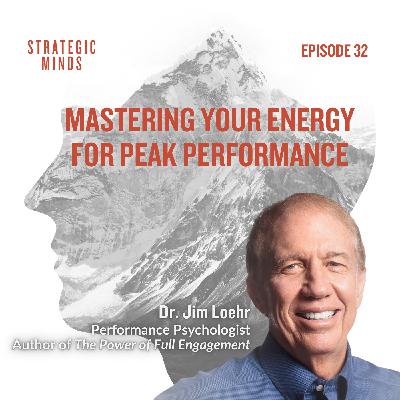
Mental toughness isn’t something you’re born with, it’s a capacity you build. Rich Horwath sits down with Dr. Jim Loehr, widely regarded as the father of mental toughness, to explore what it truly takes to perform at your best under pressure. Drawing from decades of work with elite athletes, executives, military leaders, and physicians, Jim reframes performance as an energy challenge not a time problem.
The conversation moves beyond mindset into the science of energy management, resilience, and recovery. Jim explains why tolerating failure is essential to growth, how pressure becomes a gift when properly trained for, and why purpose is the ultimate anchor in high-stakes environments. From Novak Djokovic to Special Forces teams, the principles remain the same.
The discussion culminates in Jim’s evolution from performance psychology to character. Enduring success, he argues, is rooted in moral and ethical character, integrity, compassion, and kindness, and the disciplined investment of energy into what matters most.
🔑 Key Quotes:
“Mental toughness is an acquired capacity to ignite the full range of your talent and skill on demand, regardless of the situation that you might be in.”
“And we began to realize that the centerpiece of everyone's life is their sense of purpose.”
“If you're doing something for others, that somehow lights you up.”
“But if you're not fully engaged in the time you have, aligned with whatever the mission was, you can spend endless hours — not 10,000 hours, but 100,000 hours — and get worse because you're not there.”
“Energy is the resource that is so precious.”
“We are oscillatory beings in an oscillatory universe.”
“If I want to make a difference in someone's life, an athlete, I can't do it unless I have energy and I'm willing to invest energy unconditionally in them as a person and helping them achieve their mission.”
🏆 Winsights:
Our Winsight comes from Howard Schultz, former CEO of Starbucks, who reminds us that strategic advantage often comes from subtraction, not addition. By intentionally unplugging activities that consumed time and mental space, Starbucks discovered that less truly can be more. Strategy isn’t just about what you choose to do, it’s equally about what you decide to stop doing.
For leaders, this is a powerful discipline. Too often, teams stay busy investing energy, budget, and attention into initiatives that no longer generate meaningful value. Over time, those commitments dilute focus and crowd out the work that actually drives results.
The strategic question is simple but uncomfortable: What should you unplug? Regularly identifying what to stop, meetings, projects, processes, or priorities, creates the space needed to reallocate energy into the most productive areas and fuel sustainable growth.
🔗 Guest Links:
Connect with Jim Loehr
Linkedin: https://www.linkedin.com/in/jim-loehr/
Website: https://www.jim-loehr.com/
Books by Jim Loehr: https://www.jim-loehr.com/books
🚀 Resources from Rich Horwath, Host of Strategic Minds:
🌐 Strategic Thinking Institute Website
👤 Rich Horwath on LinkedIn
🎥 Rich Horwath on YouTube
🐦 Rich Horwath on X
📸 Rich Horwath on Instagram
📘 STRATEGIC Book
🧠 Strategic Fitness System
📬 Free Strategic Thinker Newsletter
🧪 Strategic Quotient (SQ) Assessment
🎧 Listen on Apple Podcasts
🎧 Listen on Spotify
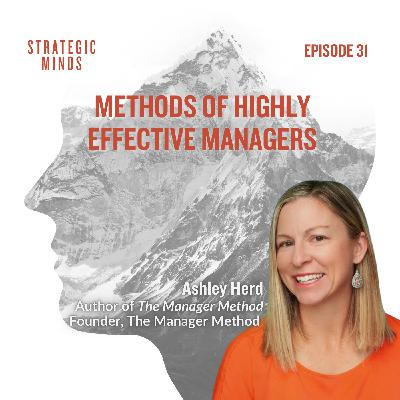
Highly effective managers don’t rely on titles, tactics, or endless to-do lists. They lead with intention. Today, Rich Horwath is joined by Ashley Herd, former Chief People Officer, founder and author of The Manager Method, to unpack what truly drives managerial effectiveness in today’s complex workplace.
Ashley introduces the idea of a “career quilt,” encouraging leaders to see diverse experiences as strategic assets rather than detours. She shares how stepping back from linear career thinking enables managers to make clearer decisions, build stronger relationships, and align daily work with long-term goals.
The discussion centers on Ashley’s Pause–Consider–Act framework, a practical tool for navigating difficult conversations, prioritizing effectively, and leading more humanely. The result is a repeatable approach that helps managers drive results, strengthen engagement, and avoid burnout.
🔑 Key Quotes:
“ One of the ways to move away from being tactical is to think big picture — what are our eventual goals?”
“When you're in HR, I actually think it's incredibly important to be strategic no matter what your role is.”
“I focus on what I want my life to be like and what kind of value I think I can bring to others?”
“The number one driver of employee engagement is whether someone's direct manager explains to them why their role matters, why their work matters, and if they're successful in that role, how that impacts the overall organization, customers.”
🏆 Winsights:
Today’s Winsight comes from Meg Whitman, former CEO of eBay, who reminds us that strategy is as much about exclusion as it is about inclusion. In a world defined by endless to-do lists and constant demands, the real constraint leaders face isn’t ambition…it’s time.
Strategic advantage comes from deciding what not to do. Which products won’t be offered? Which customers won’t be targeted? Which internal initiatives will be deprioritized so resources can be focused where they matter most?
Great strategy isn’t about doing more. It’s about making deliberate trade-offs that concentrate effort, energy, and investment on the few priorities that drive disproportionate value. Be intentional not only about what you pursue but equally clear about what you choose to leave behind.
🔗 Guest Links:
Connect with Ashley Herd:
Linkedin: https://www.linkedin.com/in/ashleyherd/
Website: https://managermethod.com
The Manager Method by Ashley Herd: https://www.managermethod.com/book
🚀 Resources from Rich Horwath, Host of Strategic Minds:
🌐 Strategic Thinking Institute Website
👤 Rich Horwath on LinkedIn
🎥 Rich Horwath on YouTube
🐦 Rich Horwath on X
📸 Rich Horwath on Instagram
📘 STRATEGIC Book
🧠 Strategic Fitness System
📬 Free Strategic Thinker Newsletter
🧪 Strategic Quotient (SQ) Assessment
🎧 Listen on Apple Podcasts
🎧 Listen on Spotify
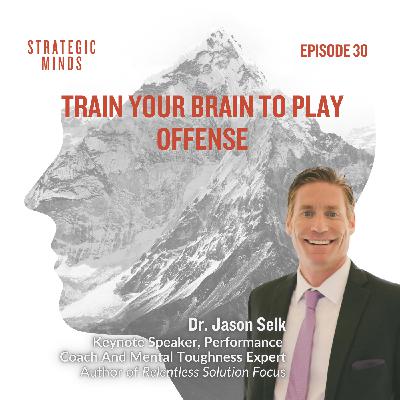
Train Your Brain to Play Offense
Elite performance doesn’t come from motivation: it comes from training. Rich Horwath sits down with Dr. Jason Selk, one of the world’s leading performance coaches, to explore how mental toughness is built, practiced, and sustained under pressure.
Drawing from Selk’s work with championship teams and senior executives, the conversation reframes performance as a discipline rooted in high standards, preparation, and self-image. From his Midwest upbringing to his early test with the St. Louis Cardinals, Selk shares how readiness, not reassurance, separates top performers.
The discussion delivers practical tools leaders can apply immediately, including identity statements, process goals, visualization, and the power of starting each day on offense. The takeaway is clear: when the mind is trained intentionally, strategy and execution follow.
🔑 Key Quotes:
“They say phase one of performance is you must have high standards.”
“I’ll tell you what mental toughness is not. It’s not a pep talk.”
“And I would tell you on a daily basis or at least three or four days a week, a person needs to be doing something called mental workouts and success logs.”
“A person will not outperform nor will they underperform their self image for long.”
“If I get my most important activity done early, my brain knows it’s on offense.”
“The process mentality is the single most effective way for people to control results.”
“If you’re not using visualization on a regular basis, in the business world or in the sports world, there’s no possible way you can be operating at your potential.”
“Overloading channel capacity is the biggest mistake being made in business and in sport. And the magic numbers are 3 and 1. 3 and 1.”
🏆 Winsights:
Sun Tzu the Chinese general and philosopher who had the writings which became the book The Art of War said being unconquerable lies within yourself. As you think about your business, your work, your occupation, are you allowing things to conquer you throughout the day: the small things, the little challenges and issues that pop up, or are you using mental toughness to overcome them?
I’d encourage all of us to think about, at least for a few minutes each day, are we being the best versions of ourselves?
Meaning, are we using mental toughness to overcome the negative, to overcome the challenges, to overcome the problems, and really focus on the solutions, the progress, and what’s going to take us to our goals?
🔗 Guest Links:
Connect with Dr. Jason Selk:
Website: https://www.jasonselk.com/
Instagram: @drjasonselk
Jason Selk on LinkedIn: https://www.linkedin.com/in/dr-jason-selk/
Books by Jason Selk: https://www.jasonselk.com/books
🚀 Resources from Rich Horwath, Host of Strategic Minds:
🌐 Strategic Thinking Institute Website
👤 Rich Horwath on LinkedIn
🎥 Rich Horwath on YouTube
🐦 Rich Horwath on X
📸 Rich Horwath on Instagram
📘 STRATEGIC Book
🧠 Strategic Fitness System
📬 Free Strategic Thinker Newsletter
🧪 Strategic Quotient (SQ) Assessment
🎧 Listen on Apple Podcasts
🎧 Listen on Spotify
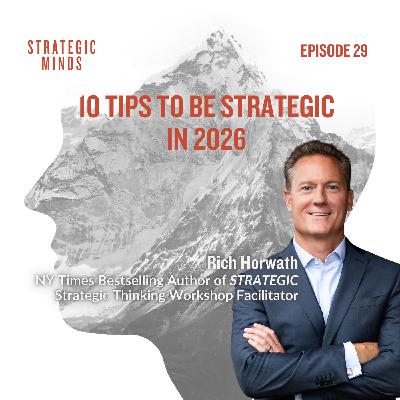
As the year comes to a close, Rich Horwath reflects on lessons learned from working with dozens of organizations and thousands of leaders in 2025. He re-centers the true meaning of strategic: possessing insight that leads to advantage. Rich states that strategy begins with curiosity, an explorer’s mindset focused on learning, reflection, and deliberate choice.
Rich walks listeners through a practical year-in-review framework, balancing achievements with an honest assessment of what didn’t work. From identifying top learnings and priorities to establishing a rallying cry for the year ahead, the goal is clear: turn reflection into actionable insight.
The episode culminates with ten practical ways leaders can sharpen their strategic edge, from managing energy to maximize time to improving decision-making, meetings, and planning. The message is simple but powerful: new growth comes from new thinking, and strategy is a discipline that must be practiced.
🔑 Key Quotes
“In the dictionary, strategic is defined as ‘of or relating to strategy,’ which is not really too helpful, so in my research, the way I’ve defined strategic is possessing insight that leads to advantage.”
“I define insight as a learning that leads to new value.”
“When we think about competition in the market, we want to think about how they are shaping the perception of value.”
“Research by McKinsey shows that the number one driver of revenue growth is the reallocation of resources throughout the year from underperforming areas to ones with greater performance.”
“Leadership can be defined as setting direction and serving others to achieve goals.”
“What does practice for you look like?”
🏆 Winsights
The Winsight for this episode borrows inspiration from Dr. Seuss, reframed through a strategic lens. Most leaders don’t dislike strategy. They avoid it because it feels slow, abstract, and disconnected from the adrenaline of daily execution. Tactics feel productive and thinking feels optional.
But advantage is created by leaders who choose otherwise. While others stay trapped in reaction mode, checking phones, chasing urgency, and fighting fires, strategic leaders deliberately carve out time to think. They step back, question assumptions, and align resources toward what truly moves the business forward.
Strategic thinking isn’t about avoiding action. It’s about elevating it. When leaders schedule time to think, they stop reacting and start leading. That discipline, choosing insight over impulse, is what separates activity from progress.
🚀 Resources from Rich Horwath, Host of Strategic Minds:
🌐 Strategic Thinking Institute Website
👤 Rich Horwath on LinkedIn
🎥 Rich Horwath on YouTube
🐦 Rich Horwath on X
📸 Rich Horwath on Instagram
📘 STRATEGIC Book
🧠 Strategic Fitness System
📬 Free Strategic Thinker Newsletter
🧪 Strategic Quotient (SQ) Assessment
🎧 Listen on Apple Podcasts
🎧 Listen on Spotify
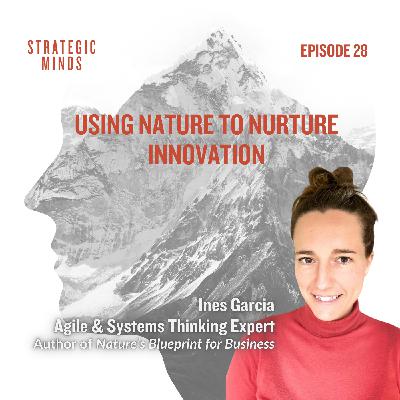
Nature has spent billions of years perfecting strategy, and those lessons can help leaders think more clearly about innovation. Rich Horwath sits down with Ines Garcia, author of Nature’s Blueprint for Business, in this episode of Strategic Minds Podcast to explore how ecosystem principles can strengthen the way organizations work and grow.
She shows why leaders must stay attuned and responsive to their environment, just as ecosystems do when they face tension and change. Ideas like ecotones and “bending without breaking” highlight how the space between teams can spark the most innovation.
Listeners gain a new lens for strategy and instead of adding complexity, tap into natural patterns that have been refined over billions of years. The result is smarter innovation, stronger collaboration, and environments where people and ideas can truly flourish.
🔑 Key Quotes:
“Biomimicry is, Jenin-Bernion says, innovation inspired by nature.”
“The opportunity for where things meet is an opportunity, a space to create, to collect materials and exchange nutrients.”
“We often use value stream mapping to look at within the organizational boundaries, ideally across your value chain, how can you reduce waste of time, right?”
“If after an injury or stress, then have the ability to learn from that into what you’re becoming rather than going back. Even staying still is going backwards.”
“I think that we should quiet our cleverness and observe the natural patterns that govern us.”
“I would encourage leaders to breathe in and look outside.”
“We are in this time of moving from competitive advantage to collaborative advantage.”
“Ninety percent of the materials that we use in our products are wasted. Imagine if you keep them within your value chain or don’t even put them there to start. What a savings of energy, transport, effort, materials cost.”
🏆 Winsight:
Ralph Waldo Emerson wrote, “Nature has made up her mind that what cannot defend itself shall not be defended.” It’s a powerful reminder for leaders: advantage isn’t something we claim, it's something we build. Organizations thrive when they invest in capabilities that genuinely strengthen their position.
As you assess your business, ask whether you’re developing the skills, knowledge, and systems that create a defensible moat. Are you sharpening differentiation or simply maintaining activity? Strategic advantage requires intention, not inertia.
If we’re not actively creating the capabilities that separate us from the competition, we limit our ability to shape the position we want in the market. The question for leaders becomes simple: Are we building what we need to defend, and deserve, our future advantage?
🔗 Links:
Connect with Ines Garcia:
Ines Garcia's website
Nature’s Blueprint for Business (Book)
Ines Garcia on LinkedIn
🚀 Resources from Rich Horwath, Host of Strategic Minds:
🌐 Strategic Thinking Institute Website
👤 Rich Horwath on LinkedIn
🎥 Rich Horwath on YouTube
🐦 Rich Horwath on X
📸 Rich Horwath on Instagram
📘 STRATEGIC Book
🧠 Strategic Fitness System
📬 Free Strategic Thinker Newsletter
🧪 Strategic Quotient (SQ) Assessment
🎧 Listen on Apple Podcasts
🎧 Listen on Spotify

In this episode of Strategic Minds Podcast, Rich sits down with Derin McMains to explore how elite athletes develop clarity, resilience, and composure—and how business leaders can do the same. Drawing from his career in professional baseball and mental performance coaching across major sports, Derin breaks down the “mental game”: the crucial seconds between moments where decisions are shaped.
He shares practical tools leaders can use to shift from emotion-driven reactions to process-driven responses, manage confidence, and prepare with greater intention. The discussion shows how the principles that help athletes perform under pressure can empower executives to show up as the version their team needs most.
🔑 Key Quotes:
“I define the mental game as the game you play between moments.”
“Emotions are great informants and terrible dictators.”
“The scoreboard doesn’t care how you feel. Fans don’t care how you feel. When I focus on confidence and feelings, I’m not focused on the task at hand.”
“Let’s start with identity. How I see myself determines how I see the world.”
“With every goal, it always starts with what problem you’re really trying to solve.”
🏆 Winsights:
Jack Welch once warned that when the rate of change inside a company lags the rate of change outside it, the end is already in motion. Reed Hastings echoes the same truth: organizations rarely die from moving too fast—they die from moving too slow. Together, their message is unmistakable.
Leaders must cultivate a constant urgency around getting better. Value creation isn’t static, and neither is the environment we compete in. The moment we stop evolving, we start falling behind.
Set aside time regularly with your team to look beyond the present and define the future state of the business. Where are you going, and what must change to get there? Strategic progress begins with intentional forward focus.
🔗 Links:
Connect with Derin McMains:
LinkedIn: Derin McMains on LinkedIn
Podcasts: No Show Dogs & The Way 2 Play Free
Instagram: @dmac_mindset
X: @McMainsDmac
🚀 Resources from Rich Horwath, Host of Strategic Minds:
🌐 Strategic Thinking Institute Website
👤 Rich Horwath on LinkedIn
🎥 Rich Horwath on YouTube
🐦 Rich Horwath on X
📸 Rich Horwath on Instagram
📘 STRATEGIC Book
🧠 Strategic Fitness System
📬 Free Strategic Thinker Newsletter
🧪 Strategic Quotient (SQ) Assessment
🎧 Listen on Apple Podcasts
🎧 Listen on Spotify
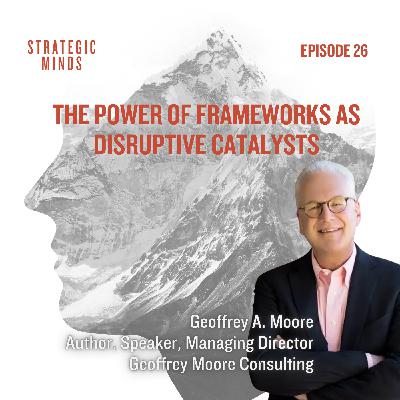
In this episode of Strategic Minds, host Rich Horwath speaks with legendary strategist and bestselling author Geoffrey A. Moore, whose landmark books - Crossing the Chasm, Zone to Win, and Dealing with Darwin - have transformed how leaders approach innovation, disruption, and go-to-market strategy.
Moore shares how storytelling, pattern recognition, and intellectual curiosity shaped his unique approach to strategic frameworks - tools that help executives make smarter decisions in high-risk, low-data environments. Together, they unpack how frameworks act as disruptive catalysts, enabling leaders to synthesize complexity, uncover trapped value, and allocate resources more strategically.
Through examples from Salesforce, Microsoft, and Amazon, Moore explains the power of “zoning the enterprise” - aligning performance, productivity, incubation and transformation zones to optimize investment, leadership focus, and execution. His insights reveal why frameworks are not formulas but languages of strategic alignment, empowering leaders to think clearly and act decisively amid rapid business transformation.
🔑 Key Quotes
“The first part of strategy is context. The second part of the strategy is, okay, where do I apply force to have… it’s like, where’s the fulcrum?”
“I think what Microsoft did under Bill Gates, and Balmer doesn’t get any credit, which is not fair — Gates and Balmer and now Satya — they’ve never been the disruptor. They’ve always been the fast follower, but they’ve been amazing at fast following.”
“I think of it as a pyramid a bit — with business models at the top, and then the business model gives rise to the operating model, and the operating model gives rise to the infrastructure model.”
“I do think you ought to have a library of frameworks. I think you ought to bring them out and kind of say, ‘Is this helping or not?’”
“And resource allocation really is the essence. This is the deliverable from strategy.”
🏆 Winsights
Our Winsight today comes from Charles Darwin, the English naturalist, who said:
“It’s not the strongest of the species that survive, nor the most intelligent, but the ones most responsive to change.”
As you think about your business, your leadership, and your performance, ask yourself: How open to change and evolution am I?
We don’t want to repeat the same patterns year after year or rely on tactics that no longer serve us. Strategic leaders evolve — they adapt, improve, and think differently to drive growth for themselves and their organizations.
🔗 Links:
Connect with Geoffrey A Moore:
Website: https://geoffreyamoore.com/
LinkedIn: Geoffrey A Moore on LinkedIn
Books: Crossing the Chasm: Marketing and Selling Technology Products to Mainstream Customers
Zone to Win: Organizing to Compete in an Age of Disruption
Dealing with Darwin: How great Companies Innovate at Every Stage of Evolution
The Infinite Staircase: What the Universe Tells Us about Life, Ethics, and Morality
🚀 Resources from Rich Horwath, Host of Strategic Minds:
🌐 Strategic Thinking Institute Website
👤 Rich Horwath on LinkedIn
🎥 Rich Horwath on YouTube
🐦 Rich Horwath on X
📸 Rich Horwath on Instagram
📘 STRATEGIC Book
🧠 Strategic Fitness System
📬 Free Strategic Thinker Newsletter
🧪 Strategic Quotient (SQ) Assessment
🎧 Listen on Apple Podcasts
🎧 Listen on Spotify
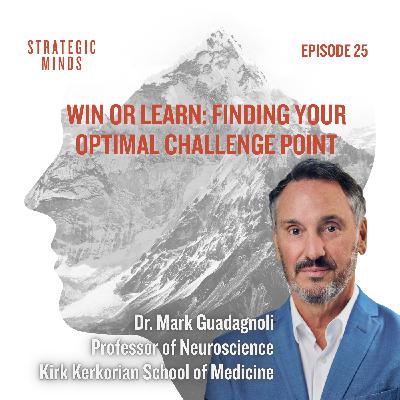
Neuroscientist and performance coach Dr. Mark Guadagnoli joins Rich Horwath to share how neuroscience and strategy intersect to elevate performance under pressure. Drawing from his groundbreaking Challenge Point Framework, Dr. Guadagnoli explains how practicing at your personal edge boosts learning speed, resilience, and confidence.
From the operating room to the boardroom, he shows why the best leaders and teams embrace challenge, reframe failure, and build cultures where it’s not win or lose—it’s win or learn.
🔑 Key Quotes:
“Great performers are also stubborn, tenacious, but they're also open enough to seek out ways to be better.”
“Think about what life is like if you're not worried about whether or not you're going to be successful.”
“Number one, I was successful. Number two, I learned something. Those are the two options, right? If one of those things isn't true, then there's a problem in the system.”
“The first thing that I would say is you don't prepare for high pressure moments with low pressure preparation.”
“And again, you either win or you learn.”
🏆 Winsights:
Tom Gentile, CEO of Spirit Aerosystems, reminds us that time is part of your strategy. Too often, leaders let their calendars control them instead of the other way around. High-performing executives manage time from the top down—batching activities, reducing context switching, and focusing deeply on what drives the most strategic value.
As you plan your week, ask yourself: Are you managing your time, or is your time managing you?
🔗 Links:
Connect with Mark Guadagnoli:
LinkedIn: Mark Guadagnoli on LinkedIn
Books: Practice to Learn, Play to Win: The Answer to Your Best Golf
Human Learning: Biology, Brain, and Neuroscience
Research: https://pubmed.ncbi.nlm.nih.gov/15130871/
🚀 Resources from Rich Horwath, Host of Strategic Minds:
🌐 Strategic Thinking Institute Website
👤 Rich Horwath on LinkedIn
🎥 Rich Horwath on YouTube
🐦 Rich Horwath on X
📸 Rich Horwath on Instagram
📘 STRATEGIC Book
🧠 Strategic Fitness System
📬 Free Strategic Thinker Newsletter
🧪 Strategic Quotient (SQ) Assessment
🎧 Listen on Apple Podcasts
🎧 Listen on Spotify
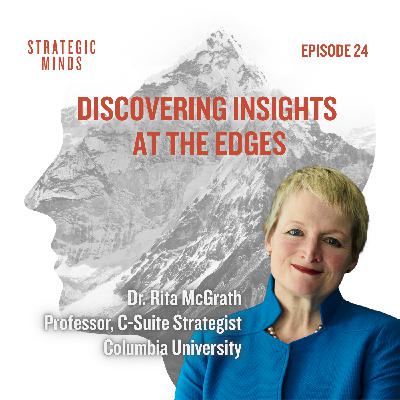
Discovering Insights at the Edges
In this episode, Rich Horwath sits down with Dr. Rita McGrath, Columbia Business School professor and one of the world’s foremost experts on strategy and innovation. Known for her books including, Discovery-Driven Growth, The End of Competitive Advantage and Seeing Around Corners, Dr. McGrath reveals how leaders can identify the early signals of change and shape organizations that thrive through disruption.
From checkpoint-based planning to the power of systematic disengagement, Rita explains how today’s most successful leaders move beyond rigid planning and instead experiment, learn, and adapt. She explores the value of leading indicators, resource reconfiguration, and discovering opportunity in emerging “arenas” rather than static industries.
Together, Rich and Rita discuss why true strategic clarity demands courage—the willingness to stop doing what no longer serves and the foresight to invest in what could be.
🔑 Key Quotes:
“My friend Sharon Price-John, who happens to be the CEO of Build-A-Bear Workshop, has a great way of framing this. She said, stop doing stupid stuff.”
“And what an inflection point does is it changes that envelope of possibilities. So now you can do things you never could before.”
“And if you think about things like a mission, Patagonia would come to mind as a firm that’s centered on that. So I think the first choice you need to make is—what are we sort of centering ourselves on?”
“And if you don’t invest in creating the conditions for those future choices, you just won’t have those choices to make.”
“A leading indicator is giving you some clues about what could be—not necessarily will be—but what could be in the future.”
“And I think strategy is really critical, because how else are you going to have the clarity to say, yes, I’m doing this and not that?”
🏆 Winsights:
This week’s Winsight comes from Reed Hastings, CEO of Netflix, who reminds us: “If you are not genuinely pained by the risk involved in your strategic choices, then it’s not much of a strategy.”
Real strategy requires trade-offs. It’s not about doing everything—it’s about deciding what matters most, and having the discipline to say no to what doesn’t. Great leaders make those choices consciously, knowing that clarity comes with discomfort.
As Hastings suggests, the anxiety we feel when we commit to one path and close off others is the signal that strategy is working. If every decision feels easy, we’re not being strategic—we’re just being busy. This week, reflect on the trade-offs you and your team are making. If you feel that tension, you’re likely heading in the right direction.
🔗 Links:
Connect with Rita Mcgrath:
Website: ritamcgrath.com
LinkedIn: Rita McGrath on LinkedIn
Books:
Seeing Around Corners: How to Spot Inflection Points in Business Before They Happen – Amazon Link
The End of Competitive Advantage: How to Keep Your Strategy Moving as Fast as Your Business — Amazon link
Discovery-Driven Growth--Amazon Link
The Entrepreneurial Mindset: Strategies for Continuously Creating Opportunity in an Age of Uncertainty — Amazon Link
🚀 Resources from Rich Horwath, Host of Strategic Minds:
🌐 Strategic Thinking Institute Website
👤 Rich Horwath on LinkedIn
🎥 Rich Horwath on YouTube
🐦 Rich Horwath on X
📸 Rich Horwath on Instagram
📘 STRATEGIC Book
🧠 Strategic Fitness System
📬 Free Strategic Thinker Newsletter
🧪 Strategic Quotient (SQ) Assessment
🎧 Listen on Apple Podcasts
🎧 Listen on Spotify
The Octopus Approach to AI
In this episode, Rich sits down with Stephen Wunker, innovation strategist, author, and Managing Director at New Markets Advisors. As the co-author of AI and the Octopus Organization, Steve brings decades of experience helping companies harness innovation to drive real strategic change.
Together, Rich and Steve explore how artificial intelligence is transforming the way organizations think, decide, and lead. They discuss the octopus as a metaphor for distributed intelligence—where agility at the edges connects seamlessly to alignment at the core—and share a practical framework for building the “superintelligent firm.”
From shifting the role of managers to freeing time for creativity and connection, this episode uncovers how leaders can use AI to reshape their organizations for the future.
If you’re looking to understand how strategy and AI truly intersect—and how to prepare your business for what’s next—this conversation is for you.
🔑 Key Quotes:
“AI has the ability to free up so much time that’s spent gathering and processing information. The real promise is giving people more time to coach, collaborate, and connect.”
“AI creates a fluidity of information—like a neural necklace in an octopus—enabling coordination but also potential dysfunction if left unmanaged.”
“AI brings intelligence and rapid action to the edge of the organization, empowering frontline teams while keeping decisions within smart guardrails.”
“In AI-infused workplaces, middle managers move from spending 25% of their time with people to 65%. That’s a massive unlock of capability.”
“Great ideas are easy if you start with great questions.”
⏱️ Timestamps:
(00:00) Deep Dive Interview with Stephen Wunker
(42:38) Practice Makes Profit
(45:18) League of Strategic Minds
(46:49) Winsights: Ideas for Advantage
💰 Practice Makes Profit:
Rich challenges leaders to take a strategic pause and think about their career evolution — not just where they are, but where they want to go.
He outlines a simple framework used with executives to guide this reflection. Rich reminds listeners that effective leaders design their future, building each career move as a deliberate step toward their end game.
🧠 League of Strategic Minds:
This listener's question: “What should a one-page business plan include?”
Rich recommends creating a StrategyPrint — a clear, one-page snapshot of how your business creates value. He also suggests including your purpose, mission, vision, and values at the top to keep your plan anchored in intent.
Listeners can submit their own questions at StrategySkills.com for a chance to be featured — and win some Strategic Minds swag.
🏆 Winsights:
Rich closes with a Winsight — an idea for advantage — from Cal Henderson, co-founder of Slack, who asks:
“What are the things that are most strategically important — and am I allocating my time to them correctly?”
It’s easy for leaders to get lost in the weeds. Rich reminds teams to step back and structure their discussions around what truly drives the business forward.
If your meetings are filled with tactics, your organization will stay tactical. Strategy begins with how you spend your time.
🔗 Links:
📘 AI and the Octopus Organization: Building the Superintelligent Firm: Amazon Link
📘Costovation: Innovation that Gives Your Customers Exactly What They Want–and Nothing More: Amazon Link
📘 The Innovative Leader: Step-by-Step Lessons from Top Innovators For You and Your Organization: Amazon Link
📘 Jobs To Be Done: A Roadmap for Customer-Centered Innovation: Amazon Link
💼 Stephen Wunker on LinkedIn: linkedin.com/in/stephenwunker
🚀 Subscribe to Strategic Minds:
🌐 Strategic Thinking Institute Website
👤 Rich Horwath on LinkedIn
🎥 Rich Horwath on YouTube
🐦 Rich Horwath on X
📸 Rich Horwath on Instagram
📘 STRATEGIC Book
🧠 Strategic Fitness System
📬 Free Strategic Thinker Newsletter
🧪 Strategic Quotient (SQ) Assessment
🎧 Listen on Apple Podcasts
🎧 Listen on Spotify
Strategy: The Art of Shaping the Future
In this episode, Rich sits down with renowned strategist, psychologist, and innovation expert Dr. Max McKeown. As the author of The Strategy Book, SuperAdaptability, and several other bestsellers, Max brings a uniquely creative lens to the world of strategic thinking — blending research, live visual art, and a deep appreciation for paradox.
Together, Rich and Max explore what strategy really is, how imagination fuels innovation, and why developing a rhythm to your strategic work is essential in today’s ever-changing world. With insight, humor, and sharp metaphors, this episode offers a powerful reframing of how leaders can shape the future.
If you're looking to reconnect with the why behind your strategy — and equip yourself with creative tools to thrive — this episode is for you.
🔑 Key Quotes:
“Strategy is about shaping the future.”
“Strategy is everything you need to get to where you want to go. Strategy is everything — but everything is not strategy.”
“One organization I'm thinking about has a strategic rhythm to their work… slow, slow, quick, quick, slow.”
“I define innovation as being practical creativity — making new ideas useful.”
⏱️ Timestamps:
(00:00) Deep Dive Interview with Dr. Max McKeown
(1:00:45) Practice Makes Profit
(1:04:24) League of Strategic Minds
(1:06:10) Winsights: Ideas for Advantage
💰 Practice Makes Profit:
In this segment, Rich highlights the value chain as a powerful tool for sharpening strategic thinking. Originally developed by Michael Porter, the value chain breaks a business into primary activities (like production, operations, marketing, or sales) and the supporting secondary activities that enable them. By mapping these activities—whether at the industry level, such as bean production through roasting in the coffee industry, or at the company level, like Uber’s operations spanning rides, delivery, and freight—leaders can see where differentiation and costs shape customer value. Comparing your value chain against competitors’ makes it easier to identify areas of competitive advantage and disadvantage, offering a practical way to practice strategic thinking.
🧠 League of Strategic Minds:
This listener Q&A tackled the question, “How can I tell if my strategy is working?” Rich explained that one common pitfall is changing strategies too quickly without truly testing them. The key lies in setting measurable objectives with clear timeframes, then building in milestones to track progress along the way. For example, instead of aiming vaguely to increase sales by 15% over the year, a leader might target 3% growth in Q1, 6% by Q2, and 10% by Q3. These checkpoints create a clear rhythm for evaluation, allowing leaders to adjust thoughtfully rather than guessing whether their strategy is paying off.
🏆 Winsights:
To close the episode, Rich shared a quote from Olympic gold medal gymnast Shannon Miller, who observed that at the highest levels of competition, everyone is talented and works hard, but what separates the gold medalists from the silver medalists is the mental game. The insight applies equally to business: mental fitness is a strategic advantage. Rich encouraged listeners to build their own mental game by starting the day with short “mental workouts” to increase focus and resilience, positioning themselves to perform at their best when it matters most.
🔗 Links:
📘 SuperAdaptability
📘 The Strategy Book
📘 The Innovation Book
📘 The Innovator’s Book
🌐 TheSpeedStrategy.com
🎥 Max McKeown Live Drawings
🚀 Subscribe to Strategic Minds:
🌐 Strategic Thinking Institute Website
👤 Rich Horwath on LinkedIn
🎥 Rich Horwath on YouTube
🐦 Rich Horwath on X
📸 Rich Horwath on Instagram
📘 STRATEGIC Book
🧠 Strategic Fitness System
📬 Free Strategic Thinker Newsletter
🧪 Strategic Quotient (SQ) Assessment
🎧 Listen on Apple Podcasts
🎧 Listen on Spotify
In this episode, Rich sits down with Mo Edjlali, mindfulness innovator, entrepreneur, and founder of Mindful Leader. With more than 25 years of cross-industry experience, Mo has helped shape how mindfulness is applied in the workplace. His book, Open MBSR, reimagines the future of mindfulness in organizational life.
Together, Rich and Mo explore the intersections of mindfulness, leadership, and strategy—examining how leaders can build self-awareness, navigate paradoxes, and bring greater presence to their decision-making.
If you're curious about how contemplative practices can influence performance and leadership, this conversation offers practical insights and powerful reframes.
🔑 Key Quotes:
“The practice of mindfulness is paying attention to the present moment with openness and curiosity.”
“Just turn off the noise and be alone with your thoughts. And there's no excuse not to do that.”
“I think it's very difficult to have situational awareness if you don't have self-awareness. And if you do have situational awareness, but you don't have self-awareness, then it might be difficult to share what you've discovered in ways that are effective and that rally folks around.”
“I'm a staunch advocate for this idea of dialectic thinking to get us to just remember that idea of balance, almost like the yin and the yang… We have to find balance, to think in paradox, like we could accept who we are fully and we could want to become a better person.”
💰 Practice Makes Profit:
Leadership inconsistency is one of the top reasons employees leave organizations. Just as athletes want referees to call the game consistently, teams want their leaders to act with clarity and stability. One powerful tool? Leadership principles. These short, actionable statements help guide how leaders show up and make decisions — every day. By practicing them consistently, leaders build trust, foster alignment, and create the conditions for lasting performance.
🧠 League of Strategic Minds:
Listener Question: How do you define leadership?
Leadership is the ability to set a clear direction and support others in achieving shared goals. Great leaders don't just chart a path — they equip their teams with the tools, training, and guidance to succeed. If you'd like to submit a question for this segment, visit strategyskills.com. Selected entries receive exclusive Strategic Minds swag.
🏆 Winsights: Ideas for Advantage
Today’s Winsight comes from David Novak, former CEO of Yum! Brands:
“Take time to reflect. It’s the stillness that leads to the action.”
Strategic thinkers don’t just do — they pause. Set aside 30 minutes each week to step off the activity treadmill and ask yourself: What am I doing? Why am I doing it? How could I do it better? The stillness might just be your biggest advantage.
⏱️ Timestamps:
(00:00) Deep Dive Interview with Mo Edjlali
(38:52) Practice Makes Profit
(41:33) League of Strategic Minds
(44:20) Winsights: Ideas for Advantage
🔗 Links:
Open MBSR: Reimagining the Future of Mindfulness: https://www.amazon.com/Open-MSBR-Vision-Framework-Mindfulness/dp/1119988632
Mindful Leader: https://www.mindfulleader.org/
Mo Edjlali on LinkedIn: https://www.linkedin.com/in/medjlali/
🚀 Subscribe to Strategic Minds
Strategic Thinking Institute Website
Rich Horwath on LinkedIn
Rich Horwath on YouTube
Rich Horwath on X
Rich Horwath on Instagram
STRATEGIC Book
Strategic Fitness System
Free Strategic Thinker Newsletter
Strategic Quotient (SQ) Assessment
🎧 Listen on Apple Podcasts
🎧 Listen on Spotify
How can leaders develop winning strategy by solving competition-based problems?
In this episode, Rich sits down with Martin Reeves — chairman of the BCG Henderson Institute, prolific business strategist, and co-author of books like The Imagination Machine, Your Strategy Needs a Strategy, and his recently published work, Like: The Button that Changed the World. Martin shares why great strategies often require reframing the real problem, how leaders can deploy collective imagination, and why strategic advantage is always a moving target.
He also explores the rare but essential trait of ambidexterity — being able to exploit what works while continuing to explore what’s next — and outlines why in today’s fast-changing world, strategy must evolve from a plan to a practice.
🔑 Key Quotes:
“I have a very pragmatic definition of strategy in that it's any systematic, so not just random, any systematic pattern of thought or action which biases the probability, not the certainty, biases the probability of favorable competitive outcomes.”
“Well, the basic idea is you've got to solve a competitive problem and therefore what problem you're solving depends upon the competitive situation.”
“We kept bumping into this idea of what the strategists call ambidexterity, which is the ability to explore and exploit, to do the growth thing as well as the efficiency thing is extremely valuable, but also quite rare.”
“As a 35-year veteran strategist, I can't remember a single assignment where the given problem, the assumed problem, was the actual problem. There was always the need to reframe.”
“We may think about the strategy of large corporations in terms of efficiency and deduction and analysis, but actually now with the pace of change, also every company needs, even at scale, to be entrepreneurial and therefore it needs to deploy collective imagination.”
“So essentially, competitive advantage involves doing difficult and valuable things, which you can do, which create value for customers, but which are hard for others to imitate.”
🧠 Practice Makes Profit:
Rich reflects on how to avoid chasing the shiny objects in your business and start assessing opportunities objectively.
🎯 League of Strategic Minds:
How can leaders prepare their teams for a productive strategy off-site meeting?
🏆 Winsight:
Former LinkedIn CEO Jeff Weiner’s perspective on effective time management and how you can apply it to your work.
⏱ Time Stamps:
(00:00) Deep Dive Interview with Martin Reeves
(52:46) Practice Makes Profit
(55:13) League of Strategic Minds
(57:10) Winsights, Ideas for Advantage
🔗 Links:
📕 Like: The Button That Changed the World
📕 Your Strategy Needs a Strategy
📕 The Imagination Machine
🔗 https://www.linkedin.com/in/martin-reeves/
🚀 Subscribe to Strategic Minds
Strategic Thinking Institute Website
Rich Horwath on LinkedIn
Rich Horwath on YouTube
Rich Horwath on X
Rich Horwath on Instagram
STRATEGIC Book
Strategic Fitness System
Free Strategic Thinker Newsletter
Strategic Quotient (SQ) Assessment
🎧 Listen on Apple Podcasts
🎧 Listen on Spotify
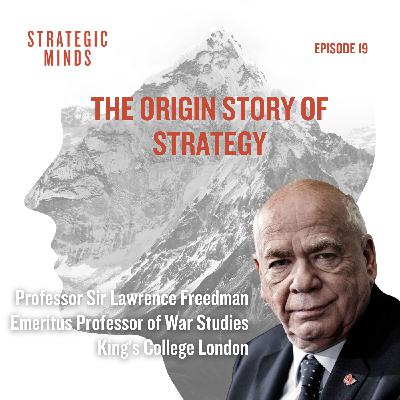
How can leaders develop strategies that adapt to uncertainty and avoid the pitfalls of overconfidence?
In this episode, Rich sits down with Professor Sir Lawrence Freedman — Emeritus Professor of War Studies at King’s College London and one of the world’s leading scholars on strategy, international relations, and military history. Knighted for his contributions and the official historian of the Falklands Campaign, Sir Lawrence has authored seminal works including Strategy: A History, The Future of War, and The Evolution of Nuclear Strategy.
In this wide-ranging conversation, he shares insights on:
How strategy is more than a plan — and why it’s a continuous, iterative process
Why understanding your adversaries and allies is as important in business as in war
The dangers of hubris, overextension, and failing to listen to dissenting voices
How leaders can recognize when to adapt or reverse course without losing momentum
Sir Lawrence also offers timeless lessons for business leaders on reading context, anticipating friction, and practicing strategic empathy.
⏱ Time Stamps
(00:00) Deep Dive Interview with Sir Lawrence Freedman
(54:35) Practice Makes Profit
(56:23) League of Strategic Minds
(58:43) Winsights, Ideas for Advantage
🔑 Key Quotes
“Strategy is one of those things that you do without calling it strategy. So if people at any time are working out how to achieve what they want to achieve and looking at the means available, they're engaging in strategy.”
“It's easier to have a good strategy if you've got resources, much harder if you don't have resources, which is why, incidentally, a lot of the most ingenious strategic thinkers have been underdogs because they really needed to work at it.”
“The thing about strategy is it's a continual process. So I kind of talk about it as a sort of soap opera rather than a three-act play. You don't suddenly say, now I'm done.”
“If you look at why military strategy fails most, it's because of underestimation of your adversaries.”
“Most strategy, let's say 50% of strategy is defensive. I don't know how much that's taught in business schools, but that's the way in practice a lot of it's gonna work because you're just being caught out. So it's against the ability to read situations.”
🔄 Practice Makes Profit
Rich shares a practical exercise for conducting a meeting audit — helping leaders reclaim time and improve organizational efficiency by aligning meetings with strategic purpose.
🧠 League of Strategic Minds
Listener Question:
What are the keys to leading a truly strategic meeting?
Rich outlines the importance of clear agendas, pre-work, interactive dialogue, and actionable takeaways to transform standard meetings into value-creating sessions.
💡 Winsight: Idea for Advantage
Michael Porter reminds us:
“It’s healthy for people to disagree, but there comes a time when discussion ends. Strategy is about picking a direction and getting everybody really excited about it.”
Leaders who decide decisively and align teams behind a clear direction outperform those who linger in consensus-building.
🔗 Links
Sir Lawrence Freedman’s Books on Amazon:
Strategy: A History
The Future of War: A History
Command: The Politics of Military Operations
The Evolution of Nuclear Strategy (4th Edition)
Sir Lawrence’s Substack: https://samf.substack.com/
Additional Links:
Strategic Thinking Institute Website: https://www.strategyskills.com/
Rich Horwath on LinkedIn: https://www.linkedin.com/in/richhorwath/
Rich Horwath on YouTube: https://www.youtube.com/@RichHorwath
Rich Horwath on X: https://x.com/RichHorwath
Rich Horwath on Instagram: https://www.instagram.com/richhorwathceo/
STRATEGIC Book: https://www.amazon.com/dp/1394215339
Strategic Fitness System: http://www.Strategic-Fitness-System.com
Free Strategic Thinker Newsletter: https://www.strategyskills.com/subscribe/
Strategic Quotient (SQ) Assessment: https://www.strategyskills.com/strategic-quotient-assessment/
Subscribe to the Podcast on Apple Podcasts: https://podcasts.apple.com/us/podcast/strategic-minds/id1748877976
Subscribe on Spotify: https://open.spotify.com/show/57wbZTtLJhznc4OBCe0OE6?si=c2c74bbb9b4340e0
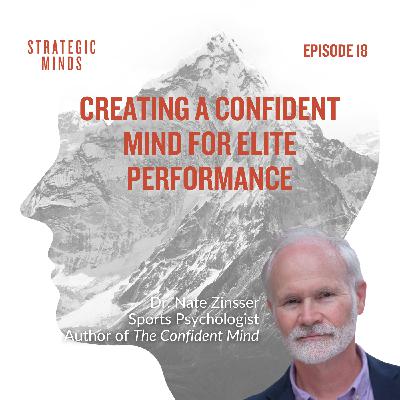
How can you apply the mental training techniques of world-class achievers to maximize your performance?
In this episode, Rich sits down with Dr. Nate Zinsser — performance psychologist, long-time director of West Point’s Center for Enhanced Performance, and author of The Confident Mind. Dr. Zinsser shares practical tools for building unshakable confidence, how to mentally prepare for high-stakes moments, and why envisioning your wins before they happen is a key to sustained success.
He also explains how athletes, warriors, and business leaders can all train their minds to adapt to any situation they face — and why a “first victory” begins before you ever walk into the room.
Key Quotes:
“I define confidence as a state of certainty that you will have about a particular ability, a particular skill or competence, a sense of certainty that allows you to bypass conscious analysis and thought about what you’re doing and basically execute unconsciously.”
“You are in that spotlight, your body is going to surge. And you can either choose to say, ‘I’m excited. This is cool. Look at my body turning on.’ Or you can go, ‘Geez, I’m getting real nervous. I don’t like this.’ Choose wisely. It’s going to happen.”
“And proper envisioning is a skill. It is a skill that, as I've said before, improves with practice. And sometimes you have to start with very simple things.”
“Confidence is how you think on the inside. Arrogance is what you put out to the world.”
“If success produced confidence, you'd have a ton of it. No, it's not about the success that you've had. It's about your willingness to emotionally invest in your own success, to allow it to build.”
---
Practice Makes Profit:
Rich shares how leaders can prepare for important events the same way elite athletes prepare for game day — by creating a daily mental workout to train their minds for high performance.
League of Strategic Minds:
How can leaders train for confidence the same way they train for physical performance? Is it really possible to "practice" in your mind?
Winsight:
Is your team winning? Are you outperforming the competition in providing superior value to customers? In its most basic form, strategy is how you plan to win. If you’re not currently winning, then create a new strategy.
⏱ Time Stamps:
(00:00) Deep Dive Interview with Dr. Nate Zinsser
(47:34) Practice Makes Profit
(50:34) League of Strategic Minds
(53:16) Winsights, Ideas for Advantage
🔗 Links:
Find The Confident Mind by Dr. Zinsser here: https://www.amazon.com/Confident-Mind-Battle-Tested-Unshakable-Performance/dp/0063014831
Learn more about Dr. Zinsser at his website: https://www.natezinsser.com/about
Strategic Thinking Institute Website: https://www.strategyskills.com/
Rich Horwath on LinkedIn: https://www.linkedin.com/in/richhorwath/
Rich Horwath on YouTube: https://www.youtube.com/@RichHorwath
Rich Horwath on X: https://x.com/RichHorwath
Rich Horwath on Instagram: https://www.instagram.com/richhorwathceo/
STRATEGIC Book: https://www.amazon.com/Strategic-Direction-Advantage-Executive-Excellence/dp/1394215339
New executive development platform: Strategic Fitness System: http://www.Strategic-Fitness-System.com
Sign up for Rich’s free Strategic Thinker Newsletter: https://www.strategyskills.com/subscribe/
Are you Strategic? Take the Strategic Quotient (SQ) Assessment and find out: https://www.strategyskills.com/strategic-quotient-assessment/
Subscribe to the Podcast On Apple Podcasts: https://podcasts.apple.com/us/podcast/strategic-minds/id1748877976
On Spotify: https://open.spotify.com/show/57wbZTtLJhznc4OBCe0OE6?si=c2c74bbb9b4340e0&nd=1&dlsi=f9d56ce5aafd4941
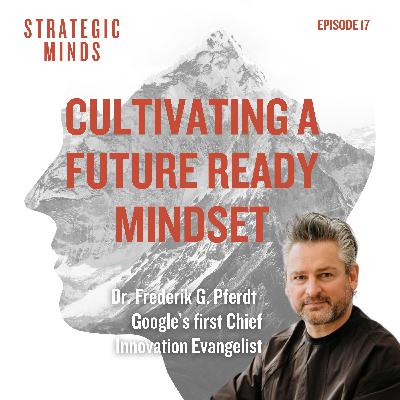
If plans don’t always pan out, how can we best prepare for the future?
In this episode, Rich sits down with Dr. Frederik G. Pferdt who was Google’s first Chief Innovation Evangelist and is now a Stanford educator and an Executive-in-Residence and Visiting Fellow at NYU Stern.
In this conversation, he shares insights into how to ritualize and embody cultural values, how to prepare for the future and the power of choosing to show up.
---------
Key Quotes: “Instead of planning, we should invest more in preparing. Because planning is usually external. It's timelines, it's spreadsheets, it's steps, it's milestones, all of those things. But preparing is internal. It's your mind state, it's your emotional readiness to adapt.”
“ Innovation is a permission problem, not an idea problem. People don't need more creativity. They need more psychological safety to use it.”
”If you wanna create an environment for innovation, I would recommend using rituals and not rules. Rituals are sticky and they're human… Leaders have specific values in an organization that they wanna activate, bring to life. I think rituals are the best way to actually do that.”
Practice Makes Profit: Making collaboration seamless by assessing alignment.
League of Strategic Minds [listener question]: What strategy myths hold organizations back from being more successful?
Winsights: Ideas for Advantage: Jeff Bezos, founder of Amazon, said, “I bet 70 percent of the innovation we do focuses on slightly improving a process. That incremental invention is a huge part of what makes Amazon tick.” Do you and your team have a process to stimulate innovative thinking throughout the year so that you're always providing new value to your customers? Innovate and evolve or risk becoming obsolete.
--------
Time stamps:(00:00) Deep Dive Interview with Frederik
(47:34) Practice Makes Profit
(50:34) League of Strategic Minds
(53:16) Winsights, Ideas for Advantage
---------
Links:
Submit a question for Rich to the League of Strategic Minds: https://www.strategyskills.com/strategic-minds-podcast/
Frederik Pferdt on LinkedIn: https://www.linkedin.com/in/fgpferdt/
Strategic Quotients Assessment: https://www.strategyskills.com/strategic-quotient-assessment/
Rich Horwath on LinkedIn: https://www.linkedin.com/in/richhorwath/
Rich Horwath on YouTube: https://www.youtube.com/@RichHorwath
Rich Horwath on Instagram: https://www.instagram.com/richhorwathceo/
Strategic Thinking Institute Website: https://www.strategyskills.com/
Inc. Magazine’s Top 4 book for 2024: STRATEGIC Book: https://www.amazon.com/Strategic-Direction-Advantage-Executive-Excellence/dp/1394215339
New executive development platform: Strategic Fitness System: http://www.Strategic-Fitness-System.com
Sign up for Rich’s free Strategic Thinker Newsletter: https://www.strategyskills.com/subscribe/
[Subscribe to the Podcast]
On Apple Podcasts: https://podcasts.apple.com/us/podcast/strategic-minds/id1748877976
On Spotify: https://open.spotify.com/show/57wbZTtLJhznc4OBCe0OE6?si=c2c74bbb9b4340e0&nd=1&dlsi=f9d56ce5aafd4941
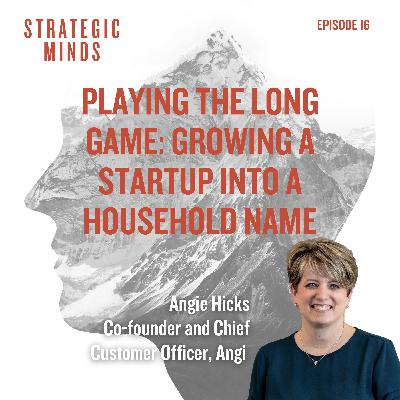
How does a long-term entrepreneur identify a good idea, scale it, and stay committed to that vision over 30 years?
In this episode, Rich sits down with Angie Hicks, Co-founder and Chief Customer Officer at Angi, formerly Angie’s list. They discuss building a business from the ground up, leading employees and external partners, and maintaining enthusiasm for a long-term goal.
---------
Key Quotes: “ If you don't maintain the culture, it'll be a bad culture.”
“When I think about whether I like what I'm doing, I base it on two factors. One, do I like the people I'm working with? And two, am I learning new things?”
“Sometimes you have to force a learning function on the organization because it's important. Because the landscape shifts and you don't want to get caught flat-footed.”
“Find your unit that you're going to evaluate things on. What is it? What is that process? And then make sure you can always pull back the layers to make sure that element is working well.”
Practice Makes Profit: Solve challenges effectively and efficiently with solutional thinking.
League of Strategic Minds [listener question]: How can I help my team be more innovative
Winsights: Ideas for Advantage: Meg Whitman, former CEO of eBay and HP Enterprises, said, “First, you need the right strategy. Less than perfect execution against the right strategy will probably work. 100 percent execution against the wrong strategy, won't.” Does your team have a strategy that you believe in and can help win in the market? If not, all the time you're spending on execution and tactics is being wasted. The motto is ready, aim, fire not just keep firing. Think first.
--------
Time stamps:(00:41) Deep Dive Interview with Angie
(47:27) Practice Makes Profit
486:57) League of Strategic Minds
(50:11) Winsights, Ideas for Advantage
---------
Links:
Submit a question for Rich to the League of Strategic Minds: https://www.strategyskills.com/strategic-minds-podcast/
Angie Hicks on LinkedIn: https://www.linkedin.com/in/angie-hicks-30566/
Angi: https://www.linkedin.com/company/angi/
Rich Horwath on LinkedIn: https://www.linkedin.com/in/richhorwath/
Rich Horwath on YouTube: https://www.youtube.com/@RichHorwath
Rich Horwath on Instagram: https://www.instagram.com/richhorwathceo/
Strategic Thinking Institute Website: https://www.strategyskills.com/
Inc. Magazine’s Top 4 book for 2024: STRATEGIC Book: https://www.amazon.com/Strategic-Direction-Advantage-Executive-Excellence/dp/1394215339
New executive development platform: Strategic Fitness System: http://www.Strategic-Fitness-System.com
Sign up for Rich’s free Strategic Thinker Newsletter: https://www.strategyskills.com/subscribe/
[Subscribe to the Podcast]
On Apple Podcasts: https://podcasts.apple.com/us/podcast/strategic-minds/id1748877976
On Spotify: https://open.spotify.com/show/57wbZTtLJhznc4OBCe0OE6?si=c2c74bbb9b4340e0&nd=1&dlsi=f9d56ce5aafd4941
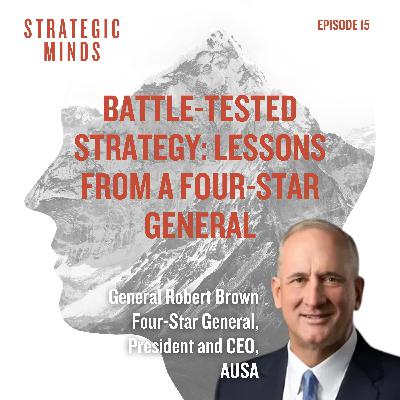
What military strategies and tactics can business leaders leverage to position their companies for success?
In this episode, Rich sits down with four-star General Robert Brown, President and CEO of the Association of the United States Army. General Brown is an experienced commander who has led at every level, from platoon through Army Service Component Command, leading a group of over 100,000 soldiers.
In this conversation, he discusses military strategy and best practices for navigating the modern Fog of War, sharing his insights on red teaming, after action reviews, and leadership principles.
---------
Key Quotes: “Too much information has become the fog of war. It used to be not enough. Now it's too much… Now you've got to look through haystacks of information, thousands of haystacks of information, to try to find that golden needle in the haystack that will help you make a decision.”
“ I've seen somebody say to me: ‘Here’s my strategy, it’s 15 pages.’ And it's like, hey, it's gonna fail, You might as well stop. Start again. Can't be 15. Nobody's gonna read it.”
“ The key is creating a learning environment where people want to learn and that after action review helps you learn and overcome those issues that may be buried if you didn't pull them out. It's like pulling a band aid off. You can't be thin skinned. Sometimes it's tough.”
Practice Makes Profit: Increasing team velocity through a decision inventory.
League of Strategic Minds [listener question]: What's the best way to tell if someone is strategic?
Winsights: Ideas for Advantage: Sun Tzu, the Chinese general and philosopher, wrote, “Do not repeat the tactics which have gained you one victory, but let your methods be regulated by the infinite variety of circumstances.” Are you and your team repeating the same tactics year after year and expecting some type of miraculous change? Carve out time to think strategically about the changes in your market and with your customers. Stop procrastinating and start innovating.
--------
Time stamps:(00:00) Deep Dive Interview with General Brown
(54:57) Practice Makes Profit
(56:17) League of Strategic Minds
(57:31) Winsights, Ideas for Advantage
---------
Links:
Submit a question for Rich to the League of Strategic Minds: https://www.strategyskills.com/strategic-minds-podcast/
General Brown on LinkedIn: https://www.linkedin.com/in/robert-brooks-brown-1981usma/
AUSA.org: https://www.ausa.org/
Strategic Quotients Assessment: https://www.strategyskills.com/strategic-quotient-assessment/
Rich Horwath on LinkedIn: https://www.linkedin.com/in/richhorwath/
Rich Horwath on YouTube: https://www.youtube.com/@RichHorwath
Rich Horwath on Instagram: https://www.instagram.com/richhorwathceo/
Strategic Thinking Institute Website: https://www.strategyskills.com/
Inc. Magazine’s Top 4 book for 2024: STRATEGIC Book: https://www.amazon.com/Strategic-Direction-Advantage-Executive-Excellence/dp/1394215339
New executive development platform: Strategic Fitness System: http://www.Strategic-Fitness-System.com
Sign up for Rich’s free Strategic Thinker Newsletter: https://www.strategyskills.com/subscribe/
[Subscribe to the Podcast]
On Apple Podcasts: https://podcasts.apple.com/us/podcast/strategic-minds/id1748877976
On Spotify
: https://open.spotify.com/show/57wbZTtLJhznc4OBCe0OE6?si=c2c74bbb9b4340e0&nd=1&dlsi=f9d56ce5aafd4941
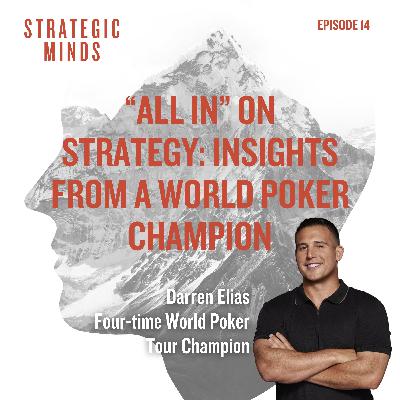
What strategic thinking techniques can leaders apply from a world poker champion to better position themselves for success?
In this episode, Rich sits down with Darren Elias, a four time World Poker Tour champion. Darren is ranked number one all time in victories, final tables and cashes on the World Poker Tour and has amassed over $12.5 million in live tournament poker winnings.
In this conversation, Darren gives us insight into preparation and execution, how to adapt on the fly, assessing and reading competition, and maintaining emotional control to make good decisions.
---------
Key Quotes:“You really can't think about the money that much. You have to execute the strategy and you shouldn't be thinking in dollars or anything like that. You should be thinking in numbers and players and the relationships between our strategies. I think a lot of mistakes I've seen at big final tables come from players that get a little overwhelmed by the moment or the thinking about the money. That stuff you really shouldn't be thinking about until after the tournament.”
“ The biggest thing for me is objective self evaluation, where I'm looking at how I played, I'm looking at the decisions from a distance and saying, was this hand played well? Was this the right play against this player in that situation? And really remaining confident that even though you're losing, and in poker tournaments, you actually lose 80 percent of the time.”
“ Know who you're playing against….because everybody has different strategies. You have loose players, tight players. You have ones that don't want to play big pots. You have ones that maybe don't play as many hands preflop….So really, try to understand your opponent. Uh, what they're trying to do with the table, what their general strategy is.”
Practice Makes Profit: Reducing mental fatigue and burnout by batching your work.
League of Strategic Minds [listener question]: What's the best way to align strategies between different functional areas?
Winsights: Ideas for Advantage: Jensen Huang, the CEO of NVIDIA, said, “Our company is 30 days from going out of business. You're always on the way to going out of business. If you don't internalize that sensibility, you will go out of business.” Ask yourself this, are you and your team meeting to discuss your business model and how it needs to evolve?
--------
Time stamps:(00:41) Deep Dive Interview with Darren Elias
(37:48) Practice Makes Profit
(39:43) League of Strategic Minds
(41:08) Winsights, Ideas for Advantage
---------
Links:
Submit a question for Rich to the League of Strategic Minds: https://www.strategyskills.com/strategic-minds-podcast/
Darren Elias on LinkedIn: https://www.linkedin.com/in/darren-elias-3a1432114/
BetMGM: https://www.linkedin.com/company/betmgm/
Rich Horwath on LinkedIn: https://www.linkedin.com/in/richhorwath/
Rich Horwath on YouTube: https://www.youtube.com/@RichHorwath
Rich Horwath on Instagram: https://www.instagram.com/richhorwathceo/
Strategic Thinking Institute Website: https://www.strategyskills.com/
Inc. Magazine’s Top 4 book for 2024: STRATEGIC Book: https://www.amazon.com/Strategic-Direction-Advantage-Executive-Excellence/dp/1394215339
New executive development platform: Strategic Fitness System: http://www.Strategic-Fitness-System.com
Sign up for Rich’s free Strategic Thinker Newsletter: https://www.strategyskills.com/subscribe/
[Subscribe to the Podcast]
On Apple Podcasts: https://podcasts.apple.com/us/podcast/strategic-minds/id1748877976
On Spotify: https://open.spotify.com/show/57wbZTtLJhznc4OBCe0OE6?si=c2c74bbb9b4340e0&nd=1&dlsi=f9d56ce5aafd4941
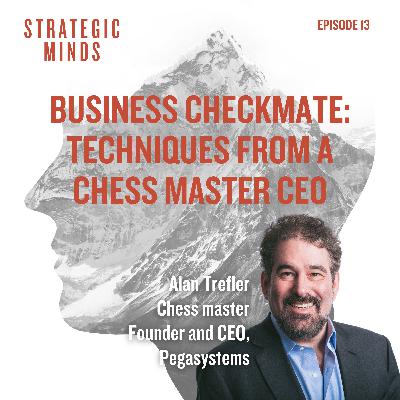
What are the business techniques leaders can learn from a Chess Master CEO and how should they be thinking about the future of AI?
In this episode, Rich sits down with Alan Trefler, a chess master and the Founder and CEO of Pegaystems, the Enterprise Transformation Company that helps organizations Build for Change® with enterprise AI decisioning and workflow automation. Alan has earned multiple patents and overseen the expansion of Pega from start-up to a $1.3+ billion, global, public company with about 6,000 employees.
In this episode, he discusses the lessons he has taken from chess into business, and how he thinks companies should be strategically thinking about AI.
---------
Key Quotes:“The chess master will look and identify a set of candidates. They don't just stare at the position and magically figure out what to do. They say, ‘hey, here are three, four, five things that appear to be credible alternatives’ and then very methodically dig through them to figure out which might be the best one or what the holes are.”
“In the four decades of Pega’s existence, we've done five complete technology shifts….
And every single one of those encompass the risk of doing something that was materially different. And there's always risk when you're doing something the first time, or you're doing something that is hard. Ultimately I think evaluating those risks is key, but you also need to think about the risk of not making a change.”
“If you think of AI as an accelerant, as a way to, for example, tell you something about your business that you should make better and then you have the chance with your team to weigh in and don't necessarily do what the AI is telling you, but use the AI as a stimulus. Boy, you can use the AI as it exists now, and it can profoundly change the way a business works.”
Practice Makes Profit: Increasing productivity and efficiency by scoring and categorizing your interactions.
League of Strategic Minds [listener question]: What are the keys to running a good strategy offsite meeting?
Winsights: Ideas for Advantage: Jack Welch, former CEO of GE, said, “When the rate of change inside a company is slower than the rate of change outside, the end is in sight. The only question is when.” Are you and your team making changes internally in your thinking, processes, resource allocation, and structure each and every quarter?
--------
Time stamps:(00:44) Deep Dive Interview with Alan Trefler
(43:50 Practice Makes Profit
(45:48) League of Strategic Minds
(48:27) Winsights, Ideas for Advantage
---------
Links:
Submit a question for Rich to the League of Strategic Minds: https://www.strategyskills.com/strategic-minds-podcast/
Alan Trefler on LinkedIn: https://www.linkedin.com/in/alantrefler/
Pegasystems: https://www.linkedin.com/company/pegasystems/
Rich Horwath on LinkedIn: https://www.linkedin.com/in/richhorwath/
Rich Horwath on YouTube: https://www.youtube.com/@RichHorwath
Rich Horwath on Instagram: https://www.instagram.com/richhorwathceo/
Strategic Thinking Institute Website: https://www.strategyskills.com/
Inc. Magazine’s Top 4 book for 2024: STRATEGIC Book: https://www.amazon.com/Strategic-Direction-Advantage-Executive-Excellence/dp/1394215339
New executive development platform: Strategic Fitness System: http://www.Strategic-Fitness-System.com
Sign up for Rich’s free Strategic Thinker Newsletter: https://www.strategyskills.com/subscribe/
[Subscribe to the Podcast]
On Apple Podcasts: https://podcasts.apple.com/us/podcast/strategic-minds/id1748877976
On Spotify: https://open.spotify.com/show/57wbZTtLJhznc4OBCe0OE6?si=c2c74bbb9b4340e0&nd=1&dlsi=f9d56ce5aafd4941

Comments

Download from Google Play

Download from App Store
 United States