


 Claim Ownership
Thriving Kids
Subscribed: 36Played: 320
Subscribe

© Child Mind Institute
Description
Parenting can feel overwhelming when kids struggle with anxiety, behavior, school, or big emotions. Thriving Kids is a podcast for parents and caregivers who want clear, honest answers about child and adolescent mental health.
Hosted by Dr. Dave Anderson, a clinical psychologist at the Child Mind Institute, each episode focuses on a common parenting challenge — from tantrums to school struggles — with practical strategies grounded in science.
You’ll hear direct, expert guidance from clinicians who work with kids and families every day.
New episodes every week, with companion newsletters for easy reference.
Hosted by Dr. Dave Anderson, a clinical psychologist at the Child Mind Institute, each episode focuses on a common parenting challenge — from tantrums to school struggles — with practical strategies grounded in science.
You’ll hear direct, expert guidance from clinicians who work with kids and families every day.
New episodes every week, with companion newsletters for easy reference.
40 Episodes
Reverse
In this Q&A episode of Thriving Kids, Dr. Dave Anderson follows up on last week’s conversation with Dr. Linda Charmaraman about how kids feel about social media. In this episode, we cover:Smartphone readiness is about preparation, not just age. Delaying access can help, but parents also need to take a realistic, flexible approach. Help build digital literacy and encourage kids to come to you for help when something goes wrong.Educational screen time can be useful, but entertainment is ok, too. Evidence-based apps can support learning, especially for younger children, but the goal is thoughtful boundaries, not treating all non-educational screen time as automatically bad.Privacy and independence should be earned gradually. Parents should stay curious about their child’s digital world. Use clear guideposts and increase freedom as kids demonstrate responsibility over time — much like learning to drive.Key takeaways: Children should know they can come to you when something goes wrong online. Let them know that honesty about a situation will lead to a much better outcome than hiding it.Setting strong boundaries around screen time to protect time for sleeping, playing, and interacting with family especially are among the most important digital rules you can set.Digital freedom should be earned gradually through coaching, building trust, and meeting milestones.
Parents and caregivers may have a lot of worries about their teens using social media, from encountering harmful content to cyberbullying. But what do teens themselves say about how social media affects them day to day?In this episode of Thriving Kids, Dr. Dave Anderson sits down with Dr. Linda Charmaraman a senior research scientist at the Wellesley Centers for Women and founder and director of the Youth, Media & Wellbeing Research Lab. Dr. Charmaraman's research follows kids from middle school into high school. She shares what teens say actually helps their well-being (social support, finding community, learning, exploring identity) and what tends to hurt (peer dynamics, exclusion, comparison, and hits to self-esteem).They also talk about what works at home:Keep screens out of bedrooms and protect sleepUse screen limits to support daily life, not as punishmentStay curious so your kid keeps talkingFocus on relationship quality and communication, not perfect controlThe key message for every kid: No matter what happens online — even if it’s embarrassing or scary — you can come to your parent, and they will help you through it.Further readingThe Family Media Plan – American Academy of Pediatrics (AAP)When Are Kids Ready for Social Media? – Child Mind InstituteHow Phones Ruin Concentration – Child Mind Institute
Part 3 of 3: What actually helps students succeed in college?In this episode of Thriving Kids, our clinicians offer practical guidance for families preparing for the transition to college. From understanding accommodations to building routines that support mental health, this conversation focuses on actionable steps.Moderated by Dr. Morgan Eldridge with Dr. David Friedlander and Dr. Adam Zamora, this episode covers:• Academic supports and documentation• Counseling centers and mental health care• Self-advocacy in college• How parents can support teens' independenceCollege Readiness ToolkitOur toolkit has guidance for teens — along with a section for parents — on how to get a good start in college and navigate this important period of building independence.Download it here: https://childmind.org/topics/college/#toolkit
Part 2 of 3: College demands a new level of self-managementIn this episode of Thriving Kids, our clinicians unpack executive functioning and procrastination — and why struggling to start a task isn’t about laziness, but about skill development and brain maturation.In this moderated conversation led by Dr. Morgan Eldridge with Dr. David Friedlander and Dr. Adam Zamora, you’ll hear:• What executive functioning actually involves• Why procrastination can become a cycle• How brain development affects follow-through• Why building these skills matters in collegeCollege Readiness ToolkitOur toolkit has guidance for teens — along with a section for parents — on how to get a strong start in college and manage this transition.Download it here: https://childmind.org/topics/college/#toolkit
Part 1 of 3: Why does college feel overwhelming — even for strong, capable students?In this episode of Thriving Kids, our clinicians explore why the transition from high school to college can be harder than expected. Students move from a structured, familiar environment to one that demands independence, self-management, and new social connections.You’ll hear a moderated conversation led by Dr. Morgan Eldridge with Dr. David Friedlander and Dr. Adam Zamora that covers:• Why anxiety and depression often emerge freshman year• The impact of losing structure• The emotional adjustment of leaving home• How belonging affects mental healthCollege Readiness ToolkitOur toolkit has guidance for teens — along with a section for parents — on how to get a good start in college and navigate this critical period of building independence.Download it here: https://childmind.org/topics/college/#toolkit
Talking to kids about racism and discrimination can feel intimidating. But in this episode of Thriving Kids, Dr. Dave Anderson and Dr. Isha Metzger discuss how to start the conversation early, keep it practical, and support kids in ways that match their age and situation.What you’ll learn:How to convey a clear definition of racism that goes beyond “one person being mean”How microaggressions show up in everyday life, even when someone “didn’t mean it”Why kids might show stress from experiencing racism through behavior (withdrawal, irritability) or physical symptoms (headaches, stomachaches)How to help your child respond if they experience discriminationHow to teach ally behavior: what to say, when to get help, and why speaking up in the moment mattersWhat to do if your child causes harm: Reflect → Repair → RelearnKey takeaways:Start the conversation early and keep it going. Don’t wait for a single “big talk.”Use direct, factual language. Kids do better with simple, clear wording.Practice a few “in the moment” phrases your kid can actually say, like: “That’s not okay.”If your child is targeted: validate first, then problem-solve.If your child is the one who said something harmful: stay calm, name the impact, and coach a better next step.From the episode: M&M exercise Use a small bag of M&Ms to talk about difference and unfair treatment:Observe differences (color, shape, cracked shells)Ask: “Are any better than the others?”Connect it to how people can get treated unfairly based on how they lookKeep it simple: same on the inside, differences add valueTips from the Thriving Kids tip sheet:Talk about it. Kids are likely to encounter racism and discrimination at a young age. Put aside any discomfort and talk about these topics with your kids early and often.Be direct and factual. When you’re explaining racism for the first time, it’s important to use clear, straightforward language.It’s ok to show emotion. When talking with your children about racism or specific events that have happened due to racism, it’s okay to express your own feelings of anger, hurt, or sadness. This helps normalize these reactions and validate what your child may already be feeling.Take a multimedia approach. Share books, movies, TV shows, YouTube channels or anything else with age-appropriate content related to the issues you are trying to tackle. These can provide additional information, context and characters for kids to relate to.Listen and validate. Even young children are perceptive and may be scared or confused by things they’ve seen or heard. Ask open-ended questions and give them plenty of space to answer. Little kids can also express themselves through drawings or acting things out with toys.Teach advocacy. Just as you may have encouraged your child to stand up for friends who are treated unkindly, teach them to speak out if they witness or experience discrimination firsthand – if it is safe to do so.Plan a course of action. There’s nothing worse than feeling helpless, so if your child comes to you with a troubling experience or concern, help them develop a response. Remind them that it’s not always on them to respond, and depending on the situation, there may be reason to make a report with the school or authorities.Further readingFree Guides and Resources – Dr. Isha MetzgerPositive Parenting, Thriving Kids – Child Mind Institute
In this Q&A episode of Thriving Kids, Dr. Dave Anderson follows up on last week’s conversation with Dr. Joanna Kim about parental self-care and the invisible labor of raising kids. He answers listener questions about guilt, exhaustion, and how to make “filling your cup” realistic in a normal week.In this episode, we cover:“How do I help friends who feel guilty taking time away from their kids?” Reframe from quantity to quality time. Try a one-week experiment: take a little time back, then notice what changes (energy, patience, connection).“I’m a chronic yes-person. What do I say no to?” Sort non-negotiables, want-to-dos, and energy drains. Practice saying "no" for a short window (a few days), then decide what boundaries should stick.“I get homework from my child’s therapist and forget. I feel like I’m failing.” You’re not failing. Your therapist wants honesty. Build a simple system for tracking and prioritizing, then accept that some tasks won’t happen every week.“I have no time. Work, dinner, bedtime, repeat. What can I do?” Start by naming what actually calms you (food/drink, movement, sleep, connection, faith/spiritual practices, quiet). Then look for small pockets to repeat, not a perfect routine.“Any clever tricks to get a break without my kids interrupting?” Tricks can work in the short term, but the long-term goal is modeling normal boundaries: “I’m taking 20 minutes. I’ll be back at ___.” Key takeaways:“Self-care” doesn’t require money or big blocks of time.Start with minutes, then build.Your goal isn’t more time with your kids — it’s better time with your kids.Boundaries often matter as much as adding new habits.If you’re working with a therapist/coach, missed homework is useful info — it helps you set a plan that fits your real week.
Self-care for parents isn’t selfish — it’s fuel.In this episode of Thriving Kids, Dr. Dave Anderson talks with Dr. Joanna Kim about what real self-care looks like for busy parents — especially those who feel guilty about taking a break.We cover: • Why self-care can feel like a privilege or unrealistic • How to “fill your cup” in 1 to 5 minutes (no spa day required) • The science of parent engagement and what gets in the way • How sleep, boundaries, and saying no protect your energy • Why modeling rest and balance matters for your kidsFrom tea with a daily quote to pocket Sudoku to sleeping in without guilt — this episode is about small, doable changes that help you show up as the parent you want to be.Follow Dr. Kim’s Engaging Families Lab:Instagram: @engagingfamilieslabWebsite: engagingfamilieslab.orgFurther readingThe Impact of Parental Burnout – American Psychological Association (APA) Mental Health Resources for Parents – Mental Health America (MHA) Why Self-Care Is Essential to Parenting – Child Mind Institute
In this Thriving Kids Q&A episode, Dr. Dave Anderson answers parent questions about child stress, anxiety, avoidance, burnout, and coping with big emotions.Building on a recent conversation with Dr. Dylan Gee, a professor of psychology at Yale University, this episode focuses on how kids learn to respond to stress — and how parent behavior can either ease anxiety or reinforce it over time.Dr. Anderson addresses common situations parents face, including school anxiety, physical symptoms of stress, over-scheduling, achievement pressure, and burnout. He explains why avoidance often makes anxiety worse and how parents can support kids without pushing too hard or being too accommodating to their anxiety.In this episode, you’ll learn:How kids pick up on parental stress — and how to change your own venting habitsWhy avoidance increases anxiety over timeWhy anxiety often shows up as stomachaches or headachesWhy reassurance can backfire — and what to do insteadHow accommodation can unintentionally reinforce anxietyHow to support over-scheduled teens under college pressureWhat teen burnout looks like after prolonged stressSimple tools to reset a child’s nervous system before tests, games, or performancesThis episode draws on evidence-based approaches from cognitive behavioral therapy (CBT), child development research, and clinical practice. It’s designed for parents of kids navigating anxiety, perfectionism, stress, and emotional overload.Further reading(Video) How do I help my child cope with stress? – Child Mind InstituteThe Art and Science of Mindfulness – Child Mind Institute For more expert guidance and free family resources, visit:https://childmind.org/resources
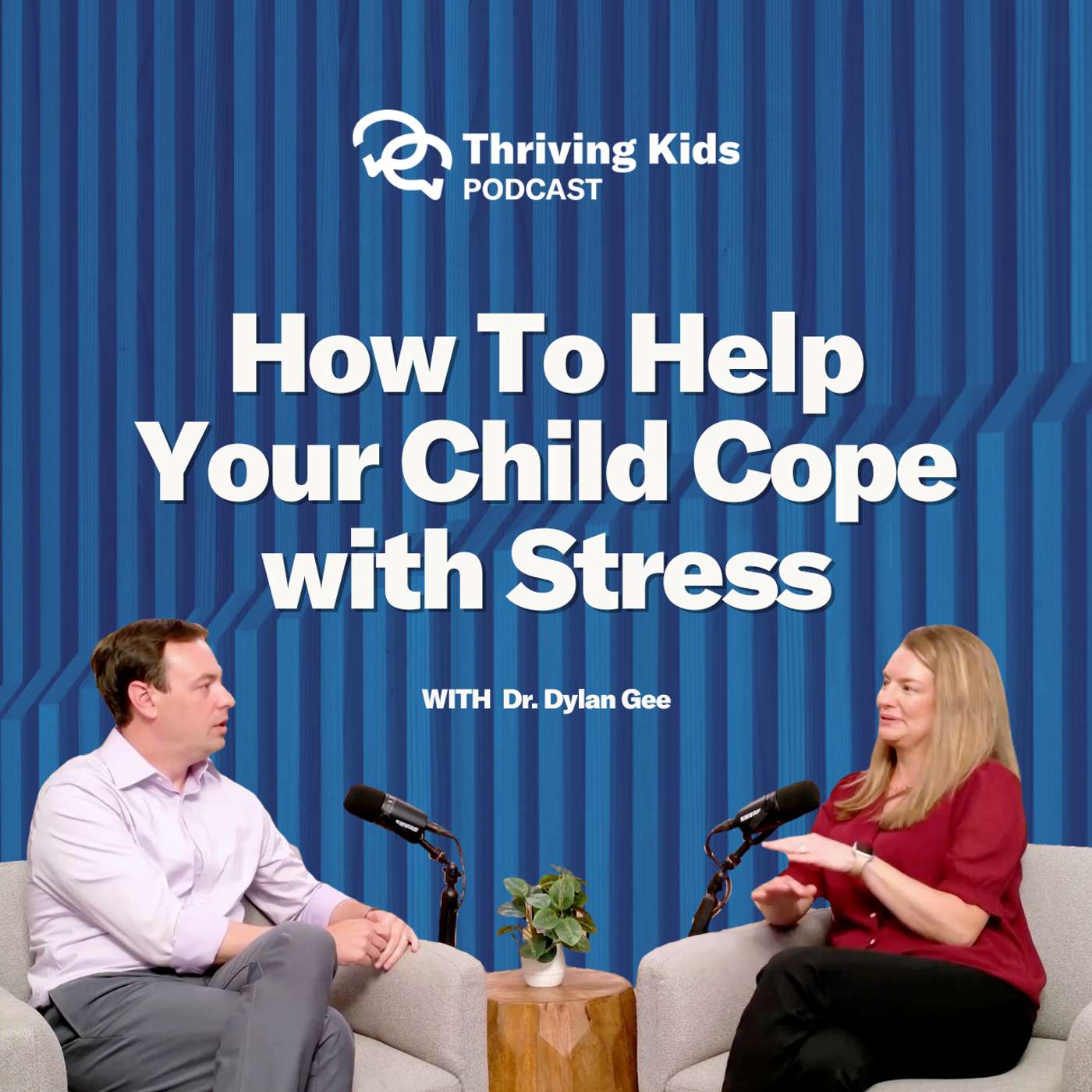
Is your child struggling with stress — or is it something more?In this episode of Thriving Kids, Dr. Dave Anderson sits down with Dr. Dylan Gee, a professor of psychology at Yale University, to explore the vital difference between managing stress and simply trying to avoid it. While it’s natural to want to "pave the road" and remove obstacles for our children, learning to tolerate discomfort is one of the most important emotional skills a child can build.We discuss the "avoidance trap," where stepping in to solve every problem can actually make a child's stress worse over time. Dr. Gee explains how kids can learn to recover from hard moments and why your own emotional state as a caregiver is the most powerful tool for helping a stressed child feel safe and supported.In this episode, we discuss:The avoidance trap – Why helping kids avoid stress can undermine their ability to build long-term resilience.The power of parental regulation – How staying calm and regulated helps your child cope when things feel overwhelming.Validation and labeling – Why identifying big emotions like "frustrated" or "scared" is the first step toward managing them.Challenging extreme thinking – How to guide kids away from "all-or-nothing" thoughts and toward more balanced perspectives.Filling the coping toolbox – Practical strategies like deep breathing, mindfulness, and creative expression to help kids bounce back.
In this Q&A edition of Thriving Kids, Dr. Dave Anderson answers listener questions following last week’s conversation with Jennifer Wallace on toxic achievement culture and helping kids feel like they matter.Parents asked practical, hard questions about failure, pressure, motivation, and emotional regulation. This episode focuses on striking a balance — between support and independence, structure and flexibility, and validation and limits.Questions cover:Natural consequences vs. stepping in – Did you rob your child of a lesson by rescuing a forgotten school project? How to decide based on context and stakes.Kids who cheat because they hate losing – What’s developmentally normal at younger ages, when rule-following matters for peer relationships, and how to address cheating without turning games into power struggles.Paying kids for good grades – Does it increase pressure? How to use rewards thoughtfully and fade them out over time.When your child says, “I suck at this” – How to respond to negative self-talk and helping kids move from self-blame to problem-solving.The brutal car ride home after a loss – Why “I loved watching you play” can backfire and how to ask your teen what support they actually need.When schools make failure feel high-stakes – What to say when mistakes lead to remedial groups or lost electives and how parents can act as “counter-programming” to achievement culture.Key takeaways:There is rarely one “right” parenting move.Kids need both scaffolding and space to struggle.Pressure affects children differently.Validation doesn’t mean fixing feelings.Effort matters more than perfection.This episode is especially helpful if you’re parenting a child who is sensitive to failure, a perfectionist, or feeling overwhelmed by expectations at school or in sports.
In this episode of Thriving Kids, Dr. Dave Anderson speaks with Jennifer Wallace, an award-winning journalist and author, about her books Never Enough and Mattering: The Secret to a Life of Deep Connection and Purpose. They discuss the culture of toxic achievement and how fostering a sense of mattering can serve as an antidote. Wallace shares research findings on mattering, practical strategies for parents, and emphasizes the importance of making others feel valued in everyday interactions. They also explore the impact of parental self-care on creating a healthy environment for children.Further Reading:How to Help Kids Learn to Fail – Child Mind InstituteRaising Resilient Kids Who Are Prepared for the Future – Child Mind InstituteHow to Model Healthy Coping Skills – Child Mind Institute
Parenting teens can feel confusing and exhausting — especially when connection starts to slip.In this Thriving Kids Q&A episode, Dr. Dave Anderson from the Child Mind Institute answers real questions from parents about staying connected to teenagers during adolescence.We cover:Why teens can be warm and talkative with other adults but distant at homeHow memes, TikToks, and inside jokes still count as real connectionHow to prepare teens for college and independence without constant conflictWhat to do when defiance and power struggles escalateHow to respond when teens self-diagnose ADHD or other mental health conditions onlineThis episode focuses on relationship-first parenting, clear boundaries, and helping teens feel understood — so they’re more likely to come to you when it really matters.Further reading Help! My Teen Stopped Talking to Me – Child Mind InstituteTips for Communicating With Your Teen – Child Mind InstituteParenting a Defiant Teen: Expert Tips – Child Mind Institute

Parenting a teen can feel like walking on eggshells. Conversations can turn into conflict. Teens may pull away, and parents may wonder how to navigate boundaries and stay connected.In this episode of the Thriving Kids, Dr. Dave Anderson is joined by pediatric psychologist Dr. Ann-Louise Lockhart to talk about what actually helps build a stronger, healthier relationship with your teen — even during tough moments.They discuss: • Why teens push back and pull away during adolescence • What real connection with teens looks like (and what it doesn’t) • How to set limits without damaging trust • Common parenting mistakes that increase power struggles • How to stay grounded when emotions run high • Practical ways to rebuild connection after conflictThis conversation focuses on realistic, evidence-based strategies parents can use to improve communication, reduce tension, and strengthen trust — without trying to control or fix their teen.Further readingTips for Communicating With Your Teen – Child Mind InstituteHelp! My Teen Stopped Talking to Me – Child Mind Institute
How do you talk to kids about the hard stuff — without making their worries worse?In this Thriving Kids Q&A episode, Dr. Dave Anderson answers real questions from parents about how to talk with kids and teens about difficult, emotionally loaded topics in calm, developmentally appropriate ways.Drawing on clinical experience from his work at the Child Mind Institute, Dr. Anderson walks through what helps — and what often backfires — when kids ask about scary news, big life fears, or sensitive issues at home.Topics covered in this episode include:Talking to kids about anxiety, disasters, and frightening newsHelping children cope with worries about climate changeSupporting kids dealing with unkind friends or social rejectionHow to respond when kids fear losing a parentDiscussing financial stress without passing on adult worryHow to talk about suicide safely and openlyExplaining substance use and addiction in age-appropriate waysThroughout the episode, Dr. Anderson emphasizes validation, honesty, emotional regulation, and keeping conversations open — even when a parent feels they didn’t handle a moment perfectly the first time.Further readingHelping Children Cope With Frightening News – Child Mind InstituteKids and Climate Anxiety – Child Mind InstituteBig Talks: How to Have Important Conversations With Kids – Child Mind Institute

Dr. Dave Anderson sits down with science journalist and author Melinda Wenner Moyer to talk about what kids actually need to cope, connect, and grow up healthy today.They cover:Why letting kids experience big feelings builds resilienceHow listening (not lecturing) strengthens connectionWhat parents get wrong about screens and techWhy avoiding hard topics doesn’t protect kidsHow everyday conversations shape empathy and judgmentThis episode is about practical, research-backed parenting — not perfection.Further readingHow Can We Help Kids With Self-Regulation? - Child Mind InstituteHow to Raise Kids Who Aren’t A**holes - Melinda Wenner MoyerHello, Cruel World - Melinda Wenner Moyer
Join Dr. Dave Anderson for this special Q&A edition of Thriving Kids, where he addresses parenting questions ranging from managing a 6-year-old's meltdowns to navigating screen time battles to keeping the peace between siblings. Dr. Anderson offers advice on emotion regulation, developing coping skills, setting effective boundaries, and more.

Dr. Dave Anderson and special guest Dr. Marc Brackett, the founding director of the Yale Center for Emotional Intelligence, discuss the importance of understanding and managing emotions. Dr. Brackett shares insights from his books, Permission to Feel and Dealing with Feeling, and highlights practical strategies. Whether you're a parent, educator, or caregiver, this conversation offers valuable guidance on raising emotionally healthy children and the vital role emotion regulation plays in a child's well-being.Further reading from the Child Mind InstituteHow Can We Help Kids With Self-Regulation?How to Help Children Calm DownAnd more from Dr. Marc BrackettDealing with Feeling
In this Q&A follow-up to last week’s Thanksgiving special, Dr. Dave Anderson answers listener questions about emotional self-regulation, holiday expectations, and the stress that comes with getting everyone together under one roof.You’ll hear quick, practical guidance on:Managing holiday expectations so you don’t end up disappointedHow much to plan during winter breakLoosening screen limits without losing controlWhat to do about kids who refuse holiday mealsTeens who disappear the moment break startsHandling gift-giving reactions and gratitudeProtecting your own energy and avoiding resentmentResetting when the day goes off the railsIf you’re celebrating Thanksgiving, we hope your day feels manageable. If not, these answers apply to any big family gathering — December holidays, birthdays, or any festival that brings people together.

The holidays can feel like a marathon for parents — full of expectations, logistics, and emotions. In this episode, Dr. Dave Anderson talks with clinical psychologist (and new parent) Dr. Kimberly Alexander about what she calls “running the gauntlet” of the holiday season.They unpack how to manage your own expectations, keep kids regulated, and handle tricky family moments — without losing your sense of humor or sanity.You’ll learn:Why “know thy child” might be the best holiday mantraHow to balance structure and flexibility when school’s outWhat to do when your child’s behavior doesn’t match your “perfect family” visionHow to set boundaries with relatives who take it personallyTips for teaching gratitude and handling gift-giving meltdownsDr. Alexander also shares what she calls “the Kim package” — her practical approach to balancing family needs, setting limits with grace, and remembering that every year looks different.Related resources:Making the Holidays Kid-Friendly – Child Mind InstituteHow to Take the Stress Out of Family Gatherings – Child Mind Institute

Comments

Download from Google Play

Download from App Store
 United States