


 Claim Ownership
Talking O&G - a RANZCOG Podcast
Subscribed: 21Played: 390
Subscribe

© Copyright 2025 All rights reserved.
Description
Talking O&G - a RANZCOG Podcast delivers expert insights and up-to-date clinical information in obstetrics and gynaecology. Created for RANZCOG members, trainees, and healthcare professionals, each episode features evidence-based discussions on essential topics—from miscarriage and vasa praevia to contraception, abortion, and more. Available in both audio and video formats, with new episodes released fortnightly via ranzcog.edu.au/podcasts, Spotify, Apple Podcasts, YouTube, and all major platforms.
36 Episodes
Reverse
In this episode of Talking O&G: a RANZCOG Podcast, host Dr Nisha Khot speaks to Associate Professor Stefan Kane and Professor Joshua Vogel about the 2025 consolidated guidelines for the prevention, diagnosis, and treatment of postpartum haemorrhage (PPH). These guidelines were released as a collaboration between the World Health Organization (WHO), the International Federation of Gynecology and Obstetrics (FIGO), and the International Confederation of Midwives (ICM).
A/Prof Kane and Professor Vogel discuss the guideline’s change in diagnostic threshold for PPH, recommended preventative interventions, first-response treatments, refractory PPH treatments, and more. They highlight the importance of addressing the physical, emotional, and psychological impacts of PPH, and provide advice for clinicians adapting these international guidelines into local contexts.
🔗 Resources mentioned in this episode:
Consolidated guidelines for the prevention, diagnosis and treatment of postpartum haemorrhage
📌 RANZCOG members can submit CPD at: https://shorturl.at/iq733
💬 If you found this episode valuable, please rate, review, subscribe, and share it with your colleagues.
RANZCOG acknowledges the need for more inclusive terminology for gender diversity. In this podcast we aim to use inclusive language, and any use of the term “women” should be interpreted to include all people requiring gynaecological and obstetric care.
The views expressed are those of the speakers and may not reflect the official position of the Royal Australian and New Zealand College of Obstetricians and Gynaecologists (RANZCOG).
In this episode of Talking O&G: a RANZCOG Podcast, host Dr Nisha Khot speaks to Associate Professor Stefan Kane and Professor Joshua Vogel about the 2025 consolidated guidelines for the prevention, diagnosis, and treatment of postpartum haemorrhage (PPH). These guidelines were released as a collaboration between the World Health Organization (WHO), the International Federation of Gynecology and Obstetrics (FIGO), and the International Confederation of Midwives (ICM).
A/Prof Kane and Professor Vogel discuss the guideline’s change in diagnostic threshold for PPH, recommended preventative interventions, first-response treatments, refractory PPH treatments, and more. They highlight the importance of addressing the physical, emotional, and psychological impacts of PPH, and provide advice for clinicians adapting these international guidelines into local contexts.
🔗 Resources mentioned in this episode:
Consolidated guidelines for the prevention, diagnosis and treatment of postpartum haemorrhage
📌 RANZCOG members can submit CPD at: https://shorturl.at/iq733
💬 If you found this episode valuable, please rate, review, subscribe, and share it with your colleagues.
RANZCOG acknowledges the need for more inclusive terminology for gender diversity. In this podcast we aim to use inclusive language, and any use of the term “women” should be interpreted to include all people requiring gynaecological and obstetric care.
The views expressed are those of the speakers and may not reflect the official position of the Royal Australian and New Zealand College of Obstetricians and Gynaecologists (RANZCOG).
In this episode of Talking O&G: a RANZCOG Podcast, host Dr Nisha Khot speaks to Associate Professor Alexis Shub about the ADIPS 2025 Consensus Recommendations for the Screening, Diagnosis, and Classification of Gestational Diabetes.
Gestational diabetes mellitus (GDM) is one of the most common conditions of pregnancy – in 2023, 17% of pregnant people in Australia were diagnosed with GDM. Dr Khot and A/Prof Shub unpack the changes in the ADIPS guideline – including an increased diagnostic threshold for GDM and reduced reliance on early-pregnancy OGTT – and the benefits they carry for both clinicians and patients. They explore the increased focus on the HbA1c test, what the options are for people unable to tolerate an OGTT, and tips for clinicians adopting the guideline into practice.
While this guideline is specific to Australian practitioners, separate guidelines are currently under development for Aotearoa New Zealand, which will be covered in a future episode of Talking O&G.
🔗 Resources mentioned in this episode:
Australasian Diabetes in Pregnancy Society (ADIPS) 2025 consensus recommendations for the screening, diagnosis and classification of gestational diabetes
ADIPS Frequently Asked Questions
The Conversation “How pregnant women are tested for gestational diabetes is changing. Here’s what this means for you”
📌 RANZCOG members can submit CPD at: https://shorturl.at/iq733
💬 If you found this episode valuable, please rate, review, subscribe, and share it with your colleagues.
RANZCOG acknowledges the need for more inclusive terminology for gender diversity. In this podcast we aim to use inclusive language, and any use of the term “women” should be interpreted to include all people requiring gynaecological and obstetric care.
The views expressed are those of the speakers and may not reflect the official position of the Royal Australian and New Zealand College of Obstetricians and Gynaecologists (RANZCOG).
In this episode of Talking O&G: a RANZCOG Podcast, host Dr Nisha Khot speaks to Associate Professor Alexis Shub about the ADIPS 2025 Consensus Recommendations for the Screening, Diagnosis, and Classification of Gestational Diabetes.
Gestational diabetes mellitus (GDM) is one of the most common conditions of pregnancy – in 2023, 17% of pregnant people in Australia were diagnosed with GDM. Dr Khot and A/Prof Shub unpack the changes in the ADIPS guideline – including an increased diagnostic threshold for GDM and reduced reliance on early-pregnancy OGTT – and the benefits they carry for both clinicians and patients. They explore the increased focus on the HbA1c test, what the options are for people unable to tolerate an OGTT, and tips for clinicians adopting the guideline into practice.
While this guideline is specific to Australian practitioners, separate guidelines are currently under development for Aotearoa New Zealand, which will be covered in a future episode of Talking O&G.
🔗 Resources mentioned in this episode:
Australasian Diabetes in Pregnancy Society (ADIPS) 2025 consensus recommendations for the screening, diagnosis and classification of gestational diabetes
ADIPS Frequently Asked Questions
The Conversation “How pregnant women are tested for gestational diabetes is changing. Here’s what this means for you”
📌 RANZCOG members can submit CPD at: https://shorturl.at/iq733
💬 If you found this episode valuable, please rate, review, subscribe, and share it with your colleagues.
RANZCOG acknowledges the need for more inclusive terminology for gender diversity. In this podcast we aim to use inclusive language, and any use of the term “women” should be interpreted to include all people requiring gynaecological and obstetric care.
The views expressed are those of the speakers and may not reflect the official position of the Royal Australian and New Zealand College of Obstetricians and Gynaecologists (RANZCOG).
In this episode of Talking O&G: A RANZCOG Podcast, host A/Prof Scott White is joined by Professor Lisa Hui and Dr Lilian Downie to unpack RANZCOG’s Clinical Guideline for Prenatal Screening for Fetal Structural Anomalies and Chromosome Conditions (C-Obs 35). This updated guideline combines four previous statements to consolidate recommendations, acknowledging the interrelatedness of genetics and structural anomalies.
Professor Hui and Dr Downie are expert clinicians who were involved in the development of the new guideline. They discuss non-invasive perinatal testing (NIPT), chorionic villus sampling (CVS), changes in recommendations for structural ultrasounds, equity and access issues, pre- and post-test counselling, and more.
Professor Hui and Dr Downie emphasise that all pregnant people should be offered prenatal screening, regardless of their demographic or any assumptions about their attitude to screening.
🔗 Resources mentioned in this episode:
Screening and diagnosis of fetal structural anomalies and chromosome conditions (C-Obs 35)
📌 RANZCOG members can submit CPD at: https://shorturl.at/iq733
💬 If you found this episode valuable, please rate, review, subscribe, and share it with your colleagues.
RANZCOG acknowledges the need for more inclusive terminology for gender diversity. In this podcast we aim to use inclusive language, and any use of the term “women” should be interpreted to include all people requiring gynaecological and obstetric care.
The views expressed are those of the speakers and may not reflect the official position of the Royal Australian and New Zealand College of Obstetricians and Gynaecologists (RANZCOG).
In this episode of Talking O&G: A RANZCOG Podcast, host A/Prof Scott White is joined by Professor Lisa Hui and Dr Lilian Downie to unpack RANZCOG’s Clinical Guideline for Prenatal Screening for Fetal Structural Anomalies and Chromosome Conditions (C-Obs 35). This updated guideline combines four previous statements to consolidate recommendations, acknowledging the interrelatedness of genetics and structural anomalies.
Professor Hui and Dr Downie are expert clinicians who were involved in the development of the new guideline. They discuss non-invasive perinatal testing (NIPT), chorionic villus sampling (CVS), changes in recommendations for structural ultrasounds, equity and access issues, pre- and post-test counselling, and more.
Professor Hui and Dr Downie emphasise that all pregnant people should be offered prenatal screening, regardless of their demographic or any assumptions about their attitude to screening.
🔗 Resources mentioned in this episode:
Screening and diagnosis of fetal structural anomalies and chromosome conditions (C-Obs 35)
📌 RANZCOG members can submit CPD at: https://shorturl.at/iq733
💬 If you found this episode valuable, please rate, review, subscribe, and share it with your colleagues.
RANZCOG acknowledges the need for more inclusive terminology for gender diversity.
In this podcast we aim to use inclusive language, and any use of the term “women” should be interpreted to include all people requiring gynaecological and obstetric care.
The views expressed are those of the speakers and may not reflect the official position of the Royal Australian and New Zealand College of Obstetricians and Gynaecologists (RANZCOG).
In this episode of Talking O&G: A RANZCOG Podcast, host A/Prof Scott White speaks to expert clinicians Dr Heather Waterfall and Dr Shaylee Iles about RANZCOG’s Birth After Caesarean Clinical Guideline (C-Obs 38).
Rates of caesarean births continue to rise across Australia and Aotearoa New Zealand, with repeat caesarean births being a leading contributing factor. Comprehensive, evidence-based guidance is vital to ensure clinicians feel empowered to counsel patients in making informed decisions for their subsequent births.
Dr Waterfall is a generalist O&G practising in the Adelaide Hills, and Dr Iles is a director of obstetrics at a tertiary unit in NSW and was Chair of the RANZCOG Guideline Development Group. They discuss some of the key changes presented in the guideline, the implications for clinical practice, how to advise on birth method after caesarean, the use of risk calculators, induction of labour, and more. The conversation emphasises the importance of an individualised approach that champions informed decision-making.
🔗 Resources mentioned in this episode:
Birth After Caesarean Clinical Guideline (C-Obs 38)
📌 RANZCOG members can submit CPD at: https://shorturl.at/iq733
💬 If you found this episode valuable, please rate, review, subscribe, and share it with your colleagues.
RANZCOG acknowledges the need for more inclusive terminology for gender diversity.
In this podcast we aim to use inclusive language, and any use of the term “women” should be interpreted to include all people requiring gynaecological and obstetric care.
The views expressed are those of the speakers and may not reflect the official position of the Royal Australian and New Zealand College of Obstetricians and Gynaecologists (RANZCOG).
In this episode of Talking O&G: A RANZCOG Podcast, host A/Prof Scott White speaks to expert clinicians Dr Heather Waterfall and Dr Shaylee Iles about RANZCOG’s Birth After Caesarean Clinical Guideline (C-Obs 38).
Rates of caesarean births continue to rise across Australia and Aotearoa New Zealand, with repeat caesarean births being a leading contributing factor. Comprehensive, evidence-based guidance is vital to ensure clinicians feel empowered to counsel patients in making informed decisions for their subsequent births.
Dr Waterfall is a generalist O&G practising in the Adelaide Hills, and Dr Iles is a director of obstetrics at a tertiary unit in NSW and was Chair of the RANZCOG Guideline Development Group. They discuss some of the key changes presented in the guideline, the implications for clinical practice, how to advise on birth method after caesarean, the use of risk calculators, induction of labour, and more. The conversation emphasises the importance of an individualised approach that champions informed decision-making.
🔗 Resources mentioned in this episode:
Birth After Caesarean Clinical Guideline (C-Obs 38)
📌 RANZCOG members can submit CPD at: https://shorturl.at/iq733
💬 If you found this episode valuable, please rate, review, subscribe, and share it with your colleagues.
RANZCOG acknowledges the need for more inclusive terminology for gender diversity.
In this podcast we aim to use inclusive language, and any use of the term “women” should be interpreted to include all people requiring gynaecological and obstetric care.
The views expressed are those of the speakers and may not reflect the official position of the Royal Australian and New Zealand College of Obstetricians and Gynaecologists (RANZCOG).
This episode of the Summer Series of Talking O&G: A RANZCOG Podcast features Professor Ranee Thakar presenting on “Addressing Disparities in Pelvic Floor Health and Access to Care” at the RANZCOG Annual Scientific Meeting 2025.
Professor Thakar is a distinguished consultant obstetrician and urogynaecologist at Croydon University Hospital and an honorary senior lecturer at St George’s University of London. Between 2022-2025, she made history as the first woman of colour and third female President of the Royal College of Obstetricians and Gynaecologists (RCOG). As President of the International Urogynaecological Association (IUGA) (2019-2020), she played a pivotal role in advancing urogynaecological care worldwide.
A hidden epidemic, pelvic floor dysfunction (PFD) affects one in three women worldwide. Having been neglected in global health agendas, the crisis is exacerbated in low and middle-income countries that have limited surgical and physiotherapy capacity. Professor Thakar examines the impacts of a range of barriers to care, including patient-level sociocultural, healthcare system, and economic and logistic barriers. She outlines strategies to improve care such as normalising and destigmatising PFD, improving education, and promoting research and data collection.
Professor Thakar encourages all O&Gs to advocate for improved pelvic floor health in their everyday practice. She highlights that pelvic floor health is not optional – it is a matter of equity, dignity, and human rights.
The Summer Series is being released in video format to accommodate the visual elements of the presentations.
🔗 Resources mentioned in this episode:
Squeezy App
Breaking the Taboo with Theo Clarke Podcast
📝 Relevant RANZCOG resources:
Pelvic Floor Health - RANZCOG
📌 RANZCOG members can listen to this episode and answer self-reflective questions to claim CPD hours towards their AHPRA and MCNZ mandated CAPE requirements as an Addressing Health Inequities activity. Submit CPD at: https://shorturl.at/iq733
💬 If you found this episode valuable, please rate, review, subscribe, and share it with your colleagues.
RANZCOG acknowledges the need for more inclusive terminology for gender diversity.
In this podcast we aim to use inclusive language, and any use of the term “women” should be interpreted to include all people requiring gynaecological and obstetric care.
The views expressed are those of the speakers and may not reflect the official position of the Royal Australian and New Zealand College of Obstetricians and Gynaecologists (RANZCOG).
This episode of the Summer Series of Talking O&G: A RANZCOG Podcast features Aotearoa New Zealand-based generalist O&G Dr Anna Hudspith presenting on “Working towards sexual and reproductive health equity in Aotearoa New Zealand” at the RANZCOG Annual Scientific Meeting 2025.
Dr Hudspith practises in a secondary unit in the Hutt Valley, as well as at an abortion clinic in Wellington. She co-chairs the Abortion Providers Group Aotearoa New Zealand (APGANZ) – the only national group specifically providing guidance and education in abortion care – and is an amazing advocate for equitable sexual and reproductive health.
Dr Hudspith’s presentation examines the inequity of sexual reproductive health care across Aotearoa New Zealand through hypothetical case studies. She considers a broad range of factors such as age, location, income, health history, cultural background, and gender identity.
The key issues addressed include HPV vaccinations and screening, the rise of congenital syphilis, care for transgender and gender diverse people, and access to medical and surgical abortion care.
The Summer Series is being released in video format to accommodate the visual elements of the presentations.
🔗 Resources mentioned in this episode:
Abortion Providers Group Aotearoa New Zealand (APGANZ)
Warming the Whare for trans people and whānau in perinatal care
Decide.org.nz
The RANZCOG Trans and gender diverse inclusive obstetric and perinatal care workshop will return in Aotearoa New Zealand on 7 September 2026 – registration information to come in early 2026.
New Zealand Aotearoa Abortion Clinical Guideline | Ministry of Health NZ (Disclaimer: This guideline has been included for additional cultural advice. Please see the RANZCOG binational Clinical Guideline for Abortion Care for up-to-date clinical recommendations)
📝 Relevant RANZCOG guidelines:
Clinical Guideline for Abortion Care
📌 RANZCOG members can submit CPD at: https://shorturl.at/iq733
💬 If you found this episode valuable, please rate, review, subscribe, and share it with your colleagues.
RANZCOG acknowledges the need for more inclusive terminology for gender diversity.
In this podcast we aim to use inclusive language, and any use of the term “women” should be interpreted to include all people requiring gynaecological and obstetric care.
The views expressed are those of the speakers and may not reflect the official position of the Royal Australian and New Zealand College of Obstetricians and Gynaecologists (RANZCOG).
This episode of the Summer Series of Talking O&G: A RANZCOG Podcast features Canada-based physician Professor Laura Magee presenting the plenary, “Long-Term Maternal Health After Hypertension in Pregnancy” at the RANZCOG Annual Scientific Meeting 2025. This plenary session was supported by the Norman Beischer Medical Research Foundation.
Professor Magee is a globally recognised expert in obstetric medicine, with a research focus on pregnancy-related hypertension and medical complications in pregnancy. She was the Principal Investigator of the landmark Control of Hypertension in Pregnancy Study (CHIPS) trial, shaping international hypertension guidelines.
In this presentation, Professor Magee examines the link between hypertensive disorders of pregnancy (HDP) and cardio-renal-metabolic disease, with a robust review of evidence-based research. She considers the role of pre-existing risk factors; the importance and challenges of postnatal follow-up; and an overview of care approaches. Areas for potential intervention are discussed, including breastfeeding for maternal health, prevention of postpartum weight retention, and early postpartum blood pressure control.
The Summer Series is being released in video format to accommodate the visual elements of the presentations.
🔗 Resources mentioned in this episode:
Incidence and Long-Term Outcomes of Hypertensive Disorders of Pregnancy | JACC
Association Between History of Adverse Pregnancy Outcomes and Coronary Artery Disease Assessed by Coronary Computed Tomography Angiography | JAMA
Postpartum physiology, psychology and paediatric follow up study (P4 Study)
📝 Relevant RANZCOG guidelines:
Early pregnancy screening and prevention of preterm preeclampsia and related complications (C-Obs 61)
📌 RANZCOG members can submit CPD at: https://shorturl.at/iq733
💬 If you found this episode valuable, please rate, review, subscribe, and share it with your colleagues.
RANZCOG acknowledges the need for more inclusive terminology for gender diversity.
In this podcast we aim to use inclusive language, and any use of the term “women” should be interpreted to include all people requiring gynaecological and obstetric care.
The views expressed are those of the speakers and may not reflect the official position of the Royal Australian and New Zealand College of Obstetricians and Gynaecologists (RANZCOG).
This episode of Talking O&G: A RANZCOG Podcast is the first in a special summer series featuring presentations delivered at the RANZCOG Annual Scientific Meeting 2025. Dr Stephanie Trust delivers the Alison Bush Memorial Oration, sharing insights and recommendations for promoting community focused care for First Nations women and girls.
Dr Trust is a proud Gidja/Walmajarri woman and General Practitioner based in the Kimberley region of Western Australia. In 2024, she was named WA GP of the Year, and she currently sits on the Board of the Australian Indigenous Doctors’ Association. Dr Trust is the Clinical Director for Wunan Health, a social enterprise of the Wunan Foundation.
In this episode, Dr Trust outlines the importance of taking a holistic approach to care, with recommendations including promoting a diverse and supported allied health force; providing culturally safe and tailored services; supporting peer-led initiatives; and incorporating education and training.
The Summer Series is being released in video format to accommodate the visual elements of the presentations.
🔗 Resources mentioned in this episode:
Wunan Foundation
Closing the gap for Indigenous health | Birthing on Country
50 Words Project
Helping you learn and teach about Aboriginal culture - Creative Spirits
RANZCOG members can listen to this episode and answer self-reflective questions to log CPD hours towards their AHPRA and MCNZ mandated CAPE requirements under cultural safety.
📌 Submit CPD at: https://shorturl.at/iq733
💬 If you found this episode valuable, please rate, review, subscribe, and share it with your colleagues.
RANZCOG acknowledges the need for more inclusive terminology for gender diversity.
In this podcast we aim to use inclusive language, and any use of the term “women” should be interpreted to include all people requiring gynaecological and obstetric care.
The views expressed are those of the speakers and may not reflect the official position of the Royal Australian and New Zealand College of Obstetricians and Gynaecologists (RANZCOG).
In this episode of Talking O&G: A RANZCOG Podcast, hosts Dr Nisha Khot and Dr Heather Waterfall speak to Professor Kirsten Black and Dr Catriona Melville about RANZCOG’s Clinical Guideline for Abortion Care.
This guideline is the first binational evidence-based clinical practice guideline on abortion care for Australia and Aotearoa New Zealand. Both Prof Black and Dr Melville are sexual reproductive health experts who contributed to its development. They discuss key evidence-based recommendations including pre-abortion considerations, telehealth provision, STI screening, medical and surgical techniques, and providing contraception following an abortion.
They also highlight the importance of providing individualised, person-centred care which promotes equity and cultural safety, as well as considerations for those in rural or remote areas. They encourage clinicians to engage in further training opportunities in abortion care where possible, emphasising that equitable abortion access is an essential part of healthcare provision.
🔗 Resources mentioned in this episode:
Clinical Guideline for Abortion Care - RANZCOG
Sexual and Reproductive Health Advanced Training Pathway (ATP)
Effectiveness, safety and acceptability of no‐test medical abortion (termination of pregnancy) provided via telemedicine: a national cohort study
Telemedicine medical abortion at home under 12 weeks’ gestation: a prospective observational cohort study during the COVID-19 pandemic
📌 RANZCOG members can submit CPD at: https://shorturl.at/iq733
💬 If you found this episode valuable, please rate, review, subscribe, and share it with your colleagues.
RANZCOG acknowledges the need for more inclusive terminology for gender diversity.
In this podcast we aim to use inclusive language, and any use of the term “women” should be interpreted to include all people requiring gynaecological and obstetric care.
The views expressed are those of the speakers and may not reflect the official position of the Royal Australian and New Zealand College of Obstetricians and Gynaecologists (RANZCOG).
In this episode of Talking O&G: A RANZCOG Podcast, hosts Dr Nisha Khot and Dr Heather Waterfall speak to Professor Kirsten Black and Dr Catriona Melville about RANZCOG’s Clinical Guideline for Abortion Care.
This guideline is the first binational evidence-based clinical practice guideline on abortion care for Australia and Aotearoa New Zealand. Both Prof Black and Dr Melville are sexual reproductive health experts who contributed to its development. They discuss key evidence-based recommendations including pre-abortion considerations, telehealth provision, STI screening, medical and surgical techniques, and providing contraception following an abortion.
They also highlight the importance of providing individualised, person-centred care which promotes equity and cultural safety, as well as considerations for those in rural or remote areas. They encourage clinicians to engage in further training opportunities in abortion care where possible, emphasising that equitable abortion access is an essential part of healthcare provision.
🔗 Resources mentioned in this episode:
Clinical Guideline for Abortion Care - RANZCOG
Sexual and Reproductive Health Advanced Training Pathway (ATP)
Effectiveness, safety and acceptability of no‐test medical abortion (termination of pregnancy) provided via telemedicine: a national cohort study
Telemedicine medical abortion at home under 12 weeks’ gestation: a prospective observational cohort study during the COVID-19 pandemic
📌 RANZCOG members can submit CPD at: https://shorturl.at/iq733
💬 If you found this episode valuable, please rate, review, subscribe, and share it with your colleagues.
RANZCOG acknowledges the need for more inclusive terminology for gender diversity.
In this podcast we aim to use inclusive language, and any use of the term “women” should be interpreted to include all people requiring gynaecological and obstetric care.
The views expressed are those of the speakers and may not reflect the official position of the Royal Australian and New Zealand College of Obstetricians and Gynaecologists (RANZCOG).
In this episode of Talking O&G, host Dr Heather Waterfall is joined by Associate Professor Mathew Leonardi to answer RANZCOG members’ and trainees’ questions on endometriosis.
An internationally recognised leader in gynaecological surgery and ultrasound, Mathew is an Associate Professor at McMaster University Medical Centre in Hamilton, Canada, and holds a PhD from the University of Sydney. He sits on the World Endometriosis Society Early Career Board and is a founding member of the Next Generation Committee at the International Society of Ultrasound in Obstetrics and Gynaecology.
During the discussion, Mathew weighs in on the shift towards ultrasound as the preferred first-line diagnostic tool for endometriosis, the benefits and limitations of this method, how MRI compares, and recommendations for laparoscopy as a surgical intervention. Mathew also advocates for upskilling both gynaecologists and sonographers in advanced gynaecological ultrasound, the importance of ‘prehab’, and how to support patients with endometrioma who are seeking fertility.
🔗 Resources mentioned in this episode:
Talking O&G E4. Unpacking RANZCOG’s New Endometriosis Guideline
Australian Living Evidence Guideline: Endometriosis
Patient resources: https://ranzcog.edu.au/womens-health/endometriosis/
📌 RANZCOG members can submit CPD at: https://shorturl.at/iq733
💬 If you found this episode valuable, please rate, review, subscribe, and share it with your colleagues.
RANZCOG acknowledges the need for more inclusive terminology for gender diversity.
In this podcast we aim to use inclusive language, and any use of the term “women” should be interpreted to include all people requiring gynaecological and obstetric care.
The views expressed are those of the speakers and may not reflect the official position of the Royal Australian and New Zealand College of Obstetricians and Gynaecologists (RANZCOG).
COI Statement: Mathew Leonardi reports grants from Australian MRFF, AbbVie, AIMA/SOPHIE, CanSAGE, CIHR, Endometriosis Australia, Hamilton Health Sciences, Health Canada, Hyivy/MITACS/SOPHIE, Medical Research Future Fund/Imagendo, Myant Inc/MITACS, GE HealthCare/MITACS, and Pfizer; honoraria for lectures/writing from AIUM, AbbVie, Bayer, Canon, GE Healthcare, Pfizer, Samsung, TerSera; consultancy work with AbbVie, Chugai, Gesynta, Hologic, Imagendo, Pfizer, and Roche Diagnostics; and affiliations with SUGO (Specialized Ultrasound in Gynecology & Obstetrics) and Endometriosis360. He holds leadership roles in the World Endometriosis Society Early Career Board, ISUOG Next Generation, and the Gynecologic Ultrasound Society, all outside the submitted work.
In this episode of Talking O&G, host Dr Heather Waterfall is joined by Associate Professor Mathew Leonardi to answer RANZCOG members’ and trainees’ questions on endometriosis.
An internationally recognised leader in gynaecological surgery and ultrasound, Mathew is an Associate Professor at McMaster University Medical Centre in Hamilton, Canada, and holds a PhD from the University of Sydney. He sits on the World Endometriosis Society Early Career Board and is a founding member of the Next Generation Committee at the International Society of Ultrasound in Obstetrics and Gynaecology.
During the discussion, Mathew weighs in on the shift towards ultrasound as the preferred first-line diagnostic tool for endometriosis, the benefits and limitations of this method, how MRI compares, and recommendations for laparoscopy as a surgical intervention. Mathew also advocates for upskilling both gynaecologists and sonographers in advanced gynaecological ultrasound, the importance of ‘prehab’, and how to support patients with endometrioma who are seeking fertility.
🔗 Resources mentioned in this episode:
Talking O&G E4. Unpacking RANZCOG’s New Endometriosis Guideline
Australian Living Evidence Guideline: Endometriosis
Patient resources: https://ranzcog.edu.au/womens-health/endometriosis/
📌 RANZCOG members can submit CPD at: https://shorturl.at/iq733
💬 If you found this episode valuable, please rate, review, subscribe, and share it with your colleagues.
RANZCOG acknowledges the need for more inclusive terminology for gender diversity.
In this podcast we aim to use inclusive language, and any use of the term “women” should be interpreted to include all people requiring gynaecological and obstetric care.
The views expressed are those of the speakers and may not reflect the official position of the Royal Australian and New Zealand College of Obstetricians and Gynaecologists (RANZCOG).
COI Statement: Mathew Leonardi reports grants from Australian MRFF, AbbVie, AIMA/SOPHIE, CanSAGE, CIHR, Endometriosis Australia, Hamilton Health Sciences, Health Canada, Hyivy/MITACS/SOPHIE, Medical Research Future Fund/Imagendo, Myant Inc/MITACS, GE HealthCare/MITACS, and Pfizer; honoraria for lectures/writing from AIUM, AbbVie, Bayer, Canon, GE Healthcare, Pfizer, Samsung, TerSera; consultancy work with AbbVie, Chugai, Gesynta, Hologic, Imagendo, Pfizer, and Roche Diagnostics; and affiliations with SUGO (Specialized Ultrasound in Gynecology & Obstetrics) and Endometriosis360. He holds leadership roles in the World Endometriosis Society Early Career Board, ISUOG Next Generation, and the Gynecologic Ultrasound Society, all outside the submitted work.
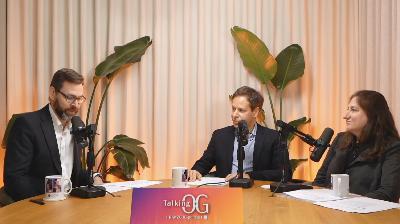
Preeclampsia is an uncommon yet high-risk condition – especially when it develops early in pregnancy. In this episode of Talking O&G: A RANZCOG Podcast, host Associate Professor Scott White is joined by Professor Amanda Henry and Associate Professor Daniel Rolnik to unpack RANZCOG’s Early Pregnancy Screening and Prevention of Preterm Preeclampsia Guideline.
This discussion explores the rationale behind the guideline update, how first-trimester screening improves detection of preeclampsia and practical steps for clinicians. Topics include individualised risk assessment, the Fetal Medicine Foundation (FMF) first-trimester algorithm and the use of aspirin for risk reduction. The guests also discuss equity and access, including barriers faced in rural/remote settings, out-of-pocket costs and culturally competent care for First Nations and Māori patients.
🔗Resources mentioned in this episode:
Early pregnancy screening and prevention of preterm preeclampsia and related complications (C-Obs 61)
SOMANZ Hypertension in Pregnancy Guideline 2023
FMF Assessment of risk for Preeclampsia (PE)
📌 RANZCOG members can submit CPD at: https://shorturl.at/iq733
💬 If you found this episode valuable, please rate, review, subscribe, and share it with your colleagues.
The views expressed are those of the speakers and may not reflect the official position of the Royal Australian and New Zealand College of Obstetricians and Gynaecologists (RANZCOG).
Preeclampsia is an uncommon yet high-risk condition – especially when it develops early in pregnancy. In this episode of Talking O&G: A RANZCOG Podcast, host Associate Professor Scott White is joined by Professor Amanda Henry and Associate Professor Daniel Rolnik to unpack RANZCOG’s Early Pregnancy Screening and Prevention of Preterm Preeclampsia Guideline.
This discussion explores the rationale behind the guideline update, how first-trimester screening improves detection of preeclampsia and practical steps for clinicians. Topics include individualised risk assessment, the Fetal Medicine Foundation (FMF) first-trimester algorithm and the use of aspirin for risk reduction. The guests also discuss equity and access, including barriers faced in rural/remote settings, out-of-pocket costs and culturally competent care for First Nations and Māori patients.
🔗Resources mentioned in this episode:
Early pregnancy screening and prevention of preterm preeclampsia and related complications (C-Obs 61)
SOMANZ Hypertension in Pregnancy Guideline 2023
FMF Assessment of risk for Preeclampsia (PE)
📌 RANZCOG members can submit CPD at: https://shorturl.at/iq733
💬 If you found this episode valuable, please rate, review, subscribe, and share it with your colleagues.
The views expressed are those of the speakers and may not reflect the official position of the Royal Australian and New Zealand College of Obstetricians and Gynaecologists (RANZCOG).
Cervical screening is an essential public health measure in the prevention of cervical cancer, and practice continues to evolve with new evidence and recommendations.
In this episode of Talking O&G: A RANZCOG Podcast, host Dr Nisha Khot is joined by Associate Professor Jared Watts and Dr Anna Clare to unpack RANZCOG’s new Signposting Guideline: Cervical Cancer Screening in Australia and Aotearoa New Zealand.
This discussion covers the rationale for the updated guideline and how it can support clinicians in day-to-day practice. Topics include HPV testing as the primary screening tool, risk-based recommendations, self-collection, and managing higher-risk and immunocompromised groups. The guests also explore approaches to trauma-informed care and guidance for special circumstances such as pregnancy, hysterectomy and non-sexually active patients.
They also highlight the importance of culturally safe care, supporting patients to make informed decisions, and what’s next for cervical screening across Australia.
While this episode focuses on the Australian context, we’ll be dedicating a future episode to cervical screening in Aotearoa New Zealand.
🔗 Resources mentioned in this episode:
RANZCOG Cervical Cancer Screening Guideline
RANZCOG Cervical Cancer Screening in Australia and New Zealand Patient Information Pamphlet
PREVENT Project
📌 RANZCOG members can submit CPD at: https://shorturl.at/iq733
💬 If you found this episode valuable, please rate, review, subscribe, and share it with your colleagues.
The views expressed are those of the speakers and may not reflect the official position of the Royal Australian and New Zealand College of Obstetricians and Gynaecologists (RANZCOG).
Cervical screening is an essential public health measure in the prevention of cervical cancer, and practice continues to evolve with new evidence and recommendations.
In this episode of Talking O&G: A RANZCOG Podcast, host Dr Nisha Khot is joined by Associate Professor Jared Watts and Dr Anna Clare to unpack RANZCOG’s new Signposting Guideline: Cervical Cancer Screening in Australia and Aotearoa New Zealand.
This discussion covers the rationale for the updated guideline and how it can support clinicians in day-to-day practice. Topics include HPV testing as the primary screening tool, risk-based recommendations, self-collection, and managing higher-risk and immunocompromised groups. The guests also explore approaches to trauma-informed care and guidance for special circumstances such as pregnancy, hysterectomy and non-sexually active patients.
They also highlight the importance of culturally safe care, supporting patients to make informed decisions, and what’s next for cervical screening across Australia.
While this episode focuses on the Australian context, we’ll be dedicating a future episode to cervical screening in Aotearoa New Zealand.
🔗 Resources mentioned in this episode:
RANZCOG Cervical Cancer Screening Guideline
RANZCOG Cervical Cancer Screening in Australia and New Zealand Patient Information Pamphlet
PREVENT Project
📌 RANZCOG members can submit CPD at: https://shorturl.at/iq733
💬 If you found this episode valuable, please rate, review, subscribe, and share it with your colleagues.
The views expressed are those of the speakers and may not reflect the official position of the Royal Australian and New Zealand College of Obstetricians and Gynaecologists (RANZCOG).

Comments

Download from Google Play

Download from App Store
 United States