


 Claim Ownership
Time Billionaires: Mindset and Time Management for Work & Life
Subscribed: 2Played: 0
Subscribe

© 2025
Description
Time Billionaires is the podcast for high-performing professionals who know they could be getting more out of life. Whether you're busy doing the things you think you have to do while longing for the things you actually want to do, or simply seeking more intention and groundedness in how you spend your time, this show is for you.
If you expect to live another 31 years, you have over a billion seconds left. Hosted by Rebecca Shaddix, Time Billionaires teaches you how to spend that time like the billionaire you already are by transforming those overlooked 90-second to 15-minute "micromoments" throughout your day into purposeful opportunities for more intentional, grounded living.
Each 7-15-minute episode combines science-backed insights with practical strategies that busy executives, entrepreneurs, and overwhelmed parents can implement immediately. Through engaging conversations with accomplished professionals, neuroscientists, and behavioral experts, you'll discover how small, intentional choices in your existing micromoments create a compounding effect that transforms how productive, connected, and alive you feel.
Because when you spend your micromoments intentionally, you don't just get more done – you get more out of life.
For more insights on turning hidden minutes into your greatest asset, connect with Rebecca and follow the podcast on LinkedIn!
Time Billionaires on LinkedIn: https://www.linkedin.com/company/time-billionaires-pod
Rebecca: https://www.linkedin.com/in/rebeccashaddix/
Subscribe to follow the show.
If you expect to live another 31 years, you have over a billion seconds left. Hosted by Rebecca Shaddix, Time Billionaires teaches you how to spend that time like the billionaire you already are by transforming those overlooked 90-second to 15-minute "micromoments" throughout your day into purposeful opportunities for more intentional, grounded living.
Each 7-15-minute episode combines science-backed insights with practical strategies that busy executives, entrepreneurs, and overwhelmed parents can implement immediately. Through engaging conversations with accomplished professionals, neuroscientists, and behavioral experts, you'll discover how small, intentional choices in your existing micromoments create a compounding effect that transforms how productive, connected, and alive you feel.
Because when you spend your micromoments intentionally, you don't just get more done – you get more out of life.
For more insights on turning hidden minutes into your greatest asset, connect with Rebecca and follow the podcast on LinkedIn!
Time Billionaires on LinkedIn: https://www.linkedin.com/company/time-billionaires-pod
Rebecca: https://www.linkedin.com/in/rebeccashaddix/
Subscribe to follow the show.
34 Episodes
Reverse
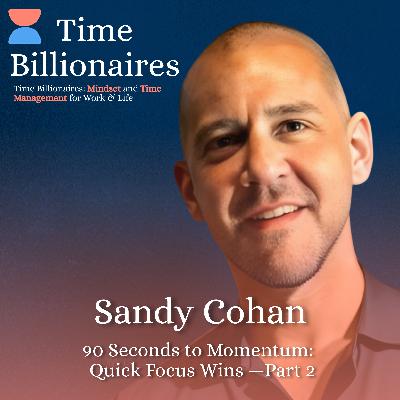
What if the secret to better focus isn't blocking out distractions, but locking into what you actually want?
In Part 2 of this conversation on the Time Billionaires podcast, performance psychologist Sandy Cohan flips the script on how we think about focus, anxiety, and momentum. Instead of fighting negative thoughts (which only makes them stronger), Sandy reveals why your brain needs "to-dos" not "don't-dos."
Rebecca and Sandy explore the power of refilling your glass instead of debating if it's half full or empty, why asking "what if it all works out?" changes everything, and how measuring gains instead of gaps can shift your entire perspective in under five minutes.
What You'll Learn:
- Why focus is about locking in, not blocking out
- How "don't-dos" sabotage your performance (and what to do instead)
- The refillable glass mindset: Moving beyond half full or half empty
- Why your brain can't process negative commands (the tree branch effect)
- The "what if it all works out?" game to counter anxiety
- How to measure gains, not gaps, when you're feeling stuck
- The "now what?" reframe for building momentum in challenging moments
- A 5-minute practice to acknowledge wins and build confidence
If you want to break free from spiraling negative thoughts, build unshakeable focus, and turn anxiety into momentum by training your brain to lock into what you want instead of what you fear, this episode gives you the mental reframes and micro-practices to shift your mindset immediately.
Timestamps:
01:19 - What's the smallest action to create momentum when you feel stuck?
02:15 - The refillable glass: A third perspective on optimism
04:20 - The tree branch effect: Why "don't-dos" backfire
06:15 - Why telling yourself "don't be nervous" makes you more nervous
07:10 - The "what if it all works out?" game
07:45 - Why we don't play the positive what-if game
08:34 - The mountain hike perspective: Looking down vs looking up
09:11 - Dan Sullivan's Gap and the Gain concept
10:03 - How much time do we spend acknowledging wins?
11:45 - The "now what?" reframe for any situation
Connect with Sandy!
Sandy’s Website: https://sandycohan.com/
Sandy’s Books: https://sandycohan.com/books/
LinkedIn: https://www.linkedin.com/in/sandy-cohan-138a54193/
Instagram: https://www.instagram.com/sandycohanofficial/
For more insight on making the most out of the small moments in your day, follow Rebecca and the Time Billionaires Podcast on LinkedIn!
And if you liked the show, subscribe to follow it.

In this episode of Time Billionaires, Rebecca speaks with Sandy Cohan, an elite performance mindset coach, global keynote speaker, and two-time bestselling author who has helped Olympic and NHL athletes, CEOs, and high-level performers overcome anxiety and build lasting confidence under pressure.
Together, they unpack how to overcome anxiety in high-stakes moments and why real confidence is the result of your belief systems and thought processes, not a goal in and of itself that we can arrive at. Sandy explains that confidence is the visible result, but belief, memory, and past evidence make confidence sustainable. If you’ve ever struggled with self-doubt, performance anxiety, or imposter syndrome, this conversation offers practical tools you can use immediately.
Rebecca and Sandy explore:
The different thought processes between trying to convince yourself you can succeed vs. reinforcing belief through past wins.
How defining success with clarity and specificity reduces anxiety
Why vagueness feeds anxiety, and specifically, labeling your fears makes them more manageable.
How the same lessons elite athletes use to stay calm under pressure can be used by anyone in any stressful or high-stakes situation.
Easy ways to build momentum in under 5 minutes.
If you want to build confidence, manage anxiety, and perform at your best, this episode gives you actionable strategies rooted in performance psychology.
Timestamps
Confidence vs. Belief (How to get there) – 03:15
Defining Success with Specific Targets – 08:45
Connect with Sandy:
Sandy’s Website: https://sandycohan.com/
Sandy’s Books: https://sandycohan.com/books/
LinkedIn: https://www.linkedin.com/in/sandy-cohan-138a54193/
Instagram: https://www.instagram.com/sandycohanofficial/
For more insight on making the most out of the small moments in your day, follow Rebecca and the Time Billionaires Podcast on LinkedIn!
And if you liked the show, subscribe to follow it.

Are you successful on paper but feel like something's missing? In Part 2 of this conversation on the Time Billionaires podcast, Rebecca continues her discussion with career coach Carlotta Negri Di Sanfront about navigating the "messy middle" of modern careers, when you've achieved traditional success but still feel unfulfilled.
Carlotta reveals why the most successful people she coaches have one thing in common: a crystal-clear vision that allows them to say "no" frequently. She shares a simple color-coding exercise that reveals where your time really goes, why doing nothing can be your most productive activity, and how to avoid losing yourself by saying yes to too many opportunities.
What You'll Learn:
Why successful people still feel like something is missing
The power of having a clear vision to set non-negotiables
How saying "no" becomes an act of power, not limitation
A simple color-coding exercise to audit where your time actually goes
Why doing nothing in 5-minute gaps makes you more creative and productive
The 20-20-20 rule for preventing eyestrain and cognitive overload
Habit stacking for parents: How to make family time fulfilling for you too
Why fixing your eyes on one point calms your brain and lowers cortisol
If you want to: set powerful boundaries, reclaim fragmented time, and thrive in both your career and personal life without burning out, this episode gives you practical exercises to protect your energy and make every moment count.
Timestamps:
02:00 - The messy middle: When success doesn't feel like enough
02:58 - Why clear vision enables powerful boundaries
04:30 - Color-coding exercise: Audit your week by priority
06:45 - Making time for everything: Work, family, self-care, and social life
08:09 - What to do with 5 minutes between tasks
12:45 - How doing nothing is actually highly productive work
13:31 - Habit stacking for parents: Making family time fulfilling for everyone
Get in Touch with Carlotta!
LinkedIn: https://www.linkedin.com/in/carlottanegridisanfront/
For more insight on making the most out of the small moments in your day, follow Rebecca and the Time Billionaires Podcast on LinkedIn!
And if you liked the show, subscribe to follow it.
Chapters
(00:00:00) - Time to Billionaire(00:01:52) - Getting Out of the Messy Middle of Your Career(00:08:24) - What's Your Favorite Thing to Do With Your Time?(00:13:16) - How to Balance Your Time With Your Child(00:15:37) - Reclaiming Your Time

What if the traditional markers of success, job titles, team size, and climbing the corporate ladder, aren't actually what matter most?
In Part 1 of this two-part conversation of the Time Billionaires podcast, career coach and former Chief Product Officer Carlotta Negri Di Sanfront shares why ambitious professionals need to unlearn conventional definitions of success and replace them with values-aligned goals.
Rebecca and Carlotta explore the gap between what we say we value and how we actually spend our time, the chemical wiring behind risk-taking and bold career moves, and why being satisfied with "good enough" might be the most underrated skill in modern leadership.
What You'll Learn:
Why job titles and team size don't determine real success
A simple exercise to check if your time aligns with your values
How to make bold career decisions without fearing irreversible consequences
The difference between dopaminergic and "here and now" brain wiring (and what it means for your career choices)
Why some people thrive on ambiguity while others prefer stability
How to know when it's time to take a leap of faith versus staying put
If you want to define success on your own terms, align your daily choices with your core values, and make bold career decisions without fear of regret, this episode gives you a simple framework to audit your life and reclaim what matters most.
Timestamps:
02:15 - Why job titles and promotions don't equal success
03:45 - Simple exercise: Do your calendar and values align?
07:10 - Are career choices really irreversible?
08:31 - What "bold decisions" actually look like in practice
09:15 - Leaving corporate security for flexibility and purpose
11:43 - When to take risks versus when to be satisfied with 80%
12:50 - The dopamine-driven brain: Why some people are wired for risk
Get in Touch with Carlotta!
LinkedIn: https://www.linkedin.com/in/carlottanegridisanfront/
For more insight on making the most out of the small moments in your day, follow Rebecca and the Time Billionaires Podcast on LinkedIn!
And if you liked the show, subscribe to follow it.
Chapters
(00:00:16) - Time Billionaires: Carlota Nyngri(00:00:59) - What to Unlearn About Success(00:02:42) - Ideas for a Shift(00:07:32) - Bradley on Making Bold Choices
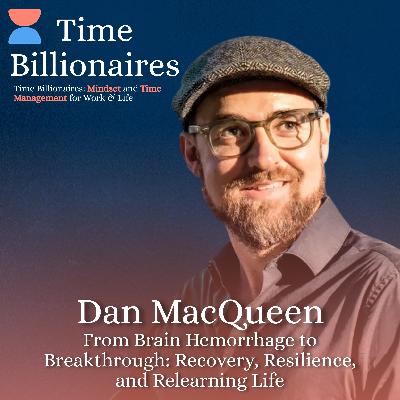
In this episode of Time Billionaires, Rebecca speaks with Dan MacQueen about the life-altering brain hemorrhage that struck him at twenty-eight, the weeks he spent in a coma, and his long journey through brain injury recovery—learning to walk, talk, and fully re-enter daily life. Dan shares how surviving a traumatic brain injury reshaped his relationship with time, energy, and control.
From the moment he adopted the stoic principle “control the controllables” to the daily commitment to keep moving forward one decision at a time, Dan’s story offers a grounded, honest look at resilience after injury. Rebecca and Dan unpack the practical mental tools that helped him rebuild his life after a brain hemorrhage—and how these same strategies can help anyone navigating recovery, burnout, or major life disruption.
Together, they explore the psychological cost of rumination and regret, how to distinguish between controllable vs. uncontrollable stressors, and share a simple five-minute exercise for reducing anxiety, restoring focus, and conserving mental bandwidth.
Whether you’re recovering from a serious injury, facing an unexpected setback, or simply looking for practical tools to improve focus and productivity, Dan’s journey offers a powerful blueprint for progress over perfection, emotional resilience, and learning when to let go of what you can’t change.
Timestamps
Dan’s Brain Hemorrhage & Recovery Story – 00:00
Embracing Stoicism: “Control the Controllables” – 01:20
One Decision a Day: Rebuilding After Brain Injury – 03:45
Overcoming Rumination and Regret – 06:00
Five-Minute Exercise: Controllables vs. Uncontrollables – 08:15
Connect with Dan
Website: https://www.macqueendan.com/
LinkedIn: https://www.linkedin.com/in/macqueendan/
For simple daily mindset tips, follow Rebecca and the Time Billionaires Podcast on LinkedIn.
And if you enjoy the show, please rate it and subscribe to follow it.
Chapters
(00:00:00) - How to Become a Billionaire in Your Life(00:00:41) - Brain Injuries: How to Live Your Life(00:02:17) - Decisions Made Along The Way to Recovery(00:04:30) - How to Reclaim Your Time
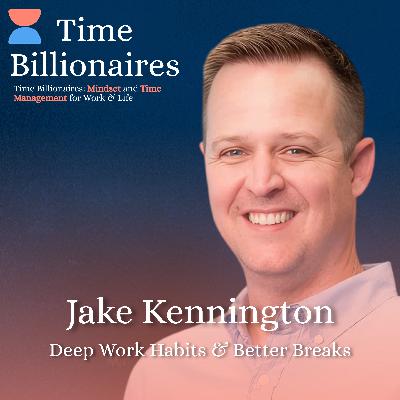
In this episode of Time Billionaires, Rebecca sits down with Jake Kennington, founder of Actively Human, to explore how deep work, intentional breaks, and clearer boundaries can help professionals reclaim their time, and their sense of fulfillment.
Jake, a former licensed structural engineer, husband, father of four, and executive coach, shares how he helps mid-career professionals overcome burnout, break free from society’s default definition of success, and design a life aligned with their values rather than a “full calendar that leads to an empty life.”
Together, Rebecca and Jake unpack:
Why deep work habits matter more than working longer hours
How setting clear boundaries between work and personal time improves focus and satisfaction
The Pomodoro Technique (25 minutes of focused work followed by a 5-minute break) and why it works
Research shows that breaks are most restorative when they’re different from your main task, including simple resets like standing up, stepping outside, or getting sunlightJake also shares a memorable story involving NBA champion Dwyane Wade to illustrate what it looks like to take proactive ownership of your role—on a team, in your career, and in your life.
Toward the end of the conversation, Jake explains why so many high-achieving professionals feel unfulfilled: they’re chasing someone else’s version of success. Drawing on the idea that “no one ever steps in the same river twice,” he walks through the importance of redefining success, realigning daily routines, and reconnecting with the people and work that matter most as life evolves.
Jake closes by revealing the surprising numbers behind his own journey, 25 homes, 14 cities, and 22 jobs, as a reminder that intentional choices around time, focus, and purpose are the real currency of long-term fulfillment.
Timestamps
Setting boundaries and managing your calendar (“full calendar, empty life”) - 00:58
Using the Pomodoro technique and micro-breaks for deep focus - 05:07
Defining your own success instead of chasing others’ metrics - 08:08
Opting into an intentional life versus the unwitting status quo - 11:09
The REDAC framework (Redefine, Realign, Reconnect) and why engagement & relationships matter - 14:43
Connect with Jake Kennington!
Website:https://activelyhuman.com/
LinkedIn: https://www.linkedin.com/in/jakekennington/
For simple daily mindset tips, follow Rebecca and the Time Billionaires Podcast on LinkedIn.
And if you enjoy the show, please rate it and subscribe to follow it.
Chapters
(00:00:00) - How to Make More Money in a Short Time(00:00:57) - Time Billionaires: Jake Kennington(00:01:58) - Setting Boundaries for Your Calendar(00:09:03) - Why So Many People Are Unful(00:14:47) - Reclaiming Your Time
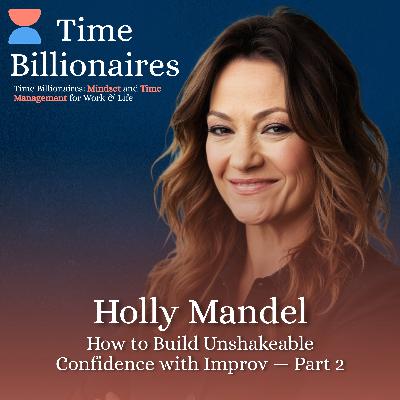
Why do capable, experienced people still hesitate to speak up — even when they know what they’re saying is right?
In Part 2 of this conversation on Time Billionaires, Rebecca Shaddix and Groundlings improv alum Holly Mandel explore how real confidence is built not through more preparation, perfection, or credentials, but through learning how to take up space before you feel ready.
Using principles drawn from improv (but not acting for the sake of performance), this episode breaks down why overthinking is often a stress response, how fear of “getting it wrong” quietly erodes confidence at work, and why waiting to feel confident first almost never works. Instead, Rebecca and Holly unpack how confidence grows through action, presence, and small moments of courage that compound over time.
You’ll hear practical, relatable ideas anyone can apply, whether you’re leading a team, contributing in meetings, navigating feedback conversations, or simply trying to trust yourself more in high-pressure moments:
Why confidence isn’t a personality trait, it’s a practiced response
How “taking up space” changes how others perceive your authority
Why low-stakes discomfort builds resilience faster than over-preparing
How small mindset shifts can reduce overthinking and improve communication at work
This episode reframes confidence as something you practice, not something you wait for, and shows how everyday micromoments can quietly rewire how you show up, speak up, and lead.
This episode is especially relevant for anyone interested in confidence at work, leadership development, communication skills, and overcoming overthinking.
Timestamps
Elasticity of Comfort Zones & Practicing Discomfort – 00:00:00
Brain Science of Stress, Creativity, and Collaboration – 00:02:04
The “Five Whys” Technique to Unpack and Overcome Fear – 00:07:30
Five-Minute Improv Practices for Creativity – 00:10:17
Confidence Without a Script: Using Uncertainty as a Strength – 00:11:41
Connect with Holly
Website: https://www.hollymandel.com/
LinkedIn: https://www.linkedin.com/in/holly-mandel/
For simple daily mindset tips, follow Rebecca and the Time Billionaires Podcast on LinkedIn.
And if you enjoy the show, please rate it and subscribe to follow it.
Chapters
(00:00:00) - How to Live a More Productive Life(00:06:01) - In the Elevator With An Acting Class(00:11:36) - Own Your Accomplishments(00:16:33) - How to Give Yourself a Voice(00:21:15) - How to Keep Your New Year's Resolutions(00:21:52) - Rebecca Shattucks: Reclaim Your Time
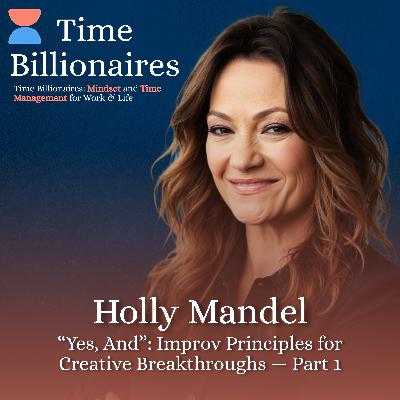
In this episode of Time Billionaires, Rebecca Shaddix explores how improv training builds better leaders, more creative teams, and faster collaboration with Holly Mandel, an improv professor and corporate trainer who has worked with PwC, IBM, and Pfizer to bring improv principles into their team dynamics.
Trained at Los Angeles’s Groundlings Theater, Holly explains why the core improv principle “Yes, And” isn’t about agreement, but about creating momentum and collaboration by acknowledging someone else’s version of reality. Together, Rebecca and Holly unpack how improvisers build trust, interrupt cycles overthinking, and easy ways to unlock creativity, confidence, and adaptability with easy improv warm-ups anyone can do in 5 minutes.
This conversation goes beyond “being present.” You’ll learn how:
Swapping “but” for “and” subtly rewires trust in meetings and feedback
Taking up space before you feel ready builds confidence faster than preparation
Low-stakes discomfort (like improv) strengthens decision-making under pressure
Five-minute micromoment exercises inspired by improv can improve team collaboration and everyday communication skills
They also dive into the neuroscience behind improv, explaining how shifting out of a fight-or-flight brainwave can reduce stress, spark fresh insights, and rewire your default mindset toward openness and innovation. By the end of this conversation, you’ll understand why improvisers don’t fear not knowing the next step, because they realize they already have all the tools they need to use uncertainty to create something entirely new.
Timestamps
Why Improv Builds Better Thinking, Communication, and Leadership–00:00
Overthinking at Work: Breaking Rumination Spirals with Improv Principles–01:21
“Yes, And” vs “Yes, But”: Communication Skills That Build Trust–03:11
Taking Up Space: Confidence, Authority, and Creative Leadership–10:35
Connect with Holly
Website: https://www.hollymandel.com/
LinkedIn: https://www.linkedin.com/in/holly-mandel/
For simple daily mindset tips, follow Rebecca and the Time Billionaires Podcast on LinkedIn.
And if you enjoy the show, please rate it and subscribe to follow it.
Chapters
(00:00:00) - How to Become a Billionaire in 30 Seconds(00:00:52) - Why Holly Mandel Is One of Time Billionaires(00:01:35) - In the Elevator With an Improviser(00:03:39) - The Importance of Improvisation for Business(00:05:12) - The Importance of Yes anders in Improvisation(00:11:43) - Do You Have to Do "It All"?(00:14:23) - Being Fully Present in the Moment(00:18:05) - Why Improvisation Is Important for Your Brain
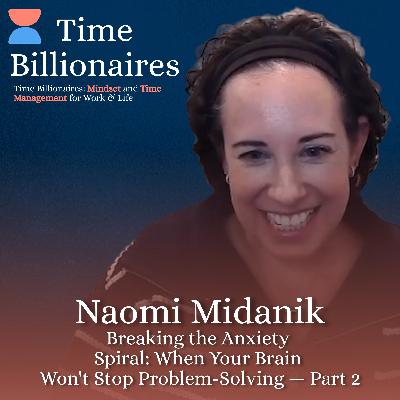
In Part 2 of this Time Billionaires conversation, Rebecca continues her discussion with Naomi Midanik, cancer survivor and Founder at Bright Balance Psychotherapy. This episode dives deeper into the misconceptions around workplace burnout and why it's become the "most socially acceptable way to talk about mental health at work."
Naomi clarifies the true definition of burnout - emotional exhaustion, cynicism about work, and reduced effectiveness - and explains the critical test: if rest from work doesn't help your symptoms, it's likely not burnout. The conversation explores how high-achieving professionals often misdiagnose themselves, missing underlying factors like hormonal changes, unprocessed trauma, or other mental health conditions that require different treatment approaches.
The episode also tackles the trap of overthinking decisions and how our brains try to "outthink" anxiety through endless pros-and-cons lists. Naomi shares the story of Rebecca's coaching breakthrough, where 50 minutes of analysis was solved by 15 seconds of intuitive knowing. She introduces practical grounding techniques, including the proper way to do the 5-4-3-2-1 sensory exercise and simple mindfulness practices that don't require meditation.
Timestamps:
Recap and opening about emotional numbness vs. burnout – 0:00
The true definition of burnout and the rest test – 2:29
Understanding depersonalization in workplace context – 4:41
The coaching story: analysis paralysis vs. intuitive knowing – 4:57
Why our brains can't outthink anxiety – 6:45
Breaking the worry and rumination cycles – 7:56
The importance of self-awareness and body attunement – 8:44
The 5-4-3-2-1 grounding exercise (done properly) – 9:59
Mindfulness without meditation: washing hands mindfully – 12:32
The "notice something new" approach to mindfulness – 13:49
Connect with Naomi:
Bright Balance Psychotherapy: https://www.brightbalancetherapy.com/
LinkedIn: linkedin.com/in/naomimidanik
For more insights on turning hidden minutes into your greatest asset, connect with Rebecca and the Time Billionaires Podcast on LinkedIn!
And if you love the show, subscribe to follow it.
Shout-out to Graham Duncan from East Rock Capital for the "Time Billionaires" concept that inspired our show name - originally shared on The Tim Ferriss Show.
Chapters
(00:00:00) - How to Realize Your Time Billionaires(00:01:13) - What to Do About Burnout in the Workplace(00:09:03) - How to Break a Pattern of Anxiety
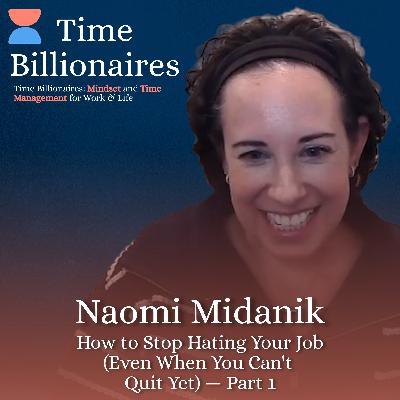
In this episode of Time Billionaires, Rebecca speaks with Naomi Midanik, a cancer survivor and Founder at Bright Balance Psychotherapy. As a registered psychotherapist practicing in Ontario, Canada, Naomi brings a unique perspective, having spent 17 years in corporate marketing before transitioning to therapy. Her specialty focuses on professionals, entrepreneurs, and working moms navigating career challenges and workplace burnout.
The conversation explores the reality many face: being stuck in a job they hate without the immediate option to quit. Naomi introduces the concept of radical acceptance from dialectical behavior therapy, explaining how to validate your negative feelings about work while simultaneously focusing energy on what you can actually control. She shares practical strategies for making the best of difficult situations, from reframing your commute to managing difficult boss relationships.
Timestamps:
Opening question about hating your job but making the best of it – 0:00
Introduction to Naomi and her background – 0:26
Why people feel trapped in jobs they hate – 1:28
What radical acceptance actually means and how to practice it – 2:39
The "good" reframe vs. radical acceptance for different situations – 4:40
Personal example: cancer diagnosis and appropriate responses – 5:32
Toxic positivity vs. genuine acceptance in career situations – 7:42
Understanding emotional numbness as an early burnout signal – 9:14
Signs to watch for when going through the motions – 10:39
Connect with Naomi:
Bright Balance Psychotherapy: https://www.brightbalancetherapy.com/
LinkedIn: linkedin.com/in/naomimidanik
For more insights on turning hidden minutes into your greatest asset, connect with Rebecca and the Time Billionaires Podcast on LinkedIn!
And if you love the show, subscribe to follow it.
Shout-out to Graham Duncan from East Rock Capital for the "Time Billionaires" concept that inspired our show name - originally shared on The Tim Ferriss Show.
Chapters
(00:00:00) - How to Make a Living from Your Job(00:00:46) - What Radical Acceptance Can You Do For Your Job?(00:07:43) - How to Get Over a Hating Your Job(00:09:25) - The Signs That You're Starting to Burnout
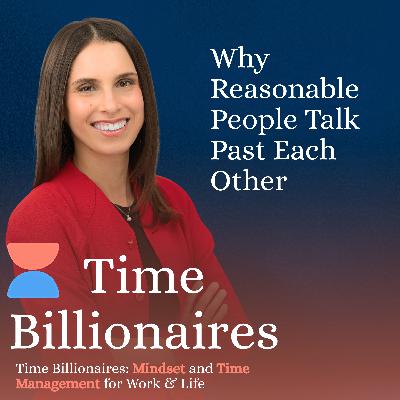
Have you ever walked away from a discussion—about work, politics, parenting, or even something small—wondering how two reasonable people could hear the same words and leave with completely different conclusions?
After years studying how people interpret ideas, first in public policy, then in marketing, and eventually in her own family, Rebecca noticed a pattern: it’s often not what we’re saying that derails conversations, but the invisible opposite our words quietly introduce.
Whether you’re trying to advocate for something you care about, explain a decision at work, or stay connected with people who see the world differently, this episode offers an easy mental shift that can keep the people you’re interacting with engaged, curious, and willing to keep talking.
What you'll learn:
Different brains naturally scan for different priorities (change vs. stability)
How introducing the wrong frame can lose someone before the conversation starts
The "Opposite Test": a simple way to strengthen your arguments before you make them
Why repetition subtly legitimizes ideas, even wrong ones
The connection between effective framing and building meaningful relationships
For more insights on turning small moments into your greatest asset, follow Rebecca and the Time Billionaires Podcast on LinkedIn!
And if you love the show, subscribe to follow it.
Chapters
(00:00:01) - How to Become a Billionaire in 31 Years(00:00:34) - The Only Way to Win a Political Argument(00:06:39) - The Micro-moment Exercise
In Part 2 of this Time Billionaires episode, Rebecca continues her conversation with Oren Shai, Co-Founder of Feeling School, exploring the deeper connections between nervous system regulation, success, and emotional well-being. Oren explains the difference between parasympathetic (rest and digest) and sympathetic (fight or flight) nervous system states, offering practical techniques like elevating legs above the heart to quickly access parasympathetic responses.
The conversation takes a turn as they discuss how most people misunderstand success, operating from what Oren calls the "coffee and trauma" model, constantly medicating themselves with stimulants while chasing achievements that they believe will finally make them feel complete. Instead, he advocates for redefining success as living authentically, contributing meaningfully, and connecting with others.
Timestamps:
Understanding parasympathetic vs sympathetic nervous system states – 0:42
Contextual approaches to nervous system regulation – 2:30
The importance of experimenting with what works for you – 4:23
Why most careers are "fueled by coffee and trauma" – 6:33
Redefining success beyond achievement metrics – 7:47
Childhood conditioning and earning love patterns – 12:25
Moving beyond protective patterns without blame – 13:36
Final thoughts: The way you want to feel is on the other side of what you're not feeling – 14:40
If you'd like to connect with Oren, you can find Oren on LinkedIn and learn more about Feeling School here.
For more insights on turning hidden minutes into your greatest asset, connect with Rebecca and the Time Billionaires Podcast on LinkedIn!
And if you love the show, subscribe to follow it.
Shout-out to Graham Duncan from East Rock Capital for the "Time Billionaires" concept that inspired our show name - originally shared on The Tim Ferriss Show.
Chapters
(00:00:00) - An Exercise for Connecting to Parasympathetic(00:06:13) - What Most People Don't Understand About Success(00:14:35) - How to Feel the Way You Want to Feel
In this episode of Time Billionaires, Rebecca speaks with Oren Shai, an organizational psychologist, neuroscience-based executive coach, and Co-Founder of Feeling School. Oren teaches his signature methodology to high-achieving leaders, integrating cutting-edge neuroscience with depth and humanity to help them step into their most connected, alive expression of leadership at work and in life.
The conversation explores why we fight our natural energy fluctuations instead of working with them. Oren introduces his concept of the "human wave", the natural cycles of energy that everyone experiences throughout the day, week, and seasons. He explains how fighting these cycles creates tension and shame spirals, while recognizing and supporting ourselves through them leads to better performance and well-being. Oren also shares practical somatic tools for resetting during busy workdays, including visual system resets, pattern interrupting techniques, and the importance of giving our nervous systems intentional breaks from the constant vigilance required in urban environments.
Timestamps:
Introduction to the "human wave" concept and energy cycles – 0:41
Why we shame ourselves for natural energy fluctuations – 1:45
Understanding that everyone operates in natural cycles – 3:35
The importance of intention when using grounding tools – 4:30
Pattern interrupting vs. forcing focus – 5:23
Creating somatic-friendly office cultures – 6:45
Simple tools for 3-minute breaks and visual system resets – 10:03
Deep belly breathing and parasympathetic activation – 13:45
If you'd like to connect with Oren, you can find Oren on LinkedIn and learn more about Feeling School here.
For more insights on turning hidden minutes into your greatest asset, connect with Rebecca and the Time Billionaires Podcast on LinkedIn!
And if you love the show, subscribe to follow it.
Shout-out to Graham Duncan from East Rock Capital for the "Time Billionaires" concept that inspired our show name - originally shared on The Tim Ferriss Show.
Chapters
(00:00:00) - Executive Coach Oren Shy on Life's Natural Cycles(00:04:05) - How to Get More Present in Your Life(00:05:19) - Practice of Slow Down(00:06:57) - How to Get Out of the Office(00:10:09) - What is the somatic practice?(00:10:48) - How to Lower Your Body's Stress Cycle
In Part 2 of this Time Billionaires episode, Rebecca continues her conversation with Michael Barber, Chief Marketing Officer at StarTech, diving deeper into career decision-making and the courage required for growth. Michael introduces his powerful "mirror test" for decision-making, asking yourself whether your current choices reflect what you want to see in the mirror, both literally and metaphorically.
This framework helps him evaluate everything from daily priorities to major life decisions, ensuring his actions align with his desired outcomes. The conversation explores Michael's unconventional career path of spending only 2-4 years at each position, a strategy that was unusual before 2010 but has accelerated his growth through diverse experiences across different industries and teams.
He emphasizes that discomfort is the price of growth and encourages embracing uncomfortable decisions rather than avoiding them. Michael shares his personal framework for knowing when it's time to make a career change: when he stops sleeping well. He explains how physical and behavioral indicators can signal when you're not doing what you want to do or feel you're running out of time for what matters most.
Timestamps:
- The mirror test: Aligning decisions with desired outcomes – 0:35
- Opportunity costs in personal life and micro-moment decisions – 1:45
- Michael's unconventional career strategy of short sprints – 3:59
- Why being uncomfortable accelerates growth opportunities – 5:30
- How to know when it's time for a career change – 6:29
- Using sleep as a gut-check indicator for life decisions – 7:15
- The "best version of yourself" framework for relationships and jobs – 8:05
Connect with Michael Barber:
LinkedIn: https://www.linkedin.com/in/michaeljamesbarber/
For more insights on turning hidden minutes into your greatest asset, connect with Rebecca and follow the podcast on LinkedIn!
Time Billionaires on LinkedIn: https://www.linkedin.com/company/time-billionaires-pod
Rebecca: https://www.linkedin.com/in/rebeccashaddix/
And if you love the show, subscribe to follow the show!
Shout-out to Graham Duncan from East Rock Capital for the "Time Billionaires" concept that inspired our show name - originally shared on The Tim Ferriss Show.
Chapters
(00:00:00) - Time Billionaires: How to Prioritize Your Life(00:03:39) - What Do You Wish You Knew About Time Management?
In this episode of Time Billionaires, Rebecca speaks with Michael Barber, a Chief Marketing Officer with over 20 years of experience leading marketing teams. Michael's work has been featured in The New York Times and Forbes, and he's known for helping companies grow while ensuring their teams actually enjoy the process.
Michael introduces the powerful concept of "micro legacies", the idea that everyday humans can create meaningful impact through small, intentional daily actions rather than comparing themselves to celebrities and influencers. He argues that holding doors, asking genuine questions in meetings, and listening more than talking can collectively make the world a better place through accumulated positive interactions.
The conversation explores how time poverty affects our ability to be generous and patient with others, referencing a fascinating study about Good Samaritan volunteers who were three times less likely to help others when they felt rushed. Michael shares his proven "three D's" framework (Do it, Delegate it, or Drop it) that he's used for nearly 20 years to make quick decisions and avoid time debt in both professional and personal contexts.
Timestamps:
- Introduction to micro legacies vs. celebrity influence– 0:43
- Why everyday actions matter more than big achievements – 2:30
- How time poverty affects our generosity and patience – 4:45
- The three D's framework: Do it, delegate it, or drop it – 5:25
- Applying decision frameworks to emails and daily inputs – 5:58
- One-touch tasks and personal time management – 8:30
- Adapting the three D's for personal relationships – 9:15
Connect with Michael Barber:
LinkedIn: https://www.linkedin.com/in/michaeljamesbarber/
For more insights on turning hidden minutes into your greatest asset, connect with Rebecca and follow the podcast on LinkedIn!
Time Billionaires on LinkedIn: https://www.linkedin.com/company/time-billionaires-pod
Rebecca: https://www.linkedin.com/in/rebeccashaddix/
And if you love the show, subscribe to follow the show!
Shout-out to Graham Duncan from East Rock Capital for the "Time Billionaires" concept that inspired our show name - originally shared on The Tim Ferriss Show.
Chapters
(00:00:00) - "Micro Legacies": The Impact of Your Actions(00:00:43) - Michael Barber(00:01:14) - Your concept of micro legacies(00:04:58) - How to Regain Control of Your Time
We're taught that wanting more makes us selfish, that ambition and desire are at odds with being humble or grateful for what we already have. But what if wanting is actually what makes us human?
From childhood, many of us learn to shrink our desires, and be accommodating, humble, and not take up too much space. We confuse contentment with complacency and mistake humility for self-erasure. But research shows that this conditioning often leaves us chasing quick hits of pleasure instead of pursuing what truly fulfills us.
In this episode, Rebecca explores why we feel guilty for wanting things, diving into evolutionary psychology and happiness research to reveal the crucial difference between hedonic happiness (instant gratification) and eudaimonic happiness (lasting fulfillment). You'll discover how to balance both types while breaking free from the guilt that keeps you stuck in cycles of short-term comfort at the expense of long-term growth.
What you'll learn:
Why our hunter-gatherer conditioning makes us think success is a zero-sum game (and why it's not)
The hidden ego behind self-denial and why "being the bigger person" sometimes keeps you small
How to distinguish between what makes you happy vs. what just makes you feel good momentarily
Why the most fulfilling experiences often don't feel pleasant in real time
The research behind two distinct types of happiness and how to balance both
How to rewire your brain to crave meaningful progress over instant gratification
Quick Actions You Can Take Today:
Try the non-dominant hand writing exercise to assess what you actually want beyond surface desires
Identify one area where you've been settling for "good enough" and get honest about what you really want
Next time you reach for a distraction, pause and ask whether you need comfort or growth in that moment
Practice reframing one desire from "selfish" to "human" and notice how it changes your relationship to that want
This episode offers hope for anyone who's been taught to want less, do less, or be less.
Because when you get honest about what actually makes you happy, you expand what's possible, not just for yourself, but for everyone around you.
Follow Time Billionaires wherever you get your podcasts so you never miss an episode.
For more insights on turning hidden minutes into your greatest asset, connect with Rebecca and follow the podcast on LinkedIn!
Rebecca's LinkedIn: https://www.linkedin.com/in/rebeccashaddix/
Podcast Page:
Chapters
(00:00:00) - Time Billionaires(00:00:57) - Why Do We Feel Guilty About Wanting Things?(00:08:31) - Reclaiming Your Time With a Micro-Moment
In this episode of Time Billionaires, Rebecca continues her conversation with Jo Amato about creating sustainable approaches to managing work and life demands. Jo shares a powerful reframe on work-life balance: giving yourself permission to be "good" at work some weeks while being excellent in your personal life, and vice versa. She reveals why trying to be excellent at everything simultaneously is unsustainable for mental and physical health. The conversation explores practical communication strategies, including Jo's experience with a "red, yellow, green" system at work where team members briefly shared their energy levels at meeting starts, helping colleagues understand capacity and redistribute tasks appropriately.
A key insight emerges around shifting from self-critical questioning ("Why can't I get more done?") to curious, compassionate inquiry ("Why am I struggling with this? Oh, I'm doing a lot."). Jo emphasizes that when you name where you are and what you need, you create permission structures for yourself while allowing others to actively support you. This mindset shift impacts not only personal well-being but also how you manage teams and relationships. The episode concludes with Jo's daily check-in practice: asking "What was my biggest priority today? Am I on track? If not, why not?" from a place of curiosity rather than judgment.
Timestamps
Permission structures: Being good vs. excellent – 0:00
Intentional communication about work-heavy weeks – 3:30
The red, yellow, green energy system at work – 4:25
How naming your state allows others to help – 5:34
From self-criticism to self-compassion – 6:49
Morning routines for self-awareness – 7:35
Daily priority check-ins with curiosity – 8:30
Connect with Jo Amato:
LinkedIn: https://www.linkedin.com/in/joellenamato
For more insights on turning hidden minutes into your greatest asset, connect with Rebecca and follow the podcast on LinkedIn!
Time Billionaires on LinkedIn: https://www.linkedin.com/company/time-billionaires-pod
Rebecca: https://www.linkedin.com/in/rebeccashaddix/
And if you love the show, Subscribe to follow it.
Shout-out to Graham Duncan from East Rock Capital for the "Time Billionaires" concept that inspired our show name - originally shared on The Tim Ferriss Show.
Chapters
(00:00:00) - How to Give Yourself Permission to Be Good at Work(00:05:29) - Check in With Yourself Every Day

In this episode of Time Billionaires, Rebecca speaks with Jo Amato, a tech executive with 20 years of experience in senior leadership roles at Microsoft, Teradata, and Ernst & Young. Jo balances a demanding career with being present for her family and raising three teenagers. Jo shares how she's discovered practical ways to stay grounded and create time in a busy schedule through two key strategies: a daily ritual and smart AI use.
The conversation dives deep into Jo's innovative approach to using AI as a "reflection mirror" - moving beyond basic meeting summaries to having AI organize her scattered thoughts and hold up an objective mirror. This practice helps her identify which thoughts serve her goals and which don't, eliminating the internal debate that typically consumes mental energy. Jo explains how this creates a compounding effect similar to investing money: by investing a few minutes with AI upfront, she manufactures 10-15 minutes of time that she can redirect toward reflection or solving problems she previously didn't have time to address.
Timestamps
The balancing act: Managing career and family in the tech world – 0:32
Daily grounding practice: How 3 sun salutations changed everything – 1:56
Step-by-step guide to a simple morning ritual for beginners – 3:01
Using AI to create more free time – 4:17
Moving from internal debate to external clarity – 6:40
The time investment strategy: How AI creates compounding returns – 8:25
Manufacturing time through intentional systems – 9:11
Connect with Jo Amato:
LinkedIn: https://www.linkedin.com/in/joellenamato
For more insights on turning hidden minutes into your greatest asset, connect with Rebecca and follow the podcast on LinkedIn!
Time Billionaires on LinkedIn: https://www.linkedin.com/company/time-billionaires-pod
Rebecca: https://www.linkedin.com/in/rebeccashaddix/
And if you love the show, Subscribe to follow it.
Shout-out to Graham Duncan from East Rock Capital for the "Time Billionaires" concept that inspired our show name - originally shared on The Tim Ferriss Show.
Chapters
(00:00:00) - How to Get Smart About AI(00:00:36) - Meet Joe: A Mom Living in the Tech World(00:01:24) - How to Stay Grounded in the World(00:04:06) - How AI Is Affecting Your Time Management(00:06:09) - Letting Go of Things That Don't Serve You(00:07:34) - A Week in the Life With AI
In this episode of Time Billionaires, Rebecca speaks with Kevin Monroe, a gratitude consultant and recognized expert on cultivating hope and gratitude to transform workplace culture. Kevin shares a surprising discovery from his gratitude challenge launched six years ago: when people share gratitude in community rather than individually, the results are exponential, not linear. He explains how his gratitude encounters bring strangers together for just 8-9 minutes, with participants consistently reporting they "arrived as strangers, left as friends" - revealing how quickly people connect when they lower their guard and speak freely about gratitude.
The conversation explores the concept that "gratitude delayed is gratitude denied" - the tendency to save gratitude for major life events while missing thousands of everyday opportunities. Kevin challenges listeners to practice "micro-gratitude" for the smallest things, from salt's impact on flavor and health to the thousands of hands that touched items in your grocery store before you bought them. The episode concludes with Kevin's practical "Cheerleader Challenge" - a simple under-five-minute exercise where you text someone who cheers you on to express specific gratitude for their impact, creating a contagious ripple effect of appreciation.
Timestamps
The exponential power of sharing gratitude in community – 0:00
Why gratitude delayed is gratitude denied – 3:45
The micro-gratitude practice: Being grateful for salt – 6:20
Gratitude for everyday abundance in grocery stores – 8:15
How 8 minutes of shared gratitude creates lifetime connections – 11:30
The Cheerleader Challenge: A 5-minute gratitude exercise – 15:40
Connect with Kevin Monroe:
Website: https://www.kevindmonroe.com/
LinkedIn: https://www.linkedin.com/in/kevinmonroe/
Twitter: https://x.com/kevin_monroe
Gratitude Encounters: https://www.kevindmonroe.com/live-gratitude-experiences/p/customized/encounter
For more insights on turning hidden minutes into your greatest asset, connect with Rebecca and follow the podcast on LinkedIn!
Time Billionaires on LinkedIn: https://www.linkedin.com/company/time-billionaires-pod
Rebecca: https://www.linkedin.com/in/rebeccashaddix/
And if you love the show, Subscribe to follow it.
Shout-out to Graham Duncan from East Rock Capital for the "Time Billionaires" concept that inspired our show name - originally shared on The Tim Ferriss Show.
Chapters
(00:00:00) - Why You're Already a Time Billionaire(00:01:09) - Kevin Monroe(00:01:54) - The Joy of Sharing Gratitude(00:06:52) - Thanksgiving: A Day of Personal Responsibility(00:08:39) - The Joy of Sharing Gratitude(00:11:05) - The 'Cheerleader Challenge'
Ever wished it were simpler to make real friends, or found yourself frustrated by coworkers who just rub you the wrong way?
The United States Surgeon General declared loneliness a public health epidemic, which is as harmful to your health as smoking 15 cigarettes a day. We live in a world that’s more connected than ever, yet so many of us still feel unseen, unheard, or misunderstood.
The good news is that building meaningful connection with other people can be much easier—and faster—than people think. A lot of people assume that meaningful connection takes long conversations, shared experiences, or deep vulnerability. But what if it could actually start in less than a minute?
In this episode of Time Billionaires, Rebecca Shaddix shares how to create real connection even when you’re short on time. You’ll learn small mindset shifts that dissolve the invisible barriers keeping us apart, and how small moments of genuine presence can rewire your brain for belonging.
Changing the way you connect doesn’t require more time, just more intention.
What you'll learn:
How to break mental traps that lead to judging others, whether you're placing yourself above or below others.
Why the words you use matters: The transformative difference between thinking of reaching out to others as being "vulnerable" vs. being "bold".
The hidden pattern behind most interpersonal frustration and how to rewire your brain to find shared understanding.
How to turn any stranger into a potential meaningful conversation with easy conversation-starting questions.
How to use curiosity as a key to a more interesting life.
Featured Techniques:
The Join, Jump, or Jealous: Learn why someone's behavior bothers you by identifying whether you recognize something in them you don't like in yourself (join), you're making assumptions about their intentions (jump), or they have something you wish you had (jealous)
The Boldness Reframe: Transform your energy by replacing "I need to be vulnerable" with "I'm going to be bold", same action, completely different focus
The Party Thought Experiment: Flip your perspective on starting conversations by remembering how relieved you feel when someone approaches you first
The Follow-Up Question Rule: Build momentum in conversations by asking one or two questions about what someone just shared, rather than jumping to unrelated topics
Conversation Starters That Work Everywhere: From "What's your dog's name?" to "What's exciting you lately?" to "How long have you been in [city]?", simple openers that invite real connection.
Quick Actions You Can Take Today:
Think of someone who annoys you and challenge yourself to come up with three alternate explanations for their be...
Chapters
(00:00:00) - How to Build Better Connections With Time(00:00:45) - How to Build Better Connections in a Minute(00:01:50) - What Really Upsets You About Someone's Behavior(00:05:12) - What is Judgement?(00:06:09) - Vulnerable vs Bold: The Evolving Conversation(00:11:27) - How to Connect in the Micro-moment

Comments

Download from Google Play

Download from App Store
 United States