


 Claim Ownership
HR Data Labs
Subscribed: 56Played: 1,123
Subscribe

© All rights reserved by WRKdefined
Description
Unlock the future of HR, today with the HR Data Labs podcast! Dive into transformative insights, expert interviews, and cutting-edge practices that empower organizations to harness their workforce’s potential. Join us for engaging discussions that will inspire you to innovate, strategize, and lead with confidence! Tune in now!
262 Episodes
Reverse
Are you tired of dealing with outdated recruiting strategies? Wondering if AI can truly revolutionize hiring? This episode dives into the gritty truth about how modern metrics and emerging AI tools are reshaping talent acquisition—sometimes for better, sometimes for worse.Join us as we unpack decades of recruiting wisdom, the pitfalls of cost-per-click, and what’s next in HR tech.
In this episode:
The history of traditional job advertising and its limitations
How cost-per-application models are changing the game
The messy reality of defining "qualified" applications and why subjectivity matters
The myth of AI as an unbiased recruiter and its legal risks
Why transparency in pay and job descriptions can fix much of the hiring chaos
The dangers of scaling bad processes and how to avoid scaling mistakes
Practical insights on choosing the right metrics for your hiring needs
The future of AI in recruitment and the importance of process over technology
Useful links:
College Recruiter
Work Defined Podcast Network
Ultimate Guide to Recruitment Metrics
Artificial Intelligence in Hiring – Industry Report
The Future of Pay Transparency
Reach out to Steven Rothberg:
LinkedIn
Twitter
Timestamps:
0:00 - Welcome and episode overview: Are recruitment metrics still holding up?00:42 - Introducing Stephen Rothberg and college recruiter’s journey01:14 - The roots of traditional recruiting: From flyers to newspapers02:25 - Starting a business from a summer job and risk-taking mentality03:52 - The Winnipeg Jets story: Childhood risks and lessons in boldness05:23 - The shift from inefficient to performance-based ad models06:49 - The real meaning of "click" and the confusion across platforms08:13 - The rise of cost per application and its emotional impact on employers09:54 - Defining "qualified applications"—subjectivity and its pitfalls11:35 - Why scaling bad processes makes them worse13:08 - The evolution of pay-per-click and undisclosed definitions14:54 - The deadly cycle of bad job descriptions and reposting16:23 - How hiring for "fit" often misses the mark and costs real money17:10 - Qualification in hiring: Who judges? The subjectivity of recruiters18:29 - Scaling broken processes: The airplane manufacturing example19:54 - The quiet cost of bad candidate sourcing: The ATS funnel22:17 - The dangerous hype around AI and its current limitations in hiring23:12 - The black hole of AI decision-making and lack of transparency26:24 - The importance of honest job descriptions and pay transparency28:43 - Do employers prefer CPC, duration-based, or new models?30:01 - The chase for quality candidates and the costs involved31:27 - How to effectively invest in recruitment—long-term wins over shortcuts32:28 - The impact of AI on assessments and candidate matching35:55 - The legal peril of AI-driven hiring decisions and audit trail challenges37:25 - Final thoughts: Embracing process, transparency, and smart metrics
In this episode, we explore how artificial intelligence is revolutionizing HR, with a focus on building trust through data privacy and security. Join us as we discuss practical steps, emerging challenges, and the evolving role of HR professionals in the AI era.
Key Topics:
The importance of foundational data quality before implementing AI in HR
Securing sensitive employee data and managing privacy concerns
The role of semantic layers and data organization for effective AI use
How AI impacts HR workflows and transforms knowledge work
Practical approaches to integrating AI responsibly and securely
Education needs for HR to understand AI risks and opportunities
Future trends: AI's potential to reinvent HR practices, not just automate
Resources & Links:
Fuel 50 - Workforce Mobility and Talent Pipelines
Amazon - Book: Data Privacy and Security in the Cloud
Flurry - Official Website
Amazon Bedrock - AI Model Service
Anthropic - AI Safety and Privacy Guarantees
OpenAI - Responsible AI Use
Connect with Brian Platts:
LinkedIn
Twitter
Timestamps:
00:30 - Welcome and introduction to the episode
01:15 - Brian Platts’ background in HR and software
02:08 - Flurry’s mission to make data meaningful for HR
03:26 - Fun fact: starting career driving a semi truck
04:44 - AI in HR: privacy, security, and data foundations
05:53 - Preparing your HR data for AI adoption
06:08 - Challenges with data quality and use cases
07:08 - Security considerations: private vs. public data
08:22 - Trusting AI vendors and data-sharing risks
09:15 - Teaching AI to query data securely
10:07 - Data organization and semantic layers
11:29 - Improving chatbots and avoiding misinformation
12:26 - Ensuring process accuracy and data integrity
13:14 - Sharing vs. protecting employee data
14:05 - Re-implementing permissions in AI-driven systems
15:01 - Education and awareness around AI security
16:13 - Learning from SaaS security issues during early cloud adoption
17:18 - HR’s role in AI education and safeguarding IP
18:14 - Balancing productivity gains with security controls
19:06 - AI’s impact on HR future: automation and new workforce roles
20:16 - The concept of the “Meat Layer” and human-AI collaboration
21:02 - Will AI replace HR jobs or empower them?
22:16 - The limits of current AI technology and future innovations
23:03 - Analogies: AI as a horse and the importance of tooling
24:06 - Embracing AI to enhance human work rather than replace it
25:16 - Reinventing HR processes beyond IT-led automation
26:18 - Regulatory challenges and incremental HR AI adoption
27:30 - How HR can lead responsible AI integration
28:03 - Final advice for HR professionals: think broadly and connect the dots
In this episode, we dive deep into the challenges and opportunities of HR data governance, exploring how organizations can improve data quality, ownership, and usability in a rapidly evolving AI landscape. Join us for practical insights from seasoned HR analytics experts on building a data-driven culture that supports strategic decision-making.
Key Topics:
Why HR data is often unreliable and the impact on decision-making
The role of ROI and cultural mindset in improving HR data quality
The importance of ownership, stewardship, and clear definitions in data governance
How AI and machine learning magnify data quality issues if governance is lacking
Practical steps to start building your HR data governance framework
The critical role of documentation, data catalogs, and system integration
Common pitfalls: managing multi-system data consistency and avoiding errors
Quick wins: focusing on key metrics and stakeholder collaboration
Timestamps:
00:00 - Introduction: Why HR data governance matters today
02:30 - Challenges HR faces with data quality and accuracy
06:15 - Why organizations struggle to demonstrate ROI from HR data
09:00 - Cultural and mindset barriers to effective data management
11:00 - The impact of AI and machine learning on HR data quality
12:30 - Context and system integration challenges across HR tech stack
15:11 - Defining HR data governance: Ownership, stewardship, and quality
17:00 - Creating a data glossary and system of record for HR data
19:05 - Real-world examples of poor HR data visibility and audit issues
21:00 - Using chatbots and AI: risks, benefits, and data consistency
24:00 - The importance of documentation and version control in AI applications
27:40 - Practical steps to start your HR data governance journey
30:00 - The significance of aligning metrics and defining owners
33:00 - Building a culture of data excellence and quick wins
36:00 - Addressing expectations for pristine data and managing realities
37:00 - Final recommendations for HR leaders to improve data governance
Connect with Guests:
Raswinder Singh - LinkedIn | Twitter
Ankit Abrol - LinkedIn | Twitter
🚀 Dive into the future (at least the next 6 months) of HR with the latest episode of the HR Data Labs podcast! In the Season 10 recap, host David Turetsky explores the evolving landscape of compensation, strategy, and people analytics. We recap the current Season 10, where we discuss addressing training gaps, the impact of AI in HR, and other cool episode topics. Then we review our prediction for the past 6 months and make bold predictions for first 6 months of 2026.
Join us for a thought-provoking discussion that prepares you for the challenges and opportunities ahead. #HRInnovation #FutureOfWork #HRDataLabs

Join host David Turetsky and guest Paul Reiman from Novo Insights as they delve into the dynamic world of compensation strategies and pay transparency. Discover how regulatory changes in the US and Europe are shaping the landscape, the critical role of job documentation, and the impact of technology in fostering transparency. Tune in for insightful predictions for 2026 and learn how political climates may influence future pay transparency laws.
Chapters
Introduction and Guest Introduction
Compensation Strategies and Pay Transparency
Regulatory Changes in the US and Europe
The Role of Technology in Transparency
Predictions for 2026
Conclusion and Final Thoughts
Quotes:
"Job documentation is crucial for pay transparency."
"Regulatory changes are reshaping the compensation landscape."
"Expect a shift in compensation survey methodologies by 2026."
"Technology plays a key role in enabling transparency."
"Implementing pay transparency presents unique challenges."
"2026 will bring significant changes to HR practices."
"Adapting to regulatory changes is essential for success."
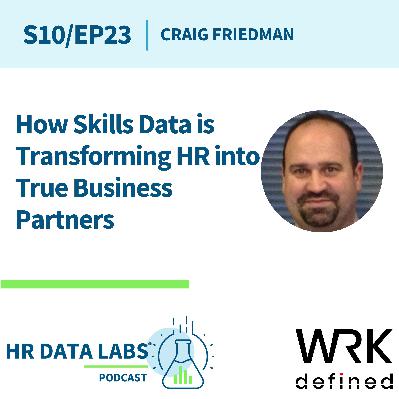
Craig Friedman, Talent and Skills Transformation Leader at St. Charles Consulting Group and author of Enterprise Skills Unlocked, joins us this week to discuss the shift toward skills-based organizations. He breaks down how data-driven transformations allow companies to move from simple headcount management to true capability management. Craig also shares practical advice on how to prioritize skills projects to ensure they solve real business problems and deliver ROI.
[0:00] Introduction
Welcome, Craig!
Today’s Topic: How Skills Data is Transforming HR into True Business Partners
[5:05] What does a skills-based transformation look like in practice?
Shifting the talent process from an exercise in headcount management to an exercise in capability management.
Moving away from static "boxes on an org chart" to using granular data that supports the entire talent infrastructure.
Leveraging skills data that lives in both business systems (capabilities) and people systems (individual skills) to better align with business functions.
[11:57] How different teams leverage skills data differently
Why L&D teams need granular skill details, while staffing teams prioritize context on scope and scale for compensation purposes.
The importance of creating an enterprise data taxonomy where different departments can agree on a skill but append their own metadata.
Using machine learning to handle the searches, connections, and adjacencies required to make the data useful across teams.
[26:14] The impact on Learning and Development (L&D)
How real-time skills gap analysis simplifies curriculum redesign when jobs or organizational structures change.
The growing need for assessment and validation to verify skills learned through informal methods like coaching or on-the-job experience.
Identifying business cases where skills can make a clear difference and prioritizing them based on value and risk.
[36:20] Closing
Thanks for listening!
Quick Quote
“A lot of the reason we're doing this now when we couldn't do it before is because of these more advanced tools in data analytics and AI and machine learning that actually help us manage data at that scale.”
Link to Craig's book: https://a.co/d/0naqmvh
🚀 Exciting changes are coming in 2026! Join David Turetsky as he shares his vision for HR Data Labs, focusing on positivity and growth. Discover how we're merging brown bag lunches into our podcast and launching something new for HR Data Labs. #HRDataLabs #2026Vision #Positivity
Chapters
00:00:34 Introduction and New Directions
00:01:42 David Turetsky's Personal Goals
00:03:59 HR Data Labs Evolution
00:06:19 HR Data Doodles news
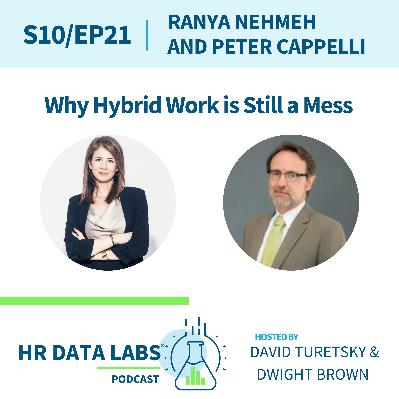
Ranya Nehmeh, HR Strategist and Adjunct Professor at FHWien der WKW in Vienna, Austria, and Peter Cappelli, Professor of Management and Director of the Center for Human Resources at the Wharton School, join us this week to discuss some of the topics covered in their book, In Praise of the Office. We explore the current tumultuous state of Return-to-Office (RTO) mandates, why "hybrid" work is often failing to deliver on its promises, and the critical need for intentional management to foster human connection.
[0:00] Introduction
Welcome, Ranya and Peter!
Today’s Topic: The Realities of Hybrid Work
[9:15] The messiness of Return-to-Office (RTO) today
Why the media narrative often contradicts the realities of small business data.
Why the definition of “hybrid” varies per organization.
[19:03] Is work actually getting done remotely?
Distinguishing between hitting individual KPIs and maintaining organizational health.
The deterioration of meeting culture and the rise of "cameras off" apathy.
The loss of social norms and the difficulty of resolving conflict without face-to-face interaction.
[29:50] Do policies need to change for the new world of work?
Addressing proximity bias and its impact on promotions and career development.
Why treating hybrid work the same as traditional office work is a management failure.
Understanding the winners and losers of remote work, particularly for younger or newly onboarded employees.
[46:23] Closing
Thanks for listening!
Quick Quote
“If you really want people to come back into the office, you have to do it with intentionality.”

Steve Brink, CEO of GECN Group, joins us this week to discuss the complex world of executive compensation. Steve breaks down why the US pays a premium compared to the rest of the world, how boards are shifting their focus from simple compensation to holistic talent management, and the global trends driving executive pay structures today.
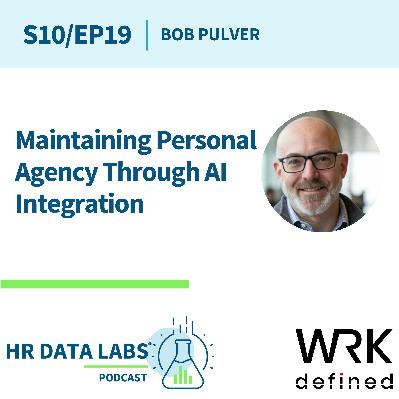
Bob Pulver, host of the Elevate Your AIQ podcast and a 25-year enterprise tech and innovation veteran, joins us this week to unpack the urgent need to move past "AI" as a buzzword and define what "Responsible AI" truly means for organizations. He shares his insights on why we are all responsible for AI, how to balance playing "defense" (risk mitigation) and "offense" (innovation), and why we must never outsource our critical thinking and human agency to these new tools.
[0:00] Introduction
Welcome, Bob!
Today’s Topic: Defining Responsible AI and Responsible Innovation
[12:25] What Does “Responsible AI” Mean?
Why elements (like fairness in decision-making, data provenance, and privacy) must be built-in "by design," not bolted on later.
In an era where everyone is a "builder," we are all responsible for the tools we use and create.
[25:48] The Two Sides of Responsible Innovation
The "responsibility" side involves mitigating risk, ensuring fairness, and staying human-centric—it’s like playing defense.
The "innovation" side involves driving growth, entering new markets, and reinvesting efficiency gains—it’s like playing offense.
[41:58] Why don’t we use AI to give us a 4-day work week?
The critical need for leaders to separate their personal biases from data-driven facts.
AI’s role in recent layoffs.
[50:27] Closing
Thanks for listening!
Quick Quote
“We're all responsible for Responsible AI, whatever your role is. You're either using it or abusing it . . . or you're building it or you're testing it.”

Noah Mithrush, Director of Growth Marketing at Guusto, joins us live from the UKG Aspire Conference to unpack the critical intersection of User Experience (UX) and Employee Experience (EX) in HR technology. Noah explains why so many HR programs fail to gain adoption and how even the best intentions can be derailed by a poor user experience. We discuss how to get into the user’s mindset, why HR tech should be as easy to use a consumer app, and how making the emotional journey of an employee is the key to success.
[0:00] Introduction
Welcome, Noah!
Today’s Topic: Rethinking User Experience to Improve Employee Experience & Program Adoption
[3:53] What do people get right and wrong about user experience?
Why good intentions often fail, and the common mistake of not considering all technology touchpoint for the end-user
The problem of designing programs that are manually intensive for managers
[10:43] How do you get into the users’ mindset to align UX and EX?
Going beyond just mapping process steps to mapping the employee journey
Why implementing "emotional IQ" into the design process is critical for driving program adoption
[16:59] How does AI impact the employee experience?
Using agentic processes to allow teams to do more with less
The potential for AI to allow teams to "think differently" and fundamentally redesign the employee journey
[22:28] Closing
Thanks for listening!
Quick Quote
“What I see a lot of the time is what people get right is their intention. At the very beginning, they're trying to solve a problem . . . but when it comes to tech and the user experience, [they’re] not taking into consideration all of the points along the way of different technology [and] how the actual end-user (or employee) has to use and interact with it.”
Nate Rees, Director of Training and Talent Development at Salary.com, joins us this episode to discuss a critical issue facing organizations today: the manager training crisis. Nate shares alarming data on the percentage of managers promoted without receiving any training and the costly impact this has on turnover and productivity. We explore why organizations fail to invest in new managers, how a raise is not a substitute for training, and low-budget/high-impact strategies HR leaders can implement immediately to better support their new managers.
[0:00] Introduction
Welcome, Nate!
Today’s Topic: The Manager Training Crisis
[6:25] What is the manager training crisis?
60% of new managers report receiving zero training for their role.
New managers are split between their own quota and team development.
[16:31] Why aren’t more organizations investing in manager training?
Untrained managers’ teams have a 260% higher turnover rate.
Organizations will pay a premium for external experienced managers but won’t invest in developing their internal talent.
[22:29] How can HR leaders start to fix this?
Create a zero-budget manager mentor program by leveraging your existing top managers.
User simple conversation models like COIN (Context, Observation, Impact, Next).
[33:43] Closing
Thanks for listening!
Quick Quote
“60% [of managers] say they never received any training when they transitioned into their first leadership role... we're throwing them at the deep end of the pool and not giving them any swimming lessons.”
Carlee Wolfe, Associate Vice President of Talent and Organizational Effectiveness at Hyatt, joins the podcast for a special 250th episode! Carlee discusses the value, strategy, and importance of serving on nonprofit boards. She shares insights on how to find the right board that matches your passions and skills, why nonprofits need skilled volunteers, and how to be an effective contributing board member once you join.
[0:00] Introduction
Welcome, Carlee Wolfe!
Today’s Topic: The Value and Strategy of Joining a Nonprofit Board
[9:28] What is the strategic value of joining a nonprofit board?
Carlee’s story of learning how to get involved and discovering you can "just ask"
Why nonprofits need skilled and passionate board members to serve
[17:29] How do you find the right board to join?
Starting by identifying your passions, skills, and available time commitment
Using resources like national board matching services (e.g., Board Source) or local city programs
[26:00] How to be an effective board member
The importance of passion and commitment to making tough decisions
Knowing your scope and capacity; avoid overcommitting to too many boards
[28:07] Closing
Thanks for listening!
Quick Quote
“I think the big thing about being on a board . . . is you are helping set the support and steward the strategic direction of the organization, right? You're that body that supports the ultimate mission of where the organization is heading.”
In this episode, David and Dwight dive into the critical and ever-present issue of poor data quality in HR and its cascading impact on the organization. They break the problem down into 3 key areas: recruiting, artificial intelligence, and pay transparency. They explore how recruiting often serves as the flawed entry point for employee data, discuss the dangers of training AI on biased information (which can lead to discriminatory practices like ageism), and examine the new data governance challenges posed by emerging pay transparency laws.
[0:00] Introduction
Today’s Topic: The Impact of Poor Data Quality on HR Today
[5:24] How does poor data quality in recruiting create downstream problems?
Recruiting is the first ingress of data into an organization, and it's often the least well-managed.
Poor data can also originate from the company side, with issues like inaccurate job descriptions or incorrect FLSA classifications.
[12:08] How can biased data lead to discriminatory AI in the hiring process?
AI agents used in video interviews can reject qualified candidates based on flawed or biased training data.
Companies that fail to address AI bias on the front end risk facing expensive lawsuits and will be forced to fix their systems later.
[19:32] What are the data governance challenges presented by pay transparency laws?
Pay transparency laws in several states require companies to disclose pay ranges for open roles also mandate that companies keep detailed records of salary structures, grade ranges, and hiring data for extended periods.
Many organizations may need to update their data governance strategies to ensure they are retaining the necessary historical data to comply with these regulations and withstand potential audits.
[24:31] Closing
Thanks for listening!
Quick Quote
“As the demographic bubble for Gen X gets larger, companies can't ignore [AI bias in recruitment] anymore. They have to take it on, and that means they have to start training their artificial intelligence to not filter out all of us grays.”
Haris Ikram, Co-founder and CEO of CandorIQ, and Chad Atwell, Head of Customer Success and Advisory Services at CandorIQ, join us this episode to discuss the critical, yet often disconnected, relationship between HR and finance in workforce planning. They explore why these teams often operate in silos and how they can collaborate more effectively on headcount and compensation to drive business success. The conversation also gets into the changing definition of the workforce, the role of data in strategic planning, and how AI is shaping the future of work and employee skills.
[0:00] Introduction
Welcome, Haris and Chad!
Today’s Topic: Bridging the Gap Between HR and Finance in Workforce Planning
[5:50] Why HR and finance teams don’t collaborate, even though they should
The different objectives driving each team.
How to manage a multifaceted and flexible approach to getting work done in the modern economy.
[20:06] What’s workforce planning and what challenges might be present?
Workforce planning is about having the right people—and now AI agents—in place to get the work done.
How to manage a multifaceted and flexible approach to getting work done in the modern economy.
[37:53] How AI and agents are influencing workforce planning
How AI is automating tactical work, creating a greater need for employees with skills in critical thinking, creativity, and strategy.
The importance of measuring the true productivity impact of AI over time, and why companies must be thoughtful about its implementation.
[43:46] Closing
Thanks for listening!
Quick Quote
“Layoffs cause an immense amount of harm for the companies as well. I mean, there's lots of research out there that will show dips or even just outright dives in company confidence, people's belief in future career opportunities, confidence in leadership.”
In this special solo episode, recorded live at the HR Tennessee Conference, David takes a deep dive into the fundamentals of compensation planning. He demystifies the complex processes behind pay decisions, breaking down everything from base pay and bonuses to the strategic importance of pay philosophy, market analysis, and effective communication. Listen in for a masterclass on how to build a fair, transparent, and effective compensation strategy.
[0:00] Introduction
Welcome to this special presentation!
Today’s Topic: A Deep Dive into Compensation Planning
[0:26] What Are the Core Components of Compensation?
Breaking down the differences between base pay, bonuses, and incentives
Navigating complex pay elements like overtime, tips, and perquisites (“perks”)
[10:59] Building the Compensation Framework
The essential strategic steps from pay philosophy and job analysis to market analysis and implementation
Identifying the key players in the planning process, from executives and HR to managers and employees
[22:43] How Can You Truly Pay for Performance?
Why merit increases may no longer be an effective tool for driving performance in today's economy
Aligning variable pay and bonuses with individual, team, and company performance for maximum impact
[37:58] Compensation Planning in Action: Case Studies & Real-World Scenarios
How to craft a compelling narrative around pay decisions to make them a true investment in employees
Adapting compensation strategies for non-profits by focusing on mission-critical metrics
[49:30] Q&A and Closing
Thanks for listening!
Quick Quote
“Incentive plans only work if the manager and the employee have a conversation and there's communication about why this happened . . . No one likes wasting money, and that lack of a story is a waste of money.”
In this episode, which was recorded live from the HR Tennessee Conference in Nashville, David welcomes Misty Bolt, also known as "Medicare Misty." Misty demystifies the complexities of Medicare, explaining what it is and how it's funded, and she explains the critical differences between it and Medicaid. She also discusses the current state of Medicare, common misconceptions employees have as they approach retirement, and why early and continuous financial education is essential for ensuring a secure future.
[0:00] Introduction
Welcome, Misty!
Today’s Topic: Demystifying Medicare and Planning for a Secure Retirement
[3:16] The Current State and Future of Medicare
How recent legislation is impacting Medicare Advantage plans and doctor’s funding.
Navigating disruptions as some insurance plans are terminated, and the importance of open enrollment.
[7:03] Why Employees Are Unprepared for Retirement Decisions
How to navigate being "thrown out to the wolves" with no transitional support after decades of your company making healthcare decisions for you.
The challenge of suddenly having to make complex decisions about Medicare, Social Security, and long-term care all at once.
[15:58] Proactive Steps for Financial Wellness and Retirement
The importance of engaging a financial advisor early in your career to plan for the future.
Using financial tools like Health Savings Accounts (HSAs) as a retirement tool, not just for medical expenses.
[18:15] Closing
Thanks for listening!
Quick Quote
“[When you retire] you're thrown out to the wolves and [navigating Medicare] is . . . so hard and so complicated that nobody understands it.”
In this episode, David and Dwight continue their “AI-Off,” a deep dive into using AI development tools to automate everyday tasks and create custom applications for HR. They explore the concept of "vibe coding" with platforms like Replit and Base44, discussing how HR professionals can leverage natural language to build powerful tools without extensive coding knowledge. They cover the iterative development process, the importance of subject matter expertise, and the practical realities of cost and security when deploying AI solutions.
[0:00] Introduction
Welcome, David and Dwight!
Today’s Topic: The AI-Off Part Two - Building AI Applications with Natural Language
[8:19] The Pros and Cons of AI Development Tools
How platforms like Replit and Base 44 handle the entire application stack, from the user experience to the backend data.
The power of these tools to quickly build dashboards, scorecards, and data aggregation tools that once took significant time and effort.
[17:38] How to build AI Applications with Natural Language
Why subject matter expertise is crucial for guiding the AI to build a useful and accurate application.
The importance of providing context to the AI, much like a product manager creates user stories for a development team.
[24:09] The Reality of Building with AI: Costs, Security, and Deployment
Understanding the costs associated with using these platforms and weighing them against the time and effort saved.
The need for human oversight and professional review, especially for security and compliance, before deploying an application externally.
[30:24] Closing
Thanks for listening!
Quick Quote
“If you want [AI] to help you use your job better, [using tools like Replit or Base44] is potentially a really great way of being able to utilize your skills and your knowledge in this area.”
Sarah Smart, founder of Horizon Human Resources and a seasoned talent acquisition (TA) leader, joins us this episode to discuss the transformational impact of AI on talent acquisition. We explore how AI is reshaping TA roles, from coordinators to sourcers, and make the case for a fundamental shift in how organizations structure and skill their recruiting teams for the future. Sarah also provides critical advice for CHROs on adopting a skills-first strategy and integrating workforce planning directly into the TA organization to create a more predictive, data-driven, and effective hiring engine.
[0:00] Introduction
Welcome, Sarah!
Today’s Topic: The Transformation of Talent Acquisition in the Age of AI
[5:28] How is AI impacting Talent Acquisition today?
AI has been a part of TA for over a decade, but its implementation requires more wisdom and due diligence now than ever before.
The ROI for new technology should be based on strategic outcomes, like quality of hire or speed, not just headcount reduction.
[20:32] How will TA structure and skills evolve over the next two years?
Sourcing will become a more strategic function, using AI to combine talent marketing with deep candidate intelligence to nurture relationships over time.
Workforce planning should be owned by Talent Acquisition to enable “predictive demand control” and align hiring strategy with business capacity and needs.
[36:18] What is your advice for CHROs?
Effective TA organizations are no longer built on “super recruiters”; they require investment in creating metrics-driven, data-literate, and technology-fluent teams.
Organizations must adopt a “skills-first” approach, mapping current capabilities to future needs to inform buy vs. build talent strategies.
[44:19] Closing
Thanks for listening!
Quick Quote
“When you flip everything on its head and think skills first, it completely changes the structure of your organization.”
In this special episode, David and Dwight introduce an interesting live experiment: the “AI-Off.” They’ll explore how modern AI developer tools are making it possible for anyone (regardless of their coding background) to build powerful, enterprise-level applications. Listen in as they brainstorm an HR use case and plan the process of turning a simple idea into a functional app in real-time.
[0:00] Introduction
Welcome, David and Dwight!
Today’s Topic: The AI-Off Part One - Planning to Build an HR Application Using AI
[0:26] The Power of AI in Application Development
How AI developer tools are changing the game for non-programmers.
Comparing traditional software development cycles to rapid AI-powered prototyping.
[8:07] Brainstorming the HR Use Case
Exploring different ideas, from a simple to-do list to more complex market solutions
[15:46] Closing
Thanks for listening, and be sure to tune into Part Two coming out soon!

Comments

Download from Google Play

Download from App Store
 United States