


 Claim Ownership
The Murmur Pod
Subscribed: 0Played: 0
Subscribe

© MurmurMD
Description
The Murmur Pod is hosted by Dr. Aidan Raney III and Dr. Joe Walsh. Specializing in interventional cardiology, they explore happenings in the cardiology and medical communities, discuss interesting cases, review new technology, and more.
This podcast is presented first in the MurmurMD App! Work in the cath lab? Reach out to join the private community there!
This podcast is presented first in the MurmurMD App! Work in the cath lab? Reach out to join the private community there!
32 Episodes
Reverse
Not all cardiogenic shock after acute MI is left-sided — and treating it like it is can be fatal.In this MurmurMD case discussion, Dr. Chris Brown walks through a young patient with acute MI, progressive shock, and severe right ventricular failure, highlighting how early recognition and biventricular mechanical support (Bipella physiology) stabilized the patient when inotropes and balloon support failed.This transcript-based conversation focuses on real-time decision-making, including:• Differentiating acute occlusion from chronic disease in an MI presentation• Why rising troponins without washout suggested ongoing ischemia• Recognizing RV failure as the primary shock driver• Why balloon pump and escalating inotropes worsened physiology• Early RV unloading with RP support as the first step toward BiPella• Hemodynamic clues that mandated adding LV unloading• Why RV support should precede LV support in evolving BiPella shock• PCI strategy once full biventricular support is established• Renal recovery after unloading both ventricles• Using BiPella as a bridge to recovery, LVAD, or transplant decision-making• Why unloading injured myocardium outperforms pharmacologic stimulationA clear, real-world example of BiPella physiology saving a failing heart when revascularization alone isn’t enough.Chapters:00:00 – Acute MI with shock: LV vs RV failure dilemma 01:00 – Troponin trends and evidence of ongoing ischemia 02:00 – Recognizing RV failure as the dominant problem 03:00 – Why balloon pump and inotropes failed 04:00 – Decision to unload the RV first 05:00 – Transitioning toward BiPella physiology 06:00 – Hemodynamics that triggered LV unloading 07:00 – PCI strategy under biventricular support 08:00 – Renal recovery and early organ response 09:00 – Weaning strategy and support sequencing 10:00 – BiPella as bridge to recovery vs advanced therapies 11:00 – Final lessons: unload, don’t overstimulate🔔 Subscribe for more insights from interventional experts and real-world program builders.📱 Download the app: https://apps.apple.com/app/apple-store/id1586692687📺 Follow us on YouTube: https://www.youtube.com/channel/UCfrLYhAhliQ2ZvXinkDCZvA#BiPella #BiventricularSupport #CardiogenicShock #AcuteMI #MechanicalCirculatorySupport #Impella #CriticalCareCardiology #InterventionalCardiology #MurmurMD
A successful valve program isn’t built in the cath lab alone — it’s built in the clinic, the workflow, and the team structure behind the scenes.In this MurmurMD discussion, Dr. Andrei Pop and Caitlin O'Callaghan Reen, CNP, FACC walk through how they’ve structured and scaled a high-functioning valve clinic, covering everything from referrals and imaging to staffing models and follow-up.The conversation breaks down what actually works in day-to-day practice, including:• Why valve clinics must be process-driven, not physician-dependent• How referral pathways determine procedural volume and case quality• Organizing clinic flow around echo, CT, and multidisciplinary review• The role of APPs, nurses, coordinators, and administrators• Avoiding bottlenecks between clinic, imaging, and procedure scheduling• Managing TAVR, TEER, and surgical referrals in a single ecosystem• Pre-visit planning to reduce wasted clinic visits• Post-procedure follow-up models that prevent patients from being lost• How data tracking and communication improve outcomes and efficiency• Common mistakes programs make when scaling too quicklyA practical guide for anyone building, optimizing, or expanding a structural heart valve clinic.🔔 Subscribe for more insights from interventional experts and real-world program builders.📱 Download the app: https://apps.apple.com/app/apple-stor...📺 Follow us on YouTube: / @murmurmd Chapters:00:00 – Why valve clinic structure matters 01:00 – Referral pathways and patient intake 02:00 – Clinic workflow and visit organization 03:00 – Imaging coordination: echo, CT, and review 04:00 – Multidisciplinary decision-making 05:00 – Staffing models and role definitions 06:00 – APPs and coordinators as the backbone of the clinic 07:00 – Scheduling procedures without bottlenecks 08:00 – Managing multiple valve therapies in one clinic 09:00 – Pre-visit planning to improve efficiency 10:00 – Post-procedure follow-up and continuity of care 11:00 – Tracking outcomes and operational metrics 12:00 – Common pitfalls when scaling a valve program 13:00 – Final lessons for sustainable growth#StructuralHeart #ValveClinic #TAVR #TEER #HeartTeam #HealthcareOperations #Cardiology #ProgramBuilding #MurmurMD
In this MurmurMD discussion, Dr. Raghava Gollapudi and Dr. Arvin Narula break down how the Watchman TruSteer sheath changes left atrial appendage occlusion (LAAO) workflows — from transeptal access to final device deployment.The conversation focuses on real-world use, and highlights when TruSteer adds value, how it improves coaxiality, and why many operators are moving toward using it routinely.Topics covered in this transcript-based discussion include:• Why earlier Watchman sheaths limited depth and stability• How TruSteer allows four-directional control (superior, inferior, anterior, posterior)• Using the device body and sheath as complementary anchoring mechanisms• Improving coaxial alignment without repeating transeptal puncture• Why TruSteer reduces redeployments and manipulation• Large anterior chicken-wing, flat, and posterior appendage anatomy• Efficiency gains vs cost considerations• Why some operators now use TruSteer in nearly every case• Safety pearls: avoiding steering with the dilator in place• Minimizing air and bubble risk by reducing sheath exchanges• Achieving zero-leak goals in the Watchman FLX eraA practical discussion for operators looking to improve precision, safety, and efficiency in LAAO.🔔 Subscribe for more insights from interventional experts and real-world program builders.📱 Download the app: https://apps.apple.com/app/apple-stor...📺 Follow us on YouTube: / @murmurmd Chapters:00:00 – Introduction to Watchman TruSteer 00:40 – Limitations of earlier Watchman sheaths 01:40 – Four-directional steering and coaxial control 03:00 – Using the sheath vs the device body for positioning 04:10 – Challenging appendage anatomy: chicken-wing and posterior LAA 05:30 – Improving depth without repeating transeptal 06:40 – Efficiency, safety, and air management 08:00 – Cost vs value: when TruSteer adds benefit 09:20 – Zero-leak mindset in the FLX era 10:40 – Safety tips and final takeaways#LAAO #LAAC #Watchman #TruSteer #StructuralHeart #InterventionalCardiology #CathLab #MurmurMD #WatchmanFLX #LeftAtrialAppendage

Redo groins, radiation injury, prior infection, and failed bypasses make common femoral artery disease some of the most difficult decisions in vascular care.In this case-based discussion, Dr. Nick Mouawad and Dr. Sameh Sayfo walk through two challenging common femoral artery cases where traditional open surgery carried high risk.Topics covered include:• Managing CFA bifurcation disease after prior radiation and surgical complications• Why the profunda femoris artery must always be protected• Radial-to-peripheral access to avoid hostile groins• Intravascular imaging to guide vessel sizing and therapy• When to use IVL, atherectomy, serration balloons, and DCB• Avoiding stents in the common femoral whenever possible• Multidisciplinary decision-making for durable outcomesA practical, honest discussion focused on patient selection, technique, and long-term durability in modern peripheral intervention.🔔 Subscribe for more insights from interventional experts and real-world program builders.📱 Download the app: https://apps.apple.com/app/apple-store/id1586692687📺 Follow us on YouTube: https://www.youtube.com/channel/UCfrLYhAhliQ2ZvXinkDCZvAChapters: 00:00 – Case setup and goals of discussion00:45 – Prior pelvic radiation and failed CFA surgery02:05 – Risks of redo open CFA endarterectomy03:10 – Why the profunda femoris must be protected04:20 – Radial access strategy to avoid hostile groins05:05 – IVUS-guided sizing and IVL preparation06:00 – Serration balloons and DCB for CFA disease07:15 – Avoiding stents in the common femoral artery07:55 – Second case: prior fem-fem bypass and claudication09:10 – Crossing strategy and imaging uncertainty10:05 – Orbital atherectomy near bypass anastomosis11:45 – IVUS, gradients, and confirming success12:45 – Durability vs redo surgery discussion14:00 – Multidisciplinary collaboration and MurmurMD#CommonFemoralArtery #PeripheralArteryDisease #IVL #IVUS #Endovascular #VascularSurgery #RedoGroin #RadialToPeripheral #MurmurMD #MultidisciplinaryCare
Leaflet modification has rapidly evolved from niche innovation to a cornerstone of lifetime TAVR management.In this discussion, Dr. Toby Rogers joins Dr. Andrei Pop to explore the latest data, device advances, and clinical decision-making behind Basilica, Shortcut, and emerging techniques like Telltale, Unicorn, and leaflet excision.Key topics covered:History of leaflet modification — from LAMPOON to BASILICA and now device-guided proceduresHow Shortcut and Telltale are changing training and accessWhy leaflet modification is still primarily for TAV-in-SAV but expanding to redo-TAVRBalancing risk, complexity, and informed consent for lower-risk patientsRole of CT simulation, FEops, and DASI modeling for lifetime valve planningWhen to err on the side of leaflet modification vs risking coronary obstructionCoronary height and valve-to-coronary distance — why those 2–4mm cutoffs aren’t gospelFuture directions: routine modification, improved washout, and potential HALT reductionAccess routes (carotid, transcaval, axillary) and practical tips for operatorsComparing BASILICA, Shortcut, Unicorn, and Telltale—safety, mechanism, and learning curveWhy new devices need structured trials before widespread useThis is essential viewing for structural heart operators refining TAVR-in-TAVR safety, coronary access strategies, and the future of leaflet modification.🔔 Subscribe for more insights from interventional experts and real-world program builders.📱 Download the app: https://apps.apple.com/app/apple-store/id1586692687📺 Follow us on YouTube: https://www.youtube.com/channel/UCfrLYhAhliQ2ZvXinkDCZvAChapters:00:00 – Introduction: The evolution of leaflet modification 00:40 – From LAMPoon to BASILICA: history of electrosurgery 02:00 – Off-label origins and why it mattered 03:00 – Shortcut and Telltale: first commercial systems 05:00 – Who qualifies? High-risk vs lower-risk considerations 06:30 – Lifetime management and early valve planning 08:00 – Simulation tools (3Mensio, FEops, DASI) in valve strategy 09:30 – Challenges in coronary height and valve-to-coronary measurement 12:00 – Surgical perspective: root enlargement and small annuli 13:00 – Rethinking the “risk-based” TAVR vs SAVR decision 15:00 – When to err toward leaflet modification 17:00 – New benefits beyond obstruction: access & flow dynamics 19:00 – Routine modification in the future? 20:00 – Cerebral protection data and operator practices 23:00 – Access routes: transfemoral vs transcarotid approaches 25:00 – Comparing BASILICA, Shortcut, Unicorn & Telltale 28:00 – Risks of balloon-tear methods and lack of validation 30:00 – Data-driven advancement vs anecdotal adoption 31:00 – Future of device design and mitral implications 33:00 – Closing remarks and next frontier: mitral leaflet work#LeafletModification #BASILICA #Shortcut #Telltale #TAVRinTAVR #ValveinValve #StructuralHeart #CoronaryProtection #AorticValve #MurmurMD
LIMA interventions are rare, high-risk, and technically unforgiving. In this MurmurMD case session, Dr. Arvin Narula and Dr. Joe Walsh walk through an extremely challenging LIMA-to-LAD lesion involving heavy calcification, tortuosity, failed prior PCI, device entrapment, rotational atherectomy, Shockwave IVL, and management of unexpected graft thrombus.This discussion delivers real-world strategy, troubleshooting, and device thinking you won’t find in textbooks.Key insights from the case:• Why left distal transradial can provide safer LIMA engagement• The moment a Corsair microcatheter is “chewed up” — and why that signals severe calcium• How to decide between more support, downsizing, or plaque modification• When rotational atherectomy is safe in a LIMA graft — and when it’s not• Why starting the burr in the native LAD, not the graft, may reduce risk• How dual preparation (Rota + Shockwave) improves expansion• DCB strategy for distal LAD disease• Managing LIMA thrombus: ACT troubleshooting, lytics, aspiration, and stent “tattooing”• Tricks for keeping thrombus from embolizing distally• How to avoid dissecting the LIMA ostium during exchanges• What to do if ACT remains subtherapeutic despite multiple bolusesThis is an advanced case with invaluable pearls for anyone treating heavily calcified coronaries, bypass graft disease, or LIMA interventions.🔔 Subscribe for more insights from interventional experts and real-world program builders.📱 Download the app: https://apps.apple.com/app/apple-store/id1586692687📺 Follow us on YouTube: https://www.youtube.com/channel/UCfrLYhAhliQ2ZvXinkDCZvAChapters:00:00 – Why LIMA interventions are challenging 00:40 – Patient background and LIMA access strategy 01:20 – Tortuosity, calcium, and microcatheter difficulty 02:00 – Deciding to escalate to rotational atherectomy 02:40 – Rota technique and safety considerations in LIMA 03:30 – Adding Shockwave for dual preparation 04:10 – DCB strategy for distal LAD disease 04:50 – Managing sudden LIMA thrombus and low ACT 05:40 – Final result and key takeaways#ComplexPCI #LIMAIntervention #RotationalAtherectomy #ShockwaveIVL #DCB #Atherectomy #CoronaryCalcium #InterventionalCardiology #BypassGraftPCI #CathLab #MurmurMD
Complex mitral valve anatomy continues to challenge even the most experienced TEER operators. In this month's SWAC conference, Dr. Sergio Garcia, Dr. Tom Waggoner, Dr. Mark Bieniarz, and Dr. Aidan Raney walk through how to approach PASCAL therapy in anatomies where leaflet length, clefts, stenosis, and calcification make decision-making difficult.Using multiple real patient examples, they break down:• How PASCAL’s separatable clasps change strategy in short posterior leaflets• When to choose PASCAL vs Pascal Ace based on anatomy• Managing posterior leaflet restriction, clefts, and deep scallop gaps• How clasping technique differs from MitraClip• Imaging keys for procedural success on transesophageal echo• When to attempt independent clasping—and when not to• Avoiding iatrogenic mitral stenosis• What to do when coaptation depth is low or leaflet mobility is asymmetric• Real-world case outcomes, lessons, and clinical pearls from each scenarioA must-watch for operators training in PASCAL or managing anatomies that push TEER beyond standard degenerative or functional mitral regurgitation.Chapters:00:00 – Introduction: Why complex mitral anatomy requires a different strategy 01:00 – Case review overview and PASCAL system fundamentals 01:40 – Leaflet length, calcium, clefts: deciding if TEER is feasible 02:20 – When to choose PASCAL vs Pascal Ace 03:00 – Understanding PASCAL’s independent clasping advantage 03:40 – Case 1: Short posterior leaflet and how to secure a durable grasp 04:20 – Using TEE to confirm leaflet insertion and avoid chordal entanglement 04:50 – Maneuvering around a cleft and choosing the correct landing zone 05:20 – Case 2: Posterior leaflet restriction and reduced mobility 05:50 – Why independent clasping helps unequal coaptation 06:20 – Residual MR strategies: reposition, reclasp, or add a second device 06:50 – Case 3: When coaptation depth is too shallow for a central grasp 07:20 – Recognizing when stenosis risk outweighs TEER benefit 07:45 – Procedural adjustments when leaflet tissue is limited 08:10 – Case 4: Complex functional MR with tenting and asymmetric jets 08:45 – TEE markers for good versus poor grasping zones 09:10 – Post-grasp evaluation: gradients, residual jets, and stability 09:40 – Final thoughts: how PASCAL expands TEER into anatomies once avoided🔔 Subscribe for more insights from interventional experts and real-world program builders.📱 Download the app: https://apps.apple.com/app/apple-store/id1586692687📺 Follow us on YouTube: https://www.youtube.com/channel/UCfrLYhAhliQ2ZvXinkDCZvA#Mitr alValve #TEER #PASCAL #StructuralHeart #TAVR #HeartTeam #EchoGuidedProcedures #InterventionalCardiology #MitralRegurgitation #MurmurMD #SWAC
The common femoral artery has always been considered a surgical zone—but with today’s endovascular technology, should that dogma be challenged?In this MurmurMD session, vascular surgeon Dr. Nick Mouawad joins Dr. Sameh Sayfo for a deep dive into how modern tools (IVUS, intravascular lithotripsy, advanced classification systems, and hybrid-OR workflow) are reshaping the way we evaluate and treat common femoral artery disease.Using real-world experience and early data from investigative studies, the conversation covers:• When to intervene on common femoral disease• CTA vs duplex for pre-op planning• How hybrid ORs change strategy and bailout options• Key differences between acute limb ischemia vs chronic CLTI femoral exposure• Why wound complications and groin integrity matter• Which patients surgeons worry about most• The rise of IVUS for sizing and anatomical confirmation• How IVL (M5+, L6) is changing luminal gain and safety• Why common femoral arteries are far larger than traditionally assumed• Challenges: lack of large-bore DCBs, bifurcation disease, proximal spillover• What future device platforms are still missing• Early trial design lessons comparing IVL + DCB vs endarterectomyA must-watch for anyone treating inflow disease, CLTI, or evaluating whether femoral interventions can be safely expanded beyond surgery alone.Chapters:00:00 – Introduction and setting the stage 01:00 – Why common femoral disease is a “sacred surgical zone” 02:00 – Indications for treating common femoral artery lesions 03:00 – Imaging workup: ultrasound vs CT 04:00 – When hybrid ORs become essential 05:00 – Acute limb vs chronic femoral disease: what changes surgically 06:30 – Groin complications and what surgeons fear most 08:00 – Patient types that raise surgical risk 09:00 – The durability of endarterectomy vs risks in fragile patients 10:00 – Why endovascular solutions matter for modern PAD demographics 11:00 – The biggest danger of early endovascular CFA therapy: dissection 12:00 – What technologies surgeons want when considering endovascular CFA work 13:00 – Calcification patterns and why IVL changed the game 14:00 – IVUS for femoral sizing: why CFA vessels are bigger than we thought 15:00 – Limitations: maximum DCB sizes and when they fall short 16:00 – L6 vs M5+: how the devices differ and when to use each 17:00 – European data on CFA stenting and bifurcation techniques 18:00 – Trial design: how to avoid bias when comparing endo vs open 19:00 – Classification systems (Ozema, Rapolino) and choosing appropriate patients 20:00 – Early lessons from IVL + DCB vs surgery investigation 21:00 – Future technologies needed for CFA therapy 22:00 – Closing thoughts: hybrid strategies and patient selection🔔 Subscribe for more insights from interventional experts and real-world program builders.📱 Download the app: https://apps.apple.com/app/apple-store/id1586692687📺 Follow us on YouTube: https://www.youtube.com/channel/UCfrLYhAhliQ2ZvXinkDCZvA#PeripheralArteryDisease #CommonFemoralArtery #IVL #IVUS #VascularSurgery #Endovascular #CLTI #PAD #HybridOR #MurmurMD #L6 #M5Plus #DCB #CalciumModification
ADR (Antegrade Dissection and Re-Entry) has historically been viewed as unpredictable — but with a structured, IVUS-sighted approach, it becomes one of the most consistent and controllable CTO PCI techniques.In this detailed case walkthrough, Dr. Robert Riley demonstrates how he performs an IVUS-Sighted ADR workflow during a complex RCA CTO. He explains how to select landing zones, create a controlled knuckle, prevent hematoma formation, orient the Stingray system correctly, and re-enter the true lumen with precision.Topics you’ll learn:When ADR is the correct strategy for a long CTOIdentifying a clean distal landing zone using IVUSHow to form a stable knuckle with the Pilot 200The purpose of de-escalating to Mongo for safer advancementHematoma prevention with guide extension supportHow retrograde angiography guides Stingray orientationVacuum decompression (“straw technique”) for clearing the subintimal spaceStick-and-drive vs stick-and-swap re-entry patternsUsing IVUS to confirm true lumen passage and guide stent sizeAvoiding the most common ADR failure modesThis is a foundational training for operators refining modern ADR technique with IVUS guidance.Chapters:00:00 – Why ADR still matters in modern CTO PCI 01:00 – When ADR is favored over wire escalation 02:00 – Identifying the distal landing zone with IVUS 03:30 – RCA CTO setup and planning 05:30 – Bifemoral access and guide selection 06:30 – Creating a knuckle with the Pilot 200 08:30 – De-escalating the knuckle and reducing subintimal trauma 10:30 – Guide extension support and pressure control 11:30 – Stingray preparation and system orientation 12:30 – Selecting the correct projection angle 14:00 – Retrograde angiography for confirmation 15:00 – Vacuum decompression (“straw technique”) 17:00 – Stick-and-swap method to regain the true lumen 19:00 – IVUS confirmation and how to size stents correctly 21:00 – Final angiographic review and procedural takeaways🔔 Subscribe for more insights from interventional experts and real-world program builders.📱 Download the app: https://apps.apple.com/app/apple-store/id1586692687📺 Follow us on YouTube: https://www.youtube.com/channel/UCfrLYhAhliQ2ZvXinkDCZvA#CTO #ADR #IVUS #InterventionalCardiology #ComplexPCI #Stingray #Pilot200 #MongoWire #CathLab #MurmurMD
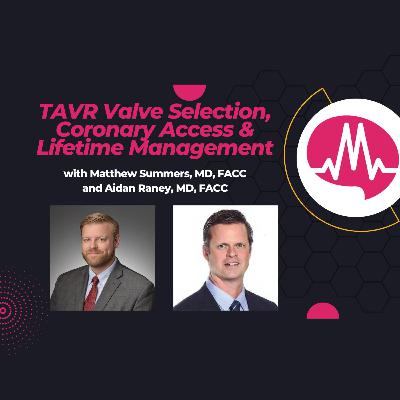
TAVR isn’t just a procedure anymore — it’s a lifetime management decision.In this in-depth case discussion, Dr. Matt Summers and Dr. Aiden Raney dive into how hemodynamics, modeling tools, and device design are reshaping how operators approach valve selection, coronary access, and reintervention planning.Key insights include:Real-world cases showing how valve selection has evolved since 2018Using DASI modeling to predict sinus sequestration and coronary riskHow Shortcut has simplified bilateral leaflet modification and reduced procedure timesLessons learned from redo-TAVR failures, pannus formation, and HALTWhy younger and bicuspid patients still favor surgical approachesHow commissural alignment and annular eccentricity guide modern valve choiceWhen and how to tackle coronary intervention through TAVR framesThe importance of hemodynamics over “comfort” in valve selectionThis is a must-watch for interventional cardiologists aiming to merge clinical intuition with device innovation and predictive modeling for long-term outcomes.Chapters:00:00 – Revisiting early valve-in-valve planning 01:00 – How modeling (DOSI) predicts coronary occlusion risk 02:20 – Shortcut vs. Basilica: evolution in leaflet modification 04:00 – Purpose-built devices reducing case time and risk 05:00 – When Shortcut changes your threshold for leaflet splitting 07:00 – Lessons from redo-TAVR and pannus formation 10:00 – Why bicuspid and young patients often need surgery 13:00 – The coronary access problem that taught a hard lesson 16:00 – Commissural alignment as the key to reintervention success 18:00 – Doing left main PCI through a fresh TAVR 20:00 – Horizontal aortas and catheter flexibility 22:00 – Hemodynamics as the foundation of valve choice 24:00 – Building a lifetime valve strategy for every patient🔔 Subscribe for more insights from interventional experts and real-world program builders.📱 Download the app: https://apps.apple.com/app/apple-store/id1586692687📺 Follow us on YouTube: https://www.youtube.com/channel/UCfrLYhAhliQ2ZvXinkDCZvA#TAVR #StructuralHeart #ValveInValve #LeafletModification #PredictiveModeling #CommissuralAlignment #InterventionalCardiology #DOSI #CoronaryAccess #MurmurMD
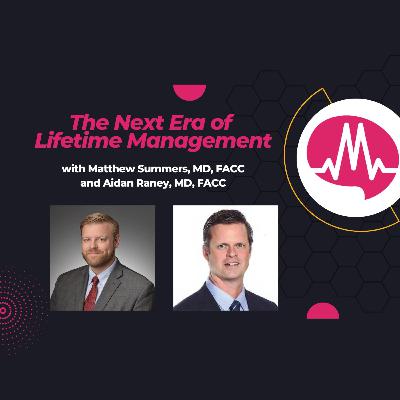
TAVR has come a long way—from a high-risk bailout procedure to a precision-driven, patient-specific therapy.In this MurmurMD case discussion, Dr. Matt Summers (Sentara Heart Valve Center) joins Dr. Aiden Raney to explore how new data, AI modeling, and simulation tools like DASI are transforming how interventionalists choose between self-expanding and balloon-expandable valves. A real look into contemporary approaches to valve therapy decisions.Key insights covered:The evolution from procedural survival to lifetime valve strategyHow hemodynamics and durability data are reshaping valve selectionUsing predictive modeling (DASI) to prevent annular rupture and coronary occlusionReal-world lessons from redo TAVR and valve-in-valve proceduresWhy commissural alignment and cusp overlap have changed the gameWhat next-generation AI tools mean for precision TAVR planningHow large-volume centers are integrating data, imaging, and simulation into every caseThis conversation bridges clinical intuition with digital precision, offering a glimpse into how the next era of TAVR will be designed—patient by patient, model by model.Chapters:00:00 – Introduction and evolution of TAVR therapy 01:00 – From high-risk to precision: how TAVR decision-making has evolved 02:30 – Valve selection: BEV vs SEV and the 16 decision factors 04:00 – Durability, hemodynamics, and small annulus data 06:00 – What the SMART and Notion trials revealed about performance 08:00 – Coronary access, explant, and the penalty of being wrong 10:00 – AI modeling and pre-procedural simulation (DASI) 12:00 – Predicting rupture, occlusion, and leaflet modification needs 14:00 – Impact of modeling on procedural planning and outcomes 16:00 – Planning for the second valve: true lifetime management 18:00 – Future vision: Precision TAVR through AI-guided design🔔 Subscribe for more insights from interventional experts and real-world program builders.📱 Download the app: https://apps.apple.com/app/apple-store/id1586692687📺 Follow us on YouTube: https://www.youtube.com/channel/UCfrLYhAhliQ2ZvXinkDCZvA#TAVR #StructuralHeart #InterventionalCardiology #MurmurMD #PredictiveModeling #DASI #ValveSelection #HeartValve #CathLabInnovation
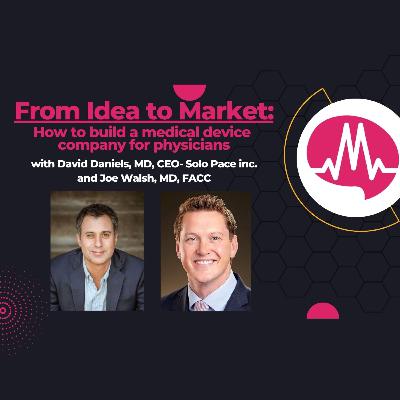
Physicians Building Devices: Powering the Next Wave of Cardiovascular InnovationNot in boardrooms—but in cath labs, by operators sharing cases, data, and ideas in real time.In this episode, Dr. David Daniels and Dr. Joe Walsh dive into how platforms like MurmurMD are connecting physicians, engineers, and startups to accelerate device innovation from the front lines of interventional cardiology.Key themes and insights:Why innovation starts with operators identifying real problems in the labHow peer-to-peer case sharing is shortening the feedback loop between users and buildersTurning complication management into product-development insightThe role of data transparency and outcomes sharing in improving next-gen designsCollaborating across teams—engineers, industry, and interventionalists—without silosWhy speed, iteration, and feedback now define modern cardiovascular innovationA preview on physician-built ecosystem for device advancementThis is essential viewing for clinicians, startups, and innovators who believe the future of medtech is built inside the cath lab, not outside it.00:00 – Intro: Building devices from inside the cath lab 01:00 – Why innovation begins with frustration in the lab 02:15 – From case sharing to concept generation 03:30 – Turning complications into design opportunities 05:00 – The value of rapid feedback between operators and engineers 07:00 – Data as fuel: how shared outcomes guide better devices 09:00 – Creating a two-way bridge between clinicians and companies 11:00 – Vision: crowdsourced device evolution 12:30 – Real-time learning → real-time innovation 14:00 – How open conversation accelerates safe experimentation 15:30 – Next steps: empowering physician-engineer collaboration🔔 Subscribe for more insights from interventional experts and real-world program builders.📱 Download the app: https://apps.apple.com/app/apple-store/id1586692687📺 Follow us on YouTube: https://www.youtube.com/channel/UCfrLYhAhliQ2ZvXinkDCZvA#MedTech #DeviceInnovation #MurmurMD #InterventionalCardiology #StructuralHeart #CathLab #ClinicalInnovation #PhysicianEntrepreneur #MedicalDevices #MurmurMDLive

Can creating a shunt between the left atrium and the coronary sinus improve symptoms for patients with heart failure with preserved ejection fraction (HFpEF)?In this in-depth discussion, Dr. Andrei Pop and Dr. Firas Zahr, PI of the ALT-FLOW II Trial, explore the science, physiology, and patient selection behind one of the most intriguing new frontiers in interventional heart failure.Key takeaways:What makes ALT-FLOW different from previous intra-atrial shunt devicesHow shunt location, size, and flow patterns affect outcomesWhich heart failure patients respond best — HFpEF, HFrEF, or mixed phenotypesWhy resting wedge pressures don’t predict exercise hemodynamicsThe importance of exercise right heart catheterization and PCWL measurementInsights on stroke risk and why preserving the atrial septum may matter for lifetime proceduresHow ALT-FLOW maintains procedural simplicity and safety through the coronary sinus approachExpanding the field of interventional heart failure and device-based diastolic therapiesThis conversation is essential for structural heart and heart failure specialists exploring new options for symptomatic HFpEF patients in the modern era of shunt-based therapy.🔔 Subscribe for more insights from interventional experts and real-world program builders.📱 Download the app: https://apps.apple.com/app/apple-store/id1586692687📺 Follow us on YouTube: https://www.youtube.com/channel/UCfrLYhAhliQ2ZvXinkDCZvAChapters:00:00 – Intro: The rise of interventional heart failure 00:45 – What makes the ALT-FLOW device unique 01:20 – Lessons learned from prior shunt trials 02:30 – Which patients may benefit most 04:00 – Persistent symptoms after valve repair and TAVR 05:00 – Stroke risk and shunt design safety 06:30 – Importance of preserving the interatrial septum 07:00 – Exercise right heart catheterization and PCWL 08:30 – What exercise reveals about true physiology 10:30 – When wedge pressures tell the real story 12:00 – Expanding tools for diastolic dysfunction 13:30 – Sham control and endpoint selection in ALT-FLOW II 15:30 – Heart failure specialists re-engaging with HFpEF 17:00 – Pacemaker leads and coronary sinus access 18:00 – Future of interventional heart failure 19:30 – Industry, innovation, and economics of device therapy 21:00 – Safety data and operator experience so far 23:00 – Future: Finding the right HFpEF subsets 24:30 – Closing reflections and next steps in research#ALTFlow #HFpEF #HeartFailure #StructuralHeart #InterventionalCardiology #CoronarySinusShunt #HeartFailureDevice #CathLab #MurmurMD
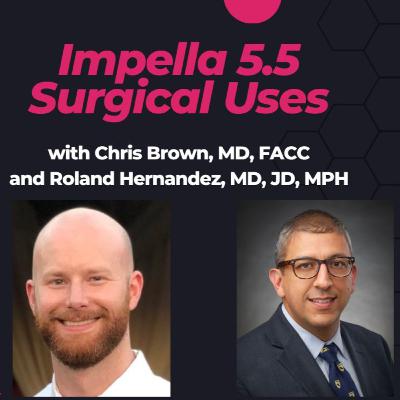
How do surgeons decide when to place an Impella 5.5 before valve surgery?In this discussion, Dr. Roland Hernandez walks through his operative approach with Dr. Chris Brown, covering:Patient selection: when balloon pump isn’t enough supportStep-by-step technique for direct aortic Impella 5.5 insertionHow to tunnel and remove the graft safelyTechnical pearls for cross-clamp position and avoiding floodingStrategies for weaning from bypass to ImpellaCommon hazards: wire and catheter challenges for surgeonsWhy mobilization is critical and when Impella CP isn’t enoughThis case-based conversation offers a rare surgeon-to-interventionalist perspective on advanced mechanical circulatory support.🔔 Subscribe for more insights from interventional experts and real-world program builders.📱 Download the app: https://apps.apple.com/app/apple-store/id1586692687📺 Follow us on YouTube: https://www.youtube.com/channel/UCfrLYhAhliQ2ZvXinkDCZvAChapters:00:00 – Intro & guest background 00:45 – Patient case: severe LV dysfunction, AI + MR 02:10 – Why Impella 5.5 over balloon pump 03:20 – Preemptive strategy & surgical planning 03:40 – Direct aortic Impella 5.5 implantation technique 04:45 – Graft tunneling, closure, and removal details 06:20 – Operative sequence & bypass setup 08:10 – Positioning, cross-clamp, and cannulation pearls 09:00 – Valve replacement + Impella insertion steps 10:20 – Weaning from bypass to Impella support 12:00 – Technical challenges: wires & catheters 13:20 – Axillary vs supraclavicular approach considerations 14:30 – Hazards of clamp position & LV flooding 15:45 – Manipulating the device intra-op 16:10 – Deciding level of support: index, EF, gestalt 17:20 – Post-op outcomes, shock scenarios, and red flags 18:40 – Mobilization benefits: why 5.5 beats CP 20:00 – Closing thoughts & key lessons#Impella #MechanicalSupport #CardiacSurgery #AVR #InterventionalCardiology #TAVR #HeartFailure #MCS #Impella55 #MurmurMD
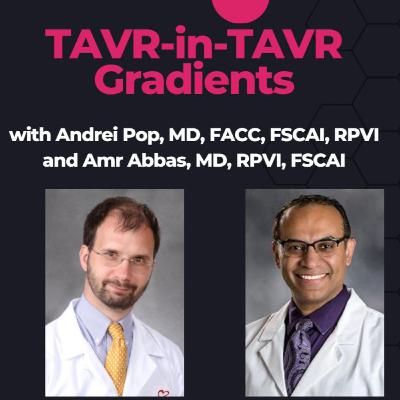
What really drives gradients after TAVR-in-TAVR—and do they actually matter?In this conversation, Dr. Amr Abbas and Dr. Andrei Pop break down the nuances behind gradient measurements, patient-prosthesis mismatch (PPM), and valve expansion strategy in redo TAVR.Key takeaways include:Why echo gradients differ from invasive gradients even under identical hemodynamicsUnderstanding discordance between flow and pressure in post-TAVR assessmentWhy PPM is less concerning in normal-flow patients than previously believedHow flow state—not gradient—drives outcomes after TAVR or SAVRThe role of predicted vs measured PPM and valve-specific flow patternsInsights on undersizing vs overexpansion and how to optimize redo TAVR resultsWhy well-expanded valves may outperform “bigger” but underexpanded onesHow lifetime management means moving past numbers to patient-centered outcomesThis is a must-watch for interventional cardiologists and structural heart teams focused on redo TAVR planning, flow hemodynamics, and lifetime valve strategies.00:00 – Introduction: TAVR-in-TAVR and gradient anxiety 01:10 – Invasive vs echo gradients: why they don’t match 03:00 – Discordance and measurement error in post-TAVR gradients 04:25 – Understanding pre-discharge echo gradient increases 05:15 – When gradients are “nuisance” findings vs real issues 06:00 – PPM redefined: what echo really measures 07:30 – Flow-derived valve area and its pitfalls 09:00 – Flow vs gradient: the real driver of outcomes 10:00 – Lessons from the PARTNER and TVT data 12:30 – Predicted vs measured PPM in clinical context 14:00 – The role of ejection fraction and low-flow states 16:00 – Flow patterns: laminar vs turbulent impact on velocity 18:00 – Valve sizing: smaller expanded vs larger underexpanded 20:00 – Expansion optimization and stent analogy 22:00 – Valve labeling, true ID, and expansion limits 24:30 – Historical shift: from “biggest valve possible” to “best expansion possible” 26:30 – Oversizing risks, skirts, and modern generation valves 28:00 – The balance between PVL, pacemaker risk, and expansion 30:00 – Lifetime management: beyond numbers to patient outcomes 31:00 – Closing thoughts & takeaways#TAVR #ValveInValve #TAVinTAV #InterventionalCardiology #StructuralHeart #Echocardiography #AorticValve #PPM #Hemodynamics #MurmurMD
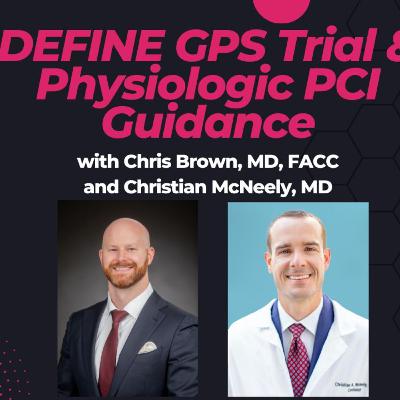
How often do patients leave the cath lab with residual ischemia—and can physiologic guidance change outcomes?In this discussion, Dr. Chris Brown and Dr. Christian McNeely review insights from the DEFINE GPS Trial, where PCI guided by pressure wire co-registration was compared with angiography alone.Key highlights:- Why 20% of patients left the lab with residual ischemia in DEFINE PCI- How FFR/iFR pullback and co-registration create a physiologic roadmap for stenting- Trial design, enrollment (2,100 patients), and endpoints: MACE at 1–2 years- Surprising cases where physiology overturned angiographic impressions- Calcium, long lesions, and the limits of angiography alone- When to trust physiology vs imaging—IVUS/IVL integration- The future role of co-registration software in routine PCIThis is a must-watch for interventional cardiologists looking to integrate objective physiologic data into daily practice.Like and subscribe to see more!Follow the MurmurMD Youtube for more tips: https://www.youtube.com/channel/UCfrLYhAhliQ2ZvXinkDCZvADownload the MurmurMD app here: https://apps.apple.com/app/apple-store/id1586692687?pt=123231498&ct=curtis&mt=800:00 – Intro & guest background 00:39 – Define GPS trial design & objectives 01:17 – Residual ischemia: lessons from Define PCI 02:23 – Co-registration system explained 03:09 – Inclusion criteria & patient population 03:53 – Endpoints: MACE at 1–2 years 04:07 – Enrollment: 2,100 patients, top enrolling sites 04:25 – Why angiography alone misses physiology 05:12 – Standard PCI workflow vs physiologic pullback 06:30 – Case 1: circumflex calcification & LAD ischemia 07:41 – Co-registration mechanics step-by-step 09:12 – Post-PCI IFR goals & physiologic success 11:31 – IVUS co-registration and stent sizing pearls 12:46 – Calcium, long lesions & turbulence effects 13:43 – Taking subjectivity out of angiography 15:22 – Physiology + imaging: additive or redundant? 16:43 – Aggressive stent sizing & perforation risk 17:28 – Case 2: non-STEMI with PDA & focal circ lesion 18:51 – Pullback showing ischemia dots at stenosis 20:10 – Why physiology prevented unnecessary stenting 21:49 – Which lesions should we defer vs treat? 22:17 – Looking ahead: Define GPS trial results (2026–27)#DefineGPS #PCI #InterventionalCardiology #FFR #iFR #CoRegistration #CathLab #StructuralHeart #StentOptimization #MurmurMD
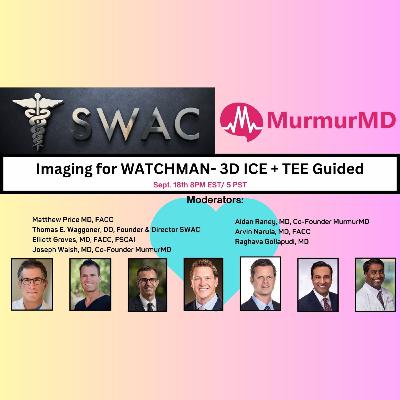
How is left atrial appendage closure (LAAC) evolving in 2025—and what’s the role of 3D ICE vs TEE?In this SWAC session, Dr. Matthew Price and panelists share their real-world experiences and expert pearls:Why 3D ICE is becoming the standard for Watchman and Amulet proceduresKey tips to avoid air embolism and manage sedation risksHow to safely perform ICE-guided transseptal puncture and LAA imagingWhen TEE or mini-TEE probes remain the better optionCost, staffing, and program scaling strategies for high-volume centersPractical steps for single-operator workflows and nursing team integrationWhether you’re a structural heart imager, interventional cardiologist, or part of a valve clinic team, this discussion highlights the future of LAAC imaging and what it takes to safely scale programs as patient volumes grow.00:00 – Welcome & panel introduction 00:18 – Why imaging is critical for LAAC in 2025 00:37 – Matthew Price: 3D ICE is the future for Watchman and Amulet 01:03 – Boston Scientific advisory on air emboli 01:50 – Why 3D ICE outperforms 2D ICE for moderate sedation 02:11 – NCDR registry data on ICE vs TEE outcomes 02:40 – Learning curve and case volume to master ICE 03:42 – Practical workflow: efficient 3D ICE case steps 05:42 – Pre-procedure CT planning and AI sizing tools (FEOPS, DASHI) 07:11 – Tips for safe transseptal puncture with ICE guidance 09:04 – Balloon dilation vs delivery sheath crossing strategies 13:14 – Using fluoro as a backup for ICE alignment 18:08 – Aligning the ICE view to the LAA axis for accurate deployment 28:12 – Preventing air embolism during sedation-only cases 31:18 – Hydration, LA pressure checks, and sheath management 35:17 – When to choose TEE: obesity, severe OSA, or complex mitral work 40:17 – Mini-TEE probes: workflow advantages under MAC 47:01 – Pre-procedural imaging vs on-table imaging debate 52:09 – High-volume GA workflows and 4-minute deployment case 53:08 – Panel takeaways: scaling LAAC imaging programs#LAAC #Watchman #3DICE #TEE #InterventionalCardiology#StructuralHeart #CathLab #LAAO #ModerateSedation #MurmurMD
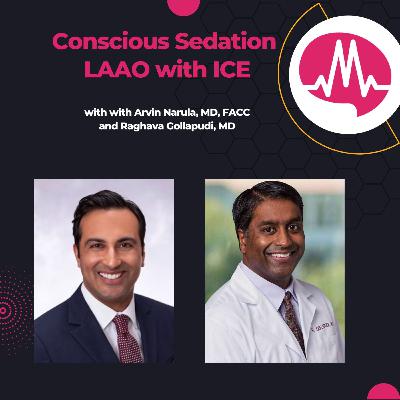
Can you safely perform left atrial appendage occlusion (LAAO) without TEE, anesthesia, or an echo doc?In this episode, Dr. Raghava Gollapudi (San Diego Cardiac Center) and colleagues break down how they built a conscious sedation, ICE-only LAAO program in private practice. They cover:- Why traditional TEE + anesthesia models slow scheduling and add variability- Evidence from Europe showing ICE-only Watchman is safe- How to transition from TEE support to ICE-only workflow- Practical pearls for ICE catheter handling, transeptal crossing, and imaging- Patient selection: absolute and relative contraindications- The role of nursing staff and team buy-in- Why 3D/4D ICE makes device visualization easierThis is a must-watch for operators and program builders looking to simplify workflows and improve access to LAAO.⏱️ Chapters00:00 – Intro & program overview01:00 – Why conscious sedation for LAAO?02:00 – Limitations of TEE + anesthesia model02:45 – Evidence for ICE-only Watchman safety03:30 – Becoming a solo-operator with ICE04:45 – Transition: 20 cases with TEE + ICE06:00 – Patient selection: contraindications & risks08:00 – Screening tools & nursing involvement09:00 – Step-by-step ICE technique & home views10:30 – Transeptal crossing: tips, 3-minute rule12:00 – Biggest barrier: ICE-only septal crossing14:00 – Imaging the appendage: mid & low angle views15:45 – Benefits of 3D/4D ICE vs 2D ICE16:30 – Final pearls for solo-operator LAAO🔔 Subscribe for more insights from interventional experts and real-world program builders.📱 Download the app: https://apps.apple.com/app/apple-stor...#LAAO #Watchman #ConsciousSedation #ICEImaging #InterventionalCardiology #StructuralHeart #CathLab #AtrialFibrillation #SoloOperator #murmurmd
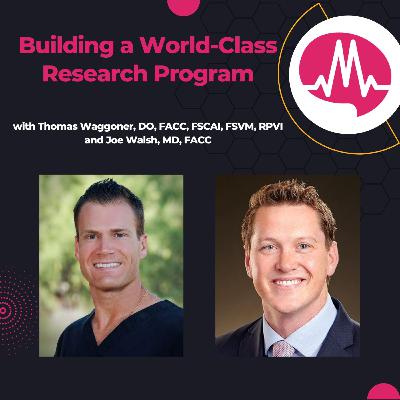
A look into how Dr. Waggoner took a new TAVR program and transformed it into a top-tier research hub from scratch! Dr. Tom Wagner, Director of Structural Heart at Tucson Medical Center, shares his journey in building a research-first culture from scratch. In this conversation, he discusses:Why research is a differentiator in regional cardiologyHow he grew from zero research to 70+ active clinical trialsThe inflection point when a program takes off (around year 5)The importance of volume, outcomes, and clean data for sponsor trustPractical insights on staffing: from one CRC to a full research hierarchyWhy perseverance, weekends, and attention to detail are the real “secret sauce”How research fuels both patient access to novel devices and institutional reputationWhether you’re a structural cardiologist, program director, or part of a valve team, this discussion offers a roadmap to building research infrastructure that benefits both patients and institutions.Chapters:00:00 – Intro & guest background 01:10 – Starting with zero research & 50 TAVRs/year 02:00 – Why research matters for program growth 03:30 – Research as a differentiator in regional markets 04:10 – Perseverance: the real “secret sauce” 05:30 – Balancing call, STEMI, and research demands 06:20 – The 5-year inflection point of growth 07:00 – From 2 trials to 70: scaling the research portfolio 07:45 – Importance of high volume and outcomes 08:15 – Why clean data builds sponsor trust 09:30 – Don’t overreach: starting with the right trial 10:20 – Building staff: from one CRC to a full hierarchy 12:00 – Lessons learned from early trial missteps 13:00 – Closing insights on building lasting programs#StructuralHeart #CardiologyResearch #TAVR #HighRiskPCI #InterventionalCardiology #ClinicalTrials #CathLab #ValveTeam #ResearchProgram #MurmurMD
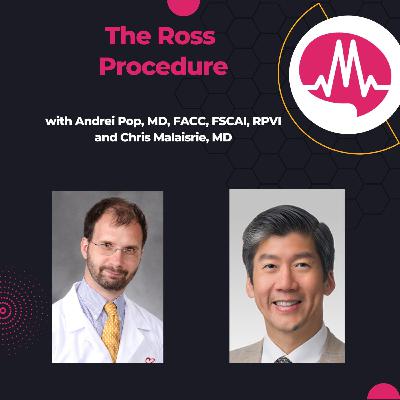
Once considered niche, the Ross procedure is making a strong comeback. With improved techniques and long-term outcomes, it’s becoming a first-line option for younger patients with aortic valve disease.In this episode, Dr. Chris Malaisrie (Northwestern Memorial, Chicago) joins Dr. Andrei Pop to discuss:Why the Ross procedure is resurging in high-volume centersTechniques to stabilize the autograft and prevent dilation (deep LVOT implant, Dacron grafts, wrapping with native root)Post-op strategies including strict blood pressure control for favorable remodelingDurability data: 85–90% freedom from reintervention at 10 yearsManaging failures: surgical re-repair, TAVR options, and future dedicated devicesPatient selection: under 50, women, and those with small aortic rootsThe role of root enlargement and replacement in lifetime managementMinimally invasive approaches: mini-thoracotomy vs sternotomyTAVR-first vs surgery-first strategies in younger patientsWhy the valve clinic model and shared decision-making matter in 2025This is a must-watch for surgeons, interventional cardiologists, and valve clinic teams navigating lifetime aortic valve management.Chapters:00:00 – Intro & guest background 01:00 – Why the Ross procedure is resurging 02:15 – Stabilizing the autograft: surgical techniques 04:00 – Blood pressure control & early remodeling 05:20 – Jacketed Ross and long-term durability 06:30 – Failure rates and freedom from reintervention 07:15 – Options for failing autografts & future TAVR devices 10:30 – Homografts vs autografts: differences in calcification 12:00 – Ross volumes, outcomes, and national trends 13:30 – Patient selection: under 50, women, and small roots 14:15 – Root enlargement and replacement strategies 20:00 – CT planning and AI modeling for AVR 21:15 – Minimally invasive AVR: mini-thoracotomy vs sternotomy 22:15 – TAVR first vs Ross first in younger patients 23:30 – Challenges with TAVR explant vs SAVR explant 26:00 – Techniques for safe TAVR explant 27:00 – TAV-in-TAV as a lifetime strategy 28:30 – Coronary protection & unicorn procedure 31:30 – Valve clinics & shared decision-making 33:15 – The debate over single-operator TAVR 35:00 – Closing thoughts & takeaways#RossProcedure #AorticValve #CardiacSurgery #ValveSurgery #StructuralHeart #TAVR #LifetimeManagement #ValveClinic #InterventionalCardiology #MurmurMD

Comments

Download from Google Play

Download from App Store
 United States