


 Claim Ownership
The Parenting Reboot with Deepa
Subscribed: 0Played: 0
Subscribe

© Deepa Dave
Description
The Parenting Reboot is all about raising future generations who are true digital natives. I chat with parents, psychologists, tech experts, educators, and anyone passionate about raising strong, hopeful kids in a tech-driven world. It's all about finding real, creative ways to raise the next generation as humanly (and sanely!) as possible.
deepavd.substack.com
deepavd.substack.com
18 Episodes
Reverse

Motherhood can be a beautiful yet overwhelming journey — especially in today’s hyper-connected world. Most of us are quietly grappling with the same tension: we love technology, we depend on it, and we’re also watching it slowly reshape our children’s childhoods in ways we didn’t sign up for.On the latest episode of the Parenting Reboot, I sit down with Danielle Mussafi — a Brooklyn-based early childhood educator, Substack writer, and creator of Ordinary Animals — to talk about what it means to parent and teach with intention in an age of infinite distraction.Danielle’s husband is a high school teacher. Between the two of them, they see every stage of what technology is doing to young people — in classrooms, in playgrounds, and at home. And their shared conclusion? It’s not working. It’s not worth it.Why “Ordinary Animals”?Danielle’s philosophy centers on one quietly radical idea: we are human animals, and that is enough. In a world that constantly nudges us to optimize, perform, and produce — Danielle argues for the opposite. She invites us to celebrate our ordinariness. To find meaning not in highlight reels, but in the mundane, the unplanned, the unphotographed.Motherhood, she says, has been one of the most grounding forces of her life — not because it made her extraordinary, but because it made her real.(And yes — we talk about matrescence, the profound psychological transformation of becoming a mother. Fun fact: it still hasn’t officially made it into the dictionary.)Thanks for reading The Parenting Reboot with Deepa! Subscribe for free to receive new posts and support my work.The Disappearance of Free PlayAs an early childhood educator, Danielle has watched a slow erosion happen in real time. Safe, unstructured outdoor spaces for kids are disappearing. The village has thinned out. Third spaces — the parks, open spaces, the after-school corner — are vanishing.And when kids can’t negotiate, argue, invent rules, and manage boredom together without adult supervision, something important goes missing. “Sometimes coming up with the rules of the game takes hours. And then they only play for a little bit — because the rules, the negotiating, is the play.”- DanielleTV and phones, she says, have become default co-parents — not because parents are failing, but because the social net we once relied on has frayed. We don’t live in villages anymore. Extended families are spread thin. And safe places for children to simply be children are harder to find.The Push Back Against EdTechDanielle and her husband aren’t alone in their skepticism — and the conversation is finally starting to shift. Teachers and parents are seeing, firsthand, that technology in classrooms isn’t delivering on its promises. EdTech was sold as a revolution. Many are now questioning the return.She’s not anti-tech. She’s pro-intentionality.“It’s not screens, screens, screens,” she says. “If you can separate it out and just say — I’m going to wait as long as I possibly can to introduce personal devices to my children — that’s where you start.”So, What Does “Going Analog” Actually Mean?I asked Danielle to define it. Her answer surprised me with its simplicity:“It’s really just about reclaiming small moments of your attention and your intention inside whatever life you’re actually living.”Not a rejection of technology. Not a privilege reserved for those who can opt out. Just a conscious redirect — toward breath, toward movement, toward presence.The things she suggests are mostly free: take a walk, write a gratitude list, do 10 jumping jacks, spend 15 minutes colouring. These aren’t lifestyle upgrades. They’re attention practices.And if going analog feels like a privilege? Danielle is direct: “Then we may have lost the plot.”The Practical Bit: Audio as a BridgeIf you’re trying to transition your kids away from screens, Danielle offers one beautifully simple tip: try audio first.TV delivers the strongest dopamine hit of any screen — vivid colors, fast pace, a completely passive experience. Switching a child straight from that to building blocks is a recipe for a meltdown (their nervous system is adjusting, not being difficult).Key Takeaways:* Matrescence is real — becoming a mother transforms your identity, and that transformation deserves to be named and honored.* Free, unstructured play is disappearing — and with it, the social and emotional skills children develop when left to negotiate the world themselves.* Third spaces matter — communities, institutions, and governments have a role to play in creating safe, unsupervised spaces for kids to be kids.* EdTech isn’t delivering — teachers and parents are pushing back, and the conversation is finally gaining mainstream traction.* Going analog isn’t all-or-nothing — it’s about reclaiming small moments of attention, one intentional choice at a time.* Audio is your bridge — when transitioning kids from screen time, use audio as a middle step before jumping to active play.* Find your people — seek out parents and educators in your community who share your values around low-tech childhood.For more insights on parenting and navigating the digital landscape, check out Danielle’s work at Ordinary Animals. Show her some love! This is a public episode. If you would like to discuss this with other subscribers or get access to bonus episodes, visit deepavd.substack.com
I’ve been away for a bit, but I’m back — and this conversation with Megs Shah, co-founder of the Parasol Cooperative, felt like exactly the right episode to return with.Megs is building technology the way it should have been built from the start: with human safety and agency at the center, not revenue. Under Parasol, Shah built Ruth, an AI tool for survivors of exploitation and abuse. They don’t require accounts. They don’t ask for personally identifiable information. They actively discourage users from sharing it. That’s rare. And it raised a question I haven’t been able to stop thinking about: why do we accept so much less from every other app our kids are using?“We have gone to the degree that humans are the product. And we have got to stop doing that.” - Megs Shah, The Parasol CooperativeMegs also breaks down three principles that she believes should guide all technology design — safety, privacy, and dignity. We talked about what consent actually looks like in a digital world, why your child’s gaming app probably doesn’t need their location, and the difference between parental supervision and surveillance. Takeaways* Parents must cultivate trust with their children from an early age.* Open dialogues about technology and online safety are crucial.* Understanding the ethical implications of AI is essential for parents.* Digital safety tools should be used to empower children, not control them.* Parents should regularly audit their children’s devices and apps.* Teaching children about consent is vital in both physical and digital interactions.* Modeling good digital behavior is important for parents.* AI can be a tool for good, but it requires responsible use.* Parents should be aware of the data privacy policies of apps their children use.* The future of technology should prioritize safety and dignity for users.Food for thought: When did you last audit the apps on your child’s phone together? Or even your own phone?This episode is going to be worth your time — whether you’re a parent, an educator, or anyone who uses technology (so, everyone). Happy listening!Thanks for reading The Parenting Reboot with Deepa! Subscribe for free to receive new posts and support my work. This is a public episode. If you would like to discuss this with other subscribers or get access to bonus episodes, visit deepavd.substack.com
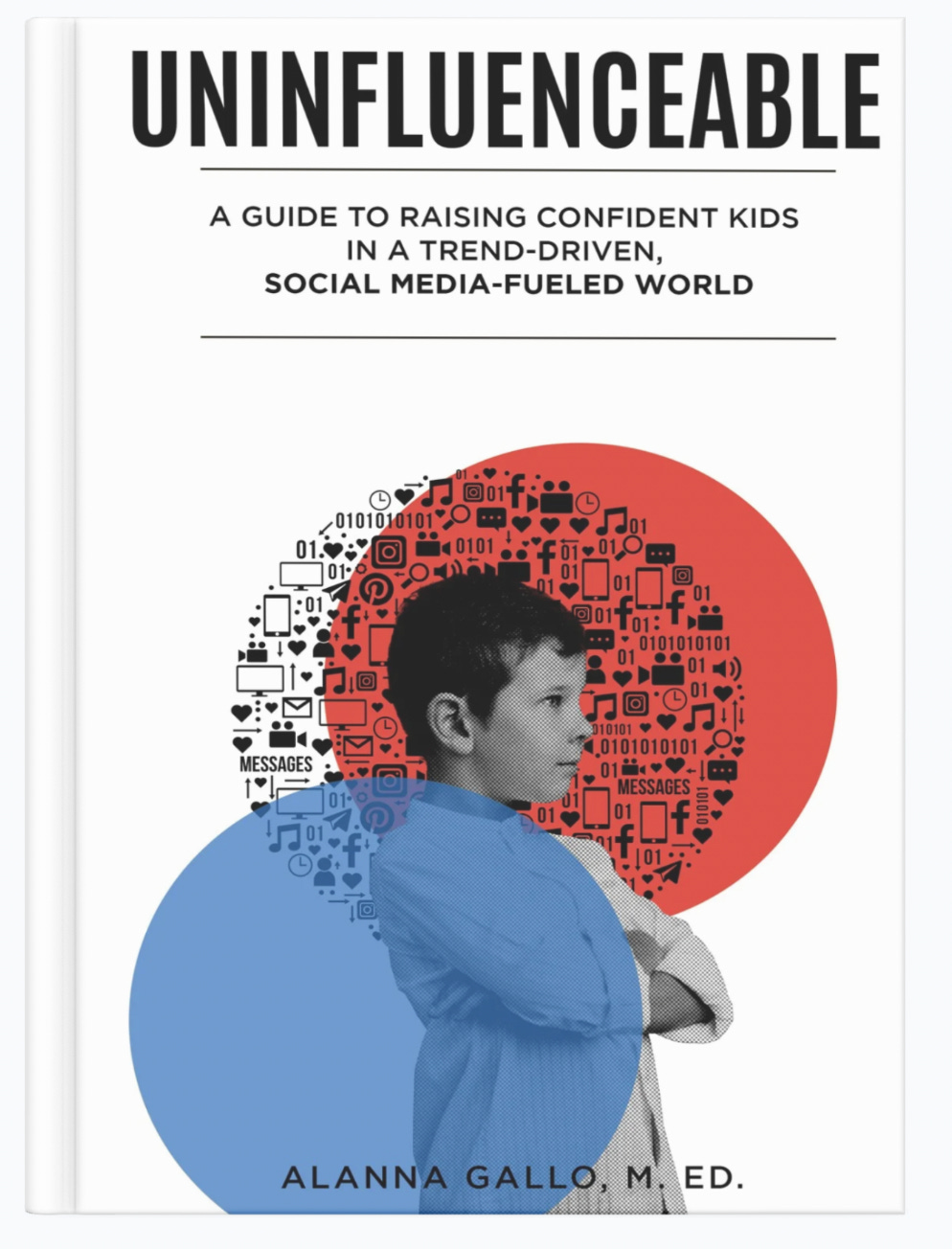
If someone handed you a book on how to raise grounded, emotionally strong, clear-thinking kids in a world run by algorithms, wouldn’t life be easy? I just finished reading Uninfluenceable and got a chance to sit down with the author of this book — Alanna Gallo. She is a former public school teacher, mom of four, and education consultant.Alanna and I get into the messy, confusing reality of raising children in a world where technology has quietly become the third co-parent. Social media punishes nuance, algorithms feed polarization, and kids are handed screens as quickly as snacks. Bored? Screen. Tantrum? Screen. Slightly too quiet? Screen.And from birth, many children are trained into constant stimulation — light-up toys, sensory overload, apps tracking every feed and nap. Somewhere along the way, many of us lost touch with our own intuition.Alanna breaks down what truly hasn’t changed:Kids still need attachment, security, real-world stimulation, and adults who preserve their childhood instead of outsourcing it. Tech companies aren’t designing for our childrens’ well-being — they’re designing to maximize their attention for profits. But here’s the empowering part:Parents still hold the real decision-making power. We choose when (and if) the devices enter our homes. We choose the rhythms, the boundaries, and the experiences that shape our families.Alanna leaves us with three grounded rules that every parent can start using today:* Don’t use tech to fix boredom or discomfort.* Make family connection non-negotiable.* Be intentional about who your family spends time with.We also explore the growing movement of families redefining wealth — not as money, but as time: time outdoors, time together, time off of screens, time living in the real world.This episode is an invitation to slow down, reconnect, and remember that our kids are human beings — not products for algorithms.New episodes out every other Wednesday. Follow the Parenting Reboot: This is a public episode. If you would like to discuss this with other subscribers or get access to bonus episodes, visit deepavd.substack.com
Meet Sandhya Viswan, an engineer turn educator, homeschooling mum of two and now a consultant in the education sector in one of the largest cities in India. On the Parenting Reboot’s latest episode, Viswan and I unpack one of the biggest modern parenting dilemmas: What does “the right education” even mean anymore?She brings a refreshing, deeply practical lens to a world where schools market themselves more than ever, tech evolves faster than we can blink, and parents are overwhelmed by endless choices. “Parents know what they don’t want from education, but they don’t know what exactly they want.”- Sandhya V., Founder of EdDeedShe founded a a website called EdDeed, that acts as a search tool for many parents to simplify school discovery process for families.In this episode, we also explore:• Why the “top school” may not be the right fit• How homeschooling supports natural learning• The post-COVID shift in education in India• What parents actually want (but rarely articulate)• Personalized learning vs. reality• Technology as a tool — not a babysitterFrom post-COVID shifts to the explosion of educational technology, this episode is a map for any parent navigating an increasingly complex schooling landscape. And above all, Sandhya leaves us with hope: we are raising one of the best generations of children, and with the right guidance, they can thrive in a world that’s growing and shrinking at the same time.New episodes out every other Wednesday. Follow the Parenting Reboot: This is a public episode. If you would like to discuss this with other subscribers or get access to bonus episodes, visit deepavd.substack.com
Education in India is evolving, but not always evenly. In this week’s episode of Parenting Reboot, I speak with Neha Gujar — a Teach For India program partner who’s been on the frontlines of education reform for over a decade.Neha’s journey is as fascinating as it is purposeful: from a defense background to transforming classrooms and communities across India. She has seen how education can shift the trajectory of an entire family — and how much more there is to fix at a systemic level, before every child has an equal shot.“Education can change the trajectory of an entire family — not just a child.”— Neha Gujar, Teach For IndiaAs a teacher and now an education consultant helping rural entrepreneurs design and deliver curriculums, Neha has seen both the brilliance and the burnout of the Indian education system — and she believes the way forward lies in redefining what “teaching” means. This conversation dives into why skill-building, empathy, and purpose must sit at the heart of the next education movement.We also talk about:* Why teaching should be seen as a nation-building profession — not a fallback job.* How technology has blurred the lines between learning with children and distracting them.* What empathy looks like in a system obsessed with marks.* And how parents, communities, and teachers can together redefine success — to raise happier, more resilient children.For too long, teaching has been treated as a fallback — a profession people “settle” into. But as Neha points out, the teachers who stay in the system aren’t there by chance; they’re there by choice. Education is more than textbooks — it’s about community and care. If you’ve ever questioned the kind of “success” schools reward, this conversation will move you.Learn more about Teach for India and the TFIx program.Teach For India👉 Subscribe to Parenting Reboot for conversations that help us rethink modern parenting, one episode at a time.New episodes out every other Wednesday. Follow the Parenting Reboot: This is a public episode. If you would like to discuss this with other subscribers or get access to bonus episodes, visit deepavd.substack.com
We weren’t born with devices — and yet, they now shape every part of our day.Research shows that kids as young as 11 own smartphones, and two-year-olds make up a significant YouTube viewing audience. But the real problem isn’t the screen — it’s the system behind it.This week on Parenting Reboot, I sat down with Riz Vazir, founder of Scroll By Choice, a Seattle-based initiative helping families and workplaces build digital resilience. Riz calls himself a techno-optimist — someone who doesn’t fear technology but insists that we must learn to live with it consciously.“We were all focused on the features our devices came with,” he says.“But no one taught us how to orient our lives, thinking, and behaviors around something so powerful that fits in our pockets.”We spoke about the illusion of control, the algorithms shaping our values, and why digital wellness is a life skill—not a luxury.Takeaways from this episode:* Technology is a relationship, not a tool. You have to nurture it.* Algorithms aren’t neutral. They serve their masters — always.* Parents model tech behavior. Kids watch not what we say, but what we do when stressed, bored, or lonely.* Going “screen-free” isn’t realistic. We need to teach techno-resilience, not nostalgia for a world that doesn’t exist anymore.* Our attention is currency. Kids are ready for this conversation — ask them: “Who makes money off this app you love?”Riz believes the future of healthy tech lies in education, self-awareness, and values — not fear or restriction.“The algorithm isn’t a tech problem,” he says. “It’s a values problem.”And that, perhaps, is the most powerful insight of all. Learn more about the work Scroll By Choice does here. New episodes out every other Wednesday. Follow the Parenting Reboot: This is a public episode. If you would like to discuss this with other subscribers or get access to bonus episodes, visit deepavd.substack.com
Parenting often feels like a tug-of-war. For the first time on the Parenting Reboot, I brought a parent and a psychologist / child tech expert together to talk about screen time, tech use in households and the challenge to balance it all out, especially without guilt and shame. Jenna Wawrzyniec is a mom of three is on a mission to simplify complex research and build a stronger parent community. Dr. Zachary Stuckelman studies how children interact with digital media. His mission is to shift the narrative away from fear and shame about screens and help families figure out where tech fits into their own puzzle.Takeaways1. Screens Are the Medium, Not the MessageDr. Zach reminded us that “the screen itself is the medium — it’s not the message.” What matters is the content and context: What are children watching? How is it edited? Can they apply what they see to real-life problem-solving?Research is often behind the pace of innovation. “By the time we can say definitively that a show like Bluey builds certain skills,” he notes, “the show may already be off the air.”That’s the push-and-pull of studying kids’ media in a fast-changing world.2. Core Skills for the Future: Concentration & Frustration ToleranceJenna focuses on two skills that she wants her own children — from infancy to adolescence — to keep developing:* Concentration: the ability to sustain focus on meaningful tasks* Frustration Tolerance: the capacity to cope with boredom, inconvenience, or setbacksMontessori education, she says, is “an education path for adaptation…we’re teaching kids how to think, how to be self-learners.”Dr. Zach adds the related concept of attention regulation — learning to prioritize what matters in a given moment and inhibiting distractions. Paired with emotion regulation, these skills form the foundation of healthy interaction with technology.3. A Balanced Approach to ScreensBoth guests cautioned against an all-or-nothing mindset. Jenna described her family’s approach as “warm and approachable, but still with boundaries” — her nine-year-old, for example, doesn’t yet have a smartphone because “he simply doesn’t have a real use case for it right now.”Dr. Zach used the “Halloween candy model” to explain why total prohibition can backfire:“If you forbid something completely and then suddenly allow it, you’re not helping a child build a healthy habit with that item.”Instead, parents can help by:* Setting age-appropriate limits* Mediating and co-viewing screen content* Talking about what kids see and connecting it to real-world learning.New episodes out every other Wednesday. Follow the Parenting Reboot: This is a public episode. If you would like to discuss this with other subscribers or get access to bonus episodes, visit deepavd.substack.com
You don’t need technology to raise children. All they need is human attention.These are the words of Madhura Gogte Pusalkar — a Montessori educator, music teacher, and child-development expert from Mumbai. This week on the Parenting Reboot, we talk about the relevance of Montessori education in preparing children for a future influenced by artificial intelligence. She emphasizes the importance of hands-on learning, the role of technology, and the need for parents to model good values and foster independence in their children.We live in a time where everything feels like it’s moving too fast — even for adults to comprehend. In the rush, we risk forgetting what makes us truly human: connection, patience, and the higher purpose of raising children who can thrive without being dependent on devices.Madhura reminds us that over-reliance on technology in the formative years doesn’t create smarter kids — it creates over-dependence later in life. Children don’t need more screens. They need more life. Real experiences, patient guidance, and the freedom to explore with their hands are what prepare them for both today and tomorrow.Takeaways from our conversation:* Montessori equips children with resilience and future-ready skills.* Hands-on learning builds logical thinking, creativity, and patience.* Tech can play a role, but mindful, minimal use is key.* Over-reliance on devices risks stunting independence.* Children learn best through human interaction and real-life experiences.* Parenting in a fast-moving, tech-driven world requires slowing down.When I asked Madhura about the future of today’s children, her answer was simple but profound: “It begins with us. Their future depends on how we raise them today.”Share this episode with a parent who feels caught between screens and reality. This conversation is your reminder that while technology is racing ahead, raising children requires slowing down.New episodes out every Wednesday. Follow the Parenting Reboot: This is a public episode. If you would like to discuss this with other subscribers or get access to bonus episodes, visit deepavd.substack.com
Do you need to quit your job to make your kids go screen free? Probably not.We discuss this on The Parenting Reboot, as I sit down with Dr. Madhumitha Ezhil — a digital detox expert, consultant and parent who has helped countless families rethink their relationship with screens.Dr. Madhumitha knows the other side of the screen all too well. Her 300-page thesis was dedicated to studying how to keep consumers scrolling and hooked to social media ads. Today, she’s on a mission to help parents step away from algorithm and raise children rooted in reality.TakeawaysIn this episode, we discuss:* Why no-tech until 4 or 5 years can be a game-changer for toddlers.* The three C’s (Connection, Communication, Critical Thinking) that form the foundation of healthy childhood.* Why “do as I say, not as I do” doesn’t work — kids imitate our screen habits.* How tech-free zones and times, especially mornings without phones can reset your family rhythm.* Why nurturing critical thinking is our children’s real competitive edge in the age of AI.* The importance of cultural context and nuance in applying western ideals or practices to parenting in Asia.* Why it is important to practice emotional regulation and empathy with your kids.Dr. Madhumitha’s advice is both practical and deeply human: Come back to your child, not the algorithm.🎙 The Parenting Reboot Podcast – Real stories, expert insights, and honest conversations about raising kids in a changing world.New episodes out every Wednesday. Follow the Parenting Reboot: This is a public episode. If you would like to discuss this with other subscribers or get access to bonus episodes, visit deepavd.substack.com
Did you wish some social media apps never existed? Do you spend 3-5 hours every day doomscrolling on one of those very apps?This week on the Parenting Reboot, I chat with Nick Rotola—dad of three, youth pastor turned serial tech entrepreneur, and founder of UP (scrollhappy.com)—to ask a bold question: Can we have a healthy relationship with social media? Nick’s social media platform is designed to protect kids from doomscrolling and promote positivity online. It is devoid of polarizing content, pornography and things that kids and teens should probably not have access to. He shares his journey from youth pastor to tech founder, why he believes parents need to step up as guides in the digital age, and how his platform UP aims to shift kids away from doomscrolling toward meaningful digital experiences.What we covered:* Why scrolling has become habitual (and harmful)* The real impact of social media on youth mental health* How parents can set tech rules that kids actually understand* The double-edged sword of AI in shaping online experiences* Why giving kids independence offline is just as vital as protecting them onlineSocial media isn’t going anywhere. But maybe, we can shape it into something better for the next generation. A better digital childhood.🎙 The Parenting Reboot Podcast – Real stories, expert insights, and honest conversations about raising kids in a changing world.New episodes out every Wednesday. Follow the Parenting Reboot: This is a public episode. If you would like to discuss this with other subscribers or get access to bonus episodes, visit deepavd.substack.com
Why are AI teachers needed today? Can we build empathy into AI code? What role does equity play in training AI models? We explore all of this and more in the latest episode of the Parenting Reboot where I chat with Dr. Pauldy Otermans, the co-founder of the Otermans Institute that built the world’s first AI teacher and is democratizing education across Asia, Africa and the rest of the world. As a neuroscientist, psychologist and a tech leader, she understands the impact of technology on our brains. So, I asked her something ridiculous: Will our brains atrophy because of our over-reliance on tech (especially artificial intelligence)? Dr. Pauldy: “AI is not making any decisions, we are.” We also explore the balance between screen time and meaningful engagement with tech for kids, essential skills needed in an AI-driven world, and the role of educators in adapting to new technologies. Classrooms of the future are not going to be the same anymore. Where does AI fit into all of this, and what can we do as parents to be ready for this change?Takeaways* Screen time can be transformed into meaningful learning experiences.* AI should be seen as a tool to enhance human capabilities, not replace them.* Critical thinking and adaptability are essential skills for the future.* Personalized learning through AI can cater to individual learning styles.* The Otermans Institute aims to democratize education using AI.* Community feedback is crucial for improving educational tools.* Parents should engage with technology to support their children's learning.* Educators can use AI to reduce administrative burdens and focus on teaching.* Empathy in AI is important for effective learning interactions.* The future of jobs will require a skills reset due to AI advancements.New episodes out every Wednesday. Follow the Parenting Reboot: This is a public episode. If you would like to discuss this with other subscribers or get access to bonus episodes, visit deepavd.substack.com

“I found motherhood harder than ChatGPT,” says Aaksha Meghawat in her calm, collected voice.In this episode of the Parenting Reboot (TPR), I sit down with Aaksha — a mom, AI/ML expert, and now a Y Combinator–backed AI startup founder from California — to explore two journeys that rarely get discussed together:* Postpartum life — the emotional, physical, and economic costs we don’t talk about enough.* Startup life — building a company from scratch in one of the most complex and fast-moving tech spaces.We talked about:* Why motherhood needs real support systems — not just “inspirational” hashtags.* Why motherhood or parenting isn’t considered as part of GDP.* The need for parental playbooks and strong mental frameworks* The risks of “trustless” tech and how to make AI more accountable.She didn’t just give birth to a human baby… she also brought an AI “baby” into the world.Her startup, Kashikoi, is building a way for people to question, debate, and “interview” AI agents to uncover hidden biases — a safety net that helps individuals do their own background checks on AI systems.This is a conversation about resilience, innovation, and building community at the crossroads of parenting and technology.Key Takeaways:* Motherhood is a challenging yet rewarding journey.* The intersection of motherhood and technology is complex.* Postpartum experiences are often overlooked and under-supported.* Technology can be both a challenge and a solution for parents.* AI has the potential to empower children in their learning.* More research and systemic support for mothers is urgently needed.* Mental frameworks are crucial for navigating parenting and technology.* Sharing stories builds stronger parenting communities.* Kashikoi aims to reduce bias in AI interactions.* The future of parenting will involve more personalized learning opportunities.Whether you’re a parent, tech enthusiast, or future-focused thinker, this conversation will leave you inspired to reimagine what’s possible for the next generation.🎙 The Parenting Reboot Podcast – Real stories, expert insights, and honest conversations about raising kids in a changing world.New episodes out every Wednesday. Follow the Parenting Reboot: This is a public episode. If you would like to discuss this with other subscribers or get access to bonus episodes, visit deepavd.substack.com
From the explosion of live-streaming careers to creating healthy screen-time rules, Jing Shen and I unpack how to raise mindful, creative kids in a hyperconnected world. He is a tech nerd and a dad to a 6-year-old girl, who runs the biggest live streaming platform of Asia. We also explore the challenges and opportunities presented by technology while parenting and the importance of authenticity in digital interactions, especially on social media or live streaming platforms.Jing Shen also shares insights on navigating information overload, especially as new parents and setting boundaries with kids for screen time. 🎧 Listen to the full episode for tools, mindset shifts, and a reminder that kids don’t just copy what you say — they copy what you scroll.Takeaways* Live streaming empowers human connections through interactive entertainment.* Authenticity is increasingly valued in digital interactions.* Technology should be viewed as a tool for parenting, not a master.* Setting clear rules for screen time is essential for children.* Information overload presents challenges for modern parents.* The future of work may prioritize individual creativity over mechanical tasks.* Parents should model healthy tech use for their children.* Play is an essential part of learning and development.* Ethical considerations in tech design are crucial for children's safety.New episodes out every Wednesday. Follow the Parenting Reboot: This is a public episode. If you would like to discuss this with other subscribers or get access to bonus episodes, visit deepavd.substack.com

As a new mom, I stumbled upon Kamakshi’s substack “Things Parents Google” when I was up at 2 a.m. one night, four months postpartum, hoping to feel seen / heard through social media. Despite the overload of information available online on how to raise children, not much is available on how to navigate the online world safely. Especially for new moms who are vulnerable to every information, post, picture, video out there to “inform” them about the right ways to breastfeed, nourish and care for their babies. In this episode, Kamakshi shares her postpartum journey and talks about how technology can be both a boon and a bane. She found solace in online communities, joining Facebook groups for mothers with babies born in the same month. These platforms provided a sense of camaraderie and reassurance that she wasn't alone in her struggles. However, the constant influx of information on social media sometimes added to her anxiety, highlighting the need for balance.She emphasizes the importance of trusting oneself and using the support system available. "Use the village," she advises, acknowledging the value of letting others help with daily tasks. She also stresses the need to filter advice and information, focusing on what truly resonates with one's own experience. Takeaways* Trust yourself, it takes time to adjust to motherhood.* Don't compare your parenting journey to others.* Breastfeeding is not the only option; formula feeding is valid.* Social media can provide support but also overwhelm.* It's important to find a balance with technology in parenting.* Postpartum mental health is crucial and often overlooked.* FaceTime with family can be a positive use of screen time.* Every child is different; trust your instincts as a parent.* Prepare the next generation to discern real from digital.* Use your village for support; it's okay to ask for help.Explore some of Kamakshi’s works and check out Roots and Reflections—a personal biographer service that she offers. New episodes out every Wednesday. Follow the Parenting Reboot: This is a public episode. If you would like to discuss this with other subscribers or get access to bonus episodes, visit deepavd.substack.com
When you hear "AI teacher," do you imagine a robot standing at a whiteboard or an app teaching your middle-schooler algebra? Either way, it's not science fiction anymore.This week on The Parenting Reboot, I sat down with Dev Aditya, co-founder of the Otermans Institute, who helped build the world’s first AI teacher. Why an AI Teacher?The global report on teachers reveals an urgent need for 44 million primary and secondary teachers worldwide by 2030. We talk about the promise and pressure of bringing AI into classrooms—how it could support students and teachers, democratize access to education, and yes, even challenge our ideas of what human learning should look like. He breaks down how they built the world’s first AI teacher, how it impacts students and teachers alike, and why education needs to change in the age of automation. Thought-provoking, inspiring, and a bit mind-bending.This episode is for any parent wondering: Are we prepared for AI in our child’s life—or already behind?Takeaways* AI can serve as a co-educator and role model in classrooms.* The pandemic accelerated the need for digital learning solutions.* AI teachers can provide personalized learning experiences.* Data privacy is crucial when developing AI for children.* AI can help bridge the gap in education for marginalized communities.* Hyper-personalization can improve student engagement and learning outcomes.* AI can run offline, making it accessible in low-connectivity areas.* The future of work will require continuous learning and adaptation.* Democratization of education can be achieved through affordable AI solutions.* AI can support teachers by providing data analytics and personalized lesson plans.New episodes out every Wednesday. Follow the Parenting Reboot: This is a public episode. If you would like to discuss this with other subscribers or get access to bonus episodes, visit deepavd.substack.com

Are you a new mom / parent? Were you sucked into doomscrolling or left feeling insufficient after trying to find answers to why your baby won’t sleep / feed / hit those milestones?This episode is a heartfelt conversation, from one mother to another. We talk about postpartum in its rawest forms and the influence of social media in day-to-day parenting. New episodes out every Wednesday. Follow the Parenting Reboot:You can follow Satshya on YouTube or Instagram. Also, her podcast Chumma Conversations are worth listening to!Satshya is a well-known content creator herself, bridging the world of mundane every day things and culture with humour and authenticity. But as a mother, she is tech-apprehensive and believes in setting some healthy boundaries with it. We also chat about ways to nurture a healthy environment for children (like more play-based and in the nature) while also reflecting on the hopes for future generations.Takeaways* The parenting landscape has changed significantly with technology.* Support from family and friends is crucial during postpartum.* Social media can provide valuable parenting tips but also unrealistic expectations.* Finding a balance between screen time and real-life interactions is essential.* Every child is different; what works for one may not work for another.* Setting boundaries with technology is important for both parents and children.* Parenting requires self-control and mindfulness, especially with social media.* Sleep is vital for children's growth and development.* It's okay to seek help and advice from professionals rather than relying solely on social media.* Parenting is a journey of learning and adapting to each child's needs. This is a public episode. If you would like to discuss this with other subscribers or get access to bonus episodes, visit deepavd.substack.com
"Parenting requires humility and a willingness to learn.” That was one of the key takeaways of my conversation with Anmol Mohan, an ML expert and director at a big tech company based out of Singapore. Between “We are not equipped to be parents, really” and “Ethics don't exist; it's all about wisdom”, there is so much we unpack in episode 2 of the Parenting Reboot.For instance, we explore the intersection of parenting and technology, talk about how parents can navigate the challenges posed by digital tools while fostering a healthy relationship with technology for their children. Anmol shares his insights on gamification strategies for managing screen time, the role of AI in parenting and education, and the importance of resilience and adaptability in preparing children for an uncertain future. The discussion also touches on the ethics of AI and the need for a redefined approach to parenting in the modern era.Key takeaways* Technology can be a positive tool in parenting.* Gamification can effectively influence children's behavior.* Parental controls are useful but should not be solely relied upon.* AI is an inevitable part of our lives and parenting.* Children should be taught resilience and adaptability.* Ethics in AI is complex and situation-dependent.* Parents should learn from their children.* Creating a large 'field of play' for kids is essential.* Exposure to books and learning environments fosters curiosity.* Parenting requires humility and a willingness to learn.New episodes every Wednesday. Follow the Parenting Reboot on YouTube, Spotify and Instagram for more!Check out Anmol’s blog here. This is a public episode. If you would like to discuss this with other subscribers or get access to bonus episodes, visit deepavd.substack.com
Welcome to the Parenting Reboot—where we deep dive into all things parenting, technology and raising kind resilient lil humans for a tech-centric future. In episode 1, I chat with Mohana and Joel, parents navigating the complexities of raising a child with a third member of their household—their smartphone. They discuss the challenges of parenting in the digital age, the importance of preparation, and the balance between screen time and engagement. The couple shares their experiences with unrealistic expectations set by social media, the significance of building a supportive community, and the cautious integration of technology and AI in their parenting approach. I also discuss with them the importance of creating secure attachments with children, the complexities of sharing their lives online (sharenting), and the need for parents to navigate technology thoughtfully. They emphasize the significance of fostering hope and resilience in children while also addressing the risks associated with their digital footprints. The discussion highlights the balance between education and protection in a rapidly evolving technological landscape.Key takeaways* Parenting requires preparation, but real learning happens on the go.* Every child is unique, and parenting must adapt to their needs.* Technology offers both connection and isolation in parenting.* Screen time should be structured and monitored for children.* Social media creates unrealistic expectations for parents.* Building a supportive community is crucial for parenting.* AI can be a helpful tool, but it requires careful integration.* Parents often feel pressured to constantly engage their children.* Boredom is a lost concept in today's parenting.* It's important to stagger the introduction of technology to children. The world is magical enough without excessive technology.* Creating a secure attachment with children is crucial.* Parents should guide their children through technology, not isolate them from it.* Sharenting poses risks that outweigh its educational benefits.* Digital footprints are a growing concern for children.* Fostering hope and resilience in children is essential.* Parents need to slow down and be present with their children.* Family activities should include technology to promote togetherness.* Raising good digital citizens requires collective societal norms.* Mistakes in parenting can be corrected and learned from.Follow The Parenting Reboot on YouTube, Spotify and Instagram for more! This is a public episode. If you would like to discuss this with other subscribers or get access to bonus episodes, visit deepavd.substack.com
Comments

Download from Google Play

Download from App Store
 United States