


 Claim Ownership
That's Girl Code
Subscribed: 2Played: 0
Subscribe

© thatsgirlcode
Description
Hot takes, tech talk, and women who get it. All things tech, all things corporate, and all things women in STEM!
19 Episodes
Reverse
OpenClaw is the open-source AI agent that exploded across GitHub almost overnight. It runs locally, connects to your email, calendar, social accounts, and developer tools, and can take action on your behalf without you in the loop. It’s the personal AI assistant many frontier labs have hinted at but haven’t released.In this solo episode, Eden breaks down how OpenClaw actually works, the origin story behind its rapid rise, the naming drama with Anthropic, and why companies like Anthropic and OpenAI have been hesitant to ship something like this themselves. From prompt injection to exposed API keys and massive attack surfaces, we unpack the security trade-offs behind giving AI “hands and feet.”

In this episode, Eden and Ellen step away from their usual technical topics and analyze how tech startups are portrayed in popular media. They break down three startup origin stories: The Social Network (Facebook/Meta), Super Pumped (Uber), and Swiped (Whitney Wolfe Herd, Tinder, and Bumble).For each film or series, they play Two Truths and a Lie to compare what actually happened versus what was dramatized for storytelling. Along the way, they discuss founder mythology, lawsuits, venture capital influence, workplace culture, and how gender dynamics are often reshaped or simplified on screen.The conversation covers real events behind Facebook’s early lawsuits, Uber’s cultural failures and regulatory battles, and Whitney Wolfe Herd’s departure from Tinder and the founding of Bumble. They also call out common technical misrepresentations in movies and where these productions surprisingly got things right.A discussion on startup history, media dramatization, and how pop culture shapes the public’s understanding of the tech industry.
On this episode of That’s Girl Code, Ellen breaks down how data actually moves through modern applications, from the moment you tap your screen to the systems that learn from that behavior and quietly reshape what you see next.Using Instagram as a running example, she walks through the full data ecosystem of an app, explaining why different types of databases exist, how OLTP and OLAP systems serve completely different purposes, and how events turn user behavior into data. The episode covers relational databases, NoSQL, object storage, graph and vector databases, and how analytics platforms like Databricks power insights, models, and decisions behind the scenes.This episode is a practical, systems-level look at how frontend, backend, and data architecture work together — and why understanding data flow is essential for building scalable, high-performing applications.
In this episode of That’s Girl Code, we explore agentic AI systems that go beyond traditional generative models to perceive their environment, reason about goals, take action, and learn over time.We define what an AI agent is, how agentic systems differ from standard large language model applications, and break down the core components that enable autonomous behavior: perception, cognition, action and execution, and learning and adaptation.We then examine key agentic design patterns—including Reflection, ReAct, Planning, Multi-Agent Collaboration, ReWOO (Reasoning Without Observation), and CodeAct—discussing when to use each, their tradeoffs, and the risks of misapplication. We then touch on implementation, highlighting how frameworks such as LangChain, LangGraph, CrewAI, and platforms like AWS Bedrock support orchestration, tooling, memory, and production deployment.Finally, we address the broader implications for software engineers and organizations, including emerging roles, evolving developer workflows, and critical considerations around security, governance, auditability, and ethical responsibility.This episode provides a practical, technical introduction to agentic AI and its impact on the future of software engineering.Github Copilot Agentic demo: https://www.youtube.com/watch?v=onVn-lnHZ9s

In this episode of "That's Girl Code," Eden takes the mic solo to explore the concepts of "Technofeudalism" as presented by Yanis Varoufakis in his book Technofeudalism: What Killed Capitalism. Delving into the evolution from capitalism to a new economic structure, Eden discusses the role of cloud capitalists and the impact of digital interconnectedness on our society. With insights into historical economic shifts and the influence of modern tech giants, this episode offers a thought-provoking look at our current economic landscape. Tune in for a deep dive into the future of our economy and the potential paths forward.
Season 2 kicks off with a deep, but digestible, two-part conversation on AI, social media, and the incentives shaping the future. Inspired by The Social Dilemma and Tristan Harris’ interview on Diary of a CEO, we unpack how tech moved from monetizing attention to monetizing intimacy - and what that means for mental health, misinformation, privacy, and who’s actually accountable when things go sideways.We pull back to look at the forces driving all of this - profit incentives, weak regulation, massive infrastructure bets, and global competition. From mental health and data privacy to national security and the AI arms race, we connect the dots between the social media era and the futures we’re building with AI right now.
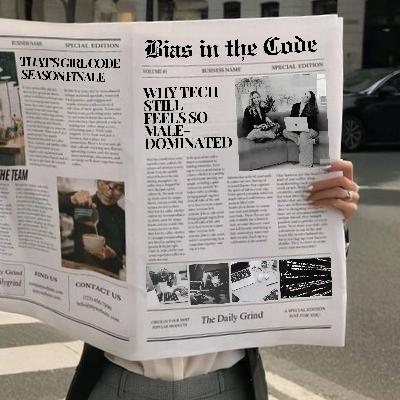
In this episode of That’s Girl Code, Eden and Ellen pull back the curtain on what it really means to be a woman in tech — not just through personal experience, but through decades of data. They trace the fictional journey of “Hannah,” a composite of every woman who’s ever written code, sat through a bias-laced meeting, or been told she’s “too opinionated.” From her first math class to her first pull request, Hannah’s path reveals how stereotype threat, subtle bias, and structural inequities shape who stays in the pipeline and who burns out trying to prove they belong.Eden and Ellen dive into studies showing that gender-diverse teams literally build better software — faster fixes, cleaner code, fewer bugs — while also exploring why women’s work still faces harsher scrutiny and smaller rewards. They unpack everything from the silent politics of code reviews to the glass cliff of leadership, asking the bigger question: if the data proves diversity makes tech stronger, why is progress still so fragile? This isn’t a pity party; it’s a data-driven reality check — equal parts stats, story, and solidarity.
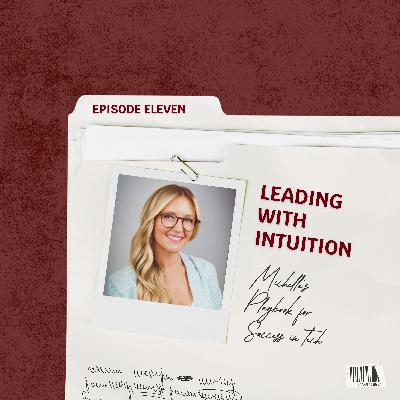
This week, Ellen and Eden sit down with Michelle Meyer—a seasoned technology executive who’s been both a role model and a mentor to women in tech. From sports to sales to the boardroom, Michelle shares stories of grit, growth, and leadership, plus a few unexpected detours. Together we unpack how to sell the vision when you’re not the one coding, build credibility at the right altitude, and keep your energy for the work that matters. We cover mentorship, making tough calls, and finding your lane without playing the comparison game—then detour into a charming, very Michelle side project.
A chaos in comfort episode: Ellen and Eden trade their most mortifying corporate and studio slip-ups—from double-joining a C-suite call to starting class 10 minutes early—plus internet gems from Slack gone wrong to interview fumbles. Come for the trauma bonding, stay for the reminder that it’s rarely that deep and always fixable.

WWDC: Past, Present, and the Very Glassy Future. Eden calls this her personal Super Bowl, Ellen brings the history tea, and together we connect Apple’s June WWDC promises to what actually shipped. We break down iOS 26’s Liquid Glass glow-up, the skinny-iPhone discourse, and why some “wow” features hit while others… might be for someone else’s life. Then Eden gets delightfully nerdy: VisionOS fundamentals (windows, volumes, spaces), what’s new for spatial web and media, SwiftUI vs. UIKit in 2025, Swift Assist in Xcode 26, containerization, and the rumor-mill about Swift on Android. It’s equal parts fangirl and critical friend—because we love Apple, but we’re not drinking the Kool-Aid without reading the release notes.

Algorithms, but make it a party. We turn classic coding patterns into memorable, real-life stories so you can spot them fast, choose the right approach under interview pressure, and explain your thinking clearly. This is your your totally unboring guide to important algorithms in swe. Expect high-level mental models, quick cues, and fun analogies—not math dumps—plus how these patterns connect to everyday engineering. Perfect for tightening your pattern recognition and confidence before your next code screen.
From Microsoft’s AI job study shaking up automation fears, to GPT-5’s messy launch, to Figma’s record-breaking IPO, we’re spilling every drop. We also dive into Apple’s Liquid Glass design overhaul and Figure AI’s humanoid robots—yes, the ones folding laundry and maybe stealing jobs.Whether you like your tech tea sweet, bitter, or ice-cold, we’ve got all the sips you need.
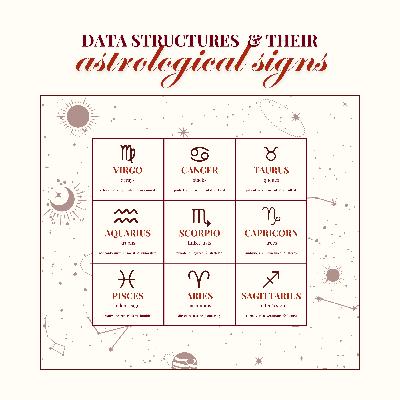
What do coding fundamentals and astrology have in common? More than you’d think. In this episode of That’s Girl Code, Ellen and Eden break down core data structures — arrays, linked lists, stacks, queues, trees, graphs, and hash maps — and match each one to its perfect zodiac sign.From the organized reliability of Virgo arrays, to the rebellious Aquarius graphs, to the steady Taurus queues, we’ll show you how the logic of computer science connects with the personality of the stars.Whether you’re a CS student, a software dev brushing up on fundamentals, or just someone who loves a good astrology meme, this episode blends tech, fun, and cosmic vibes.

Pour yourself a glass and join us as we Ballmer’s Peak our way through some of computer science’s wildest lore and tech drama. We cover the science behind Ballmer’s Peak, the messy origin story of OpenAI (and the Elon vs. Sam Altman feud), the person whose “NULL” license plate made him the final boss of California’s vehicle fines, Grace Hopper’s iconic bug moment, and the esoteric Slack “hummus” notification.Check out The Ballmer Peak: An Empirical Search

From building a morning routine to setting strategic goals, from staying organized with tools like Notion to learning when (and how) to say no, this episode is your go-to guide for thriving in the workplace with confidence and clarity.We’re sharing the 10 tips that helped us grow in our careers, build strong reputations, and stay aligned with our long-term goals, all while staying true to ourselves. Because being that corporate girl isn’t about doing it all... it’s about doing what matters, and doing it well.

This week, Eden & Ellen break down the tech behind four of your favorite apps—TikTok, Pinterest, Uber, and Netflix. We’re talking real-time data, machine learning, microservices, and the wild backend magic that makes these platforms work.Whether you’re tech-savvy or just app-obsessed, we’re decoding the systems behind the screen—girl code style. 💻✨
This week, we’re breaking down how modern AI actually works — from machine learning and tokenization to model training and those mysterious “parameters.”We’ll walk you through how models learn patterns, why they sometimes make things up (aka hallucinate), and how new techniques help them get things right with receipts.Perfect for anyone who wants to understand the brains behind the bots — no computer science degree required.
In the premiere episode of That’s Girl Code, Eden & Ellen introduce themselves, share how they got into tech, and break down why they started this podcast. Using Git as their metaphorical roadmap (because obviously), they branch into origin stories, tech stacks, favorite projects, and the power of having a work bestie who gits it.This isn’t just another tech podcast — it’s a space for real talk, curiosity, and growth. Built to empower corporate baddies, young women, and technologists who are navigating their own path in tech — one commit at a time.
Part two of our deep but digestible conversation on AI, social media, and the incentives shaping the future. Inspired by The Social Dilemma and Tristan Harris’ interview on Diary of a CEO, we unpack how tech moved from monetizing attention to monetizing intimacy - and what that means for mental health, misinformation, privacy, and who’s actually accountable when things go sideways.We pull back to look at the forces driving all of this - profit incentives, weak regulation, massive infrastructure bets, and global competition. From mental health and data privacy to national security and the AI arms race, we connect the dots between the social media era and the futures we’re building with AI right now.
Comments

Download from Google Play

Download from App Store
 United States