


 Claim Ownership
The Flow AI Podcast
Subscribed: 0Played: 0
Subscribe

© Carter Rabasa and David Jones-Gilardi
Description
A developer-focused video podcast on AI, Agents, and MCP that delves into AI platforms using code and Langflow.
10 Episodes
Reverse
In this episode of The Flow, host David Jones-Gilardi is joined by Ruben Casas and Roy Derks to discuss the evolution of Postman, the importance of APIs in AI, and the rise of MCP apps. They explore Ruben's early coding experiences, the integration of AI with APIs, and the future of user interaction through generative UI. The conversation also touches on security concerns in AI applications, the differences between MCP and CLI approaches, and the potential for collaboration between AI and users. Demos of MCP apps showcase the exciting possibilities for developers and enterprises alike.
In this holiday episode of The Flow, hosts David Jones-Gilardi and Carter Rabasa welcome Mihai Criveti, a distinguished engineer at IBM, to discuss MCP Context Forge. The conversation covers Mihai's early programming experiences, the rapid adoption of MCP, and the features of Context Forge that simplify the integration of AI tools. They delve into the differences between A2A and MCP protocols, the importance of plugins for security, and the observability features that enhance performance monitoring. The episode concludes with insights into the future of AI development and the open-source nature of MCP Context Forge.
In this episode of "The Flow", hosts David Jones-Gilardi and Carter Rabasa are joined by Max Gerber, product engineer at Stytch. The discussion delves into the integration of security in AI applications, focusing on OAuth and MCP servers. Max shares his experiences with coding, the evolution of OAuth, and the role of Stytch in enhancing secure data access for AI agents. If you are curious about the security landscape for AI and MCP, don't miss this one.Resources:https://stytch.com/docs/guides/connected-apps/overview - Product docshttps://github.com/stytchauth/stytch-b2b-mcp-demo - Codehttps://www.notelydemo.com/mcp - live product demo
In this episode of "The Flow", hosts David Jones-Gilardi and Carter Rabasa welcome Michele Dolfi, a senior researcher at IBM and core committer to Docling. The conversation explores the significance of data in AI, the origin and functionality of Docling, and its role in processing documents, particularly PDFs. Michele shares insights into his coding journey, the challenges faced in document processing, and the innovative features of Docling that enhance developer experience.Docling resources:docling.aihttps://github.com/docling-project/docling-workshopshttps://github.com/docling-project/doclinghttps://github.com/docling-project/docling-mcphttps://www.ibm.com/think/news/doclings-rise-llm-ready-datahttps://www.ibm.com/community/ibm-techxchange-conference/
In this episode, we delve into the technical intricacies of video AI with James Le from TwelveLabs and explore how TwelveLabs leverages advanced AI models to transform video data into actionable insights. James demonstrates the use of their video embedding and language models, showcasing applications from semantic video search to anomaly detection. Perfect for developers, this episode provides a comprehensive look at integrating TwelveLabs' API into your tech stack, enabling powerful video analysis and indexing capabilities.
In this episode, we talk with Yoeven Khemlani, founder and CEO of JigsawStack, about their purpose built AI models, object detection, and the latest in using small models for more efficient processing.Resources:https://jigsawstack.com/Fun:https://codebeasts.ai/
In this episode, Carter and David discuss the latest "what's up?" with Dominik Kundel from OpenAI. We'll talk about GPT OSS, run GPT locally (yes, I said that), and learn some actionable tidbits for developers.https://openai.com/index/introducing-gpt-oss/https://artificialanalysis.ai/models/open-source#intelligence-vs-active-parametersLMStudio + gpt-oss: https://lmstudio.ai/blog/gpt-ossStreamlit demo + responses API and tools all live here: https://github.com/openai/gpt-oss?tab=readme-ov-file#responses-apiHarmony tool (demo website is not hosted yet): https://github.com/openai/harmonyThe changing of special tokens: https://colab.research.google.com/gist/dkundel-openai/eb1a8ab20264996f0849a6f5c7965d21/harmony-fun.ipynb Other helpful resources:https://openai.com/open-models/https://cookbook.openai.com/topic/gpt-oss
In this episode of The Flow, hosts David Jones-Gilardi and Carter Rabasa engage with Rich Young from Arize to discuss the intersection of AI, software development, and observability. They explore Rich's journey into programming, the mission of Arize in aiding AI builders, and the importance of observability in AI systems. The conversation delves into the innovative features of Arize, including the use of LLMs for evaluating AI outputs and the introduction of Alyx, an agentic assistant. The episode concludes with reflections on the evolving landscape of AI development tools and the excitement of continuous learning in the tech industry.
In this episode of The Flow podcast, hosts Carter Rabasa and David Jones-Gilardi welcome Kaelyn Chresfield from Twilio to discuss the intersection of AI and communication technology. They explore Kaelyn's journey into programming, the capabilities of Twilio's API, and the innovative Conversational Relay feature that enhances user interactions. The conversation includes a live coding demonstration using Twilio and Langflow, showcasing how developers can create intelligent communication experiences. The episode wraps up with insights on the future of AI in development and the importance of staying updated with new technologies.
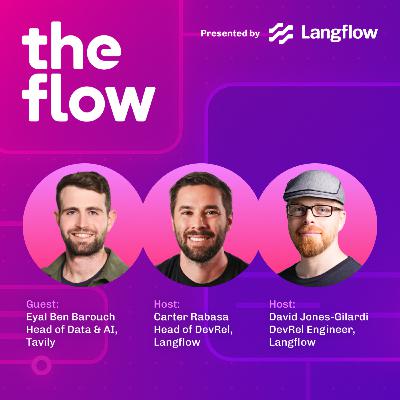
In the inaugural episode of the Flow Podcast, hosts David and Carter explore the world of AI, focusing on practical applications and tools for developers. Joined by Eyal from Tavily, they discuss the mission of Tavily, its features, and how it empowers developers to build AI agents. The conversation delves into the importance of pragmatic discussions around AI, the differences between various AI tools, and the future of AI development. The episode emphasizes community engagement and the innovative use cases emerging from the developer community.
Comments

Download from Google Play

Download from App Store
 United States