


 Claim Ownership
Signal & Noise
Subscribed: 0Played: 27
Subscribe

© Signal and Noise
Description
Join advertising industry veterans Brett House and Rio Longacre as they share regular updates and analysis on the changing world of data, tech, and AI. You’ll hear real talk from thought leaders across industries about the latest trends having the biggest impact on our jobs… and lives. Signal & Noise means no BS - only straight talk and first-hand insights from leading operators, creators, and founders.
26 Episodes
Reverse
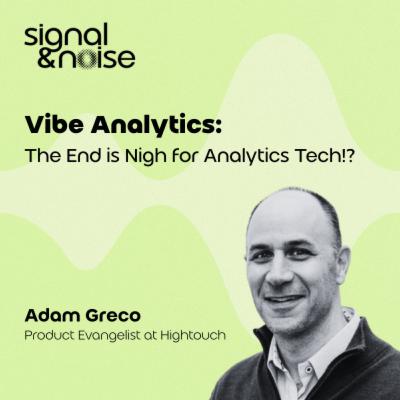
What if dashboards are dying—and analytics is about to feel more human? In this episode of Signal & Noise, hosts Brett House and Rio Longacre sit down with Adam Greco, one of the most influential voices in digital and product analytics, to unpack a provocative idea: Vibe Analytics.Adam—former Omniture and Amplitude leader and current Product Evangelist at Hightouch—argues that the future of analytics won’t be defined by dashboards, SQL queries, or rigid reporting tools. Instead, it will be driven by natural language, AI-powered interfaces, and warehouse-native architectures that let teams ask questions the way humans think.Together, we explore:- What “Vibe Analytics” actually means—and why it’s more than a buzzwordWhether traditional analytics platforms like Adobe, Amplitude, and Tableau are at risk- How AI and conversational UX could democratize analytics (and de-specialize it)- What this shift means for analysts, marketers, CMOs, and data teams- Why warehouse-native stacks built on Snowflake and Databricks are foundational to what comes next- We also dig into real-world implications for measurement, attribution, personalization, and data collaboration—and debate whether this moment represents evolution… or extinction… for legacy analytics tech.If you work in analytics, marketing, product, or data—and you’ve ever felt constrained by dashboards—this is a conversation you don’t want to miss. Enjoy!
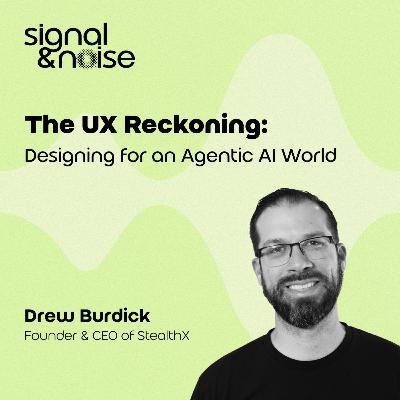
For decades, user experience has been built around a simple assumption: the human is the operator. We click, swipe, navigate, and tell systems what to do. But that assumption is breaking down.In this episode of Signal & Noise, hosts Rio Longacre and Brett House sit down with Drew Burdick to explore what happens when AI systems stop waiting for instructions and start acting on our behalf. As agentic AI moves from experimentation to production, UX is no longer about screens and flows—it’s about designing relationships, trust, and alignment between humans and autonomous systems.Drew brings a practitioner’s perspective on how UX must evolve when agents anticipate intent, take action across systems, and reason about outcomes. We dig into what “Agentic UX” really means, which long-held UX assumptions no longer apply, and why the next generation of interfaces may be invisible, conversational, or entirely new in form.The conversation covers emerging interaction models, transparency and control, trust calibration, failure states, and the ethical responsibilities designers inherit when machines begin making decisions. We also discuss how UX teams, designers, and organizations need to restructure skills, roles, and workflows to stay relevant in an agentic world.This episode is for designers, product leaders, and technologists grappling with a fundamental shift: when AI becomes a collaborator instead of a tool, experience design becomes one of the most strategic disciplines in the company.
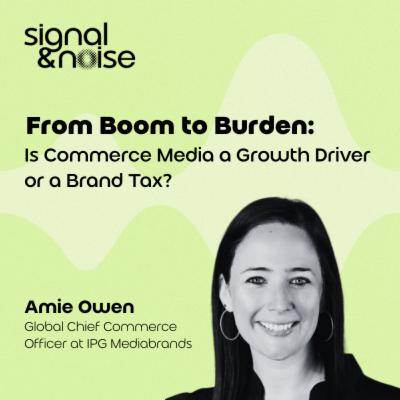
Commerce media is exploding—projected to surpass $100B in US ad spend by 2028—but beneath the hype, a harder question is emerging: is this truly incremental growth, or just a rebranded tax on brand dollars?In this episode of Signal & Noise, hosts Rio Longacre and Brett House sit down with Amie Owen, Global Chief Commerce Officer at IPG Mediabrands, to cut through the noise surrounding retail and commerce media.With Amazon and Walmart controlling roughly 80-85% of U.S. retail media spend—and more than 200 retail media networks now live—brands are facing growing fragmentation, opaque measurement, and rising pressure to “pay to play” on the digital shelf.Together, we unpack:- The difference between retail media and commerce media—and why it matters- Why many brands see commerce media as both a growth engine and a brand tax- How closed-loop attribution and deterministic purchase data are reshaping media strategy- Whether retail media is truly incremental—or simply reallocating trade spend- The role of CTV, clean rooms, and commerce signals in the next wave of growth- How agencies can help brands navigate fragmentation, standardization, and measurement chaos- What AI, agentic systems, and commerce data mean for the future of media planningIn a wide-ranging discussion, Amie brings a pragmatic, operator’s perspective—grounded in real client outcomes—on how brands should think about commerce media in 2025 and beyond: where to lean in, where to push back, and how to avoid confusing scale with success.If you’re a CMO, media leader, or brand navigating retail and commerce media today, this episode will help you separate signal from noise.

In this episode of Signal & Noise, hosts Rio Longacre and Brett House sit down with Erez Levin—former Google leader, ad quality advocate, and cultural reformer—for a wide-ranging conversation about speech, norms, and the dangerous space between censorship and permissiveness.Erez has spent his career challenging broken incentives—from paid media’s obsession with outcomes over quality to workplace norms that quietly discourage responsibility. In this conversation, he turns that same lens toward culture itself, introducing his TABOO framework: a call to restore shared social boundaries around overt bigotry, dehumanization, and the endorsement of violence—without reviving cancel culture or state censorship.The discussion explores how cancel culture unintentionally weakened society’s ability to enforce real moral limits, why antisemitism has become a visible stress test for eroding norms, and how both the “woke left” and “woke right” exploit the same failures from opposite directions. Erez makes the case that social consequences are not censorship, that forgiveness must follow accountability, and that societies collapse not when speech is free—but when nothing is out of bounds.This episode isn’t about partisan politics. It’s about guardrails, courage, and what happens when no one is willing to hold the line.Topics include:- Cancel culture vs. consequence culture- Antisemitism as a warning sign, not an exception- The woke left, the woke right, and tribal immunity- Why taboos protect pluralistic societies- How norms fail—and how they can be restored
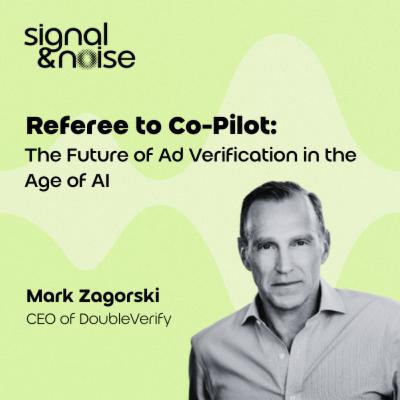
Ad verification is no longer just about blocking bad ads—it’s becoming a core input into how media is planned, optimized, and measured. In this episode of Signal & Noise, hosts Rio Longacre and Brett House sit down with Mark Zagorski, CEO of DoubleVerify, to unpack how verification is evolving in the age of AI.Mark brings a rare perspective, having led multiple AdTech companies across market cycles—from building and selling eXelate to Nielsen, to turning around Telaria, and now steering DoubleVerify as a public company. We discuss how that background shapes his philosophy as DV moves from being the industry’s “referee” to a more active co-pilot for marketers focused on outcomes.The conversation covers a wide range of timely topics: DV’s strong recent performance and what’s driving it, the shift from protection to performance and attention, and how acquisitions like Scibids AI and Rockerbox signal a tighter connection between media quality and business results. We also tackle some of the industry’s toughest debates—over-blocking and its impact on quality news, the role of AI in verification and optimization, CTV fraud and measurement gaps, sustainability and carbon signals, and how brands can invest confidently in credible journalism without sacrificing suitability.This is a candid, operator-level discussion about trust, transparency, and accountability in modern media—and what it really takes to connect quality signals to outcomes in a rapidly changing ecosystem.
From the show floor to the executive suites, CES 2026 wasn’t just another technology expo — it was a global turning point for AI, media, data, and the future of digital experiences. In this special edition of Signal & Noise, co-hosts Rio Longacre and Brett House bring you their top takeaways, on-the-ground interviews, and operator-first analysis straight from Las Vegas. In this finale episode of our CES series, Rio and Brett break down how AI has moved from feature to foundation — reshaping go-to-market strategies, content ecosystems, and the connective tissue between brands, agencies, and consumers. They dive into why AI isn’t just automating yesterday’s playbook but reinventing how decisions get made and value gets created. Along the way, you’ll hear candid field notes and executive voices from across the ecosystem — from founders and technologists to data leaders — illuminating what matters most heading into 2026 and beyond. Whether it’s AI infrastructure, data ontology, media activation, or the renewed energy of in-person connections after years of remote events, this episode captures the signal above the noise.Hit play to learn:- Why AI is now the operating system of modern business- How semantic layers and probabilistic data are reshaping media performance- What executives are prioritizing in a future where trust and context matter more than ever- Real talk on the return of deep human interaction in a digital worldThis is Signal & Noise CES 2026 — an operator’s view on what’s next. Tune in.
Recorded live in Las Vegas during CES 2026, this special Signal & Noise conversation brings together Rio Longacre and Brett House with one of the industry’s most trusted—and outspoken—voices: Lou Paskalis.In this wide-ranging discussion, Lou digs into the future of the industry in light of the rise of a tidal wave of AI-generated content, synthetic versus authentic signals, regulatory changes versus human discernment, and how trust is shifting from institutions to people. Given these dynamics, we dig into the role of creative and how content creators will play an outsized role in the future of the industry—exploring the evolving roles of platforms, advertisers, and agencies in a future that's increasingly fractured and AI-driven.As always, Lou doesn’t pull punches, ending on an surprisingly optimistic note for the industry, especially beleaguered news publishers. "For the industry, this is 1942," he quips. The year 1942, if you'll recall, is when the allies began to turn the war around. This is a candid, no-holds-barred conversation about the future of the industry—and our society.
What actually mattered at AWS re:Invent 2025—once the keynotes ended and the hype faded?In this belated, boots-on-the-ground debrief from Las Vegas, Signal & Noise hosts Brett House and Rio Longacre break down the real signals from re:Invent 2025, drawing on executive conversations, daily floor recaps, and firsthand time with partners and practitioners across the ecosystem. Joined throughout by Credera's Alyssa Furth, the episode focuses less on announcements, and more on what’s actually changing inside modern data, marketing, and AI stacks.Across conversations with partners including Databricks, Tealium, Treasure Data, Claravine, and Jasper, a few themes came through loud and clear:Agentic AI is real now — moving from buzzword to builder toolkit with services like Nova, Bedrock, Transform, and MCPInteroperability matters more than ever — as brands struggle to connect fragmented MarTech and AdTech stacks without massive re-platformingData foundations are non-negotiable — governance, consent, metadata, and taxonomy are still the gating factors for everything AI promisesIRL is back — re:Invent proved that real relationships and in-person collaboration are accelerating progress faster than months of remote meetings ever couldRather than chasing shiny objects, this episode surfaces a more grounded truth: AI doesn’t replace fundamentals—it exposes where they’re broken. And the organizations making progress are the ones investing in connective tissue, not just new tools.If you’re navigating agentic AI, modern data stacks, or the future of marketing and analytics—and want to know what actually changed at re:Invent—this episode separates signal from noise. Enjoy!
Signal & Noise: Live from Advertising Week 2025 dives into the most urgent conversations shaping modern advertising — from AI enablement and data transparency to the evolution of streaming, publishers, and the creator economy. Hosts Rio Longacre and Brett House speak with industry leaders to unpack how technology, innovation, and authenticity are redefining outcomes and quality in media. Tune in for fresh insights from the front lines of ad tech’s most transformative moment. Featured Interviews for AdWeek 2025: Johnathan Barnes, Founder & CEO, Population Science; Alyssa Furth, Senior Manager, Credera; Tim Rowe, Curator, State of Streaming; Scott Messer, Principal & Founder, Messer Media; Krish Raja, Founder, Mindmaker AI; Alexis Hochleutner, Founder, Arc Digital; Shiv Gupta, Founder, U of Digital; Karsten Weide, Principal & Chief Analyst, W Media Research; Ethan Steininger, Founder & CEO, Mixpeek; Erez Levin, Principal, Emet Advisory; Anne Thiel, Senior Director Ad & RevOps, Cox Automotive; and Bob Walczak, Founder & CEO, MadConnect

Hearst Consumer Media Chief Data Officer, Jessica Hogue, joins us to unpack how a 137-year-old publisher is rebuilding its data foundation—linking first-party identity, contextual intelligence, and tighter supply paths—to grow revenue beyond the open auction. We tackle AI’s “zero-click” squeeze, brand-safety overblocking, and the push for outcomes without backsliding into last-click. Enjoy!

This episode of Signal & Noise features industry veteran and well-known personality Lou Paskalis in a wide-ranging conversation on the state of advertising, brand safety, and the future of news media. The discussion explores why marketers have historically avoided advertising in news, the misguided reliance on keyword and domain blocking, and new research showing ads next to quality journalism don’t harm brand perception.Paskalis also dives into how AI, programmatic buying, and publisher data strategies are reshaping the economics of journalism—and why supporting trustworthy reporting is both a civic duty and a smart business move

In Episode 3, Brett and Rio take aim at a problem that quietly siphons billions of dollars and erodes trust every single day: digital ad fraud.The question is neither theoretical nor hyperbole: for many brands, it genuinely feels like the bad guys are winning. Bot farms masquerade as premium publishers, MFA sites inflate metrics, and even “safe” channels like CTV are showing cracks with pervasive illicit activity.No one agrees on exactly how much ad fraud is out there – but everyone agrees there is a lot. Most estimates say it amounts to multiple billions of dollars annually, a staggering total.With the stakes so high, this is an important topic. That’s why we invited Dr. Augustine Fou, one of the industry’s most relentless fraud hunters, to cut through the noise. Over the next hour we confront the uncomfortable truths, expose the latest tactics, and—crucially—outline concrete steps you can take before your next media plan goes live. Let’s roll up our sleeves and see who’s really winning.
In episode 2, we dive deep into Georgian's research on AI adoption across marketing and technology teams, the opportunities and challenges associated current agentic and generative AI solutions, and potential impacts across industries.While we believe AI augments existing software rather than replaces it, there will be impacts on specific job functions and work streams critical to marketing and advertising transformation. Learn what organizational changes are needed for effective AI integration, how to get started, and the challenges you'll likely face as AI adoption increases across your organization.
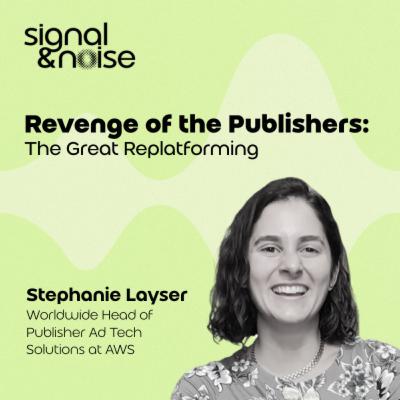
In this episode of Signal & Noise, Stephanie Layser (AKA, Google-slayer) joins hosts Brett and Rio to discuss how publishers can adapt in a digital landscape dominated by tech giants. She explores the role of AI in improving monetization, the shift toward direct ad sales, and the need for innovation to stay competitive.The episode covers brand safety, content control, and changing consumer habits—especially among younger audiences. Stephanie also highlights the importance of streamlining ad sales and using data to drive engagement and revenue.
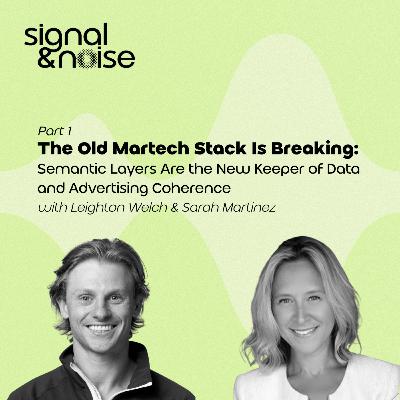
In this episode of Signal & Noise, we sit down with Leighton Welch (CTO) and Sarah Martinez (CCO) from Tracer to unpack a fundamental shift happening across enterprise data, marketing, and advertising:The stack is being rebuilt around data—not applications.And at the center of that rebuild? The semantic layer.This conversation goes beyond the usual “data unification” talking points. Instead, we break down the five structural shifts reshaping enterprise data strategy right now—and why they matter more than ever as AI moves from experimentation to execution.Tracer provides a practical lens into this transformation. Not as another dashboard or point solution, but as a system designed to solve a harder problem: How do you create shared, trusted business logic across fragmented systems so both humans and AI can act on the same truth?1. Why enterprise data strategy is suddenly back on the front burnerAI didn’t create the data problem—but it exposed it. As Leighton puts it, AI is forcing organizations to prioritize initiatives they should have tackled a decade ago, from centralized data ownership to consistent definitions. 2. The five shifts redefining the stackSemantic layers as the new business logic layerWarehouse-native architecture replacing SaaS silosZero-copy activation reducing data duplicationGovernance becoming infrastructure—not complianceAI readiness as the new forcing function3. The semantic layer as the control plane for AIIf AI is the operating layer, then definitions, context, and trust become the system of control. Without a shared “data dictionary,” agents don’t just fail—they amplify inconsistency.4. Why monolithic SaaS is under pressureEnterprises are moving away from copying data into every tool. The warehouse is becoming the system of record, and everything else is being forced to justify its existence.5. The real problem: not data, but meaningMost companies don’t lack data—they lack agreement on what that data actually means. Tracer’s approach focuses on turning raw data into reusable, governed business logic that can power decisions across teams.6. AI readiness isn’t about models—it’s about foundationsClean data, consistent taxonomy, shared definitions, and governance aren’t “nice to have.” They are prerequisites. Without them, AI becomes a very fast way to make very bad decisions.For years, the industry debated identity vs. platforms, CDPs vs. composability, centralization vs. federation.But that’s not the real shift.The real shift is this: Data is no longer an input to the system.It is the system.And the companies that win won’t be the ones with the most data—they’ll be the ones with the most trusted, reusable, and operationalized context.CMOs and marketing leaders trying to make AI realData and analytics teams dealing with fragmented stacksAdTech/MarTech operators navigating warehouse-native architecturesAnyone tired of waiting 6 months for insights that are outdated on arrivalIf you take one thing from this episode, it’s this:AI doesn’t fix bad data. It exposes it.And the semantic layer is how you fix it.
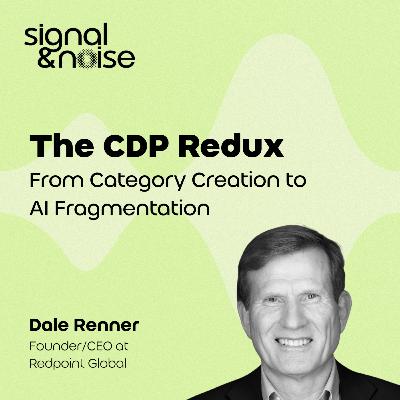
The CDP isn’t dead—but it’s definitely not what it used to be.In this episode, Rio Longacre and Brett House sit down with Dale Renner, CEO of Redpoint Global—and one of the earliest architects of the space—to revisit the rise, fragmentation, and uncertain future of the CDP.From helping shape the first-ever CDP deal to navigating today’s fractured landscape, Dale unpacks what actually happened—and where things went sideways .They get into:Why the category splintered across identity, segmentation, and activationThe real tension between marketing, IT, and data ownership—and why most CDPs failed to bridge itHow “everyone became a CDP,” turning the category into a mile-wide, inch-deep messWhy many companies ended up with multiple CDPs—and still didn’t solve the problemThe hidden truth: without high-quality data and identity, personalization is just noiseAnd most importantly—what comes next.As AI reshapes the stack, Dale makes a clear bet:The future isn’t vendor-built platforms or pre-packaged agents.It’s data readiness, composable architectures, and company-owned agentic layers—built on top of systems that can actually handle identity, scale, and complexity.Because in the end, this was never about CDPs. It was always about the data.
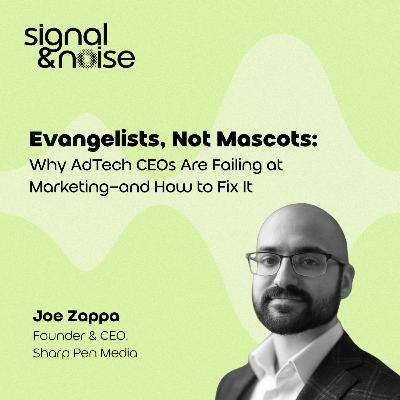
AdTech has built some of the most sophisticated technology in the digital economy — and some of the most forgettable marketing.In this episode of Signal & Noise, we sit down with Joe Zappa, Founder & CEO of Sharp Pen Media, to unpack a hard truth the industry rarely confronts:You can’t outsource belief.For decades, AdTech companies have treated marketing as something downstream — polish it, package it, delegate it. But Joe argues that’s exactly where things go wrong. When CEOs hide behind feature lists, jargon, and generic positioning, marketing becomes interchangeable. And in a crowded ecosystem where everyone claims better targeting, better measurement, and better AI, invisibility becomes the real risk.Joe makes the case that the CEO must be the chief evangelist — not a mascot, not a quote-approver, but an active communicator who can clearly articulate:What’s broken in the industryWhat they believe about the futureWhy their company existsAnd why anyone should careWe go deep on:Why AdTech messaging collapses into samenessThe difference between product speak and narrativeHow to build a simple, usable messaging “Bible”Why controversy is often safer than invisibilityThe collapse of institutional gatekeepers — and what that means for foundersHow AI can amplify clarity — or create “slop cannons”Why humanities training may be more valuable than ever in the AI eraThis conversation isn’t just about marketing tactics. It’s about leadership, conviction, and attention in a world where distribution is democratized and authenticity matters more than ever.If you’re a founder, CEO, CMO, product leader, or operator in AdTech, MarTech, or media — this episode will challenge how you think about voice, visibility, and responsibility. Because in 2026, you don’t win by having the best deck. You win by having the clearest belief.
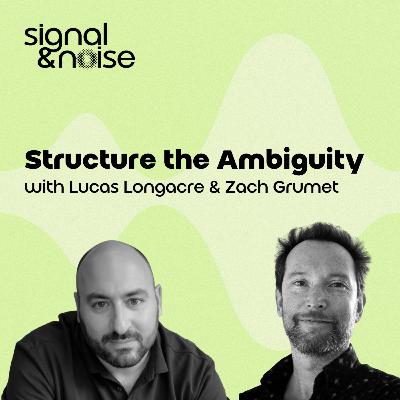
Lucas Longacre officially joins Signal & Noise—and in his debut episode as an Executive Voices contributor, he starts exactly where great product work begins: in the mess.In this conversation, Lucas sits down with Zach Grumet—product leader, operator, and one of the key figures behind Lucas’s own transition into product—to unpack what it actually means to “structure the ambiguity.”This isn’t a conversation about frameworks or buzzwords. It’s about the real work:Why product managers don’t “ship features”—they own the messHow unclear problems, bad communication, and organizational friction kill good productsThe difference between product managers and actual product leadersWhy most teams solution too early—and miss the problem entirelyAnd how AI is quietly rewriting the rules of product development in real timeAlong the way, they get into the uncomfortable truths: failed decisions, broken processes, internal chaos—and why those moments are where real product thinking is forged.From reducing onboarding friction to predicting parking enforcement patterns (yes, really), Zach brings battle-tested lessons from FinTech, HealthTech, and SaaS—while Lucas connects it to a new reality where prototyping happens in hours, not quarters.But beneath it all is a bigger question: If AI accelerates everything… what actually matters more?This episode is about clarity in a world that’s only getting noisier. And it’s just the beginning.
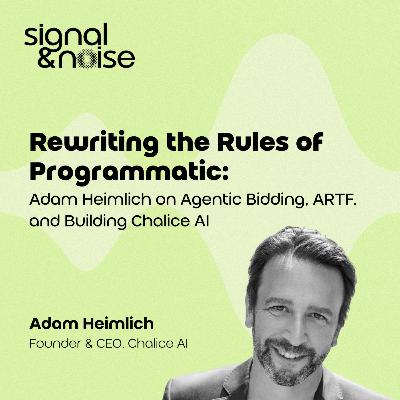
Programmatic advertising has spent the last 15 years optimizing for one thing: speed.But somewhere along the way, we lost something more important—control, transparency, and true decisioning intelligence.In this episode of Signal & Noise, we sit down with Adam Heimlich, Founder & CEO of Chalice AI, to unpack what happens when an operator who spent decades inside the system decides to rebuild it from the ground up.Adam’s perspective is different. He’s not theorizing about programmatic—he ran it. He understands the incentives, the inefficiencies, and the architectural limitations of RTB and DSP-driven buying. And now he’s building a new model.We cover:Why RTB infrastructure is fundamentally constrained by legacy “pipes”- How Chalice is using containerized decisioning to move logic closer to the bidstream- What the Agentic RTB Framework (ARTF) actually is—and why it mattersWhy AI agents may reshape how media decisions are made (and who controls them)The shift from platform-centric buying → modular, agent-driven ecosystems- Why data is commoditized—but modeling and service are notThe real implications of agentic trading and AI-native marketplacesWe also go beyond the tech:Adam’s transition from agency operator to founder- Building Chalice alongside his partner Ali ManningThe reality of startup life vs. the mythologyAnd yes… the philosophy behind AdTech shitpostingThis is a conversation about more than bidding mechanics. It’s about whether the entire architecture of digital advertising is about to change—and who wins if it does.If you care about where programmatic is actually heading—not just what vendors are selling—this one is worth your time.👇 Subscribe for more Signal & Noise🌐 signalandnoise.ai🎙️ Available on Spotify, Apple, and YouTube
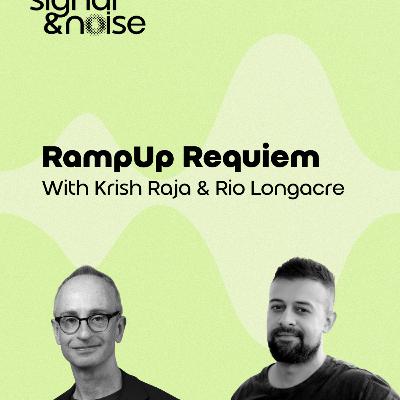
Every year, leaders from across advertising, technology, and media gather in San Francisco for RampUp, the annual conference hosted by LiveRamp. Over the past decade, RampUp has become one of the most influential events in the AdTech ecosystem—bringing together brands, agencies, publishers, data providers, and technology platforms to discuss the future of identity, data collaboration, and responsible advertising.LiveRamp sits at the center of that conversation. The company built its reputation as a pioneer in identity resolution—helping marketers connect fragmented consumer signals across devices, platforms, and channels in a privacy-conscious way. Today, LiveRamp’s technology powers a broad data collaboration ecosystem that allows organizations to safely match, analyze, and activate data across partners, platforms, and clean room environments. As the advertising industry moves deeper into a world defined by privacy regulation, signal loss, and AI-driven decisioning, LiveRamp’s role as a neutral identity and data collaboration layer has only grown more important.In this special Signal & Noise episode, Rio Longacre and Krish Raja kick things off with a recap of RampUp 2026, sharing their perspective on the biggest themes from the event—from the evolution of identity infrastructure to the rise of retail media networks, the increasing importance of data collaboration, and the growing influence of AI across the marketing ecosystem.The episode then features a series of conversations with some of the industry’s leading voices who attended RampUp:Shailley Singh, COO & EVP of Product at IAB Tech Lab, discussing the future of industry standards, interoperability, and the technical infrastructure shaping digital advertising.Leigh M. Freund, CEO of Network Advertising Initiative (NAI), on privacy, regulation, and the evolving role of self-governance in digital advertising.Austin Leonard, VP/GM of Dollar General Media Network, exploring the continued rise of retail media and how new entrants are building powerful commerce-driven advertising platforms.Daniel Block, Head of Corporate Business Development at Fetch Rewards, on the growing role of consumer data platforms and loyalty ecosystems in modern marketing.Scott Messer, Founder & CEO of Messer Media, offering an independent operator’s perspective on the current state—and future direction—of AdTech.Together, these conversations paint a picture of an industry that is rapidly evolving. Identity is being rebuilt. Data collaboration is becoming a core operating model. Retail media continues its explosive growth. And AI is beginning to reshape how campaigns are planned, executed, and optimized.In other words, RampUp 2026 offered a glimpse into the next phase of digital advertising—and in this episode, we separate the signal from the noise.

Comments

Download from Google Play

Download from App Store
 United States