


 Claim Ownership
The Collaborative Business Podcast
Subscribed: 0Played: 0
Subscribe

© Peter Simoons
Description
Conversations with experts in the field of alliances & partnerships and with business owners and entrepreneurs who have built their businesses thanks to collaborations. The show aims to be an inspirational source for the listeners to provide useful insights to the best ways of working together in business-to-business collaboration.
petersimoons.substack.com
petersimoons.substack.com
21 Episodes
Reverse
Strategic alliances are often framed as corporate transactions, deals struck to expand markets, reduce costs, or outmanoeuvre competitors. But for Manoj Kumar the essence of successful partnerships lies not in contracts or spreadsheets, but in human connection and long-term trust. His experiences in India’s tech sector and beyond reveal a fundamental truth: the strongest alliances are built when people, not just companies, align around shared goals.Manoj’s journey began with a challenge familiar to many startups: how to break into enterprise markets with limited resources. At a telephony solutions provider he found the answer in partnerships. By collaborating in India, his company gained access to high-value customers who needed integrated voice and CRM solutions. The results were striking: sales cycles shrank from four months to six weeks, and partners became brand advocates. The secret? Trust and personal relationships. As Manoj puts it, “Partnerships are between human beings. If the relationship is strong, the partnership thrives.”His approach extends beyond India. When working with an international partner, Manoj encountered higher quality standards and technical hurdles. A failed integration test, for instance, exposed a limitation in his company’s platform, it couldn’t process 16-digit international phone numbers. Instead of abandoning the partnership, Manoj treated it as a learning opportunity, upgrading the system and improving the product. Even when alliances don’t succeed, he argues, they can still deliver value by revealing blind spots and driving innovation.For Manoj, the real power of partnerships lies in their long-term potential. He warns against expecting instant results, noting that meaningful collaborations often take seven to eight months to materialise. The key is patience, transparency, and a focus on mutual benefit. “Partnerships are not short-term activities,” he says. “They’re investments, professionally and personally.” His advice for those entering alliances is simple: find synergy, communicate openly, and deliver early wins to build momentum.Ultimately, Manoj’s story is a reminder that the best alliances are human-centric. They thrive when individuals connect, trust each other, and commit to shared success. In a business world that often prioritises efficiency over relationships, his perspective is a refreshing call to build partnerships that last, not just on paper, but in practice. But the most enduring lesson? Behind every successful alliance is a human relationship waiting to flourish. This is a public episode. If you would like to discuss this with other subscribers or get access to bonus episodes, visit petersimoons.substack.com

In this episode of the Collaborative Business Podcast, I bring back a conversation with David Archer about what collaborative leadership really demands in practice. David’s journey into this field is anything but theoretical. Trained as an engineer and shaped by years of work in complex infrastructure, oil exploration joint ventures and large scale rail programmes, he has spent his career examining one central question: why do so many systems fail at their boundaries?Together with Alex Cameron, David co leads Socia, a consultancy dedicated to helping leaders deliver results across organisational, contractual and cultural divides. His definition of collaboration is refreshingly precise. It is not about being agreeable or altruistic. It is about delivering results in situations where the people you depend on do not report to you. The moment success relies on those outside your formal authority, leadership becomes a boundary discipline.A recurring theme in our conversation is the importance of intersections. Using the London Underground map as an analogy, David explains how lines may operate independently for much of their journey, yet become critically interdependent at transfer points. Organisations are no different. Collaboration does not need to happen everywhere. It needs to happen where interests, processes and accountabilities intersect.We explore the foundations of successful collaboration through David’s three legged stool model: governance, operational process and behaviour. Contracts and formal structures matter, but they are insufficient on their own. Efficient interfaces enable information to flow. Above all, behaviours that build trust determine whether collaboration generates innovation or descends into defensiveness. If you are repeatedly reaching for the contract, something deeper has already broken down.David also shares formative moments from his career. As a young engineer, he learned that being technically right counts for little without understanding the lived experience of others. Later, observing public private partnerships on the London Underground, he saw how excessive reliance on legal documentation can undermine relational commitment.For leaders entering a new alliance, his advice is both strategic and psychological. First, clarify why collaboration is essential. What will it deliver that a transaction cannot? Second, conduct a pre mortem. Imagine five years have passed and the partnership has failed. What eroded trust? What misaligned incentives? Surface those risks early.This episode challenges the comfortable notion that collaboration is simply a soft skill. At scale, it is a structural capability and increasingly, it is decisive. This is a public episode. If you would like to discuss this with other subscribers or get access to bonus episodes, visit petersimoons.substack.com
Collaborative business is no longer confined to a handful of industries or a niche professional discipline. In this episode from 2014 in the Collaborative Business Podcast, I speak with Joost Allard, a Dutch-born alliance professional who built his career in the United States and has witnessed the evolution of alliances from the late 1990s to today’s cross sector collaborations.Joost’s journey into alliances began in the technology world. After moving to the US and working in IT roles, he was invited to join a team exploring collaboration between the organisation operating NASDAQ and a European stock exchange. The ambition was bold: to explore the feasibility of a 24 hour trading platform. Although the initiative did not result in a lasting partnership, the experience proved formative. The failure was not technical but strategic. The parties entered with different long term objectives. That insight became Joost’s first deep lesson in alliances: alignment of intent matters more than operational detail.From there, alliances became his professional focus. What stands out in our conversation is his broad and evolving definition of a strategic alliance. For Joost, it is no longer limited to corporate partnerships. Alliances now span public private initiatives, smart cities, clean technology, automotive ecosystems and beyond. At their core, they involve two or more organisations discovering a shared purpose and choosing to collaborate rather than compete.We also explore the growing relevance of structured methodology. While mature organisations tend to formalise alliance processes, newcomers often operate with lower levels of formality. Joost frames this through the lens of capability maturity. Discipline is essential, but so is creativity. Alliances require both a robust process and the flexibility to adapt when opportunity emerges.A particularly forward looking part of our discussion centres on applying lean startup principles to alliance development. Joost argues that alliances should validate assumptions early, test business models collaboratively and reduce financial and reputational risk. Rather than building solutions in isolation, organisations can engage partners and customers in shaping and refining ideas before scaling them.He closes with three practical recommendations: cultivate trust based relationships, combine disciplined process with creative exploration, and start thinking about partnering earlier than feels necessary. In a world where innovation increasingly happens across organisational boundaries, partnering is no longer optional. It is integral to the business model itself.This conversation offers both strategic reflection and practical guidance for anyone navigating the expanding landscape of collaborative business. This is a public episode. If you would like to discuss this with other subscribers or get access to bonus episodes, visit petersimoons.substack.com
In this episode of the Collaborative Business Podcast, I am bringing back a conversation with Dave Luvison, a seasoned alliance professional whose career spans across practice, academia and consulting. Dave brings a rare dual lens to the conversation: practitioner realism combined with academic depth.What unfolds is not a textbook discussion of alliances, but a thoughtful exploration of what truly differentiates them from channels, partner programmes and ecosystems.Dave offers a definition of strategic alliances that goes beyond contracts and collaboration. For him, an alliance is not simply two organisations working together under a formal agreement. It is a relationship in which both parties must fundamentally change something about how they operate. Whether that involves adapting products, reconfiguring processes or altering service delivery, alliances require mutual organisational adjustment. That necessity to “break” something internally in order to create joint value is, in Dave’s view, what makes alliances both powerful and difficult.This distinction becomes particularly sharp when compared to channels. In a channel model, one organisation standardises and scales. It cannot adapt to hundreds or thousands of partners. In a true alliance, however, adaptation runs in both directions. That bilateral change creates opportunity for synergy, but it also introduces operational strain and cultural tension.Our discussion also moves into ecosystems. If alliances are hard to manage, ecosystems are nearly impossible to control. Dave argues that organisations cannot manage ecosystems in the traditional sense. Instead, they must shape conditions, define cultural orientations and create processes that make collaboration easier across a portfolio of relationships. The focus shifts from managing individual relationships to building collaborative capability.Perhaps most compelling is Dave’s emphasis on organisational behaviour and culture. Alliances do not fail because the strategy is flawed. They struggle because organisations are not naturally designed to collaborate across boundaries. Silos, identity dynamics and rigid internal processes often undermine good intentions. Leaders who declare alliances strategic must also recognise the operational and cultural adjustments required to support them.For organisations entering alliances for the first time, Dave offers a simple but demanding starting point: articulate your partner’s objectives as clearly and convincingly as your own. Step into their position. If you cannot describe what success looks like for them, the alliance begins on unstable ground. This is a public episode. If you would like to discuss this with other subscribers or get access to bonus episodes, visit petersimoons.substack.com

Business collaborations come in many shapes and sizes, but few environments test the discipline of alliance management as rigorously as a multinational organisation. In this episode of the Collaborative Business Podcast, recorded in 2014, I sit down with Cees Bijl, who at the time headed Strategic Alliances and Emerging Business Areas at Royal Philips. The conversation offers a rare inside view of how alliances are designed, governed and sustained inside a global corporation where partnerships are not a side activity, but a core driver of innovation and growth.Philips, headquartered in Amsterdam, has long been known for bringing innovation to market through collaboration. From iconic consumer products such as Senseo to less visible but equally strategic business-to-business alliances, partnerships played a central role in delivering on the brand promise of improving people’s lives through meaningful innovation. As Cees explains, this importance has only increased as Philips moved deeper into healthcare and professional lighting, sectors that evolve rapidly and increasingly depend on ecosystems rather than stand-alone products.A key theme in the discussion is the shift from bilateral alliances to complex, multi-party ecosystems. In lighting and healthcare, Philips must collaborate with software providers, platform players, municipalities and a wide range of non-traditional partners to deliver complete solutions. This requires new skills, new governance models and, above all, a clear strategic anchor. Alliances, Cees argues, should never start from opportunism alone. They must be rooted in strategy and subjected to the same level of rigour as acquisitions, with clear expectations around top and bottom line impact.The episode also dives into how Philips organised its alliance capability. A small, central group-level team working closely with sector-specific professionals, supported by a growing network of trained alliance managers across the business. Formal processes, training programmes and regular reviews ensured that alliances remained relevant, or are deliberately and respectfully dismantled when their strategic rationale no longer holds.One particularly instructive example is the long-standing alliance between Philips Lighting and Somfy. What made this case compelling is not only the complementary technologies, artificial and natural light control, but the patience and stamina required to bring the partnership to life. It took years to align visions, prove commercial value and establish a shared go-to-market approach. The lesson is clear. Successful alliances are people-intensive, take time, and only gain real traction when they deliver tangible commercial results.This conversation with Cees Bijl remains highly relevant today. It challenges the idea that alliances are vague or secondary and shows instead how, when managed with discipline and intent, they become a powerful strategic instrument. This is a public episode. If you would like to discuss this with other subscribers or get access to bonus episodes, visit petersimoons.substack.com
In this episode of the Collaborative Business Podcast, I sit down with Dede Haas, a channel sales strategist who has been living and breathing “the channel” since 1985. If you have ever wondered what it really means to scale revenue through partners, or why some partner programmes never get traction despite great intentions, this conversation will give you both clarity and a few uncomfortable truths.We start with a practical definition. For Dede, business collaboration in the channel world is fundamentally about two companies working together to make money by selling something, often hardware, software, or services, with the vendor selling through a partner. That partner might be a value added reseller, a systems integrator, or another solution provider that bundles products and services into outcomes customers will actually buy. But the discussion quickly moves beyond the simplistic “sell-through only” framing. Dede also pulls in scenarios alliance professionals will recognise, such as independent software vendors building modules that extend a vendor product, or OEM arrangements where your capability becomes embedded in someone else’s offer. In other words, channel and alliances overlap more often than many people assume, even if the language differs by industry or company.A theme that comes back repeatedly is that channel is not for everybody. Dede works with many organisations that decide to “do channel” because direct sales has become costly, then expect revenue in a matter of months. She explains why that rarely happens and what has to change first: the company must be honest about whether its offer is suitable for a channel motion at all, and if so, which type of channel fits best. “Why channel?” is not a rhetorical question, it is the starting gate.From there, Dede goes straight into the operational reality: channel enablement is not an optional extra. If you want partners to sell your product, you are signing up to help them build their business selling your stuff. That requires patience, field-level support, and a mindset shift for leaders who quietly assume the partner should do all the work.Dede’s Intel story makes the point vivid. She describes how consistency and hands-on help built trust with partners who had seen too much turnover. Once that trust was real, partners opened doors, shared customer access, and the territory moved from almost no new revenue to around $2 million in two quarters. Trust, in the end, is not a value statement. It is a growth lever.We close with two practical nudges: watch out for channel conflict when you run direct and indirect sales in parallel, and do not build a channel programme with people who have never done it. This is a public episode. If you would like to discuss this with other subscribers or get access to bonus episodes, visit petersimoons.substack.com
Today I’m bringing back an episode of the Collaborative Business Podcast where I explore a perspective on alliances that is often underestimated, and sometimes even resisted, until it is too late. The legal perspective. My guest is Luuk van der Laan, a lawyer specialised in strategic alliances, and someone who has spent much of his career at the intersection of collaboration, technology, and long-term business development.At first glance, the combination of law and collaborative business may feel uncomfortable to some. Law is still too often associated with control, protection, and worst-case scenarios, while alliances are associated with ambition, growth, and opportunity. One of the reasons I wanted to have Luuk on the podcast is precisely because he challenges that false contrast. In our conversation, it becomes clear that good legal thinking does not constrain collaboration. It enables it.Luuk brings a rare mix of experience to the table. After more than two decades as a lawyer, including eight years at Philips working directly on large-scale alliances such as Senseo, he understands alliances not only as contractual structures but as living systems. Systems that span R&D, production, marketing, governance, and executive decision making. His work today ranges from start-ups to global corporates, and from bilateral partnerships to complex European technology platforms involving dozens of parties.One of the central themes in our conversation is clarity of objectives. Luuk explains why making alliance objectives explicit, and even contractual, dramatically increases the chance of success. Not because objectives must be identical, but because hidden agendas almost always erode trust. This insight alone challenges a common assumption that contracts should remain deliberately vague to preserve flexibility. According to Luuk, ambiguity rarely creates flexibility. It creates friction.We also dive into governance, executive sponsorship, exit clauses, and intellectual property. Topics that many alliance teams prefer to postpone, but which often determine whether an alliance scales or stalls. Luuk shares concrete lessons from real alliances, including why negotiating the exit while everyone is still enthusiastic is one of the most pragmatic moves partners can make.What I particularly appreciate in this conversation is that it reframes the role of legal professionals in alliances. Not as deal closers at the end of the process, but as alliance architects who help partners think through how they want to work together before complexity sets in.If you are involved in building, managing, or advising strategic alliances, this episode offers a grounded and refreshingly practical view on how legal design can strengthen collaboration rather than suffocate it. This is a public episode. If you would like to discuss this with other subscribers or get access to bonus episodes, visit petersimoons.substack.com
In this episode of the Collaborative Business Podcast, recorded in 2014, I am in conversation with Francine Allaire, someone who brings both depth and pragmatism to the topic of collaboration. This is one of those conversations where experience speaks louder than theory. Francine has spent most of her career in sales, partner development, and ecosystem building, primarily in the IT and consulting industry, including senior roles at Oracle, as well as CSC, Sun Microsystems, and KPMG.What makes this episode particularly valuable is the way Francine connects collaboration to real business outcomes. She does not present collaboration as a soft concept or a fashionable slogan, but as a core business capability. In a world where organisations are constantly asked to do more with fewer resources, she makes a compelling case that no company, regardless of size, can afford to go it alone. Collaboration, in her view, is no longer optional. It is becoming the dominant business model for sustainable performance and growth.A central part of our discussion revolves around the six critical success factors Francine uses to assess and build partnerships. These factors may sound familiar at first glance, but her strength lies in how she groups and explains them in a way that makes them immediately applicable. She speaks about chemistry and compatibility, about complementarity rather than overlap, about shared vision and expectations, and about trust and communication as non negotiable foundations. What stands out is her insistence that whenever these factors are compromised, partnerships almost inevitably underperform.We also explore the organisational reality behind alliances. Francine is refreshingly honest about the fact that many companies like the results of collaboration more than they like the effort required to make it work. She talks openly about culture, incentives, and compensation, and how these often undermine collaborative behaviour despite good intentions. This leads to a thoughtful reflection on the role of alliance and partner professionals, who must act not only as business developers, but also as diplomats, mediators, and ambassadors inside their own organisations.Towards the end of the conversation, Francine shares a powerful personal example from her career that illustrates how collaboration can dramatically change outcomes under extreme pressure. Her key message is simple but profound. Think relationship first, business second. Companies do not partner with companies. People partner with people.This episode offers practical insight, grounded experience, and a clear reminder that strong relationships remain at the heart of successful alliances. This is a public episode. If you would like to discuss this with other subscribers or get access to bonus episodes, visit petersimoons.substack.com
In this episode of the Collaborative Business Podcast, I have the pleasure of welcoming back Anoop Nathwani. He was my very first guest on the podcast, and he is also the first to return. That alone already says something about the depth and relevance of our conversations. This episode was sparked by a short exchange we had after I wrote a newsletter inspired by a very practical weekend experience. I tried to fix a leaking tap myself and quickly realised that plumbing is a profession for a reason. Doing it yourself without the right expertise does not just fail to solve the problem, it often makes it worse.That reflection led me to draw a parallel with alliances. Alliance management is also a profession, yet it is still treated far too often as something people can simply do on the side. Anoop replied to my newsletter with a simple but powerful observation. At the end of the day, alliances are about relationships. That response was the starting point for this conversation.Together, we explore why the relationship aspect of alliances is so frequently underestimated or even ignored. Many organisations talk enthusiastically about alliances, but what they really mean is sales. They build contracts, define targets, and expect results to appear almost automatically. The relationship is assumed to be in place once the agreement is signed. Anoop and I strongly challenge that assumption. Relationships are not an on off switch. They are a continuum that requires constant attention, care, and professional skill.We discuss why alliance failure rates remain so high, often exceeding sixty percent, and why the root cause is rarely the contract or the value proposition. More often than not, it is the quality of the relationship. Alliance managers, as Anoop puts it, are the glue. When they do their job well, they are almost invisible. When they are missing, everything starts to fall apart.Another theme we unpack is the misconception that alliances are a magic wand for immediate sales. Sales do matter, but they are a lagging indicator. Sustainable results are the outcome of trust, communication, and shared intent, built over time. Expecting instant revenue from an alliance is like treating a marathon as a sprint. It also requires different skills and often different people from those who excel in sales roles.We also dive into how you can measure what many consider intangible. Trust, relationship quality, and collaboration can be assessed through access to senior stakeholders, willingness to innovate together, openness in sharing roadmaps, and the depth of dialogue between partners. Communication plays a central role here, not just in sending messages, but in listening, understanding context, and showing empathy.This episode is reflective, candid, and grounded in real experience. If you work with alliances or partnerships and want to understand why relationships are not a soft topic but the core of collaboration, this conversation is for you. This is a public episode. If you would like to discuss this with other subscribers or get access to bonus episodes, visit petersimoons.substack.com

Alliance marketing is often treated as a supporting act in the world of partnerships, a function that sits somewhere between communications, sales enablement, and brand. Yet in practice it shapes how partnerships are understood internally, how value is expressed externally, and how the entire organisation develops the muscle memory needed for collaboration at scale. In today’s episode, recorded in 2014, I am speaking with someone who has lived that evolution from the inside. Kim Tremblay has been working in alliance and partner marketing since the early 2000s, long before social platforms, community-driven content, and rapid digital amplification changed the rules of engagement.Kim’s modesty belies the depth and breadth of her experience. Across two decades, primarily within Schneider Electric, she has helped shape alliances that span continents, business units, and complex technical ecosystems. Her definition of an alliance is anchored not in branding or messaging but in tangible commitments. Dedicated teams, investment in research and development, joint solution design, and the operational discipline required to activate a partnership across more than 130 countries. In her world, alliances are not slogans, they are enterprise level endeavours with measurable impact.In our conversation, Kim explains how Schneider Electric organises its alliances and how alliance marketing fits into that structure. It is a distributed model, intentionally woven through business units and supported by both strategy and global marketing. Her team’s remit is two sided. Internally, they cultivate what she calls alliance DNA through communication, storytelling, and relentless alignment work. Externally, they shape joint narratives with partners, guide solution launches, and act as the connective tissue between global strategy and country level execution.We also explore how social media changed alliance marketing. For Kim, it reduced friction, accelerated communication, and opened space for authentic, real time interaction between brands. Yet it also introduced a new layer of cultural nuance. Not every partner embraces speed, informality, or decentralised voices, so her team calibrates their approach partner by partner.Throughout the discussion, Kim offers pragmatic guidance drawn from experience. The value of securing true executive sponsorship. The importance of mapping decision makers early. The reality that internal alignment often consumes more time than external coordination. And the usefulness of a simple principle that many alliance professionals rediscover the hard way: under promise and over deliver.This episode is a rich look at the often invisible work that enables alliances to succeed. I hope you enjoy it. This is a public episode. If you would like to discuss this with other subscribers or get access to bonus episodes, visit petersimoons.substack.com
Collaboration has never been more central to the way modern businesses create value. Even companies with strong organic capabilities and deep balance sheets are discovering that their most meaningful breakthroughs happen when they open their boundaries and connect with others. Yet as alliances evolve beyond familiar one to one constructs, a new class of partnership model is taking shape, one that blends strategy, operations, technology and governance in ways that challenge even the most experienced practitioners. These collaborative networks and ecosystems represent the next frontier of partnership thinking, but they also demand a level of orchestration and fluency that few organisations have fully mastered.This 2014 episode explores that frontier. My guest, Troy Gautier, has spent more than two decades navigating the complexities of alliances in environments ranging from global consulting firms to international multi party partnership structures. His career spans both sides of the Atlantic, which gives him a rare vantage point on how collaboration has changed and how organisations can position themselves to benefit from the shift towards networked value creation.What makes ecosystems different from traditional alliances is not simply scale or the number of stakeholders involved. It is the increased interdependence between parties, the often competing incentives that must be reconciled, and the need for governance and decision making frameworks that work at network speed. Troy brings a rich set of experiences, from designing international partner networks to integrating major acquisitions, and he offers a clear view of why businesses that learn to operate in these multifaceted environments will outperform those that stay within the comfort zone of bilateral deals.We also examine the growing tension between strategic intent and operational reality. Technology has made it easier than ever to discover potential partners, but it has not simplified the work of actually collaborating. As Troy points out, the art lies in everything that happens after the handshake. How partners create momentum in the first hundred days, how they align capabilities, how they govern without slowing down, and how they adjust when the assumptions of the deal inevitably evolve.If your organisation is wrestling with the move from alliances to ecosystems, or if you are curious about the skills required to lead in this next phase of collaborative business, this conversation offers a sharp and practical perspective. Enjoy the episode. This is a public episode. If you would like to discuss this with other subscribers or get access to bonus episodes, visit petersimoons.substack.com

When I first published this conversation with Ard-Pieter de Man in 2014, the field of alliances was growing fast, yet many organisations still struggled with the fundamentals. Revisiting the episode now, it is striking how many of the challenges he described remain exactly the ones managers face today. His insights from both academia and practice make this discussion unusually rich and still highly relevant.Ard-Pieter begins by cutting through the usual confusion about what an alliance actually is. For him, the defining features are joint decision-making and open-ended contracts. These two elements capture the essence of why alliances are difficult. You cannot fully script an alliance in advance, because the environment shifts and the relationship evolves. That uncertainty requires partners who can adapt together rather than fall back on rigid terms. Interestingly, he observes that contracts often change within one to three years, either becoming more complex as the partnership grows or, in trusted relationships, actually becoming simpler over time.A significant reason for writing his book was the recurring struggle managers have with choosing the right alliance form. Many companies rely on a single model they know well and stretch it across every partnership. Ard-Pieter counters this habit by mapping the wide variety of alliance structures available, supported by real case studies instead of abstract frameworks. His goal is to provide managers with both inspiration and a practical handbook. He invites them to explore unfamiliar models and use structured checklists when designing alliances, especially once a partner is already selected and the real work begins.The examples he shares bring those ideas to life. The long-standing alliance between KLM, Northwest, Air France, Alitalia and Delta demonstrates how a simple business idea can be the anchor for decades of cooperation, even when the execution behind it is highly complex. At the other end of the spectrum sits the Future Store Initiative, a trust-based collaboration of fifty partners with hardly any legal structure. It shows how simplicity of purpose, the right selection of partners and transparent behaviour can create impressive innovation momentum.One of Ard-Pieter’s most valuable observations concerns change management in alliances. Most alliances change frequently, yet few organisations plan for it. He argues that proactive scenario planning is possible and necessary. Whether it is success, failure or staff turnover, many shifts can be anticipated, and the procedures for responding can be agreed well in advance.This episode remains a strong reminder that alliances succeed not through templates but through thoughtful design, continual adjustment and a deep understanding of how collaboration really works in practice.Books mentioned in this episode:* Ard-Pieter de Man – Alliances: An Executive Guide to Designing Successful Strategic Partnerships* Jeff H. Dyer – Collaborative Advantage This is a public episode. If you would like to discuss this with other subscribers or get access to bonus episodes, visit petersimoons.substack.com

In this 2014 episode, Snehal Desai, then Global Business Director at Dow Water and Process Solutions, reflects on the wide range of partnerships that shaped the business. Dow worked across the full collaboration spectrum, and Snehal explains how each type played a practical role inside the organisation. He also highlights why executive sponsorship is not a formality but a decisive factor in making alliances work, drawing on his own experience as an executive sponsor.Snehal’s most valuable lessons came from being embedded in an alliance himself. Negotiating a deal may look neat and convincing on paper, yet the real dynamics only surface once the project begins. That is when you discover how the partnership actually behaves under pressure and which resources are genuinely available rather than simply promised.A central theme he introduces is what he calls the collaboration gene. For him, this ability to work fluidly across boundaries is indispensable for breakthroughs in sustainable development. He encourages anyone interested in cross-organisational or cross-sector collaboration to strengthen those capabilities, because solving complex global problems demands exactly that mix of mindset and skill.This episode offers a rich set of insights from someone who has lived the reality of alliances and large-scale cooperation. This is a public episode. If you would like to discuss this with other subscribers or get access to bonus episodes, visit petersimoons.substack.com

If you have ever travelled by air, the odds are high that you have encountered an airline alliance in one form or another. Sometimes the experience is invisible, sometimes you notice that a different carrier handles your check-in and sometimes you choose a flight because it earns miles with your preferred loyalty programme. Yet what sits behind these arrangements is far more complex than most passengers realise.In this episode of the Collaborative Business Podcast, recorded in 2013, we step into the world of airline alliances with Bruce Donszelmann, who at the time served as VP Alliances at KLM Royal Dutch Airlines. Bruce explains why no two alliances are alike and why strong executive support is indispensable for any strategic collaboration.Our conversation explores several dimensions unique to the airline sector. One example is landing rights, which are tightly bound to political considerations. Their allocation can draw governments into the formation and operation of alliances, adding layers of complexity seldom seen in other industries.Listen and learn as Bruce shares his experience of how airline alliances really work. You will also discover that the industry hosts far more alliances than those strictly between airlines. Enjoy the episode! This is a public episode. If you would like to discuss this with other subscribers or get access to bonus episodes, visit petersimoons.substack.com

When reading the title of this episode, “combining work and travel”, you would almost think that my guest is in the travel industry. However, nothing is further from the truth: Natalie Sisson is the “Suitcase Entrepreneur”. Natalie combines her work with a traveling life, living out of her suitcase.At the moment of recording this interview in 2013 I had been following Natalie online for about six or seven months and had seen her spending time in the USA, Canada, Vietnam, and Thailand. Seeing a successful entrepreneur building a personal brand, doing business and combining it all with traveling the world, made me wonder how she does it.In my view that can only be done with the help of a team and other types of collaborations. Hence I invited Natalie to be my guest and to share her story.In today’s episode we dive into the juggling art of combining business with a traveling life.When listening to Natalie, you might discover that it is less of a magical juggling task than it at first sight might seem.Listen and learn how Natalie creates freedom in business and adventure in life (and can help you do the same): Enjoy this episode!Books mentioned in this episode:* Natalie’s own book: “The Suitcase Entrepreneur: Create freedom in business and adventure in life”* The book Natalie mentioned: “Who moved my Cheese” by Spencer JohnsonConnect with Natalie Sisson:* https://suitcaseentrepreneur.com/* https://nataliesisson.com/ This is a public episode. If you would like to discuss this with other subscribers or get access to bonus episodes, visit petersimoons.substack.com
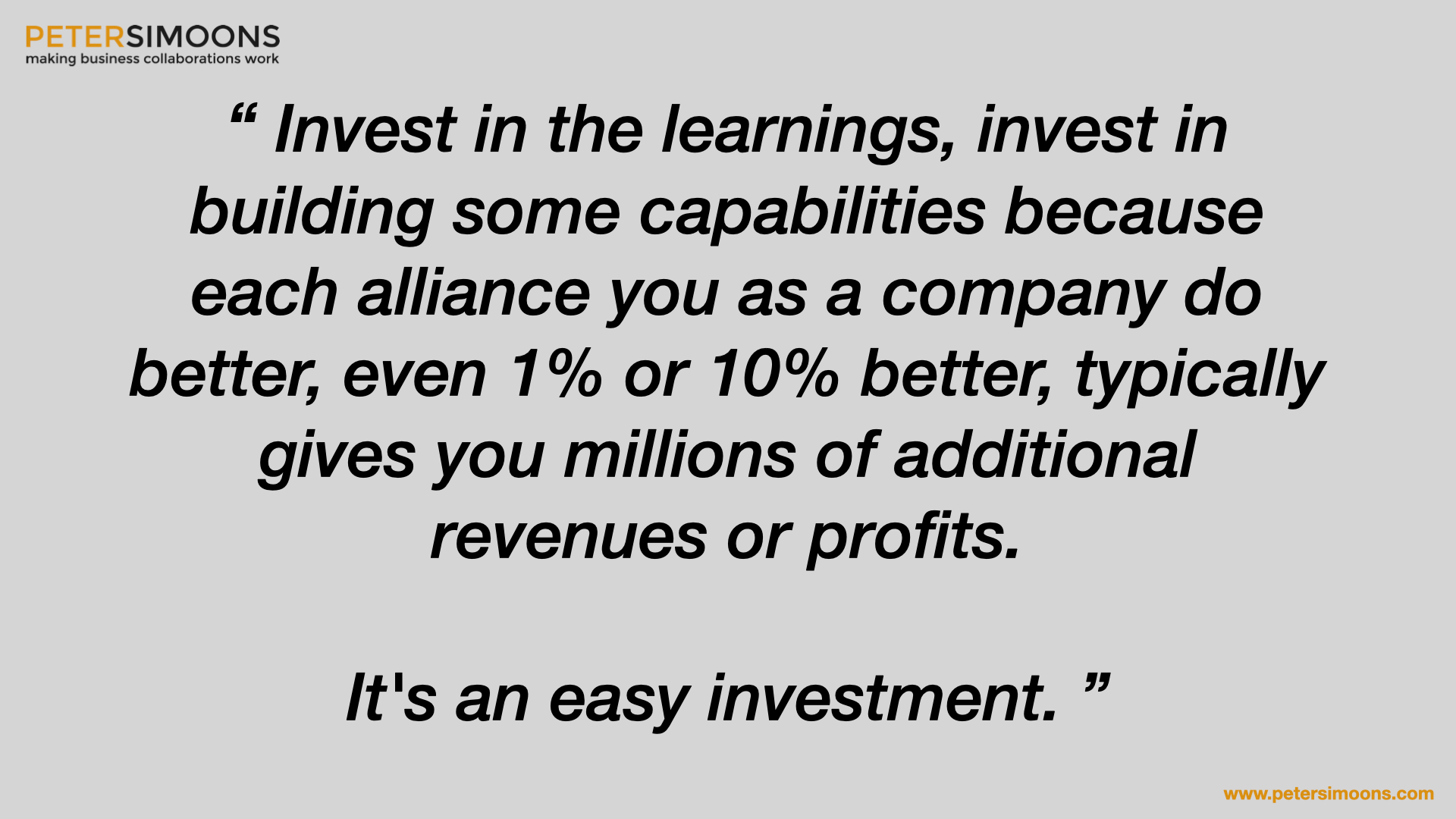
In Episode 4 of the Collaborative Business Podcast, I have a conversation with John Bell. Recorded in December 2013, this episode features John, who was back then responsible for strategy and business development at Philips Research. Today, he serves as the CEO of HighTechXL, the Netherlands’ premier deep-tech venture builder. HighTechXL addresses societal challenges by combining groundbreaking technologies and entrepreneurship. John is also a part-time Professor of Strategic Alliances at Tilburg University.In this episode, John delves into the broad definition of alliances and establishes a connection between selecting an alliance partner and an innovation partner. He shares valuable lessons learned by Philips from their experience with strategic alliances and explains how they ensure these lessons are embedded within their organisation.John also offers insights into why he believes smaller companies might gain more from their experiences than larger ones. He suggests that large companies could benefit from establishing a central office to capture and disseminate these learnings throughout the organisation.John concludes the episode with the thought-provoking quote, “If you have seen one alliance, you have seen one alliance.” He emphasises that every alliance is unique, and even after establishing over 35 alliances, he continues to learn from each new one.And he closes off with a great advice:I would say as a big company, even as a small company, invest in the learnings, invest in building some capabilities because each alliance you as a company do better, even 1% or 10% better, typically gives you millions of additional revenues or profits.So it’s an easy investment.Connect with John Bell:Website: hightechxl.comLinkedIn This is a public episode. If you would like to discuss this with other subscribers or get access to bonus episodes, visit petersimoons.substack.com
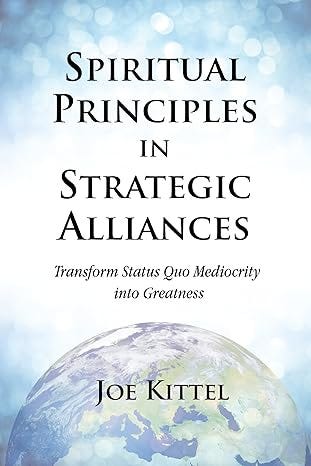
When we talk about “Spiritual principals in strategic alliances”, you might feel there to be a strange contradiction in this sentence. Spiritual principals might sound vague to many people while strategic alliances can be very concrete. In this third episode of the Collaborative Business Podcast (recorded in 2013) I talk to Joe Kittel, the author of a book with the same title. In this episode Joe will explain why he’s convinced that spiritual principles are not vague and why it is very important to have them in all relationships and therefore also in strategic alliances.The highlights of this week’s episode are:* What are spiritual principles in strategic alliances?* How to capture the essence of a strategic alliance in only two slides.* How HP and Canon created an alliance for the desktop publishing market without having an overall contract.* Partner selection or not?* How the HP – Microsoft alliance taught Joe the most about alliances.White papers and books mentioned in this episode:* “Simply Focus on Incremental Value and Value-Impediments: transforming a strategic alliance through simplicity”: a whitepaper on the 2-Slide MethodologyTM, describing how the essence of any alliance can be described in 2 slides: Value-Impediments and Incremental Value.* The Harvard Business Review article “Simple Rules for Making Alliances Work”: including a discussion about the Value-Impediments slide from the 2-Slide MethodologyTM that was used in a co-selling situation in the HP/Microsoft alliance.* “Change Your Alliance: how ordinary strategic alliance managers can accomplish extraordinary results”: a whitepaper about being a transformational strategic alliance manager. The basic ideas were derived by the book “Change the World” by Robert E. Quinn and applied to alliance management based on Joe’s 16 years of experience as a strategic alliance manager at HP.* Change the World: how ordinary people can accomplish extraordinary results by Robert E. Quinn.* The Corporate Mystic: a guidebook for visionaries with their feet on the ground by Gay Hendricks and Kate Ludeman.* Spiritual Principles in Strategic Alliances: transform status quo mediocrity into greatness by Joe Kittel.Connect with Joe KittelWebsite: SpiBR.orgLinkedIn This is a public episode. If you would like to discuss this with other subscribers or get access to bonus episodes, visit petersimoons.substack.com
In this episode of ‘The Collaborative Business Podcast’ I will talk with you about the collaborative business spectrum. This spectrum covers the full area of collaborative businesses. Hence it is the spectrum where my guests in further episodes in ‘The Collaborative Business Podcast’ are active in.In this episode I’m talking about alliances & partnerships with a 2013 view. Although still very relevant, some terms might have changed. As an example you will hear me talk about “alliance networks”, which we most likely will call Ecosystems in 2025.The highlights of this weeks episode are:* What is in the collaborative business spectrum* Why do companies enter into strategic alliances* What are examples of collaborative business relationships This is a public episode. If you would like to discuss this with other subscribers or get access to bonus episodes, visit petersimoons.substack.com

Bringing Back the Collaborative Business PodcastThe Collaborative Business Podcast aims to inspire listeners with practical insights into how to work effectively together in alliances, partnerships, and other forms of business-to-business collaboration.The episodes in this series were recorded between mid‑2013 and late 2015. While some references may no longer be current, the lessons on inter-organisational collaboration remain highly relevant. I’ll make sure the show notes are updated wherever possible to provide current context.The First EpisodeIn this inaugural episode I sit down with Anoop Nathwani, who, as of 2025, is one of my partners at Alliance Accelerator. In our 2013 conversation, we explore collaboration in strategic supplier relationships and strategic alliances, uncovering the similarities between the two.Highlights* What are strategic supplier relationships?* How do they differ from traditional procurement relationships?* How do they compare to strategic alliance?* What should a procurement department do differently to turn relationships into collaborative ones?* What should a supplier do differently to foster collaboration with a customer?* Parallels between supplier collaboration and strategic alliances.Connect with Anoop* LinkedIn: https://www.linkedin.com/in/strategicalliancespartnerships/* Website: https://consortioconsulting.com/Dive in and discover timeless strategies for building stronger, more collaborative business relationships! This is a public episode. If you would like to discuss this with other subscribers or get access to bonus episodes, visit petersimoons.substack.com
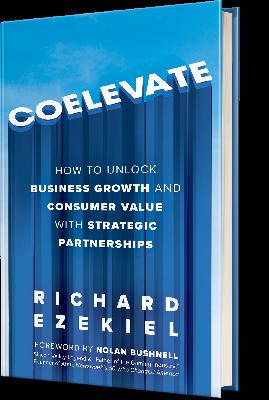
In this conversation I am talking with Richard Ezekiel, who is an executive that has built partnerships with Fortune 500 companies and helped scale market-defining startups in Silicon Valley. Richard has distilled his insights into a forthcoming book, COELEVATE, which will be released on 29 July 2025.We discuss his book, the critical importance of knowing your why in partnerships, and what he would say to executives who remain sceptical about the value of partnerships.Be sure to stay tuned until the end, when Richard reveals an exciting new tool being launched alongside the book.Enjoy our conversation.Learn more about COELEVATE at amazon.com or visit the dedicated site at coelevatebook.com. This is a public episode. If you would like to discuss this with other subscribers or get access to bonus episodes, visit petersimoons.substack.com

Comments

Download from Google Play

Download from App Store
 United States