


Propeller Breeze
Subscribed: 0Played: 9
Subscribe

© Propeller Breeze
Description
Propeller Breeze is the show for you—whether you're a student pilot grinding through ground school, a seasoned simmer flying virtual skies, or just someone who’s always looked up when a plane passes by.
We cover everything student pilots and aviation enthusiasts need—from the four forces of flight and training milestones to simulator tips and real-world flying insights. With a laid-back vibe and a passion for aviation, we’re here to inspire, inform, and keep you climbing.
We cover everything student pilots and aviation enthusiasts need—from the four forces of flight and training milestones to simulator tips and real-world flying insights. With a laid-back vibe and a passion for aviation, we’re here to inspire, inform, and keep you climbing.
35 Episodes
Reverse
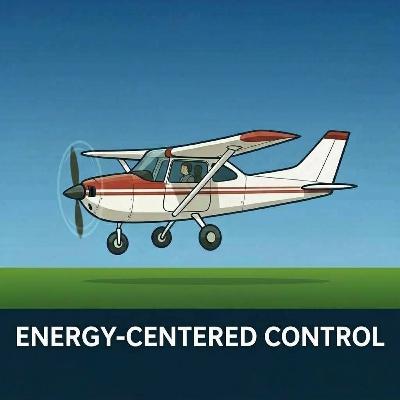
In this episode, we explore the revolutionary energy-centered approach to aircraft flight control, a paradigm shift that moves beyond the traditional "pitch for airspeed, power for altitude" mindset. Instead, pilots learn to manage an aircraft’s total mechanical energy as a unified system, balancing both the total amount of energy and its distribution between altitude and airspeed.We break down the critical roles of primary flight controls: the throttle as the total energy controller, regulating the net flow of energy through thrust and drag, and the elevator as the energy distribution controller, allocating energy between vertical flight path and airspeed. Using the intuitive "reservoir analogy," we illustrate how these controls work together to achieve precise flight performance.By the end of this episode, you’ll understand why effective flight isn’t about controlling altitude or airspeed independently—but mastering the integrated management of the aircraft’s energy state.

In this episode, we explore the fundamental principles of flight energy management and the constant balancing act that keeps an aircraft safely and efficiently in the air. At the heart of this concept is the relationship between thrust and aerodynamic drag, and how their difference determines the net flow of energy into or out of the airplane.We break down the idea of Specific Excess Power (Pₛ), the key metric that describes how quickly an aircraft can gain or lose total energy, and how that energy is stored as altitude and airspeed. Through the energy balance equation, we examine how every change in thrust, drag, or velocity must ultimately be reflected in a change in the aircraft’s energy state.We also discuss the pilot’s role in managing this system through coordinated control inputs. The throttle regulates the total energy entering the aircraft, while the elevator determines how that energy is distributed between climbing, descending, accelerating, or slowing down. Understanding this coordination is essential to avoiding energy crises and maintaining precise control of the airplane.Finally, we look at how energy management operates across different timeframes, from immediate flight control during maneuvers to long term performance considerations such as range and endurance.Whether you are a pilot, aviation enthusiast, or someone curious about the physics behind flight, this episode offers a clear framework for understanding how airplanes manage energy to stay airborne and achieve their performance goals. ✈️
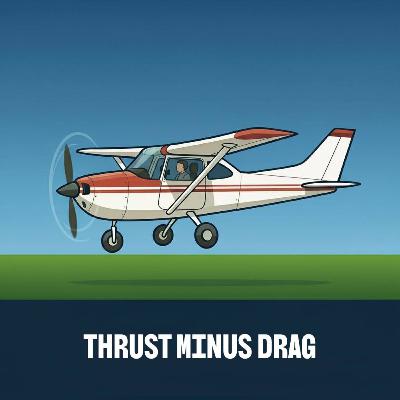
In this episode, we break down the mechanics of aerial energy management through the fundamental equation that governs every phase of flight: Thrust minus Drag. By understanding how the relationship between engine thrust and aerodynamic drag determines total mechanical energy, pilots gain precise control over altitude and airspeed.We explore how total energy is stored in two forms, potential energy in altitude and kinetic energy in airspeed, and how the net difference between thrust and drag dictates whether that energy increases, decreases, or remains constant. You will learn the three core energy states, surplus, deficit, and equilibrium, and how each state directly shapes climb performance, acceleration, descent profiles, and cruise stability.We also examine the powerful concept of energy exchange, the inverse relationship between altitude and airspeed. When one increases, the other decreases, provided total energy remains constant. Through practical examples, we explain how constant energy maneuvers work and why precise thrust adjustments are required as drag changes with airspeed.By the end of this episode, you will have a clear systems-level understanding of how to interpret T minus D in real time, manage energy intentionally, and maintain control authority across every phase of flight.
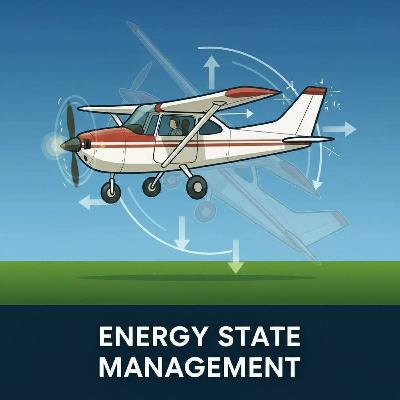
In this episode, we explore the core principles of aviation energy state management through an airplane-centric frame of reference. Rather than focusing on groundspeed or height above terrain, we break down why professional pilots manage flight using indicated altitude and indicated airspeed, the true measures of potential and kinetic energy stored in the aircraft.We examine how total energy is distributed between altitude and airspeed, and why understanding this balance is critical for safe and precise aircraft control. You will learn the difference between what pilots can directly control, such as climb performance and acceleration through control inputs, and what remains outside their influence, including terrain elevation and wind.This episode also highlights the strategic side of energy management. When facing rising terrain or shifting winds, pilots cannot change the environment, but they can manipulate the airplane’s energy state and choose safer headings to mitigate risk. By mastering the distinction between internal indications and external variables, pilots develop the discipline to “fly the airplane” rather than react to ground-based illusions.Whether you are a student pilot or an experienced aviator, this discussion reframes energy management as a deliberate, instrument-driven practice that underpins every safe maneuver in flight.
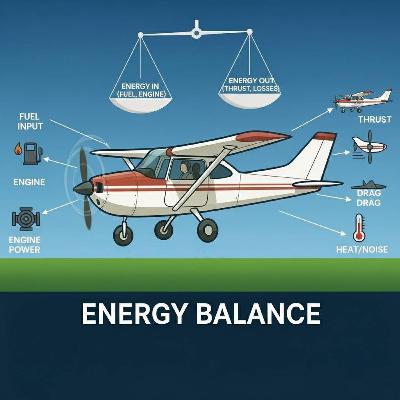
In this episode, we explore the Aerodynamic Energy Balance and reframe the airplane as a dynamic energy system. Instead of viewing altitude and airspeed as separate performance numbers, we break down how they represent stored mechanical energy, potential energy in altitude, and kinetic energy in velocity.You will learn how the total mechanical energy equation, mgh plus one half mV squared, defines the aircraft’s energy state and how mass, gravity, height, and velocity interact to shape flight performance. We explain why altitude is stored potential energy, why airspeed is stored kinetic energy, and how pilots continuously trade one for the other.We also examine what it means for an airplane to be an open energy system. Energy flows in from fuel, and energy is constantly lost to drag and the surrounding air. Because of this exchange, total mechanical energy is never static. It must be actively managed.This episode brings a systems perspective to flight, helping you understand climbs, descents, acceleration, and deceleration as deliberate energy management decisions. By the end, you will see flight not just as control inputs and instrument readings, but as the continuous balancing of an energy reservoir that determines performance, stability, and safety.
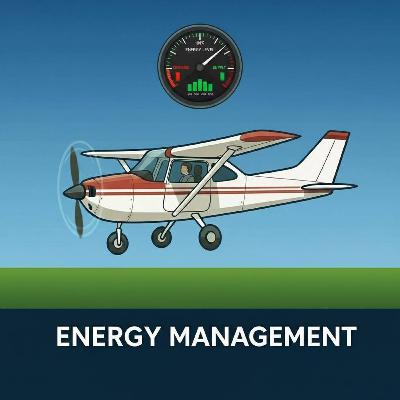
In this episode we break down one of the most critical—and often misunderstood—skills in aviation: energy management. By viewing the airplane as a living energy system, we explore how altitude and airspeed work together to define every phase of flight. You’ll learn why effective energy management is essential for maintaining precise flight profiles, executing smooth transitions, and preventing dangerous deviations. We also connect poor energy control to the leading causes of fatal accidents, including Loss of Control In-Flight (LOC-I), Controlled Flight Into Terrain (CFIT), and approach-and-landing mishaps. Whether you’re a student pilot building fundamentals or a seasoned aviator sharpening your edge, this episode focuses on the mental models, control coordination, and risk awareness needed to manage energy—and keep every flight safe.
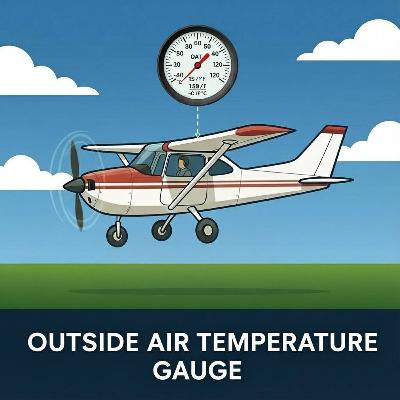
In this episode, we break down the Outside Air Temperature (OAT) gauge, one of the simplest yet most operationally useful instruments in the cockpit. You will learn how this mechanically driven instrument uses a bimetallic helical thermometer to sense ambient air temperature and translate thermal expansion into an accurate cockpit indication. We explore how OAT readings help pilots understand the atmospheric temperature lapse rate with altitude, why correct sensor exposure matters for accuracy, and how temperature data supports better situational awareness in everyday and high-altitude operations. This episode highlights how a straightforward design delivers essential environmental insight for safe and informed flight.
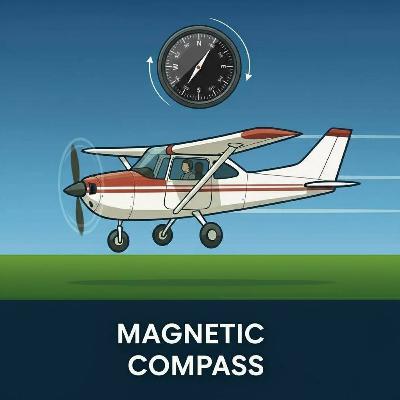
In this episode we break down the aircraft magnetic compass from first principles to real world cockpit use, explaining how it aligns with the Earth’s magnetic field and why this simple instrument remains required for both VFR and IFR flight. We explore compass construction and readout, then dive into the core sources of error, variation, deviation, and magnetic dip, including how each one affects navigation and how pilots correct for them. You will learn the proper course correction sequence from true to magnetic to compass, understand northerly and southerly turning errors, acceleration and deceleration errors using the ANDS mnemonic, and how to manage oscillation when setting other instruments. We close with a look at the vertical card magnetic compass and how its design changes display, damping, and turning characteristics, giving you a complete and practical understanding of one of aviation’s most misunderstood instruments.
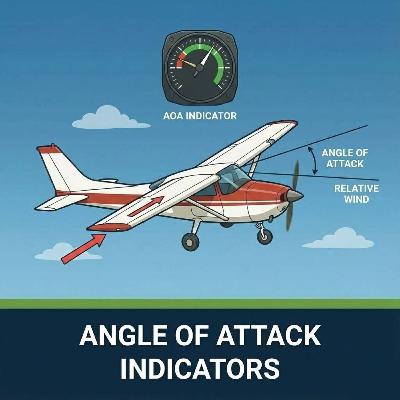
In this episode, we explore Angle of Attack indicators and why they represent one of the most powerful tools for understanding an aircraft’s true aerodynamic condition. We explain how AOA makes an otherwise invisible parameter visible, giving pilots direct awareness of stall margin and airfoil performance in real time. You will learn why airspeed alone is not a reliable indicator for stall avoidance, and why every aircraft, in a given configuration, always stalls at the same critical angle of attack regardless of weight, bank angle, temperature, density altitude, or center of gravity. We also discuss how AOA indicators enhance situational awareness, improve energy management, and help pilots better visualize the balance between lift, drag, thrust, altitude, and airspeed. This episode connects aerodynamic theory to practical cockpit decision making, showing how AOA fundamentally changes the way pilots manage safety and performance.

In this episode, we break down how modern aircraft determine attitude and heading, and why today’s systems are far more reliable than the spinning gyros of the past. We explore the evolution from free gyros to solid-state Attitude and Heading Reference Systems (AHRS), explaining how laser-based sensors and magnetometers work together to provide accurate pitch, bank, and heading information without the risk of tumbling. You’ll learn how the flux gate compass senses the Earth’s magnetic field, how remote indicating compass systems reduce magnetic interference, and why slaved gyros automatically stay aligned while free gyros demand constant pilot attention. We also cover common limitations and errors, from precession and vacuum failures to startup and taxi checks, and tie it all together with real cockpit instruments like the HSI and RMI. This episode is a practical, pilot-focused look at the technology quietly keeping you oriented in every phase of flight.
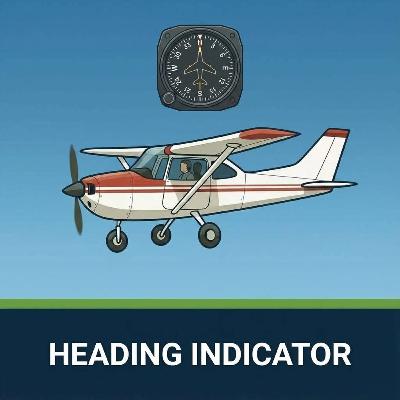
In this episode we break down the aircraft heading indicator and explain why it is such an important companion to the magnetic compass. We explore how this gyro driven instrument uses rigidity in space to provide a stable and easy to read heading, even in turbulence where the compass struggles. You will learn how the rotor and compass card work together, why the airplane moves around the gyro rather than the other way around, and what causes the heading indicator to drift over time. We also cover the two main sources of error, friction induced precession and the apparent drift caused by the Earth’s rotation, and why regular realignment is necessary. Finally, we look at modern solutions like the Horizontal Situation Indicator and how magnetometer slaving largely eliminates these limitations, giving pilots more reliable heading information with minimal adjustment.

In this episode, we take a deep dive into the aircraft Attitude Indicator, the most realistic and trusted instrument on the flight deck. We explain how a horizontally mounted gyroscope uses rigidity in space to provide an instant visual picture of pitch and bank relative to the true horizon. You will learn how to correctly interpret the miniature aircraft and horizon bar, why the banking scale should be used only to control the amount of bank and not its direction, and how improper interpretation can lead to confusion. We also cover practical pilot adjustments, standard calibration in straight and level flight, and the real world limitations of traditional attitude indicators, including pitch and bank limits and what happens when an instrument tumbles. This episode builds a clear mental model of how the Attitude Indicator works and how to rely on it confidently during both visual and instrument flight.

In this episode, we break down how aircraft turn and yaw indicators help pilots maintain control and coordination, especially when flying on instruments. We compare the turn and slip indicator with the turn coordinator, explaining how each gyroscopic system works, why the canted gyro in the turn coordinator matters, and how standard rate turns are identified. We then focus on the inclinometer, the simple ball that reveals slips and skids, and explain what those conditions really mean aerodynamically. You will learn the classic rule “step on the ball,” how to correct uncoordinated flight with proper rudder and bank inputs, and why these instruments are critical backups if the attitude indicator fails. Finally, we touch on practical tools like the yaw string and walk through essential preflight and taxi checks to ensure these indicators are giving reliable information when it matters most.
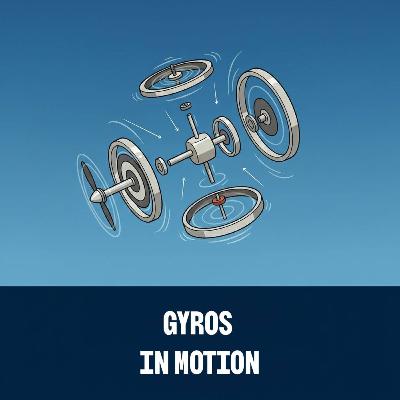
In this episode, we unpack the fascinating world of gyroscopic flight instruments—the quiet, spinning heroes that keep pilots oriented and aircraft under control. You’ll learn how two fundamental principles, rigidity in space and precession, allow the attitude indicator, heading indicator, and turn coordinator to deliver steady, reliable information even as the aircraft maneuvers through three dimensions. We’ll explore how mounting systems shape an instrument’s behavior, why gyros drift, and how pilots correct for these subtle quirks in flight.Then we dive into the power systems behind these instruments, examining the vacuum, pressure, and electrical sources that keep the gyros spinning. From the engine-driven vacuum pump to the 4.5–5.5 "Hg operating range, you’ll hear how redundancy is built into aircraft systems—and what happens when suction drops below safe limits. Whether you're a pilot, student, or aviation enthusiast, this episode will give you a clear and practical understanding of the physics and power systems behind the gyroscopic instruments you rely on every flight.

In this episode we dive into the world of Electronic Flight Displays (EFDs) — the “glass cockpit” revolution that replaced the old six-pack of steam gauges with sleek, software-driven Primary Flight Displays and Multi-Function Displays. You’ll hear how EFDs consolidate flight-critical data, boost reliability and safety, cut installation and maintenance costs, and let pilots see the future of flight with features like six-second trend vectors.We’ll unpack the anatomy of the PFD (airspeed and altitude tapes, attitude horizon, VSI, heading and turn indicators), explain the invisible workhorses behind the screens — the Air Data Computer (ADC) and Attitude, Heading & Reference System (AHRS) — and show how digital architecture makes upgrades, customization, and aircraft integration far easier than ever before. Along the way we’ll cover practical pilot benefits (clearer instrument scans, predictive trend cues), failure-mode design choices (where the tach lives and how displays failover), and what this technology means for training and maintenance.Whether you’re a pilot curious about modern instrumentation, an A&P fascinated by modular avionics, or just love how software keeps planes flying smarter, this episode translates technical detail into real-world insight — with clear examples, a few cockpit stories, and takeaways you can use next time you step into a glass cockpit.
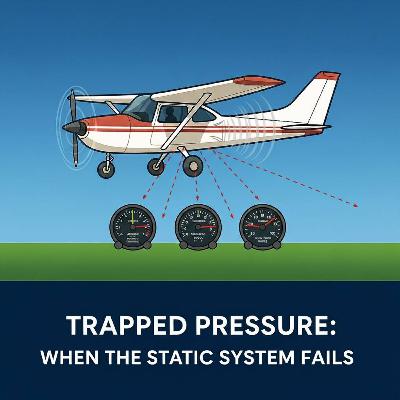
In this episode, we dig into one of the most deceptive failures in light aircraft instrumentation: a blocked static system. When the static ports become obstructed—but the pitot tube remains clear—the aircraft’s most trusted instruments start lying with confidence. We break down why the Airspeed Indicator still moves yet becomes dangerously unreliable, why the altimeter freezes in place, and why the VSI goes silent with a flat zero reading.You’ll learn how a pilot’s climb or descent can create the illusion of changing airspeed, even when the aircraft hasn’t sped up or slowed down at all. We’ll also look at how flying above or below the blockage altitude twists the ASI’s readings in predictable ways, and why understanding these patterns is essential for diagnosing the failure in real time.Finally, we explore the role of the alternate static source—how it can save the day, why it introduces its own instrument errors, and what corrections pilots must know before relying on it.If you’ve ever wondered how quickly a static blockage can turn reliable instruments into misleading storytellers, this episode brings the clarity you need.
In this episode, we dive into one of the most deceptive and potentially dangerous failure modes in light aircraft: pitot-static system blockages. Moisture, ice, dirt, or even a well-placed insect can quietly compromise the very instruments you rely on for airspeed, altitude, and vertical trend awareness.We’ll break down exactly how these blockages occur, what they do to each instrument, and—most importantly—how to recognize the difference between a simple pitot blockage and a full pitot-and-drain-hole obstruction. You’ll learn why a blocked pitot can make your airspeed collapse to zero, and how a fully trapped pitot system can trick your ASI into acting like an altimeter—with indications that increase during a climb and decrease during a descent, regardless of your real airspeed.We’ll also explore static port failures, why they affect all three instruments simultaneously, and how a pilot can spot the telltale signs in flight. Finally, we’ll cover prevention and mitigation: smart preflight habits, proper use of pitot heat, and the procedures your POH/AFM expects you to follow.If you’ve ever wondered what really happens when your aircraft’s pressure ports stop telling the truth, this episode will give you the clarity needed to recognize the symptoms and respond with confidence.
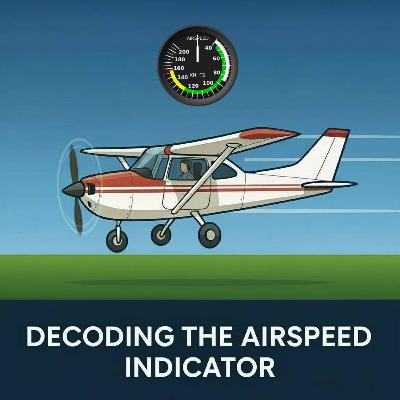
In this episode, we dive into one of the most information-rich instruments on the flight deck: the Airspeed Indicator. Building on our exploration of the pitot-static system, we unpack how the ASI translates pressure into performance—and why understanding its nuances is essential for safe and efficient flying.We’ll break down the mechanism behind the instrument, explore the four key types of airspeed every pilot must master, and demystify the color-coded arcs that define the aircraft’s operational envelope. From stall speeds and flap limits to VNE and the caution range, you'll learn how to interpret the ASI at a glance and understand what’s not shown on the dial—like maneuvering speed, climb speeds, and critical multi-engine limitations.Finally, we’ll walk through the simple but essential pre-flight checks that verify the ASI’s health before takeoff.Whether you’re a student pilot building your foundation or an experienced aviator refreshing the essentials, this episode will give you a clearer, more confident grasp of one of aviation’s most fundamental instruments.
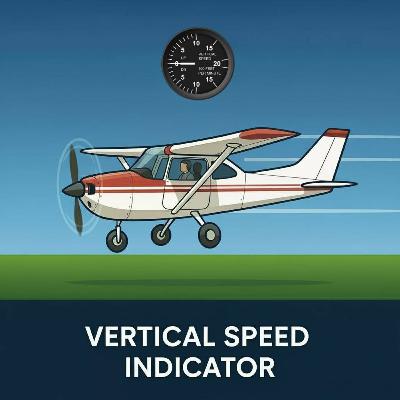
In this episode of Aviation Essentials, we explore one of the most informative yet often misunderstood instruments in the cockpit—the Vertical Speed Indicator (VSI), also known as the Vertical Velocity Indicator (VVI). This episode unpacks how this differential pressure instrument helps pilots interpret an aircraft’s rate of climb or descent in feet per minute, and why understanding its lag and limitations is essential to accurate altitude control.We’ll break down:The Core Function: How the VSI translates changes in static pressure into readable vertical speed.Inside the Instrument: The role of the diaphragm, airtight case, and calibrated leak that make the VSI work.Trend vs. Rate Information: How the VSI first shows the direction of change, then stabilizes to show the rate of change.Instrument Lag: Why every standard VSI has a 6–9 second delay—and what that means in turbulence or during aggressive maneuvers.The IVSI Advantage: How the Instantaneous Vertical Speed Indicator uses accelerometers to provide immediate, accurate readings.Preflight Checks: The vital steps to ensure the VSI is functioning correctly before and during flight.Whether you’re a student pilot learning your first scan or an experienced aviator refining your instrument awareness, this episode will give you a deeper appreciation for the VSI’s role in maintaining smooth, controlled vertical flight.

In this episode of Aerodynamic_Poison, we unravel one of aviation’s most deceptively simple—but critically important—instruments: the aircraft altimeter. Pilots depend on it for terrain clearance, traffic separation, and performance calculations—but what happens when it’s just a little off?We’ll dive into how altimeter settings are derived, why a small error in barometric pressure can put you hundreds of feet off your intended altitude, and how to avoid the dangerous illusion of being “higher than you really are.” You’ll also learn how the five types of altitude—Indicated, True, Absolute, Pressure, and Density—interact to define a pilot’s vertical awareness, and why Density Altitude is the silent performance killer on hot days.From pressure systems to preflight checks, this episode lays out the practical science behind barometric accuracy—and how pilots translate shifting air into precise altitude readings.

Comments

Download from Google Play

Download from App Store
 United States