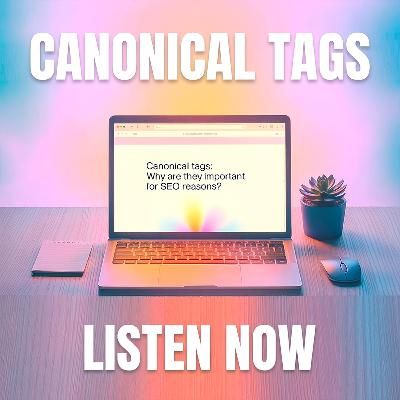
In this comprehensive episode, host Favour Obasi-ike, joined by guests Celese Williams, Dr. Fashion, and Ryan Dennis, cuts through the noise to deliver the five most essential SEO fixes small businesses must implement in 2026. Moving beyond abstract theory, the discussion provides a masterclass in actionable strategy, covering the non-negotiable foundations of site architecture, the currency of strategic link building, the revenue-killing impact of slow site speed, the power of dominating local search, and the technical integrations needed to get indexed and noticed by search engines.Next Steps for Booking A Discovery Call | Digital Marketing + SEO Services:>> Need SEO Services? Book a Complimentary SEO Discovery Call with Favour Obasi-Ike here>> Visit our Work and PLAY Entertainment website to learn about digital marketing services.>> Join our exclusive SEO Marketing community>> Read SEO Articles>> Subscribe to the We Don't PLAY Podcast>> Purchase Flaev Beatz Beats OnlineKey TakeawaysMaster Your Site Architecture: A well-structured website with proper canonical tags, optimized images, and clear headings is the non-negotiable foundation for both user experience and search engine visibility.Treat Links as Currency: Strategically build internal and external links, ensuring every piece of content has a corresponding URL on your website to build authority and drive traffic from multiple sources.Prioritize Blazing-Fast Speed: A slow website kills conversions and rankings. Actively manage site speed through optimized hosting, a Content Delivery Network (CDN), and compressed media files.Dominate Your Geographic Area: For businesses serving specific areas, embedding location data (maps, zip codes, city names) directly into your site is crucial for capturing "near me"searches.Integrate to Accelerate: Directly connect your website to Google Search Console and Bing Webmaster Tools and manually submit new content to get indexed significantly faster than waiting for organic crawls.Detailed Show Notes & Timestamps[00:00:00] Introduction: Setting the Stage for 2026Host Favour Obasi-ike kicks off the new year by tackling the evergreen challenge of Search Engine Optimization. He frames "fixing" SEO not as a one-time task but as a continuous process of optimization that is fundamental to brand awareness, website traffic, and revenue growth. He provides an initial call to action, directing listeners to the link in the show description to book a consultation or subscribe to his email list for ongoing insights. With the stage set, the episode transitions into the first and most foundational technical fix for any small business website.[00:04:15] SEO Fix #1: Site Architecture - The Foundation of Your Digital PresenceSite architecture is the fundamental blueprint of a website, dictating how both users and search engine algorithms navigate, understand, and value its content. A strong architecture is the bedrockof any successful digital presence, ensuring content is organized, accessible, and easily discoverable.Key components of a robust site architecture include:Canonical Tags: A canonical tag tells search engines which version of a page is the "master copy," preventing duplicate content issues. As Favour Obasi-ike explains with the "Adam Apple"analogy, just as a person has one true name, your content must have one single, consistent identity recognized by search engines to avoid confusion.Image Optimization: Large, uncompressed image files are a primary cause of slow load times. Uploading images that are several megabytes in size will significantly degrade site performance and hurt search rankings.Link Health: Regularly checking for and fixing broken or duplicate links is essential for a clean and functional site structure.Website Updates: Using the "brushing your teeth" analogy, Favour Obasi-ike explains that keeping content and copyright dates current signals relevance. Search engines prioritize fresh, well-maintained content, and an outdated copyright date is a direct signal that a site may be abandoned or irrelevant.*Heading Tags (H1-H6):* Properly structured headings organize content for human readers and provide a clear hierarchy that helps search engines understand the main topics and subtopics of a page.URLs & Schema: Keyword-rich URLs (e.g., .../cookie-recipes) and schema markup (microdata for recipes, events, etc.) give search engines explicit context about a page's purpose, improving its chances of ranking for relevant queries.[00:14:30] Guest Spotlight: Celese Williams on Design, UX, and SEOGuest speaker Celese Williams distills her formula for a successful small business website into three core principles: simple design, easy user experience (UX), and findable SEO. She powerfully underscores this advice with her own success story, revealing that her "basic" but architecturally sound website generated $247,000 in revenue last year, proving that a solid foundation is more valuable than flashy design.With a solid architectural blueprint defined, the next strategic imperative is to establish realistic implementation timelines, which vary dramatically based on a business's starting point.[00:19:45] Strategy Session: SEO Timelines for New vs. Existing BusinessesDetermining a realistic timeline for SEO results is a common strategic challenge. The approach differs significantly for a business building its digital footprint from scratch versus one that is optimizing an existing but underperforming presence.Prospect ProfileProspect A: No online presence, thriving on referrals.6-12 Months: Building a digital foundation from the ground up requires significant time to establish authority, build content, and gain visibility. Favour Obasi-ike notes this timeline can be shortened to 3 months if a podcast is part of the strategy.Prospect B: Existing local presence, but not definitive.3-6 Months: Leveraging an existing foundation allows for a faster path to scalable results. The focus shifts from creation to optimization, building upon the authority the site already has.Celese Williams adds a critical counterpoint, emphasizing that industry competition is the ultimate "X factor" that can heavily influence any projected timeline. A business in a low-competition niche may see results faster, while one in a saturated market will face a longer road. From this high-level strategy, the focus shifts to the practical tactics of audience building across different platforms.[00:26:30] Community Q&A: Building a Social Media AudienceThis Q&A session addresses a common pain point for small businesses: how to efficiently build and maintain an audience across multiple social platforms without getting overwhelmed. The speakers offer a unified message centered on smart, focused distribution.Celese Williams' "Master a Few" Strategy:Trying to be on every platform is an unsustainable and difficult strategy.Businesses should focus on mastering the top 2-3 platforms where their target audience is most active and engaged.Dr. Fashion's "Smart Distribution" Method:She advocates for the "create once, distribute smartly" approach.This involves batch recording long-form content and using tools like repurpose.io to efficiently atomize and distribute it across various platforms, tailoring the hook for each audience.Favour Obasi-ike's "Ecosystem" Approach:He analyzes the importance of building a presence within a platform ecosystem like Meta (Facebook, Instagram, Threads, WhatsApp).He highlights the power of using long-form content, such as a podcast, as a source for dozens of micro-content pieces (clips, quotes, articles), which dramatically improves searchability and reach.[00:39:00] Case Study: The Power of Organic Keyword GrowthFavour Obasi-ike presents his own podcast as a powerful case study on the long-term value of consistent, high-quality content. He illustrates its organic keyword growth over just three months:Top 3 Keywords: Grew from 85 on October 13th to 198 in January.Top 10 Keywords: Grew from 91 on October 13th to 245 in January.Top 50 Keywords: Grew from 469 on October 13th to 1,196 in January.Top 100 Keywords: Grew from 238 on October 13th to 627 in January.This tangible growth demonstrates how a steady stream of relevant content creates a compounding interest effect on search visibility. The discussion on content distribution logically pivots back to a core SEO technical fix: the links that tie all that content together.[00:41:10] SEO Fix #2: Web Links - The Pathways to ProfitabilityLinks are the nervous system of a website, creating pathways that guide both users and search engines to valuable content. They are the currency of the internet, signaling authority and relevance.Favour Obasi-ike outlines a simple yet powerful three-step strategy for link building:Identify Core Products/Services: Begin with a clear understanding of what you sell. This focus will guide your keyword and content strategy.Embed Keywords in URLs: Create descriptive, keyword-rich URLs for every page (e.g., velvet.com/red-velvet-cookies). Avoid using "stop words" (like for, the, a), as they add no contextual value for search engines and make URLs longer and less focused.Match Social Posts to Website Links: Implement a *"1-to-1 match"* strategy. For every social media post you create, ensure there is a corresponding article or landing page on your own website. This ensures you are building authority for your domain, not just for the social media platform.Celese Williams enthusiastically endorses this approach, noting that SEO agencies charge clients $1,000 on the low end, up to $20,000-$30,000 on the high end for this exact strategy. However, a perfectly l