


 Claim Ownership
Words From the Brothers
Subscribed: 45Played: 1,550
Subscribe

© 2025 The Servants of the Word. All rights reserved. International copyright secured.
Description
The Servants of the Word, an ecumenical brotherhood of celibate men, share their spirituality through teaching, inspiration, and music. May it help you follow the Lord Jesus more closely.
60 Episodes
Reverse
As we reach the halfway point of Lent, Daniel Dunkl invites us to pause and reflect. Whether the season has been fruitful, difficult, or distracted, it is not too late to make space for God. Lent is not meaningful because of itself, but because it creates room for the One who is ultimate meaning.Journeying through Romans 6–8 and John 4, we explore Paul’s powerful teaching on slavery and freedom, sin and grace, death and new life. There is no neutral ground—we live under an obligation either to sin or to God. Yet in Christ’s death and resurrection, we are set free from the law of sin and welcomed into the life of the Spirit.This episode reflects on what it means to die with Christ, walk in newness of life, and live as sons and daughters led by the Spirit. Even amid struggle, the Spirit produces life, peace, and hope. Lent becomes a season to ask deeper questions, seek God’s will, and renew our desire for the full life he offers.The entire list of this year's readings can be found at 40 Days 2026 Readings & Podcast.
In this second week of Lent, Luis Arce reflects on the Transfiguration of Christ in Matthew 17 and the call not only to behold Christ’s glory, but to be transformed by it. Just as Jesus was transfigured before his disciples, Scripture tells us that we too are being transformed “from one degree of glory to another” as we gaze upon the Lord.Moving through Romans 3–5, this episode explores the heart of the Gospel: all have sinned, yet all are justified freely by grace through faith in Christ. Abraham stands before us as a model of unwavering trust—believing God’s promises even when they seemed impossible. And in Christ, the new Adam, the power of sin is reversed and hope is restored.Even suffering is not wasted. Through faith, endurance forms character, character forms hope, and hope does not disappoint—because God’s love has been poured into our hearts through the Holy Spirit. Join us as we continue the Lenten journey, asking the Lord to transform our weakness, strengthen our faith, and draw us more deeply into his glory.The entire list of this year's readings can be found at 40 Days 2026 Readings & Podcast.
Join Peter Legaspi and the Words From the Brothers as we journey through the first full week of Lent. Inspired by Joel, James, Matthew, and Romans, this episode explores the interior work of the season: returning to God with all our hearts, disciplining disordered desires, and embracing humility, patience, and faithful love.From Jesus’ temptations in the wilderness to practical guidance for living out Scripture today, we reflect on how prayer, fasting, and almsgiving train the heart to resist pride, possessions, and fleeting pleasures, drawing us closer to God’s grace. A timely meditation for anyone seeking to grow spiritually this Lenten season.The entire list of this year's readings can be found at 40 Days 2026 Readings & Podcast.
In this episode of Words From the Brothers, we enter the Lenten journey with the prophetic call from Joel: “Return to me with all your heart.” Reflecting on Scripture from Joel and the opening chapters of James, this meditation invites us to focus not on external observances alone, but on the interior work of conversion—rendering our hearts rather than our garments.Through themes of humility, care for the poor, and guarding our speech, we are reminded that Lent is a season of responding to God’s steadfast love with lives shaped by mercy, integrity, and joy. Even amid trial and discipline, we are invited to return to the Lord with confidence, trusting in his generosity and grace as he forms us more fully in love.The entire list of this year's readings can be found at 40 Days 2026 Readings & Podcast.
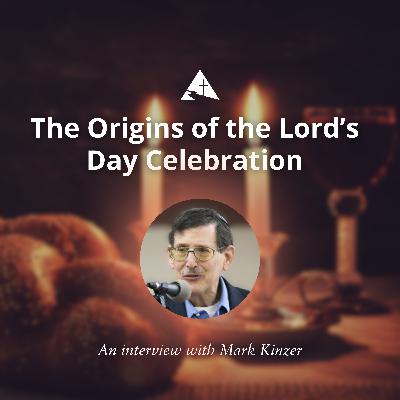
In this episode of Words From the Brothers, we sit down with Rabbi Dr. Mark Kinzer—Messianic Jewish theologian and founding voice behind the Lord’s Day celebration—to trace the rich history behind a practice that has shaped thousands of Christian households. Drawing from Jewish Sabbath tradition, early community life, and decades of lived experience, Rabbi Kinzer reflects on faith, identity, joy, and how worship in the home can renew the life of the Church today.
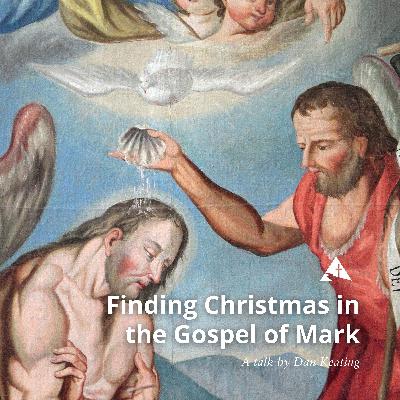
At our 2025 Christmas Retreat, our brother Dan Keating takes up an unexpected challenge: finding Christmas in the Gospel of Mark. Though Mark offers no nativity story, Dan shows how this Gospel still powerfully reveals the coming of the Son of God.

In this final Advent episode, Kenneth Carandang reflects on the Incarnation and the watchful hope found in Matthew 1 and the closing chapters of Mark. As Christmas draws near, we are invited to trust God’s promises, love as He loves, and actively wait with faith, vigilance, and joyful hope for Christ’s coming.
In this week’s Advent reflection, Andy Pettman guides us through the Gospel passages that reveal who Jesus is through his works, his glory, and his call to trust. Join him as he unpacks moments from Matthew and Mark that invite us to deeper faith in the midst of earthly struggle.The entire list of this year's readings can be found at Advent 2025 Readings & Podcast.
In our second Advent episode, Brian LaLonde leads us into the meaning of “Maranatha” through the miracles of Mark—freedom from darkness, healing in a moment, mastery over creation. Let us ponder the many ways Christ comes to meet us.The entire list of this year's readings can be found at Advent 2025 Readings & Podcast.
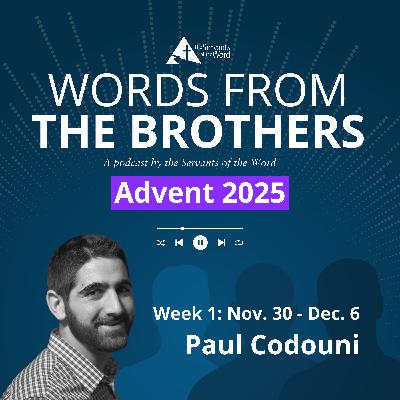
In this first Advent episode, our Lebanese brother Paul Codouni invites us to enter the season by staying awake to God’s presence. Drawing from the Sunday readings and the opening chapters of the Gospel of Mark, he reflects on what it means to be ready for the Lord, to guard time for silence and solitude, and to let Scripture shape our daily walk with Him.
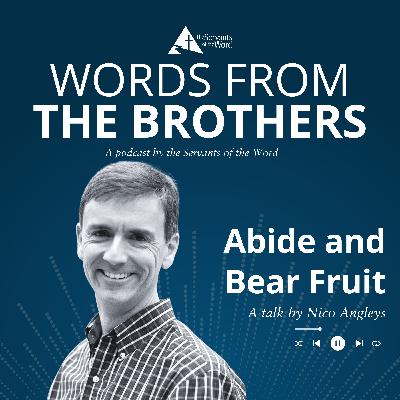
In this opening talk for the Brothers’ Fall Weekend Retreat, our brother Nico Angleys invites us to rediscover one of the most familiar yet profound teachings of Jesus—“I am the vine, you are the branches.” Drawing from John 15:1–11, Nico shares how this passage became a word from the Lord for us—confirmed through prayer, reflection, and providential encounters.
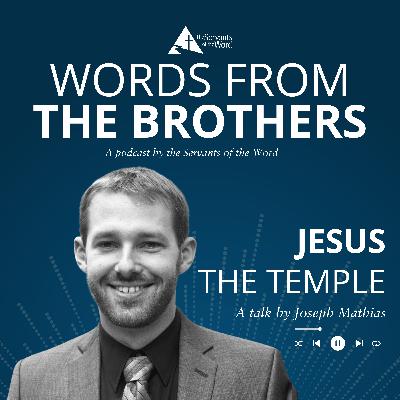
In this episode, Joseph Mathias invites us to reflect on how Jesus fulfills the role and promise of the Temple from the Old Covenant. Drawing from 1 Kings 8, the passage that recounts Solomon’s prayer at the dedication of the Temple, Joseph leads us to consider how the presence of God—once localized in stone and structure—is now fully revealed and accessible in the person of Jesus Christ.Through guided meditation and thoughtful reflection, this episode offers space to encounter Christ as the dwelling place of God among us, the one who intercedes, sanctifies, and draws us near.

For today’s installment of our 40 Days Meditation series, our brother William Cannon provides commentary on Heb 4:1-13. Listen below, download here, or search for Words from the Brothers on your favourite podcasting app.
Therefore, while the promise of entering his rest still stands, let us fear lest any of you should seem to have failed to reach it. For good news came to us just as to them, but the message they heard did not benefit them, because they were not united by faith with those who listened. For we who have believed enter that rest, as he has said,
“As I swore in my wrath,
‘They shall not enter my rest,'”
although his works were finished from the foundation of the world. For he has somewhere spoken of the seventh day in this way: “And God rested on the seventh day from all his works.” And again in this passage he said,
“They shall not enter my rest.”
Since therefore it remains for some to enter it, and those who formerly received the good news failed to enter because of disobedience, again he appoints a certain day, “Today,” saying through David so long afterward, in the words already quoted,
“Today, if you hear his voice,
do not harden your hearts.”
For if Joshua had given them rest, God would not have spoken of another day later on. So then, there remains a Sabbath rest for the people of God, for whoever has entered God’s rest has also rested from his works as God did from his.
Let us therefore strive to enter that rest, so that no one may fall by the same sort of disobedience. For the word of God is living and active, sharper than any two-edged sword, piercing to the division of soul and of spirit, of joints and of marrow, and discerning the thoughts and intentions of the heart. And no creature is hidden from his sight, but all are naked and exposed to the eyes of him to whom we must give account.
Heb 4:1-13
For today’s installment of our 40 Days Meditation series, our brother William Cannon provides commentary on Heb 9:1-28. Listen below, download here, or search for Words from the Brothers on your favourite podcasting app.
Now even the first covenant had regulations for worship and an earthly place of holiness. For a tent was prepared, the first section, in which were the lampstand and the table and the bread of the Presence. It is called the Holy Place. Behind the second curtain was a second section called the Most Holy Place, having the golden altar of incense and the ark of the covenant covered on all sides with gold, in which was a golden urn holding the manna, and Aaron’s staff that budded, and the tablets of the covenant. Above it were the cherubim of glory overshadowing the mercy seat. Of these things we cannot now speak in detail.
These preparations having thus been made, the priests go regularly into the first section, performing their ritual duties, but into the second only the high priest goes, and he but once a year, and not without taking blood, which he offers for himself and for the unintentional sins of the people. By this the Holy Spirit indicates that the way into the holy places is not yet opened as long as the first section is still standing (which is symbolic for the present age). According to this arrangement, gifts and sacrifices are offered that cannot perfect the conscience of the worshiper, but deal only with food and drink and various washings, regulations for the body imposed until the time of reformation.
But when Christ appeared as a high priest of the good things that have come, then through the greater and more perfect tent (not made with hands, that is, not of this creation) he entered once for all into the holy places, not by means of the blood of goats and calves but by means of his own blood, thus securing an eternal redemption. For if the blood of goats and bulls, and the sprinkling of defiled persons with the ashes of a heifer, sanctify for the purification of the flesh, how much more will the blood of Christ, who through the eternal Spirit offered himself without blemish to God, purify our conscience from dead works to serve the living God.
Therefore he is the mediator of a new covenant, so that those who are called may receive the promised eternal inheritance, since a death has occurred that redeems them from the transgressions committed under the first covenant. For where a will is involved, the death of the one who made it must be established. For a will takes effect only at death, since it is not in force as long as the one who made it is alive. Therefore not even the first covenant was inaugurated without blood. For when every commandment of the law had been declared by Moses to all the people, he took the blood of calves and goats, with water and scarlet wool and hyssop, and sprinkled both the book itself and all the people, saying, “This is the blood of the covenant that God commanded for you.” And in the same way he sprinkled with the blood both the tent and all the vessels used in worship. Indeed, under the law almost everything is purified with blood, and without the shedding of blood there is no forgiveness of sins.
Thus it was necessary for the copies of the heavenly things to be purified with these rites, but the heavenly things themselves with better sacrifices than these. For Christ has entered, not into holy places made with hands, which are copies of the true things, but into heaven itself, now to appear in the presence of God on our behalf. Nor was it to offer himself repeatedly, as the high priest enters the holy places every year with blood not his own, for then he would have had to suffer repeatedly since the foundation of the world. But as it is, he has appeared once for all at the end of the ages to put away sin by the sacrifice of himself. And just as it is appointed for man to die once, and after that comes judgment, so Christ, having been offered once to bear the sins of many, will appear a second time, not to deal with sin but to save those who are eagerly waiting for him.
Heb 9:1-28
For today’s installment of our 40 Days Meditation series, our brother William Cannon provides commentary on Heb 4:14-5:10. Listen below, download here, or search for Words from the Brothers on your favourite podcasting app.
Since then we have a great high priest who has passed through the heavens, Jesus, the Son of God, let us hold fast our confession. For we do not have a high priest who is unable to sympathize with our weaknesses, but one who in every respect has been tempted as we are, yet without sin. Let us then with confidence draw near to the throne of grace, that we may receive mercy and find grace to help in time of need.
For every high priest chosen from among men is appointed to act on behalf of men in relation to God, to offer gifts and sacrifices for sins. He can deal gently with the ignorant and wayward, since he himself is beset with weakness. Because of this he is obligated to offer sacrifice for his own sins just as he does for those of the people. And no one takes this honor for himself, but only when called by God, just as Aaron was.
So also Christ did not exalt himself to be made a high priest, but was appointed by him who said to him,
“You are my Son,
today I have begotten you”;
as he says also in another place,
“You are a priest forever,
after the order of Melchizedek.”
In the days of his flesh, Jesus offered up prayers and supplications, with loud cries and tears, to him who was able to save him from death, and he was heard because of his reverence. Although he was a son, he learned obedience through what he suffered. And being made perfect, he became the source of eternal salvation to all who obey him, being designated by God a high priest after the order of Melchizedek.
Heb 4:14-5:10
For today’s installment of our 40 Days Meditation series, our brother William Cannon provides commentary on Heb 12:18-29. Listen below, download here, or search for Words from the Brothers on your favourite podcasting app.
For you have not come to what may be touched, a blazing fire and darkness and gloom and a tempest and the sound of a trumpet and a voice whose words made the hearers beg that no further messages be spoken to them. For they could not endure the order that was given, “If even a beast touches the mountain, it shall be stoned.” Indeed, so terrifying was the sight that Moses said, “I tremble with fear.” But you have come to Mount Zion and to the city of the living God, the heavenly Jerusalem, and to innumerable angels in festal gathering, and to the assembly of the firstborn who are enrolled in heaven, and to God, the judge of all, and to the spirits of the righteous made perfect, and to Jesus, the mediator of a new covenant, and to the sprinkled blood that speaks a better word than the blood of Abel.
See that you do not refuse him who is speaking. For if they did not escape when they refused him who warned them on earth, much less will we escape if we reject him who warns from heaven. At that time his voice shook the earth, but now he has promised, “Yet once more I will shake not only the earth but also the heavens.” This phrase, “Yet once more,” indicates the removal of things that are shaken-that is, things that have been made-in order that the things that cannot be shaken may remain. Therefore let us be grateful for receiving a kingdom that cannot be shaken, and thus let us offer to God acceptable worship, with reverence and awe, for our God is a consuming fire.
Heb 12:18-29
For today’s installment of our 40 Days Meditation series, our brother William Cannon provides commentary on Heb 12:1-7. Listen below, download here, or search for Words from the Brothers on your favourite podcasting app.
Therefore, since we are surrounded by so great a cloud of witnesses, let us also lay aside every weight, and sin which clings so closely, and let us run with endurance the race that is set before us, looking to Jesus, the founder and perfecter of our faith, who for the joy that was set before him endured the cross, despising the shame, and is seated at the right hand of the throne of God.
Consider him who endured from sinners such hostility against himself, so that you may not grow weary or fainthearted. In your struggle against sin you have not yet resisted to the point of shedding your blood. And have you forgotten the exhortation that addresses you as sons?
“My son, do not regard lightly the discipline of the Lord,
nor be weary when reproved by him.
For the Lord disciplines the one he loves,
and chastises every son whom he receives.”
It is for discipline that you have to endure. God is treating you as sons. For what son is there whom his father does not discipline?
Heb 12:1-7
For today’s installment of our 40 Days Meditation series, our brother William Cannon provides commentary on Heb 10:19-39. Listen below, download here, or search for Words from the Brothers on your favourite podcasting app.
Therefore, brothers, since we have confidence to enter the holy places by the blood of Jesus, by the new and living way that he opened for us through the curtain, that is, through his flesh, and since we have a great priest over the house of God, let us draw near with a true heart in full assurance of faith, with our hearts sprinkled clean from an evil conscience and our bodies washed with pure water. Let us hold fast the confession of our hope without wavering, for he who promised is faithful. And let us consider how to stir up one another to love and good works, not neglecting to meet together, as is the habit of some, but encouraging one another, and all the more as you see the Day drawing near.
For if we go on sinning deliberately after receiving the knowledge of the truth, there no longer remains a sacrifice for sins, but a fearful expectation of judgment, and a fury of fire that will consume the adversaries. Anyone who has set aside the law of Moses dies without mercy on the evidence of two or three witnesses. How much worse punishment, do you think, will be deserved by the one who has trampled underfoot the Son of God, and has profaned the blood of the covenant by which he was sanctified, and has outraged the Spirit of grace? For we know him who said, “Vengeance is mine; I will repay.” And again, “The Lord will judge his people.” It is a fearful thing to fall into the hands of the living God.
But recall the former days when, after you were enlightened, you endured a hard struggle with sufferings, sometimes being publicly exposed to reproach and affliction, and sometimes being partners with those so treated. For you had compassion on those in prison, and you joyfully accepted the plundering of your property, since you knew that you yourselves had a better possession and an abiding one. Therefore do not throw away your confidence, which has a great reward. For you have need of endurance, so that when you have done the will of God you may receive what is promised. For,
“Yet a little while,
and the coming one will come and will not delay;
but my righteous one shall live by faith,
and if he shrinks back,
my soul has no pleasure in him.”
But we are not of those who shrink back and are destroyed, but of those who have faith and preserve their souls.
Heb 10:19-39
For today’s installment of our 40 Days Meditation series, our brother William Cannon provides commentary on Heb 10:1-18. Listen below, download here, or search for Words from the Brothers on your favourite podcasting app.
For since the law has but a shadow of the good things to come instead of the true form of these realities, it can never, by the same sacrifices that are continually offered every year, make perfect those who draw near. Otherwise, would they not have ceased to be offered, since the worshipers, having once been cleansed, would no longer have any consciousness of sins? But in these sacrifices there is a reminder of sins every year. For it is impossible for the blood of bulls and goats to take away sins.
Consequently, when Christ came into the world, he said,
“Sacrifices and offerings you have not desired,
but a body have you prepared for me;
in burnt offerings and sin offerings
you have taken no pleasure.
Then I said, ‘Behold, I have come to do your will, O God,
as it is written of me in the scroll of the book.'”
When he said above, “You have neither desired nor taken pleasure in sacrifices and offerings and burnt offerings and sin offerings” (these are offered according to the law), then he added, “Behold, I have come to do your will.” He does away with the first in order to establish the second. And by that will we have been sanctified through the offering of the body of Jesus Christ once for all.
And every priest stands daily at his service, offering repeatedly the same sacrifices, which can never take away sins. But when Christ had offered for all time a single sacrifice for sins, he sat down at the right hand of God, waiting from that time until his enemies should be made a footstool for his feet. For by a single offering he has perfected for all time those who are being sanctified.
And the Holy Spirit also bears witness to us; for after saying,
“This is the covenant that I will make with them
after those days, declares the Lord:
I will put my laws on their hearts,
and write them on their minds,”
then he adds,
“I will remember their sins and their lawless deeds no more.”
Where there is forgiveness of these, there is no longer any offering for sin.
Heb 10:1-18
For today’s installment of our 40 Days Meditation series, our brother Abyong Calo provides commentary on Heb 8:1-13. Listen below, download here, or search for Words from the Brothers on your favourite podcasting app.
Now the point in what we are saying is this: we have such a high priest, one who is seated at the right hand of the throne of the Majesty in heaven, a minister in the holy places, in the true tent that the Lord set up, not man. For every high priest is appointed to offer gifts and sacrifices; thus it is necessary for this priest also to have something to offer. Now if he were on earth, he would not be a priest at all, since there are priests who offer gifts according to the law. They serve a copy and shadow of the heavenly things. For when Moses was about to erect the tent, he was instructed by God, saying, “See that you make everything according to the pattern that was shown you on the mountain.” But as it is, Christ has obtained a ministry that is as much more excellent than the old as the covenant he mediates is better, since it is enacted on better promises. For if that first covenant had been faultless, there would have been no occasion to look for a second.
For he finds fault with them when he says:
“Behold, the days are coming, declares the Lord,
when I will establish a new covenant with the house of Israel
and with the house of Judah,
not like the covenant that I made with their fathers
on the day when I took them by the hand to bring them out of the land of Egypt.
For they did not continue in my covenant,
and so I showed no concern for them, declares the Lord.
For this is the covenant that I will make with the house of Israel
after those days, declares the Lord:
I will put my laws into their minds,
and write them on their hearts,
and I will be their God,
and they shall be my people.
And they shall not teach, each one his neighbor
and each one his brother, saying, ‘Know the Lord,’
for they shall all know me,
from the least of them to the greatest.
For I will be merciful toward their iniquities,
and I will remember their sins no more.”
In speaking of a new covenant, he makes the first one obsolete. And what is becoming obsolete and growing old is ready to vanish away.
Heb 8:1-13

Comments

Download from Google Play

Download from App Store
 United States