


Cross-cultural Stories
Subscribed: 4Played: 71
Subscribe

© Ray
Description
We all carry invisible suitcases when we leave home.
Packed with language, memories, rituals, contradictions—and the courage to grow.
I’m Ray, a chemical engineer turned storyteller. Born in China, I spent 15 years living in South Korea before moving to Stanford, California. In this podcast, I talk to friends, family, and fellow travelers in Mandarin, English, or Korean about the things we bring with us—and the things we leave behind.
We explore cultural differences, identity shifts, everyday joy, and emotional struggles.
You may hear your own story in ours.
Packed with language, memories, rituals, contradictions—and the courage to grow.
I’m Ray, a chemical engineer turned storyteller. Born in China, I spent 15 years living in South Korea before moving to Stanford, California. In this podcast, I talk to friends, family, and fellow travelers in Mandarin, English, or Korean about the things we bring with us—and the things we leave behind.
We explore cultural differences, identity shifts, everyday joy, and emotional struggles.
You may hear your own story in ours.
30 Episodes
Reverse
How do you find your footing in a completely new country? For Kumud, it started with a lonely moment at a party and ended with her finding a family at the Bechtel International Center. In this episode of Cross-Cultural Stories, I interviewed Kumud about her move from India to Stanford. We discuss the realities of being a trailing spouse, the pressures of raising a teenager in Silicon Valley, and the simple yet powerful advice Kumud has for all newcomers: take the first step. Tune in for an honest, funny, and inspiring conversation about resilience and connection.
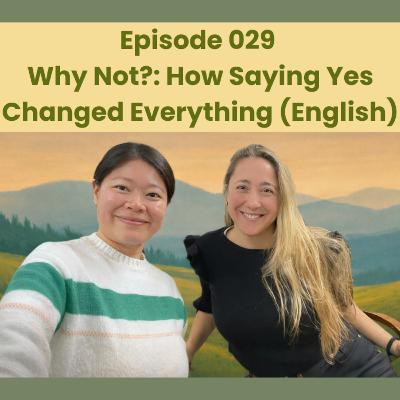
In this episode, I’m joined by Jeanette, a human resources and talent management specialist from Buenos Aires, Argentina, who moved to Stanford to support her husband’s PhD journey. But instead of pressing pause on her own life, Jeanette dove headfirst into building community, leading workshops, and reimagining her personal and professional identity in a new country.From navigating culture shock and language barriers to launching Linkedln and Personal Development workshops and Zumba Dance Classes for international spouses, Jeanette shares how she turned uncertainty into purpose and why she believes you can do anything you set your mind to.This conversation is a beautiful reminder that personal growth doesn’t stop when you move abroad. Sometimes, it’s just getting started.Let’s dive in.
This Episode is generated from Episode 027 (Korean) by AI. I hope you find this episode interesting!This interview features Hailey, a postdoctoral researcher at Stanford, who shares her personal and professional transition from South Korea to the United States. She discusses how living abroad redefined her concept of home and shifted her perspective on cultural differences, such as American small talk and direct communication styles. In her research career, she highlights the contrast between the hierarchical intensity of Korean labs and the independent, horizontal structure found in the U.S. Hailey also reflects on overcoming language barriers and the importance of maintaining mental peace by staying present rather than worrying about the future. Ultimately, she encourages others to remain flexible and less attached to rigid plans when adapting to a new country.
If you’ve ever wondered:What’s it really like to be a postdoc at Stanford?Are U.S. labs truly more “equal”—or just another form of solitude?How do Asian students adapt to an academic culture that asks, “Why don’t you have an opinion?”How do you rebuild a life beyond research in a foreign country?In this episode, our guest Hailey shares her real survival notes. Having experienced the high-pressure yet close-knit lab culture in Korea, and now navigating the free yet sometimes isolating academic environment in the U.S., she reveals:Why postdocs in the U.S. don’t have to write as many reportsThe academic philosophy behind a PI constantly asking, “What do you think?”How to handle the responsibility and anxiety that come with “too much freedom”The mental shift from “execution mode” to “thinking mode”Life beyond academia: finding housing, navigating healthcare, building a social life, and practicing self-careWhether you’re considering further studies abroad or are already on your own international academic journey, this conversation offers genuine insight and resonance.00:00 – Guest Introduction: Hailey, PhD from Korea, Postdoctoral Researcher at Stanford00:51 – The Evolution of “Hometown”: From Indifference to Longing03:36 – Short-term Visit vs. Long-term Stay: Shifting from “Tourist” to “Resident”05:06 – U.S. vs. Korean Research Culture: Paperwork, Communication, and Lab Dynamics13:04 – Adaptation Challenges: Small Talk, Surface Friendliness, and Navigating Real Connections16:22 – Joys of Daily Life: Backyard Barbecues, Outdoor Activities, and Connecting with Nature27:13 – Future Plans: Staying in the U.S. for Now, with Heart Set on Returning to Korea41:11 – Core Cross-cultural Insight: Accepting Differences, Embracing Diversity, Coexisting GentlyTimeline
Hi, I’m Ray! The guest of this episode is my good friend Kanna, whom I met at Stanford. A year ago, when we first got to know each other, she was navigating life in the Bay Area as a “trailing spouse,” trying to find her footing. Back in Tokyo, she was a goal-driven and ambitious career professional, but after moving to the States for her family, the shedding of her social identity unexpectedly led her to discover her deeply “selfless” nature.In this honest conversation, we talk about how she shifted from “living for achievements” to “finding peace in taking care of others,” and how this inner transformation surprisingly opened new doors for her in Silicon Valley. This is more than just a story about career change—it’s a dialogue about reshaping personal values, building resilience, and constructing a stronger, happier core of life upon the ruins of “loss” in the midst of cross-cultural transition. If you’ve ever gone through an identity shift or questioned your own sense of worth, I believe Kanna’s journey will inspire you.Timeline:00:00 - 03:00 Opening and Guest IntroductionRay introduces the podcast theme, welcomes guest Kanna, shares how they met at a Stanford job search workshop, and overviews Kanna's transition from leaving her corporate career in Japan to arriving in the Bay Area as a trailing spouse.03:00 - 06:30 Career Transition and Family ConsiderationsKanna explains in detail her reasons for leaving the Japanese workforce, the difficult choice between caring for her young daughter and supporting her husband's studies, and the reality of failed internal transfer attempts.06:30 - 09:50 Real Challenges of Job Hunting in Silicon ValleyIn-depth discussion on the professional matching barriers immigrants face in Silicon Valley, including niche divisions within the same field such as B2B/B2C, data analysis/content creation.09:50 - 14:20 Strategies for Rebuilding Professional IdentityKanna shares innovative networking methods after losing her professional title – from "bringing my child to pitch events" to "iterating self-introductions over a hundred times" – detailing her journey from being overlooked to gaining attention.14:20 - 21:30 Shift in Values and Self-DiscoveryThe core turning point of the conversation: Kanna describes how losing everything led her to discover her inherent nature of "finding peace in caring for others," contrasted with Ray's sharing of her own shift "from pleasing others to focusing on self-fulfillment."21:30 - 27:50 Career Choices Within LimitationsDiscussion on how immigrants navigate "imperfect job matches" under practical constraints like visas. Kanna shares her adaptation process as a Community Marketing Manager at a mental health startup.27:50 - 36:40 Philosophy of Superhuman Time ManagementRevealing the secrets behind Kanna balancing full-time work, a Stanford MBA, and parenting: her husband's support system, the importance of internal drive, and specific methods of applying work automation thinking to daily life.36:40 - 45:55 Practical Advice for Those Who FollowKanna proposes interpersonal principles like "meet at least three times" and "give first, receive later," sharing her real experience of how genuinely helping others ultimately opened doors for herself.
From "Who would watch such cheesy plots?" to "secretly bingeing on the subway," how did short dramas sneak into our lives unnoticed? In this bonus episode, our speaker, Producer Wanzi , who has a background in sociology, puts theory into practice. Using Goffman's front and backstage theory and symbolic interactionism, she dissects the "undercurrent chemistry" at the heart of short dramas. Turns out, we're not actually hooked on the plot—we're hooked on the emotional symbols of the mobile era. Listen as she discusses how short dramas have become "life’s consumables" and how we can gracefully "see past the magic." Honestly, after hearing her breakdown, I feel like I've officially "graduated" from short dramas. I hope you can also be inspired by this bonus episode!
In this episode, we continue our in-depth conversation with Producer Wanzi, turning toward life’s bigger decisions and a more enduring sense of homesickness. When her career and life in Jeju Island were at their most comfortable, what led her to make the resolute choice to return to Shanghai? As she transitioned from a cross-cultural editor to a film and television producer in China, what kinds of “disenchantment” and reconstruction did she experience?We also dive into the small, intimate habits that quietly carry meaning: a bowl of Korean soybean paste soup seasoned by hand, a fridge always stocked with Jongga kimchi, and a cup of hot water she never managed to give up. How do these everyday rituals become subtle bridges between a place once lived in and a place called home?Toward the end of the episode, we arrive at a gentle definition together:“Perhaps ‘a foreign land’ is not a geographic location, but a shared past—one we all carry, yet can never return to.”Whether you are still drifting or have already put down roots, this conversation about choice, memory, and self-reconciliation may resonate deeply. We close the episode with a shared understanding:“A foreign land is a beautiful past preserved in our collective memory, while home is the string that lets the kite fly far—yet always brings it safely back.”Timeline00:00 — The decision to return: the responsibility of an only child and the career clock at thirty03:37 — Professional disenchantment: from media editor to film and TV producer06:40 — Television memories: from guilt-laden viewing to professional analysis11:30 — Life in between: what changes and what remains in everyday food habits17:31 — Choosing not to assimilate: iced Americano and selfhood beyond appearance anxiety23:25 — The meaning of travel: from “seeing the world” to observing everyday life29:04 — Defining “foreign land” and “home”: the kite string and the past we can’t return to32:16 — Closing and invitation: to all fellow travelers with stories to tell
As President Lee Jae-myung of South Korea visits China, Chinese-Korean relations have once again become a hot topic. At this moment, my friend from my time studying in Korea and I would rather talk about the specific people and concrete experiences. In this episode of the podcast, we are honored to invite PD Wanzi, the former Chinese-language editor-in-chief of the benchmark cultural magazine Jeju Weekly in Jeju Island. We ask her to share her genuine experiences as a young Chinese person in Korea from three dimensions: student life, workplace culture, and media observations. The content of this episode includes but is not limited to:From Seoul to Jeju Island: Real-life survival stories of renting, job interviews, and eating marinated crabServing as editor-in-chief in a multicultural team: How did a local media outlet become a window for Sino-Korean exchange?Typhoon nights, phone guarantors, the uncle who slipped us money… Those small yet timeless acts of kindnessThis is not just a story of personal growth but also a vivid slice of grassroots exchanges between China and South Korea.If you are also interested in cultural collisions, overseas survival, and personal choices in the context of our times, tune in to this episode now!Timeline:00:00 Reunion with an old friend: Memories of studying in Korea twenty years ago03:17 From classmates to "southern drift comrades": Supporting each other in Korea's southernmost cities09:39 A taste of homesickness and friendship: Marinated crab in Yeosu and traveling across the sea to visit13:01 Behind the decision to study abroad: Career planning and "landing with trust"27:13 Fear and warmth on a typhoon night: Human kindness during natural disasters35:57 Holidays in a foreign land and kindness from strangers: Chuseok and the story of "50,000 won"44:34 A career as a multicultural editor-in-chief: Practicing and reflecting on Chinese media in Jeju Island58:52 Observations on workplace culture and closing thoughts: Experiencing hierarchy versus relative equality
Samira, an Iranian girl born in Tehran, was initially eager to pursue physics and maths, but after seeing historical artworks, she shifted her focus to art. This change in direction, especially choosing the path of pursuing art, was a shock for her family, who were mostly in managerial, engineering, and medical professions. Now an accomplished artist who made her first movie at age 19, Samira explains that art begins by creating something for yourself, and then for your audience. She believes that if you connect with yourself, you turn your creativity on, meaning everybody can be an artist. She also shares that through travel and observation, she began to omit borders in her artwork, focusing on universal connections. She remains active by volunteering in the different communities in Stanford and is focused on studying and preparing to apply for business school.Timeline:00:28 – Guest Introduction: Samira’s multifaceted background06:17 – Childhood self-talk and inner guidance12:55 – Art as a form of creative expression accessible to everyone20:23 – Observations of Iranian artists in an international context28:10 – Attempts to combine art and business34:22 – Understanding and accommodation in a cross-cultural marriage41:28 – Language, culture, and emotional belonging48:54 – Learning about business and creative strategy in the U.S.54:42 – The importance of community support for new immigrantsIf you want to know more about Samira, please check out her LinkedIn profile here. https://www.linkedin.com/in/samira-davarfara-945b673b/
Ilor and Madina's story began in the shared kitchen of a university apartment in Israel. From roommates to lovers, from a cross-border marriage to building a life together in Silicon Valley, their relationship has been continually reshaped across cultures and continents.In this episode, Ilor shares openly about:An unexpected romance that started with carpooling to buy groceriesThe legal and cultural intricacies behind getting secretly married in GeorgiaNavigating the stark contrast between “showing off” and “modesty” in Israeli and Kazakh culturesWaking up at 4 a.m. in Silicon Valley to sync with his team’s time zone halfway across the worldUsing stock trading to build financial and emotional security in a new countryRedefining “home” not as a place, but as a daily life built togetherThis is more than a love story. It’s a real-time document of two young people navigating identity, belonging, and the active creation of it in a globalized era.Timeline:00:00 - Intro: From University Roommates to Silicon Valley Couple08:15 - Cross-Border Marriage: Why We Got Married in Georgia16:40 - Cultural Contrasts: Modesty vs. Showmanship25:10 - Life in Silicon Valley: 4 a.m. Work & The Missing Breakfast Culture34:20 - Investing as a Second Career: Building Security Abroad42:50 - Redefining "Home": Identity, Belonging & Future Plans50:00 - Advice for Cross-Cultural Navigators
Welcome to Cross-cultural Stories! Today we are talking with Ana, a guest who embodies leadership and dedication. Ana came to Stanford as a spouse from Guadalajara, Mexico, and quickly transitioned from her previous role as a project manager to a key volunteer at the CCIS. She now helps lead the Loan Closet, a system designed to help international students borrow essential items when they first arrive. Ana reveals that her organizational skills—including her love for scheduling using Google Calendar and organizing things by categories—make her perfectly suited for this role. Join us as we explore how she embraced change and transformed so quickly.Timeline:00:00 Introduction and Welcome to the first Mexican guest, Ana.01:13 Ana's self-introduction.04:03 Introducing the CCIS Loan Closet program.05:18 Discussion on the definition of "Home" and building deep connections.10:28 Spouses' challenge: feeling lost and useless due to excess free time.15:33 The crucial "mindset change": viewing free time as a "gift".20:16 Ana's self-discovery: Confirming her love for organization and planning.30:45 Key advice: Using this time to "really know yourself" to better connect with others
What does it take to rebuild your life and career in a foreign country? Juan and Carolina share their cross-cultural story: from the traffic jams of Bogotá to the supportive halls of Stanford. Learn how they found balance between a demanding PhD and a creative pastry career, and why their final advice is simple yet powerful: "Be patient and trust yourself.”00:00 - Introduction01:17 - Guests' Self-Introduction02:39 - Describing Hometown Bogotá08:32 - Music and Dance Culture14:45 - Redefining the Meaning of Home16:40 - Career Paths and Cross-Cultural Work28:21 - Cultural Differences and Positive Experiences38:01 - Support System and Personal Growth41:28 - Advice for Others46:12 - Growth in Their Relationship47:52 - Conclusion
This is Episode 18, the English version of Episode 17, which was originally recorded in Chinese. In this episode, you’ll hear the story of our guest, Alan, presented in a different way. The English audio was generated using AI tools based on the original transcript, so it offers another way to experience his journey.He dreams of building a library, a museum, and a football field for Laosi Village in Hainan. To make this a reality, Village Chief Alan uses the Stanford campus as his classroom, life in the Bay Area as his real-world training, and retired U.S. experts as his advisors. Join his journey to discover how a Chinese village is building a sustainable future through global connections.
Guest: Alan (Village Chief Tan) — Village Chief of Laoshi Village in Hainan, structural engineer, and guitarist in a Bay Area band.Alan is "Village Chief Tan" of Laoshi Village in Hainan, the guitarist for the Bay Area band "Wishes," and a family man accompanying his loved ones and child. Even earlier in his life, he lived a dual existence: a meticulous structural engineer by day and a passionate musician by night.From the mangrove forests of a Hainan fishing village to the campus landscapes of Stanford, from rural libraries to community museums, he blends an engineer's precision with a musician's passion, building a bridge of sustainable ideals between his hometown and his adopted home.Come listen as Alan shares how he uses a guitar and a strong sense of responsibility to compose a community symphony for the future across two worlds~Are you also curious about Laoshi Village that Chief Tan describes?Check out the website of Laoshi Village, Haitou Town, Danzhou City, Hainan Province!https://www.laoshi-village.com/cn/aboutTimestamps00:00 - 02:03 Introduction & Multiple Identities: Village chief, engineer, musician.02:32 - 05:46 Defining "Hometown" & Hainan's Rich Dialect Culture.06:41 - 11:40 The Music Journey: From university band to a dual life as an "engineer by day, musician by night."11:40 - 16:36 Cross-Disciplinary Thinking: Using inspiration from music to optimize engineering projects and leveraging performance resources to enrich village life.17:55 - 24:41 California Insights: Inspiration and contrasts drawn from its meticulous approach to nature conservation.24:41 - 31:58 Rural Vision: Plans to create a community nature museum, sports fields, and other public spaces.31:58 - 38:28 Real-World Challenges: Inspiration from Stanford's campus and the difficulties of maintaining community projects.38:57 - 50:12 Bay Area Life: Finding belonging through a band and fellow townspeople associations, and successfully recruiting international volunteer resources.
In this special episode, the tables are turned as podcast host Ray, me, becomes the interviewee. Gently guided by Stanford volunteer Brad's insightful questions, I open up about my journey across three cultures: China, South Korea, and the United States. I share my upbringing in China's Henan province, how living in Korea helped me find a self that felt "seen," and my navigation between career and passion as a research professional. I delve into why living abroad strengthened my connection to my Chinese roots and what ultimately inspired me to create a podcast dedicated to capturing cross-cultural stories. This is more than a personal narrative; it's a genuine conversation about identity, belonging, and the pivotal turns in life's path. I hope this episode could resonate you whoever you are.
In this episode, our guest Brad shares his journey as a long-term volunteer at CCIS in Stanford’s Bechtel International Center.Together, we explored:Where does our sense of insecurity in a new environment come from?How is a genuine connection like a “dance for two”?And why can an open community ease both the confusion of the young and the loneliness of the elderly?Listen as Brad reflects on more than ten years of volunteering: years filled with countless touching life stories, all unfolding within one small yet remarkable community.CCIS: (Community Committee for International Students)If you're interested in Brad's Zoom class, here is the information for you:Understanding Culture – One Person at A TimeThis group is designed to promote cross-cultural understanding and friendships through interviews and group discussions. To receive the Zoom link and ask questions, email Brad at <bradteresa2@gmail.com>.When: Fridays | 10:30 am to 12 pm.
This Episode is in English and generated from Episode 013 by an AI Tool.What happens when the formative six years of adolescence are spent in a temple- an atmosphere of spiritual reflection? Our guest, Yu'En, currently a Postdoctoral researcher at Stanford, experienced this unique journey.Join me to understand why and how this special life experience impacts him.
This episode features Yu'En, a scholar from Taiwan currently working as a Postdoctoral Fellow at Stanford. His life trajectory has involved multiple migrations, starting from Taipei to Central Taiwan and back to Taipei, and now includes his endeavors in the US Bay Area. Yu'En defines the concept of "homeland" as being closely related to "growth". He is currently striving to make this foreign land "the homeland of tomorrow".Following an early family change and relocation, he moved to live in a temple in Central Taiwan for six years. This unique experience was crucial to the development of his personality. Yu'En now considers his father's decision at the time to be "wise", as his father chose to prioritize mental health and prevented the family from "falling apart". During his life at the temple, Yu'En learned how to deal with worries and anxieties and developed "awareness", which laid the cornerstone for achieving inner peace.Now in the US, in addition to conducting pathological research on Parkinson's disease, he has adapted to the academic environment by working with a US supervisor. Furthermore, he and his wife Suki(Episode 003/004) cultivated a deep "revolutionary bond" during their life abroad.Join us as we follow Yu'En's journey, exploring how he gradually reconstructed his self and defined a new place of belonging through multiple migrations.Duration: 55 min本期节目邀请到来自台湾、现于斯坦福担任博士后研究员的Yu'En。他的人生轨迹经历了从台北到中部、再重返台北,直至今日在美国湾区打拼的多重迁徙。Yu'En对故乡的定义与“成长”紧密相关,他正努力将现今的异乡生活“活成他日的故乡”。 在早年因家庭变故搬迁后,他曾在台湾中部的寺庙生活了六年,这段独特的经历对他的人格养成至关重要。现在的Yu'En认为父亲当时做了一个明智的决定,因为他选择了优先支持心理健康,避免了家庭的"分崩离析"。在这段寺庙生活期间,Yu'En学会了如何处理烦恼与焦虑,并学会了「觉察」,这些经历都为他奠定了通往内心平静的基石。 如今在美国,他除了进行帕金森氏症的病理学研究,也在学术环境中,适应了与一位每日追问进度的美国老板相处,并成功争取到独立自主的研究训练模式。此外,他与妻子 Suki 在异国生活中培养了深厚的革命情感,并且领悟到了亲密关系中的真谛。 请加入我,一起跟随Yu'En的脚步,探索他在多地迁徙中,如何一步步重塑自我、定义新的归属地。 时长:55 min
This Episode is in English and generated from Episode 011 by AI. I hope you find this episode interesting!In this episode of Cross-Cultural Stories, I’m joined by my first male guest, Brian, who, like me, is from Henan. His journey has taken him from Zhengzhou to Beijing, Shanghai, Texas, and now California. Along the way, he reflects on how moving between cities and cultures shaped his outlook—from the ambition of his 20s to the simplicity he values in his 30s. For Brian, “homesickness is really about longing for childhood,” a thought that resonates deeply. We also discussed the warmth of neighbors in Texas, the fast-paced life in California, the contrasts between AI and human experience, and the mindset of living abroad. Brian’s story is a reminder that migration is not only about geography—it’s about discovering ourselves and the meaning we bring to life.
In Episode 11, we have the very first male guest I've interviewed since starting the podcast, Brian!Brian is my fellow Hénán native. Although we haven't reached the point of "seeing a fellow villager in a foreign land brings tears to the eyes," meeting him still felt exceptionally warm.Brian and I have known each other for over a year. Last summer, he and his wife moved from Texas to California, where he accompanied his wife during her post-doc while looking for a job himself.This year, he finally successfully secured a software engineer position, officially joining the ranks of Silicon Valley programmers. In this episode, I heard this sentiment from Brian's sharing: the so-called hometown is childhood, and the so-called nostalgia is a pleasant melancholy. Listen to his experiences in different cities, and reflect on what he said: wandering does not mean you are a stranger in a foreign land; it can also be viewed as an opportunity to explore life experiences. Perhaps you will come to love the current version of yourself who chose a different path.Length: 55 min这一期的嘉宾是我播客开录以来采访到的第一位男嘉宾,Brian!(欢呼声)Brian 是我的河南老乡,虽然没有到“异国见老乡,两眼泪汪汪”的程度,但见到还是会觉得格外亲切。我和 Brian 认识也有一年多了。去年夏天,他和太太从美国德州搬到加州,一边陪太太做博后,一边自己找工作。今年,他终于成功拿到软件工程师的职位,正式加入了硅谷码农的行列。这一期,我从Brian的分享里听到了这样的感触:所谓故乡就是童年,所谓乡愁就是一种愉悦的忧伤。听一听他在不同城市的经历,想一想他说的,漂泊并不代表你就是异客,也可以是你对自己生命的一种探索。也许你会更加喜欢当下选择了不一样道路的自己。时长:55分钟

Comments

Download from Google Play

Download from App Store
 United States