


 Claim Ownership
STR Data Lab™ by AirDNA
Subscribed: 42Played: 1,755
Subscribe

© Jamie Lane
Description
Whether you're on your first property or your 100th, having the right market data is crucial to starting and scaling your short-term rental business. Join Travel Economist Jamie Lane as he provides trusted insights and delves deep into the numbers that drive this multi-billion dollar industry.
170 Episodes
Reverse

Is 2026 shaping up to be a breakout year for short-term rentals — or another year of mixed signals? In this January market review, the STR Data Lab team unpacks early indicators that could define performance for the rest of the year, from rising bookings and shifting travel patterns to economic tailwinds and major event demand. For hosts, property managers, and investors, these first-month signals offer critical clues about where revenue opportunities — and risks — are emerging.While occupancy dipped year over year due to continued supply growth, bookings surged at one of the strongest rates in months, signaling healthy future demand. Coastal destinations are seeing robust early reservations ahead of spring break and summer travel, while urban markets are experiencing a surprising boost driven largely by anticipation of the upcoming World Cup. Meanwhile, mountain and ski destinations are facing headwinds from a weak Western snow season — a reminder that hyper-local factors can still outweigh national trends.The episode also zooms out to the economic backdrop shaping travel demand: job growth, disposable income, inflation trends, tax policy changes, and even larger tax refunds. The takeaway is clear — when people have money in their pockets, travel follows. Add in the potential windfall from major events like the World Cup, and hosts across many markets could see outsized revenue opportunities if they prepare early.You don’t want to miss this episode if you’re planning pricing, investments, or strategy for 2026.Key TakeawaysBooking momentum matters more than current occupancy. Strong forward bookings suggest healthy demand ahead even if winter performance looks weak.Coastal markets are leading early for spring and summer travel. Hosts in beach destinations should prepare for competitive pricing and high demand.Major events create spillover demand beyond host cities. Nearby markets may benefit from travelers extending trips around large events.Mountain market performance is highly weather-dependent. Diversifying seasonality strategies can reduce risk in ski destinations.Economic conditions are turning favorable for travel. Rising disposable income and tax refunds could fuel increased bookings in 2026.Sign up for AirDNA for FREE 👇https://bit.ly/4j6rRMahttps://www.airdna.co/worldcup—————Connect with Jamie on social mediaLinkedIn: https://www.linkedin.com/in/jamiehlane/ Twitter: https://twitter.com/Jamie_Lane—————Connect with Scott on social mediaLinkedIn: https://www.linkedin.com/in/sagescott—————Connect with AirDNA on social media:Instagram: https://instagram.com/airdna.coLinkedIn: https://www.linkedin.com/company/airdna/Twitter: https://twitter.com/airdnaTikTok: https://www.tiktok.com/@airdna.co—————Episode 170

What if the biggest opportunity in your STR business isn’t higher ADR or better occupancy — but who actually owns your guest relationship?In this episode of The STR Data Lab, Jamie Lane sits down with Arthur Colker, CEO of StayFi, to unpack one of the most under-discussed levers in short-term rentals: guest acquisition costs and repeat demand. As OTAs continue tightening control over guest data and shifting fee structures, hosts and property managers are left asking an important question — are we building a business, or renting one?Arthur breaks down why tracking guest acquisition costs, collecting first-party data, and building a direct booking channel isn’t just about avoiding platform fees. It’s about increasing total occupancy, improving booking windows, and creating long-term resilience. From practical strategies for smaller operators to how advanced hosts are reaching 60%+ direct bookings, this conversation reframes direct booking as a growth strategy — not just a defensive move.If you’ve ever wondered whether investing in your brand, email marketing, or direct booking site is worth it — this episode delivers clarity.You don’t want to miss this episode.Practical Takeaways You Can Apply NowThink beyond the booker. Every guest in the reservation is a potential future customer. Expanding your marketing mindset beyond the primary booker unlocks new repeat and referral opportunities.Consistency beats perfection. A simple monthly email — even plain-text and personalized — can outperform polished newsletters. The goal is to stay top of mind when guests are ready to book again.Direct bookings increase total occupancy — not just margins. The real ROI isn’t only saving OTA fees. It’s filling nights that would otherwise sit empty.Build a brand, even if you’re small. Whether you have one property or ten, guests need an identity to remember. For smaller operators, your personal story and hospitality voice are the brand.Control your pricing strategy. Advanced operators often price higher on OTAs and reward direct bookings with better value — flipping the script from dependence to leverage.Sign up for AirDNA for FREE 👇https://bit.ly/4rYGQvP—————Connect with Jamie on social mediaLinkedIn: https://www.linkedin.com/in/jamiehlane/ Twitter: https://twitter.com/Jamie_Lane—————Connect with Scott on social mediaLinkedIn: https://www.linkedin.com/in/sagescott—————Connect with AirDNA on social media:Instagram: https://instagram.com/airdna.coLinkedIn: https://www.linkedin.com/company/airdna/Twitter: https://twitter.com/airdnaTikTok: https://www.tiktok.com/@airdna.co—————Episode 169
What happens when one of the largest centralized property managers in short-term rentals meets a deeply local, franchise-driven model? In this episode of The STR Data Lab, AirDNA’s Chief Economist Jamie Lane sits down with Steve Schwab, CEO of Casago, to unpack one of the most consequential industry shifts of the past decade: the Vacasa–Casago merger.Steve shares an honest, behind-the-scenes look at how the integration is unfolding — from transitioning thousands of homes and teammates to rethinking how scale, culture, and accountability actually work in hospitality. The conversation goes beyond headlines to explore why local ownership, empowered teams, and owner-centric decision-making may be the antidote to the operational strain that has challenged large STR operators in recent years.Along the way, Jamie and Steve dive into franchise economics, technology complexity, churn as a health metric, and the often-underestimated skill that separates top-tier operators from the rest. Whether you’re an independent host, a growing property manager, or an industry professional watching STR evolve in real time, this episode offers a rare perspective on where the business is headed — and what it takes to build something that lasts.This is one conversation that will change how you think about scale, leadership, and success in short-term rentals — you don’t want to miss it.Key Takeaways You Can Apply TodayLocal ownership matters more than ever: Empowered, in-market operators create stronger relationships with homeowners, guests, and communities — and reduce churn.Scale isn’t just about size: Breaking operations into locally accountable units can avoid the “dis-economies” that plague centralized models.Technology complexity is the silent killer: From PMS integrations to revenue management and accounting, STR operations are far deeper than they appear — especially in year one.Churn is a health check, not just a metric: Monitoring churn at both the market and portfolio level reveals operational and cultural issues early.The best operators know when to say no: Curating the right inventory, homeowners, and guests is often what separates top-performing property managers from underperformers.Sign up for AirDNA for FREE 👇https://bit.ly/4qjPZNU—————Connect with Jamie on social mediaLinkedIn: https://www.linkedin.com/in/jamiehlane/ Twitter: https://twitter.com/Jamie_Lane—————Connect with Scott on social mediaLinkedIn: https://www.linkedin.com/in/sagescott—————Connect with AirDNA on social media:Instagram: https://instagram.com/airdna.coLinkedIn: https://www.linkedin.com/company/airdna/Twitter: https://twitter.com/airdnaTikTok: https://www.tiktok.com/@airdna.co—————Episode 168

Is 2026 shaping up to be the most compelling year for short-term rental investing since the post-pandemic boom? In this episode of The STR Data Lab, AirDNA Chief Economist Jamie Lane and co-host Scott Sage break down the newly released 2026 Best Places to Invest report — and explain why smart investors may finally see the odds shifting back in their favor.After several challenging years marked by high home prices, rising interest rates, and uneven STR performance, the data is starting to tell a more optimistic story. Jamie walks through the core metrics behind AirDNA’s rankings — including investability, demand momentum, revenue growth, and regulatory viability — and explains why yield, not hype, is driving today’s best opportunities. The result? A list that favors overlooked small and mid-sized cities, infrastructure-driven demand, and markets where affordability still creates room for returns.The conversation also explores how investors can tailor their strategy using price-tier analysis and demand drivers like universities, national parks, and major infrastructure projects. Rather than chasing “vacation-only” destinations, this episode challenges listeners to rethink what makes a strong STR market — and how to build a repeatable investment thesis using data, not instinct.You don’t want to miss this episode if you’re planning your next STR investment.Key Takeaways2026 may mark a turning point for STR investing as yields improve and financing pressures ease.Yield matters more than ever — especially in markets with lower home prices and steady demand.Small and mid-sized cities continue to outperform, driven by infrastructure, workforce, and extended-stay demand.Price-tier analysis unlocks opportunity, showing where returns change dramatically at different budget levels.Demand drivers like universities and national parks create resilient, diversified booking patterns beyond traditional vacation travel.Best Places To Invest:https://www.airdna.co/best-places-to-invest-in-vacation-rentals—------------Sign up for AirDNA for FREE 👇https://bit.ly/4s2G7tf—————Connect with Jamie on social mediaLinkedIn: https://www.linkedin.com/in/jamiehlane/ Twitter: https://twitter.com/Jamie_Lane—————Connect with Scott on social mediaLinkedIn: https://www.linkedin.com/in/sagescott—————Connect with AirDNA on social media:Instagram: https://instagram.com/airdna.coLinkedIn: https://www.linkedin.com/company/airdna/Twitter: https://twitter.com/airdnaTikTok: https://www.tiktok.com/@airdna.co—————Episode 167
2025 was anything but predictable for short-term rentals. After a surprisingly strong start, the second half of the year told a very different story — and the December data brings that contrast into sharp focus. In this episode of The STR Data Lab, AirDNA Chief Economist Jamie Lane is joined by Bram Gallagher to break down the final U.S. performance numbers and what they reveal about the state of the STR industry heading into 2026.From weakening occupancy to long-awaited ADR growth finally outpacing inflation, the conversation unpacks why topline stability masked huge disparities beneath the surface. While national averages ended the year nearly flat, many operators experienced dramatic wins or losses depending on where they operate, who they serve, and how they’re positioned. The episode also explores how broader economic forces — cooling labor markets, mortgage-rate volatility, and a K-shaped economy — showed up clearly in STR performance.Looking ahead, Jamie and Bram dig into pacing data for early 2026, uncovering encouraging signs for spring break and summer travel, especially in resort markets. They also discuss what easing mortgage conditions and stabilizing occupancy could mean for investors considering their next move. Whether you’re managing one property or a growing portfolio, this episode helps cut through the noise to understand what really drove performance — and what to watch next.You don’t want to miss this episode!Key Takeaways for STR Hosts & Operators2025 was a tale of two halves: Strong performance early in the year gave way to declining occupancy in the back half, despite modest ADR gains.Averages hide extremes: While national occupancy finished flat, nearly half of major markets saw meaningful gains — and others saw steep declines.Luxury outperformed across the board: Higher-priced listings consistently captured stronger (or less negative) occupancy than budget properties, reinforcing the K-shaped economy.Resort markets led the way: Coastal and mountain destinations posted the strongest occupancy and ADR growth, while urban markets continued to struggle.Early 2026 signals are improving: Spring break and summer demand are pacing well, lead times are stabilizing, and easing mortgage conditions may unlock new investment opportunitiesYear End Review:https://www.airdna.co/blog/us-review-december-2025—————Sign up for AirDNA for FREE 👇https://bit.ly/3Yz8mlS—————Connect with Jamie on social mediaLinkedIn: https://www.linkedin.com/in/jamiehlane/ Twitter: https://twitter.com/Jamie_Lane—————Connect with Scott on social mediaLinkedIn: https://www.linkedin.com/in/sagescott—————Connect with AirDNA on social media:Instagram: https://instagram.com/airdna.coLinkedIn: https://www.linkedin.com/company/airdna/Twitter: https://twitter.com/airdnaTikTok: https://www.tiktok.com/@airdna.co—————Episode 166

What if one of the biggest opportunities in rentals isn’t short-term or long-term — but everything in between? In this episode of The STR Data Lab, Jamie Lane sits down with Jeff Hurst, CEO of Furnished Finder and former President of Vrbo, to unpack why midterm rentals have quietly become one of the fastest-growing segments in the housing market — and why so many investors still misunderstand them.Drawing on newly released AirDNA data and Furnished Finder’s on-the-ground experience, the conversation explores how demand for 30+ day stays has more than doubled since 2019, fueled by relocating families, healthcare professionals, construction crews, academics, and a growing need for flexible living. Jeff explains why midterm rentals aren’t just “discounted short-term stays,” but a fundamentally different asset class — with different pricing logic, tenant expectations, and operational realities.From regulation and affordability to investor accessibility and tech gaps, this episode reframes how STR hosts and property managers should think about midterm rentals — not as a fallback, but as a durable, scalable third pillar of the rental economy that’s still early in its evolution.You don’t want to miss this episode.Key Takeaways You Can Apply TodayMidterm demand is surging: AirDNA data shows stays of 28+ days are up 138% since 2019 — outpacing short-term rental growth by a wide margin.It’s a different business model: Midterm rentals price closer to long-term housing, prioritize functionality over flash, and often book one stay at a time with frequent extensions.The strongest demand drivers are practical, not leisure: Think hospitals, universities, construction corridors, and suburban job centers — not vacation hotspots.Lower capital, lower friction investing: Midterm rentals often require less upfront furnishing, fewer turnovers, and significantly less day-to-day management.The category is still early: With limited tech infrastructure and minimal institutional saturation, midterm rentals today resemble short-term rentals circa 2008.Sign up for AirDNA for FREE 👇https://bit.ly/4jcZdsL—————Monthly Rentals: The Hidden Gem of Housing—————Connect with Jamie on social mediaLinkedIn: https://www.linkedin.com/in/jamiehlane/ Twitter: https://twitter.com/Jamie_Lane—————Connect with Scott on social mediaLinkedIn: https://www.linkedin.com/in/sagescott—————Connect with AirDNA on social media:Instagram: https://instagram.com/airdna.coLinkedIn: https://www.linkedin.com/company/airdna/Twitter: https://twitter.com/airdnaTikTok: https://www.tiktok.com/@airdna.co—————Episode 165

Is the short-term rental industry struggling — or simply growing up? In this episode of The STR Data Lab, AirDNA Chief Economist Jamie Lane sits down with Simon Lehmann to unpack what “normalization” really means for STR operators, investors, and property managers heading into 2026. After years of explosive growth, the industry is entering a new phase — one defined less by expansion and more by execution.Simon shares why demand hasn’t collapsed the way headlines suggest, why strong operators are still thriving, and why the biggest shift happening right now is in expectations. Growth rates, margins, and valuations are resetting — but that doesn’t spell trouble. Instead, it’s forcing a long-overdue focus on discipline, systems, and unit-level profitability. As competition intensifies and margins compress, professionalism is no longer optional.The conversation also dives into technology and AI, exploring why the future isn’t about more tools, but fewer — and better — ones. From fragmented tech stacks and data silos to the elusive “source of truth,” Jamie and Simon explain why operators who master their data will be best positioned to survive (and win) in the next chapter of STRs.You don’t want to miss this episode if you’re planning for 2026 and beyond.Key Takeaways from This EpisodeNormalization ≠ downturn: The STR industry isn’t collapsing — growth expectations and return profiles are simply resetting.Execution now beats expansion: We’ve moved from a growth story to a selection story, where strong operators pull ahead.Professionalization means discipline: Systems, process rigor, and unit-level economics matter more than portfolio size.Margins are under pressure: Rising costs and regulation make revenue management and cost control essential skills.Tech stacks must simplify: The next wave of STR tech will focus on integration, AI-driven insights, and a single source of truth — not more point solutions.Sign up for AirDNA for FREE 👇https://bit.ly/4jcZdsL—————Connect with Jamie on social mediaLinkedIn: https://www.linkedin.com/in/jamiehlane/ Twitter: https://twitter.com/Jamie_Lane—————Connect with Scott on social mediaLinkedIn: https://www.linkedin.com/in/sagescott—————Connect with AirDNA on social media:Instagram: https://instagram.com/airdna.coLinkedIn: https://www.linkedin.com/company/airdna/Twitter: https://twitter.com/airdnaTikTok: https://www.tiktok.com/@airdna.co—————Episode 164
November delivered a mixed bag for short-term rentals — and this episode breaks down what really happened beneath the headline numbers. RevPAR dipped, occupancy softened, and demand growth slowed, but not for the reasons many hosts might expect. Jamie Lane and Bram Gallagher unpack how calendar shifts, supply growth, and subtle demand dynamics distorted the monthly data — and why November may not be as weak as it first appears.Beyond performance, the conversation zooms out to the broader economic backdrop shaping STR demand. With new jobs and inflation data finally back online, the picture that emerges is one of a gradually softening labor market, uneven sector growth, and continued uncertainty around interest rates. The hosts also explore troubling trends in international inbound travel, particularly from Canada, and what policy shifts — or global events — could mean for future recovery.The episode closes on a forward-looking note, spotlighting holiday pacing and the early signals for 2026. From stronger-than-expected Christmas and New Year travel to a surge in bookings tied to the 2026 World Cup, this data-rich discussion offers hosts and operators critical insight into where opportunity — and risk — may lie in the months ahead.You don’t want to miss this episode if you’re planning for 2025 and beyond.Key Takeaways for STR Hosts & ManagersNovember’s softness was partly a calendar illusion: A day-of-week shift materially impacted occupancy and demand comparisons.Rates are stabilizing again: ADR and repeat rent index growth returned after a weak late summer, signaling pricing power may be improving.International demand remains a concern: Inbound travel to the U.S. is still significantly down, especially from Canada.Holiday travel is shifting later: New Year’s is pacing exceptionally strong, pushing more demand into early January.The World Cup is already reshaping 2026 demand: June bookings are surging — especially in host cities — with major implications for pricing and strategy.Sign up for AirDNA for FREE 👇https://bit.ly/4mAqNR0—————www.airdna.co/blog/us-review-november-2025—————Connect with Jamie on social mediaLinkedIn: https://www.linkedin.com/in/jamiehlane/ Twitter: https://twitter.com/Jamie_Lane—————Connect with Scott on social mediaLinkedIn: https://www.linkedin.com/in/sagescott—————Connect with AirDNA on social media:Instagram: https://instagram.com/airdna.coLinkedIn: https://www.linkedin.com/company/airdna/Twitter: https://twitter.com/airdnaTikTok: https://www.tiktok.com/@airdna.co—————Episode 163
What happens when supply finally stabilizes, demand shifts gears, and the global economy refuses to follow the script? In this year-end Outlook episode, AirDNA Chief Economist Jamie Lane sits down with Bram Gallagher to break down what actually happened in 2025 — and what STR hosts and property managers should prepare for in 2026.Together, they revisit last year’s predictions on supply growth, occupancy, and pricing, grading where the industry hit the mark (and where reality surprised us). The conversation then looks forward, unpacking how macroeconomic forces — from inflation and interest rates to housing affordability and global travel trends — are shaping the next phase of the short-term rental market.The takeaway? 2026 may not be a breakout year, but it’s a pivotal one. With supply re-accelerating, demand patterns evolving, and events like the World Cup looming large, this episode offers a grounded, data-backed roadmap for navigating what’s ahead — especially for operators who are thinking strategically rather than reactively.You don’t want to miss this episode!Key Takeaways for STR Hosts & OperatorsSupply has bottomed — and it’s coming back. After slowing sharply in 2025, supply is expected to re-accelerate in 2026, especially in resort and suburban markets.Occupancy may soften slightly before rebounding. Supply could outpace demand in the short term, leading to modest occupancy pressure before conditions rebalance in 2027.Pricing power remains limited but stable. ADR growth should improve modestly, though most existing listings will need to hold rates steady rather than push aggressive increases.International demand is an X-factor. The 2026 World Cup could drive record inbound travel — but policy and sentiment will play a major role in how big that impact is.Experienced operators have the advantage. The next wave of supply growth is likely driven by more professional, intentional investors — raising the bar for performance and operations.Sign up for AirDNA for FREE 👇https://bit.ly/413X3Ut—————Connect with Jamie on social mediaLinkedIn: https://www.linkedin.com/in/jamiehlane/ Twitter: https://twitter.com/Jamie_Lane—————Connect with Scott on social mediaLinkedIn: https://www.linkedin.com/in/sagescott—————Connect with AirDNA on social media:Instagram: https://instagram.com/airdna.coLinkedIn: https://www.linkedin.com/company/airdna/Twitter: https://twitter.com/airdnaTikTok: https://www.tiktok.com/@airdna.co—————Episode 162

The 2026 World Cup is shaping up to be one of the biggest short-term rental demand events in history—bigger than the Super Bowl, bigger than Taylor Swift tours, and long enough to make or break an entire revenue year. In this episode, Jamie Lane sits down with revenue strategist and Happy Guest founder Rebecca Ballart, who has personally priced more than 10,000 listings worldwide, to help hosts understand what to expect… and how not to leave thousands of dollars on the table.Rebecca breaks down why mega-events behave nothing like peak season, how booking windows warp under immense hype, and why the “right” price can’t be pulled from comps or pricing tools alone. This conversation is filled with practical guidance for hosts in every 2026 host city—especially those looking at early booking spikes and wondering, “Am I priced too low… or way too high?”They also walk through real-world examples, from massive wins at Hangout Fest to the hard realities when an event is suddenly canceled. Rebecca shares what operators can monitor between now and kickoff, how to think about length-of-stay strategy, when to adjust, and why the smartest revenue managers mix tools with human intuition—not one or the other.If you’re hosting anywhere near a World Cup stadium, you can’t afford to miss this episode.Key TakeawaysMega-events don’t follow normal demand patterns. Expect sudden booking rushes, long periods of quiet, and another surge as the event approaches.Length of stay is a powerful lever. Shorter stays + higher nightly rates often outperform long minimums during multi-week events.Inventory size dictates upside. Large homes can safely aim higher, while 1–2 bedroom units compete directly with hotels and must price accordingly.Use pricing tools—but don’t outsource your thinking. Algorithms can miss nuance; human oversight catches opportunities and prevents painful mistakes.Set guardrails before cancellations hit. Minimum event rates and watchful monitoring protect you from losing revenue when fans shift cities or plans change.Sign up for AirDNA for FREE 👇https://bit.ly/4muz61v—————Connect with Jamie on social mediaLinkedIn: https://www.linkedin.com/in/jamiehlane/ Twitter: https://twitter.com/Jamie_Lane—————Connect with Scott on social mediaLinkedIn: https://www.linkedin.com/in/sagescott—————Connect with AirDNA on social media:Instagram: https://instagram.com/airdna.coLinkedIn: https://www.linkedin.com/company/airdna/Twitter: https://twitter.com/airdnaTikTok: https://www.tiktok.com/@airdna.co—————Episode 161

The short-term rental market is entering a new phase — one where stability, not volatility, is driving the biggest changes. In this fireside chat from the Data & Revenue Management Conference, Jamie Lane joins Simon Lehmann and Pedro Borges to break down the real signals behind 2025’s “steady state” and what it means for hosts and managers heading into 2026. This isn’t a hype-filled projection; it’s a data-backed look at supply slowdowns, shifting guest behavior, and how professionalization continues to reshape the competitive landscape.From the K-shaped performance split between luxury and mid-market listings to the growing influence of OTA ranking systems, the conversation highlights why outperforming your market now depends less on macro tailwinds — and more on operational sharpness. Jamie and Pedro dig into pricing challenges, the emerging STR-to-midterm pivot in major cities, and how rising owner expenses like taxes and insurance are reshaping what “profitability” even means. If you want a grounded, unfiltered view of where the industry is actually heading, this episode delivers it.For STR operators planning their next move, this is essential listening. You don’t want to miss this episode!Key TakeawaysStability requires strategy: With occupancy flat and supply growth at historic lows, 2025–2026 will be a competition for share, not an automatic lift.Quality gaps matter: Listings with sub-4.7 ratings are shrinking fastest as OTAs elevate top-tier properties and push weaker performers to page two and beyond.Profitability is the real KPI: Rising insurance and property taxes mean managers must understand — and communicate — homeowner-level financial realities.Luxury grows, mid-market squeezes: The K-shaped recovery continues, rewarding high-end supply while challenging budget and mid-tier operators.Midterm strategies surge: Regulatory pressure and seasonality are accelerating the blend of STR and midterm stays, especially in cities like NYC, Denver, and LA.Sign up for AirDNA for FREE 👇https://bit.ly/45KslCy—————Connect with Jamie on social mediaLinkedIn: https://www.linkedin.com/in/jamiehlane/ Twitter: https://twitter.com/Jamie_Lane—————Connect with Scott on social mediaLinkedIn: https://www.linkedin.com/in/sagescott—————Connect with AirDNA on social media:Instagram: https://instagram.com/airdna.coLinkedIn: https://www.linkedin.com/company/airdna/Twitter: https://twitter.com/airdnaTikTok: https://www.tiktok.com/@airdna.co—————Episode 160

What happens when two hands-on STR operators decide to take their kids, their business, and a camera across all 50 states? Kylee and Steven Niederhauser—longtime hosts and boutique property managers in Southern California and the Palm Springs region—join Jamie to share the remarkable evolution of their business and the surprising realities of running 40+ units from the road.In this episode, they unpack how they went from a rundown Mission Beach duplex to a curated, mid-size management portfolio—without ever aiming to become “big.” Their story is a masterclass in staying lean, staying connected, and building systems that support real freedom… not just more work. Along the way, they’re gathering fresh inspiration from dozens of stays across the country, rethinking what truly makes a memorable STR experience, and learning what hosts get right (and wrong) from a guest’s perspective.Whether you’re an aspiring host, an already-stretched operator, or someone dreaming of reshaping your lifestyle through STRs, this episode distills years of hard-earned lessons—no fluff, just practical insights from operators living it in real time.You don’t want to miss this episode.🔑 Key TakeawaysBoutique beats big: Kylee & Steven intentionally chose not to scale endlessly—quality, owner alignment, and lifestyle mattered more than unit count.Systems enable freedom: Their remote-friendly stack centers around Uplisting + Breezeway, with smart-home tools filling the gaps.Personalized responses still win: They use templates—but not automation—so every guest feels a human touch (and messages never sit unanswered).Owners must buy in: Performance issues often come down to owners unwilling to reinvest; showing real comps is key to shifting mindsets.Being guests changed their hosting: Their 50-state trip revealed what truly matters to travelers—and inspired new ideas for design, amenities, and guest experience.https://www.youtube.com/@kyleeandstevenSign up for AirDNA for FREE 👇https://bit.ly/3HkuETy—————Connect with Jamie on social mediaLinkedIn: https://www.linkedin.com/in/jamiehlane/ Twitter: https://twitter.com/Jamie_Lane—————Connect with Scott on social mediaLinkedIn: https://www.linkedin.com/in/sagescott—————Connect with AirDNA on social media:Instagram: https://instagram.com/airdna.coLinkedIn: https://www.linkedin.com/company/airdna/Twitter: https://twitter.com/airdnaTikTok: https://www.tiktok.com/@airdna.co—————Episode 159

Sonder’s bankruptcy has shaken the short-term rental world — and for good reason. Once the poster child of the “hotel-meets-Airbnb” model, Sonder’s downfall marks a pivotal moment for operators everywhere. In this episode, AirDNA’s Chief Economist Jamie Lane and co-host Scott Sage unpack what went wrong, what it signals for the rental arbitrage model, and how changing travel demand is reshaping the industry.From a surprising partnership failure with Marriott to the ripple effects in urban markets still struggling post-COVID, Jamie and Scott connect the dots between Sonder’s story and broader market trends. They also dig into fresh October 2025 performance data, including occupancy declines, rate adjustments, and a critical PSA for hosts affected by Airbnb’s new service fee model.The episode closes with a behind-the-scenes look at AirDNA’s latest data model upgrades, revealing how machine learning is improving accuracy and trust in industry insights — setting the stage for even more powerful analytics ahead.You don’t want to miss this episode — especially if you rely on rental data to guide your business decisions.Key Takeaways for STR Pros🏚️ Sonder’s bankruptcy signals the end of rental arbitrage — operators tied to high-cost leases are struggling as demand and urban travel lag.🏙️ Urban recovery is still uneven: international inbound demand to the U.S. fell 16% this year, weighing heavily on city performance.💸 Watch your margins: many hosts haven’t offset Airbnb’s new 15% service fee, which could cut into real earnings this winter.📉 October’s numbers show slowing demand (2.5%) and occupancy declines (~1.5%), mirroring weakness in hotels — but mountain markets saw a lift from fall “leaf peeping” travel.🤖 AirDNA’s new data models boost accuracy, capturing longer-term stays and eliminating duplicate listings — giving hosts clearer, more reliable market visibility.Sign up for AirDNA for FREE 👇https://bit.ly/3JLl2lM—————Connect with Jamie on social mediaLinkedIn: https://www.linkedin.com/in/jamiehlane/ Twitter: https://twitter.com/Jamie_Lane—————Connect with Scott on social mediaLinkedIn: https://www.linkedin.com/in/sagescott—————Connect with AirDNA on social media:Instagram: https://instagram.com/airdna.coLinkedIn: https://www.linkedin.com/company/airdna/Twitter: https://twitter.com/airdnaTikTok: https://www.tiktok.com/@airdna.co—————Episode 158
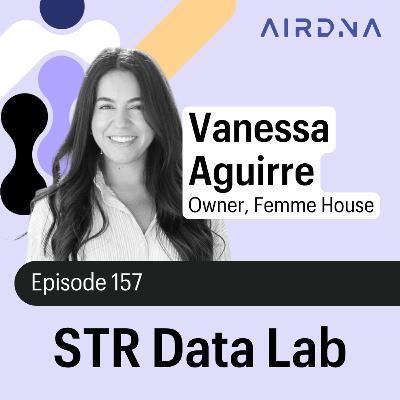
What happens when a short-term rental host fully leans into one guest avatar—and builds a brand around it? In this episode, Jamie Lane sits down with Vanessa Aguirre, founder of The Femme House, to explore how she turned themed, photo-worthy bachelorette stays into a thriving STR portfolio. From neon signs and heart-shaped mini golf to seven-seat beauty bars, Vanessa shares how creating an experience—not just a place to sleep—translates to higher occupancy, premium rates, and months-ahead bookings.As part of AirDNA’s new “guest avatar” series, this conversation dives deep into the data and design strategy behind properties made for specific traveler types. Vanessa and Jamie unpack how catering to groups like bachelorettes can yield up to 35% higher revenue, what hosts often overlook when trying to enter this niche, and why “thinking like a bride” matters more than any pricing tool.You don’t want to miss this one—it’s a masterclass in creative differentiation for hosts looking to stand out in competitive markets.Key Takeaways:🎯 Niche down to scale up: Targeting a specific traveler type (like bachelorettes) can yield outsized returns.💡 Experience beats aesthetics: Beyond pink wallpaper, success comes from functional, “Instagrammable” design.📅 Plan ahead for long-term bookings: Bachelorette groups often book 6–12 months out, offering stable revenue forecasting.💬 Overcommunicate: Set expectations early and often to maintain smooth guest and neighbor relationships.🔄 Stay on trend: The bachelorette market evolves quickly—hosts must refresh content, décor, and amenities yearly to stay relevant.https://www.tiktok.com/@vanessaeaguirre?lang=enhttps://www.instagram.com/vanessa.e.aguirre/?hl=en —————Sign up for AirDNA for FREE 👇https://bit.ly/4loNHdc—————Connect with Jamie on social mediaLinkedIn: https://www.linkedin.com/in/jamiehlane/ Twitter: https://twitter.com/Jamie_Lane—————Connect with Scott on social mediaLinkedIn: https://www.linkedin.com/in/sagescott—————Connect with AirDNA on social media:Instagram: https://instagram.com/airdna.coLinkedIn: https://www.linkedin.com/company/airdna/Twitter: https://twitter.com/airdnaTikTok: https://www.tiktok.com/@airdna.co—————Episode 157

For The STR Data Lab’s three-year anniversary, Jamie Lane sits down with AirDNA and Uplisting CEO Rohit Bezewada for an inside look at how the company—and the short-term rental industry—are evolving. From scaling Uber and leading M&A at JP Morgan to building AirDNA’s next chapter, Rohit shares lessons on data-driven growth, leadership, and innovation in the STR tech ecosystem.This conversation dives deep into what it takes to build trust in data, how AirDNA is expanding beyond analytics into operations, and why Rohit himself is buying a short-term rental to experience the products firsthand. He also pulls back the curtain on what’s next for hosts—AI-powered tools, smarter revenue management, and a simpler, more connected tech stack for every investor and property manager.You’ll walk away with a front-row view of the forces shaping the STR industry—from consolidation to AI—and a better understanding of where opportunity lies for hosts ready to level up. Don’t miss this behind-the-scenes look at the future of AirDNA and short-term rentals.Key Takeaways Data as a mindset: Rohit’s biggest lesson from Uber—never make decisions based on anecdotes; measure everything.The future is integrated: AirDNA is moving beyond data insights to operational tools that help hosts manage and scale.AI in action: Expect agent-style assistants that help hosts underwrite, price, and operate properties automatically.Power to the “long tail”: Most STR hosts don’t use PMS tools—AirDNA aims to serve this group with simple, trustworthy software.Consolidation is coming: The STR tech space will mature fast, and the winners will have data, distribution, and customer trust.Sign up for AirDNA for FREE 👇https://bit.ly/4osgoc9—————Connect with Jamie on social mediaLinkedIn: https://www.linkedin.com/in/jamiehlane/ Twitter: https://twitter.com/Jamie_Lane—————Connect with Scott on social mediaLinkedIn: https://www.linkedin.com/in/sagescott—————Connect with AirDNA on social media:Instagram: https://instagram.com/airdna.coLinkedIn: https://www.linkedin.com/company/airdna/Twitter: https://twitter.com/airdnaTikTok: https://www.tiktok.com/@airdna.co—————Episode 156

What happens in Vegas doesn’t stay in Vegas this time. Jamie Lane and Scott Sage are back from the VRMA conference with powerful insights shaping the future of short-term rentals—from the rise of AI tools to why “national is dead and local is king.” They unpack the data behind what’s really driving property manager success today—and what’s holding others back.In this episode, Jamie reveals new AirDNA research showing a major divide between top-performing property managers and the rest: those with review scores above 4.7 are keeping clients, while those below are losing nearly a quarter of their portfolio. They also explore why small, hyper-local co-hosts are thriving while national brands stall, and how a well-designed loyalty program can win repeat guests without relying on Airbnb or Vrbo.Later, they dig into the latest STR data—muted summer demand, shifting guest behavior, and the surprising 40% surge in New Year’s bookings driven by holiday timing. Plus: a PSA every host using a PMS on Airbnb needs to hear before October 27th. Key Takeaways AI is already transforming hosting: Innovative tools are boosting communication scores and guest experiences, even before Airbnb or Vrbo roll out their own versions.The 4.7 Rule: Property managers with review scores below 4.7 now face double the churn rate (24%) of top performers—quality is retention.Local > National: Hyper-local operators managing 6–20 properties are growing fastest, proving proximity and personal touch beat big-brand scale.DIY Loyalty Works: Local managers can build profitable loyalty programs that attract repeat guests—no need to wait for OTA initiatives.Holiday & Market Insights: Expect strong end-of-year demand, a 40% New Year’s Eve surge, and higher bookings in World Cup host cities next summer.Sign up for AirDNA for FREE 👇https://bit.ly/45bfb1c—————Connect with Jamie on social mediaLinkedIn: https://www.linkedin.com/in/jamiehlane/ Twitter: https://twitter.com/Jamie_Lane—————Connect with Scott on social mediaLinkedIn: https://www.linkedin.com/in/sagescott—————Connect with AirDNA on social media:Instagram: https://instagram.com/airdna.coLinkedIn: https://www.linkedin.com/company/airdna/Twitter: https://twitter.com/airdnaTikTok: https://www.tiktok.com/@airdna.co—————Episode 155

What if scaling your vacation rental business could actually hurt your bottom line? This week, Jamie Lane sits down with Ashley Ching, founder and CEO of Inhaven, to unpack her research on why national hospitality management companies—from Vacasa to Ambridge—have repeatedly failed to scale successfully. Together, they dive into the structural challenges of the short-term rental industry and uncover why “bigger” doesn’t always mean “better.”Ashley shares insights from hundreds of executive interviews across hotels, restaurants, and vacation rentals, revealing five key pillars that separate thriving, sustainable property managers from those that crumble under complexity. From the myth of economies of scale to the power of local operations and curated portfolios, this episode is a must-listen for any STR professional who wants to grow smarter—not just larger.Whether you manage 10 homes or 1,000, this conversation reframes how you think about profitability, service, and scale—and what true success in hospitality really looks like. You don’t want to miss this episode.Key TakeawaysBigger isn’t better: Hospitality is a labor-driven business, not a production line—growth often brings higher costs and lower margins.Curate your portfolio: The most successful managers focus on quality over quantity, offboarding “bad” properties that drain time and profit.Stay local: Empowering on-the-ground teams and decision-makers leads to stronger operations and better guest experiences.Choose owners wisely: Aligning with the right owners is as crucial as choosing the right homes.Pick your focus: You can prioritize service, scale, or profitability—but not all three at once. Sign up for AirDNA for FREE 👇https://bit.ly/411Sk5J—————Connect with Jamie on social mediaLinkedIn: https://www.linkedin.com/in/jamiehlane/ Twitter: https://twitter.com/Jamie_Lane—————Connect with Scott on social mediaLinkedIn: https://www.linkedin.com/in/sagescott—————Connect with AirDNA on social media:Instagram: https://instagram.com/airdna.coLinkedIn: https://www.linkedin.com/company/airdna/Twitter: https://twitter.com/airdnaTikTok: https://www.tiktok.com/@airdna.co—————Episode 154Key Takeaways

The vacation rental landscape is evolving fast — and Vrbo’s taking bold steps to redefine what “success” means in this new era. In this episode, Jamie Lane sits down with Tim Rosolio, VP of Vacation Rental Partnerships at Expedia Group, to explore how Vrbo is prioritizing quality over quantity, building stronger demand through Expedia’s massive network, and integrating cutting-edge AI tools to improve the booking journey for guests and hosts alike.Tim shares an inside look at Vrbo’s journey from HomeAway’s early subscription days to today’s global platform, explaining how the industry’s supply boom has reshaped what travelers expect — and what property managers need to deliver. From AI-powered review summaries to the “One Key” loyalty program bridging hotels and vacation rentals, this conversation unpacks the biggest levers shaping the next phase of STR growth.Whether you’re managing one property or a thousand, you’ll walk away with insights to future-proof your business in an increasingly competitive market.Don’t miss this one — it’s packed with an insider's perspective you won’t find anywhere else. Key Takeaways 🏠 Quality is the new growth metric: Vrbo is focusing less on adding listings and more on ensuring consistent, high-quality guest experiences.🌍 Expedia integration is expanding demand: Vacation rentals are now surfacing across Expedia’s B2B and brand ecosystem, from Delta to AmEx Travel.💳 Vrbo Payments opens new opportunities: Opting in allows hosts to tap into global distribution networks while simplifying transactions.🤖 AI is transforming the traveler journey: From review summaries to search partnerships with Perplexity, AI is boosting discovery and conversion.💡 Loyalty meets vacation rentals: The One Key program connects hotel and STR bookings, attracting new guests who can “burn” points on vacation homes.Sign up for AirDNA for FREE 👇https://bit.ly/45enjOz—————Connect with Jamie on social mediaLinkedIn: https://www.linkedin.com/in/jamiehlane/ Twitter: https://twitter.com/Jamie_Lane—————Connect with Scott on social mediaLinkedIn: https://www.linkedin.com/in/sagescott—————Connect with AirDNA on social media:Instagram: https://instagram.com/airdna.coLinkedIn: https://www.linkedin.com/company/airdna/Twitter: https://twitter.com/airdnaTikTok: https://www.tiktok.com/@airdna.co—————Episode 153

Every host dreams of more direct bookings—but few have cracked the code like Brittany Magsig of Mountain Mama Cabins. In this episode, Jamie Lane dives into Brittany’s journey from buying her first Smoky Mountain cabin during COVID to becoming a social media powerhouse who now drives the majority of her reservations directly through her own channels.Brittany shares how she turned TikTok and Instagram into engines of trust, loyalty, and bookings—while also balancing the challenges of being both an influencer and a host. She explains what types of content actually convert, how to build lasting guest relationships, and why consistency matters more than perfection.If you’ve ever wondered how to move beyond pretty property photos and really make social work for your short-term rental, this conversation will spark new ideas you can put into practice right away. You don’t want to miss this episode!What You’ll Learn in This Episode:How Brittany built a loyal following that drives 60%+ direct bookingsThe content strategies that actually attract guests (and what to avoid)Why showing your face builds trust faster than polished photosTips for handling viral content, controversy, and guest perceptionsActionable first steps to start posting consistently—even if you’re camera shySign up for AirDNA for FREE 👇https://bit.ly/3HtCv0X—————Connect with Jamie on social mediaLinkedIn: https://www.linkedin.com/in/jamiehlane/ Twitter: https://twitter.com/Jamie_Lane—————Connect with Scott on social mediaLinkedIn: https://www.linkedin.com/in/sagescott—————Connect with AirDNA on social media:Instagram: https://instagram.com/airdna.coLinkedIn: https://www.linkedin.com/company/airdna/Twitter: https://twitter.com/airdnaTikTok: https://www.tiktok.com/@airdna.co—————

The short-term rental world is shifting fast—and this week’s episode breaks down what hosts and property managers need to know to stay ahead. Fresh from the Expedia + VRBO product launch in Austin, Jamie Lane and Scott Sage share the latest innovations rolling out to help drive bookings, improve guest experience, and reward quality operators. From AI-powered guest review summaries to new distribution channels across Expedia’s B2B network, these changes could reshape how your listings perform.But that’s just the start. Jamie and Scott also dig into the Fed’s latest interest rate moves, why mortgage rates aren’t falling as quickly as you might expect, and what that means for STR investors. They then zoom into the data: summer performance trends, where occupancy is softening, and why luxury and coastal markets are holding strong while budget and urban listings feel the squeeze.If you want to understand where demand is heading this fall and how to position your business for success in 2025, this is the episode to hear. You don’t want to miss it!What You’ll Learn in This Episode:VRBO’s quality push: More listings will be removed if they don’t meet guest expectations—high-quality operators win.AI comes to STR platforms: Expect automated guest review summaries, Q&A boxes, and property highlights designed to boost conversions.Fed rate cuts = mixed signals: Lower federal funds rates haven’t translated to cheaper mortgages yet; recession risk looms.Summer recap: Demand grew modestly, RevPAR hit a post-COVID high, but 34 of the top 50 markets saw occupancy declines.The bifurcation trend: Luxury and coastal/mountain markets are performing well, while budget and urban/suburban listings struggle.Sign up for AirDNA for FREE 👇https://bit.ly/41039p1 —————Connect with Jamie on social mediaLinkedIn: https://www.linkedin.com/in/jamiehlane/ Twitter: https://twitter.com/Jamie_Lane—————Connect with Scott on social mediaLinkedIn: https://www.linkedin.com/in/sagescott—————Connect with AirDNA on social media:Instagram: https://instagram.com/airdna.coLinkedIn: https://www.linkedin.com/company/airdna/Twitter: https://twitter.com/airdnaTikTok: https://www.tiktok.com/@airdna.co—————Episode 151

Comments

Download from Google Play

Download from App Store
 United States