


 Claim Ownership
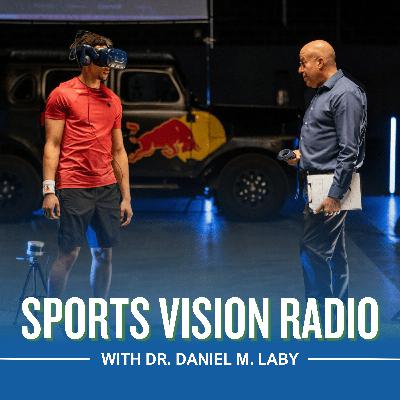
Sports Vision Radio
Subscribed: 1Played: 4
Subscribe

© Daniel M. Laby, MD
Description
Welcome to the podcast where vision meets performance.
Hosted by Dr. Daniel Laby, one of the world’s leading Sports Vision Specialists with over 30 years of experience working with professional, Olympic, and elite athletes across the globe.
This show is designed for athletes, coaches, parents, and performance-minded professionals who want to understand how the visual system, what you see and how your brain processes it, directly impacts your ability to compete at the highest level.
Each episode dives into the science and strategy behind visual performance: from reaction time and focus control, to decision-making speed, visual processing, and beyond. Whether you’re on the field, in the gym, or in the dugout, you’ll learn practical insights and cutting-edge methods to train your eyes and brain to work together, so you can play sharper, smarter, and faster.
Because seeing clearly is just the beginning. This is about vision that wins!
Hosted by Dr. Daniel Laby, one of the world’s leading Sports Vision Specialists with over 30 years of experience working with professional, Olympic, and elite athletes across the globe.
This show is designed for athletes, coaches, parents, and performance-minded professionals who want to understand how the visual system, what you see and how your brain processes it, directly impacts your ability to compete at the highest level.
Each episode dives into the science and strategy behind visual performance: from reaction time and focus control, to decision-making speed, visual processing, and beyond. Whether you’re on the field, in the gym, or in the dugout, you’ll learn practical insights and cutting-edge methods to train your eyes and brain to work together, so you can play sharper, smarter, and faster.
Because seeing clearly is just the beginning. This is about vision that wins!
66 Episodes
Reverse
What if everything you’ve been told about carrots and eyesight is only half the story?In this episode, we unpack the fascinating science behind vision, nutrition, and genetics and why “eat your carrots” might be one of the most oversimplified pieces of health advice out there.You’ll learn how your body actually converts nutrients into usable vitamin A, why some people naturally struggle more than others (thanks to their DNA), and which compounds truly protect the most important part of your eyesight.Plus, we explore a surprising research finding that shows how isolated supplements can sometimes do more harm than good and why whole foods win every time.If you care about sharper focus, better performance, brain health, or long-term eye protection, this conversation will completely change how you think about what’s on your plate.IN THIS EPISODE, YOU'LL LEARN:The genetics of vitamin A — why your DNA determines how well you convert beta-carotene and what that means for your vision, immunity, and overall healthThe real eye-protecting nutrients — how lutein and zeaxanthin act like built-in sunglasses to shield your retina and enhance clarityWhy supplements can backfire — the surprising risks of high-dose isolated nutrients and the science behind choosing whole foods insteadFueling your eyes = fueling your brain — how smart nutrition improves focus, reaction time, and total nervous system performanceEPISODE TIMESTAMPS:00:24 - Understanding Vitamin A: Retinol vs. Beta-Carotene01:03 - The Role of Genetics in Vitamin A Conversion02:28 - Beyond Beta-Carotene: The Importance of Lutein and Zeaxanthin04:10 - The Risks of High-Dose Supplements05:18 - The Power of Whole Foods for Eye and Brain Health06:29 - Key Takeaways for Optimal Vision and HealthHELPFUL RESOURCES:Sports Vision NYCConnect with Dr. Laby on InstagramPick Up a Copy of Eye of the ChampionDownload The Ultimate Sports Vision Guide for Athletes [FREE]👉 Don’t forget to subscribe to Sports Vision Radio so you never miss an episode on the science of peak performance.
How does a baseball player hit a 95-mph pitch… or a fencer land a strike within centimeters?It turns out elite performance isn’t just about “great vision.”It’s about using the right visual system at the right distance.In this episode, we break down the fascinating science behind how the brain judges depth and why athletes actually rely on two completely different systems depending on how far the action is happening.IN THIS EPISODE, YOU'LL LEARN: Elite athletes don’t rely on just “better vision” — they rely on the right visual system for the distance they’re playing at.Beyond 20 feet, the brain depends mostly on monocular cues like motion and tracking to judge depth.Inside 20 feet, stereo (two-eye) vision provides the precise 3D accuracy needed for close, fast decisions.Vision training should match your sport’s specific demands — one-size-fits-all simply doesn’t work.EPISODE TIMESTAMPS:00:00 – The big question: How do elite athletes judge depth (and the baseball myth) 01:00 – The two systems explained: monocular vs binocular vision 02:05 – Stereo vision, the 20-foot limit, and why distance changes everything 03:35 – Sport examples: fencing, basketball, golf, hockey, and the quarterback hybrid 04:40 – The takeaway: why vision training must match your sport and how to build a complete visual toolkitHELPFUL RESOURCES:Sports Vision NYCConnect with Dr. Laby on InstagramPick Up a Copy of Eye of the ChampionDownload The Ultimate Sports Vision Guide for Athletes [FREE]👉 Don’t forget to subscribe to Sports Vision Radio so you never miss an episode on the science of peak performance.
This week, we put football players through their paces using Blaze Pod reaction time testing and the results reinforced a truth we’ve seen for decades: elite performance isn’t just about what athletes see… it’s how fast their brain processes visual information and triggers the right response.In football, milliseconds can be the difference between clearing a ball or conceding, winning a duel or losing position, making the squad or sitting on the bench.In this episode, we break down the difference between simple reaction time and complex reaction time, why complex decision-making creates a significant delay, and how the best athletes train a skill I call Decision Vision, the ability to integrate perception, cognition, and motor execution under pressure.IN THIS EPISODE, YOU'LL LEARN:Simple reaction time isn’t the game: Football rarely gives you predictable “go” moments — simple reaction time is useful, but limited.Decision-making is where time disappears: The moment an athlete has to identify, choose, and execute, reaction time slows, often by over 100ms.Decision Vision is the real separator: Top performers process visual information faster, make better choices under pressure, and act sooner, not just quicker.Train it like you play it: The best results come from testing and training vision under real game load (cognitive + physical), not in isolation.EPISODE TIMESTAMPS:00:00 - Why milliseconds decide outcomes in football01:10 - The Blaze Pod testing session overview02:00 - Simple reaction time: what it measures and why it matters03:20 - A real-world example: dominant vs non-dominant leg reaction times04:40 - Why football isn’t simple: introducing complex reaction time06:10 - The “Decision Vision” gap (and why it’s the real separator)07:45 - The Sports Vision Pyramid: from basic vision to elite decision-making09:10 - NeuroTracker + BOSU ball: testing vision under real sport load10:40 - How deficits at lower levels create delays at the top12:00 - How we train athletes to close the gap (decision-making & anticipation)13:30 - Reacting vs anticipating: the elite advantage14:30 - Watch the full testing setup on YouTubeHELPFUL RESOURCES:Sports Vision NYCConnect with Dr. Laby on Instagram
After decades of working with elite athletes and championship teams, one question keeps coming up again and again:“Can you scientifically prove that vision training improves performance?”In this episode, we tackle the reality behind that question and explain why the issue isn’t whether sports vision works… it’s why traditional proof is so hard to produce in elite sport. We break down the statistical and practical barriers that make research in this space incredibly difficult, and what teams should do in the meantime.IN THIS EPISODE, YOU'LL LEARN:Why it’s so hard to “prove” sports vision worksWhat makes elite performance research trickyWhat the evidence does suggest about vision and high performanceHow teams should approach vision training nowEPISODE TIMESTAMPS:00:27 - Challenges in Proving Vision Training01:39 - Statistical Hurdles in Vision Training Research03:30 - Evidence from Existing Studies04:10 - Sport-Specific Visual Demands05:28 - The Case for Vision Training07:06 - The Future of Vision TrainingHELPFUL RESOURCES:Sports Vision NYCConnect with Dr. Laby on InstagramPick Up a Copy of Eye of the ChampionDownload The Ultimate Sports Vision Guide for Athletes [FREE]👉 Don’t forget to subscribe to Sports Vision Radio so you never miss an episode on the science of peak performance.
What if the moments we call “choking” aren’t mental failures at all — but predictable physiological breakdowns?In this episode, we explore The Power of 37, a critical performance threshold that shows up again and again in elite sport, neuroscience, and even mathematics. Drawing from decades of work with world-class athletes and insights from the classic Secretary Problem, this episode reveals why performance collapses under pressure and how champions train to withstand it.You’ll learn why visual fatigue often precedes mechanical failure, how the eye–brain–body loop breaks down late in games, and why pushing past controlled fatigue in training is the key to sustained championship performance.IN THIS EPISODE, YOU'LL LEARN:Why the 37% threshold marks the point where elite performance systems shift from control to chaosHow visual fatigue, not mental weakness, causes late-game mistakes under pressureWhat visual fumbles and quiet-eye breakdowns reveal about performance before physical failureHow elite athletes train beyond game intensity to push their breaking point later and reduce its impactEPISODE TIMESTAMPS:00:39 - The Power of 37 in Human Performance01:19 - Neuromuscular and Visual System Breakdown02:24 - Visual Fumbles in Sports04:26 - Training Beyond the 37% Threshold04:56 - The Importance of Visual Training06:16 - Applying the Power of 37HELPFUL RESOURCES:Sports Vision NYCConnect with Dr. Laby on InstagramPick Up a Copy of Eye of the ChampionDownload The Ultimate Sports Vision Guide for Athletes [FREE]👉 Don’t forget to subscribe to Sports Vision Radio so you never miss an episode on the science of peak performance.
How much do you really understand about the visual skills behind elite athletic performance?In this episode, we kick off the year with something a little different — a five-question sports vision quiz drawn directly from Eye of the Champion. Whether you’re an athlete, coach, or simply fascinated by the science of high performance, this episode reveals why vision is far more than just seeing clearly, it’s about prediction, decision-making, and preparation.You’ll discover the most misunderstood aspects of sports vision, why generic training programs often fail, and how elite athletes gain a competitive edge long before competition begins.IN THIS EPISODE, YOU'LL LEARN:Why the primary role of vision in sport is prediction, not clarityWhich Olympic sport requires the sharpest distance vision and why the answer surprises most peopleThe Sports Vision Pyramid and what must be optimized before higher-level training worksWhy reaction time training only benefits certain athletes and how to know if it’s worth your timeWhat the Quiet Eye phenomenon is and how it improves performance across multiple sportsEPISODE TIMESTAMPS: 00:43 - Question 1: Core Purpose of Vision in Sports02:18 - Question 2: Sports Specific Visual Requirements03:53 - Question 3: The Sports Vision Pyramid05:00 - Question 4: Reaction Time and Athletic Performance06:16 - Question 5: The Quiet Eye PhenomenonHELPFUL RESOURCES:Sports Vision NYCConnect with Dr. Laby on InstagramPick Up a Copy of Eye of the ChampionDownload The Ultimate Sports Vision Guide for Athletes [FREE]👉 Don’t forget to subscribe to Sports Vision Radio so you never miss an episode on the science of peak performance.
Every season, athletes and coaches ask the same question: Does sports vision training really work, or is it just another performance trend?After more than 30 years working with athletes across Major League Baseball, the English Premier League, and elite sport worldwide, Dr. Daniel Laby gives a clear, science-backed answer: yes, sports vision training works, but only when it’s done correctly.In this episode, Dr. Laby cuts through the hype and explains why most vision training fails, what elite athletes do differently, and how coaches and players can train vision safely, effectively, and in a way that actually transfers to performance on the field.IN THIS EPISODE, YOU'LL LEARN: Why 20/20 vision doesn’t equal elite performance and what truly matters when the game speeds upWhich visual and perceptual-cognitive skills are actually trainable and backed by decades of researchWhy most sports vision training fails and how generic drills and apps miss real-world transferHow to train vision safely and effectively so it integrates with movement, decision-making, and competitionEPISODE TIMESTAMPS:00:24 - Common Misconceptions About Sports Vision01:02 - The Sports Vision Pyramid01:16 - Key Research Findings02:21 - Common Problems in Vision Training03:11 - Effective Vision Training StrategiesHELPFUL RESOURCES:Sports Vision NYCConnect with Dr. Laby on InstagramPick Up a Copy of Eye of the ChampionDownload The Ultimate Sports Vision Guide for Athletes [FREE]👉 Don’t forget to subscribe to Sports Vision Radio so you never miss an episode on the science of peak performance.
There’s a brief moment before every shot, often less than half a second, that can determine success or failure. It’s not mechanics or technique. It’s what happens when the eyes stop moving.In this episode, we explore The Quiet Eye, a powerful but often overlooked performance skill used by elite athletes. Research shows that successful performances are preceded by earlier and longer visual fixation on the correct target, while missed shots under pressure often involve late or unstable gaze shifts.You’ll learn why Quiet Eye isn’t about staring longer, how it prepares the brain to execute movement, and how it can be trained without changing mechanics, especially when the pressure is highest.IN THIS EPISODE, YOU'LL LEARN: Quiet Eye predicts success, especially under pressureIt’s task-specific, the right target mattersThe eyes prepare the brain for executionQuiet Eye can be trained without changing techniqueEPISODE TIMESTAMPS:00:00 - The Crucial Moment Before a Free Throw00:15 - Understanding Quiet Eye in Sports00:52 - The Science Behind Quiet Eye01:43 - Training Quiet Eye for Better Performance02:02 - Practical Quiet Eye Drills02:39 - Quiet Eye Under PressureHELPFUL RESOURCES:Sports Vision NYCConnect with Dr. Laby on InstagramPick Up a Copy of Eye of the ChampionDownload The Ultimate Sports Vision Guide for Athletes [FREE]👉 Don’t forget to subscribe to Sports Vision Radio so you never miss an episode on the science of peak performance.
What if the hours you spend gaming could actually help you perform better on the field, court, or ice, not just improve your K/D ratio?In this episode, Dr. Daniel Laby dives into what sports vision science really says about gaming and athletic performance. While gaming won’t magically turn you into a superstar, research shows that the right kind of gaming, done the right way, can sharpen key visual and cognitive skills that matter in high-speed sports.He breaks down what’s proven, what’s hype, and how athletes can use gaming strategically as part of a smart performance training program.IN THIS EPISODE, YOU'LL LEARN:The right kind of gaming can sharpen sport-relevant visual skills like reaction speed, tracking moving objects, focusing in chaos, and seeing fine details faster.Gaming is a supplement, not a replacement for practice. The benefits are real but modest and only work when paired with proper sport training.Only fast-paced, competitive games played with intention matter. Casual or slow games don’t produce the same visual-cognitive benefits.Used strategically, gaming is low-risk and accessible, especially in the off-season or during injury and if you’re already gaming, it’s worth doing it in a way that might help performance.EPISODE TIMESTAMPS:00:36 - Scientific Evidence: Gaming Improves Vision01:16 - Benefits of Gaming for Athletes01:57 - Limitations and Considerations03:35 - Practical Tips for Using Gaming in Training04:40 - When and How to Incorporate GamingHELPFUL RESOURCES:Sports Vision NYCConnect with Dr. Laby on InstagramPick Up a Copy of Eye of the ChampionDownload The Ultimate Sports Vision Guide for Athletes [FREE]👉 Don’t forget to subscribe to Sports Vision Radio so you never miss an episode on the science of peak performance.
Athletes, parents, and coaches are sounding the alarm: “Their eyes just aren’t working anymore.” Missed shots, poor tracking, fuzzy vision, late reactions. These aren’t just random off days. They’re symptoms of a predictable, research-backed cascade of visual fatigue.In today’s episode, Dr. Daniel Laby breaks down what’s actually happening when an athlete says, “I just can’t see anymore,” and why most people have been thinking about sports vision all wrong. He explains the three overlapping systems that fail under fatigue, the science behind visual breakdown, and what athletes can finally do about it.This is a must-listen for athletes, coaches, performance staff, and parents who want to understand the hidden factor limiting high-level performance and how to train it.IN THIS EPISODE, YOU'LL LEARN:Visual fatigue has three components: physical, eye muscle, and cognitiveFatigue follows a predictable breakdown: eye movements → gaze control → timing → decisionsMany late-game mistakes are caused by tired eyes, not tired legsVisual performance under fatigue is measurable and trainableEPISODE TIMESTAMPS:00:29 - Understanding Visual Fatigue: A New Perspective00:58 - Physical Fatigue and Its Impact on Vision01:34 - Local Visual Oculomotor Fatigue02:03 - Cognitive Fatigue: The Hidden Challenge02:38 - The Predictable Pattern of Visual Breakdown05:21 - Real-World Implications and Solutions05:50 - Addressing Visual FatigueHELPFUL RESOURCES:Sports Vision NYCConnect with Dr. Laby on InstagramPick Up a Copy of Eye of the ChampionDownload The Ultimate Sports Vision Guide for Athletes [FREE]👉 Don’t forget to subscribe to Sports Vision Radio so you never miss an episode on the science of peak performance.
In this episode, Dr. Daniel Laby unpacks one of the biggest misconceptions in sports vision - the idea that correlations fully explain how visual skills impact performance. After decades of analyzing athlete data, he reveals why linear thinking misses the real story and how a non-linear, threshold-based approach uncovers the insights that actually drive results.Using examples from baseball hitters, Dr. Laby shows how small visual improvements only create big performance gains when an athlete crosses a specific threshold—highlighting why individualized, targeted training matters far more than generic visual improvement.Whether you're a coach, athlete, or trainer, this episode will change the way you think about visual performance and training.IN THIS EPISODE, YOU'LL LEARN:The visual system is non-linear, so correlations alone can be misleadingReal performance gains occur when athletes cross specific visual thresholdsSmall improvements only matter if they happen near those thresholdsTargeted, individualized visual training is far more effective than general improvementEPISODE TIMESTAMPS:00:42 - The Non-Linear Nature of the Visual System01:01 - Practical Example: Baseball Hitters01:36 - Understanding Threshold-Based Performance03:07 - The Logistic Curve Model03:39 - Practical Implications for Athletes and Coaches04:20 - Rethinking Visual TrainingHELPFUL RESOURCES:Sports Vision NYCConnect with Dr. Laby on InstagramPick Up a Copy of Eye of the ChampionDownload The Ultimate Sports Vision Guide for Athletes [FREE]👉 Don’t forget to subscribe to Sports Vision Radio so you never miss an episode on the science of peak performance.
In this episode, Dr. Daniel Laby zooms out from drills and techniques and explores the future of sports vision training. He breaks down the three major forces reshaping how athletes train their brains — democratization of tools, adaptive intelligence, and neuroplasticity acceleration, and explains why we’re at the most exciting turning point in human performance. IN THIS EPISODE, YOU'LL LEARN:We’re entering the Cognitive Athletics Revolution, where training the brain is as important as training the body. Pro-level vision and cognitive tools are now accessible to everyday athletes. Adaptive systems personalize training in real time based on your performance. Advances in neuroplasticity let athletes improve visual-cognitive skills faster and more precisely.EPISODE TIMESTAMPS:00:24 - The convergence of science, technology, and performance01:00 -Big Change #1: From million-dollar labs to smartphone-based vision training01:40 - Why widespread access doesn’t guarantee equal results02:15 -Big Change #2: Systems that tailor training based on real-time performance03:00 - Personalized, predictive programs that adjust automatically to athlete needs03:42 - Big Change #3: How brain training can now happen faster and more precisely04:30 - Training specific brain circuits vs. doing generic drills05:05 - How the three major trends work together to form the Cognitive Athletics Revolution.HELPFUL RESOURCES:Sports Vision NYCConnect with Dr. Laby on InstagramPick Up a Copy of Eye of the ChampionDownload The Ultimate Sports Vision Guide for Athletes [FREE]👉 Don’t forget to subscribe to Sports Vision Radio so you never miss an episode on the science of peak performance.
Most athletes, and even many coaches, believe elite vision training requires elite budgets. In today’s episode, we flip that misconception on its head. Dr. Daniel Laby breaks down six incredibly effective sports vision tools, each costing less than $50, that he regularly uses with athletes from youth sports all the way to Premier League and Real Madrid star Trent Alexander-Arnold.You’ll learn why visual performance is the underdeveloped competitive edge in modern sport, how simple tools can transform an athlete’s reaction time, processing speed, and on-field decision-making, and exactly how to start implementing these drills into your weekly training.IN THIS EPISODE, YOU'LL LEARN:Six high-impact tools that dramatically improve visual performanceThe foundational Sports Vision Pyramid and how to apply it to any sportHow to structure 30–40 minute weekly vision training sessions for maximum resultsThe key principle behind long-term improvement: consistent, focused practiceEPISODE TIMESTAMPS:00:41 - Tool 1: Swivel Vision Training Glasses01:30 - Tool 2: The Eye of the Champion Book02:15 - Tool 3: Juggling Set02:40 - Tool 4: Brain HQ App03:07 - Tool 5: Home Court App03:43 - Tool 6: Tennis Balls04:31 - Real-World Results and Case Study05:09 - Implementation Strategy for Vision Training05:33 - Breaking Down Barriers to Elite Vision TrainingHELPFUL RESOURCES:Sports Vision NYCConnect with Dr. Laby on InstagramPick Up a Copy of Eye of the ChampionDownload The Ultimate Sports Vision Guide for Athletes [FREE]👉 Don’t forget to subscribe to Sports Vision Radio so you never miss an episode on the science of peak performance.
When Liverpool and England star Trent Alexander-Arnold partnered with Dr. Daniel Laby in 2021, few could have predicted the impact that cutting-edge vision training would have on his game. In this episode, Dr. Laby walks you through the remarkable journey, from early testing to measurable performance gains, revealing how elite-level sports vision can unlock untapped potential on the pitch.Featured in a Red Bull documentary, Trent’s transformation shows that football isn’t just about physical ability or tactical awareness — it’s also about how well players see, process, and react to the world around them.IN THIS EPISODE, YOU'LL LEARN:How traditional vision tests fall short for elite athletesWhat the Advanced Vision Testing System (AVTS) is and how it mirrors real game conditionsWhy multiple-object tracking and depth perception are crucial for high-speed decision-makingThe incredible stats behind Trent’s improvement — including a 240% jump in tracking ability and major increases in assists and key passesThe science behind regression to the mean — and why vision training, like strength training, requires maintenanceWhat this means for the future of football and athlete developmentEPISODE TIMESTAMPS:00:46 Advanced Vision Testing System (AVTS)01:01 Systematic Training Approach01:26 Importance of Depth Perception and Adaptability01:55 Innovative Training Techniques02:16 Remarkable Performance Improvements02:55 The Need for Ongoing Maintenance03:28 Vision Training: The Untapped FrontierHELPFUL RESOURCES:Sports Vision NYCConnect with Dr. Laby on InstagramPick Up a Copy of Eye of the ChampionDownload The Ultimate Sports Vision Guide for Athletes [FREE]👉 Don’t forget to subscribe to Sports Vision Radio so you never miss an episode on the science of peak performance.
Episode SummaryIn this Deep Dive episode, the hosts break down the Sports Vision Pyramid — a five-level performance model built from decades of working with elite and professional athletes. Rather than relying solely on strength, speed, or technical skill, this framework prioritizes how athletes take in, process, and act on visual information under high-pressure, real-time conditions. Performance isn’t just about muscles or mechanics — it’s fundamentally about perception and decision-making.The conversation begins by examining why the pyramid model starts with vision as its foundational layer. If the raw visual input isn’t sharp, fast, and accurate, then every higher-level skill suffers. Athletes cannot execute elite-level actions if they are processing incomplete or delayed visual information. The episode stresses that training the top of the pyramid without first optimizing lower levels is inefficient — and often a waste of coaching time and resources.From vision clarity and contrast sensitivity, to depth perception, to decision-making, to motor execution, each level builds on the one below it. The hosts highlight that many pros compensate for subtle visual deficits with advanced instincts and mechanics—but once detected and corrected, even small improvements in foundational visual performance can deliver meaningful competitive gains.The episode concludes with compelling empirical evidence from pro baseball: players with superior Level-1 visual performance (on the AVTS test) demonstrated significantly greater plate discipline and higher on-base rates, not from hitting harder, but from improved selectivity and decision-making. The message is clear — optimizing vision improves cognition, which improves execution, which wins games.The takeaway? Whether you're an athlete or a business professional, elite performance begins at the foundation. Master the input — and the output takes care of itself.Learning PointsVision is the foundational performance input — clarity + contrast sensitivity are Level 1.Testing must simulate real-world demands: brief, time-pressured visual stimuli.Each eye must be tested individually to identify asymmetries.Level 2: stereo vision — depth perception & spatial judgment.Level 3: visual-based decision-making — clarity reduces cognitive load and increases selectivityLevel 4: motor execution — training here is inefficient if lower levels are weak.Level 5: on-field performance — the visible outcome of a strong foundation.Pro-level data: better foundational vision correlates with a higher on-base percentage via improved pitch selection.Training the top without fixing the base is like building athletic performance on sand.The model applies beyond sports — decision quality depends on the quality of input.Episode Timestamps00:00 — Introduction to optimizing athletic performance00:20 — Why vision matters more than strength/speed alone00:45 — The Sports Vision Pyramid concept explained01:10 — Importance of building from the bottom up01:50 — Level 1: Visual acuity & contrast sensitivity02:49 — Time-pressure visual testing and monocular testing03:40 — AVTS testing: speed, clarity, contrast04:28 — Even pros compensate for hidden visual deficits05:11 — Level 2: Stereo vision & depth judgment06:19 — Level 3: Vision-based decision-making07:44 — Cognitive load and early pitch recognition07:50 — Level 4: Visually-guided motor execution08:48 — Why mechanics alone can’t fix...
🎧 Show Notes – The Death of Talent: Why Preparation Always WinsDr. Laby’s framework for turning effort into exponential advantage — and why every athlete can build greatness from scratch.SummaryIn this episode of Sports Vision Radio, the hosts explore what truly separates elite athletes and high performers from the rest — and it’s not raw talent. Drawing on the expertise of Dr. Daniel Laby, who has spent three decades working with professional athletes, the conversation challenges the myth that success is primarily genetic. Instead, it emphasizes preparation, deliberate practice, cumulative advantage, and sheer work ethic as the real engines of excellence.The discussion begins by dissecting the traditional equation of Achievement = Talent + Preparation, revealing that as one moves toward the top tier of performance, the importance of natural talent diminishes while preparation and training dominate. The hosts highlight that the psychological freedom in focusing on effort rather than innate ability empowers individuals to take full control of their development.Next, the episode delves into the nature of deliberate practice—not mere repetition, but precise, targeted training aimed at correcting weaknesses. Examples such as Steph Curry’s early commitment to refining his shooting form and Tiger Woods’ lifelong accumulation of golf practice illustrate how compounding small advantages early in life leads to exponential results over time.The conversation culminates in identifying the ultimate differentiator: effort. At the elite level, everyone is talented and trained — but only the few who sustain extraordinary levels of effort and intensity rise to the very top. Dr. Laby’s personal story about training for the New York City Marathon — starting with a single block and progressing to 26 miles — perfectly illustrates how determination and systematic improvement can overcome perceived limitations in talent.Ultimately, this episode reframes success as a function of controllable variables — deliberate effort and sustained preparation — challenging listeners to increase their own preparation by just 10%. A small, consistent boost today, the hosts suggest, becomes tomorrow’s competitive edge through the power of cumulative advantage.Learning PointsTalent matters less than we think: Success at the top levels depends more on preparation than innate ability.Deliberate practice is key: Focused, feedback-driven training targeting weaknesses builds long-term mastery.Cumulative advantage compounds success: Small early gains snowball into large differences over years of consistent work.Effort is the ultimate differentiator: The hardest workers outpace even the most naturally gifted.Actionable takeaway: Boost your preparation by 10% this week — effort compounds just like interest.⏱️ Episode Timestamps00:00 – 00:47 – Introduction: Redefining success beyond genetics and highlights00:47 – 02:11 – The talent myth: Why preparation outperforms natural ability02:11 – 03:54 – The psychology of effort: Controlling what you can build03:54 – 05:27 – Practice as the engine: Deliberate, targeted improvement05:27 – 07:26 – Cumulative advantage: The compounding effect of early mastery (Steph Curry, Tiger Woods)07:26 – 08:47 – The final differentiator: Relentless effort and intensity08:47 – 10:22 – Dr. Laby’s marathon story: Effort over talent in real life10:22 – 11:45 – Core takeaways: Preparation, deliberate practice, compounding, and effort11:45 – End – Challenge to...
1. Summary (4–5 Paragraphs)In this episode of The Deep Dive, the hosts unpack four of the most common—and costly—mistakes athletes make that silently hold back their performance. Instead of focusing on grueling workouts or expensive equipment, they explore smarter, evidence-based ways to optimize performance through better decisions, sharper vision, and intelligent use of technology and expertise.The conversation begins with the first major pitfall: neglecting functional vision. Athletes often assume that having 20/20 vision is enough, but as the discussion reveals, static eye charts don’t measure the dynamic visual skills essential for real-world competition. Dynamic visual acuity, depth perception, visual processing speed, and peripheral awareness are what truly separate good athletes from great ones. Without assessing and optimizing these, athletes are effectively training blindfolded.The second mistake delves into what the hosts call the “Wild West” of sports advice. With social media flooded by self-proclaimed experts, athletes often waste time and money following unverified or unsafe training methods. The takeaway: demand proof, credentials, and evidence before trusting anyone with your performance. As elite teams vet their consultants rigorously, so should individual athletes.From there, the hosts pivot to mistake number three—failing to leverage new knowledge. They highlight how breakthroughs in sports vision, neurotraining, and affordable technologies like VR are creating powerful new tools for athletes. Even simple activities like juggling can significantly enhance brain coordination and field awareness, providing measurable advantages without high costs.The final mistake centers on mindset: believing there’s a single “magic bullet” solution. While vision optimization is a game-changer, it must be integrated with consistent practice, high-quality coaching, and a holistic approach. The true formula for success lies in combining these marginal gains—clear vision, vetted expertise, and adaptive tools—so that no external factor limits potential. What remains is the athlete’s own dedication to apply these lessons consistently.2. Learning PointsFunctional vision drives performance: Static 20/20 vision is only the baseline; dynamic visual skills are the foundation of elite play.Train your brain, not just your body: Processing speed, depth perception, and peripheral awareness directly impact reaction time.Vet your sources: Avoid “guru” misinformation by demanding credentials, data, and results that apply to your sport.Leverage innovation: From juggling to virtual reality, modern neurotraining tools can boost coordination and performance efficiently.Avoid the “magic bullet” trap: Vision is vital but not sufficient alone—success requires integration across physical, mental, and perceptual training.Adopt a professional mindset: Treat your personal training decisions with the same rigor elite organizations use to hire consultants.Stack marginal gains: The cumulative effect of small, smart improvements can outpace any single big fix.3. Episode Timestamps00:00 – Introduction: Smarter decisions, not harder workouts00:13 – Four fundamental mistakes athletes keep making00:53 – Mistake #1: The Vision Blind Spot01:22 – Why 20/20 isn’t enough — dynamic vision in motion02:09 – Training blindfolded: The hidden cost of ignoring vision03:08 – Transition to Mistake #2: The Wild West of advice03:55 – Filtering noise and identifying credible expertise04:49 – Vetting experts...
🎙️ Episode SummaryIn this episode, Dr. Laby dives into one of the most overlooked yet impactful factors in athletic performance: myopia, or nearsightedness. For athletes who depend on split-second visual precision—whether tracking a fastball, spotting a teammate, or reading subtle movement cues—nearsightedness can quietly erode competitive performance. The discussion begins by breaking down what myopia is: the ability to see near objects clearly but with blurred distance vision. While glasses and contacts can correct it temporarily, the real concern lies in progression—the gradual worsening of myopia over time.The episode explores two critical consequences of progressive myopia. The first is the immediate impact on sports performance. Even small prescription changes can degrade visual acuity from elite levels like 20/12 or 20/15 down to 20/20, which for most people seems “perfect,” but for professional athletes can mean the difference between success and failure. The second consequence is more serious: long-term eye health. As the eye elongates, it physically stretches the retina, increasing the risk of irreversible damage such as retinal tears, detachment, maculopathy, and early cataracts.Listeners then learn how managing myopia isn’t just about sharper sight—it’s about protecting the structure and longevity of the eye itself. Research shows that slowing myopia progression by just one diopter (one unit in prescription strength) can reduce future vision-threatening risks by approximately 40%. That’s a profound, quantifiable benefit that highlights the importance of early intervention, especially for young athletes and those still developing visually through their teens and early twenties.Dr. Laby also outlines the key risk factors that increase susceptibility to progressive myopia: early age of onset, genetics, excessive near work (especially screen time), and ethnic background (with higher prevalence in individuals of Asian descent). These insights are paired with actionable recommendations, including regular, specialized sports vision evaluations that go beyond the standard “20/20” eye exam.Finally, the episode introduces three modern, evidence-based strategies proven to slow or control myopia progression: orthokeratology (Ortho-K)—nighttime lenses that reshape the cornea; multifocal soft contact lenses that alter peripheral focus; and low-dose atropine eye drops, which biochemically signal the eye to slow elongation. Together, these tools empower athletes and parents alike to make informed, proactive decisions about visual health—ensuring not just peak performance today, but lifelong visual stability and safety.🧠 Learning PointsMyopia (nearsightedness) affects both athletic performance and long-term eye health.Even a slight increase in prescription (e.g., 0.50–1.00 diopter) can lower visual performance from elite to average levels.Progressive myopia causes the eye to elongate, increasing risks of retinal damage, maculopathy, and cataracts.Slowing myopia by just 1 diopter reduces future vision risks by roughly 40%.Major risk factors: young age of onset, genetics, prolonged near work, and Asian ethnicity.Three proven treatments for controlling progression:Orthokeratology (Ortho-K): Nighttime corneal reshaping lenses.Multifocal soft contacts: Adjust peripheral light focus to limit eye growth.Low-dose atropine drops: Biochemical signal that halts elongation.Regular sports vision evaluations are crucial — 20/20 isn’t necessarily “good enough” for elite performance.The goal: Correct for...
🔑 Episode SummaryWhat can a TV comedy teach us about world-class performance? In this episode, we explore how a single dart scene from Ted Lasso reveals two powerful lessons for athletes and high performers everywhere: a mental framework to stay cool under pressure, and a visual technique used by the best in the world.Drawing on decades of experience from Dr. Daniel Laby — a specialist who’s worked with elite athletes across MLB, Olympic sports, and more — we break down how mindset + visual precision can give anyone an edge.You’ll discover why the phrase “Be curious, not judgmental” is more than a clever line, and how the science of the Quiet Eye separates pros from amateurs in darts, golf, basketball, and beyond.📘 Learning PointsCuriosity over judgment: Why shifting your mindset transforms pressure into opportunity.The cost of judgment: How negative self-talk triggers physiological stress that kills performance.The Quiet Eye: A science-backed visual technique that stabilizes focus and improves accuracy.Three performance tools: Verbal cues, micro-target precision, and optimal timing.Real-world application: How athletes can train these skills and how you can apply them in any domain.⏱️ Timestamps0:00 – 0:45 | Introduction — performance lessons from Ted Lasso’s dart scene0:46 – 2:05 | Two key lessons: mindset & technique2:06 – 3:20 | Why judgment kills performance (physiology of fight-or-flight) 3:21 – 4:35 | Curiosity as a diagnostic tool — from golf to team dynamics4:36 – 5:45 | Transition: Mindset → Technique (introducing the Quiet Eye)5:46 – 7:05 | Dr. Joan Vickers’ research — what defines the Quiet Eye7:06 – 8:15 | Ted’s 3 performance tools: verbal cue, precision vision, timing8:16 – 9:20 | Science-backed evidence: why elites hit more accurately9:21 – 9:49 | Wrap-up: Mindset + Technique together, final takeawayTranscript Now if you're looking for that edge in performance science, well sometimes you find it in really unexpected places. Today we're actually digging into elite performance, but maybe not from the source you'd expect. We're looking at insights from, believe it or not, a scene in Ted Lasso that dart scene.Right, exactly. That dart scene. We're combining that with, uh, decades of professional experience to pull out. Two key lessons, one mental, one physical things you can use pretty much instantly to improve focus, whether that's in sports or really any skill that demands it. Yeah, it sounds fun pulling from a TV show, but the foundation here is really solid.We're leaning heavily on insights from specialists, particularly Dr. Daniel Laby. I mean, this is someone with 30 years. 30 years working hands-on with top tier professional athletes across all kinds of sports. Wow. 30 years. Yeah. So the goal here is basically to take what the absolute best performers learn and, you know, bring it straight to you.Perfect. Okay, so let's set up that lasso scene just quickly. Season one, Ted's playing darts against Rupert, the antagonist. He's way behind, needs three perfect throws, huge pressure. And the sources we look at, they argue he wins not by luck, but through well real technique in psychology. Mm-hmm. It's a great illustration.So let's start with a mind game. Ted drops that famous line right before his comeback. Be curious, not judgmental. Okay, great quote. But how does that actually work for winning under pressure? Well, it's more than just a nice phrase, whether Walt Whitman actually said it or not. That's kind of...
SummaryIn this episode, we explore one of the most fundamental yet misunderstood aspects of human performance: reaction time. We often assume catching a falling object or responding instantly in sport is purely reflexive—but the truth is far more nuanced. Dr. Daniel Laby, with over 30 years of experience working with elite athletes, helps us unpack what reaction time really is, how it’s measured, and what surprising factors influence it.We begin by breaking down simple reaction time—the fastest see–process–react loop. Unlike complex in-game decisions, simple reaction time involves a preplanned response to a visual cue. While not a mindless reflex, it’s the shortest possible cognitive pathway, critical for everything from driving to high-level sports performance.The discussion then shifts to how we measure such a fleeting process. From Francis Galton’s 19th-century ruler drop test to modern computerized systems, each method has strengths and flaws. Even today’s tech introduces delays from sensors, software, and display refresh rates, meaning that raw scores often don’t reflect true human biology. Carefully controlled research suggests the most accurate average simple reaction time is about 210 milliseconds.Dr. Laby’s work also uncovers key influences on reaction speed. Age clearly matters—reaction time slows by about 55 milliseconds per decade—but sex and race show no significant differences. Most surprising is the discovery of a spatial advantage: people may react faster when a stimulus appears on the opposite side of their reacting hand, likely due to how the brain processes cross-hemisphere information.These insights have implications well beyond sports. From designing safer dashboards and alert systems to tailoring athletic training, understanding the nuances of reaction time could make a measurable difference in both everyday safety and elite performance.Learning PointsSimple Reaction Time Defined: A rapid see–process–react loop involving a preplanned response.Measuring Challenges: Traditional ruler tests are simple but imprecise; even computers introduce lag.Benchmark Speed: True human reaction time is ~210 ms once system delays are accounted for.Impact of Age: Reaction time slows about 55 ms per decade, influencing both athletes and daily activities.No Sex or Race Effect: Research shows no significant differences in simple reaction time between groups.Spatial Advantage: Faster responses can occur when stimuli appear opposite the reacting hand’s side.Applications: Insights can optimize training, sports strategies, and even safety systems like driving or emergency alerts.🎧 Episode Timestamps00:00 – 01:10 | Introduction: Why reflexes aren’t as simple as they seem01:10 – 03:00 | Defining simple reaction time: the see–process–react loop03:00 – 04:30 | Measuring reaction time: ruler drop test & early science04:30 – 06:30 | Modern computer tests: hidden delays and biases06:30 – 08:00 | The true benchmark: ~210 milliseconds08:00 – 09:30 | Age and reaction time: slowing by ~55 ms per decade09:30 – 10:45 | Myths debunked: no sex or race differences10:45 – 11:45 | Spatial advantage: faster when reacting across sides11:45 – 12:33 | Implications for sports, safety, and everyday lifeTranscript We often just take our reflexes for granted. Don't we like catching something, falling off a table? Absolutely. Split-second stuff....

Comments

Download from Google Play

Download from App Store
 United States