


Base by Base
Subscribed: 7Played: 471
Subscribe


© Gustavo Barra
Description
Base by Base explores advances in genetics and genomics, with a focus on gene-disease associations, variant interpretation, protein structure, and insights from exome and genome sequencing. Each episode breaks down key studies and their clinical relevance—one base at a time.
Powered by AI, Base by Base offers a new way to learn on the go. Special thanks to authors who publish under CC BY 4.0, making open-access science faster to share and easier to explore.
Powered by AI, Base by Base offers a new way to learn on the go. Special thanks to authors who publish under CC BY 4.0, making open-access science faster to share and easier to explore.
318 Episodes
Reverse

️ Episode 198: Mechanical Confinement and the Shape-Shifting Life of Melanoma Cells
In this episode of PaperCast Base by Base, we explore how physical forces in the tumor microenvironment can push melanoma cells to switch from a pigment-producing, proliferative state into an invasive, drug-tolerant one, focusing on new work that links mechanical confinement, chromatin remodeling, and neuronal-like programs in cancer.
Study Highlights:Using a zebrafish model of BRAFV600E-driven melanoma together with human tumor samples and single-cell transcriptomics, the authors identify a subpopulation of tumor cells at the tumor–microenvironment interface that displays elongated nuclei and a gene expression program resembling undifferentiated, neuron-like cells. In vitro confinement of human melanoma cells under a polydimethylsiloxane piston recapitulates this interface state, triggering assembly of a perinuclear cage of acetylated microtubules that protects the nucleus from mechanical stress. Mechanical confinement selectively upregulates the chromatin-bending protein HMGB2, whose increased residence time on chromatin opens neuronal and invasive gene loci and engages pathways such as Notch and BRN2 that drive a switch toward an invasive phenotype. Genetic disruption of HMGB2 in zebrafish melanomas and human melanoma cells shifts the balance back toward proliferation with larger but less invasive tumors, whereas HMGB2 overexpression enhances invasion and tolerance to BRAF and MEK inhibition in mouse xenografts.
Conclusion:Mechanical confinement within the tumor microenvironment can rewire melanoma cells through HMGB2-dependent chromatin remodeling to favor an invasive, neuronal-like and drug-tolerant state over purely proliferative growth.
Music:Enjoy the music based on this article at the end of the episode.
Reference:Hunter MV, Joshi E, Bowker S, Montal E, Ma Y, Kim YH, Yang Z, Tuffery L, Li Z, Rosiek E, Browning A, Moncada R, Yanai I, Byrne H, Monetti M, de Stanchina E, Hamard P-J, Koche RP, White RM. Mechanical confinement governs phenotypic plasticity in melanoma. Nature. 2025;647:517–527. https://doi.org/10.1038/s41586-025-09445-6
License:This episode is based on an open-access article published under the Creative Commons Attribution 4.0 International License (CC BY 4.0) – https://creativecommons.org/licenses/by/4.0/
Support:Base by Base – Stripe donations: https://donate.stripe.com/7sY4gz71B2sN3RWac5gEg00
Official websiteBase by Base – https://basebybase.com/
On PaperCast Base by Base you’ll discover the latest in genomics, functional genomics, structural genomics, and proteomics.

️ Episode 163: Animal origins: looping back in time
In this episode of PaperCast Base by Base, we explore how chromatin folding mechanisms emerged alongside animal evolution, focusing on a Spotlight article that synthesizes high-resolution 3D genome maps across unicellular relatives of animals and early-branching metazoans to probe when enhancer–promoter looping first appeared.
Study Highlights:This Spotlight reviews evidence from micro-C datasets spanning ichthyosporeans, filastereans, choanoflagellates, sponges, ctenophores, placozoans, and cnidarians, showing that broad A/B-like chromatin compartments and, crucially, enhancer–promoter chromatin loops are features that arise within animals rather than in their unicellular relatives. It emphasizes that loops are readily detected in early metazoans such as ctenophores, placozoans, and cnidarians, while sponges show weaker or absent looping signals, hinting at lineage-specific trajectories or possible secondary loss. The article highlights unusual promoter hubs in placozoans, where hundreds of transcription start sites cluster, potentially coordinating housekeeping expression programs. Mechanistically, ctenophores appear to use abundant C2H2 zinc-finger proteins that bind unmethylated motifs at loop anchors, suggesting alternative loop-formation strategies distinct from the CTCF-driven loop extrusion and insulated TAD architecture characterized in vertebrates. Together, these observations argue that chromatin loops emerged with complex gene regulation in animals and diversified across lineages instead of following a single universal mechanism.
Conclusion:Chromatin looping likely originated at the dawn of animal life and diversified across lineages, underpinning the rise of complex gene regulation before the canonical, CTCF-insulated TAD architecture seen in many bilaterians.
Reference:Matar, O., & Marlétaz, F. (2025). Animal origins: looping back in time. Trends in Genetics. https://doi.org/10.1016/j.tig.2025.06.013
License:This episode is based on an open-access article published under the Creative Commons Attribution 4.0 International License (CC BY 4.0) – https://creativecommons.org/licenses/by/4.0/
Support:If you'd like to support Base by Base, you can make a one-time or monthly donation here: https://basebybase.castos.com/
Episode Slug: animal-origins-looping-back-in-time
Keywords: chromatin loops; animal evolution; Micro-C; ctenophores; enhancer–promoter interactions

Pimplaskar A et al., The American Journal of Human Genetics - In UCLA ATLAS EHR-linked biobank analyses, random forest-derived enrollment probabilities and inverse-probability weighting increased replication of known GWAS variants and altered PGS associations.
Study Highlights:Using the UCLA ATLAS EHR-linked biobank, the authors trained random forest classifiers on demographics, healthcare utilization, and ICD-10 features to distinguish enrolled from background patients. They converted predicted enrollment probabilities into inverse-probability weights and applied these to GWAS replication tests and PGS-PheWAS scans. The classifier achieved AUROC≈0.85 and weighting increased replication of known GWAS variants by 54% while changing phenome-wide PGS association patterns. These results indicate that enrollment-driven inclusion bias can materially affect variant discovery and downstream PGS-based phenotypic associations in health-system biobanks.
Conclusion:Inclusion bias in EHR-linked biobanks like UCLA ATLAS measurably affects common-variant discovery and PGS associations, and enrollment-aware inverse-probability weighting can improve replication while reducing effective sample size.
Music:Enjoy the music based on this article at the end of the episode.
Reference:Pimplaskar A, Qiu J, Lapinska S, Tozzo V, Chiang JN, Pasaniuc B, Olde Loohuis LM. Inclusion bias affects common variant discovery and replication in a health-system linked biobank. The American Journal of Human Genetics. 2026;113:1–13. https://doi.org/10.1016/j.ajhg.2026.02.011
License:This episode is based on an open-access article published under the Creative Commons Attribution 4.0 International License (CC BY 4.0) - https://creativecommons.org/licenses/by/4.0/
Support:Base by Base – Stripe donations: https://donate.stripe.com/7sY4gz71B2sN3RWac5gEg00
Official website https://basebybase.com
On PaperCast Base by Base you’ll discover the latest in genomics, functional genomics, structural genomics, and proteomics.
Episode link: https://basebybase.com/episodes/inclusion-bias-ucla-atlas

Mathur Y et al., E., Monir M. M., Islam M. T., Sultana M., Ahmed T., Alam M. & Seed K. D. Capturing dynamic phage–pathogen coevolution by clinical surveillance. Nature ( - Clinical surveillance in Bangladesh shows Vibrio cholerae acquired PLE11 encoding Rta that restricts ICP1 tail assembly, driving a selective sweep of phage-resistant strains.
Study Highlights:This study analysed clinical Vibrio cholerae and ICP1 isolates from stool in Bangladesh using genomic surveillance, plaque assays, qPCR, experimental phage evolution, TEM and mass spectrometry. The authors identify a newly acquired mobile element, PLE11, whose small protein Rta disrupts ICP1 tail assembly by targeting the phage tape measure protein (TMP), producing genome-filled tailless capsids. PLE11 also encodes a TMP and other tail factors enabling assembly of chimeric virions that incorporate PLE-encoded TMP and BhuB, preserving satellite transmission. Continued surveillance documented natural ICP1 counteradaptation via CRISPR–Cas acquisition and convergent TMP substitutions that restore infectivity.
Conclusion:Acquisition of PLE11 encoding the tail-targeting protein Rta drove selection of phage-resistant Vibrio cholerae in Bangladesh and prompted convergent ICP1 counteradaptations that restore phage propagation.
Music:Enjoy the music based on this article at the end of the episode.
Reference:Mathur Y., Boyd C. M., Farnham J. E., Monir M. M., Islam M. T., Sultana M., Ahmed T., Alam M. & Seed K. D. Capturing dynamic phage–pathogen coevolution by clinical surveillance. Nature (2026). https://doi.org/10.1038/s41586-026-10136-z
License:This episode is based on an open-access article published under the Creative Commons Attribution 4.0 International License (CC BY 4.0) - https://creativecommons.org/licenses/by/4.0/
Support:Base by Base – Stripe donations: https://donate.stripe.com/7sY4gz71B2sN3RWac5gEg00
Official website https://basebybase.com
On PaperCast Base by Base you’ll discover the latest in genomics, functional genomics, structural genomics, and proteomics.
Episode link: https://basebybase.com/episodes/ple11-rta-icp1-tail-assembly

Rockowitz S et al., Scaling genomic reanalysis to unlock diagnoses and transform rare disease care. Human Genetics and Genomics Advances - Boston Children's Hospital used VS-NN, HPO NLP, and DRAGEN reprocessing in a proactive genomic reanalysis to identify candidate diagnoses in 2% of pediatric ES/GS cases.
Study Highlights:The study deployed a centralized Proactive Genomic Reanalysis (PGR) workflow on a Boston Children’s Hospital pediatric ES/GS cohort integrated into the CRDC infrastructure. Key methods combined DRAGEN reprocessing, automated HPO extraction from EHR notes, CFA filtering on the GeneDx research platform and a VS-NN variant-scoring neural network followed by two-pass manual review. Applied to 2,144 previously unsolved cases, the pipeline flagged 310 variants, manual review prioritized 45 variants in 42 patients, and clinicians judged 33 variants to have high suspicion of disease causality, yielding ~2% candidate diagnostic rate. The work shows that institution-led, semi-automated reanalysis can produce clinically actionable findings while reducing reliance on clinician-initiated lab reanalysis, though it requires infrastructure for data transfer, confirmation and patient recontact.
Conclusion:A centralized, semi-automated, clinically integrated Proactive Genomic Reanalysis workflow at Boston Children’s Hospital is feasible and identified candidate diagnostic variants in 2% of reviewed pediatric ES/GS cases, demonstrating a scalable model that can increase diagnoses while requiring institutional resources for confirmation and recontact.
Music:Enjoy the music based on this article at the end of the episode.
Reference:Rockowitz S, Shao W, French C, Truong TK, Hagen J, McGonigle R, et al.; and Wendy K. Chung. Scaling genomic reanalysis to unlock diagnoses and transform rare disease care. Human Genetics and Genomics Advances. 2026;7:100582. https://doi.org/10.1016/j.xhgg.2026.100582.
License:This episode is based on an open-access article published under the Creative Commons Attribution 4.0 International License (CC BY 4.0) - https://creativecommons.org/licenses/by/4.0/
Support:Base by Base – Stripe donations: https://donate.stripe.com/7sY4gz71B2sN3RWac5gEg00
Official website https://basebybase.com
On PaperCast Base by Base you’ll discover the latest in genomics, functional genomics, structural genomics, and proteomics.
Episode link: https://basebybase.com/episodes/proactive-genomic-reanalysis-bch

Cromer SJ et al., The American Journal of Human Genetics - This paper reviews polygenic risk scores (PRS) and social determinants of health (SDoH) and outlines best practices for integrating PRS and SDoH across diverse populations to improve prediction and equity.
Study Highlights:This review focuses on human populations and uses conceptual frameworks, hypothetical population examples, and synthesis of methodological studies to evaluate PRS and SDoH integration. It summarizes methods for PRS construction and transferability, SDoH measurement at individual and area levels, and analytic approaches including interaction, mediation, and calibration. Quantitatively, the authors note substantial declines in PRS predictive accuracy when applied to genetically distinct populations (for example, African-ancestry performance often ~20–40% of European-derived PRS). The review highlights harmonization, population-specific calibration, and interdisciplinary teams as functional steps to improve predictive validity and reduce inequitable impacts.
Conclusion:Integrating PRSs with carefully measured and harmonized SDoH across diverse populations requires population-aware conceptual frameworks, calibrated analytic methods, diverse datasets, and ethical safeguards to improve predictive validity and equity.
Music:Enjoy the music based on this article at the end of the episode.
Reference:Cromer SJ, Cobran EK, Iyer HS, Hysong MR, Vargas LB, Smith JL, Konigsberg IR, Bogumil D, Glover L, King G, PRIMED Consortium SDoH Working Group, Lange LA, Patel A, Wojcik G, Raffield L, Conti DV, et al. Incorporating polygenic risk scores and social determinants of health across populations: Considerations and best practices in research. The American Journal of Human Genetics. 2026;113:1–25. https://doi.org/10.1016/j.ajhg.2026.02.007
License:This episode is based on an open-access article published under the Creative Commons Attribution 4.0 International License (CC BY 4.0) - https://creativecommons.org/licenses/by/4.0/
Support:Base by Base – Stripe donations: https://donate.stripe.com/7sY4gz71B2sN3RWac5gEg00
Official website https://basebybase.com
On PaperCast Base by Base you’ll discover the latest in genomics, functional genomics, structural genomics, and proteomics.
Episode link: https://basebybase.com/episodes/polygenic-risk-sdoh-harmonization
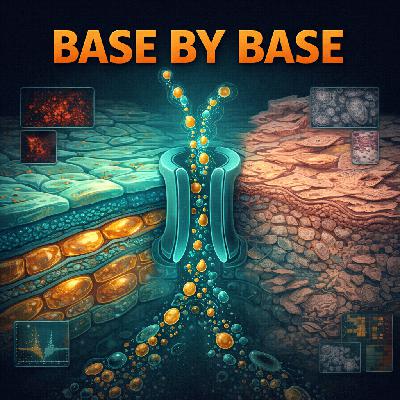
Wong BHH et al., PNAS - Mouse and human studies show the LPC transporter Mfsd2a enables plasma-derived LPC uptake into keratinocytes, preserving linoleate-rich phosphatidylcholine pools and promoting epidermal differentiation.
Study Highlights:Using epidermis-specific (2aEpKO) and conventional (2aKO) Mfsd2a-deficient mice, lineage tracing, untargeted shotgun lipidomics, LightOx-LPC uptake assays, and primary human keratinocyte cultures, the authors mapped Mfsd2a expression to suprabasal/granular keratinocytes and demonstrated Mfsd2a-dependent uptake of plasma-derived LPC in vivo. Lipidomic quantification showed reductions in linoleate-containing phospholipids (PL-18:2 decreased ~15% in 2aEpKO and ~13% in 2aKO) and a marked loss of TAG-18:2 (−79% in 2aEpKO). Inducible epidermal Mfsd2a loss produced transient dermatitis, defective desquamation, retained lamellar bodies, and keratinocyte activation, while MFSD2A knockdown in human keratinocytes reduced LPC-driven differentiation. Functional rescue experiments in vitro revealed that LPC-18:1 and LPC-18:2 promote keratinocyte differentiation in an MFSD2A-dependent manner, linking plasma LPC uptake to epidermal lipid homeostasis and differentiation.
Conclusion:Mfsd2a mediates uptake of plasma-derived LPC (notably LPC-18:2) into suprabasal keratinocytes to maintain linoleate-containing phospholipid pools and support keratinocyte differentiation and normal desquamation.
Music:Enjoy the music based on this article at the end of the episode.
Reference:Wong BHH, Behmoaras J, Chua AWC, Galam DLA, Tan BC, Torta F, Chin CF, Mishra K, Ding M, Silver DL. Mfsd2a is important for maintaining epidermal homeostasis. Proc. Natl. Acad. Sci. U.S.A. 2026 Feb 19;123(8):e2531159123. https://doi.org/10.1073/pnas.2531159123
License:This episode is based on an open-access article published under the Creative Commons Attribution 4.0 International License (CC BY 4.0) - https://creativecommons.org/licenses/by/4.0/
Support:Base by Base – Stripe donations: https://donate.stripe.com/7sY4gz71B2sN3RWac5gEg00
Official website https://basebybase.com
On PaperCast Base by Base you’ll discover the latest in genomics, functional genomics, structural genomics, and proteomics.
Episode link: https://basebybase.com/episodes/mfsd2a-lpc-epidermal-homeostasis

Herpe L et al., PNAS - CRISPR knockout of Drosophila mtG3PDH (GPO1) reduces ATP production by ~60% and O2 consumption by ~33%, lowering mitochondrial efficiency and ROS emission.
Study Highlights:Using CRISPR/Cas9-generated GPO1 mutant Drosophila and isolated thoracic mitochondria, the authors combined enzymatic assays, ATP production and oxygen consumption measurements, and H2O2 emission assays to probe mtG3PDH function. Loss of mtG3PDH markedly reduced mtG3PDH enzymatic activity and drove a ~60% decrease in ATP production and ~33% decrease in O2 consumption, producing a pronounced drop in mitochondrial efficiency (ATP/O). mtG3PDH-linked ROS emission was also strongly reduced (~70%), reflecting diminished direct and reverse electron-transfer ROS generation. Functionally, GPO1 flies showed sharply reduced survival and severe climbing impairment, linking the bioenergetic defects to organismal outcomes.
Conclusion:mtG3PDH is essential for mitochondrial bioenergetics and redox homeostasis in Drosophila, with GPO1 loss causing major decreases in ATP production, O2 consumption, mitochondrial efficiency, and mtG3PDH-linked ROS that correlate with reduced survival and locomotion.
Music:Enjoy the music based on this article at the end of the episode.
Reference:Herpe L, Aminot M, Pichaud N. When alternative becomes essential: The role of mitochondrial glycerol-3-phosphate dehydrogenase. Proc. Natl. Acad. Sci. U.S.A. 2026;123(9):e2535701123. https://doi.org/10.1073/pnas.2535701123
License:This episode is based on an open-access article published under the Creative Commons Attribution 4.0 International License (CC BY 4.0) - https://creativecommons.org/licenses/by/4.0/
Support:Base by Base – Stripe donations: https://donate.stripe.com/7sY4gz71B2sN3RWac5gEg00
Official website https://basebybase.com
On PaperCast Base by Base you’ll discover the latest in genomics, functional genomics, structural genomics, and proteomics.
Episode link: https://basebybase.com/episodes/drosophila-mtg3pdh-gpo1

Korpela K et al., Gut Microbes - Review finds maternal fecal microbiota transplantation and targeted probiotics can restore Bifidobacterium and Bacteroides after C‑section or intrapartum antibiotics, with breastfeeding aiding recovery.
Study Highlights:This review focuses on term infants, particularly C‑section and intrapartum antibiotic–exposed neonates, synthesizing cohort and intervention data using 16S rRNA gene amplicon sequencing and metagenomic approaches. Maternal fecal microbiota transplantation (maternal FMT) shifted C‑section infants’ gut communities to resemble vaginally born infants and uniquely restored Bacteroidaceae, while a Bifidobacterium–Lactobacillus–FOS supplement increased bifidobacteria; vaginal seeding did not normalize overall gut composition. The authors link restoration of key taxa to potential reductions in risks such as allergy and overweight and emphasize breastfeeding as an essential adjunct to restoration strategies.
Conclusion:Evidence supports action to address early-life gut microbiota disruption: probiotics and maternal FMT show promising restorative effects, but optimal, scalable solutions and long-term immune outcomes remain to be established.
Music:Enjoy the music based on this article at the end of the episode.
Reference:Korpela K, de Vos WM. Infant gut microbiota restoration: state of the art. Gut Microbes. 2022;14(1):e2118811. https://doi.org/10.1080/19490976.2022.2118811
License:This episode is based on an open-access article published under the Creative Commons Attribution 4.0 International License (CC BY 4.0) - https://creativecommons.org/licenses/by/4.0/
Support:Base by Base – Stripe donations: https://donate.stripe.com/7sY4gz71B2sN3RWac5gEg00
Official website https://basebybase.com
On PaperCast Base by Base you’ll discover the latest in genomics, functional genomics, structural genomics, and proteomics.
Episode link: https://basebybase.com/episodes/maternal-fmt-bifidobacterium-restoration

Li Z et al., Human Genetics and Genomics Advances. 7 ( - LASI-DAD 30× whole-genome sequencing of 2,680 Indian participants produced a 69.5M-variant LD panel that improves genotype imputation accuracy and PRS performance for Indian populations.
Study Highlights:Using 30× WGS of 2,680 LASI-DAD participants, the authors constructed an LD lookup panel (69.5 million variants), phased with Eagle2.4, and identified LD structure with LDetect and Big-LD. They compared regional varLD to 1000G super-populations and evaluated imputation with Minimac4 and meta-imputation against TOPMed and GAsP. LASI-DAD increased imputation accuracy (aggregated r2) by a mean 38% versus TOPMed and 27% versus GAsP across allele frequencies and improved PRS predictive performance by 2.1%–35.1% across traits and studies. Finer-scale stronger LD and regional LD differences in LASI-DAD translate into more accurate LD estimates and better imputation and PRS transferability for Indian sub-populations.
Conclusion:LASI-DAD is the largest nationally representative Indian WGS reference panel to date and it improves LD estimation, genotype imputation accuracy, and PRS construction for Indian and South Asian populations.
Music:Enjoy the music based on this article at the end of the episode.
Reference:Li Z, Zhao W, Zhou X, Leung YY, Schellenberg GD, Wang L-S, Schönherr S, Forer L, Fuchsberger C, Dey S, Lee J, Smith JA, Dey AB, Kardia SLR. A reference panel for linkage disequilibrium and genotype imputation using whole-genome sequencing data from 2,680 participants across India. Human Genetics and Genomics Advances. 7 (2026) 100579. https://doi.org/10.1016/j.xhgg.2026.100579.
License:This episode is based on an open-access article published under the Creative Commons Attribution 4.0 International License (CC BY 4.0) - https://creativecommons.org/licenses/by/4.0/
Support:Base by Base – Stripe donations: https://donate.stripe.com/7sY4gz71B2sN3RWac5gEg00
Official website https://basebybase.com
On PaperCast Base by Base you’ll discover the latest in genomics, functional genomics, structural genomics, and proteomics.
Episode link: https://basebybase.com/episodes/lasi-dad-india-reference-panel
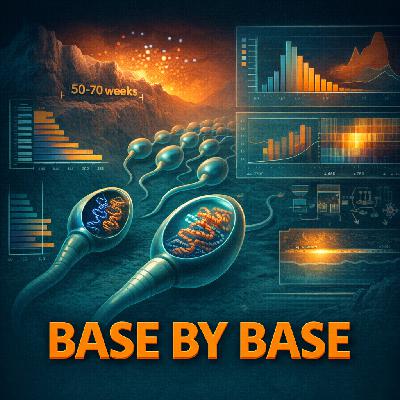
Shi J et al., The EMBO Journal - PANDORA-seq profiling of mouse and human sperm heads identifies a conserved rsRNA length shift with age and a tsRNA/rsRNA 'aging cliff' that reprograms embryonic transcripts.
Study Highlights:Using PANDORA-seq on C57BL/6J mouse sperm (intact and de-membranated heads) across five age groups and two independent human sperm cohorts, the authors identify a sharp tsRNA/rsRNA "aging cliff" in mice between 50–70 weeks and a head-specific rsRNA length shift. PANDORA-seq overcomes modification-induced detection bias to reveal increases in longer rsRNAs and decreases in shorter rsRNAs, particularly from 28S- and 18S-rRNAs, with parallel trends in human cohorts. Mitochondrial tsRNAs/rsRNAs in sperm heads, although low abundance, covary with genomic sncRNAs and help distinguish age groups. Transfection of age-mimicking tsRNA/rsRNA cocktails into mouse embryonic stem cells reprograms gene expression, upregulating metabolic and neurodegeneration-related pathways, providing a functional link to offspring phenotypes.
Conclusion:PANDORA-seq uncovers a conserved, sperm head–specific rsRNA length shift and a tsRNA/rsRNA aging cliff in mice and humans, and age-mimicking sncRNA combinations can alter embryonic transcriptomes linked to metabolic and neurodegenerative pathways.
Music:Enjoy the music based on this article at the end of the episode.
Reference:Shi J, Zhang X, Cai C, Liu S, Yu J, James ER, et al. Conserved shifts in sperm small non-coding RNA profiles during mouse and human aging. The EMBO Journal. 2026;45(4):1362–1380. https://doi.org/10.1038/s44318-025-00687-8
License:This episode is based on an open-access article published under the Creative Commons Attribution 4.0 International License (CC BY 4.0) - https://creativecommons.org/licenses/by/4.0/
Support:Base by Base – Stripe donations: https://donate.stripe.com/7sY4gz71B2sN3RWac5gEg00
Official website https://basebybase.com
On PaperCast Base by Base you’ll discover the latest in genomics, functional genomics, structural genomics, and proteomics.
Episode link: https://basebybase.com/episodes/sperm-rsrna-length-shift

Saxton DS et al., Nature - In E. coli, the membrane-bound nuclease SNIPE directly cleaves incoming phage λ DNA during genome injection, blocking infection via ManYZ and tape-measure protein interactions.
Study Highlights:In Escherichia coli, the membrane-anchored protein SNIPE was shown to block phage λ by directly cleaving DNA during genome injection. The authors combined radiolabelled 32P phage DNA assays, time-lapse CFP-ParB/ParS microscopy, TurboID proximity labelling and pBPA crosslinking to map SNIPE localization and interactions. They report that membrane-localized SNIPE requires a DUF4041 domain and a GIY-YIG nuclease domain to generate DNA fragments during injection, reducing CFP-ParB puncta ~30-fold and producing a smear of 32P-labelled fragments; an E414A nuclease mutant abolished activity. Functionally, SNIPE prevents λ replication and cell lysis and provides broad defence against many siphoviruses via interactions with ManYZ and phage tape-measure proteins.
Conclusion:SNIPE is a membrane-localized bacterial defence protein that associates with ManYZ and phage tape-measure proteins to directly cleave incoming phage DNA during genome injection, thereby blocking infection.
Music:Enjoy the music based on this article at the end of the episode.
Reference:Saxton DS, DeWeirdt PC, Doering CR, Roney IJ & Laub MT. A membrane-bound nuclease directly cleaves phage DNA during genome injection. Nature. 2026. https://doi.org/10.1038/s41586-026-10207-1
License:This episode is based on an open-access article published under the Creative Commons Attribution 4.0 International License (CC BY 4.0) - https://creativecommons.org/licenses/by/4.0/
Support:Base by Base – Stripe donations: https://donate.stripe.com/7sY4gz71B2sN3RWac5gEg00
Official website https://basebybase.com
On PaperCast Base by Base you’ll discover the latest in genomics, functional genomics, structural genomics, and proteomics.
Episode link: https://basebybase.com/episodes/snipe-membrane-nuclease-phage-injection

Moye AR et al., The American Journal of Human Genetics - Biallelic loss-of-function variants in SAXO6, a microtubule inner protein of photoreceptor cilia, cause late-onset retinal dystrophy by destabilizing axonemal microtubules.
Study Highlights:The study analyzed human patients with late-onset recessive retinal dystrophy and combined genetic sequencing (WES/WGS and long-read RNA) with high-resolution imaging and proteomics. Iterative ultrastructure expansion microscopy and immuno-gold TEM localized SAXO6 to specific microtubule doublets in photoreceptor connecting cilia and outer segments and to motile cilia in airway models. Cross-linking mass spectrometry on isolated bovine tracheal cilia detected an interaction between SAXO6 Mn-motif regions and α-tubulin (Lys370), supporting SAXO6 as a microtubule inner protein. Functionally, predicted null SAXO6 genotypes segregate with late-onset RP or cone-rod dystrophy, implicating MIP dysfunction in long-term photoreceptor stability.
Conclusion:Biallelic loss-of-function variants in SAXO6 cause late-onset retinal dystrophy, likely by disrupting a microtubule inner protein that stabilizes photoreceptor axonemes.
Music:Enjoy the music based on this article at the end of the episode.
Reference:Moye AR, McCafferty CL, Lin S, Han JH, Dudakova L, Rodenburg K, Szabó V, Nagy ZZ, Zur D, Vajter M, Kousal B, Moulin AP, Graff-Meyer A, Roosing S, Mahroo OA, Arno G, Webster AR, Ben-Yosef T, Liskova P, Engel BD, Zobor D, Quinodoz M, Rivolta C. Loss-of-function variants in SAXO6, encoding a microtubule inner protein of photoreceptor cilia, cause a late-onset retinal dystrophy. The American Journal of Human Genetics. 2026 Mar 5;113:1–18. https://doi.org/10.1016/j.ajhg.2026.02.001
License:This episode is based on an open-access article published under the Creative Commons Attribution 4.0 International License (CC BY 4.0) - https://creativecommons.org/licenses/by/4.0/
Support:Base by Base – Stripe donations: https://donate.stripe.com/7sY4gz71B2sN3RWac5gEg00
Official website https://basebybase.com
On PaperCast Base by Base you’ll discover the latest in genomics, functional genomics, structural genomics, and proteomics.
Episode link: https://basebybase.com/episodes/saxo6-photoreceptor-mip-retina
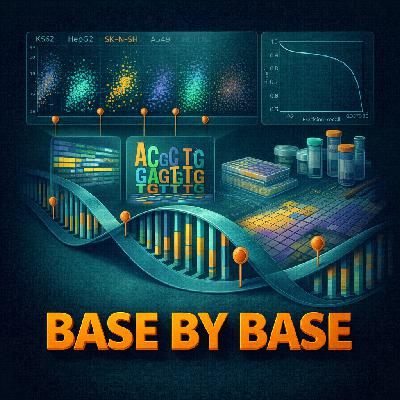
Siraj L et al., Nature - Using MPRA in five human cell types, the authors assayed 221,412 fine-mapped variants and identified 13,121 trait-associated regulatory variants (TARVs), mapping mechanisms at single-nucleotide resolution.
Study Highlights:The study assayed 221,412 fine-mapped human GWAS and eQTL variants using a massively parallel reporter assay (MPRA) across five cell lines and performed saturation mutagenesis on 136 TARVs. MPRA identified 13,121 trait-associated regulatory variants (TARVs) and showed that emVar status within endogenous CREs improves precision for causal-variant prioritization. Saturation mutagenesis defined activity blocks, assigned transcription factors for 91% of previously non-canonical TARVs, and revealed that only 69% of TARVs disrupt known TF motifs. The authors also detected regulatory epistasis in ~11% of nearby variant pairs, demonstrating non-additive effects between cis variants.
Conclusion:Large-scale MPRA combined with saturation mutagenesis systematically identifies and mechanistically annotates thousands of human trait-associated regulatory variants at single-nucleotide resolution, revealing motif-disrupting and non-canonical TF mechanisms and local epistasis.
Music:Enjoy the music based on this article at the end of the episode.
Reference:Siraj L., Castro R.I., Dewey H.B., Kales S., Butts J.C., Nguyen T.T.L., Kanai M., et al. Functional dissection of complex trait variants at single-nucleotide resolution. Nature. https://doi.org/10.1038/s41586-026-10121-6
License:This episode is based on an open-access article published under the Creative Commons Attribution 4.0 International License (CC BY 4.0) - https://creativecommons.org/licenses/by/4.0/
Support:Base by Base – Stripe donations: https://donate.stripe.com/7sY4gz71B2sN3RWac5gEg00
Official website https://basebybase.com
On PaperCast Base by Base you’ll discover the latest in genomics, functional genomics, structural genomics, and proteomics.
Episode link: https://basebybase.com/episodes/mpra-human-regulatory-variants

Baldwin-Brown JG et al., Annual Review of Ecology and Systematics - Bayesian analysis of 76,445 Utah Population Database pedigrees identifies a patrilineal Y‑chromosome lineage producing a 2:1 male bias, consistent with segregation distortion.
Study Highlights:We analyzed 76,445 anonymized human pedigrees from the Utah Population Database using a Bayesian pedigree-propagation algorithm (Warp), complemented by transmission disequilibrium testing, permutation and Monte Carlo simulations. These methods identified a single patrilineal Y-chromosome lineage with 89 informative transmissions that produced 60 male and 29 female offspring, a 67.4% male proportion. Warp and the TDT independently flagged the same family and permutation/Monte Carlo tests indicated the observed male bias was unlikely to arise by chance (p≈0.001–0.05). The pattern is consistent with a Y-linked segregation distorter and is discussed as a possible contributor to unexplained male infertility and human sex-ratio dynamics.
Conclusion:A multi-method analysis of deep Utah pedigrees identifies a statistically significant male-biased patrilineal lineage consistent with a Y-linked segregation distorter in humans.
Music:Enjoy the music based on this article at the end of the episode.
Reference:Baldwin-Brown JG, Wesolowski S, Zimmerman RM, Peterson B, Tristani-Firouzi M, Hernandez EH, Aston KI, Yandell M, Phadnis N. Signatures of sex ratio distortion in humans. Annual Review of Ecology and Systematics. 2026. https://doi.org/10.64898/2026.02.04.702084
License:This episode is based on an open-access article published under the Creative Commons Attribution 4.0 International License (CC BY 4.0) - https://creativecommons.org/licenses/by/4.0/
Support:Base by Base – Stripe donations: https://donate.stripe.com/7sY4gz71B2sN3RWac5gEg00
Official website https://basebybase.com
On PaperCast Base by Base you’ll discover the latest in genomics, functional genomics, structural genomics, and proteomics.
Episode link: https://basebybase.com/episodes/human-y-chromosome-drive

Bleidorn C et al., Trends Genet - This review shows how short-read shotgun sequencing and genome skimming recover organellar genomes, estimate genome size and repeat content, and enable scalable biodiversity monitoring.
Study Highlights:The authors review applications across eukaryotic biodiversity, museum specimens, bulk samples and eDNA using short-read shotgun sequencing and genome skimming. They detail assembly-free and mapping-based bioinformatic methods (k-mer analyses, Read2Tree, Kraken2/CONSULT) and target-enrichment approaches for recovering phylogenetic markers. Quantitatively, low-coverage skims (from <1× to ~20×) can reliably recover organellar genomes and estimate genome size and repeat content using tools such as RESPECT and GenomeScope. Functionally, these approaches enable rapid reference database building, biomass estimation, and scalable monitoring that support the Global Biodiversity Framework.
Conclusion:Short-read sequencing remains a cost-effective, broadly applicable toolkit that complements long-read references by enabling genome skimming, genome-size and repeat estimation, phylogenetics from low-coverage data, and museum-based biodiversity sampling.
Music:Enjoy the music based on this article at the end of the episode.
Reference:Bleidorn C, Podsiadlowski L, Sandberg F, Martin S, Vogler AP. The untapped potential of short-read sequencing in biodiversity research. Trends Genet. 2026;42:137-149. https://doi.org/10.1016/j.tig.2025.09.001
License:This episode is based on an open-access article published under the Creative Commons Attribution 4.0 International License (CC BY 4.0) - https://creativecommons.org/licenses/by/4.0/
Support:Base by Base – Stripe donations: https://donate.stripe.com/7sY4gz71B2sN3RWac5gEg00
Official website https://basebybase.com
On PaperCast Base by Base you’ll discover the latest in genomics, functional genomics, structural genomics, and proteomics.
Episode link: https://basebybase.com/episodes/short-read-genome-skimming
Chapters
(00:00:20) - Base by Bass(00:02:08) - The untapped potential of short-read sequencing in biodiversity science(00:09:38) - Genome Skimming to accurately estimate the biomass of marine organisms(00:16:23) - The race for low-cost sequencing(00:24:16) - Short-read sequencing: The secrets of the last ice age

Ein Hommage-Dossier, das die wissenschaftliche Laufbahn von Prof. Brunhilde Wirth würdigt und Arbeiten zum alternativen Spleißen von SMN1/SMN2 hervorhebt. Im Fokus stehen Studien aus der molekularen Genetik und funktionelle Assays, die die Auswirkungen von Varianten bei SMA aufgeklärt haben.
Studien-Highlights:
Dieses Dossier beleuchtet jahrzehntelange Arbeit in der Humangenetik und zur spinalen Muskelatrophie und betont insbesondere Studien zu SMN1 und SMN2. Zu den zentralen Methoden gehörten molekulargenetische Analysen, Spleißanalysen, Messungen der Proteinexpression sowie Stabilitätsassays zur funktionellen Validierung von Varianteneffekten. Ein zentraler mechanistischer Befund ist, dass Störungen sehr spät in der kodierenden Sequenz sich anders verhalten können, als einfache Modelle vorhersagen: Einige Transkripte entgehen dem erwarteten nonsense-mediated decay (NMD) und können die Proteinstabilität verändern. Diese experimentell validierten Erkenntnisse haben direkte Bedeutung für diagnostische Interpretation, Neugeborenen-Screening und Genotyp-Phänotyp-Korrelation bei SMA.
Fazit:
Prof. Wirths Karriere zeigt, dass die experimentelle Validierung von Spleiß- und Proteinstabilitäts-Effekten von SMN1/SMN2-Varianten für eine präzise klinische Interpretation bei SMA essenziell ist.
Musik:
Genieße die Musik, die auf diesem Beitrag basiert, am Ende der Episode.
Support:
Base by Base – Stripe-Spenden: https://donate.stripe.com/7sY4gz71B2sN3RWac5gEg00
Offizielle Website: https://basebybase.com
Bei PaperCast Base by Base entdeckst du Aktuelles aus Genomik, funktioneller Genomik, struktureller Genomik und Proteomik.
Episodenlink: basebybase.com/episodes/smn1-smn2-splicing-wirth-2/

A Tribute Dossier Celebrating the Scientific Career of Prof. Brunhilde Wirth highlighting SMN1/SMN2 alternative splicing studies using molecular genetics and functional assays that clarified variant effects in SMA.
Study Highlights:This dossier reviews decades of work in human genetics and spinal muscular atrophy, emphasizing studies of SMN1 and SMN2. Key methods included molecular genetics, splicing analysis, protein expression measurements, and stability assays to validate variant effects. A central mechanistic finding is that late coding-sequence disruptions can behave differently than simple models predict, with some transcripts escaping expected nonsense-mediated decay and altering protein stability. These experimentally validated insights have direct implications for diagnostic interpretation, newborn screening, and genotype–phenotype correlation in SMA.
Conclusion:Prof. Wirth's career demonstrates that experimental validation of splicing and protein-stability effects of SMN1/SMN2 variants is essential for accurate clinical interpretation in SMA.
Music:Enjoy the music based on this article at the end of the episode.
Support:Base by Base – Stripe donations: https://donate.stripe.com/7sY4gz71B2sN3RWac5gEg00
Official website https://basebybase.com
On PaperCast Base by Base you’ll discover the latest in genomics, functional genomics, structural genomics, and proteomics.
Episode link: https://basebybase.com/episodes/smn1-smn2-splicing-wirth
Chapters
(00:00:10) - The End of an Era in Genetic Science(00:01:57) - The discovery of SMN2 in spinal cord disease(00:06:13) - The journey from bench to bed(00:08:00) - The mystery of SMA(00:12:18) - A Legacy of SMA: Katherine Worth's work(00:15:31) - Stitch the Science Into Life

Ferolito BR et al., Human Genetics and Genomics Advances. 7 ( - Meta-analysis of MVP, UK Biobank and FinnGen with Mendelian randomization using eQTL/pQTL instruments implicates 6,447 genes and 69,669 causal gene-trait links.
Study Highlights:The authors meta-analyzed GWAS from MVP, UK Biobank, and FinnGen across 2,003 harmonized phenotypes and used cis-eQTLs and cis-pQTLs from GTEx, eQTLGen, ARIC, Fenland, and deCODE to perform two-sample Mendelian randomization. They identified 69,669 significant gene-trait pairs (p ≤ 1.6×10⁻⁹) representing 6,447 genes with strong causal evidence and performed colocalization and sensitivity analyses to assess concordance. An XGBoost classifier trained on ChEMBL-derived approved targets and engineered biological features achieved a precision-recall AUC of 0.79 to rank MR hits by likelihood of clinical success. The resource yields rediscoveries and repurposing leads (e.g., ANXA2 nominated for lipid regulation) and supplies a prioritized list for downstream target evaluation.
Conclusion:Integrating >1.2 million individuals' GWAS from large biobanks with eQTL/pQTL Mendelian randomization and orthogonal annotations yields 69,669 candidate causal gene-trait links and a machine-learning ranking that prioritizes targets for drug development.
Music:Enjoy the music based on this article at the end of the episode.
Reference:Ferolito BR, Dashti H, Giambartolomei C, Peloso GM, Golden DJ, Gravel-Pucillo K, Rasooly D, Horimoto ARV R, Matty R, Gaziano L, Liu Y, Smit IA, Zdrazil B, Tsepilov Y, Costa L, Kosik N, Huffman JE, Tartaglia GG, Bini G, Proietti G, Ioannidis H, Karim MA, Hunter F, Hemani G, Butterworth AS, Di Angelantonio E, Langenberg C, Ghoussaini M, Leach AR, Liao KP, Damrauer S, Selva LE, Whitbourne S, Tsao PS, Moser J, Gaunt T, Cai T, Whittaker JC, Million Veteran Program, Casas JP, Muralidhar S, Gaziano JM, Cho K, Pereira AC. Leveraging large-scale biobanks for therapeutic target discovery. Human Genetics and Genomics Advances. 7 (2026) 100556. https://doi.org/10.1016/j.xhgg.2025.100556.
License:This episode is based on an open-access article published under the Creative Commons Attribution 4.0 International License (CC BY 4.0) - https://creativecommons.org/licenses/by/4.0/
Support:Base by Base – Stripe donations: https://donate.stripe.com/7sY4gz71B2sN3RWac5gEg00
Official website https://basebybase.com
On PaperCast Base by Base you’ll discover the latest in genomics, functional genomics, structural genomics, and proteomics.
Episode link: https://basebybase.com/episodes/biobank-mendelian-randomization-targets
Chapters
(00:00:00) - Base by Bass(00:00:31) - Seeking the cause of disease with a single trial(00:03:01) - The Mendelian randomization study(00:07:51) - The Machine-Learning Drug Hunter(00:10:49) - Treasure Hunt for old drugs(00:12:07) - The New Way to Lower Cholesterol(00:16:19) - Finding the cures to diseases by sequencing their genomes

Nyeo SS et al., Nature - Population-scale WGS reanalysis quantifies persistent EBV DNA and shows MHC class II–mediated antigen presentation predicts EBV DNAemia and links to autoimmune and respiratory disease.
Study Highlights:Using whole-genome sequencing from UK Biobank (n≈490,560) and All of Us (n≈245,394), the authors extracted chrEBV-mapping reads, masked low-mappability regions, and defined EBV DNAemia (>1.2 genomes per 10^4 cells) in 9.7–11.9% of donors. They performed PheWAS, GWAS and ExWAS and identified 22 genome-wide significant loci and 686 missense variants across 148 genes with heritability enrichment in immune regulatory regions and B cells/antigen-presenting cells. Single-cell module scoring, pathway analyses and NetMHCpan/NetMHCIIpan peptide-presentation modeling implicated variable antigen processing and MHC class II presentation as primary determinants of EBV persistence, with stronger predicted presentation linked to lower EBV DNAemia. EBV DNAemia was reproducibly associated with autoimmune, respiratory, neurological and cardiovascular phenotypes across cohorts.
Conclusion:Reanalysis of population-scale WGS demonstrates that host genetic variation—predominantly in antigen processing and MHC class II peptide presentation—modulates persistent EBV DNA in blood and associates with multiple complex diseases.
Music:Enjoy the music based on this article at the end of the episode.
Reference:Nyeo SS, Cumming EM, Burren OS, Pagadala MS, Gutierrez JC, Ali TA, Kida LC, Chen Y, Chu H, Hu F, Zou XZ, Hollis B, Fabre MA, MacArthur S, Wang Q, Ludwig LS, Dey KK, Petrovski S, Dhindsa RS & Lareau CA. Population-scale sequencing resolves determinants of persistent EBV DNA. Nature. 2026 Feb 19;650:664–672. https://doi.org/10.1038/s41586-025-10020-2
License:This episode is based on an open-access article published under the Creative Commons Attribution 4.0 International License (CC BY 4.0) - https://creativecommons.org/licenses/by/4.0/
Support:Base by Base – Stripe donations: https://donate.stripe.com/7sY4gz71B2sN3RWac5gEg00
Official website https://basebybase.com
On PaperCast Base by Base you’ll discover the latest in genomics, functional genomics, structural genomics, and proteomics.
Episode link: https://basebybase.com/episodes/ebv-mhc-class-ii
Chapters
(00:00:00) - Base by Base(00:00:28) - A viral ghost in my body(00:03:32) - Herpes virus: When it's active, how to spot it(00:05:42) - The Hidden EBVD Genome(00:08:45) - The smoking gun in chronic fatigue(00:14:01) - Does Your Genetic Lock Fit With EBV?(00:19:01) - Finding the Secret of the Immune Program

Comments

Download from Google Play

Download from App Store
 United States