Discover
Beyond Organic Wine
Beyond Organic Wine
Author: Beyond Organic Wine
Subscribed: 26Played: 1,094Subscribe
Share
© Adam Huss
Description
Organic Wine is the gateway to explore the entire wine industry - from soil to sommeliers - from a revolutionary perspective. Deep interviews discussing big ideas with some of the most important people on the cutting edge of the regenerative renaissance, about where wine comes from and where it is going.
beyondorganicwine.substack.com
226 Episodes
Reverse
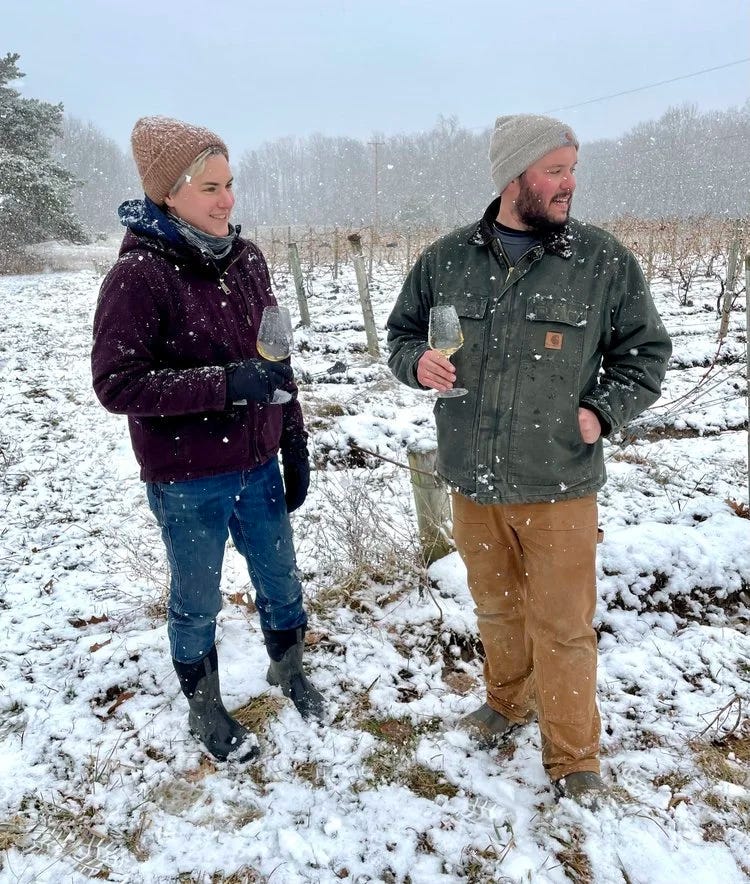
This is a free preview of a paid episode. To hear more, visit beyondorganicwine.substack.comThis episode features Derrick Vogel, a grape grower in northern Michigan, and the co-owner of Folklor Wine & Cider with Izabela Babinska. Derrick introduces us this unique winegrowing region at the northern edge of where Vitis vinifera can grow thanks to the buffering influence of lake Michigan, and where hybrid grapes are just as common because of the …
I had such a great time on my first trip and was so impressed by the wines that I went back to Quebec for a second trip and discovered another fantastic producer who has been certified organic since 2021, growing a few select vinifera and several hybrids, and making some outstanding wines. They are Vignoble Sugar Hill and please do yourself a favor and try their wines. This is a second career for the owners, and their first career must have been successful, because the winemaking at Sugar Hill indulges in the one secret ingredient to making incredible wines that almost no one can afford: TIME. They have a sparking vidal blanc for sale right now that spent 12 YEARS, not months, 12 YEARS on lees before disgorging… it is the best expression of Vidal Blanc I’ve ever tasted and one of the best sparkling wines I’ve ever had. They have a St Pepin that is not only the best St. Pepin I’ve ever had, but was so good that I almost smuggled a case across the border so that I could share it at the Embracing Hybrid Grapes conference… I didn’t but there’s still hope for those of you coming… the good folks at Sugar Hill maybe sending a representative with wine to the conference. Then there’s the Dolce Luna, their off dry wine that will convert you to off dry, made with a blend of hybrids…. We talk about all these and more, and we talk about them in English, Quebecois, and Spanish… because their vineyard manager and winemaker Jorge is Guatemalan, and one of members of the small team there, Ariane, acted as translator for us and gave her own input… so this is a fun and colorful conversation about cold climate viticulture and some of the most precision winemaking of some of the best examples of hybrid wines you’ll find anywhere. This is a public episode. If you'd like to discuss this with other subscribers or get access to bonus episodes, visit beyondorganicwine.substack.com/subscribe
Reflections on some of the big questions of 2025, and recommendations of some of my favorite books from 2025. An end of year wish for you and your wine, and a big thank you to everyone who makes Beyond Organic Wine possible. I hope to see you at Embracing Hybrid Grapes on January 26, 2026.Embracing Hybrid Grapes in California. This is a public episode. If you'd like to discuss this with other subscribers or get access to bonus episodes, visit beyondorganicwine.substack.com/subscribe
What if I told you that you could take a piece of degraded, marginal land with 3.5 pH soils and turn it into an agricultural production system with five times the productivity of neighboring conventional farms without using any fertilizer or pesticides or outside inputs besides sunlight, seeds, and plants? What if I told you that there are decades of data to support this and that it can be done anywhere, and that this system makes grapes more productive, healthier, and more delicious?Erik Schellenberg is the Commercial Horticulture and Natural Resources Educator at Cornell Cooperative Extension. He runs Black Creek Farm & Nursery in the Hudson Valley of New York, and he’s implementing a commercial scale married vine (or vite maritata) vitiforestry polyculture. If you don’t know what married vines are, it means growing vines on and with living trees as their trellising. But I prefer to think of it as the “Three Sisters” of perennial agriculture, in the sense that I don’t think the emphasis should be solely on the vine… I mean why isn’t it called a married tree? But that we should think of these living partnerships as polycultural guilds with symbiotic and stacking benefits.In this episode, Erik outlines a syntropic approach to agroforestry, and breaks down how this system works whether you’re growing cacao and coffee in Brazil, or grapes in Switzerland… and anywhere else. You likely have some appreciation for the importance of trees. But so much of our approach from a viti-forestry perspective is about how to integrate trees into our wine monocultures without hurting productivity, and sometimes we even may argue that we have to sacrifice productivity for ecological reasons. After listening to Erik present how syntropic agroforestry with vines works, you will begin to see that not only is using trees the most productive way of growing vines, but that without trees we will be handicapped in our efforts to farm with fewer inputs and to increase health and resilience. In this system, pruning functions almost exactly like rotational grazing, and really takes regenerative viticulture to the next level, where we think of perennials as cover crops… but even that doesn’t capture it exactly.This is a kind of viticulture that embodies succession, the ecological process that most of our vineyards fight against, and how humans become the regenerative partners we are meant to be in our communities. We dig into the details of vitiforestry and how to select the right tree to grow with vines. And we get into the myth of invasive species… and even some ecological solutions for the spotted lantern fly.There’s a moment in this episode in which Erik talks about how a tree responds when it gets pruned, and I got goosebumps thinking about what it would mean if we followed this example. And there’s another mind blowing moment where he discusses the ecological function of a vine and how vines may be the plant equivalent of a mastodon or elephant, and how that informs pruning and developing an early successional wineforest for their greatest productivity.I was excited about growing vines with trees before, but now I can’t imagine growing them any other way. Enjoy! This is a public episode. If you'd like to discuss this with other subscribers or get access to bonus episodes, visit beyondorganicwine.substack.com/subscribe
My guest for this episode is Nika Carlson of Greenpoint Cidery in Hudson, New York. There are some unique and wonderful aspects of what Nika does that make this conversation fun and enlightening in ways that I find thrilling and inspiring…. She planted her estate orchard entirely from wild seedling apple trees that she selected from her region. She ferments a landscape of flavors, including herbal and floral ingredients in her concoctions. She lives part-time, nearly off-grid at the orchard. And she offers a cider CSA by sailboat on the Hudson River. She also introduced me to a wonderful book titled “Folk Wines, Cordials, and Brandies” by anarchist and puppeteer, M. A. Jagendorf, a source of inspirations and recipes for a incorporating more diversity into our fermentation cultures, much like Nika is herself. This is a public episode. If you'd like to discuss this with other subscribers or get access to bonus episodes, visit beyondorganicwine.substack.com/subscribe
My guest for this episode is Joseph Brinkley. Joseph is the Senior Director of Regenerative Organic Farming at Bonterra. He oversees farming of Bonterra’s 800+ acres of estate vineyards in Mendocino County, all of which are farmed with organically. Bonterra is one of the largest organic B-corporation wineries in the US, and they are now the largest winery to achieve Regenerative Organic certification. Joseph discusses the importance of the social focus of the Regenerative Organic certification, which is unique in nearly all wine certification requirements. Since 2011 Joseph has helped Bonterra show the world that ecological best practices in viticulture, which includes the entire community, can be done at any scale, and they do this while producing delicious wines for under around $15 a bottle. We discuss all of this, biodynamics, hybrid grapes in California, and much more.Enjoy! This is a public episode. If you'd like to discuss this with other subscribers or get access to bonus episodes, visit beyondorganicwine.substack.com/subscribe
This is a free preview of a paid episode. To hear more, visit beyondorganicwine.substack.comMy guests for this episode are Julia and Alex Alvarez-Perez of Usonia Wine in the Finger Lakes region of New York… and they will be sponsoring Embracing Hybrid Grapes in California with two of their wines… and I’m very much looking forward to sharing them with those of you who attend… you are in for a surprise and a treat…Very much like you are in for …
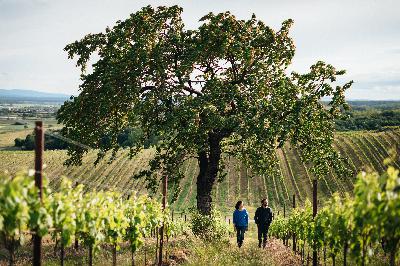
My guest for this episode is Franz Weninger of organic and biodynamic certified Weingut Weninger in Horitschon, Austria… and you, dear listener, are in for a treat. Franz is a second generation winegrower who thinks deeply about the soil, the plants, the systems and ideas that go into the ecology of wine. He offers practical and surprising insights into how to grow vinifera with less sprays, how to design vineyards for human psychological health as well as environmental health, how using highly-resistant hybrids shouldn’t be an excuse for neglecting our vines but an opportunity to care for them in different, less obligatory ways, how hybrids shouldn’t be an excuse for keeping high-density monoculture, and how a single tree can benefit a vineyard, and how if we don’t want to picnic in a vineyard… maybe we shouldn’t drink the wine from it.If this talk inspires you as much as it inspired me, you might want to check out weninger.com where Franz has published many posts that dig even deeper in to his thoughtful and revolutionary approach to winegrowing. This is a public episode. If you'd like to discuss this with other subscribers or get access to bonus episodes, visit beyondorganicwine.substack.com/subscribe
My guest for this episode is George Gale. George has led a double life. On the surface, George presented a public façade as a philosopher of science, American historian, professor, and author. He was a PhD student at UC Davis, and wrote his dissertation at Oxford. He has a Wikipedia page, spent 43 years as a professor of science and philosophy at University of Missouri Kansas City, and published multiple papers and books on the philosophy of science, the big bang theory, the anthropic principle, the philosophy of modern cosmology, and the Many Worlds Theory, among many other topics. But George also had another life, a dark and mysterious life. Outside of the classrooms and lecture halls of academia, George grew hybrid grapes. Not only did he grow them… he fell in love with them, made wine with them, and even hybridized more of them. For decades George has had a secret affair with Leon Millot, Villard Blanc, and many other outcast grapes. After decades of secrecy, George tells all in this scandalous interview.Well, sort of. George wrote a book that turns out to be THE book about the phylloxera crisis. Without knowing this history, I think many of us in wine take a lot of how things are for granted. But George’s book, Dying on the Vine, gives an amazing historical perspective on how phylloxera shaped the world that we live in today in ways much larger than just how we grow wine. Phylloxera became the catalyst for Big Science in the sense of international collaborative science that is tied up in national and international politics and economics. It was a cultural trauma that caused mass global population migrations that affect our cultures still, and it was one of the main drivers of hybridization in grapes that led to some of the enduring varieties we still drink today and use for further grape breeding efforts. But there was a dark side to all of this. Anti-american prejudice festers in the subtext of this history, and informs the wine world we inhabit. George gives us an overview of this history and even more details of the fascinating elements that still influence our wine culture now. This broad and deep look into the history of hybrids gives us insights into human nature, globalization, and the future of wine. Enjoy! This is a public episode. If you'd like to discuss this with other subscribers or get access to bonus episodes, visit beyondorganicwine.substack.com/subscribe
My guest is Rueben Lange of Amiti in Oregon FromAmiti.com. Rueben first worked a harvest in 2016, but he has packed in something like 12 harvests since then by bouncing between Northern and Southern Hemispheres, and three continents, including some notable vintages at Idiot’s Grace in the Columbia River Gorge, Maison Maenad in the Jura, and Forlorn Hope in California. Rueben says of Amiti:“The goal of this project - beyond employing the basic tenets of good land stewardship (both in my farming and the vineyards I choose to purchase from), caring for all those who work for me, and crafting wines that are meant to celebrate those I hold dear - is to deeply explore a sustainable future for Oregon, and push the envelope of Hybrid grape varieties. I love vinifera and want to continue to celebrate it, given the remarkable wines that come from them in this state. However, we as an industry continue to push the narrative of this being Pinot country - a notion I believe to be utterly false given the challenges associated with farming it here - and fail to focus on varieties that are better suited to our climate and its ever shifting nature. For that reason, I choose to work with what are considered A-typical, or non-normative varieties for this region, specifically those that I believe are well adapted to the level of climate change I will experience in my lifetime.I choose to make hybrid wines because I believe that they are the only option for a sustainable future in this state, and present an exciting possibility to develop a true sense of place and varietal typicity, free from the constraints imposed upon us by the old world. If we truly want to develop an understanding of what American terroir looks and tastes like, it seems like a no-brainer to me to do it with a variety that has no mandates handed down from the ‘higher ups’.”On the last episode we considered how natural wine is not about minimizing intervention but about a total perspective shift to seeing life as process to celebrate. On this episode we again flip a common understanding of natural wine on its head as we discuss how natural wine is not about removing human influence but actually finding the distinctively personal touch of humans engaged in intentionally fermenting. In this spirit, Rueben makes a case for abandoning the zero-zero ethos, or at least any celebration of it or smugness related to it, referring to it as a kind of recipe winemaking for natural wine.This is a wildly pro-human discussion of wine, that will piss off the misanthropes and the worshipers of that pristine ideal known as “Nature” which is kept pure by lack of contact with the malodorous miscreants known as people. Rather, we envision wine as a flowing stream in which we, besotted beavers that we are, immerse ourselves and play and mate and build dams to overflow the banks and flood our communities with life.Rueben’s wines have been described as “disorientingly delicious” and I hope you’ll find this conversation to be the same. Enjoy! This is a public episode. If you'd like to discuss this with other subscribers or get access to bonus episodes, visit beyondorganicwine.substack.com/subscribe
My guest for this episode is Michael Völker, one of the Zwei Natur Kinder in Germany. Michael and Melanie Drese spent many years working in other fields, traveling the world and. In 2013 they returned to begin taking over Michael’s father’s winery in Kitzingen in Franconia, Bavarian Germany. They began to make natural wines under the 2naturkinder label as a side project for the winery, and since then have decided to fully expand the project to take over all of the winery’s production. They make wine from grapes like Muller-Thurgau, Silvaner, Bacchus, Dornfelder, Regent, Domina, Souvignier gris, Muscaris, and several others. Some of those grapes are hybrids, and I list them all together this way to make a point… they’re just grape varieties. And if you don’t know which ones are hybrids in that list, does it matter that theyre a hybrid? Some juicy information and philosophical discussion here about lots of topics. I’m still thinking about several of the questions that come up.Enjoy!https://2naturkinder.de/ This is a public episode. If you'd like to discuss this with other subscribers or get access to bonus episodes, visit beyondorganicwine.substack.com/subscribe
This is a free preview of a paid episode. To hear more, visit beyondorganicwine.substack.comMy guest for this episode is Harold Langlais, who works as Marketing Director for and part owner with the Amoreau family at Chateau Le Puy. Chateau Le Puy’s land – the Hill of Wonders - has been chemical free since it began in the 1600’s. After WW1 they refused to begin using the novel chemistry that came out of the war and they have continued on that …
My guest for this episode is Alder Yarrow. Alder writes and does everything for the blog Vinography, and I’ve been receiving Alder’s weekly email for several years. He gives a list of links of articles he’s been reading, and I always enjoy scanning this list to see what’s going on in the wine zeitgeist.Alder’s Vinography.com blog has been published daily since 2004, and was nominated for a James Beard Award in 2013.Since 2011, Alder has also been a monthly columnist for Jancis Robinson where he also contributes wine reviews for American wines. Alder has been judging competitions for many years, and spent nearly a decade as a judge for the World of Fine Wine’s annual Global Restaurant Wine List awards, and for the James Beard Restaurant awards.His coffee-table book of essays and photographs, The Essence of Wine, was named one of the best wine books of 2014 by the New York Times and won the Chairman’s Prize at the 2015 Louis Roederer International Wine Writers Awards.In 2013 Alder was inducted into the Wine Media Guild of New York’s Wine Writers Hall of Fame, an honor he shares with only 24 other living wine writers. He is also a member of the Circle of Wine Writers.Alder was the architect of and serves as the day-to-day manager for the Old Vine Registry, the world’s first and most authoritative public database of old vine vineyards around the globe.I reached out to Alder for this conversation because of a comment he made about the recent Eric Asimov article about hybrid grapes. I gave Alder questions in advance, so he knew I wanted to challenge him on several ideas. To his credit he still agreed to the conversation, and you’re about to listen to the results. Though I think we share most of the same values and agree about a lot, we don’t agree about everything, and that’s why I wanted to talk with him. I hope that makes sense. You have to get out of your own echo chamber if you want to learn, and if you care about truth. And more and more you have to actively seek the company of those who disagree with you if you want to break free of the control of algorithms… if you want to cultivate diversity. So I’m grateful to Alder for being game and taking the time to have this conversation/debate.And if you listen until the end, I’m also including as an epilogue the verbatim exchange that we had via email after the conversation. As I re-listened to a specific part of the recorded conversation while editing, I realized I wanted to make a comment about something that I had let slide, but I wanted him to be able to respond to that comment. So stay tuned at the end if you’re interested in hearing more.Please join Beyond Organic Wine on Substack.Enjoy! This is a public episode. If you'd like to discuss this with other subscribers or get access to bonus episodes, visit beyondorganicwine.substack.com/subscribe
This is a free preview of a paid episode. To hear more, visit beyondorganicwine.substack.comWhat does an ecological approach to winegrowing and wine making look like?This episode looks at two brilliant and unique approaches to growing and making an ecological wine business. It is meant to excite and tempt and titillate you about how we could have a very different experience with wine. This episode is an invitation. I invite you to cultivate your imagination for what's possible, to think constructively of alternative perspectives on winegrowing, to recreate your understanding of what it means to be regenerative. I invite you into a new vision for wine.After spending the year learning some of the limits of regenerative wine, and reporting those in the Death in the Vineyard mini-series, I wanted to spend some time exploring what regenerative wine could be. This is a stand-alone episode, but it also functions as an epilogue to the Death In The Vineyard series. The most important lesson I learned this year is that it is impossible to grow or make wine “regeneratively,” or even to grow organically or biodynamically in a meaningful way, or to make “natural” wine in any way that isn’t green-washing, unless you start with an ecological foundation. But what does that mean?
This is a free preview of a paid episode. To hear more, visit beyondorganicwine.substack.comThe full schedule for Embracing Hybrid Grapes in California on January 26th at UC Davis is now available. I hope to see you there!Crazy Experimental Wines! That’s what this episode is about, and it’s also the label of Chris Boiling’s wines. Chris is a British wine writer who has also been making wine for years in Slovenia as a personal project, but he h…
The vast majority of champagnes we buy and drink in the US are over-priced luxury brands made of cheap materials, harmful farming practices, and at times exploitive labor. We get told constantly that Champagne, the region, is “moving toward” more sustainable practices, and that it is continually “doing better” with regard to ecological viticulture, but that’s because it has so far to go. As a region it consistently uses the highest percentage of pesticides of any wine region in France. Its governing body made a commitment for all of its producers to be pesticide free by 2025. But by 2025 they had abandoned this commitment, and instead this year several growers were found to be exploiting vineyard workers from North Africa and Ukraine in squalid, indentured-servitude conditions. The big brands that Americans pay over $60 + for to have a boujee soiree are sparkling pesticide-laden swill.Champagne was always a marginal climate for wine. That’s why the English back-sweetened the tart, flavorless barrels of cheap booze, accidentally initiating a re-fermentation and inventing sparkling wine… they were trying to make it palatable. And climate change isn’t helping. Yes, they get some more ripeness now… but also more rainfall, hail, and fungi. Pinot noir and chardonnay – the big varieties of Champagne – aren’t 21st century grapes. Some of the most susceptible to mildew and disease, they require enormous amounts of sprays… and being organic doesn’t help. With these varieties it just means you’re creating a toxic environment with copper and killing your soils with compaction. The hybrid grape Voltis, which is less susceptible to mildews, was approved for use in Champagne, because of all of this… but it has only been allowed to make up to 6% of the blend. There are some very thoughtful producers doing a lot of hard, amazing viticulture… but they are small scale. Most Americans outside of the coasts will never see or even have access to their bottles.So let’s call most Champagne what it is: A con job. It’s a shoddy, environmentally-damaging concoction sold as VIP experience. It’s snake oil.Instead, start the new year right. Drink something local, authentic, and organically farmed at least. A prime choice for an incredible price is the Northern Spy from Eve’s Cidery in Van Etten, New York. Amazing bubbles and a sweet appley nose, but bone dry, flinty and tart lemony palate. It’s a fine, champagne method sparkling wine from New York, using organically farmed apples of a variety that was bred in New York. Or try Ci Confonde Rose from La Garagista if you like your bubbles to be pink. This is a special wine that will blow your mind, made with Frontenac Gris and using uncertified but organic and biodynamic practices. Or try Lightning Bug from Appolo Vinyards in New Hampshire, a sparkling from their no-spray Brianna grapes. Or try the certified organic sparkling rose from Loving Cup winery in Virginia, a stunning rose made from mostly Cayuga White with a splash of Corot Noir for blush. One of my favorites of 2025 was Dear Native Grapes sparkling Deleware, made in the Catskills from organic Finger Lake Grapes. For 100% American native bubbles you can’t beat the Muscadine Pet Nats of Botanist & Barrel in North Carolina. And if you really need that “imported” feeling to feel special, the most special sparkling wine I had in 2025 was a bottle called Pelechacz, Cuvee Exceptionelle, Vidal Brut Nature 2011. It’s a sparkling Vidal Blanc that spent 12 years… yes, I said 12 years… on lees before disgorgement. It’s from Sugar Hill Winery in Quebec, and worth whatever it takes to smuggle it across the border into the US.On the west coast we have so many options… In California we have everything from Domaine Anderson if you want that traditional method vibe certified organic and biodynamic; to the selection of sparkling treats from Tilted Shed if you could care less about grapes; to the historic and amazing no-spray Pariah from North American Press – a sparkling rose with the most yummy flavors you can only get from American grapes like Catawba; to Durham Cider & Wine’s selection of unique and local flavors, to the biodynamic line-up of sparklings from Montinore in Oregon… among so many others who I regret not mentioning. The point is you can do sooo much better than Champagne… and you can do it locally, organically, and without paying exorbitant amounts to support bad farming and bad practices.Happy New Year! This is a public episode. If you'd like to discuss this with other subscribers or get access to bonus episodes, visit beyondorganicwine.substack.com/subscribe
Yesterday I spent the afternoon editing Wikipedia entries about hybrid grapes because they were either factually wrong, omitted important and relevant information, or pushed prejudiced perspectives… and sometimes did all of this.Sometimes the edits were small but important. In the entry on Hybrid Grape, a contributor thought it important to mention that they “exhibit a mix of traits” from their various parentages (this is true and relevant), and that hybrids with Vitis labrusca in their parentage “have a strong ‘candied’ or ‘wild strawberry’ aroma.” While I applaud this description (which isn’t the negative description I’ve found in other labrusca mentions), I changed this entry to read “can have a strong ‘candied’ or ‘wild strawberry’ aroma depending on many factors.”Labruscana have come a long way since the original 50/50 crosses (200 years ago), and Concord (with its 75% labrusca parentage) is very different from, say, Marquette, which has labrusca in its parentage but is the result of many, many crosses including quite a few species. The similarities of flavor between Concord and Marquette are extremely minimal, and they do not share a “candied” aroma, despite both having labrusca in their parentage. Additionally, I’ve had labruscana that were picked and made in a way that none of these “characteristic” aromas were present. But it’s true that labruscana “can” have those flavors, depending on many factors.Of course that begs the question of why even mention these things if you have to qualify them so extensively? Would it be relevant to say that “grapes with Vitis vinifera parentage can have aromas of cat piss and tar, depending on many factors”? This is factually true, but… does it matter to understanding vinifera? Or does it actively confuse people who haven’t been exposed to the wide variety of vinifera cultivars?This double standard results from wine writers – likely MW’s or other “experts” – who have had very little exposure to anything but Vinifera Culture and see the world through the prism that limits “fine wine” to only European “pure” vinifera grapes (and usually only a select few of those). Several of the most egregiously prejudiced lines in some entries about the flavors hybrid grapes were actually cited, and the citation linked to entries in the Oxford Companion to Wine. So it seems more than just Wikipedia needs to be edited. While Vinifera Culture has been navel gazing for the last half-century or more, the rest of the world has continued to adapt and change, and… surprise! Vinifera Culture finds itself completely out of touch with the current realities in wine.But more than lack of awareness permeates entries about hybrids. I edited the entry on the grape Kyoho, which started with the line: “Kyoho grapes (巨峰葡萄, Kyohō budō; lit. 'giant mountain grape'") are a fox grape (Concord-like) cross popular in East Asia.”The term “fox grape” is, again, outdated, and also inaccurate. “Fox grape” is the term given to the crop wild relative (Vitis labrusca). The children of the sexual reproduction of labrusca with other species of grapes can no longer be called the fox grape. This might be semantic. I know many people have called grapes with labrusca parentage fox grapes, even if not entirely labrusca. But it might also be a dog whistle. What they seem to want to imply, strongly, is that Kyoho is a “foxy” grape, for those of you who know what I mean, wink wink.What troubled me most was that the writer felt the need to put this piece of information as the first line in the entry about Kyoho. So someone coming to Wikipedia to learn about Kyoho now must see it through the lens of “fox grape” and what does that mean and how should I feel about that? How relevant to its existence and importance in the world of grapes is the fact that it has similar parentage to Concord and is a “fox grape”? I’m relatively sure that’s a designation that neither its breeder nor the billions of people who love it would ever apply to it.So I changed the entry about Kyoho to read: “Kyoho grapes (巨峰葡萄, Kyohō budō; lit. 'giant mountain grape'") are the most planted grapes in the world by area.[citation added] They are a variety of hybrid grape popular in East Asia.” Isn’t that a more accurate, helpful, and unbiased introduction to a grape you might be trying to learn more about?Then there were the really big changes. The “History” section of the entry for Hybrid Grape in Wikipedia read:“During the first half of the 20th century, various breeding programs were developed in an attempt to deal with the consequences of the Phylloxera louse, which was responsible for the destruction of European vineyards from 1863 onwards. After extensive attempts, grafting European varieties onto North American rootstock proved to be the most successful method of dealing with the problem.”I changed it to read:“During the first half of the 20th century, various breeding programs were developed in an attempt to deal with the consequences of globalization, which resulted in Europeans and European-Americans bringing the Phylloxera louse from North America to Europe, as well as several North American parasitic fungi - like black rot (Guignardia bidwellii), downey mildew (peronospora), and powdery mildew (oidium). Phylloxera devastated European vineyards throughout the late 1800's. While many hybrids were able to successfully resist Phylloxera, as well as the novel fungal pressures, European producers chose to graft their susceptible traditional, single-species European varieties onto North American resistant rootstock.”I spent a lot of time re-writing to choose this wording and version of history-telling, and I won’t go into all the details. But one of the things that I think is worth noting is the line ending the previous version saying that grafting “proved the most successful method of dealing with the problem.”What bothers me about that line is that I don’t think grafting actually dealt with the problem. The problem wasn’t Phylloxera. The problem was an unwillingness to adapt. The problem wasn’t with the world, out there, it was with our prejudices and perspectives, inside us. If phylloxera was the problem, hybrid grapes did and do deal with that problem and the other “problems” of grape-loving fungi. But Europeans instead chose not to adapt, but rather employed a technique that allowed them to continue to grow their susceptible varieties of vinifera: i.e. grafting. However, this left the problem of the fungi, which they dealt with by using new chemical pesticides. Again… this didn’t deal with the problem, actually. It kept their viticulture stagnate an enabled them to avoid adapting.What this wiki edit, and really all of the edits I’ve done, shows is that the problem was never dealt with. The real problem continues to shape the thinking of those who have come to know wine through this culture, and it comes out in the way they write about wine and grapes on Wikipedia. Until we free our minds from the prejudice of Vinifera Culture, we’ll continue to kick this problem down the road for someone else to deal with… for someone else to try to edit.After spending a couple hours editing, I did find a bit of encouragement. I realized I could see that stats associated with my account, and I discovered that thousands of people have visited the pages where I’ve attempted to edit out prejudice and mis-information in the past. My hope is that these are new wine lovers, new wine journalists, looking for unbiased information about these grapes. Maybe by learning about these grapes without the slant of a vinifera-centric perspective they will be part of the generation that actually deals with the problems that cause the problems. This is a public episode. If you'd like to discuss this with other subscribers or get access to bonus episodes, visit beyondorganicwine.substack.com/subscribe
This is a free preview of a paid episode. To hear more, visit beyondorganicwine.substack.com“The earth is alive. The earth is intelligent. The earth is having a crisis because of us. The good news is: we are the earth ourselves, and we can be much stronger in our activism if we remember that we are acting on behalf of, we are living agents of, we are part of, this living being called the Earth.Earthelujah!”That’s a quote from Reverend Billy of…
My guest for this episode is Lore McSpadden-Walker. Lore (they/them) is an embodiment navigator and neuro-spicy hedge witch who has dedicated their work towards helping people who have experienced systemic denial of access, disability, and/or traumatic experiences learn about their physical selves through education, facilitated conversations, movement coaching and somatic awareness, Reiki, herbalism, and earth-based relational healing. Their current projects also center aspects of food access, and include the literal sharing of foods as well as education related to growing, foraging, preparing, and preserving edible and medicinal plants.Information about their background and certifications can be found at https://www.positiveforcemovement.org/about, and you can find them on Patreon at https://www.patreon.com/TheWildWithinHealing.This episode talks about wine from multiple perspectives. Wine as food, wine as a healer for our troubled hearts, wine as psychoactive sacrament, wine as mentor. As I think Lore would put it, we uncover how wine contains multitudes. Along the way we explore the vital role that wine can play in overcoming our alienation from the community of life, and how much hope we can derive from the more-than-human world where even death is part of the cycle of abundance.Lore shares several things that move me even more now because of their uncanny timeliness. Lore implores us to learn to fall out of love with the violent narrative of human supremacy over the more-than-human world, and the incredible value of diverse and inclusive communities. They bring in an analogy from cannabis culture and discuss the potential of an Entourage Effect in wine, and I’m still thinking about how this applies to human cultures as well. This episode is a bit out of the ordinary in the best way, and you’re in for a treat.Here’s a link to the Earth Medicine Gathering we mentioned in the episode. This is a public episode. If you'd like to discuss this with other subscribers or get access to bonus episodes, visit beyondorganicwine.substack.com/subscribe
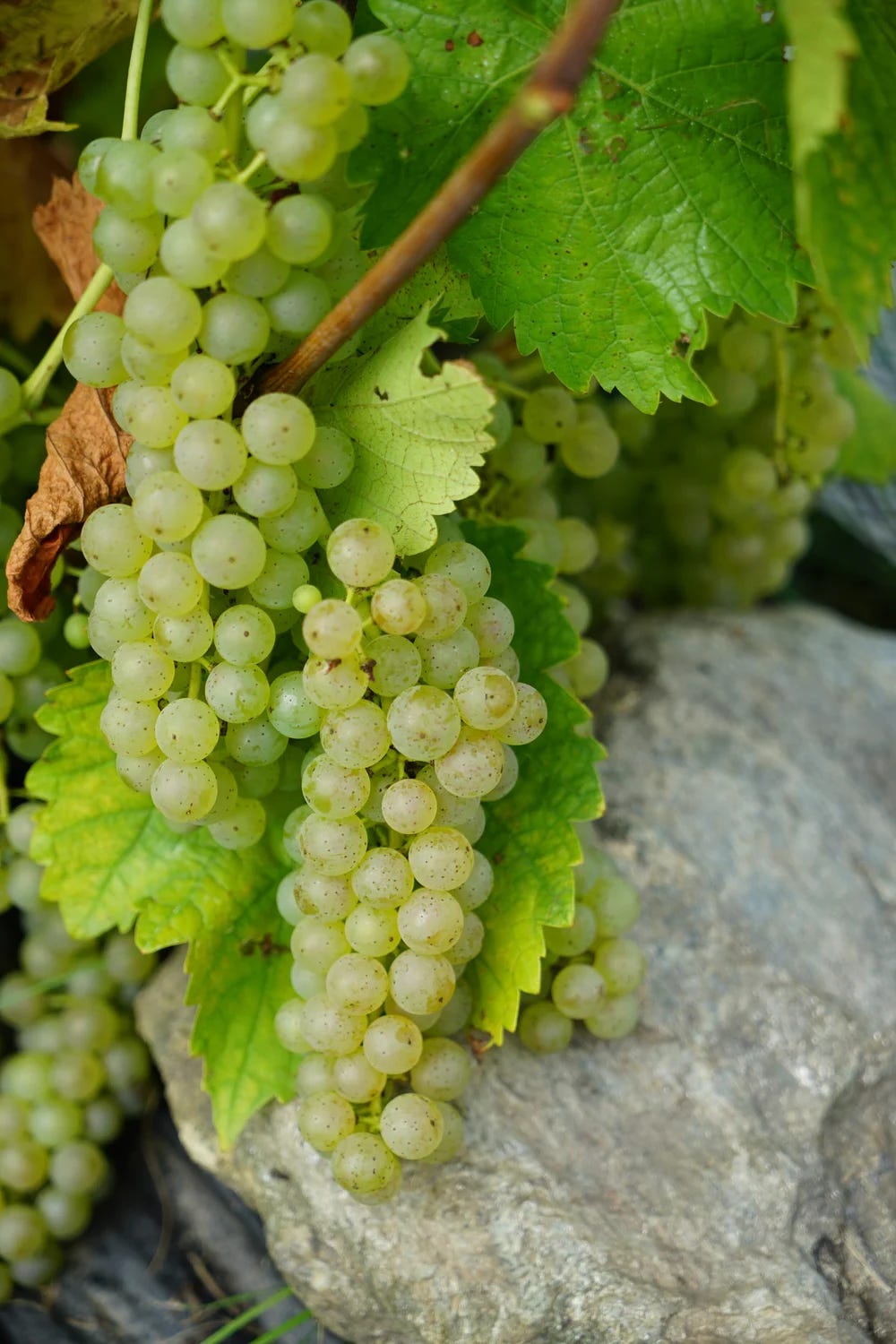
The last episode featured a 110 acre biodynamic chateau in one of Washington state’s famed AVAs. This episode features a 1 acre organic and regenerative vineyard of hybrids and vinifera with a straw bale winery and an underground house in a part of Washington that isn’t known for wine. I point out this contrast not to say that one is better than the other, but because in our dominant culture I’ve noticed that one is taken more seriously than the other. And I’m not saying that a 110 acre vineyard is really big and I’m definitely not saying it represents the same values as “Big Wine.” It’s just bigger than the vineyard we visit in this episode, and I use this comparison to look at this thought that we need to be able to scale the ideas that our wine embodies or they are dismissible, unimportant. This is a big area of critique of the small-farm regenerative ag movement by Chris Newman, of Sylvanaqua Farms. He makes important points and we need his voice. And there are some real challenges to consider: the issues we face in regenerating our wine cultures are unavoidably systemic, and the systems we live in are massive. But I recently heard the question posed, what if we focus on spreading rather than scaling? Could we look at regenerative viticulture as a viral meme, rather than as a business plan for a million acres of vineyards? Do we need or even want scale when it comes to wine? Right now it looks like the answer to that is “no.” Big Wine, the kind that comes with a bar code and national distribution and isn’t really wine anyway but more like a wine flavored beverage, seems to be what’s losing the most sales right now. And my guest for this episode is doing just fine. He has a loyal customer base because he makes his wine for his community. He represents his community’s highest values in his wine, even if they only care that it suits their taste and doesn’t make them feel like the wines of Big Wine do. His neighbors can tell that he cares about them and the land that they live on. My guest for this episode is Joe Barreca of Barreca Vineyards. Joe has been making wine for 50 years and lives in North East Washington state. Joe is a self-described back to the land hippie, and in recent years regional efforts to elevate the voices and perspectives of the native people of his region have exposed him to new perspectives that inform how he thinks about and lives on the land, and clearly inspire and move him. Over years of experimentation he has come up with some of the most fascinating approaches to winemaking that I’ve heard since I spoke with Peter Schmidt of Mythopia in Switzerland. And what I think is fascinating is that out in the remote corner of a place that isn’t usually thought of in relation to wine at all, by following ecological values and a desire to make wine for his community, Joe has sort of stumbled into making zero zero wines and orange wines and co-ferments like an ideological natty winemaker in the Loire or San Francisco Bay area. Joe grows one of his hybrid grapes, Baco Noir, with 10 foot canes… simply because he observed it and saw that that’s what it wanted, and that was the balance it needed to have the appropriate light and air to optimize the grape development. He let a baco vine grow into an old pear tree and has some really interesting observations to share about this partnership (see the photo below). Joe had never heard the term “married vine” but said he could see how that made sense. Joe also washes and reuses all of his bottles. This is something he couldn’t do without the relationships with his customers who know to bring the bottles back to him, as well as a small scale that makes this possible. While the rest of us spin our wheels trying to come up regional bottle reuse programs and find massive hurdles related to the inertia of habit and bureaucracy as well as apathy, even among those of us who should care the most about it, Joe has meanwhile set up his own local reuse system made possible by community scale winemaking… and is actually doing it. So… maybe we shouldn’t dismiss small. Maybe small is beautiful.Here’s a link to the foliar spray recipe that Joe mentions to treat vine health and reduce leaf hoppers:https://barrecavineyards.com/foliar-spray/Check out the abundance of that Baco Noir… This is a public episode. If you'd like to discuss this with other subscribers or get access to bonus episodes, visit beyondorganicwine.substack.com/subscribe