


 Claim Ownership
The Supreme Pod
Subscribed: 0Played: 0
Subscribe

© Supreme Group
Description
Welcome to The Supreme Pod by Supreme Group, where we discuss the art behind effective marketing in life science and healthcare. Every episode, we'll bring you insider strategies and expert interviews on crafting campaigns that drive real impact.
8 Episodes
Reverse
Most life science companies are already running LinkedIn ads with great content and strong creative. So why aren't the leads coming in? Usually, it's because the strategy is broken.In this episode, Eric Southwell (CGO, Supreme Group) and Irene Lecker (Director of Digital Strategy, Supreme Optimization) pull apart real LinkedIn campaigns from MilliporeSigma and Roche, showing exactly where each funnel breaks down and how to fix it.What you'll learn from this episodeWhy LinkedIn's member skills and professional profile data make it the only platform where you can target with the specificity needed for life science advertising Case Study: How MilliporeSigma's ads have strong creative and a compelling free sample offer but lose prospects through a broken click path and mobile-unfriendly formsThe three-stage funnel Eric and Irene would build from existing content: video for awareness, gated PDF for consideration, lead gen form for conversionCase Study: Why Roche's thought leadership ads are a standout, and why this ad format can deliver 10x the click-through rate of standard promoted postsHow to layer LinkedIn audiences using geography, industry, job function, seniority, and member skills to find the right scientists without inflating your cost per clickWhy LinkedIn lead gen forms consistently outperform external landing pages, and when the one exception applies (live webinars)The weekly optimization habits that turn a mediocre campaign into a lead generation engine within three monthsA quick disclaimer: all information in this episode is publicly sourced, opinions are our own, and we have no affiliation with either MilliporeSigma or Roche.LinksSupreme Intelligence: https://supremeopti.com/supreme-intelligenceSupreme Group: https://supremegroup.aiLinkedIn Ad Library: https://www.linkedin.com/ad-libraryTimestamps00:11 Welcome to the Supreme Pod and episode intro03:58 The case for LinkedIn: quality over quantity, real profiles, and brand safety09:22 Why Eric shifted 75% of Supreme's ad budget from Google to LinkedIn10:49 How to find competitor ads using the LinkedIn Ad Library11:14 MilliporeSigma ad analysis: gorgeous creative, unclear funnel stage14:25 The disconnect between "Learn More" and a free sample landing page17:30 Hidden treasure: great video and rich content buried behind the wrong ad19:59 Rebuilding MilliporeSigma's campaign as a three-stage funnel24:19 Roche ad analysis: thought leadership ads and real scientists on camera25:14 Why thought leadership ads get 10x the click-through rate27:19 The live webinar exception for lead gen forms30:34 Creative noise messaging vs. actual product benefits36:36 The pattern: great content, broken strategy41:58 Audience layering: geography, industry, job function, seniority, and member skills50:34 Optimization: weekly check-ins, A/B testing, and lead quality reviews53:54 Biggest mistake: underutilizing LinkedIn lead gen forms54:52 Magic wand: you already have enough content for LinkedIn57:23 Wrap-upKeywords#LinkedInAds, #LifeScienceMarketing, #HealthcareMarketing, #LinkedInAds, #LinkedInAudienceTargeting, #ThoughtLeadershipAds, #BiotechMarketing, #PharmaMarketing, #LinkedInAdvertising
In life sciences and healthcare, stepping into leadership is about finding the right environment, the right mentors, and the courage to invite yourself to the table.In this special International Women's Day episode, Eric Southwell sits down with four of Supreme Group's most senior women leaders — Nicky Battle (President, Supreme Communications), Liz Kanter (President & Executive Creative Director, Pivot Design), Shannon Carlson (President & Founder, C24), and Elizabeth Yi (Co-Founder, Broth) — for an honest conversation about what it actually takes to grow, lead, and thrive.What you'll learn from this episodeWhy the culture you work in matters more than the title you hold, and when it's time to walk awayThe critical difference between mentors and sponsors, and why you need bothHow to stop waiting to be noticed and start inviting yourself to the tableWhat organizations need to do beyond assigning titles: real authority, intentional time, and passing the micWhy leadership isn't just about managing people, it's how you show up in every small moment, every single dayHow to tighten your story and project confidence, even when you don't have all the answersWhy standing up for yourself requires leading with facts, not emotion, and the importance of addressing conflict fastLinksSupreme Group: https://supremegroup.aiTimestamps00:00 Episode summary sizzle00:41 Welcome and introductions (Nicky Battle, Liz Kanter, Shannon Carlson, Elizabeth Yi) 02:20 What most enabled your career growth? 02:53 Shannon on culture, authenticity, and finding the right environment 04:06 Advice for those who don't feel supported at work 05:22 Liz on relationships, trust, and the mentor who changed everything 07:46 The power of mentors vs sponsors 08:57 Shannon on how you show up and the small moments that build trust 10:08 Elizabeth on advocates who played both roles 11:14 What if you don't have a mentor? How to find one 14:04 Nicky on finding "expanders" early in your career 14:44 Shannon on carving out time for yourself 16:08 Elizabeth on the challenge of speaking up and projecting confidence 17:16 Nicky on inviting yourself to the table 19:08 What organizations can do to support women in leadership 21:39 Elizabeth on redirecting the room and passing the mic 22:20 Nicky on allyship and giving credit in meetings 24:02 Advice for women early in their careers 24:45 Shannon on proactive feedback and leading without a title 26:49 Liz on stretching beyond your comfort zone and choosing your circle 28:46 Communication and standing up for yourself with confidence 31:48 Closing wisdom: don't be scared of this space, be intentional, embrace discomfortKeywordsInternational Women's Day, women in leadership, life sciences marketing, healthcare marketing, mentorship, sponsorship, career growth, leadership development, women in pharma, women in healthcare, professional development, executive presence, allyship, career advice
In life sciences and healthcare marketing, most AI adoption still revolves around a simple chatbot and looks like “prompt, draft, redo.”In this episode, Paul sits down with Sheldon Zhai (Founder and Chief AI Officer, Supreme Group) and Leigh Wasson (SVP AI and Innovation, Supreme Group) to break down what actually drives value: using AI as leverage across the full marketing workflow, not a series of disconnected point solutions.Why “AI strategy” is overhyped but "AI as leverage" is not, and how to think in terms of business leverageWhy AI adoption stalls in regulated teams: the pace of change, the drag of recontextualizing, and security/compliance risksHow point tools can speed up one step but create downstream bottlenecks (including MLR), and why end-to-end workflows matterWhat an AI Platform (AIP) actually is, and how it moves teams beyond chat into a connected marketing stackHow curated business context (strategy, personas, proof points, approved assets) and live performance data turns AI into an insight machine and performance optimizer, not just a content generatorWhy regulated marketing should prioritize accuracy, traceability, and governance over speed Supreme Intelligence: https://supremeopti.com/supreme-intelligenceSupreme Group: https://supremegroup.ai00:00 AI leverage, 100x improvements, and “humans tell you why”00:37 Welcome and guests (Sheldon Zhai & Leigh Wasson)01:18 Is AI overhyped? Or is it having a real impact?02:41 Why AI adoption stalls: pace of change and tool churn05:01 Agility vs security in a regulated industry06:12 Why point solutions fail: bottlenecks and recontextualizing 07:54 The data unlock: curated content and live data for real-time optimization10:29 What an AIP is (and why it goes beyond chat)13:01 Can we really 10x our impact?16:32 AIP vs ChatGPT19:54 End-to-end life sciences workflows 26:34 The security risks of unmanaged AI experimentation 28:53 Application example: sales won analysis yields unexpected insights35:34 Vibe-coding inside the platform and a “white glove” last mile46:48 Accuracy over speed in regulated sectors49:08 Why AI pilots fail: forced top-down vs pull-based adoption52:45 What’s next: context graphs, platforms over point tools58:40 Wrap and where to learn moreAI adoption, life sciences marketing, healthcare marketing, AI governance, MLR workflows, AI platforms, ChatGPT vs AI platform, marketing operations, human-AI collaboration
In this episode of The Supreme Pod, hosts Eric Southwell and Paul Avery, Ph.D., sit down with Supreme Optimization’s EVP of Advertising Mihaela Pupavac, Ph.D. and biotech media founder Joachim Eeckhout to discuss 5 life science marketing trends to watch in 2026: Bing ads as an underused growth lever, modern thought leadership, why podcasting is a trust engine for your audience, AI without the hype, and the fight for bottom-of-funnel visibility. Listen to find out what you should prioritize in your marketing efforts and tactical takeaways for 2026.If you found the episode useful, we’d love it if you could leave us a review or share it with a colleague.Want to hear more from our guests? Check out Joachim Eeckhout’s podcast The Science Marketer (https://thesciencemarketer.com/podcast) and his accompanying newsletter.You can find more from Paul Avery through his podcasts Life, Science and Marketing (https://rss.com/podcasts/life-science-and-marketing/) and Artificially Intelligent Marketing (https://rss.com/podcasts/artificiallyintelligentmarketing/).And if you want more great content from The Supreme Pod, subscribe to our channel on Spotify, Apple Podcasts, or wherever you get your podcasts.YouTube: https://www.youtube.com/@SupremeGroupPodcastApple Podcasts: https://podcasts.apple.com/us/podcast/the-supreme-pod-life-science-healthcare-marketing/id183259311400:00:00 Intro00:00:47 Meet the Panel00:06:10 What We’ll Discuss Today00:07:33 Trend 1: Why Bing Ads Matter00:10:58 Why Teams Ignore Bing00:12:46 Where Bing Works00:18:13 The Automation Trap in Paid Search00:21:17 Trend 2: Thought Leadership00:23:07 How to Build Thought Leadership That Works00:32:34 “Modern” Thought Leadership = Say Something Real00:35:34 Trend 3: Podcasting Is a Growth Channel00:38:26 Podcasts Build Trust Before the Sales Call00:44:35 How Clips, Posts, and YouTube Work Together00:48:52 Trend 4: AI Without the Hype00:50:10 Avoiding “AI Slop”01:00:22 Trend 5: Bottom-of-Funnel Visibility01:14:10 Q&A
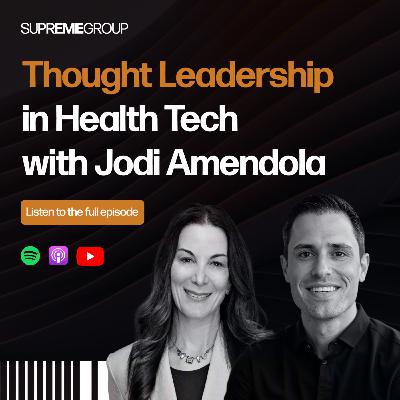
In this episode of The Supreme Pod, host Eric Southwell sits down with Jodi Amendola, President of Amendola Communications, a veteran in health tech and digital health PR with over 30 years of experience. Together, they dive deep into the evolution of thought leadership in healthcare marketing, from defining it in today’s social-first world, to using tools like LinkedIn, podcasts, and newsjacking to build authentic, educational visibility. Jodi shares timeless strategies for building trust, consistency, and authority in a crowded health tech market.If you found the episode useful, we’d love it if you could leave us a review or share it with a colleague.And if you want more great content like this, subscribe to The Supreme Group Pod channel on Spotify, Apple Podcasts, or wherever you get your podcasts.YouTube: https://www.youtube.com/@SupremeGroupPodcastApple Podcasts: https://podcasts.apple.com/us/podcast/the-supreme-pod-life-science-healthcare-marketing/id183259311400:00 Cold open: People follow people00:28 Welcome + guest intro01:10 What thought leadership really is and why it matters03:21 How to build a thought leadership program: messaging, cadence, repurposing10:15 Who should be a thought leader?15:10 Challenges in health tech communications18:22 The biggest mistakes in thought leadership and health tech PR24:07 Navigating the health tech landscape31:04 Newsjacking explained and real life examples33:09 Future trends and using AI for health tech communications
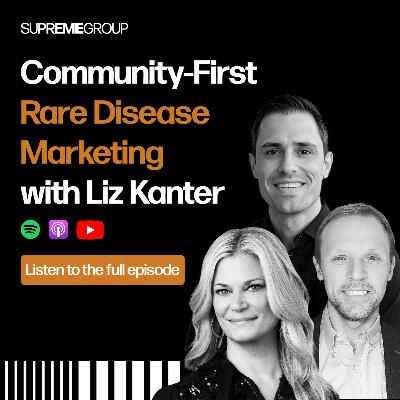
In this new episode of The Supreme Pod, hosts Eric Southwell and Paul Avery, PhD talk with Liz Kanter, President of Pivot Design, about what actually works in rare disease marketing. From active listening and advocacy partnerships to co-creating resources with patients and HCPs, Liz explains how she breaks through the pharma marketing “sea of sameness.”Liz also shares a beloved rare disease marketing case study: a therapeutic play kit complete with a stuffed animal “patient friend” that went viral in the children’s primary immunodeficiency community, transformed internal company culture, and is still in use 15 years later. Read more about it here: https://www.pivotdesign.com/work/igi/Our mission is to provide the types of insights and inspiration from across the worlds of life science and healthcare marketing that you cannot find anywhere else. If you found this episode useful, we’d love it if you could leave us a review or share it with a colleague.And if you want more great content like this, subscribe to The Supreme Group Pod channel on Spotify, Apple Podcasts, or wherever you get your podcasts.YouTube: https://www.youtube.com/@SupremeGroupPodcastApple Podcasts: https://podcasts.apple.com/us/podcast/the-supreme-pod-life-science-healthcare-marketing/id18325931140:00 — Opening & Introductions1:28 — How Liz Found Her Calling in Rare Disease3:29 — What Makes Rare Disease Marketing Unique7:49 — The Role of Empathy & Emotional Intelligence11:49 — Building Trust With Rare Disease Communities17:17 — Pivot Wins Rare Disease Agency of the Year24:44 — Breaking Out of the Pharma “Sea of Sameness”31:00 — Liz’s Favorite Campaign (Therapeutic Play Kit)43:38 — Measuring Impact & Rethinking Budgets
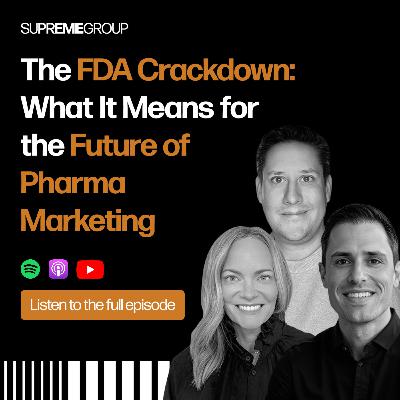
The FDA has raised the bar for DTC pharma ads and marketers must act now. Shannon Carlson and Olly Johnston explain plain language, fair balance of benefits and risks, linking ads to patient support, and full audits. Learn when to pause media, rebuild assets, and use AI for claim filters and modular content. Get the concrete steps and CMO playbook to protect your brand and build patient trust. Subscribe now to The Supreme Pod for more insights.
Can ChatGPT outsmart a PhD in life science marketing?In this Google Ads experiment, AI faces off with human expertise across keyword research, ad copywriting, and campaign setup. While ChatGPT offers helpful ideas, it misses key scientific and strategic nuances.Learn where AI stumbles, where it shines, and why human insight still leads.
Comments

Download from Google Play

Download from App Store
 United States