


 Claim Ownership
Faith in Process
Subscribed: 2Played: 0
Subscribe

© Harry Jarrett
Description
Faith in Process: A Podcast Hosted by Pastor Harry Jarrett
What if faith is not a finished product, but something alive, changing, and still unfolding in real time?
Faith in Process invites you into honest conversations with thought leaders, authors, pastors, peace builders, and everyday people who are actively exploring how faith is lived in the world today.
Each week, Pastor Harry Jarrett sits down with guests from across the Anabaptist and peace church families, along with voices from theology, creation care, spiritual formation, social ethics, and theopoetics. These conversations are open, curious, unfinished, and grounded in real life. They offer a place for young adults and lifelong seekers to explore big questions without fear and to imagine what faithful living can look like in our world.
Topics you will hear:
Faith deconstruction
Christian reconstruction
Creation care and environmental discipleship
Theopoetics and creativity in faith
Spiritual formation and vocation
Peacemaking and justice
Scripture and tradition in real life
How to grow a living faith in a noisy world
Whether you are holding on to hope, rebuilding your spiritual life, or beginning something new, these conversations will help you discover that your faith is not failing. It is forming. It is stretching. It is processing you into something deeper and more alive.
Listen each week and join a community that believes faith grows best through shared stories, open questions, and God’s gentle work in our lives.
Tap Follow and step into the journey.
pastorharryjarrett.substack.com
What if faith is not a finished product, but something alive, changing, and still unfolding in real time?
Faith in Process invites you into honest conversations with thought leaders, authors, pastors, peace builders, and everyday people who are actively exploring how faith is lived in the world today.
Each week, Pastor Harry Jarrett sits down with guests from across the Anabaptist and peace church families, along with voices from theology, creation care, spiritual formation, social ethics, and theopoetics. These conversations are open, curious, unfinished, and grounded in real life. They offer a place for young adults and lifelong seekers to explore big questions without fear and to imagine what faithful living can look like in our world.
Topics you will hear:
Faith deconstruction
Christian reconstruction
Creation care and environmental discipleship
Theopoetics and creativity in faith
Spiritual formation and vocation
Peacemaking and justice
Scripture and tradition in real life
How to grow a living faith in a noisy world
Whether you are holding on to hope, rebuilding your spiritual life, or beginning something new, these conversations will help you discover that your faith is not failing. It is forming. It is stretching. It is processing you into something deeper and more alive.
Listen each week and join a community that believes faith grows best through shared stories, open questions, and God’s gentle work in our lives.
Tap Follow and step into the journey.
pastorharryjarrett.substack.com
19 Episodes
Reverse
In this first episode of a four-part series, Pastor Harry Jarrett sits down with returning guest Lonnie Yoder to begin an honest and thoughtful conversation about religious trauma. Together, they explore a working definition of religious trauma as emotional and psychological harm caused by religious beliefs, practices, or communities that produce fear, shame, control, or distress over time. They also discuss why this subject is often more complex than people realize, especially when questions of power, authority, church structure, and personal identity are involved.This conversation introduces several important themes that will shape the series ahead, including spiritual abuse, the trauma experienced by clergy who are defrocked for theological reasons rather than misconduct, and the lasting impact of persecution on faith communities. Along the way, Pastor Harry and Lonnie reflect on the role of pastors, teachers, and church leaders, the ethical weight of power in congregational life, and the need for healthier, more self-aware faith communities. This episode is a meaningful starting point for anyone who has experienced harm in religious settings or who wants to help build communities marked by wisdom, humility, and care.00:00 Introduction to the series04:28 Defining religious trauma08:27 Power and authority in religious systems12:43 Trauma versus offense15:20 Preview of upcoming episodes18:19 What does defrocked mean22:14 Why people often miss their own power31:14 Control, power, and authority in everyday lifeFaith in Process: Sunday’s CoolRecorded live on Sunday mornings at Pleasant Valley Church of the Brethren in Weyers Cave, Virginia. Hosted by Pastor Harry Jarrett.Join us in person or listen on Apple, Spotify, YouTube, or Substack.Learn more about our congregation at pleasantvalleyalive.org Get full access to Harry Jarrett at pastorharryjarrett.substack.com/subscribe
In this Faith in Process Sunday’s Cool conversation from Pleasant Valley Church of the Brethren in Weyers Cave, Virginia, Pastor Harry Jarrett welcomes returning guest Audrey Svay. Audrey is an ordained minister in the Church of the Brethren, a professional writing consultant, and an adjunct English professor, and she brings both pastoral wisdom and practical writing tools to the question so many of us are living right now: how do we carry grief with honesty, and still find rest?Together, Harry and Audrey widen the definition of grief beyond death to include less visible losses like shifts in belief, changing communities, aging, retirement, and the quiet ache of losing roles and identity. They explore why many of us hesitate to name these losses as grief, and how our values can get tangled up in the roles we once held.Audrey offers a gentle framework of “grief and rest” held in harmony, using the image of waves that come in and recede. You will hear concrete Sabbath practices for real life, including journaling to release what you are carrying, creating a simple ritual of “trust,” small daily moments of restoration, and writing exercises like letters you do not have to send. Harry reflects on the often overlooked Holy Saturday pause between Good Friday and Easter morning, and why that day matters when we are learning to live faithfully through loss.Mentioned in this episode Audrey’s book: Between You and Me (available at Brethren Press)Segment guide with timestamps00:00 Welcome and introduction to Audrey Svay00:03 What counts as grief: roles, identity, and less visible losses00:07 Why rest and Sabbath matter for grief processing00:09 Practical Sabbath in grief; Luke 23 and the forced pause of rest00:11 Writing practices for sleep, trust, and letting go00:13 The cup metaphor; why rest belongs on the to-do list00:18 Holy Saturday and the blessing of the pause00:21 Community, listening, and telling the grief story00:25 Poetry, letters, and honest writing as grief work00:31 Retirement, identity, and the body keeping score00:35 Closing encouragementFaith in Process: Sunday’s CoolRecorded live on Sunday mornings at Pleasant Valley Church of the Brethren in Weyers Cave, Virginia. Hosted by Pastor Harry Jarrett.Join us in person or listen on Apple, Spotify, YouTube, or Substack. Learn more about our congregation at pleasantvalleyalive.org Get full access to Harry Jarrett at pastorharryjarrett.substack.com/subscribe
In this episode of Faith in Process, Pastor Harry Jarrett and co-host Grayson Preece begin a new series exploring the core convictions of the Church of the Brethren through the book Let Our Joys Be Known. The first conversation centers on one powerful theme: radical obedience.What would it take to follow Jesus if it were illegal?Travel back to 1708, when Alexander Mack and seven others stepped into the Eder River in Germany to baptize one another as adults. This act was not just symbolic. It defied both church and state. In a world where infant baptism functioned as a civic registry tied to taxation and military service, choosing believer’s baptism carried real social, economic, and political consequences.Harry and Grayson explore:• Why this act of baptism was considered dangerous• How Pietism shaped the Brethren’s emphasis on Bible study, lay leadership, and lived faith• The tension between Luke 14 and Matthew’s call to love God above all• The cost of dissent in a church-state system• What “counting the cost” means for young adults today navigating money, vocation, and meaningThis conversation moves beyond history. It asks whether radical obedience still has a place in a culture of distraction and financial pressure. What does it mean to prioritize Christ when everything else competes for attention?Recorded live at Pleasant Valley Church of the Brethren in Weyers Cave, Virginia, this episode launches a 13-part series examining the theological callings that have shaped the Brethren for more than three centuries.If your faith is still forming, still questioning, still becoming, you are in the right place.Welcome to the process.Faith in Process: Sunday’s CoolRecorded live on Sunday mornings at Pleasant Valley Church of the Brethren in Weyers Cave, Virginia. Hosted by Pastor Harry Jarrett.Join us in person or listen on Apple, Spotify, YouTube, or Substack.Learn more about our congregation at pleasantvalleyalive.org Get full access to Harry Jarrett at pastorharryjarrett.substack.com/subscribe
How can followers of Jesus respond faithfully to immigration enforcement, social justice issues, and political division? In this powerful conversation, host Harry Jarrett sits down with Dr. Scott Holland, Professor Emeritus of Peace Studies at Bethany Theological Seminary, to explore what it means to be good neighbors in turbulent times.Drawing inspiration from Fred Rogers’ ministry of neighborliness, Scott reframes activism as neighboring—a practice of loving our neighbors as ourselves, even when we disagree on solutions. The discussion tackles pressing questions: What does the way of Jesus look like amid ICE raids in Minneapolis? How do we cultivate a “democracy of the soul” in our divided democracy? How can we move beyond doctrine to create cultures of peace?This episode offers no easy answers but provides thoughtful guidance for processing faith in the real world. Scott and Harry explore the tension between different visions of peace, the power of prophetic imagination, the importance of wonder and empathy, and practical ways to engage in peacemaking—from contacting representatives to being present with those who are threatened.Whether you’re confused, concerned, or searching for faithful next steps, this conversation offers wisdom from the Church of the Brethren peace tradition, insights from thinkers like Dietrich Bonhoeffer and Walt Whitman, and an invitation to continue “living the questions” together.Faith in Process: Sunday’s CoolRecorded live on Sunday mornings at Pleasant Valley Church of the Brethren in Weyers Cave, Virginia. Hosted by Pastor Harry Jarrett.Join us in person or listen on Apple, Spotify, YouTube, or Substack.Learn more about our congregation at pleasantvalleyalive.org Get full access to Harry Jarrett at pastorharryjarrett.substack.com/subscribe
Ego Consciousness vs. God Consciousness: A Conversation on Paradigm ShiftsWhat does it mean to truly embody God consciousness in our everyday lives? In this organic, unscripted conversation, hosts Harry and Millard dive deep into the contrasts between ego consciousness and God consciousness—exploring how Jesus modeled a nonviolent, loving, and persuasive way of being that stands apart from the dominant cultural paradigms we navigate today.Millard frames the discussion around “the end times”—but not in the way you might expect. Instead of apocalyptic predictions, the conversation shifts to examining how we think, act, and relate to power and politics through the lens of faith. From the founding principles of the American republic to the challenges of living faithfully in a culture driven by self-interest and disinformation, the discussion raises critical questions about what it means to follow the way of Jesus in any political or social context.Harry responds with his own perspective: that followers of Jesus are called to live as “salt and light” in every culture and system, embodying the timeless principles of the kingdom of God rather than pledging ultimate allegiance to any earthly nation or government. The conversation touches on virtue, shared facts, and whether America’s founding ideals align with—or fall short of—the kingdom Jesus proclaimed.This episode is more conversational and exploratory than usual, so we’d love to hear your thoughts! Leave a comment or email us with your reflections as you continue processing these themes in your own life.Topics explored:* Ego consciousness vs. God consciousness* The nature of God as love and nonviolence* Living out Jesus’ way in different political systems* American civic principles and their relationship to faith* The enduring nature of the kingdom of GodFaith in Process: Sunday’s CoolRecorded live on Sunday mornings at Pleasant Valley Church of the Brethren in Weyers Cave, Virginia. Hosted by Pastor Harry Jarrett.Join us in person or listen on Apple, Spotify, YouTube, or Substack.Learn more about our congregation at pleasantvalleyalive.org Get full access to Harry Jarrett at pastorharryjarrett.substack.com/subscribe
In this special episode, host Harry Jarrett and producer Grayson Preece step into the spotlight to share their own faith journeys and how they each found their way to the Church of the Brethren.Harry reveals his winding path through Methodist, Presbyterian, Episcopal, Pentecostal, and Mennonite traditions before discovering his deep family roots in the Brethren church—connections he never knew existed until his wife found his ancestors’ names in the Pleasant Valley Church graveyard. From new age spirituality in college to twenty years as a Mennonite pastor, Harry’s story culminates in a return to his Brethren heritage.Grayson shares how he went from a childhood disconnected from church to finding authentic spiritual community at Camp Bethel, a Church of the Brethren camp. His experience as a camp counselor and his time at Bridgewater College shaped his understanding of faith as relational, accessible, and centered on community.Together, they explore what drew them to the Church of the Brethren: the emphasis on belonging before believing, the peace tradition, the priesthood of all believers, and a welcoming spirit that invites people to process their faith together. They also discuss why they’re launching a new series on Brethren heritage and what makes this denomination unique in the broader Christian landscape.Whether you’re curious about the Church of the Brethren, interested in different faith journeys, or simply enjoy honest conversations about spirituality, this episode offers an intimate introduction to the voices behind Faith in Process.Episode Highlights:* Harry’s surprising discovery of his Brethren family lineage* How Camp Bethel transformed Grayson’s spiritual life* The difference between “believe, behave, belong” and “belong, behave, believe”* What makes the Church of the Brethren’s approach to peace and community distinctive* Why faith is always in process, whether we realize it or notFaith in Process: Sunday’s CoolRecorded live on Sunday mornings at Pleasant Valley Church of the Brethren in Weyers Cave, Virginia. Hosted by Pastor Harry Jarrett.Join us in person or listen on Apple, Spotify, YouTube, or Substack.Learn more about our congregation at pleasantvalleyalive.org Get full access to Harry Jarrett at pastorharryjarrett.substack.com/subscribe
In this episode of Faith in Process, Harry and Millard dive deep into Walter Brueggemann’s concept of “royal consciousness” and what it means for the church today. Drawing from Brueggemann’s book The Prophetic Imagination, they explore how empire creates a numbness in the populace—convincing people that the way things are is the way things must be.Key Topics Discussed:* Royal consciousness vs. prophetic imagination: How empires maintain power by numbing people to injustice and suffering* Beyond individual tyrants: Why focusing on single leaders misses the systemic nature of empire consciousness* Civil religion in America: How American civil religion has created its own form of royal consciousness from the nation’s founding* The Church’s response: Are we as the church numb to what’s happening around us? How do we wake up?* Jesus and empire: How Jesus addressed the Roman Empire and elite religious systems in his context* Venezuela and peace theology: Wrestling with the Church of the Brethren’s peace position in light of recent events* The need for honest conversation: Why transparent dialogue about messy, difficult topics is essential for transformationHarry shares insights from his reflection paper on Chapter 5 (I said four, but it is five; oops) of The Prophetic Imagination and connects it with Dana Cassell’s class on addressing tyranny. Together, Harry and Millard consider what it means to practice prophetic imagination in an age dominated by empire consciousness—and how the Church of the Brethren motto “continuing the ministry of Jesus, simply, peacefully, together” offers a framework for response.This conversation challenges listeners to ask: Are we numb? What alternative vision are we offering? And how do we help people imagine that something else is possible?Referenced in this episode:* The Prophetic Imagination by Walter Brueggemann* Harry’s Substack article: “Beyond Herod Comparisons: Practicing Prophetic Imagination in the Age of Royal Consciousness.”* Dana Cassell’s “Outwit” class on addressing tyrannyJoin the conversation and continue processing your faith with us.Faith in Process: Sunday’s CoolRecorded live on Sunday mornings at Pleasant Valley Church of the Brethren in Weyers Cave, Virginia. Hosted by Pastor Harry Jarrett.Join us in person or listen on Apple, Spotify, YouTube, or Substack.Learn more about our congregation at pleasantvalleyalive.org Get full access to Harry Jarrett at pastorharryjarrett.substack.com/subscribe
I Can See the Change and the Improvement: A Conversation with Don FitzkeeHow do we know when change actually makes us more like Christ? In this episode, Harry sits down with Don Fitzkee—2026 Church of the Brethren Annual Conference moderator and pastor of worship at Lancaster Church of the Brethren—to explore this vital question.Don shares insights from his recent Messenger magazine article “I Can See the Change and the Improvement,” examining how the Church of the Brethren has evolved over the decades and which changes represent genuine spiritual growth. From the shift from non-resistance to active peacemaking, to navigating the “second half of life” faith described by Richard Rohr, this conversation wrestles with what it means to honor tradition while remaining open to transformation.The discussion touches on Brethren theology, the authority of Scripture, and how we interpret the Bible through a Christ-centered lens. Harry and Don also explore insights from N.T. Wright and Walter Brueggemann about reimagining old truths for new contexts—which forms the heart of Don’s “Imagine” conference theme for 2026.In a powerful moment, Sunday school participant John shares about finding more authentic spirituality in AA meetings than in church, raising challenging questions about honesty, vulnerability, and what it really means to encounter God together.This is a thoughtful exploration for anyone processing how faith traditions change, grow, and sometimes struggle to hold together when we see things differently.Faith in Process: Sunday’s CoolRecorded live on Sunday mornings at Pleasant Valley Church of the Brethren in Weyers Cave, Virginia. Hosted by Pastor Harry Jarrett.Join us in person or listen on Apple, Spotify, YouTube, or Substack.Learn more about our congregation at pleasantvalleyalive.org Get full access to Harry Jarrett at pastorharryjarrett.substack.com/subscribe
In this episode of Faith in Process, Pastor Harry Jarrett sits down with Lonnie Yoder to explore the question: How do we experience the divine in the midst of trauma, before, during, and after?Lonnie helps us name trauma in its different forms, including single-event trauma, repeated trauma, and the way present events can trigger historical trauma. Together, Harry and Lonnie talk about the difference between a cause and a trigger, and what it looks like to walk with people who are still living with the effects of what happened.The conversation draws on spiritual and theological frameworks like Ignatius and consolation and desolation, Brueggemann and orientation, disorientation, reorientation, and the cross and resurrection as a doorway into honest Christian reflection on suffering and God’s presence.You will also hear practical wisdom for resilience and pastoral care: the grounding gift of weekly worship, scripture as a living resource (including Psalm 139), and a simple prayer practice shaped around divine presence, divine protection, and divine peace. Lonnie also reflects on cross-cultural lessons in healing, including a story from Jamaica about music as a way to process pain when words are not enough.Listener note: this episode includes brief mention of gun violence and sexual abuse. Please listen with care.Faith in Process: Sunday’s CoolRecorded live on Sunday mornings at Pleasant Valley Church of the Brethren in Weyers Cave, Virginia. Hosted by Pastor Harry Jarrett.Join us in person or listen on Apple, Spotify, YouTube, or Substack.Learn more about our congregation at pleasantvalleyalive.org Get full access to Harry Jarrett at pastorharryjarrett.substack.com/subscribe
In this episode of Faith in Process, Harry and Millard sit down for a thoughtful and lively conversation on the process theology of Alfred North Whitehead. They explore three core ideas shaped by Whitehead’s work: that value is woven into the fabric of reality, that religion serves as the bridge between vision and action, and that God’s way in the world is persuasive love rather than coercive force. Concepts they both learned by listening to Tripp Fuller in his podcast episode “Finding Our Way Forward: How Whitehead Shows Us Religion as Life’ Creative Force”Together, Harry and Millard unpack their understanding of Whitehead’s shift from mathematician to philosopher, the roots of process thought, and how these ideas intersect with contemplative Christianity, Genesis, John’s Gospel, and Richard Rohr’s vision of a Christ soaked universe. Along the way they wrestle with questions many faith seekers ask. Is God embedded within creation? What responsibility do humans carry in the unfolding of God’s future? Does God need our yes? How do these ideas hold up amid global suffering and injustice?This episode offers an entry point into process theology through the lens of friendship, curiosity, and honest wondering. If you are exploring a more relational, dynamic understanding of God and creation, this conversation will meet you right where you are.Faith in Process: Sunday’s CoolRecorded live on Sunday mornings at Pleasant Valley Church of the Brethren in Weyers Cave, Virginia. Hosted by Pastor Harry Jarrett.Join us in person or listen on Apple, Spotify, YouTube, or Substack.Learn more about our congregation at pleasantvalleyalive.org Get full access to Harry Jarrett at pastorharryjarrett.substack.com/subscribe
In this episode of Faith in Process, Pastor Harry welcomes David Radcliff—director of the New Community Project and author of the Covenant Bible Series study God’s Earth. Our Home. David’s life and ministry are rooted in the belief that creation care, justice, and faith belong together.David shares how a formative trip to Central America reshaped his understanding of the world and launched him into decades of global service. We explore New Community Project’s partnerships in places like South Sudan, Nepal, Rwanda, Malawi, Borneo, and the Ecuadorian Amazon, where they support girls’ education, women’s empowerment, reforestation, and Indigenous defenders of threatened ecosystems.Closer to home, David describes the work of NCP’s Sustainable Living Centers in Harrisonburg, VA, and Starksboro, VT, where sustainable living is practiced, taught, and shared through community engagement.This conversation moves from ecological theology to climate realities, from global justice to personal transformation. David reminds us that hope grows when we “aim high and look low”—staying aware of the big challenges while finding inspiration in the small, faithful actions that change lives and landscapes.Join us as we explore:• The spiritual foundations of creation care• Why justice and sustainability are inseparable• How experiential learning transforms lives• What faithful stewardship looks like in a changing world• How we keep hope alive when the challenges feel overwhelmingA rich and grounded episode for anyone seeking to follow Jesus in ways that heal the earth and uplift its most vulnerable people.Faith in Process: Sunday’s CoolRecorded live on Sunday mornings at Pleasant Valley Church of the Brethren in Weyers Cave, Virginia. Hosted by Pastor Harry Jarrett.Join us in person or listen on Apple, Spotify, YouTube, or Substack.Learn more about our congregation at pleasantvalleyalive.org Get full access to Harry Jarrett at pastorharryjarrett.substack.com/subscribe
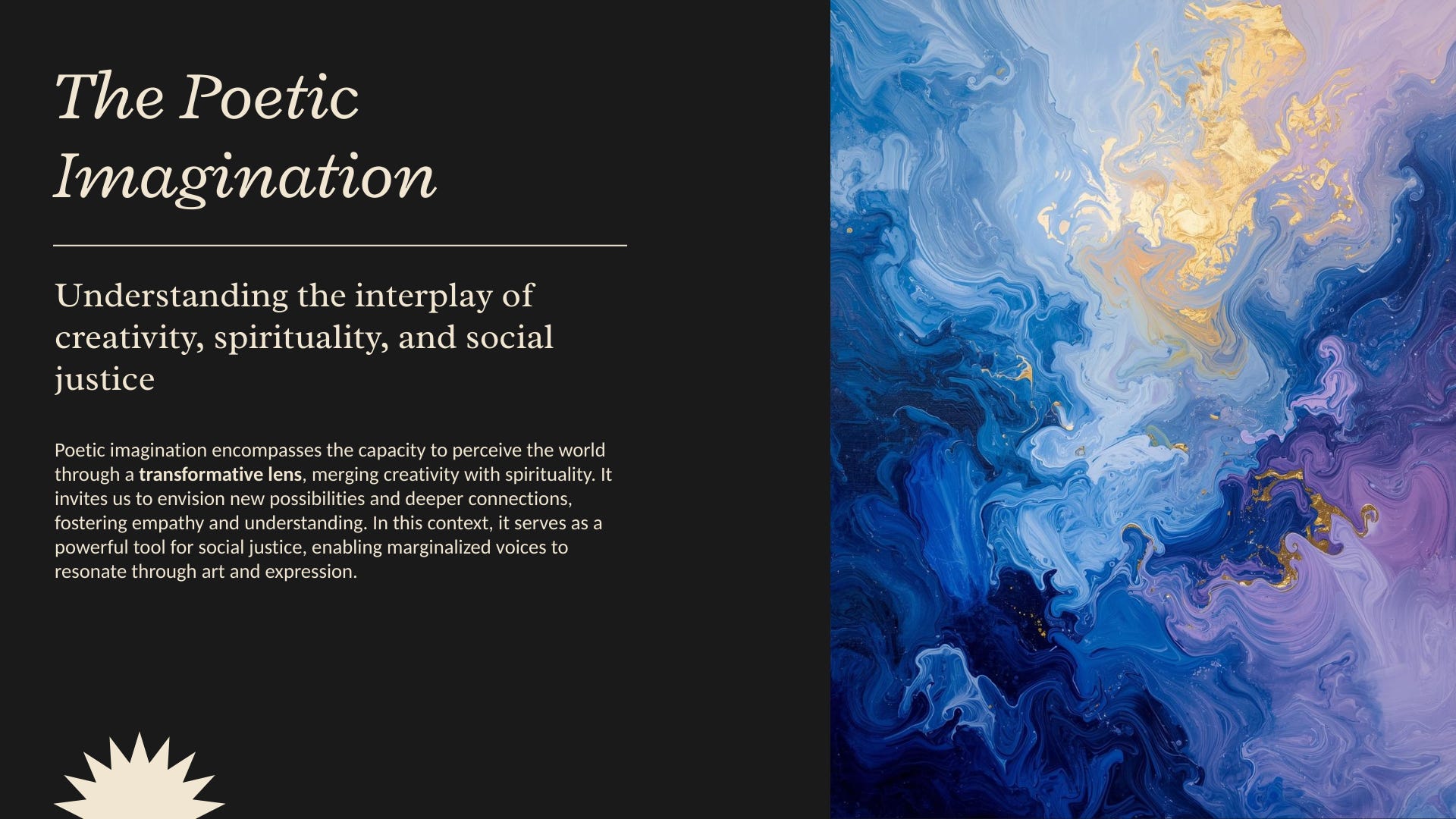
Naming God, Training Our ImaginationThis episode with Scott Holland found me standing at the meeting point of several streams I have been wading in lately: Dana Cassell’s Outwit class on resisting tyrants, Walter Brueggemann on prophetic imagination, and Scott’s work in theopoetics. What tied them together was not only a topic but a practice, imagination as the way faith learns to see differently and then to live differently.Reason walks where imagination has cleared a pathEarly on, we named something simple and bracing, language does not only report our faith, it forms it. Scott spoke of poetic imagination as a way of knowing, a God consciousness that refuses to stop at bare rationality. He echoed Richard Rorty’s insight that reason only follows after imagination has opened new paths. That landed for me. If our God talk is cramped or control heavy, our lives will feel the same. If our language makes room for awe, lament, and neighborliness, it opens space for new practices rather than only new opinions.Reading Exodus without shrinking itFrom there we turned to Exodus. I put on the table a question I have been carrying, did the plagues have to happen exactly as reported in order to be true, or did they literarily happen, told as a theopoetic way to unmask Pharaoh’s system and to name God’s liberating work. Scott affirmed the legitimacy of reading the narrative as a literary imagination of liberation, one that trains our vision for what God is doing among oppressed peoples. In that light, each plague can read like a memo to a different department of empire, water, labor, economy, religion, and more, until the regime’s spell is broken and a new people can be born.From a military metaphysics to a poetics of peaceScott drew on years with the World Council of Churches and the turn from Just War to Just Peace, imagine security not as control but as relationship, covenant with God, neighborliness with one another, care for creation. That reframes Exodus. Instead of a bigger tyrant muscling a smaller one, we hear a call to leave Egypt’s imagination behind and to practice an economy of enough, Sabbath, Jubilee mercy, and shared flourishing. It also reframes our congregational life, new words invite new habits.Is creation a witnessWe ventured to wonder, does creation speak back to oppression. Scott pointed to recent ecological wisdom that treats nature not as an it but as a thou. In process language, God lures the world, human and more than human, toward life. However we parse the mechanics, Scripture’s metaphors give us permission to notice creation as participant, not prop. That kind of imagination leads to practice, river cleanups as confession, gardens as parables, shared harvest as doxology.A democracy of the soulWhen Grayson asked how Just Peace addresses real conflict, Scott reached for deep democracy, not simple majoritarianism, but communities that make honest space for the minority voice. He linked that outer work to inner work, a democracy of the soul, where we host many voices with humility and attention. That is discipleship language I can pray with this week.Three small practices I am taking with me* Audit our prayers for control speak. Shift from God take over to God teach us to partner, and listen for how that change reshapes us.* Add Sabbath economy moments in Advent. Name one neighborly practice each week, debt relief, gleaning generosity, shared meals, and invite participation.* Let creation testify. Each Sunday, bless one story where the more than human world helps heal, feed, or reconcile neighbors.This episode with Scott confirmed something I am learning as a pastor. If imagination opens the path, language makes it walkable. I am grateful for Scott’s companionship and for the chance to keep learning how to name God in ways large enough for mystery and strong enough for liberation.Question for you, where have you seen new words, poems, songs, or metaphors create space for new life. Reply and tell me a story.Faith in Process: Sunday’s CoolRecorded live on Sunday mornings at Pleasant Valley Church of the Brethren in Weyers Cave, Virginia. Hosted by Pastor Harry Jarrett.Join us in person or listen on Apple, Spotify, YouTube, or Substack.Learn more about our congregation at pleasantvalleyalive.org Get full access to Harry Jarrett at pastorharryjarrett.substack.com/subscribe
In this episode of Faith in Process… we sit down with pastor and author Angela Finet to explore a paradigm-shifting way of understanding Sabbath—not as something we collapse into after six days of striving, but as the first gift of our lives with God. Drawing from her new Brethren Press study Sabbath: God’s Call to Peace, Angela helps us rethink the Genesis rhythm of “evening and morning,” and how humanity’s very first full day began not with labor, but with resting in God’s presence .Angela shares how this insight reshaped her own daily rhythms—from setting a bedtime alarm as the true start of the day, to reframing Sabbath as preparation for relationship rather than a list of prohibitions. Together we talk about the justice-shaped heart of Sabbath practice, the difference between resting from and resting for, and the modern pressures—especially on young adults—to be endlessly available, productive, and exhausted.This wide-ranging conversation touches on:* The deep rhythm embedded in the creation story* The Jewish practice of preparing for rest and why it matters* How Sabbath reconnects us with God, our bodies, and one another* What healthy boundaries look like in an always-on culture* Why rest is a peace practice—not an escape from responsibilityWhether you’re a student, a young professional building a career, a parent trying to hold life together, or anyone who feels stretched thin, Angela offers practical wisdom and gentle invitations to begin again with rest, relationship, and peace.Slow down with us. Start with Sabbath. And discover what God might be restoring in you. Get full access to Harry Jarrett at pastorharryjarrett.substack.com/subscribe
Millard Driver: The Pursuit of HappinessIn this episode of Faith in Process, Pastor Harry Jarrett sits down with Millard Driver to rediscover what the Founding Fathers really meant by “the pursuit of happiness.” Far from today’s focus on pleasure, success, or wealth, the Founders envisioned happiness as the lifelong pursuit of virtue and moral growth. Drawing from Benjamin Franklin’s thirteen virtues and John Adams’ belief that democracy depends on a virtuous and religious people, this conversation explores how early American ideals align with biblical teachings on character, freedom, and community.Together, Harry and Millard unpack insights from Pursuit: The Founders’ Guide to Happiness—a podcast featuring Jeffrey Rosen, Robert P. George, and filmmaker Ken Burns—and reflect on how spiritual disciplines and the fruit of the Spirit mirror the Founders’ own vision for a flourishing society.Listeners will discover:* The connection between American founding principles and Christian discipleship* How biblical virtues in 2 Peter and Galatians align with classical philosophy* Practical ways to cultivate virtue, character, and spiritual maturity todayThis episode invites you to reimagine happiness not as a fleeting feeling but as a daily pursuit of virtue that leads to true contentment, freedom, and the common good.📅 Join us live every Sunday morning at 9:30 a.m. at Pleasant Valley Church of the Brethren in Weyers Cave, VA—or online—for the live recording of Faith in Process: Sunday’s Cool. Come be part of the conversation, ask questions, and help shape the dialogue as we explore faith that’s still in process. Get full access to Harry Jarrett at pastorharryjarrett.substack.com/subscribe
DescriptionOrdained in the Church of the Brethren, Audri Svay served as a pastor for several years and currently works as the professional writing consultant for the University of St. Francis in Fort Wayne, IN where she teaches writing courses as an adjunct English professor. Svay has written for Messenger Magazine (2023), and Brethren Life and Thought (2024), and is the author of the poetry book Between You and Me, published through Brethren Press in June 2025. She has been featured as theopoet-in-residence at the Sing Me Home Festival (2023, 2024) and was recently awarded Manchester’s University’s “2024 Young Alumni of the Year.” Svay is currently working on her PhD in Literature and Criticism through Indiana University of Pennsylvania.BookBetween You and Me (Brethren Press, June 2025) — a debut collection described as “an intimate conversation about the distance between people,” blending personal storytelling with theopoetics to probe acceptance, assumptions, and identity. Order/info page at Brethren Press. brethrenpress.com Get full access to Harry Jarrett at pastorharryjarrett.substack.com/subscribe
In this episode, Lonnie Yoder joins me for a warm, candid conversation about his “Signs of Hope”—simple practices that help real people notice grace in ordinary life. Lonnie is a longtime professor of Pastoral Care and Counseling at Eastern Mennonite Seminary (1991–2021), former Associate Dean and Director of Distance Learning, and a seasoned interim pastor; he holds a Ph.D. in Religion and Personality from the University of Iowa.We record this as a live Sunday school–style podcast (“Sunday’s Cool”), and the vibe is family: Lonnie was my seminary professor and walked with me as a spiritual director during a hard ministry season, so we’re building on years of trust. We trace the origin of “Signs of Hope” in his home congregation’s pandemic worship—members submitted weekly photos (often kids, life milestones, and nature) set to music—which still shapes his vision for church life now. Lonnie shares why he commends churches to become more nimble than solid, more permeable than bounded, and more artistic than scientific, with practical stories: contextual worship he learned in Jamaica’s “lively choruses,” and an embodiment exercise churches can use in business meetings to help people talk across differences.If you’re curious how faith takes shape beyond programs and propositions—and want a simple weekly rhythm for noticing hope—this episode is for you. Listen and subscribe on Substack: https://pastorharryjarrett.substack.com/s/faith-in-process Get full access to Harry Jarrett at pastorharryjarrett.substack.com/subscribe
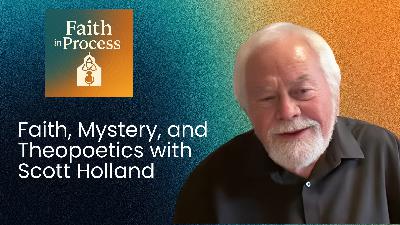
Summary In this episode, we dive into an engaging conversation with Professor Emeritus Scott Holland of Bethany Theological Seminary. We explore the concept of Theo-Poetics, its relevance, and its importance in modern theology. Scott shares insights from his background, including his work in theology, culture, and pastoral roles, as well as his pivotal role in establishing the Theopoetics program at Bethany. We also discuss the historical and contemporary significance of figures like Hans Denk, and how their perspectives can inform our spiritual journeys today. Along the way, we tackle questions about faith, doubt, and the integration of creative expressions in religious practiceScott John HollandScott Holland served for twenty-three years as the Slabaugh Professor of Theology & Culture and Director of Peace and Cross-Cultural Studies at Bethany Theological Seminary. Bethany is in partnership with the Earlham School of Religion in Richmond, Indiana. In 2022, he transitioned to Emeritus Professor teaching Theopoetics & Writing in the flourishing program he helped establish.Before joining the faculty of Bethany Seminary in 1999, Scott Holland pastored Mennonite and Church of the Brethren congregations in Ohio and Pennsylvania and taught courses ranging from the humanities to peace studies to religion at Carlow College, Westminster College, Seton Hill College, Malone College, Duquesne University and Ashland Theological Seminary.For the past twenty-five years he has been actively engaged in the World Council of Churches (WCC) Decade to Overcome Violence (DOV), Just Peace, and Pilgrimage of Justice and Peace programs. This work has taken him to consulting, speaking and writing assignments in Africa, Asia, Europe, the Middle East and the Americas. He was the North American member of the drafting team that composed An Ecumenical Call to Just Peace (2011). He is currently also a member of the of the Steering Committee for the Global Anabaptist Peace Network (GAPN).In addition to his ecumenical, interfaith, academic and public work in seeking cultures of peace, Holland is recognized for his public lectures and publications in the emerging genre of Theopoetics. This wide range of scholarship finds expression in the classes he teaches at Bethany Theological Seminary and the Earlham School of Religion, which includes courses in both flourishing Theopoetics and Peace Studies programs.AuthorshipHolland, Scott. How Do Stories Save Us? An Essay on the Question with the Theological Hermeneutics of David Tracy in View. Louvain: Peeters / Grand Rapids: Eerdmans, 2006.“From Theo-logics to Theopoetics: Mystery, Metaphor and Meaning-making.” Messenger (Church of the Brethren), April 2017. (Open PDF of issue with article) — https://www.brethren.org/messenger/wp-content/uploads/sites/3/2020/12/messenger-2017-4-done.pdf Get full access to Harry Jarrett at pastorharryjarrett.substack.com/subscribe
“What Is the Mission of the Church?” — Continuing the ConversationThis post expands on our latest Faith & Process conversation with Millard Driver, exploring the mission of the church, how we read Scripture, and why a Jesus-shaped vision still compels. Why “mission” is the right first questionIn the episode, Millard suggests that a church’s mission should align with “what Christ had in mind for the movement he started,” framing it as nothing less than the reconciliation of all creation to God. That claim is deeply biblical and widely affirmed in missional theology.* Scripture touchpoints:* 2 Corinthians 5:18–20 — ministry of reconciliation, entrusted to the church* Colossians 1:19–20 — in Christ, God is reconciling “all things…on earth or in heaven”For those of us in the Church of the Brethren, this resonates with our long-cherished motto: “Continuing the work of Jesus. Peacefully. Simply. Together.” It’s not a slogan in search of a mission; it distills one—active, communal, and peace-shaped.From “rules” to relationship: how Jesus recenters the lawWe wondered whether Christians sometimes default to a “rules and retribution” reading of the Old and New Testaments. Two clarifications help:* Jesus’ summary of the LawWhen asked about the greatest commandment, Jesus fuses two Torah texts:* Love God (Deuteronomy 6:4–5)* Love your neighbor as yourself (Leviticus 19:18)He then says all the Law and the Prophets hang on these (Matthew 22:34–40; Mark 12:28–34). Jesus doesn’t discard Torah; he re-centers it on love of God and neighbor. It presents an image of God that is consistent with this center.* The “do’s” are there—often for the vulnerableLeviticus commands landowners to leave the edges of their fields so the poor and the foreigner can glean (Leviticus 19:9–10; 23:22). That’s not retribution; it’s economic mercy written into farming.Takeaway: Jesus fulfills Torah by bringing its core—love—front and center, then pushing that love outward to enemies, outsiders, and creation itself. Providing us with a reconstructed image of the Divine.Did “empire” change Christianity?We tossed around a quip: that Christianity “was doing fine until Caesar adopted the faith.” History is more complex, but two moments matter:* Edict of Milan (313, Constantine): Legalized Christianity and restored confiscated property. It did not make Christianity the state religion.* Edict of Thessalonica (380, Theodosius): Made Nicene Christianity the empire’s official faith, cementing orthodoxy by law and coercing “heresy.”Anabaptists (and many Brethren) read this “Constantinian shift” as a drift toward power. Whether you accept every part of that critique, it explains why contemporary mission talk emphasizes witness over domination and service over control.So…what is the mission of the church?A biblically grounded synthesis from this conversation might read like this:Join God in reconciling all things in Christ—by loving God wholeheartedly (Deut 6), loving neighbors as ourselves (Lev 19), embodying practices that protect the vulnerable (Lev 19; 23), and announcing and enacting the good news that God is making all things new through and with us (2 Cor 5; Col 1).For Brethren people, this looks like continuing Jesus’ work peacefully, simply, together—a community whose life (economics, worship, peacemaking, neighbor-love) enacts the reign of God in this realm.Reading Scripture “more fully” (not just “correctly”)A helpful frame from missional theology is to read with the grain of the gospel—through the lens of God’s reconciling mission and Jesus’ love-command. That’s not modern spin; it’s how Jesus interprets the law’s center.Some in our community also find language from open and relational theology useful: God relates to us in real time, inviting collaborative love rather than coercion, with an emphasis on God’s responsive, self-giving love.Practicing the mission this week* Leave your “field’s corners.” Build margin in your budget, schedule, and church programs to prioritize the poor, the newcomer, and the wounded (Leviticus 19:9–10; 23:22).* Make love measurable. Establish a practice that embodies “love your neighbor”—a grocery gift-card fund, shared childcare, or an ecumenical partnership.* Practice non-coercion. Let your speech, social posts, and politics bear the imprint of Jesus’ non-dominating love—witness, not weaponization.Join the conversation* When you hear “mission of the church,” what do you picture first: saving souls, serving neighbors, changing systems—or all of the above? Why?* Where have you seen reconciliation—between people, churches, or in your neighborhood?* What “field corners” could you leave this month? What resource, privilege, or space could you share?If you’re new here, Faith & Process is a weekly recorded conversation at Pleasant Valley Church of the Brethren where we wrestle—honestly and hopefully—with God, church, and life. Subscribe, join the comments, and share this post with a friend who’s rethinking what faith can be. Get full access to Harry Jarrett at pastorharryjarrett.substack.com/subscribe
Podcast Episode SummaryIn this inaugural episode, Harry sits down with long-time friend and conversation partner Millard to dream out loud about a new Sunday-morning podcast for 18- to 35-year-olds at Pleasant Valley. They swap stories about repurposing COVID-era gear, sketch out a live-audience format with text-in questions, and name their first big topic: an honest dive into process and practical theology. Using the early Anabaptists’ radical baptism as a springboard, they explore why embodied acts of faith still matter, how suffering fits (or doesn’t) into discipleship, and whether God not only desires but actually needs relationship with creation. The conversation ranges from Paul’s “mind of Christ,” to Thomas Merton’s ever-creating God, to confessions about killing spiders—and ends with a shared conviction that the church’s real calling is to midwife the Kingdom of Heaven now, not just hand out tickets to the afterlife. Get full access to Harry Jarrett at pastorharryjarrett.substack.com/subscribe
Comments


Download from Google Play

Download from App Store
 United States