


 Claim Ownership
The Money Story Project
Subscribed: 0Played: 0
Subscribe

© 2026 Below The Line Finance®
Description
Money is never just about money - it’s about being human.
The Money Story Project shares real, unfiltered stories from founders, creatives, freelancers, and beyond, exploring how money weaves through identity, belonging, family, culture, education, work, and the systems we live in.
Hosted by Harriet Formby - Chartered Accountant, Fractional CFO, and trauma-informed finance coach - these conversations are fascinating, heartwarming, relatable, and rebellious.
Expect moments of recognition, perspective shifts, and yes… plenty of side-eye at capitalism and the patriarchy.
16 Episodes
Reverse

“The fact that friendship underlines our business is what makes it feel so successful when it comes to managing our finances”
This week on The Money Story Project, I’m joined by not one but two guests for the first time: Holly Close and Sophie Bellamy, the co-founders of Good Egg.
Good Egg is a web design and copywriting studio — Holly leads on web design, digital strategy and tech, and Sophie leads on copy, content and SEO. They met nearly six years ago at a women’s meetup in Vietnam — eyes locked across a cocktail bar — and have been building their business together ever since, often working remotely from various corners of the world.
In this episode, we talk about money inside a co-founder relationship:
Sophie spending a decade not knowing what was in her bank account — and how Good Egg accidentally fixed that.
Holly growing up in a freelance household, swearing she’d never go the same route, and then doing exactly that — and why it turned out to be much less scary than expected.
The rule they put in place for hard money conversations — and the fact that they’ve never actually had to use it.
What it’s actually like to share a bank account with your good pal — six years in, and genuinely not one row.
The pricing conversation they scheduled for January: Holly arrived with facts, figures and a full presentation. Sophie realised she’d been pricing like they were running a charity.
Why when you have another egg in your corner, putting your prices up becomes a lot less terrifying.
How their very different life circumstances have created balance rather than friction— one mortgage in Sheffield, one in Vietnam with her boyfriend.
Why fairness doesn’t mean 50/50 — and the spreadsheet system their accountant finds completely baffling.
What the Nicki Coe episode sparked for them — including conversations about long-term planning they hadn’t let themselves have yet.
We also get into The Highly Emotional Business Owner — their fortnightly newsletter — and how being “feelings-led gals” has, perhaps unexpectedly, made them better at the finances too.
It’s a conversation about money, yes. But really it’s about communication — and what becomes possible when you actually commit to having the conversations, even the uncomfortable ones.
Resources & Links
Read the accompanying article
Connect with Holly & Sophie / Good Egg:
Holly and Sophie run Good Egg, a Squarespace web design and copywriting studio for small business owners. Check out their all-in-one Squarespace website packages (your copy, SEO and web design all done for you).
Good Egg Website
The Highly Emotional Business Owner Newsletter
Instagram
LinkedIn
Mentioned in this episode:
A recent episode of The Money Story Project with Nicki Coe on co-founder dynamics
Connect with host Harriet Formby: LinkedIn | Instagram | Website
Learn more about The Money Story Project and how to share your own story.
🎧 Listen now — and if this conversation resonates, please follow the podcast and leave a review so more people can find these stories.
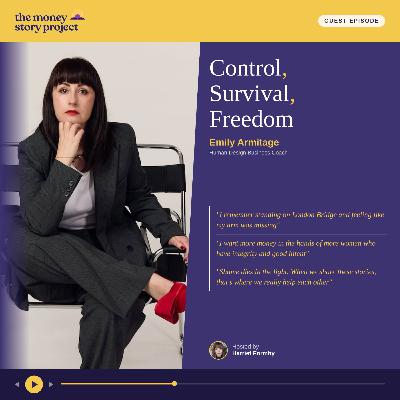
“I remember standing on London Bridge and feeling like my arm was missing. Like it was as if a part of myself was not there.”
⚠️ Content warning: This episode includes discussion of coercive control and financial abuse. Emily shares her personal experience and perspective. Support details are below.
Our guest, Emily Armitage, is the CEO and founder of The Yorkshire Zen Company, Human Design business coach and strategist for six-figure female founders.
Emily knows what it’s like to not have financial control. When she was younger, she was in a relationship defined by coercive control — and money was a central tool of that control. In this episode, she shares how early family dynamics around money set unconscious patterns, how financial abuse can work in subtle and shifting ways, and what it took to rebuild her sense of autonomy.
We talk about:
Growing up with an undercurrent of financial stress — and how the belief that “someone else is in charge of the money” can quietly shape what we accept in relationships
How financial control can shift and adapt within a relationship — and why it’s often far more subtle than people expect
Financial fawning — when handing over money isn’t a choice but a survival strategy, because saying no feels unsafe
What freedom felt like when it finally came — and why it was overwhelming rather than liberating
The link between autism and vulnerability to coercive relationships
How entrepreneurship became a route back to financial autonomy — and why selling and visibility brought their own challenges
Human Design as a tool for understanding your relationship with money and building a business that actually fits who you are
Emily also shares her perspective on what she wishes people understood about coercive control, and what we can all do to look out for the people around us.
About Emily:
Emily is the CEO and founder of The Yorkshire Zen Company and a human design business coach and strategist for six-figure female founders. She uses human design as a powerful business lens — helping women understand their energetic blueprint and build businesses that are sustainable and aligned.
Work with Emily: THE ROOM — quarterly CEO day retreats for women who are ready to unapologetically claim £100k+ in 2026 and 2027
Connect with Emily: Instagram: @emilyarmitage LinkedIn: Emily Armitage Website: emilyarmitage.co.uk
If you are affected by anything in this episode:
National Domestic Abuse Helpline: 0808 2000 247 (free, 24/7) — nationaldahelpline.org.uk
Surviving Economic Abuse: 0808 196 8845 — survivingeconomicabuse.org
Women’s Aid: womensaid.org.uk
Victim Support: 08 08 16 89 111 — victimsupport.org.uk
Galop (LGBTQ+ support): 0800 999 5428 — galop.org.uk
National Autistic Society: autism.org.uk
Mums in Need: https://www.mumsinneed.com/
Men’s Advice Line: 0808 801 0327 — mensadviceline.org.uk
For further reading on neurodivergence/autism and coercive control: Douglas & Sedgewick, 2023, Autism; the National Federation of Women’s Institutes’ 2024 briefing on neurodiversity and violence; and Somerset Domestic Abuse Service’s guide on neurodiversity and domestic abuse.
Please note: In this episode, Emily shares her personal experience and perspective. No allegations are made against any named individual. This conversation is shared in the public interest to raise awareness of financial abuse and coercive control.
Connect with host Harriet Formby: LinkedIn | Instagram | Website
Learn more about The Money Story Project and how to share your own story.
🎧 Listen now — and if this conversation resonates, please follow the podcast and leave a review so more people can find these stories.
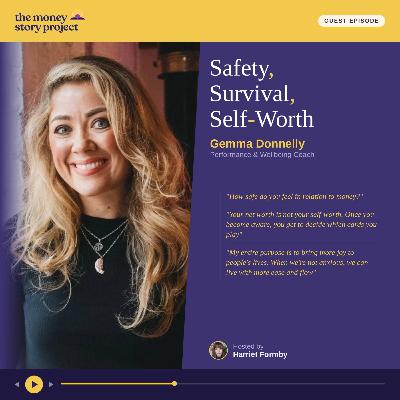
"What do you want though? As opposed to what's the smartest move? What are your values? What do you care about? How do you want to live your life?"
That's my guest this week, Gemma Donnelly - Wellbeing & Performance Coach for busy professionals and business owners to turn stress & anxiety into Calm Confidence & Clarity by retraining the mind & nervous system.
On The Money Story Project, she brings both her professional expertise and her own money story — growing up working class, experiencing burnout, walking away from a successful consultancy career & building a business from the ground up. We talk about how our relationship with money, security and uncertainty can hold you back.
In this episode, Gemma explores what happens when financial stress or perceived risk and uncertainty meets the nervous system:
Growing up in a working class family and attaching money to security — and how that held her back from taking career risks for years.
Why your net worth is not your self-worth — and how hard it is to positively negotiate a salary or charge your worth in business if you don't see your own value.
The thing nobody talks about when you leave a well-paid job to start a business — the identity shift, the uncertainty, and how the people around you might not understand.
Why some people spend money as fast as they get it — not because they're bad with money, but because having it doesn't feel familiar.
What financial stress actually does to the body — jaw tension, grinding your teeth, lower back pain, chest tightness — and why you get ill on holiday.
Why "just rest" is rubbish advice when your nervous system doesn't feel safe to stop.
How attachment styles — show up in your relationship with money, not just with people.
The difference between making decisions from survival and making decisions from choice.
We also explore why the prefrontal cortex goes offline under financial stress (meaning you literally cannot think straight), why pushing through isn't the badge of honour we've been told it is, and what it means to resource yourself through uncertainty rather than just white-knuckling it.
It's a conversation about money, yes. But also about safety, bodies, and what happens when you finally feel secure enough to ask yourself what you actually want.
Connect with Gemma:
Website: coachingwithgemma.co.uk
Instagram: @iamgemmadonnelly
1:1 Coaching - Gemma coaches within businesses and one-to-one on turning stress & anxiety into calm confidence, with spaces opening this month
Breathwork - Gemma provides Breathwork Manchester for individuals to switch off and businesses committed to wellbeing fuelled performance
New Group Programme - Gemma is currently creating a new group programme for anxiety, working with both the mind and the nervous system (coming soon)
Read the accompanying article with Gemma Donnelly
Connect with host Harriet Formby: LinkedIn | Instagram | Website
Learn more about The Money Story Project and how to share your own story.
🎧 Listen now — and if this conversation resonates, please follow the podcast and leave a review so more people can find these stories.
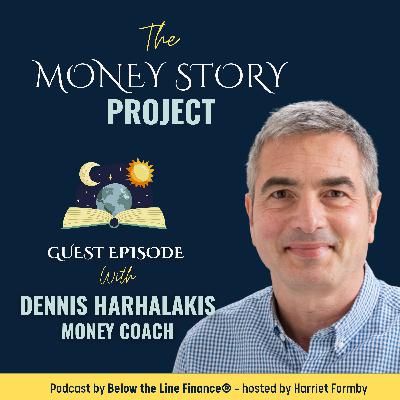
"Finance is numbers. Money is beliefs."
That's how my guest this week, Dennis Harhalakis — Certified Money Coach (CMC)®, founder of Cambridge Money Coaching, and trainer for the Money Coaching Institute of California — frames the distinction that changed everything for him on The Money Story Project podcast.
Dennis spent 30 years in financial services. Trading rooms. Wealth management. He helped set up a private bank. And yet when the regular paycheque stopped, he discovered that knowing about money and understanding your relationship with it are two completely different things.
In this episode, Dennis shares his journey from inherited anxiety to hard-won awareness:
Inheriting his father's money anxiety — traced back through generations to the 1800s — and dragging it around without realising.
The profound difference between feeling financially secure and feeling emotionally safe with money.
Why working in a bank doesn't make you any better with money than anyone else — financial advisors go bankrupt, accountants go bankrupt.
How the financial system is designed to benefit the wealthy and educated — while exploiting the mistakes of everyone else.
The question he asks every client: "How was money talked about when you were growing up?"
Why "connection before solution" changes everything — for advisors, coaches, and anyone helping someone with money.
The simple past/present/future reframe that cuts through shame about spending.
Why more money won't make you feel safer — but feeling safe with what you have will.
What Dennis would say to money now — after years of gripping it so tightly there was no room for anything else.
We also explore the newly released book Fixed by John Y. Campbell and Tarun Ramadorai on how the personal finance system is rigged against ordinary consumers, why people are shamed into thinking they have a spending problem when they actually have an income problem, and what it means to say "thank you, I've got this" to the anxious parts of yourself.
It's a conversation about money, yes. But also about inheritance, compassion, and learning to hold things differently.
Resources & Links
Read the accompanying article
Connect with Dennis:
Website: cambridgemoneycoaching.uk
LinkedIn: Dennis Harhalakis
Mentioned in this episode:
Fixed by John Y. Campbell and Tarun Ramadorai (newly released)
Learn more about The Money Story Project and how to share your own story.
Connect with host Harriet Formby: LinkedIn | Instagram | Website
🎧 Listen now — and if this conversation resonates, please follow the podcast and leave a review so more people can find these stories.
Spotify Apple Podcasts
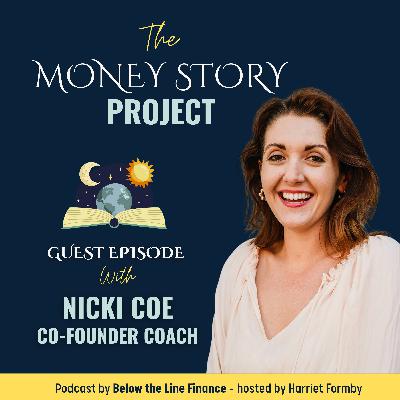
"Nothing shines a light on your personal patterns, beliefs, and triggers like being a co-founder."
That's how Nicki Coe - co-founder coach and co-founder of branding agency LUNA + LION - describes the experience of building a business with someone else.
In this episode, Nicki shares her money story and what she's learned from navigating the co-founder dynamic firsthand. She's on a mission to change the statistic that 65% of startups fail due to co-founder fallout, and she brings both coaching expertise and lived experience to that work.
We explore:
Growing up in a home where money was always there — and what beliefs got absorbed alongside that comfort (money requires sacrifice, hard work, giving a lot of yourself)
How her parents' divorce in her mid-twenties shifted her relationship with money towards fear and a sense that money couldn't fully be trusted
Leaving a stable corporate job at the beginning of a pandemic to start a coaching practice, and then co-founding LUNA + LION
The surprise of how motivating it was to make money for someone else — and the pressure that creates when things don't go well
Navigating the 50/50 split: how they held that model through maternity leave and personal challenges, and why they eventually moved to a more fluid approach
The friction that comes from caring too much — and how emotional charge can make important conversations feel impossible to have
Going looking for a co-founder coach, not finding one, and realising she needed to become that support herself
Why founders often carry a belief that they have something to prove — and how money becomes a black and white way to measure whether you've made it
The question underneath the financial stress: "Am I good enough for this?"
The conversations co-founders should be having about money — both practical (how much, how to split it, how to handle risk) and personal (why do you want the money, what does it mean to you)
Making financial conversations fun and creative — going somewhere inspiring rather than having them by the coffee machine
Why relational contracting matters as much as legal contracting in co-founder agreements
We also discuss Nicki's new Co-Founder Agreement Package, which combines a coaching guide for relational conversations with a customisable legal template.
Resources & Links
Connect with Nicki Coe:
Website: nickicoe.com
LinkedIn: Nicki Coe
Co-Founder Agreement Package
Free Resource: 10 Essential Money Q's for Every Co-Founder Team — A clear set of questions to align on finances before they create friction, helping you uncover assumptions, build understanding, and clarify expectations at any stage of your business
Learn more about The Money Story Project and how to share your own story.
Connect with host Harriet Formby: LinkedIn | Instagram | Website
🎧 Listen now — and if this conversation resonates, please follow the podcast and leave a review so more people can find these stories.
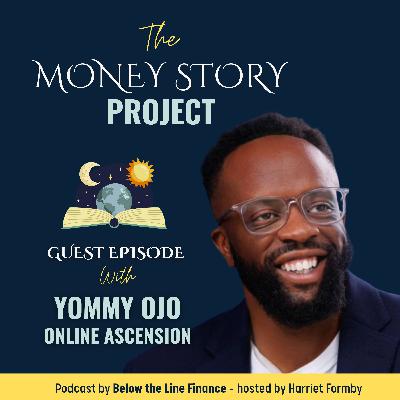
"FOMO is one of the most powerful human behaviours. Having acceptance or having clout is actually a big powerful motivator for a lot of business owners. But it's rarely talked about openly."
That's Yommy Ojo speaking a truth most founders don't say out loud—and it's where our conversation begins.
In this episode, Yommy—entrepreneur, systems and growth strategist, and founder of Online Ascension—shares what he's learned from working inside the startup and scale-up ecosystem. From investment banking to building digital products in fast-growth tech companies to founding his own businesses, Yommy has seen both the ambition and the scars that come with entrepreneurship. He now helps service-based businesses grow with less stress and more profit, focusing on scalable systems that enable leads, sales, and sustainable growth.
But this conversation goes deeper than tactics. It's about the psychology underneath our financial decisions, the costs we don't talk about, and what it means to build something that actually matters.
In this conversation, we explore:
The goals founders won't admit to—how social acceptance and recognition often drive financial targets more than we realise, and why everyone wants what they don't have
Why revenue numbers don't tell the whole story—and what founders should actually be measuring instead
"At what cost?"—the question every founder needs to ask about their ambition, and Naval Ravikant's principle of "playing long games with long people"
What founders should sacrifice and what they shouldn't—employee mental health, family relationships, personal health, and the opportunity costs we ignore
The metrics that actually matter—why retention is the biggest leading indicator of growth, and how understanding CAC, LTV, and average customer value changes everything
Why existing customers are where the money is—and how the best founders think about their CRM differently
The sales psychology most people miss—understanding different buyer decision-making styles and knowing when someone is hot vs. when they need time
How to create your own personal board of advisors—Yommy's WhatsApp broadcast list practice that became a powerful accountability and connection tool
The power of structured vulnerability—why sharing wins, lessons, and next steps openly (with the right people) creates deeper relationships and opportunities
Why so many businesses don't have their systems sorted—even years into operation, at significant scale—and what investors can smell a mile away
What "good systems" actually look like—centralized truth, accessible data, leadership oversight, and why it takes time to build properly
The full-circle moment between banking discipline and startup growth—how the systems, controls, and metrics from big institutions are exactly what scaling businesses need
We also talk about leaving a stable, well-paid banking job to follow curiosity into tech, the social pressure around "prestigious" career paths, what it means when founders aren't honest about their real motivations, why being vulnerable in content makes people lean in, how to audit a sales funnel, and why knowing your numbers is half the battle with investors.
It's a conversation about money, yes. But also about honesty, connection, and understanding what we're really building for—and at what cost.
Read the accompanying article: Value, Systems, Vulnerability: Playing Long Games with Yommy Ojo
Connect with our guest Yommy Ojo:
LinkedIn: Yommy Ojo
Online Ascension: Full-service agency helping service-based businesses grow with scalable systems
Special Offer from Yommy: Mention this podcast and get a free sales funnel audit where Yommy will run your numbers and visualise your profit potential.
Learn more about The Money Story Project and how to share your own story.
Connect with host Harriet Formby: LinkedIn | Instagram
🎧 Listen now — and if this conversation resonates, please follow the podcast and leave a review so more people can find these stories.
That gut punch when you see someone else's financial success? This bonus episode unpacks what it's actually revealing.
We explore the taboo around jealousy and shame, and what these emotions tell us about the gap between who we are and who we think we should be as business owners. Drawing on self-discrepancy theory, we examine the "shoulds" we carry, the systemic narratives we've internalised, and why financial success metrics are kept deliberately vague.
We touch on neurodivergence, the hero's journey narrative, and what it means to question whether the ideal you're chasing was ever designed for someone like you. Beyond 'fix your mindset' advice - this is about reimagining the story entirely.
Check out:Related Substack Article and Accompanying Exercises
Find out more about: The Money Story Project
Connect with Harriet Formby (your host): Linked In Instagram
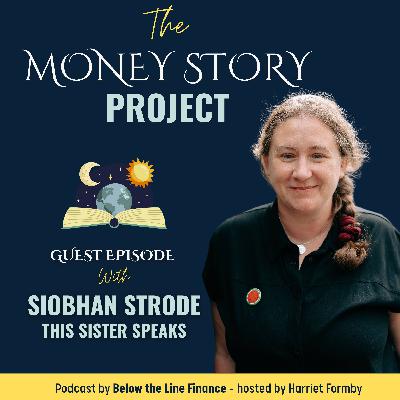
"I can check my bank account and I know I'm gonna be okay, but I still feel like I'm not gonna be okay."
That's how Siobhan Strode describes her relationship with money, even decades after the childhood loss that shaped it.
In this episode, Siobhan—advocacy consultant, mentor, and founder of This Sister Speaks—shares what happens when you lose everything at age seven, and how that experience shows up in business pricing, ADHD money management, and the long journey of understanding ourselves with compassion.
Siobhan was previously a teacher, has stood for Parliament, served as a town councillor, and as a Police and Crime Commissioner candidate. She's fierce in fighting for justice—from leading campaigns on fair school funding to speaking up for Palestine and Sudan. But when it comes to charging for her own brilliant work and managing money? That's where things get complicated.
TW: Includes discussion of trauma, inc. reference to alcoholism, domestic abuse
In this conversation, we explore:
What it's like when a seven-year-old's world completely changes
Why even now, when clients pay easily and things feel secure, Siobhan's nervous system is waiting for it all to fall apart
The moment she calculated her hourly rate and realised she was earning less than minimum wage—less than when she was 16
The stories we tell ourselves about what other people can afford (and why that's actually projection about our own experiences)
How ADHD adds another layer—why "simple" admin tasks feel genuinely difficult, and what actually helps
Generational trauma from Irish immigration—the pressure to prove yourself, the shame of failure, and patterns that go back generations
Why money struggles are structural, not personal—and the "boots theory" of why being poor is expensive
What workplaces get wrong about financial inclusion (like asking staff for £25 upfront when they haven't been paid yet)
The discomfort of financial ease when you're used to scrambling—and learning to sit with security when it feels unfamiliar
Why we need more compassion around the systemic things that keep people struggling
We also talk about doing tax returns by hand because spreadsheets overwhelm, the emotional labor of calling HMRC, why good app design actually matters for neurodivergent money management, and what it means to give yourself compassion while you're still figuring it all out.
It's a conversation about money, yes. But also about childhood, nervous systems, and understanding that struggling with money doesn't mean someone is careless or unmotivated—often, they're navigating real trauma and doing the very best they can.
Resources & Links
Read the accompanying blog article: Privilege, Poverty & Running a Business with ADHD: A Money Conversation with Siobhan Strode
Connect with Siobhan:
Website: siobhanstrode.com
Instagram: @siobhan.strode
LinkedIn: Siobhan Strode
This Sister Speaks is Siobhan's group program for women and non-binary folks who want to speak up with more confidence and courage. The next round starts October 20th 2025. You can learn more here.
Mentioned in this episode:
Dmarz Designs (Dominique Marshall) - brand designer
Yoko Studio (Yvie Ormsby) - website designer
Celie Nigoumi – photographer
Learn more about The Money Story Project and how to share your own story.
Connect with Harriet Formby: LinkedIn Instagram
🎧 Listen now — and if this conversation resonates, please follow the podcast and leave a review so more people can find these stories.
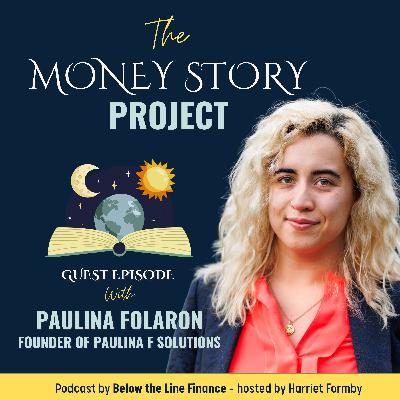
"There was like a whole whoosh, whoosh, whoosh of energy. Opportunity, open doors, possibility."
That's how our guest this week, Paulina Folaron - digital marketing consultant, operations specialist, and self-proclaimed Kitchen Witch — describes what money feels like to her now on The Money Story Project.
In this episode, Paulina shares her journey from inherited suspicion to practiced permission:
Growing up with post-communist cynicism
The cultural belief that you're predetermined by class and belonging
How Polish history (informants, rationing, survival) created a legacy of distrust around wealth
The belief that 80% of money decisions are emotional and why trying to be "logical" about money wasn't working.
The shift from seeing self-care spending as frivolous to claiming it as non-negotiable
Why we project expectations onto brands and what that reveals about belonging and identity.
Reframing affirmations as questions to stop fighting with your brain
We also explore "cultish" communities, why courses are easier to justify than rest, and what it means to invite money into the conversation on an emotional level rather than keep it at arm's length.
It's a conversation about money, yes. But also about language, belonging, and giving yourself permission to move the lines you inherited.
Resources & Links
Read the accompanying article: Suspicion, Permission & Possibility: A Money Story with Paulina Folaron
Connect with Paulina:
Website: paulinafsolutions.com
Free masterclass: Email-First Marketing
Instagram: @paulinaf_solutions
Mentioned in this episode:
Amanda Montell's book Cultish and podcast Sounds Like a Cult
Candice Brathwaite and her book on manifestation
Wild Co-Working community
Learn more about The Money Story Project and how to share your own story.
Connect with host Harriet Formby: Linked In Instagram Website
🎧 Listen now — and if this conversation resonates, please follow the podcast and leave a review so more people can find these stories.
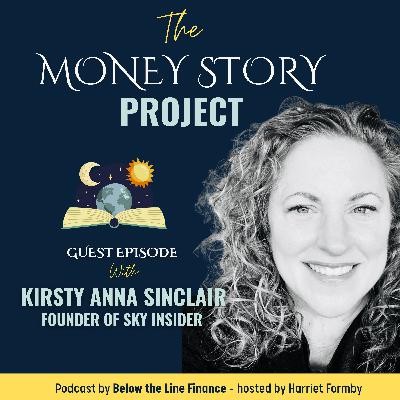
"I feel like we're on the precipice of a whole brand new story, particularly around females and money. For that to start happening, we have to start thinking about it differently, talking about it differently, and releasing ourselves from the emotions around it — seeing them and holding them up without shame or that weird secrecy."
That's how my guest this week, Kirsty Anna Sinclair — business astrologer, writer and creator of Sky Insider — opens our conversation on The Money Story Project.
In this episode, Kirsty shares her money story with depth and honesty:
Growing up in rural Australia where her parents built a house from scratch
Learning that creativity and money seemed to be inversely related
The "conspiracy" of luxury and desire that had to stay hidden.
Building a thriving wellness centre, then losing it overnight and discovering what it meant to be "a single mum on benefits."
Starting a new business and trusting herself to build sustainably.
Unpacking the "bad at maths" belief that kept her from befriending numbers.
Why the overnight success stories we see online often hide massive privileges.
Creating Sky Insider as her framework for working with natural cycles rather than "always on"
We also explore why money needs to come out of the shadows, how astrology can be a practical business planning tool, and what it means to honour your energy rather than deplete it.
It's a conversation about money, yes. But also about creativity as resource, resilience through repeated loss, and building businesses that don't grind us into dust.
Resources & Links
Read the accompanying article: Creativity, Resilience & Honouring Energy — with Kirsty Anna Sinclair
Connect with Kirsty:
Website: kirstyannasinclair.com
Sky Insider: Sign up via her website for daily astrological guidance delivered to your inbox
Instagram: @sky_insider
LinkedIn: Kirsty Anna Sinclair
Mentioned in this episode:
Economist, Pippa Malmgren's book Signals
Learn more about The Money Story Project and how to share your own story and connect with Harriet Formby.
🎧 Listen now — and if this conversation resonates, please follow the podcast and leave a review so more people can find these stories.
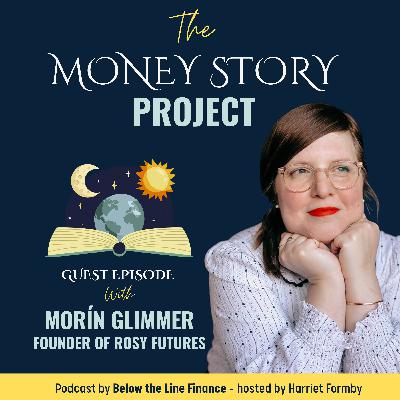
“The systems we’re in weren’t built for us. They were designed to keep us small, scared, and separate.”
That’s how my guest this week, Morín Glimmer — brand strategist, creative director, and founder of Rosy Futures — framed our conversation on The Money Story Project.
In this episode, Morín shares her money story with honesty and depth:
Growing up with mixed signals about money — where a full fridge and family holidays masked the underlying stress.
Absorbing the belief that “money isn’t for women” — and what it took to unpick that message.
How debt in her twenties became less a “failure” and more of a rite of passage.
The shift from “just a freelancer” to fully owning her role as a business owner — and the agency that comes with that.
Why she now sees money as love: “a flow of energy that sustains you and lifts you up.”
We also explore how money connects with another cultural taboo: menstrual cycles. For Morín, both are about rhythm, power, and learning to work with yourself instead of against.
It’s a conversation about money, yes. But also about systems, identity, and reclaiming power in places we’re told to stay small.
Resources & Links
Read the accompanying article
Connect with Morín:
Instagram: @rosyfutures
LinkedIn: Morín Glimmer
Website: rosyfutures.com
Follow her new podcast Wombly Being Co-Hosted by Morín Glimmer with Rosanna Jones — flipping the script on periods, productivity, and power.
Learn more about The Money Story Project and how to share your own story.
🎧 Listen now — and if this conversation resonates, please follow the podcast and leave a review so more people can enjoy these stories.
Photo Credit: Celie Nigoumi

This special episode unfolds in two parts.
First, a story. In the shadow of the full moon lunar eclipse, 'Beth' gathers for a life changing interaction in an unassuming country pub with four bold archetypes the Steward, the Trickster, the Wild Body, and the Sage.
Too much on their own, too strange for the ordinary world - but together, a kind of council.A mirror to her many selves, with messages and knowing about money, survival and thriving.
Then I share how this story came about - sparked by hearing about the 'Compass of the Wild Mind' and how it began to connect for me with our relationship with money and in particular perhaps ADHD.
Understanding the tug-of-war between order and avoidance, joy and regret, instinct and shutdown, truth and overwhelm and the parts at play. This isn’t a how-to or a fix.
More like sitting at the table, noticing which voice is speaking in you - and getting curious on what it might mean for understanding, nourishing the mind and body.
Links to:
Accidental Gods Podcast episode mentioned
Plotkin’s Map of the Wild mind diagram:Intrapersonal View of the Self and Subpersonalities
Self Esteem with Moonchild Sanelly song - ‘In Plain Sight’
A short glimpse into how the podcast comes together - the guest journey, the recording process, and the care that goes into shaping each story with agency and integrity.
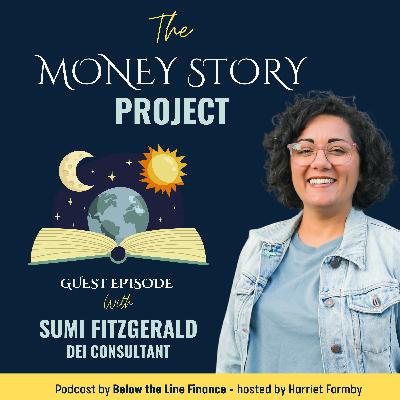
In this first guest episode of The Money Story Project, I’m joined by Sumi Fitzgerald, a diversity, equity and inclusion consultant who helps small, service-based businesses turn good intentions into concrete, impactful practice.
Sumi brings lived experience of Sri Lankan Tamil heritage, growing up and living in the UK, alongside cultural wisdom and years of professional expertise - and here they share their own money story with honesty and heart.
Sumi highlights the ongoing push and pull between inherited money stories, the need for safety, and the desire to run a business rooted in values
We talk about: • The “summer fear” : why August brings money anxiety for small business owners • Safety and roots: from family history to the struggles of renting • The boots story: clashing cultural messages about “what money is for” • Why self-employment can feel safer than a “stable” job • Spreadsheets, Profit First (adapted), and paying yourself • Pricing, equity and the gender pay gap in self-employment • Inclusion beyond pricing: "the harder conversations we avoid”
• The missing data in the small-business world: Sumi’s idea for a mini-study
Links & Resources
Read our accompanying article with Sumi
Connect with Sumi Fitzgerald: Linkedin Instagram Website
Sumi's Free workshop (coming up in October 2025): Find Your Inclusion Leaks & Your Missing Clients - a free hour to uncover where potential clients might be slipping away. Best place to hear the details first: Instagram @sumi.does.dei on Sumi’s email list or visit the website.
Sumi's Free guide: Five Things I Have to Tell Almost Everyone - practical fixes you can implement straight away.
Photo Credit: Arianna Cagli @ari_brandphotographer
Connect with the Money Story Project - Visit website Instagram Apply to be a guest
In this first episode of The Money Story Project, I share why I started this podcast - and how my own journey from “I’m not a maths person” to Chartered Accountant, Fractional CFO, and trauma-informed finance coach changed the way I think about money entirely.
This isn’t a rags-to-riches tale, a list of “10 hacks to get rich,” or a lecture on what you should be doing. It’s about exploring the deeper roots of how we relate to money - the stories we’ve been told, the stereotypes we’ve absorbed, the barriers we’ve faced, and the systems that shape it all.
In this episode, I talk about:
Why I believe nobody is inherently “bad with money.”
How early messages about maths, creativity, and “the kind of person who works in finance” nearly kept me out of this work.
The turning point when I realised that money conversations had to include how we feel - and how making space for those stories transformed my work with clients.
Why money is never just an individual thing, and how identity, culture, class, gender, neurodivergence, and trauma all intersect with our financial lives.
What you can expect from future episodes - and how to share your own story if you’d like to be part of the project.
Whether you’re a founder, creative, freelancer, or simply someone who’s ever been made to feel “bad with money,” you’ll find space here for honesty, complexity, and solidarity.
Links & Resources:
Get involved by sharing your money story
Follow us on Instagram @MoneyStoryProject and Harriet Formby @belowthelinefinance
Website & show archive
If you enjoy this episode, please follow, leave a review, share it with a friend, and join the conversation - because the more we talk about money honestly, the more we can change how it feels.
Money touches every part of our lives - but the real stories aren’t about bank balances, budgets, or get-rich-quick tips. They’re about who we are, where we come from, and the world we live in.
In this short trailer, host Harriet Formby - Chartered Accountant, Fractional CFO, and trauma-informed finance coach - shares why she’s starting these conversations, what you can expect, and how your own money story might be more powerful than you think.
Expect fascinating, heart-warming, relatable, and sometimes infuriating conversations about money, identity, belonging, culture, family, education, and the systems we all navigate.
These are the stories we wish more people spoke about - and the ones that might just change how you see yourself (and the world).
Follow The Money Story Project and join the conversation.
Comments

Download from Google Play

Download from App Store
 United States