


 Claim Ownership
Precision Signals
Subscribed: 0Played: 0
Subscribe

© CC BY 4.0 – You may share and adapt with credit to “Precision Signals” and a link to precisionsignals.ai.
Description
Precision Signals is a podcast from the CEO Roundtable on Cancer about decoding biomedical progress: what’s real, what matters, and what’s next. We talk with scientists, regulators, investors, and builders operating across the messy interface of research, healthcare, and policy. Some are moving the system from within; others are reshaping it from the outside. All of them bring signal in a world crowded with noise.
10 Episodes
Reverse
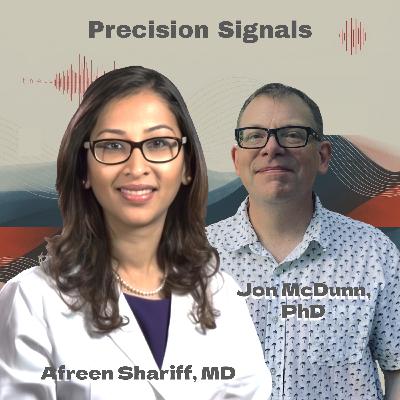
As cancer treatments become more powerful and precise, the field of oncology is entering a new era. We are moving beyond the question of "Can we extend life?" to "How do we live with the biology these therapies unleash?"In this episode of Precision Signals, host Sean Khozin is joined by Dr. Afreen Shariff (Director of the Endocrine Neoplasia Program at Duke University) and Jon McDunn (President of Project DataSphere) to discuss the complexities of immune-related adverse events (irAEs). While immune checkpoint inhibitors have revolutionized outcomes for various cancers, they can also trigger inflammatory conditions affecting the thyroid, heart, and nervous system. Our guests explore the "double-edged sword" of immunotherapy and how data science, AI, and clinician-led innovation are bridging the gap between clinical trials and real-world patient care. In this episode, we discuss: The "Next HIV": Why Dr. Shariff believes cancer care is reaching a similar turning point in long-term management. The Gap in Data: Why traditional clinical trial reporting often fails to capture the nuances physicians see at the bedside. AI & Triage: How unique e-consult models and AI tools are helping oncologists manage complex side effects more efficiently. The Future of Oncology: Predictions on patient-driven care and the push for greater data accessibility to drive innovation.
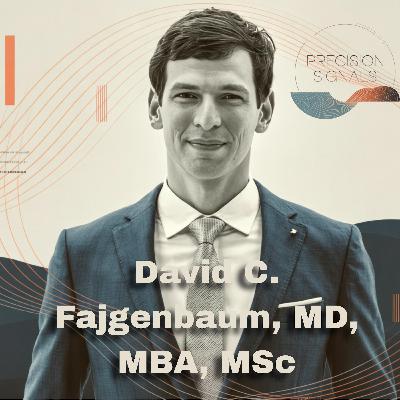
In this episode of Precision Signals, Sean Khozin sits down with Dr. David Fajgenbaum — physician, scientist, patient, and founder of Every Cure — to explore one of the most extraordinary stories in modern medicine. As a third-year medical student, David developed idiopathic multicentric Castleman disease, a rare inflammatory disorder that led to multi-organ failure. He was read his last rites five times. Facing a condition with no clear therapeutic roadmap, he began banking his own blood, performing proteomic analyses, and identified an mTOR pathway signal that led to a life-saving repurposed transplant drug. He has now been in remission for over a decade. But survival was only the beginning. David went on to found the Castleman Disease Collaborative Network and later co-founded Every Cure, a nonprofit using AI and computational pharmacophenomics to systematically evaluate every approved drug against every known disease. This episode is about moving from serendipity to strategy in medicine — and what it will take to build systems that leave no patient behind.
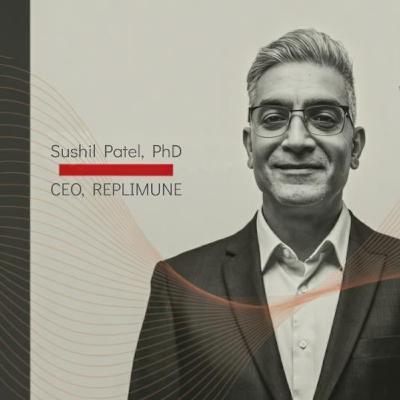
Sean Khozin in a conversation with Sushil (Sush) Patel, CEO of Replimune, discussing advancements in cancer immunotherapy, particularly the use of oncolytic viruses. They explore how engineered viruses can turn tumors into targets for the immune system, representing a shift in oncology towards reprogramming tumor biology. Sush shares insights from his extensive career, including challenges faced at Genentech and the regulatory hurdles from the FDA regarding Replimune's clinical trials. They examine the dual mechanism of oncolytic viruses and the complexities of treating diverse patient populations, advocating for collaborative efforts to refine regulatory frameworks. Sush also highlights the potential of future therapies, including advancements in gene editing and AI, while emphasizing the need for cautious optimism in integrating these technologies into cancer treatments.
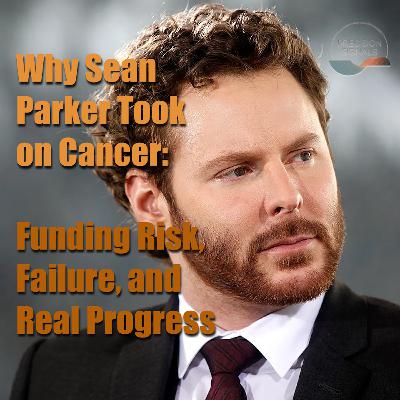
Most people know Sean Parker as the prodigy behind Napster and Facebook. Far fewer know why he chose to take on one of the hardest problems in science: cancer. In this clip from Precision Signals, we explore the founding insight behind the Parker Institute for Cancer Immunotherapy—that the greatest barrier to progress in cancer research isn’t talent or ideas, but how science is funded. Despite more than $300 billion spent on cancer R&D in the U.S. alone, progress has been slowed by systems that reward safety, incrementalism, and short-term wins—rather than bold, high-risk, potentially curative science. In conversation with Karen Knudsen, CEO of the Parker Institute, we unpack why embracing risk and accepting failure aren’t flaws in science—they’re prerequisites for real breakthroughs.
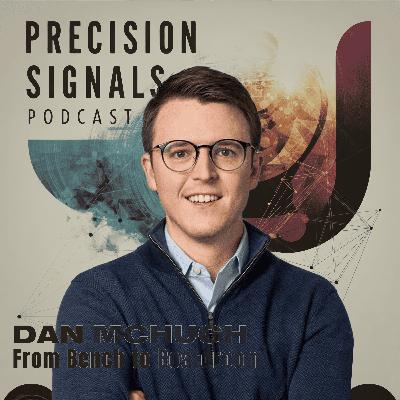
In this episode of Precision Signals, Sean Khozin speaks with Dan McHugh, investor at Yosemite, about the systems that mediate between scientific discovery and patient impact. Dan’s path runs from Stanford bioengineering and the Greenleaf Lab to Bain & Company, Emerson Collective, and the co-founding of Tune Therapeutics. Across these roles, he has operated at the boundary between deep biological science and the capital and policy structures that determine whether that science ultimately reaches patients. The conversation examines how incentives, reimbursement, and regulation shape the fate of cancer therapies, sometimes in rather unpredictable ways. It also explores Yosemite’s founding by Reed Jobs, Dan’s longstanding friendship with him, and how trust, time horizon, and shared mission have shaped a hybrid model that combines venture investment with grant-based risk-taking. This is a discussion about cancer, but it is equally a discussion about architecture: how systems are designed and what they reward.
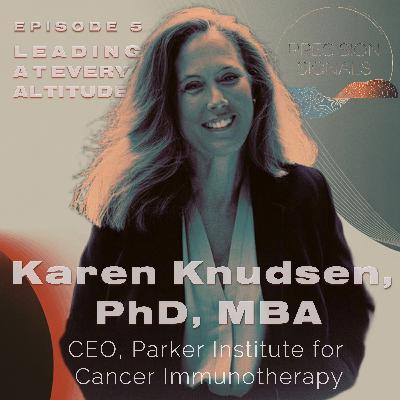
Dr. Karen Knudsen, CEO of the Parker Institute for Cancer Immunotherapy (PICI), joins Dr. Sean Khozin to dissect the science and business of curing cancer. From her upbringing as a self-described "nomad" and "army brat" to leading the American Cancer Society, Karen shares her journey from the lab bench to the boardroom.In this episode, we explore the Parker Institute's unique model of "venture philanthropy." Karen explains how PICI uses shared intellectual property to de-risk early-stage science and spin out venture-ready companies like Dispatch and Orbital Therapeutics. We also discuss the challenges of modernizing a historic non-profit with "no product" to sell , the intersection of AI and biomarkers with companies like ArteraAI , and PICI's massive data project, "Radiohead".Karen is candid about her leadership philosophy: she is not a "keep the trains running" executive, but a leader built for transformation.
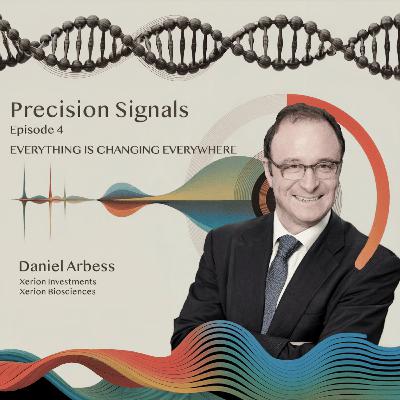
In Episode 4 of Precision Signals, Dr. Sean Khozin sits down with Daniel Arbess—investor, social entrepreneur, and healthcare innovator—to explore why the limiting factor in solving cancer and neurodegenerative diseases isn't breakthrough science, but institutional innovation.Daniel Arbess has built a career on questioning foundational assumptions across multiple domains: from analyzing Cold War nuclear policy to restructuring post-Soviet industries as the youngest-ever partner at White & Case, to founding Xerion Capital, a hedge fund that delivered over 25% annualized returns through the 2008 financial crisis. Now, he's applying that same lens to healthcare transformation.
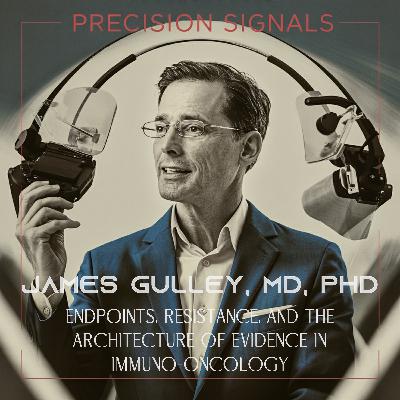
In this episode of Precision Signals, Dr. Sean Khozin speaks with Dr. James Gulley, Chief of the Medical Oncology Service and Co-Director of the Center for Immuno-Oncology at the National Cancer Institute.Dr. Gulley is one of the world’s leading figures in immuno-oncology. He helped bring immune-based cancer therapies from an era of skepticism into a clinical mainstay, shaping both the science and the clinical frameworks that define the field today.Their conversation explores the critical frontiers of immunotherapy: the limits of predictive biomarkers, the biological opacity of treatment resistance, and the shortcomings of current trial designs. They discuss adaptive clinical trials, new endpoints, and the integration of AI into clinical research. Emerging tools such as digital pathology, wearable monitoring, and continuous physiologic data capture are highlighted, including recent work detecting CAR-T toxicity before it becomes clinically evident.
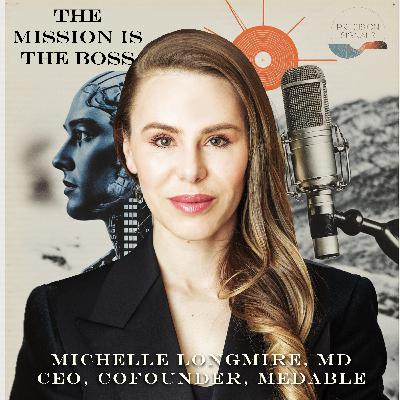
Dr. Michelle Longmire, physician-scientist, technologist, and CEO, cofounder of Medable; shares how early lessons in science and systems design shaped her mission to fix one of medicine’s most persistent bottlenecks: slow, fragmented, and inaccessible clinical trials.We discuss her path from autoimmune skin disease research at Stanford to building Medable into a global clinical trial infrastructure platform operating across 14 therapeutic areas, and what it takes to align technology, AI, and scientific rigor with the needs of patients, regulators, and researchers.
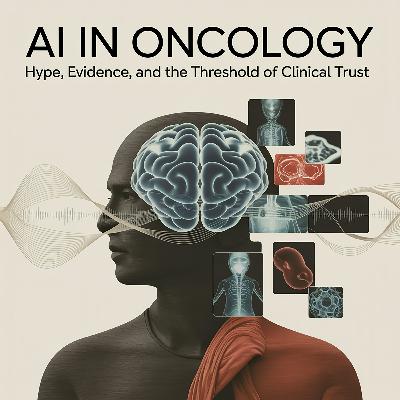
What does it take for AI to move from technical innovation to real-world adoption in oncology?In the first episode of Precision Signals, Dr. Sean Khozin speaks with Dr. Cora Sternberg and Dr. Olivier Elemento—two leaders at the intersection of clinical trials, precision medicine, and computational biology.Together, they unpack the central paradox of medical AI: why so many tools are technically validated, yet so few are clinically trusted. Topics include:Why randomized clinical trials—not just retrospective benchmarks—are essential for AI adoptionThe limitations of current training data and the risks of treating clinical guidelines as ground truthThe evolving role of real-world data, EHRs, and multimodal inputs in building more adaptive AI systemsWhat physicians actually need to trust and use AI in everyday cancer careThis is a candid conversation about evidence, trust, and what it will take to build AI that earns a place in the oncology clinic, grounded in insights from the participants’ recent review published in NEJM AI: https://ai.nejm.org/doi/abs/10.1056/A...
Comments

Download from Google Play

Download from App Store
 United States