


 Claim Ownership
Thriving The Future Podcast
Subscribed: 14Played: 334
Subscribe

© Thriving the Future
Description
Thriving the Future focuses on positive solutions to help you Thrive.
Your mindset is everything.
Skills Over Stuff.
Plant trees. Grow Food. Build community.
Let's Thrive Together.
thrivingthefuture.substack.com
Your mindset is everything.
Skills Over Stuff.
Plant trees. Grow Food. Build community.
Let's Thrive Together.
thrivingthefuture.substack.com
159 Episodes
Reverse
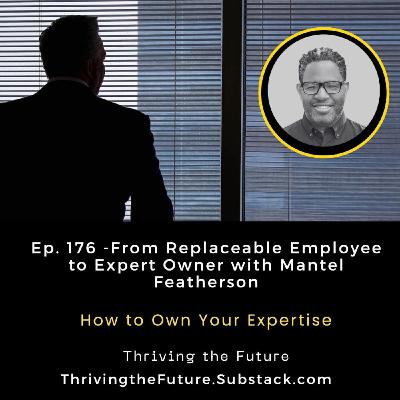
You are asked to train the new hire. Then they are given some of your projects. You are passed over for a new position because they want a “digital native”, even though you led the company-wide AI rollout as an AI Champion. You made it through the last round of layoffs but now coworkers are cutting you out of key meetings. The writing is on the wall. You need to own your expertise. Mantel Featherson of FutureProof50 joins me to discuss how to secure your future by leveraging your most powerful professional asset - your expertise. We talk about the mindset shift and how to navigate it."These layoffs aren't really about performance anymore. It's more about cost savings. It's becoming a numbers game." — MantelBuild income streams now while you still have a job.Expertise is three things: knowledge, experience, and perspective.Knowledge is what you’ve learned. Experience is what you’ve accumulated. Perspective is your secret weapon — it is the judgment that comes from having seen the same movie play out before. You know where the pitfalls are. That’s what you’re actually selling.Mantel’s four-step framework: Extract, Package, Position, Distribute.Jump in and Extract your expertise — nail down what you actually know and what you’re passionate about, because passion matters if you’re going to talk about it for years. Package it so people can recognize you for it immediately. Position it for the right market — who specifically is this for? Distribute it through the channels that fit how you work, whether that’s Substack, coaching, consulting, or courses.Take action to own your expertiseTake a skills inventory before you do anything else. List what you know, what you’ve done, and where your judgment is sharper than most people’s. Don’t frame it as a resume timeline. Frame it as: What problems can I solve?Identify the bridge from pain to purpose. What problem are you solving, and for whom? Talk to people in your target market before you build the offer. Let their words shape your positioning.Package your expertise so someone can recognize it in ten seconds. If you can’t explain what you do and who it’s for in one clear sentence, you don’t have a package yet. Keep refining until it’s that simple.Build something on the side before you need to. You don’t have to quit your job. The goal is to reduce your vulnerability. One source of income is exposure. A Substack, a consulting engagement, a small course — these aren’t backup plans, they’re the actual plan.Talk to yourself where you were two years ago. That person is your avatar, your customer. What did you need to know then that you know now? That’s your offer. That’s your market. Start there."You're basically your own first client. The challenge you had two or three years ago — that's often the challenge others are having right now." — MantelHow to connect with Mantel:Mantel on SubstackFutureProof50Mantel on LinkedInMantel on TwitterIf you want to hear more positive content like this, subscribe to the Thriving the Future Substack.If you found this episode insanely helpful, you can show Thriving the Future some love by making a one time (no subscription!) donation. Get full access to Thriving the Future Substack at thrivingthefuture.substack.com/subscribe
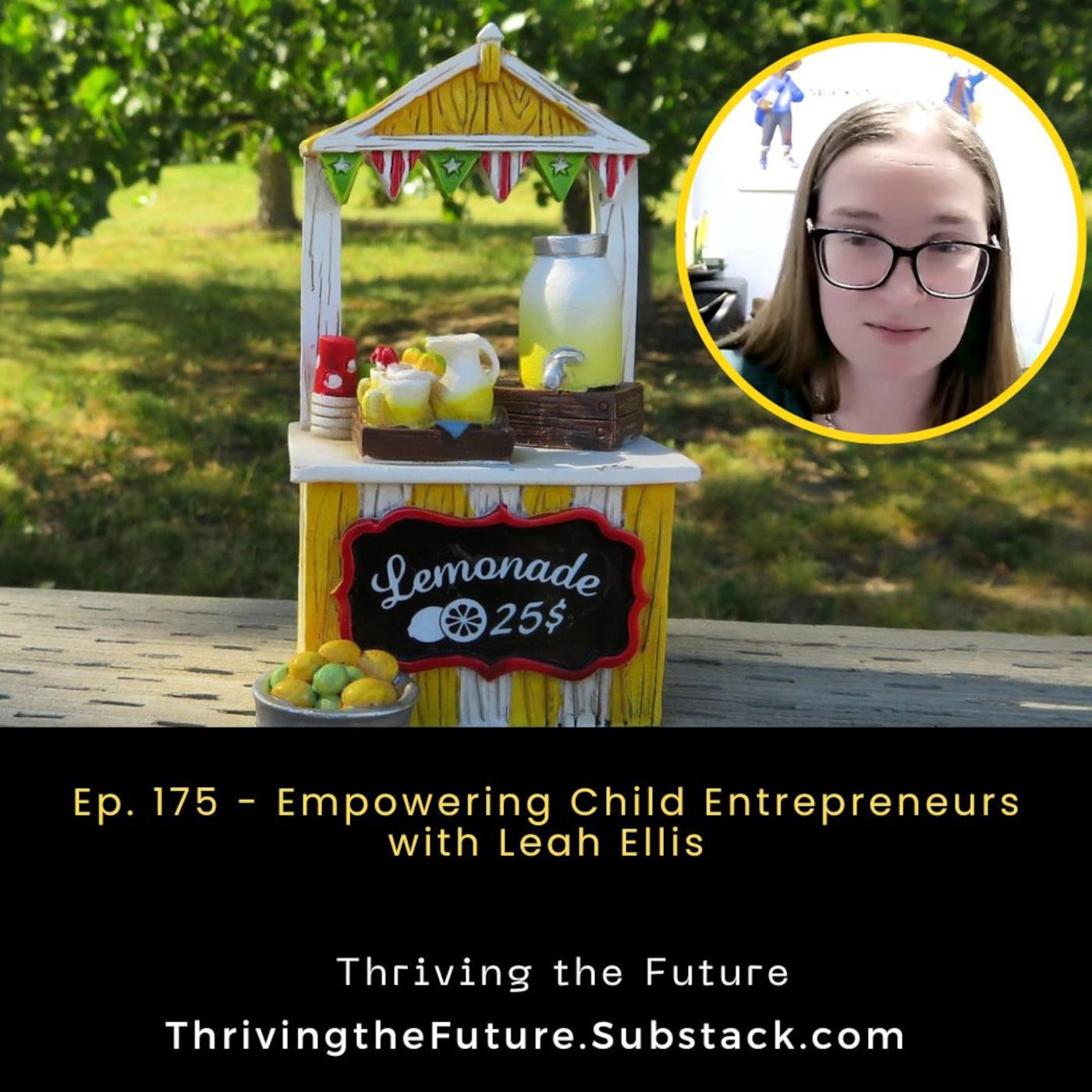
Leah Ellis from the Society of Child Entrepreneurs shares how asking a child simple questions of “Why?” can empower them to solve problems and even become entrepreneurs.Because Entrepreneurship is about solving problems. During COVID, Leah’s 4½-year-old daughter Melody had been watching entrepreneurship training videos alongside her mom. One day she said, “Mommy, I want to start a business too.” Leah’s gut reaction was no—you’re four, you’re still working on counting to fifty. But Melody kept asking “Why?” And Leah stood there realizing she didn’t have an answer. “Every answer I had was stuck on why other people wouldn’t let her do it and not necessarily why a four-year-old in the midst of a global pandemic with nothing better to do couldn’t start a business.”So they did it. Melody started “Melody Paints”—custom drip art sold through a Facebook page and a Google form. You picked your colors, paid via Venmo, and she shipped you a painting. Why Leah Started the Society of Child EntrepreneursAfter moving back to Kansas, Leah hosted a children’s business fair at a local coffee shop. Eleven kids showed up. Some made over $300 in two hours. One kid donated everything to his church’s summer camp scholarship fund. The place was so packed they would’ve been fined if the fire marshal had walked in. But then it was over. The kids went home and nobody taught them anything else. That bothered Leah. She wanted to create something that kept going—peers for her daughters to talk business with, a place where entrepreneurship wasn’t a one-day event but an ongoing conversation. So in July 2024, she convinced some friends to help her start a nonprofit. Now the Society of Child Entrepreneurs has business fairs, curriculum, storybooks, monthly workshops, and a nationwide online platform that just launched.The Best Age to Start Leah says the sweet spot for entrepreneurship is 4th through 6th grade. By fourth grade, kids desperately want whatever name-brand thing is cool right now. Parents have already spent four years buying cool stuff that ended up collecting dust, so they’ve stopped. Now the kid has to figure out how to get it themselves. That’s when the scrappiness kicks in—selling bracelets to classmates, weeding grandma’s garden for cash, painting shirts. By 7th or 8th grade, kids start looking for “real” jobs—fast food, steady babysitting gigs. They drift away from the creativity of entrepreneurship unless they’re already plugged into a program. If they are, they usually stick with it.Your Actionable StepsThe Dinner Table Question At meals, ask your kids: “What’s one problem you noticed in your life today that you could solve, and how would you solve it?” It might be something small—getting toothpaste from the end of the tube. It might be something they actually saw—a kid who struggles to get off the bus because the last step is too tall. Either way, ask follow-ups. And if they want to pursue it, let them. “Your guide is the person who asks you questions and supports you while you find your journey and you go on your mission.”I particularly liked this story:One girl in the program makes decorative pens with sayings at the top. When asked to write a mission statement, she said she didn’t have one—she just makes pens. Leah kept asking Why. “Why do you make pens?”“Because I like having a pretty pen.” “Why?” “Because it shows people what’s important to me without having to say anything.” That was her mission. For people to share what matters to them, and sometimes without saying it in words. Stop Solving, Start Asking Swap out your instinct to fix things for a habit of asking questions. How would you do that? What would it look like in practice? What could go wrong and how would you handle it? Keep pushing until they work through it themselves. Find ways to create that same dynamic at home or in your community.“Think about something in your life that annoys you. Chances are it annoys the neighbor down the road too. What can you do to solve the problem for both of you and get some of his money while you’re at it?”If you want to hear more positive content like this, subscribe to the Thriving the Future Substack.If you found this episode insanely helpful, you can show Thriving the Future some love by making a one time (no subscription!) donation. Get full access to Thriving the Future Substack at thrivingthefuture.substack.com/subscribe
Today is the first day of the rest of your life.You can literally start over (maybe with some pain and consequences, but it is still true).This mindset is real Freedom.Show notes for this episodeIt’s a New Year and statistics, and personal experience, show that most of you will give up on your resolutions by Jan-20. That’s because you are approaching it as a task and not adopting it as a mindset and core identity.Change Your IdentityResolutions fail because they try to change outcomes without changing identity. The fundamental problem isn’t willpower or technique—it’s that people say “I’m going to lose 20 pounds” instead of “I am no longer someone who eats this way.”A resolution is “something I’m going to do.” An intention is “what I am doing.”It is who I am.The research on smoking cessation proves this: people who say “I quit” restart more often than those who say “I am not a smoker.” One is a temporary action; the other is an identity shift.I was on the Paleo diet for 2 years. Then I started bargaining and failed.A new diet is a new identity –When you start a diet, you say, for example, “I am on the Paleo diet”. This implies that you can get off the Paleo diet or you can have a cheat day. You start compartmentalizing and bargaining.Instead of saying “I am on the Paleo diet”, adopt it as your identity. “I am Paleo”. Those who succeed at this see it trickle down to their friends, who know that they will have to have or make alternatives for this person at their dinner, party, or get-together.Stop making resolutions. Start making identity statements.Not “I’m going to garden this year.”“I am a gardener.”Not “I’m going to start a side hustle.”“I am building my business.”Then ask yourself what that person does every single day—and do one small piece of it right now.It even comes down to your friends“I am the sum total of the people I spend my most time around.” - PerpendIf your friends aren’t doers, their inaction will pull you back. This doesn’t mean abandoning relationships, but honestly assessing: are the people I spend the most time with aligned with who I’m becoming?Plan your life with intention so you are moving toward that goal.:Involving kids in your intentional lifeAs I shared in You Need to be Bloomscrolling, Not Doomscrolling, no one wanted to clear the weeds from the overgrown raised beds at my daughter’s house. I got my grandchildren excited about gardening by giving them a homeschooling assignment to look at the seed catalog and choose some seeds based on the color and whether they think they would be tasty. Then they pushed those seeds into the ground and weeded and watered them. They grew moonflower, a purple cabbage, stocky carrots, and a watermelon that they thought would be “juicy and tasty”.Today is the first day of the rest of your life.If you found this episode insanely helpful, you can show some love by making a one time (no subscription!) donation below.If you like this hard hitting content with real tips you can use, then Subscribe to the Thriving the Future Substack!Scott runs Grow Nut Trees (Midwest Memory chestnut and hazelnut trees and perennials like elderberry cuttings) and is a Chestnut Orchard Architect, designing orchards and food forests for Midwest homesteaders. Currently booking consults for Spring. Sign up for your Free Discovery call where I help you with your Big Picture. Get full access to Thriving the Future Substack at thrivingthefuture.substack.com/subscribe
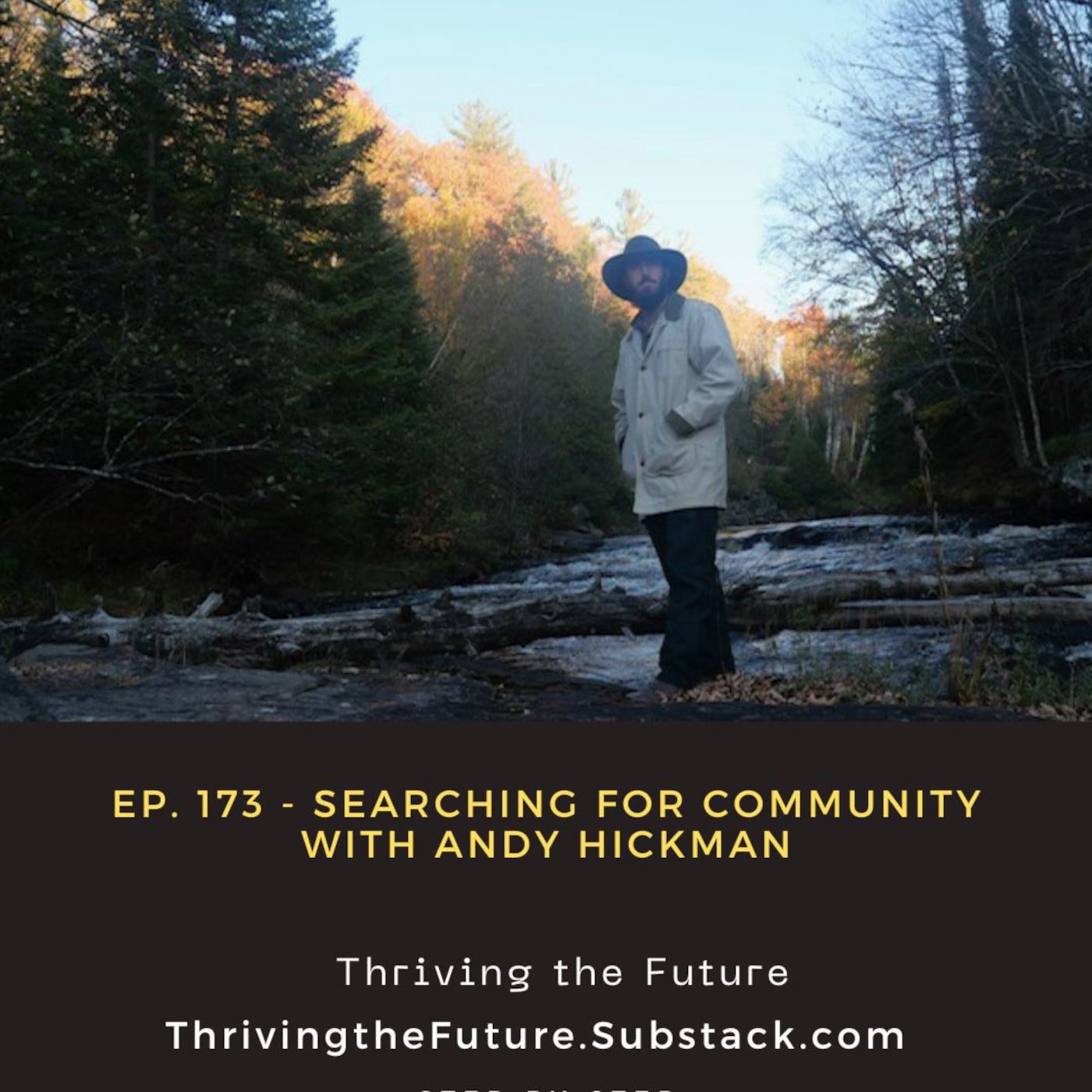
Andy Hickman (shagbark_hick on X/Twitter) has gone viral in recent months as he has tried to form community in Northern New York. He shares about the tension between loving a place yet watching it die. Do you stay? Is there anything left to hold onto?“People talk about community. There’s already community. There’s already a structure that makes sense. It’s the small town, the city block, the village, the neighborhood. We’ve done this for thousands of years.”Despite having a difficult year, he is still one of the most positive people I know.* His plans for the New Year - to travel South. He may even purchase a car (!).* Some of the places in the Southwest that he loves and wants to visit, to share with his wife Keturah, who has not seen that part of the country.* His new writing projects, including a potential book deal.* Andy’s favorite Christmas memory: Being the Yule King and riding the Yule log through the city square.Hickman’s Hinterlands on Substackshagbark_hick on X/TwitterAndy’s love of the Southwest:"It doesn't even feel like America because it's so American, if that makes sense. It's this weird horseshoe zone where you feel like you're in a foreign country, but you're actually in the heart of your own country."Actionable stepsActionable StepsStop reinventing community structures. Before trying to form an intentional community with elaborate rules and shared land, consider whether you could just move near like-minded people and be neighbors. Let natural community form through proximity and shared values rather than formal agreements.Audit why you live where you live. What’s the one thing that anchors you to your place? If that thing disappeared tomorrow, would you still have reason to stay?Look for communities with their “mojo” intact. Vitality isn’t about economics or amenities. It’s about whether people gather, whether families are growing, whether there’s optimism. Some declining places still have thriving pockets. Some prosperous places are spiritually dead. Notice the difference.Reclaim Sunday. Turn stuff off. Sit around and talk. Gather with family. This isn’t about productivity hacks or “intentional rest”—it’s about Thriving.Thriving the Future Substack is positive solutions (and even bittersweet conversations). Subscribe and get more - over 170 podcast episodes, and many articles on how to Thrive in a challenging and changing culture.Wyldewood elderberries make some of the best elderberry wine. Plus I make elderberry syrup and cough medicine for when I have a cold. It’s mid-Winter but it is the perfect time to get some elderberry cuttings. Just poke the stick in the ground and the elderberry will take off right there.Get your elderberry cuttings to grow your own elderberry for wine at Grow Nut Trees. Get full access to Thriving the Future Substack at thrivingthefuture.substack.com/subscribe
You have been thinking about Side Hustles all wrong.First Know Yourself, then Know Your Customer.Everyone starts a side hustle to add to or replace some of their income. Good idea.Because of the online gurus, you usually get into the mindset that “If I can eventually scale this, then it can replace my regular job.”You jump right to big ticket items. the $99 course, or sometimes even more $$. Crickets…no sales.Or even worse, you post and post and give away free stuff, hoping for that conversion to buying your PDF, or signing up for your Patreon, or (now) Substack subscription.“I am getting the likes and engagement, what is the problem?!”The issue is that you are farming for Likes, not value. You have not identified your customer. What is your customer’s problem that you are trying to solve?Are you making a difference?How to know your customer.Observe actions over words. Don’t just ask people what they want—watch what they actually buy.For example, go to the farmer’s market. Stand still. Look around. Watch what is going on. Pay attention to what people are buying.As Homestead Padre and I talked about in Ep.56, people at the farmer’s market are not buying produce. Sure, some do. But most people are there for the experience. They are there for the food truck. They are there for community (even if they don’t realize it).Most of the produce vendors at the farmer’s market take home their produce or trade it with other vendors for their stuff. Maybe that is the key - the community.That is a great non-monetary side benefit from being a vendor or the farmer’s market. (But as a vendor that is really not why you are there).The gap between what people say and what they do is the opportunity. It is the line between where side hustles Thrive or side hustles go to die.Now let’s look at this problem - a vendor at the farmer’s market doesn’t sell enough of their produce to make it worth their time, and they usually have to pay a fee for selling at the market.What are some solutions? You could sell value added products, or crafts alongside your produce.Many people who used to sell at the farmer’s market are creating roadside farm produce stands along the road at the corner of their property. (You need enough traffic, and you need to have a high-trust area for this to work).Maybe join together with other people at the farmer’s market and have a local food co-op. Some small farmers and gardeners do this with a CSA. Create a Facebook page or a simple app. Now you see the thought process to start solving problems.But be careful not to wedge yourself into a solution with no problem, or a solution that everyone else is trying to solve (if “everyone is doing it” then you will be treated like a commodity, with commodity pricing).Start with your IntentionSo stop just building side hustles—and start building skills.Before you do anything else, complete an analysis of your life and your life intention.Clarify what you actually want your life to look like. Your side hustle should move you toward that intentional life, not just generate random income.Start with: What are you good at?Use the eight forms of capital framework to inventory what you have and what you can do — skills, materials, living capital, financial capital.* Financial Capital* Material Capital* Living Capital* Social Capital* Cultural Capital* Intellectual Capital* Experiential Capital* Spiritual CapitalListen to Thriving the Future Podcast Ep. 3 - You Are More Wealthy Than You Think for more information on the 8 forms of capital.What are you good at?What solutions have you solved for yourself and others? That is your sweet spot.The best approach - Sell to people like you.Speak to yourself - where you were 2 years ago. Speak to that person, with their problems. You now have the solutions.I started Grow Nut Trees because the chestnut trees I bought from the Pacific Northwest or Northeast did not survive the harsh Kansas climate. The seeds and trees had a “memory” of where they originally grew. They were successful there. A tree that is used to the wet, cloudy environment in the Pacific Northwest would not thrive, let alone survive, in Kansas. So I grew my own trees, and culled the ones that did not do well.Likewise, the easiest customer to find is someone who shares your values. You’re not looking for people just like you —you’re looking for a shared worldview. You’ll naturally attract these people through how you go about things.Grow Nut Trees Success StoryYesterday I received a $100 order for chestnut trees. The customer said in the notes, “If you have any questions, call me on my cell phone rather than email.”Since it is the last week of Fall shipping and I am now transitioning into Spring orders, and he lives in the midsection of the country, I called him to ask him if he wanted me to ship immediately or hold onto them and ship to him in the Spring.This was an excellent opportunity to ask him what problem he is trying to solve: Why is he planting chestnut trees and how does he plan to use them?He just bought 20 acres of pasture and he wants to plant chestnuts. He asked how close to plant them, and what to do about deer pressure? I shared my experience and my recommendation - in his case I recommended 20 - 25 feet spacing between trees because it was important to him to be able to run a bush hog mower between the trees and rows. And adding tree tubes for the first year or two to counter the deer pressure.He asked how many more chestnut trees I had available and he bought many more, even ones that I did not have on my website. I didn’t have to upsell to him.Depending on his problem, I could have offered him a more in-depth consult or even a permaculture design.When you share you experience and knowledge one-on-one it creates a social “debt”.“The more value you give them, the more they owe you. And they will know subconsciously.” - PerpendThis social “debt” doesn’t happen in e-mail or online ordering. It doesn’t happen when someone reads your blog or Substack (that’s why they are not subscribing).If possible, move toward a personal interaction. But don’t force it, and don’t give it away too easily (don’t spend all your time on Free Zoom consult calls).Sometimes your customer is not who you think it isOne of the most surprising things about my Grow Nut Trees side hustle/biz is that nut trees are not my best selling product. Elderberry seedlings sold on FB marketplace are my best selling product. They are also the easiest to create: Take some elderberry cuttings, poke them into the ground or into a pot of soil and the elderberry will grow really fast. I can also dig up offshoot sprouts where the elderberry is spreading, stick those in spoil and it works very well. No messing with seeds.I can grow them into 2 gallon $20 plants from Spring into early Fall. I can even buy some sprouted elderberry cuttings in late Summer and grow them out more to sell later in the Fall.Most of the elderberry that I sell are Wyldewood variety. This year I will try some other varieties to extend my market. I am really excited about growing more Black Lace elderberry, although it is not as vigorous as the Wyldewood variety.(By the way, Elderberry cuttings are now available at GrowNutTrees.com)Not everyone is your customer.Early in my Grow Nut Trees journey, a guy contacted me by email to ask questions about chestnuts. I was kind of green at that point, and didn’t understand the need for the interaction that I just discussed. After the third email I internally grumbled: “Are you going to buy or what?”Eventually, after 4 or 5 emailed questions, he came back and ordered over $150 worth of trees. That was the biggest order I had at that point in my journey.Don’t go chasing after a person who is not your customer. Leave some space. (maybe they will be your customer some day).“The biggest word in the English language is no.”Buffalo Ron from The Buffalo Wool Company shared on Twitter/X a customer horror story:That lady was not his customer. She is a Walmart and Amazon customer.I just shared many side hustle tips and details that you usually don’t hear unless you pay someone for an ebook or online class. If you got value from it, then Subscribe to the Thriving the Future Substack.Or Buy Me a Coffee Get full access to Thriving the Future Substack at thrivingthefuture.substack.com/subscribe

Teach Your Kids Foundational SkillsCan your kids point out North, South, East, West when they are outside?In this episode I talk about teaching foundational skills. Jeff Putnam on Twitter/X posted that he had a team leader guy lamenting on how one of his junior team members did not know how to read a tape measure. On a Construction job!Someone didn’t learn Foundational Skills.Foundational SkillsFoundational Skills are ones that stand the test of time. (Also called Tier 1 skills). They are good 100 years ago or 100 years from now:* Pattern Recognition* Learn how to Learn* Growing food* Foraging* Building and Making - Basic construction* Repairing stuff - Fix what breaks rather than replacing it* Cooking, including cooking from scratch. You would be amazed how many college kids graduate college and do not know how to cook (other than ramen).* Basic first aid* Herbal/traditional medicineBen Falk’s Skills to Set up a Child for SuccessCan your child point out North, South, East, and West when outside?Ben Falk’s “The Resilient Farm and Homestead” book has been my homesteading Bible for over 10 years. In his new edition of “The Resilient Farm and Homestead, Revised and Expanded Edition: 20 Years of Permaculture and Whole Systems Design”, Ben Falk has a new section on teaching children skills - How to set up a child for success.For smaller kids, it is the basics: Don’t walk on the garden beds, Tool safety. But he then goes into recognizing animal tracks, Plant Identification.He then has a long list of the High-School-level graduation competency requirements that he plans to use for his child, including both pattern understanding and hard skills. Lots of permaculture skills, but also recognizing cardinal directions (North/South/East/West), and “can ID fifteen wild edibles within 1 hour in midsummer and explain one or more ways to use each one”. (This is a challenging skill that I would like to learn/refine myself).Some of the things on the list:* Can cook from scratch (and his requirement is on a wood stove)* Can read a map (not just Google maps). * Can identify contours and water movement across land.* Can tie a variety of knots.* Can safely and competently use all of the tools in the shop or garage.* Can run a mile in a specific time.* Can swim and hold his breath underwater for a certain length of time.* Basic first aid and wound care.* Can get anywhere on the property without a headlamp on a cloudy night in the Winter.* Knows gun safety and use of different firearms.* Knows basic self-defense.* Can identify how to make money in the local area. Create a business plan. Use a spreadsheet and ledger.Conflict resolution skills will be important* Conflict resolution and de-escalation will be very important skills in the future.* Managing Tradeoffs. Not everything is Winner-Take-All or Zero-Sum. There are seldom 100% winners or losers. This is one of my Top 5 most important skills to teach. It is all about mindset. * “There are no solutions, only tradeoffs” - Thomas Sowell. * Negotiation Skills* Learn how to build trust with someone. * How to interact with neighbors. * Build community. * How to listen instead of talking or thinking about what to say next. The importance of space and contemplation in the conversation. Teach Worldview, Faith, and ValuesTeach a kid where he or she “fits” in the world, in the family, and in life. If we did this then a child would feel more purpose, and would feel “whole”. Have discussions about family life when you grow up. You would think that this would be common sense, but schools, consumerism and pop culture, and climate anxiety have downplayed family and kids. Many kids do not understand that the purpose of life is to grow up, have a wife, a family, and kids. Teach Faith and Values. Don’t only outsource it to church. Live those values.What other Foundational skills can you think of? Tell us in the Comments.Like this post? then Buy Me a CoffeeIf you like this episode, then Subscribe to the Thriving the Future Substack. Get full access to Thriving the Future Substack at thrivingthefuture.substack.com/subscribe
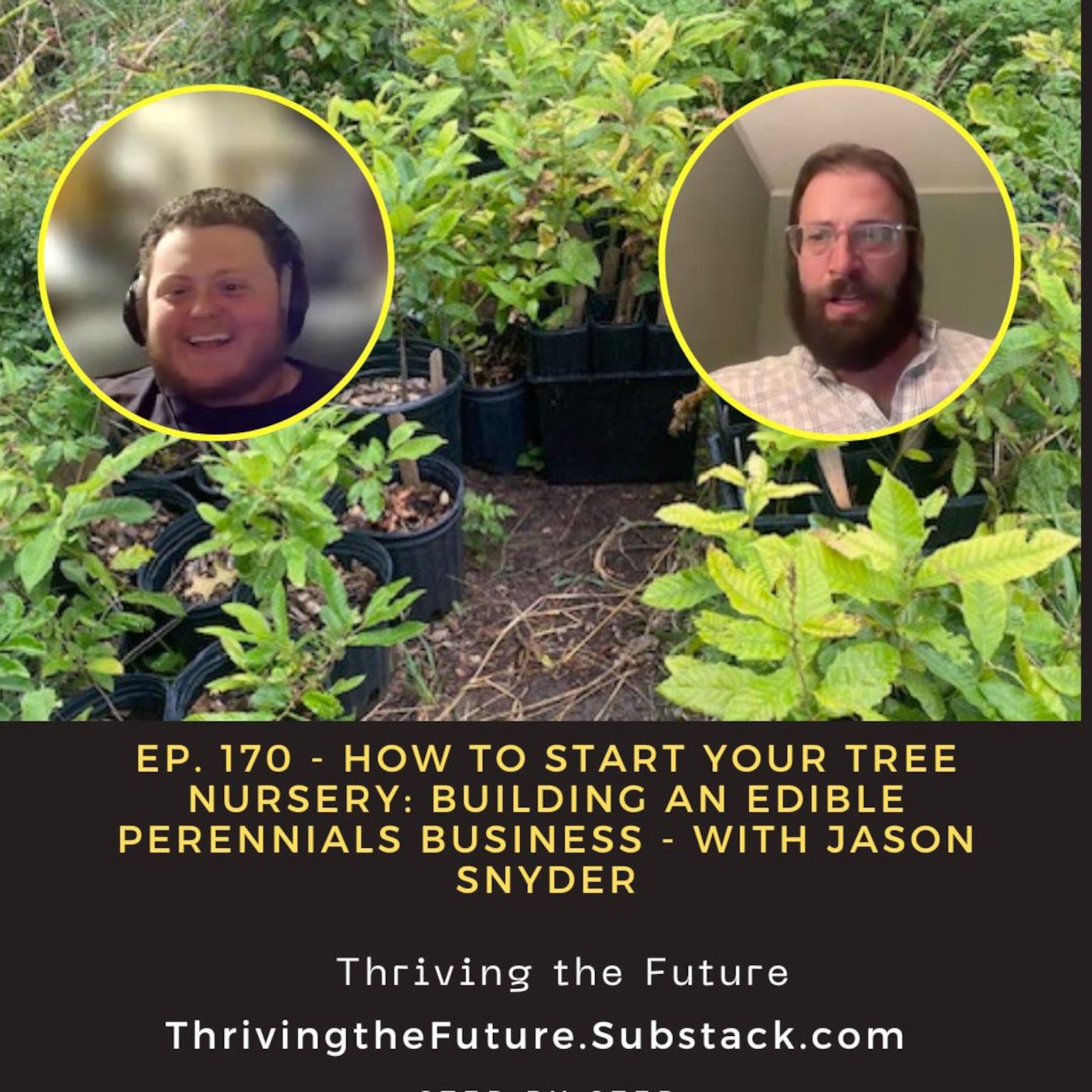
Jason Snyder shares his journey and plans to transition from a desk job to running a full-time edible perennial nursery on his 5-acre property by Fall 2027. Grant Payne and I share our lessons learned.Jason wants to grow chestnuts, hazelnuts, hickory, as well as many edible perennial shrubs.* Core nut trees: Chestnuts, hazelnuts, shagbark hickory* Fruit trees: Persimmon, pawpaw, wild plum* Berries: Elderberry, blueberry, blackberry, raspberry* Experimental (maybe do): Sea berry, goji berry, Siberian peach* Propagate from cuttings: Elderberry, willow, mulberry, figTips to Start Your Tree NurseryYou actually don’t need much space to grow thousands of trees to saplings and then sell them. You basically just need the space of a yard or a driveway to do that.Collect local seed, adapted to your area. As I share on the podcast: “Seeds and trees have a ‘memory’. They thrived and reproduced in a certain climate.Share and trade seeds with friends and other nurseries.Jason builds air prune boxes so that the seedlings will prune themselves, without growing through the bottom of the pot into the ground.Scott uses this Vego Garden Raised Bed.Grant also uses IBC totes, and is building greenhouse.Jason’s Nursery Vision & Timeline* Plans to formally launch nursery business in fall 2027 with first major sales* Will germinate seeds winter 2026-27, grow through 2027, and begin selling September 2027.Growing Methods & Techniques* Use winter stratification for nuts, storing in buckets of sand until germinated, then plant out in the Spring into loose soil in-ground beds, air prune beds, or tree pots.How to Grow Chestnuts from Seed - Grow Nut Trees* Experimenting with air prune beds/boxes** Will test blueberry propagation from cuttings this winter using root hormone* Grant and Scott also use greenhouse and high tunnel for some production or to extend the seasons.Sales & Distribution Strategy* Two-pronged approach: Local market and online shipping* Local sales: Facebook Marketplace, farmer’s markets (alongside wife’s pottery), occasional on-property sale events* Online sales: Building website, YouTube channel, Twitter presence* Additional services: May offer landscape consultations and installation services* Partnerships: Exploring collaboration with local landscapers to introduce edible plants to their clientsLicensing and Inspection* If you ship plants, you will need a neutral medium. I use coconut coir to loosen soil and for shipping plants.If you like this episode, Buy me a coffeeI still have chestnut seeds for sale at Grow Nut Trees. That’s at GrowNutTrees.com and BuyNutTrees.com.Go to my Substack page for more great content. Get full access to Thriving the Future Substack at thrivingthefuture.substack.com/subscribe
We all need community. But divisions are destroying friendships and fracturing communities across America. Many people now refuse to associate with those who hold different views — avoiding them at farmer’s markets, skipping social gatherings, even ending decades-long friendships. But there’s another path forward: a framework to navigate forgiveness and create space for people in your outer circles without compromising your values.It is finally getting cool enough for fire pit and bonfire season.Last year, we skipped an invitation to a bonfire get-together because they were there. The couple that were champions of the Covid measures - the vaxx and the lockdowns. Does that mean we can’t even talk to those folks? We can’t even buy some of their salsa or kraut at the farmer’s market?Maybe it’s time to rethink community.We are a fractured society: How division destroys communityWe are a fractured society. People are splitting along ideological lines, and not associating with the folks in the other camps. While many of us are in the gray areas between those camps. It is fueled by their social media bubble. Just follow one person that leans to the other side (Red ort Blue) and it opens a whole different world of what they like and consume. To be fair, some die-hard Red folks I know post and repeat stuff that completely perplexes me (like Charlie Kirk conspiracies). It is like we are watching two different movies. Everyone is drawing lines. And it brings up comments: “I don’t want to buy something from them.” (at the farmer’s market)Like my kickoff story: “I don’t want to go to that bonfire get-together because they will be there.”Come on people. 🙄Maybe it’s time to rethink community.Covid is the Red Line for Many (still)For my wife, Covid was a Red Line, a betrayal, and those people can’t be trusted. This led to burned bridges and icy cold interactions, or more likely none at all.But now when you talk to people, you find out that yes, they took at least one round of the vaxx. This gets messy very quickly.We were at a dinner with several of our friends, including a couple that is our best friends. They were drinking, we were not. At one point, we were talking about conspiracies. My wife went to her favorite topic - Big Pharma. At that point my friend’s wife said, “We took the Covid shot. We wanted to travel.” My wife said, “Aha!”Her husband, my friend Dave, was talking to someone else and didn’t hear this conversation. I told him about it later and they both denied it. “Maybe your wife heard what she wanted to hear.” Well no, I heard it too. “Maybe she (my wife) was just drunk”, he said.My wife then talked about doubts of associating with them anymore. Maybe it’s time to rethink community.Thriving the Future Substack is a reader-supported publication. To receive new posts and support my work, consider becoming a free or paid subscriber.The Multiple Levels of CommunityRealistically, you have multiple levels of community already. They are concentric circles.You have your Inner Circle - Family and really close friends. Includes folks that you would call at 2 AM if your water heater breaks, or if you were in an accident and you needed a ride and you can’t get ahold of your immediate family.Then there are Friends and Allies. This includes your Mutual Assistance Group. Who you frequently communicate with, share, and trade with. You will help these folks out with clearing a tree that came down in their driveway last night during the storm. Some of those people extend into the Inner Circle. And you have Acquaintances. People in your outer circle. You may see them at church or a get-together. You don’t know them really well but you still talk to them. It may be someone you know by name at the farmer’s market.It’s funny, because I knew one prepper guy who inherently grouped people into these circles automatically as part of his OpSec. Needless to day, he has buckets of food, lots of guns, but very few friends. Times are getting tough. Maybe it’s time to rethink your community.The Other is the Invisible EnemyIn Ep. 121 - The Real Civil War is Within You, Cyprian talked about the Invisible Enemy. For the Left, it is White Supremacy. It’s the white guy with a rifle asking, “What kind of American are you?”For the Right, it’s Trans people or “illegals”.This past week, there were No Kings protests. Did they amount to much? No. But people are infuriated anyway. People are drawing lines in their personal relationships over ideology. In many cases, people are refusing to associate with those people, In history, this has always been the way you treat the Other. The outsider, the different color, the different religion, the different belief. For many, their ideology is now their Religion (with a capital “R”).We have people calling for the military on our streets - to clunk the heads of those people. Never mind that power can be used against you by the next people in power!I live next to the two blue-est counties in Kansas. I work in one of them.Let’s get real. If I was really choosy, I would have a difficult and lonely life.Maybe it’s time for forgiveness.Not talking about completely removing your standards.As I said, for some this is ideology. Can I still buy something at the farmer’s market from them?Maybe it’s time for forgiveness.“But they didn’t repent!”, some say.You are called to forgiveness. Even to forgive the Samaritan that you would cross on the other side of the street to avoid.Look, they don’t have to be in your Inner Circle! We used to have local workshops - No One is an Expert, But We are Still Gonna Get Stuff Done workshops. Processing chickens, making vinegar, showing newbies (and oldies) how to use crypto, bringing apples and pressing cider. Yes, there were some weirdos that attended. It’s OK. They can be in your community and not be in your Inner Circle.Times are getting tough. Maybe it’s time to rethink your community.Never before have we been more in need to be bloomscrolling, not doomscrolling.If you like this episode, then follow my Substack: ThrivingtheFutureIf you like this episode, Buy me a coffeeI still have chestnut seeds for sale at Grow Nut Trees. That’s at GrowNutTrees.com and BuyNutTrees.com. Get full access to Thriving the Future Substack at thrivingthefuture.substack.com/subscribe
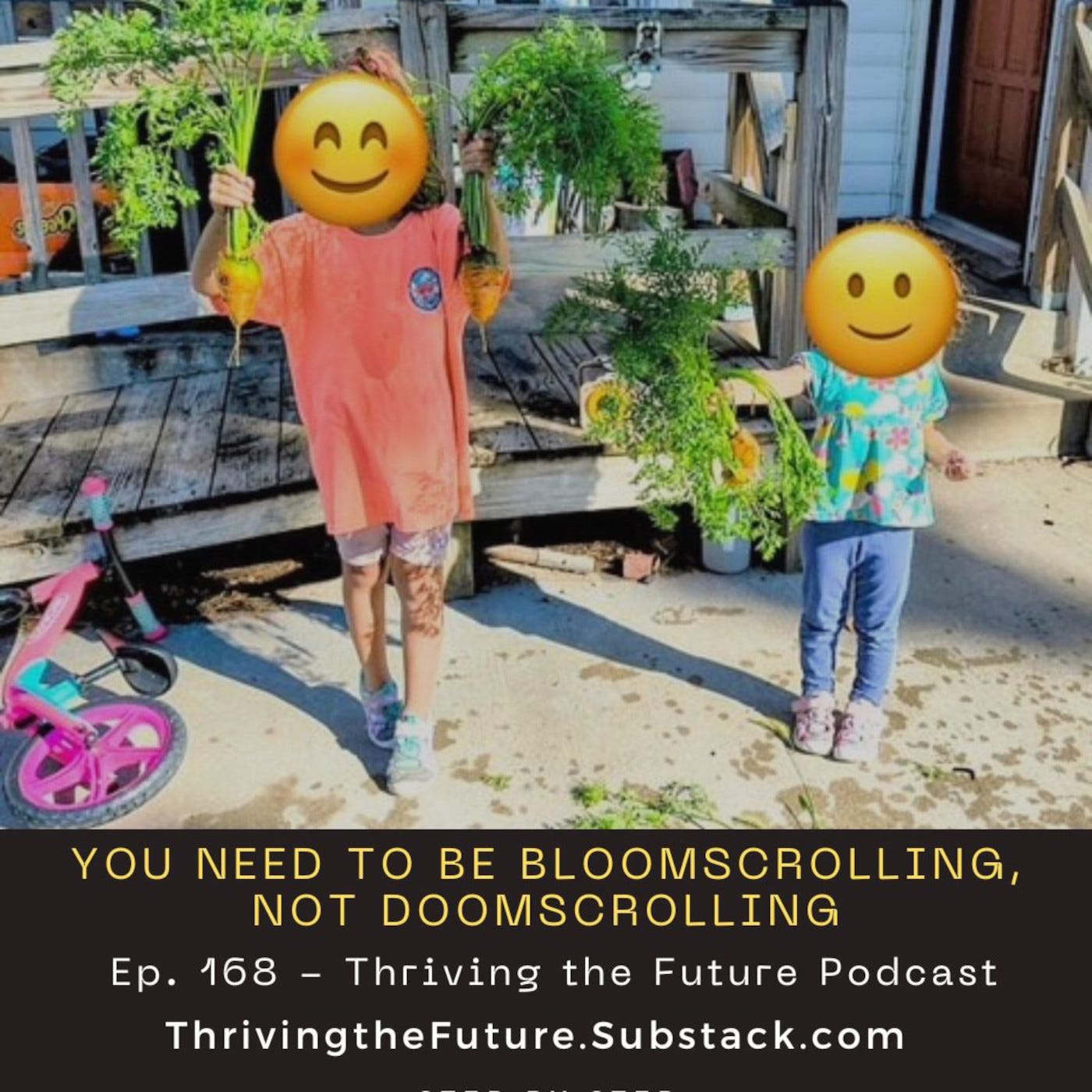
You need to post your wins and surround yourself with positive people.Homeschool success story: We had the kids pick out their favorite plants from the seed catalog. We ordered the seeds. We cleared the unused raised beds in the backyard and they planted their seeds. They weeded it throughout the season. And now we have Oxheart carrots, watermelon, and Moonflower, which blooms at night.For the full show notes with pictures, go to the Thriving the Future SubstackWelcome back to Thriving the Future. If you spend any time on social media you feel almost certain that the world is coming to an end, Sauron discovered Frodo on the way to Mount Doom and now has the One Ring, and the orcs are at the gate. You are feeding your brain the mind rot with your doomscrolling.You need to be Bloomscrolling, not Doomscrolling.Post your wins, or if it didn’t work out, post your lessons learned. Chuckle and heartily laugh about it. It’s not so bad. There will be another season.You have seen the meme where there are two guys sitting on a bus. One looks out the window and complains. The other looks out the window and looks on the bright side. Surround yourself with people who are winning, posting positive stuff. Fall is my favorite time of the year, but the leaf changes creep later and later each year. I appreciate seeing the Fall foliage from up North (so keep posting it). Likewise, I love to see Andy Shagbark Hickman posting his Northern New York snow as deep as the door, and climbing up on the roof to shovel it off. Some people are horrified, because we have a culture that names Winter storms. I see everything right with the world. Celebrate your winsMy wins this week:I collected hundreds of chestnuts from two trees down the road from my house. Some will be eaten, others planted, some sold, and many shared.I had two giant sunflowers come up from the Milpa seed mix that I planted in the garden. I saved two quarts of seed from just one of those sunflowers.Had a huge harvest of autumn olive. This will make autumn olive oxymel for cold season.Back to my grandkids: as part of their homeschool project they collected caterpillars and watched them form cocoons, chrysalis, and hatch out as butterflies.My wife and I have been fire pit maxxing this year. We have a simple firepit made of cinder blocks. Three nights this week we have been sitting out at the firepit until we can barely stay awake, shooting stars from the October Draconis meteor shower overhead. I bought a grate for the firepit and we last week we cooked steaks in cast iron. Good community newsWe need to get back to sharing community news, sort of like the fictional Prairie Home Companion. (I bet that Andy would have some good stories from NNY).Surround yourself with people that are winningFollow people on social media that are winning, getting stuff done, sharing skills. Or even just sharing a picture of the sunset and the Fall foliage. Some of my favorites:Jason SnyderRoman from Nature School StartupJoseph the Homestead PadreLongstoryFarmsBrendan from Posterity Ciderworks. Listen to Ep. 113 – Finding Heirloom Apple Trees in Long Forgotten Homesteads episode where he tells of finding lost lost apple trees on abandoned homesteads.And, of course, Grant Payne from Christine Acre Farms, the most positive person on Twitter/X. Who gets more done by 24 years old than anyone I know. And is the luckiest guys I know. If you like this episode, then follow my Substack: ThrivingtheFutureBuy me a coffeeI still have chestnut seeds for sale at Grow Nut Trees. That’s at GrowNutTrees.com and BuyNutTrees.com. Get full access to Thriving the Future Substack at thrivingthefuture.substack.com/subscribe
My friend and coworker EngSean is Gen Z. He was born in 1997. Gen Z is usually considered to be born in or after 1997. (Although some sites say 1995, the general consensus is that Gen Z starts in 1997).EngSean graduated college two years ago. He got his professional certification about 6 months ago. But he was frustrated when discussing his next steps in his career path and the answer was basically: "You stay in this role for X number of years and then move to a Senior position or another position." That sounded like a slow treadmill or dead end to him.These kinds of conversations would get blank looks from the Gen X'ers he worked with (including me).These views and goals are not limited to EngSean. I spoke with my friend Grant Payne and he stated similar frustrations.EngSean and I usually walk 1.25 mile at lunch and his mindset was so different from mine that I thought it would be interesting to have him on the podcast.NOTE: The purpose of this is not to poke fun at Gen Z, but to understand them. This is important, whether you are a boss, coworker, or family member.Gen Z Mindset - Why Gen Z Quits JobsSo we tackled these questions:* What does a career look like to you?* What does Work/Life Balance look like?* You work with older professionals. What are some of things that you would like to be understood?* If you could accomplish one goal in the next year, what would it be?* We also discussed that, generally, they do not expect to ever receive Social Security or retirement.* It is important to them to have a job description with a listed salary range.* In social situations, they do not have small talk conversations about "What do you do?". Instead, sharing what $$ you make is important to them and does not have a stigma like it does for older professionals. This can make others upset!* They expect to change jobs every 2 years or so to get a better opportunity, more challenge, and especially to get better pay.Although EngSean doesn't feel this way, some Gen Z software developers think that they should be paid the same as senior people. Some think that "everyone should be paid the same" in that job role.Thriving the Future Substack is a reader-supported publication. To receive new posts and support my work, consider becoming a free or paid subscriber.Make sure to Subscribe to Thriving the Future Podcast!If you like this content, Buy Me a Coffee.Seeds and trees have a “memory”. They thrived and reproduced in a certain climate. Often when you buy chestnut trees or even hazelnut trees or plants online, you have to buy from nurseries in the Northeast or the Pacific Northwest. Take it from us: Trees and plants grown in those climates do not do well in Kansas or, in most cases, in the midsection of the country and Midwest.That's where Grow Nut Trees comes in. You buy nut trees from our Kansas homestead: chestnut, hazelnut, and I still have some pecans left, elderberry and comfrey. All grown and adapted to the Midwest, which will make them much more likely to be successful on your homestead or in your yard.And this year I have more named chestnuts sprouted from seed by me:* Dunstan-like American hybrids* Empire Elite, which is the chestnut that is used most often for turning corn and soy fields into chestnut farms* I have Revival which has a nut that's almost as big as my palm.* Chinese chestnuts.That’s at GrowNutTrees.com and BuyNutTrees.com. Get full access to Thriving the Future Substack at thrivingthefuture.substack.com/subscribe

There it is again. My heart races for just a few moments."What am I going to do about...?" the voice inside my head asks.Anxiety, you are a familiar "friend" in this New Normal, The Dim Age.But with "friends" like this, who needs enemies?Circle of ConcernI stop and ask myself:How much of this really matters? - That is my Circle of Concern.Does it really affect me?Let's get real. That thing that is happening in Texas or DC that is the Outrage-of-the-Day on social media. Does it really impact me?If I don't live in Texas, chances are it doesn't impact me at all.Does it even concern me?Probably not.How much of this can I actually do something about?Even if we are talking about in my home state or even in my city:Is it something I can directly do something about myself? - That is the Circle of Control.If the answer is "No", then Do I know someone involved? Are they a family member, friend, a co-worker, a neighbor? - That is the Circle of Influence.If I don't know the person and don't have any influence with them as a family member, friend, or acquaintance, the answer is almost surely "No".So why waste emotional energy on it?How many hours do I spend worrying about things I cannot control? Too many.I know that tomorrow I will have a challenging day, either dealing with conflict at work, at home, my water heater failed, or my car broke down.I like to role play out and strategize in my mind how I think that it will play out.What percentage of the time does it play out like I planned? Less than 10%.Tips to Focus on the Circle of Influence and Circle of ConcernI want to burn less emotional energy. I want to have less anxiety.I want to be free of the snares that so easily entangle me.Tip: Focus on the Circle of Influence and Circle of Concern.Only spend emotional energy on the things that fall inside these two circles; only on the things that really matter.Re-evaluate your relationships and spend more emotional energy and time on the people within those circles.Tips for dealing with adversityIn addition to focusing on your Circle of Influence and Circle of Concern, get back to what works:* Plant trees* Cultivate gardens* Raise livestock* Prepare mentally and spiritually* Grow your local communityBecause Government will not save you.If you like this content, Buy Me a Coffee.Your Mindset and Worldview MatterIt all goes back to your Worldview - Your Cosmology (How the world began) and your Eschaton (How will the world end).If you are a Nihilist then you ultimately see yourself as just a cosmic accident. There is no meaning. There are a lot of kids that are this way nowadays. It is inculcated throughout school. Add in climate anxiety, perceived sexual fluidity, and the overuse of prescription drugs and you can see why young people are messed up. Then you see why most of the recent school shootings are from very disturbed teens.Once again, don't fall into the trap. Those teens in another state are not in your Circle of Influence. But your kids and grandkids are in your Circle of Influence and Circle of Concern, and you can influence their mindset. Start by spending time with them. Share culture with them. Share your faith with them. Have real conversations. Show them that they matter.Perpend and I talked about Cosmology vs. Worldview back in Episode 85 in 2023. It was the last long conversation I had with Perpend before he went to become a monk (Brother David) at the monastery.How will your world end? What are you prepping for?In March 2020, when the Lockdown started, even the preppers were surprised. We had prepped for a run on the grocery store. I had enough stuff. So why was I standing in the checkout line with more? Because we didn't believe that it was happening. We didn't really believe that it could happen in America. Our mindset was all wrong.Hard times will come. Adversity is Normal. (there, I said it). Somehow we have isolated ourselves from it. We believe the American dream that we have a Right to Life, Liberty, and the Pursuit of Happiness. Most people believe that means that we are guaranteed Happiness.Our lives are fake. We are unhappy about foolish things - "I don't have this or that".We have forgotten that "Hard times create strong men."We want Good times, but that creates Weak men.In "God's Revelation to the Human Heart", Father Seraphim Rose said that he met a young man who wanted to go to Russia in the 1980's. Not to bask in Socialism, but because he heard that people were suffering for their faith. "Where there is suffering, he thought, there will probably be something real, and there will not be such fakery as we have in America."Father Seraphim said, "I saw that his idea was quite sound: the idea that suffering might produce something genuine, while our indulgent life easily produces fakery."Are you preparing your mind and your heart for Hard times?Seeds and trees have a “memory”. They thrived and reproduced in a certain climate. Often when you buy chestnut trees or even hazelnut trees or plants online, you have to buy from nurseries in the Northeast or the Pacific Northwest. Take it from us: Trees and plants grown in those climates do not do well in Kansas or, in most cases, in the midsection of the country and Midwest.That's where Grow Nut Trees comes in. You buy nut trees from our Kansas homestead: chestnut, hazelnut, and I still have some pecans left, elderberry and comfrey. All grown and adapted to the Midwest, which will make them much more likely to be successful on your homestead or in your yard.And this year I have more named chestnuts sprouted from seed by me:* Dunstan-like American hybrids* Empire Elite, which is the chestnut that is used most often for turning corn and soy fields into chestnut farms* I have Revival which has a nut that's almost as big as my palm.* Chinese chestnuts.That’s at GrowNutTrees.com and BuyNutTrees.com.GrowNutTrees.comRaised beds that I built to test Perennial Kitchen Garden layouts:Vego Garden Modular Metal Raised Bed (which I will make 5' x 3.5', 17" tall).I use this for a perennial kitchen garden - growing herbs to use daily in the kitchen. Just come along and pick what you need for tonight's dinner. Get full access to Thriving the Future Substack at thrivingthefuture.substack.com/subscribe
This week I have Matt from FarmHopLife and Joseph the Homestead Padre with me. And we're going to talk about Orthodoxy.So why this topic? Because it seems like online, all you see from Orthodox are all these new converts and they are all arguing with evangelicals and Catholics. And there are not like regular conversations going on like Perpend (now the monk Brother David) and I used to have. And this would be the kind of conversation that we would have if he were here. We are on an Orthodox journey. I've been Orthodox for a couple of years, and I'd like to hear some more about Matt and Joseph’s Orthodox journeys. So that's what we'll do, we'll do the anti-Orthobro thing and explore your Orthodox journeys.We focus on 3 main questions:* Why Orthodoxy?* What is the most surprising thing you have found on your Orthodox journey?* What is your biggest challenge?Listen in as we share our journeys and tell our stories. Seeds and trees have a “memory”. They thrived and reproduced in a certain climate. Often when you buy chestnut trees or even hazelnut trees or plants online, you have to buy from nurseries in the Northeast or the Pacific Northwest. Take it from us: Trees and plants grown in those climates do not do well in Kansas or, in most cases, in the midsection of the country and Midwest.That's where Grow Nut Trees comes in. You buy nut trees from our Kansas homestead: chestnut, hazelnut, and I still have some pecans left, elderberry and comfrey. All grown and adapted to the Midwest, which will make them much more likely to be successful on your homestead or in your yard.This year I have more named chestnuts sprouted from seed by me:* Dunstan-like American hybrids* Empire Elite, which is the chestnut that is used most often for turning corn and soy fields into chestnut farms* I have Revival which has a nut that's almost as big as my palm.* Chinese chestnuts.That’s at GrowNutTrees.com and BuyNutTrees.com.GrowNutTrees.comRaised beds that I built to test Perennial Kitchen Garden layouts:Vego Garden Modular Metal Raised Bed (which I will make 5' x 3.5', 17" tall).I use this for a perennial kitchen garden - growing herbs to use daily in the kitchen. Just come along and pick what you need for tonight's dinner. Get full access to Thriving the Future Substack at thrivingthefuture.substack.com/subscribe
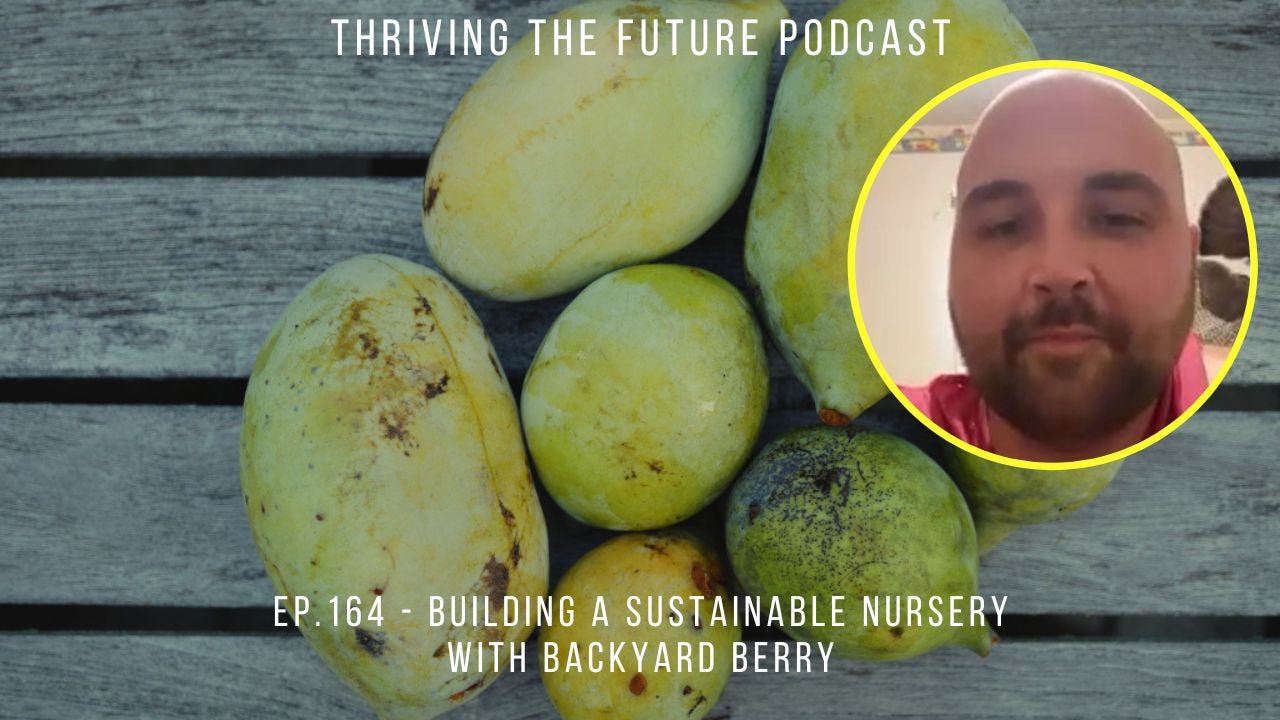
Travis from Backyard Berry on Substack shares about his series "Building a Sustainable Nursery".His favorite trees: Pawpaws, Persimmons, and Pin Cherries (for the birds).What is it like to be so near the central area where Pawpaws are grown, attending the festival. He is even drinking pawpaw ginger ale!We also talk about his series on "Homegrown National Park". Everyone was talking about national parks being affected by Federal land sales a few weeks ago. Travis posted that "What if the largest national park in America wasn’t a remote wilderness, but your own backyard?"The idea: "transforming America’s private land into vibrant habitat corridors that restore biodiversity and ecological health."Travis also shares about what it is like to work on an organic vegetable farm.Times are tough. You want to be more self sufficient and grow more food, with enough to share with family and friends or even sell some of that surplus.You’ve heard of this “food forest” thing, but it’s so overwhelming to get started. I can help.My Thriving Food Forest Design can help you realize your dreams of an edible foodscape or perennial paradise that will come back every year so you can grow more food and be more self sufficient. Schedule your FREE Discovery call with me at:Buy my chestnuts, hazelnuts, elderberry, and comfrey that are adapted to the Midwest.GrowNutTrees.comRaised beds that I am building to test Perennial Kitchen Garden layouts:Vego Garden Modular Metal Raised Bed (which I will make 5' x 3.5', 17" tall).I use this for a perennial kitchen garden - growing herbs to use daily in the kitchen. Just come along and pick what you need for tonight's dinner. Get full access to Thriving the Future Substack at thrivingthefuture.substack.com/subscribe
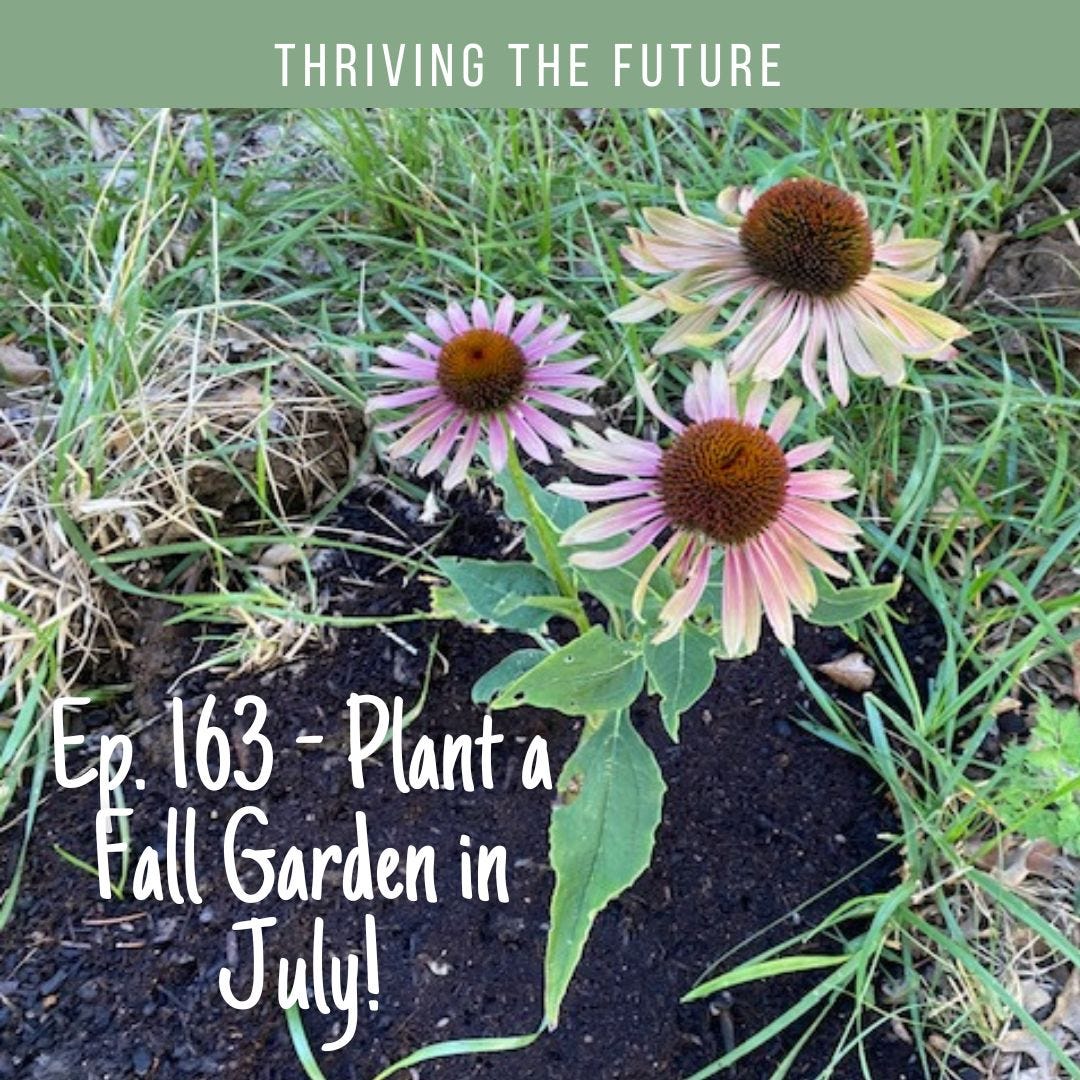
What can you grow in July?The seed displays are gone from the store. You can outdo the normies by planting a great Fall garden - even in the heat of July.I'm back! Where have I been all this time? I've planted a lot of things this Spring and for a while there I was watering day and night and working in the garden and turning over soil and one of the things that really was a problem was my garden got out of hand. It got really weedy because I don't go back there all that much. It's in Zone 2, borderline zone 3. My garden in Zone 2 is being taken over by bindweed, a really big hassle that is going to require some significant work during the down seasonI started building garden beds and raised beds closer to the house. That way I have more eyeballs on them and I can intervene without it being taken over by weeds.In addition to that, I've been spending a lot of time on having local conversations or just personal off-the-record conversations. There's no need to turn on the microphone and record everything all the time! Live in the moment!I've had great conversations with friends, folks that have been on the podcast before, and I have also been developing local community.Everything needs to go hyper-local and I'll talk more about that on a future episode.It's July in Kansas, and next week we are going to break 100 for the first time this Summer. We have had a lot of rain.None of the stores have any plants left. Around here, all the seed displays disappear around 4th of July and everything goes on clearance. This year I got a ton of stuff. I followed Grant Payne’s model and I went around and just cleaned out the clearance items. I got fig trees at Lowe’s, blackberries from Ace Hardware, and lots and lots of echinacea. I've got all kinds of different colors of echinacea that I planted pretty much everywhere.The normies aren't growing anything in July. Every time I have tried to grow or start something in July from seed, it usually fails just because of the heat. But as I'm looking at Clyde's Garden Planner, I put it at my last frost date, which is October 20th, and I've got a lot of options for things that can still be planted and can still be harvested by the time the frost comes, which is almost three months away. I can plant cabbage. Of course, cabbage can go past the first frost. I can plant cucumbers, okra. Pumpkins (if they're not 120-day pumpkins). You can plant winter squash, carrots, of course, and a lot of greens. Now the carrots and the greens will not germinate because of the sun and the heat and the soil temperature, but I have a couple of garden beds that are in the partial shade and I've been able to plant Black Seeded Simpson lettuce, which is my favorite kind of lettuce. It is the cut-and-come-again lettuce. I've been able to plant it in the raised beds and get it to germinate.You could use shade cloth to shelter it enough to maybe get it to germinate in the full garden.Another benefit is if you plant squash this late, then you can sometimes avoid the squash bugs because the squash bug wave has passed by the time the squash is getting ready to bear. That's happened to me a couple of times. I have been able to get Winter Squash. It gets kind of squirrely because it gets a bit close to that first Frost date. But last year we had this kind of weather pattern where we had rain into July. And then it turned hot and dry with drought, and it stayed hot all the way through the Fall. We didn't have a normal Fall at all, and the first major frost was not until Thanksgiving (instead of October 20th). It made for some miserable deer hunting. It made it difficult to dig up some trees and replant them somewhere else, because they weren't fully dormant yet. But one of the side benefits was that if I planted trees in September that gave me a little bit more time for root growth. I planted 2 apple trees in September and they had great root growth, and came back super strong this Spring.I also have sweet potatoes that are growing really well. In previous years I have had sweet potatoes that were as big as footballs.So give it a try. Don't give up on your garden and you'll have a great harvest this Fall.Times are tough. You want to be more self sufficient and grow more food, with enough to share with family and friends or even sell some of that surplus.You’ve heard of this “food forest” thing, but it’s so overwhelming to get started. I can help.My Thriving Food Forest Design can help you realize your dreams of an edible foodscape or perennial paradise that will come back every year so you can grow more food and be more self sufficient. Schedule your FREE Discovery call with me at:Buy my chestnuts, hazelnuts, elderberry, and comfrey that are adapted to the Midwest.GrowNutTrees.comRaised beds that I am building to test Perennial Kitchen Garden layouts:Vego Garden Modular Metal Raised Bed (which I will make 5' x 3.5', 17" tall).I use this for a perennial kitchen garden - growing herbs to use daily in the kitchen. Just come along and pick what you need for tonight's dinner. Get full access to Thriving the Future Substack at thrivingthefuture.substack.com/subscribe
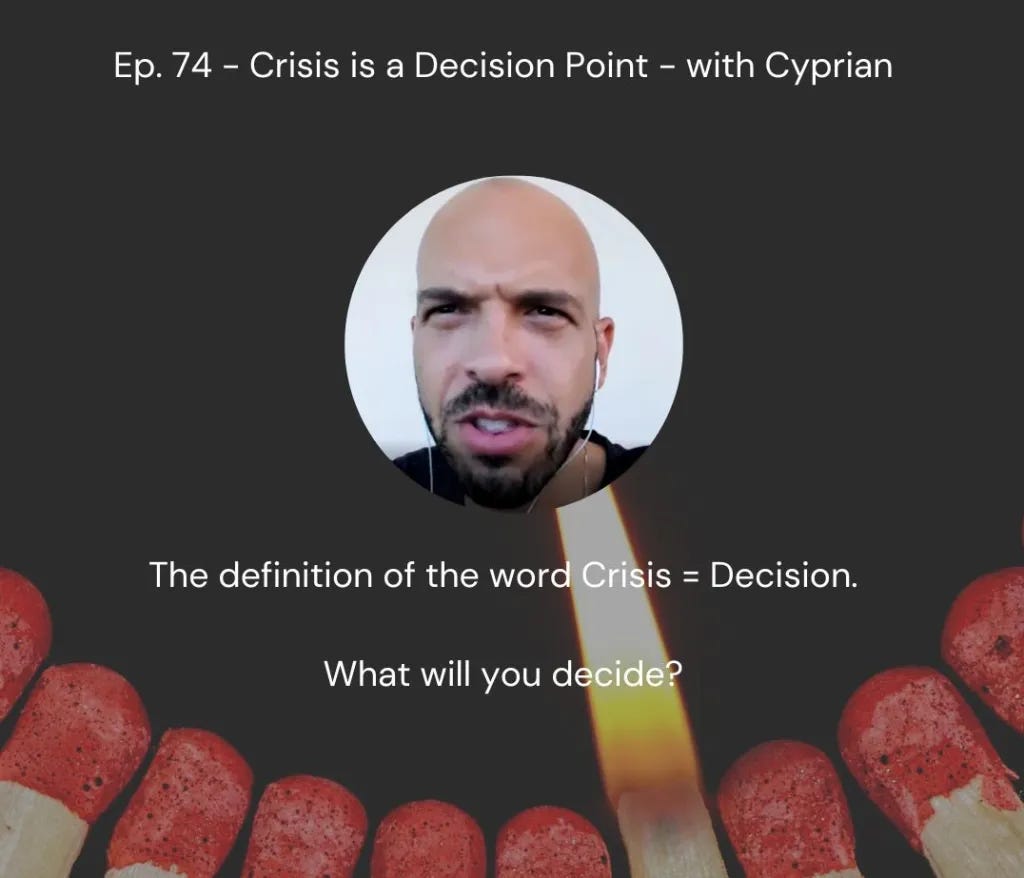
We are facing a crisis. One right after another.This is an episode from April 2023 with Cyprian (formerly Vin Armani). It includes the never-before-published bonus content where Cyprian talks about Bitcoin maximism, and the Cargo Cult.Cyprian tweeted in 2023: “‘Crisis’ means ‘decision’. Just knowing that fact changes your understanding of reality forever.”Crisis is a decision point. And “never let a good crisis go to waste.” – Rahm Emmanuel.* Are you prepared – mentally and spiritually – for what is coming?* As Cyprian said in March 2020, “the world as you know it has ended. You need to get to acceptance.”* The larger game at play – It’s all spiritual warfare. Ephesians 6:12.* #BuildTheArk – what does that mean?* OrthodoxySpiritual Warfare – Ephesians 6:12With all this happening you need to get more self sufficient. Grow you own food. WE can help.Grow Nut Trees is now taking chestnuts, hazelnuts, elderberry, and comfrey orders for Fall. The trees are adapted to the Midwest. Check it out at:GrowNutTrees.comThriving Food Forest Design: If you like this, let us create an edible foodscape, perennial paradise for you so you can grow more food and be more self sufficient. Schedule a free consult session with me at: Get full access to Thriving the Future Substack at thrivingthefuture.substack.com/subscribe
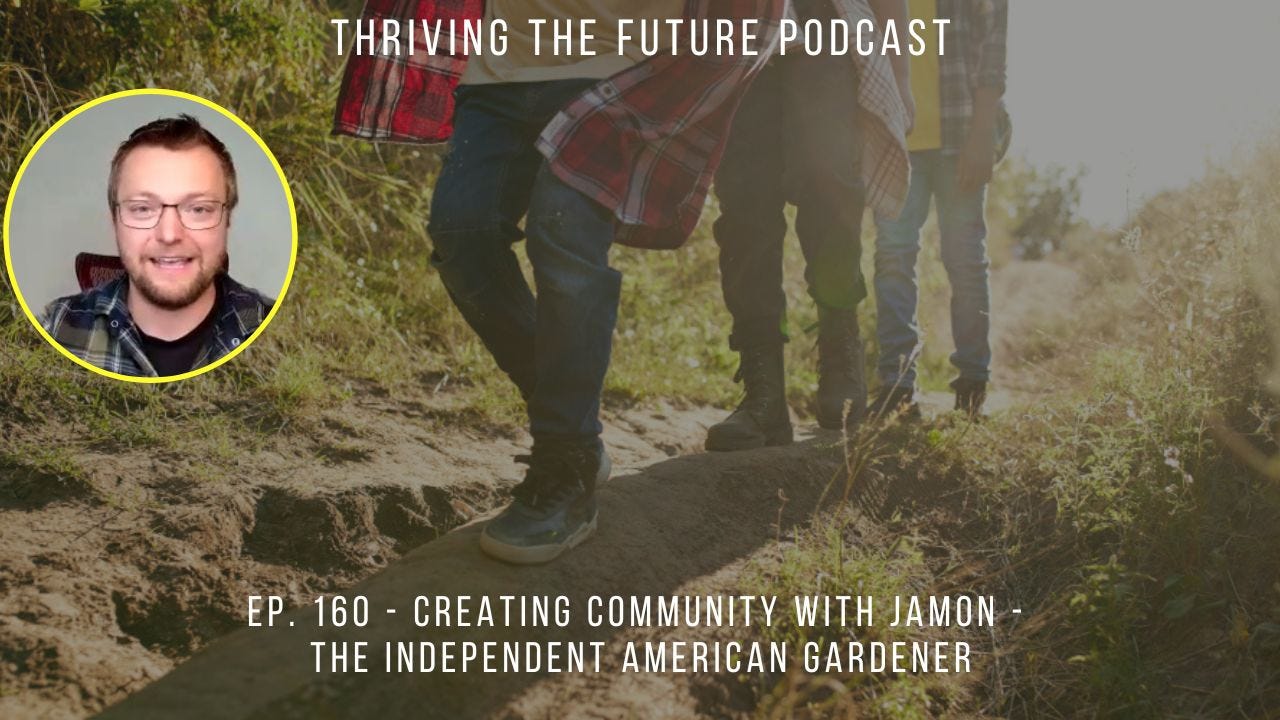
Jamon Mysliwiec (@theindependentamericangardener) joins me to share about TIAG - The Independent American Gardener, an online to in-real-life community, teaching permaculture and self-sufficiency through regenerative community.The goal is to move to a closed-loop economy, with communities producing surplus, leveraging home based small businesses, and creating a barter and trade network for the surplus.Jamon started Lulu's Garden, the first Demonstration Hub in Trenton, MO, and has bought a commercial property which will have a rooftop garden, greenhouse, a food forest, and to trade surplus through a farmers market type model.He also shares about his new off grid property and soon-to-be-Demonstration Hub in SW Missouri.Thriving Food Forest Design: Let us create an edible foodscape, perennial paradise for you so you can grow more food and be more self sufficient. Schedule a free consult session with me at:Buy my chestnuts, hazelnuts, elderberry, and comfrey that are adapted to the Midwest.GrowNutTrees.comRaised beds that I am building to test Perennial Kitchen Garden layouts:Vego Garden Modular Metal Raised Bed (which I will make 5' x 3.5', 17" tall).I use this for a perennial kitchen garden - growing herbs to use daily in the kitchen. Just come along and pick what you need for tonight's dinner.Meadow Creature Broadfork is my favorite tool for starting new garden beds. I turn over the sod, add a layer of compost, then Milpa, and cover with woodchips. Get full access to Thriving the Future Substack at thrivingthefuture.substack.com/subscribe
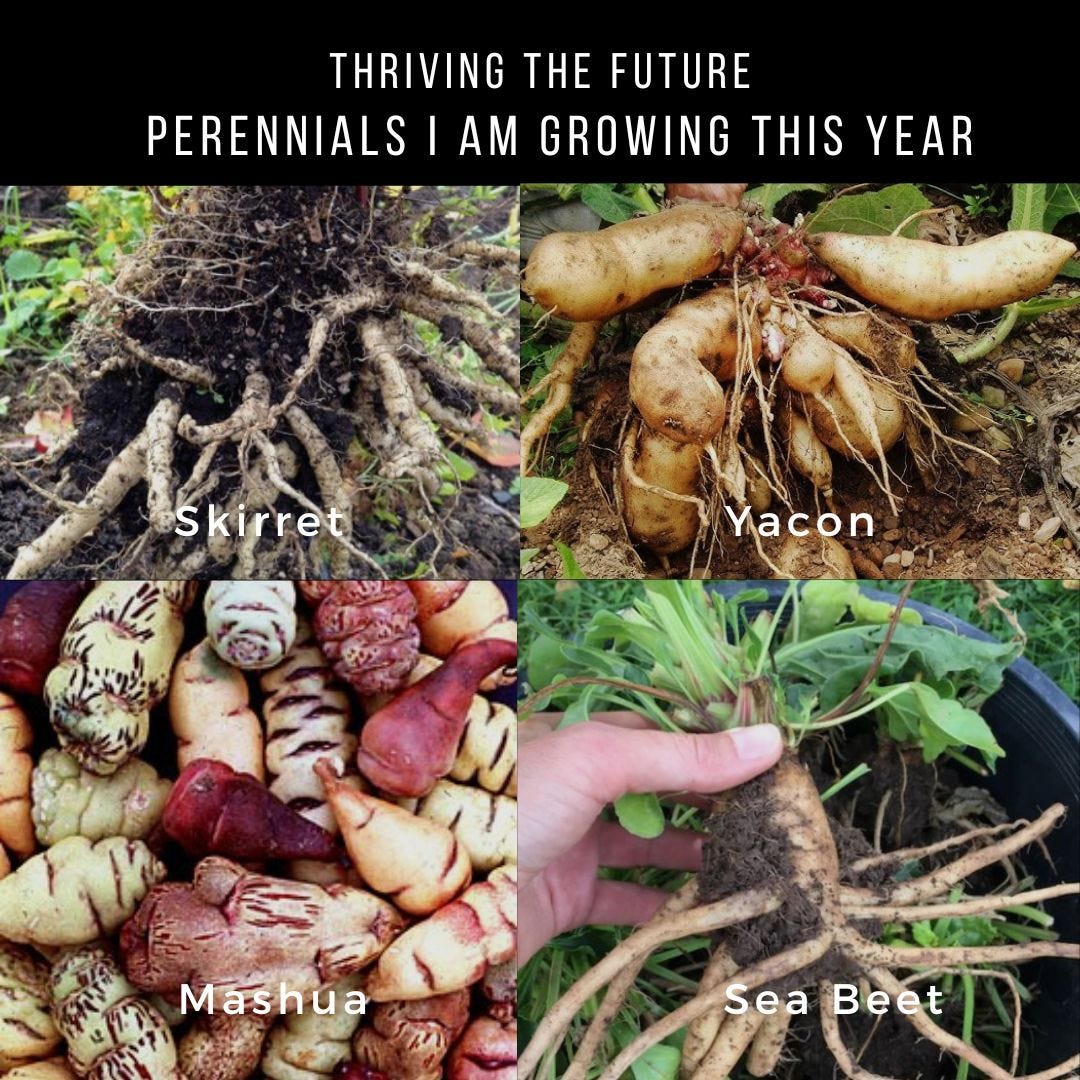
As I get older, perennials have become more important in my garden.It is the first week of May, and this Spring I have not planted any new annuals, besides potatoes. But that doesn't mean that I do not have anything to eat. A couple of years ago I focused more and more corners of my garden and raised beds on perennials. I have bloody dock and other sorrel to add to salads. Bloody dock has a lemony taste, and it's blood red veins add an intriguing conversation piece when added to a guest's salad.The Milpa bed has 2nd year cabbage, arugula, and mustard greens that can be foraged and added to salads and smoothies. The arugula and mustard greens need to gathered early before they go to seed.Narrow leaf plantain is also added to smoothies.I have oregano in a raised bed kitchen garden that is far better than any store bought oregano (and I will never go back!).I have walking onions that are so numerous that I have many to thin and add to other beds and into the food forest. As well as gift to friends, for I have more onions than I can eat.Jerusalem artichoke (sunchoke) tubers are mostly sprouting new plants, but some can still be harvested. I planted a variety a few years ago that is white, more circular and less lobulated than most sunchokes.I have added raised bed kitchen gardens in Zone 1 near the house, using two Vego Garden Modular Metal Raised Beds, and I want to increase my perennial options.SkirretThis year I will add Skirret, which is a perennial that looks like a carrot and is described as "the sweetest carrot you've ever eaten." Skirret is a European perennial, popular in medieval times. Instead of one tap root, the skirret has multiple tubers off of a plant. I got the seed from Perma Gardens at plantonce.comYaconYacon is a plant that has a deep tubers that look like a small sweet potato, and smaller tubers near the surface that look like sunchokes. Above ground it will look like a sunflower. It reportedly has a juicy fruity flavor like celery or fruit. I bought my Yacon at Raintree Nursery, and they also have a purple variety.MashuaMashua is a plant in the Nasturtium family. It is a vining and flowering plant, but also forms tubers. The leaves and flower are edible. And it repels some insects and nematodes, so you can plant it between other plants. The tubers can also come in different colors. I bought my Mashua at Raintree Nursery.Sea BeetSea beet is an ancestor of our beets and chard. It will have large edible leaves. It seeds in Year 2 and then, in midsection of country it would likely go perennial in Year 3.It is not a red beet, and I expect it to be more like a chard taste or closer to a sugar beet. I bought mine at Experimental Farm Network, which has unique things you may not find in your regular store or the usual online seed places.Perennial KaleI frequently can get kale to come back in the next year, especially if it is a thicker leafed kale like Scotch Kale. You can also get some ornamental kale that comes back every year. Those may not be great in salad, but you could eat the tender new "baby kale" or blend it into smoothies. Experimental Farm Network has been experimenting with choosing kale varieties that would be more likely to go perennial. They call it the 'Homesteader's Kaleidoscopic Perennial' Kale Grex. "Grex" is a horticulture term meaning a hybrid. I have tried this (and will continue to try it) to discover the elusive perennial kale.ChicoryAnd I go back to my tried and true chicory, which also comes back. I plant this along borders in the garden and in ground beds. I also have it growing wild up and down the driveway. You can roast chicory root as a coffee substitute (although I don't care for it). My chickens love the greens and I add it to smoothies.Try some of these plants, especially the tubers, and increase your self sufficiency by experimenting to see if you can get some of them to turn perennial.Buy my chestnuts, hazelnuts, elderberry, and comfrey that are adapted to the Midwest.Use “thriving” at checkout for 10% (through May-10).GrowNutTrees.com Get full access to Thriving the Future Substack at thrivingthefuture.substack.com/subscribe
Matt from FarmHopLife, Joseph the Homestead Padre from Smith Homestead, and Grant Payne from Christine Acres Farm join me on a community call to share our Spring plans.Matt is growing mini cactusHomestead Padre is growing Ayote squash which tastes like chocolate. He also shares his farmers market success with selling freeze dried herbs, teas, and candy.I am growing new types of chestnuts, and grafting Asian pears onto invasive Callery pears.And Grant is doing everything. Greenhouses, IBC totes with comfrey as far as the eye can see, ducks, chickens, trees, and hundred of flowers.Come and join in our success!Thriving Food Forest Design: Let us create an edible foodscape, perennial paradise for you so you can grow more food and be more self sufficient. Schedule a free consult session with me at:Buy my chestnuts, hazelnuts, elderberry, and comfrey that are adapted to the Midwest.GrowNutTrees.comRaised beds that I am building to test Perennial Kitchen Garden layouts:Vego Garden Modular Metal Raised Bed (which I will make 5' x 3.5', 17" tall).I use this for a perennial kitchen garden - growing herbs to use daily in the kitchen. Just come along and pick what you need for tonight's dinner.Meadow Creature Broadfork is my favorite tool for starting new garden beds. I turn over the sod, add a layer of compost, then Milpa, and cover with woodchips. Get full access to Thriving the Future Substack at thrivingthefuture.substack.com/subscribe
My friend David, who is now Brother David, a novice monk at the Monastery of St. John in CA, used to greet me with “How goes the struggle?”Not “how are you?”, which is usually followed with “Fine”.Instead of giving the usual response of "I am fine", I would think about it for a moment. This led to a more real and heartfelt conversation.The Struggle is RealIn Orthodox Christianity there is a prayer: "Help the Orthodox Christians to struggle".Not "Help us get through the struggle". Not "Help us not to struggle".If you are saying to yourself, "That's un-American!", then you have lost touch with your history and tradition.I could go on for paragraphs here about how we have lost this touchstone of our human existence.We knew this just 100 years ago. The janitor knew that he was janitor and measured where he was in the world. He would hope and prepare his children to have a life better than his, but he knew where he was. In modern days, through credit the janitor thinks he can drive that fancy car.I know. I was a janitor's (well, "groundkeeper's") kid.The Hero's JourneyWe watch TV or a movie and cheer when the hero goes through trials and comes out the victor at the end. We respond to these because these Hero's Journey stories are in our DNA.Yet when our own Hero’s Journey calls, we complain & scroll. We do not want to experience trials and struggles ourselves.People watch TV and movies with the Hero’s Journey and then grumble, complain, and take meds when they are called to the Hero’s Journey.We need to struggle. We need the Hero's Journey.In the Midst of Great LentI am writing this in Week 4 of Great Lent. Just passed the midpoint between the start of Lent and Pascha/Easter, which this year is on April 20.Lent for the Orthodox is 40 days of fasting, plus Holy Week. The fast is much more than other Christian traditions: Abstain from meat, fish, dairy, eggs, and (most of the time) wine and rich oils like olive oil. That's every day, not just fasting on Friday. (Sorry, no Friday Fish Frys).The purpose of Lent is to examine yourself, through prayer and counsel - in ways that are not possible if you are well fed.Proverbs 30: 8-9:Give me neither poverty nor riches—Feed me with the food allotted to me;Lest I be full and deny You, And say, “Who is the Lord?”Or lest I be poor and steal,And profane the name of my God.The Lord's Prayer says: "Give us our daily bread". Not "bless us at the all-you-can-eat buffet".Embrace the Weeks of WantThere is a seasonality to it as well. These were known as the "Weeks of Want" - the historical time at the end of Winter, where your stored food ran low, you could only do minimal foraging in the woods, and the new crops have not come in yet.Maybe we will get back to living locally. Localism, or as Andy Hickman says, "Yokelism".What Does This Have to Do With Thriving?You may be saying to yourself: "This doesn't sound like Thriving."I disagree. Thriving is designing your intentional life. That includes celebrating the good times, but also preparing for upset, for down times, and to help others as they go through their own struggles and tough times.That is the Human Equation.WAY back in Episode 13 – So You Want a Parallel Economy? – Solzhenitsyn and Havel, we talked about Vaclav Havel's solution to totalitarianism. In the waning days of the Soviet Communist empire, Vaclav encouraged citizens in Czechoslovakia to get together for community - picnics, art. Rediscover community. This overcomes isolationism, which is something that we struggle with: We are more connected (electronically) that ever yet are completely alone.Want to have an interesting conversation?Ask: "How goes the Struggle?" Try this greeting out with your friends and at church gatherings. It will cut through the cheery veneer and lead to some interesting conversations... or it will make people really upset.At least you will be having crucial conversations instead of mundane empty ones.Thriving Food Forest Design: Let us create an edible foodscape, perennial paradise for you so you can grow more food and be more self sufficient. Schedule a free consult session with me at:Buy my chestnuts, hazelnuts, elderberry, and comfrey that are adapted to the Midwest.GrowNutTrees.comRaised beds that I am building to test Perennial Kitchen Garden layouts:Vego Garden Modular Metal Raised Bed (which I will make 5' x 3.5', 17" tall).I use this for a perennial kitchen garden - growing herbs to use daily in the kitchen. Just come along and pick what you need for tonight's dinner.Meadow Creature Broadfork is my favorite tool for starting new garden beds. I turn over the sod, add a layer of compost, then Milpa, and cover with woodchips. Get full access to Thriving the Future Substack at thrivingthefuture.substack.com/subscribe
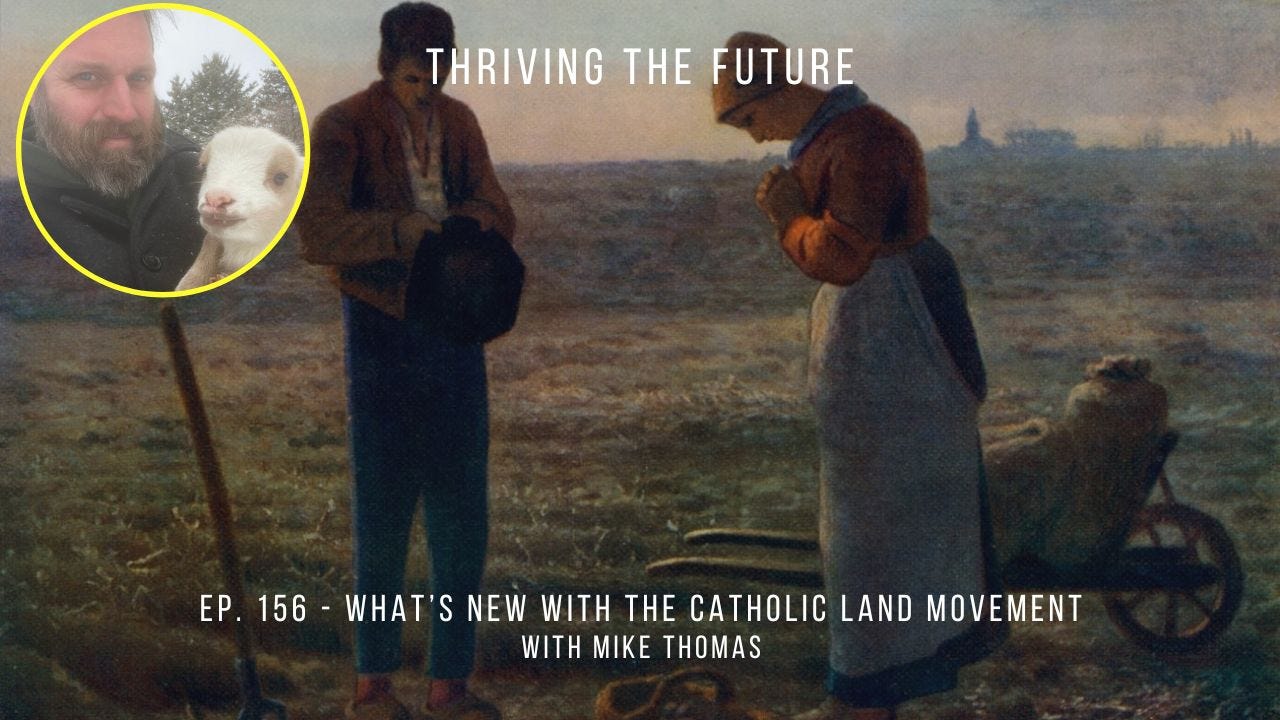
Mike Thomas of the Catholic Land Movement joins me to talk about Catholic Land Movement news. We also share about our apple orchards and cider.The purpose of the Catholic Land Movement is "a rural resettlement of Catholics onto productive property which they own".This is a network of Catholics supporting one another to help people start homesteads, and to help make homesteads and small farms thrive. They do this through helping folks find land, as well as skill swapping and workshops.* The Catholic Land Movement is now up to 30+ chapters!* Mike and his team visited Rome to discuss their mission and were able to meet with Pope Francis.* Now it is a 501c3 and you can donate to help the Catholic Land Movement.* We also share about apple trees, progress in our orchards, my challenges with fire blight, and lambing season on the homestead.* It has been so cold that his cider froze. How Mike will recover and try to to restart the fermentation.* We talk about the joy of watching new lambs.We also talk about Lent and Mike's recent tweet: "Time to use Lent to purify myself, to conquer my disorder and weakness. Time to build a foundation."Thriving Food Forest Design: Let us create an edible foodscape, perennial paradise for you so you can grow more food and be more self sufficient. Schedule a free consult session with me at:Buy my chestnuts, hazelnuts, elderberry, and comfrey that are adapted to the Midwest.GrowNutTrees.comRaised beds that I am building to test Perennial Kitchen Garden layouts:Vego Garden Modular Metal Raised Bed (which I will make 5′ x 3.5′, 17″ tall).I use this for a perennial kitchen garden – growing herbs to use daily in the kitchen. Just come along and pick what you need for tonight’s dinner.Meadow Creature Broadfork is my favorite tool for starting new garden beds. I turn over the sod, add a layer of compost, then Milpa, and cover with woodchips. Get full access to Thriving the Future Substack at thrivingthefuture.substack.com/subscribe

Comments

Download from Google Play

Download from App Store
 United States