DiscoverLitReading - Short Stories and Timeless Tales
LitReading - Short Stories and Timeless Tales
Claim Ownership

LitReading - Short Stories and Timeless Tales

Author: Short Storyverses

Subscribed: 784Played: 18,997
Share

Description

LitReading: Great Short Stories Read Aloud

Great stories deserve to be heard.

LitReading brings you a complete short stories, unabridged and narrated by veteran broadcaster and voice actor Don McDonald. Hear the masters of the form, including Edgar Allan Poe, Mark Twain, O. Henry, Edith Wharton, Anton Chekhov, Kate Chopin, William Faulkner, Katherine Mansfield, Stephen Crane, Saki, Bret Harte and Virginia Woolf. Along with them come overlooked gems from the golden age of American, British and Russian literature that deserve a second hearing.

Each episode is one full story, from a few minutes to a deeply immersive hour. Think of it as a free audiobook of short fiction, performed with warmth and clarity and just enough character to bring every voice to life. Play it on a commute, a walk or a quiet evening. It also makes good bedtime listening for grown-ups.

Come for a story. Leave with a world.

Help a good story travel. If LitReading has kept you company, tap Follow in Apple Podcasts, Spotify or your favorite podcast app. It's free, and new stories arrive automatically. A quick 5-star rating or a one-line review helps more than you'd guess, because that's how new listeners find us. And if a story stayed with you, send this episode to one friend who loves to read. That's how this show grows.

LitReading is part of Short Storyverses (shortstoryverses.com), a family of podcasts for people who love great storytelling:

  • New Tales Told: original stories in the spirit of the classics
  • FRIGHTLY!: tales of terror and the uncanny
  • Sci-Finds: science fiction and speculative stories
  • HumorUs: comic fiction
  • Season's Readings: holiday stories for any time of year
  • Readastorus: stories for younger listeners

Search for any of them wherever you get your podcasts.


Hosted on Acast. See acast.com/privacy for more information.

164 Episodes
Reverse
As a boy he was teased for his tenderness. He kept birds, rabbits, a dog, a small monkey. And a cat, enormous and entirely black, who followed him from room to room and would have followed him into the street. Now he sits in a cell with a pen, determined to set the record down plainly. He is not mad, he tells us. He is not dreaming. Edgar Allan Poe's 1843 tale.WARNING: Contains graphic animal and human violence.Follow and each new story will show up in your library as soon as it's released. No searching, no remembering.This show is one corner of Short Storyverses, a family of fiction podcasts. Some lean literary. Some are funny. Some will keep you up with the lights on, and some belong by the fire in December. There are classics nobody reads anymore and should, and original stories you won't hear anywhere else. They're all read by Don McDonald from his studio booth, and all short enough to finish on a drive, a walk, or a sleepless night.Come explore at shortstoryverses.com. Pick a universe. Stay a while.If you enjoyed this story, buy me an e-book!https://www.buymeacoffee.com/donmcdonaldor click FOLLOW Hosted on Acast. See acast.com/privacy for more information.
Ed Loyce spends his days fixing radios and televisions in a small town where nothing much happens. One evening he climbs out of his basement workroom, walks into the square, and sees something no decent town would put up with.Then he notices how everyone else is taking it.Philip K. Dick wrote "The Hanging Stranger" in 1953, a year when plenty of Americans had started keeping an eye on their neighbors. Seventy years on, it still makes you check who's standing behind you.Philip K. Dick was born in Chicago in 1928 and spent most of his life in California, writing fast, living broke, and asking one question in more than forty novels and over a hundred short stories: what's real? He won the Hugo Award for The Man in the High Castle in 1963, yet for most of his life he was paid like a pulp writer and read like a cult figure. He died in March 1982, a few months before Blade Runner, adapted from his Do Androids Dream of Electric Sheep?, reached theaters. After that the rest of the world caught up. Total Recall, Minority Report, A Scanner Darkly, and The Man in the High Castle all came from his pages. The paranoia turned out to be prophecy.If you want more stories like this one, and plenty that are nothing like it, they're all waiting for you at shortstoryverses.com. Go have a look around. Just don't stand under any lampposts on the way there.If you enjoyed this story, buy me an e-book!https://www.buymeacoffee.com/donmcdonaldor click FOLLOW Hosted on Acast. See acast.com/privacy for more information.
There’s a reason crows gather in cemeteries. They remember. They watch. And sometimes, they wait. Murder of Crows isn’t a tale borrowed from the past—it’s one I wrote for New Tales Told, a series of original stories that echo in the spaces between memory and myth. This one lingers in the cold silence of the American frontier, where the shadows are long and the watchers have wings.Set in Montana Territory, 1868, Murder of Crows is a western—but not the kind you remember from Saturday matinees. The dead don’t rest. The land doesn’t forget. And the crows? They remember everything.Author's NoteThere’s an old belief that crows remember faces. That they mourn their dead. That they never forget a slight.It was early morning when a murder of crows descended on the sycamore outside my bedroom window, their cries so sharp and relentless they pulled me from sleep with a strange sense of dread. I lay there, half-conscious and irritated, staring at the ceiling as their screams echoed through the glass. And in that moment—quietly, almost reflexively—I had a thought I wasn’t proud of: Maybe this murder deserves one of its own.From that flash of anger came something unexpected: a story. Murder of Crows began as a whisper of guilt and folklore. Though it draws faint inspiration from the life and legend of Jeremiah Johnson, this tale is entirely imagined—fiction through and through. But like many stories, its roots are tangled in real emotion: grief, memory, regret… and the uncanny way the natural world sometimes stares back.As for the birds? They haven’t left.They’re still watching.Just outside my window.If you enjoyed this story, buy me an e-book!https://www.buymeacoffee.com/donmcdonaldor click FOLLOW Hosted on Acast. See acast.com/privacy for more information.
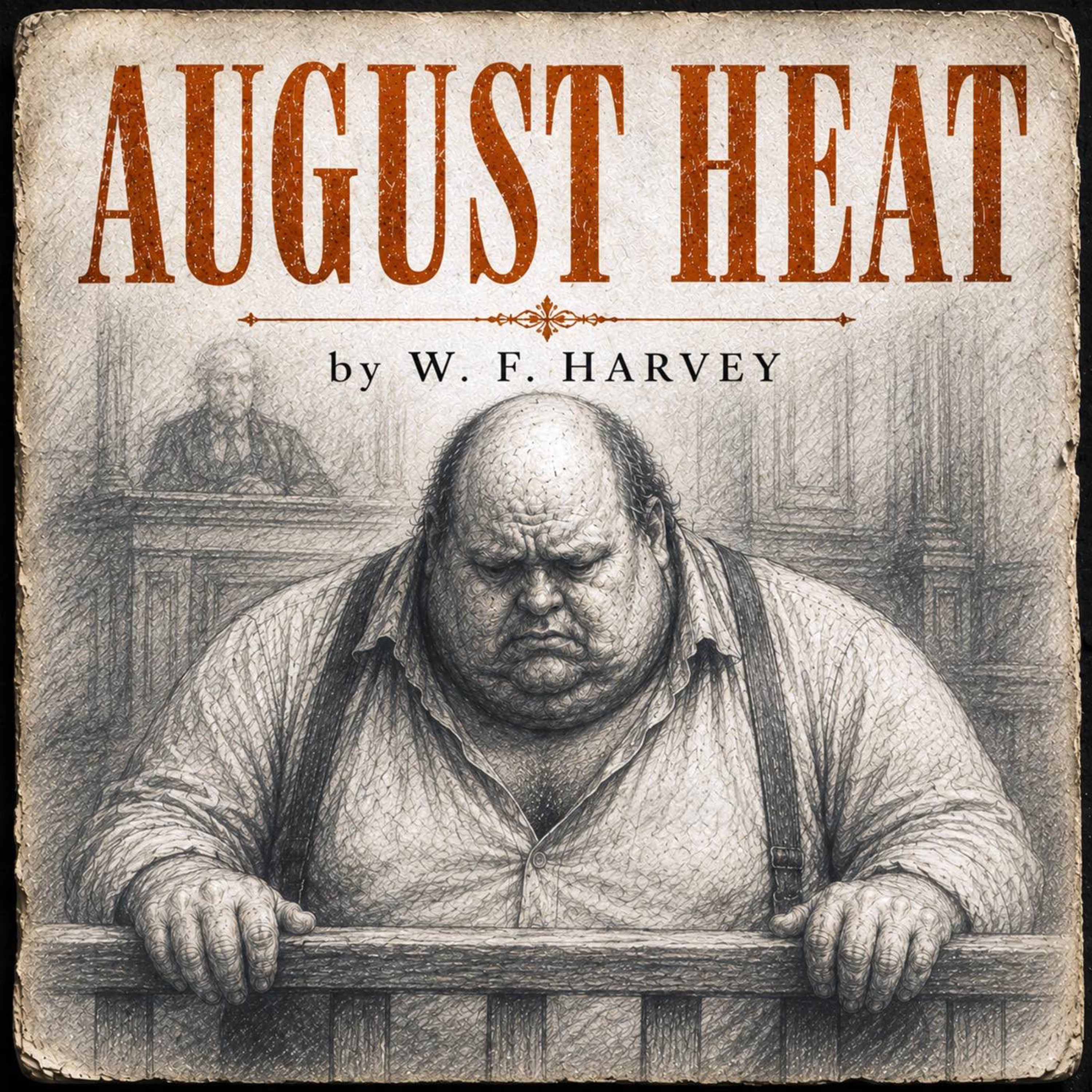
August 20th, 1910. The worst heat in living memory, the kind that flattens a city and slows the blood.An artist named James Clarence Withencroft spends the morning drawing a man in the dock, caught at the instant sentence is passed on him. Then he walks out into the glare, wanders without direction, and finds himself in a stonemason's yard, where the man from his drawing sits carving a headstone. Neither has ever laid eyes on the other. The name cut into the stone is Withencroft's own, and so is the date.They agree the safest thing is to sit together until midnight passes.W.F. Harvey wrote this in 1910, six pages that have refused to loosen their grip in the century sinceIf you enjoyed this story, buy me an e-book!https://www.buymeacoffee.com/donmcdonaldor click FOLLOW Hosted on Acast. See acast.com/privacy for more information.
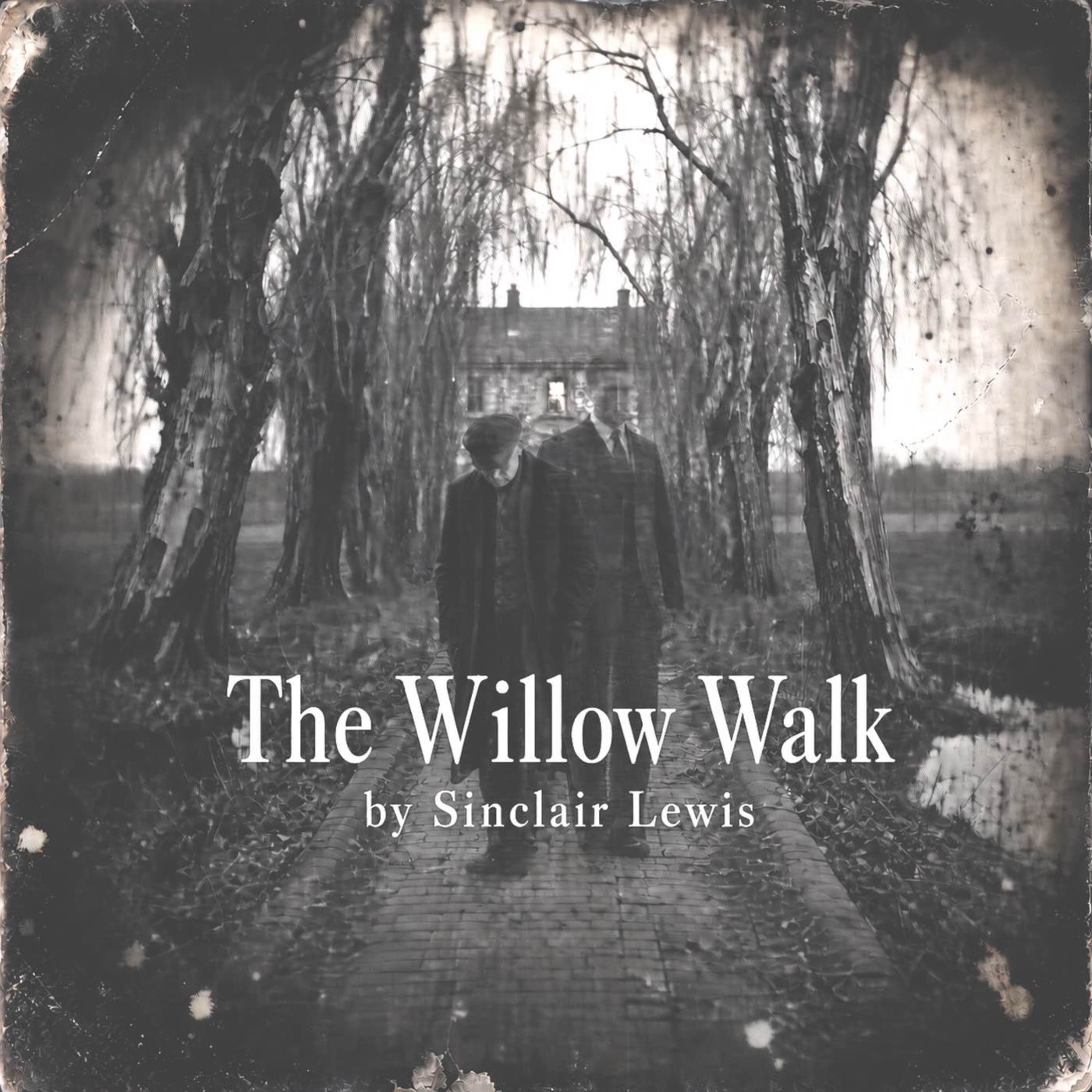
Jasper Holt counts other people's money at the Lumber National Bank, and he is very good at it. Out in Rosebank, at the end of a brick path a block long and roofed over with willows, his brother John lives alone, shabby, devout, and nearly invisible. The brothers are not much alike. Sinclair Lewis builds this one patiently, a small arrangement at a time, and then lets the willows lose their leaves.Sinclair Lewis was born in 1885 in Sauk Centre, Minnesota, a small town he spent the rest of his life dissecting. He worked his way through Yale, then through the magazine trade, turning out stories for the Saturday Evening Post and others while he learned how to aim. "The Willow Walk" comes from that stretch, 1918, and was picked up that same year for The Best American Short Stories. The novels followed fast, Main Street, Babbitt, Arrowsmith, Elmer Gantry, each one taking a layer off American respectability. In 1930 he became the first American awarded the Nobel Prize in Literature. He died in Rome in 1951.If this one held you, there's a shelf of them waiting at shortstoryverses.com. Litreading is where the classics live, Chekhov, Faulkner, Chopin, Mansfield, read the way they were meant to be heard. New Tales Told carries original fiction you won't find anywhere else. FRIGHTLY handles the dark. HumorUs takes on the funny. Love Lit, Season's Readings, and Readastorus round it out, the last one built for kids and always free of commercials. All of it narrated in one studio by one voice, all of it free. Come find your next story at .If you enjoyed this story, buy me an e-book!https://www.buymeacoffee.com/donmcdonaldor click FOLLOW Hosted on Acast. See acast.com/privacy for more information.
loading
Comments